

Keeshond
The Keeshond is a friendly, expressive and highly people-oriented dog known for its thick silver-and-black coat, fox-like face and distinctive markings around the eyes that resemble spectacles. Often described as an affectionate family companion, the breed combines a lively personality with a strong desire to be involved in everyday household life. Unlike more independent northern breeds, the Keeshond typically thrives on close contact with its people and does not usually enjoy being left alone for long periods.
Originally associated with Dutch barges and waterways, the Keeshond developed as a companion and watchdog rather than as a heavy working or hunting dog. This background helped shape a breed that is alert and responsive without necessarily being confrontational. Many Keeshonden are quick to announce visitors or unusual activity, but they are generally more welcoming than suspicious once an introduction has been made.
Keeshond temperament is one of the breed’s greatest attractions. These dogs are commonly affectionate, intelligent, playful and strongly attached to their families. They often enjoy participating in whatever their owners are doing, whether that means walking through the neighborhood, joining a family gathering or simply settling nearby at home. Their sociable nature can make them excellent companions, but it also means they need regular interaction and can become unhappy if routinely isolated.
A full grown Keeshond is a medium-sized dog, but the abundant double coat makes the breed appear larger and more substantial than its actual frame. Beneath the fur is a compact, well-balanced dog with moderate exercise needs and enough energy to enjoy daily activity without requiring the extreme workload of some sporting or herding breeds.
The coat is one of the Keeshond’s most recognizable features and also one of its biggest ownership commitments. Regular brushing is necessary to manage loose undercoat and prevent tangles, particularly during periods of heavier shedding. Prospective owners should be prepared for hair around the home as well as ongoing grooming.
For families researching Keeshond puppies, responsible breeding and early socialization are important considerations. Choosing among Keeshond breeders should involve more than appearance or availability; health screening, stable temperament and the way puppies are raised all matter. Keeshond adoption can also be a rewarding option for people willing to consider an adult dog or rescue.
The Keeshond is best suited to people who want an affectionate, responsive companion and are prepared to provide regular company, grooming and mental engagement. For the right household, its combination of friendliness, intelligence and distinctive personality can make it an exceptionally rewarding dog.

Table of Contents
Keeshond Fast Facts
Breed Group: Non-Sporting Group
Origin: Netherlands
Height: About 17–18 inches
Weight: About 35–45 pounds
Life Expectancy: Around 12–15 years
Coat: Thick double coat with a dense undercoat
Shedding: Moderate to heavy
Grooming Needs: Moderate to high
Exercise Needs: Moderate
Temperament: Friendly, affectionate, alert and intelligent
Best Suited To: Families and owners who want a sociable companion
Distinctive Feature: Spectacle-like facial markings and a heavily plumed tail
Keeshond Star Ratings
Affection With Family: ★★★★★
Friendliness With Strangers: ★★★★★
Trainability: ★★★★★
Watchdog Ability: ★★★★☆
Adaptability: ★★★★☆
Good With Children: ★★★★☆
Good With Other Dogs: ★★★★☆
Playfulness: ★★★★☆
Exercise Needs: ★★★☆☆
Independence: ★★☆☆☆
Grooming Needs: ★★★★☆
Shedding: ★★★★☆
Keeshond Appearance and Size
A full grown Keeshond is a medium-sized dog with a compact, well-balanced build hidden beneath an exceptionally full double coat. Adult Keeshonden typically stand around 17–18 inches tall and weigh roughly 35–45 pounds, although the heavy coat can make the breed appear larger and more substantial than it really is.
The breed has the classic appearance of a spitz-type dog, with erect ears, a fox-like face, a dense coat and a heavily plumed tail carried over the back. These features give the Keeshond a distinctly northern appearance even though its historical role was primarily that of a companion and watchdog rather than a heavy working dog.
One of the Keeshond’s most recognizable features is its silver-and-black coat. The combination of the dense undercoat and longer outer coat creates a full outline around the body, particularly through the neck, shoulders and tail. The ruff around the neck is especially noticeable and contributes to the breed’s substantial appearance.
The face is equally distinctive. Dark markings around the eyes create the characteristic “spectacle” effect associated with the breed, while the erect ears and alert expression reinforce its lively, watchful appearance. These facial markings are one of the features that make the Keeshond immediately recognizable.
Despite the amount of coat, the Keeshond should not be judged by bulk alone. Beneath the fur is a moderate, compact frame rather than a large or heavy-bodied dog. This is important when assessing body condition because the dense coat can easily hide gradual weight gain. Regular hands-on checks are more useful than relying only on appearance.
The overall impression should be of a balanced, alert and well-proportioned companion dog. Its thick coat, expressive face, curled tail and moderate size combine to give the Keeshond a distinctive appearance without the extreme size or build of many other northern breeds.
How Big Is a Full Grown Keeshond?
A full grown Keeshond is a medium-sized dog, typically standing around 17–18 inches tall and weighing roughly 35–45 pounds. The thick double coat can make the breed look considerably larger than its actual frame, especially around the neck, shoulders and tail. Because the coat can also hide gradual weight gain, owners should rely on regular hands-on body-condition checks rather than judging size or condition by appearance alone.

Keeshond History and Origins
The Keeshond has a distinctive history closely tied to the waterways and political life of the Netherlands. Unlike breeds developed primarily for hunting, guarding livestock or pulling heavy loads, the Keeshond became known as a companion and watchdog on Dutch barges, riverboats and small working vessels. Its alert nature, manageable size and strong attachment to people made it well suited to life aboard boats and around busy waterways.
The breed is part of the broader spitz family, which includes dogs characterized by erect ears, dense double coats, curled tails and a generally fox-like appearance. The Keeshond shares these features, but its development followed a more companion-oriented path than many northern working breeds. It needed to be watchful and responsive without being excessively aggressive, and it had to adapt to close living quarters with people.
The Keeshond became especially significant in the Netherlands during the late 18th century. The breed was associated with the Dutch Patriot movement, whose supporters opposed the ruling House of Orange. One of the movement’s prominent figures, Cornelis de Gyselaer, was associated with a spitz-type dog named Kees, and the dog became a political symbol. The breed’s name is generally understood to have developed from this association, although the exact evolution of the name has been discussed in different ways over time.
After the Patriot movement declined, the Keeshond also lost some of its prominence. For a period, the breed became less fashionable and was maintained largely by ordinary working families rather than wealthy enthusiasts. Its continued presence among barge owners and households helped preserve the type until organized breeding efforts revived interest later.
During the late 19th and early 20th centuries, breeders in Europe began working to standardize the Keeshond more formally. Interest also spread to Britain and then to the United States, where the breed eventually became recognized as a distinct member of the Non-Sporting Group. Its dramatic coat, expressive face and friendly temperament helped it gain a following as a companion dog.
The breed’s history still helps explain much of its modern behavior. The Keeshond was expected to live closely with people, remain alert to unfamiliar activity and fit into relatively confined environments. As a result, many modern Keeshonden are highly people-oriented, vocal when something catches their attention and happiest when they are included in family life.
That background sets the Keeshond apart from more independent spitz breeds. It retains the classic northern appearance, but its historical role encouraged sociability and companionship as much as watchfulness.
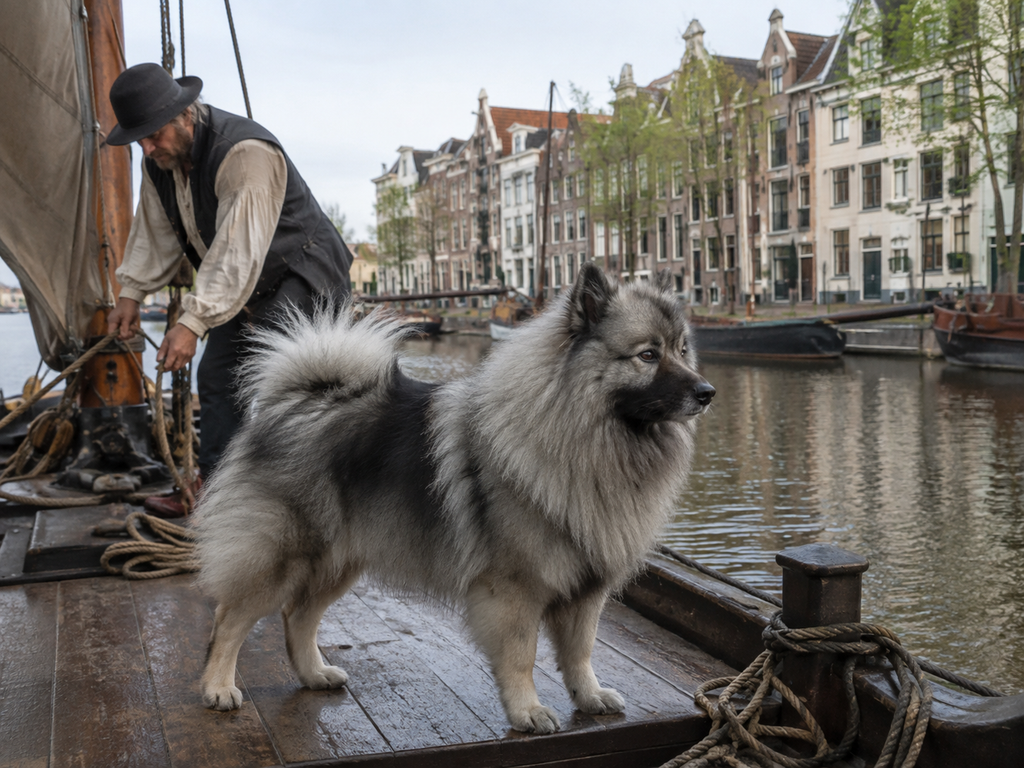
A Dutch Barge Dog With a Political Past
The Keeshond developed alongside Dutch families living and working on barges and waterways, where it served as both companion and alert watchdog. The breed later became closely associated with the Dutch Patriot movement of the late 1700s, giving it an unusual place in national history. This background helps explain why the modern Keeshond combines watchfulness with such strong attachment to people: it was shaped to live closely with families rather than work independently at a distance.
Keeshond Temperament and Personality
Keeshond temperament is one of the breed’s strongest attractions. These dogs are typically affectionate, sociable and highly attuned to the people around them, with a natural tendency to stay close to family members and take an interest in everyday household activity. Compared with more independent spitz breeds, the Keeshond is usually much more people-focused and often seems happiest when it is included in whatever the family is doing.
Many Keeshonden are friendly with visitors once properly introduced, although they are naturally alert and quick to notice changes in their surroundings. This combination makes them useful watchdogs without necessarily making them suspicious or confrontational. A Keeshond may bark when someone approaches the house or when something unusual catches its attention, but the breed is generally known more for warning than for guarding aggressively.
Their affectionate nature can make them excellent family companions. Keeshonden often enjoy close physical proximity and may follow their owners from room to room, settle beside them during quiet periods and become noticeably unhappy if they are excluded from family life. This strong attachment is appealing, but it also means the breed may struggle if left alone for long stretches on a regular basis.
The Keeshond is intelligent and responsive, which often makes training enjoyable. Many learn quickly and are motivated by praise, food and interaction with their owners. Their sensitivity can also mean they respond poorly to harsh corrections or inconsistent handling. Calm, positive training tends to bring out the best in the breed.
Playfulness is another common trait. Keeshonden often retain a cheerful, youthful quality well into adulthood and may enjoy games, short training sessions and social interaction more than repetitive physical exercise. They are not generally as intense as working herding or sporting breeds, but they do appreciate mental stimulation and involvement.
Because the breed is so social, early exposure to different people, places and situations can help reinforce confidence and good manners. A well-socialized Keeshond is usually comfortable in a wide range of family and community settings.
Individual personalities still vary. Some dogs are more outgoing, while others may be slightly reserved, particularly in unfamiliar environments. Good breeding and thoughtful early socialization both play an important role in shaping adult temperament.
For owners looking for a cheerful, affectionate dog that wants to be part of family life, the Keeshond can be an excellent match. Its combination of friendliness, intelligence and alertness gives the breed a distinctive personality that is both engaging and easy to enjoy.
What Is Keeshond Temperament Like?
Keeshonden are usually affectionate, alert and highly people-oriented. They tend to form close bonds with their families and often prefer being involved in everyday household activity rather than spending long periods alone. Although they can be vocal watchdogs, they are generally more welcoming than suspicious once introductions are made. Their intelligence and sensitivity also mean they respond best to calm, positive training and consistent routines.

Living With a Keeshond
Living with a Keeshond usually means sharing your home with a dog that genuinely wants to be part of family life. This is a sociable, people-oriented breed that tends to thrive on companionship and involvement rather than independence. Many Keeshonden will follow family members from room to room, settle nearby while people work or relax and take a strong interest in whatever is happening around the house.
That close attachment is one of the breed’s biggest strengths, but it also creates an important ownership consideration. Keeshonden generally do not enjoy being left alone for long periods day after day. A dog that is routinely isolated may become bored, frustrated or anxious, particularly if it has little mental stimulation or social contact. Owners who work long hours away from home may need to plan for company, enrichment or appropriate daytime care.
Despite their thick coat and northern appearance, Keeshonden can adapt well to many different living situations. They are not excessively large, and their exercise needs are usually moderate, so they can live successfully in apartments or smaller homes provided they receive regular walks and enough interaction. Their tendency to bark, however, should be considered in close residential settings. The breed is naturally alert and may announce visitors, passing dogs or unusual noises.
Inside the home, Keeshonden are often cheerful and affectionate without being overwhelmingly demanding. Many enjoy lying near their owners and participating in family routines, but they also benefit from having a comfortable place of their own where they can rest undisturbed.
Temperature management matters because of the dense double coat. Keeshonden generally cope better with cool conditions than extreme heat and should have access to shade, fresh water and a comfortably cool indoor environment during warm weather. Strenuous exercise should be avoided during the hottest parts of the day.
The coat also affects household maintenance. Regular brushing helps control loose hair, but owners should still expect shedding around the home. Vacuuming and routine grooming quickly become part of normal life with the breed.
Keeshonden often enjoy predictable daily routines. Regular walks, feeding times, short training sessions and family interaction can help them feel secure and settled. Their intelligence also means they appreciate mental engagement rather than simply being left to entertain themselves.
For people who want a dog that feels genuinely woven into the household, the Keeshond can be an excellent companion. The breed usually gives back a great deal of affection and personality, but it does best in homes where companionship is treated as a real daily need rather than an occasional extra.

Keeshond and Children
Keeshonden are often well suited to family life and can be excellent companions for children when they are properly socialized and treated respectfully. Their friendly, affectionate nature usually makes them more approachable than many independent spitz breeds, and they often enjoy being included in family activities. Many Keeshonden are playful without being overwhelmingly boisterous, which can make them a good match for households with school-age children.
As with any breed, supervision is still important. Children should be taught not to pull the coat, climb on the dog, disturb it while sleeping or eating, or force interaction when the dog wants space. The Keeshond is generally tolerant, but even a friendly dog can become uncomfortable if handled roughly or repeatedly bothered.
Early socialization helps puppies become confident around the noise, movement and unpredictability that can come with family life. Positive exposure to calm children, visitors and different environments can help a young Keeshond learn that these situations are normal and safe.
Older children can often become very involved in the dog’s care. Walking, basic training, brushing and simple games can strengthen the bond, especially because the breed enjoys attention and interaction. Keeshonden are intelligent and usually respond well to reward-based training, so children who are old enough to follow instructions can often participate successfully under adult supervision.
One consideration is the breed’s enthusiasm. Some Keeshonden may become excited during greetings or play and could accidentally knock over a very small child. Teaching calm greetings and reinforcing four paws on the floor can help reduce this.
The breed’s thick coat is another practical issue. Children should learn that the dog may need a break from physical contact in warm weather, especially after exercise or active play. A cool resting place and access to fresh water are important.
Keeshonden generally enjoy being part of a busy household, but they also benefit from having somewhere quiet to rest. Giving the dog a bed or retreat area where children know not to disturb it helps create healthy boundaries.
Families should still consider the individual dog. Some Keeshonden are more outgoing than others, and dogs that have had limited early socialization may need more careful introductions.
For families prepared to teach respectful handling and provide normal supervision, the Keeshond can be a warm, affectionate and highly involved family companion.
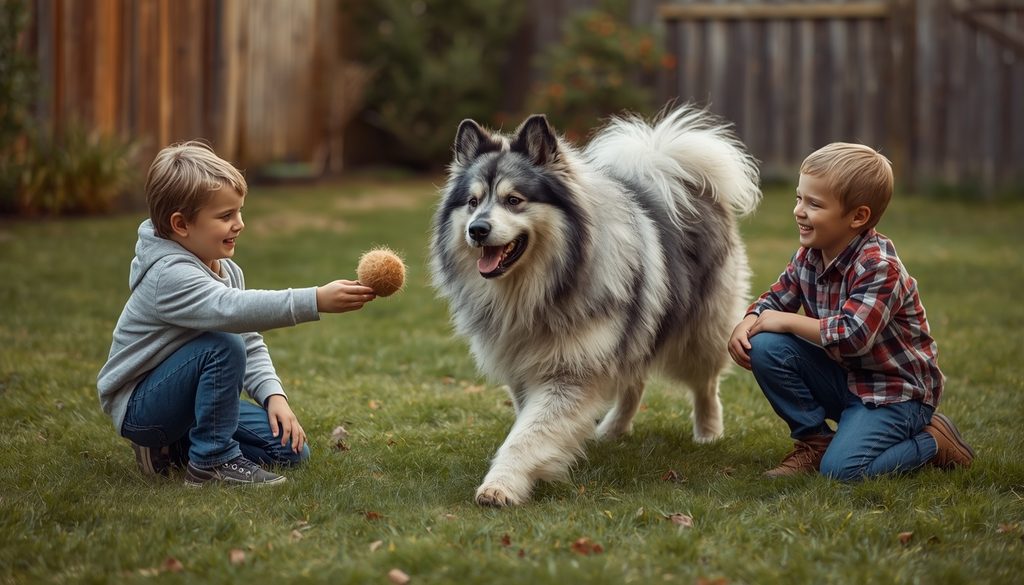
A Strong Family Companion
Keeshonden are often friendly, affectionate and playful with children, especially when they have been well socialized from a young age. Older children can usually take part in walking, training and grooming, while younger children should always be supervised. Teaching children to respect the dog’s resting space, avoid rough handling and allow the Keeshond to move away when it wants a break helps build a safe and trusting relationship.
Keeshond With Other Dogs and Pets
Keeshonden are often among the more sociable spitz-type breeds, and many live very successfully with other dogs and household pets. Their friendly, people-oriented nature usually extends to animal companions as well, especially when they have been well socialized from an early age. That said, success in a multi-pet home still depends on thoughtful introductions, sensible management and the individual personalities of the animals involved.
Many Keeshonden genuinely enjoy canine company. A puppy raised with another steady, well-mannered dog often learns appropriate social behavior naturally and may benefit from the companionship. Adult Keeshonden can also settle well with other dogs, but introductions should be handled with care rather than left to chance. Meeting on neutral ground, walking in the same direction and allowing interaction to develop gradually often works better than bringing two unfamiliar dogs together in a confined space and expecting them to sort things out immediately.
The breed’s play style is usually cheerful and social, but it can also be lively. Some Keeshonden enjoy bouncing, circling and vocal play, which may be fun for another playful dog but less welcome to a quieter or more reserved companion. Owners should watch body language closely and step in if one dog appears overwhelmed, tense or repeatedly tries to disengage. Good canine relationships are built not only on play, but also on the ability to rest calmly around one another and share space comfortably.
Inside the home, management matters during the early stages. Food bowls, treats, toys, beds and favorite resting places can all become points of tension if too much is expected too soon. Feeding separately, supervising toy access and making sure each animal has its own space can help prevent unnecessary conflict while relationships are still developing.
Keeshonden can also do well with cats, particularly when they are raised together or introduced gradually. Because the breed is generally companion-focused rather than strongly predatory, many Keeshonden learn to live peacefully with feline housemates. Even so, excitement and chasing can still happen, especially in the early stages or when a cat runs suddenly. Introductions should therefore be supervised, and cats should always have access to elevated areas or escape routes where they can move away from the dog if they choose.
Smaller pets such as rabbits, guinea pigs, birds and similar animals require more caution. Although the Keeshond is not primarily known as a hunting breed, any dog may show curiosity or chase instinct around small fast-moving creatures. Secure enclosures and physical separation remain important, and owners should not rely on good intentions alone.
Dog parks may suit some Keeshonden because many enjoy social interaction, but they are not essential. Some dogs prefer a few familiar canine friends over the unpredictability of crowded public play spaces. Carefully chosen playdates or shared walks are often a better fit.
Overall, the Keeshond usually has a strong natural advantage in multi-pet life because it tends to be friendly and socially adaptable. With steady introductions, sensible routines and realistic expectations, many become relaxed and enjoyable companions in homes with other dogs or pets.
A Naturally Sociable Breed
Keeshonden often do very well with other dogs and can also adapt successfully to life with cats when introductions are gradual and well managed. Their friendly, social nature is a real advantage in multi-pet homes, but compatibility still depends on individual temperament. Separate feeding areas, supervised early interactions and access to personal resting spaces can help pets settle more comfortably. Cats should have safe escape routes, while smaller animals such as rabbits or guinea pigs should remain securely separated. Carefully matched companions and calm introductions usually give a Keeshond the best chance of becoming a relaxed, dependable member of a multi-pet household.

Keeshond Exercise and Activity Needs
The Keeshond is an active, alert dog, but it does not usually require the intense exercise schedule associated with high-drive working or sporting breeds. Most adult Keeshonden do very well with a moderate daily routine built around walks, play, training and opportunities to explore. Their activity needs are significant enough that they should not be treated as purely ornamental companion dogs, but they are generally manageable for families and owners who can provide consistent daily engagement.
A healthy adult Keeshond will usually benefit from one or two good walks each day, along with some additional play or mental stimulation. The exact amount depends on age, fitness, health and individual temperament. Some dogs are content with a brisk neighborhood walk and a short play session, while younger or more energetic Keeshonden may enjoy longer outings, hiking, obedience work or dog sports.
The breed’s history as a companion and watchdog on Dutch barges helps explain why it tends to enjoy being active with people rather than exercising entirely on its own. Keeshonden often prefer activities that involve interaction, such as walking with the family, learning new skills or playing games. Simply turning a Keeshond loose in a backyard is unlikely to provide the same physical or mental benefit as shared activity.
Mental exercise is especially important because the breed is intelligent and observant. Food puzzles, scent games, short training sessions and problem-solving activities can help prevent boredom and give the dog an appropriate outlet for its curiosity. Keeshonden often learn quickly, so rotating activities can keep them interested.
Puppies need a gentler approach. Their developing joints should not be subjected to excessive forced exercise, repeated jumping or long-distance running. Short walks, play on safe surfaces and age-appropriate exploration are usually more suitable. As the puppy matures, activity can gradually increase.
Older Keeshonden should also remain active, but the pace and duration may need to be adjusted. Gentle walking helps maintain muscle tone, mobility and cardiovascular health, while shorter, more frequent outings may be more comfortable than long sessions.
The dense double coat is another important consideration. Keeshonden generally tolerate cool weather very well, but warm conditions can limit how much exercise is appropriate. During hot weather, walks should be scheduled for the cooler parts of the day, with access to shade and fresh water. Owners should watch for signs of overheating and avoid pushing the dog simply to meet a fixed exercise target.
Off-leash activity can be enjoyable for a well-trained Keeshond in a secure area, but reliable recall should be developed before greater freedom is allowed. Their social nature often helps them stay connected to people, but curiosity can still draw them toward other dogs, wildlife or interesting surroundings.
The ideal routine combines moderate physical activity with regular mental engagement. A Keeshond that receives both is more likely to remain fit, settled and content at home.
Exercise Should Be Social as Well as Physical
Keeshonden usually do best with moderate daily exercise that includes both movement and interaction with their owners. One or two walks, some play and short training or enrichment sessions are often enough for a healthy adult, although younger dogs may enjoy more activity. Because the breed is intelligent and people-oriented, shared activities usually provide more benefit than simply leaving the dog alone in a yard. Hot weather also deserves extra care, as the dense double coat can make strenuous exercise uncomfortable. Cooler walking times, fresh water and sensible pacing help keep activity safe and enjoyable.

Training a Keeshond
Training a Keeshond is usually a rewarding experience because the breed is intelligent, responsive and strongly motivated by interaction with its people. Keeshonden tend to learn quickly and are often eager to participate, especially when training feels like a shared activity rather than a rigid drill. Their sensitivity, however, means that the way training is delivered matters just as much as the skills being taught.
Positive reinforcement is generally the best approach. Food rewards, praise, play and access to activities the dog enjoys can all help build reliable behavior without creating unnecessary pressure. Keeshonden are usually quick to notice tone of voice and body language, so harsh corrections or confrontational handling can easily undermine confidence or enthusiasm. Calm consistency tends to produce better results and helps preserve the breed’s natural willingness to engage.
Basic training should begin early. Skills such as responding to the dog’s name, coming when called, walking politely on a leash, waiting at doors and settling calmly indoors are all useful foundations. Because Keeshonden are naturally alert and can be vocal, early work on barking is also valuable. The goal should not be to eliminate barking entirely, since alerting is part of the breed’s nature, but rather to teach the dog when barking is appropriate and when to stop.
Socialization should form part of the training process. Puppies benefit from gradual, positive exposure to different people, environments, surfaces, sounds and well-mannered dogs. This helps them develop confidence and flexibility without overwhelming them. A Keeshond that has learned to cope calmly with everyday situations is usually easier to live with as an adult.
The breed often enjoys more advanced training as well. Obedience, tricks, scent work, rally and other dog sports can provide excellent mental stimulation. Keeshonden are bright enough to become bored by endless repetition, so short sessions with variety often work better than long periods of drilling the same cue. Changing locations, introducing new challenges and ending sessions while the dog is still engaged can help maintain enthusiasm.
Recall training is particularly useful because Keeshonden are sociable and curious. Their connection to people can help with off-leash responsiveness, but this should still be developed gradually in secure areas. Reliable recall around distractions requires practice, not assumption, especially when other dogs, wildlife or interesting smells are nearby.
Handling exercises are also worth teaching from puppyhood. Regular, gentle practice with brushing, paw handling, ear checks and mouth examination can make grooming and veterinary care much easier later. This is particularly important for a breed with such a substantial coat and ongoing grooming requirements.
Another useful part of Keeshond training is teaching the dog how to cope calmly with excitement. Because the breed is naturally sociable and enthusiastic, greetings can become noisy or overanimated if good habits are not established early. Rewarding four paws on the floor, waiting briefly before greeting visitors and settling after excitement can help prevent jumping, excessive barking or frantic behavior from becoming routine. These small everyday skills often have more practical value than advanced obedience exercises.
Keeshonden also tend to respond well when training is woven into normal daily life. Asking for a brief wait before meals, practicing recall in the yard, reinforcing calm behavior when the doorbell rings and rewarding loose-leash walking during regular outings all help make good behavior more automatic. Because the breed enjoys interaction, these short opportunities can be highly effective without requiring long formal sessions. Consistency across the household is important, especially if several family members are involved in the dog’s care.
One potential challenge is that Keeshonden can become overly dependent on human attention. Training should therefore include periods of calm independence, such as settling on a bed or relaxing while the owner is occupied. This helps prevent the dog from expecting constant interaction and can make time alone easier to manage.
A well-trained Keeshond is typically a cheerful, responsive companion that understands household routines and enjoys working with its owner. The best results come from combining structure with encouragement and making learning an ongoing part of everyday life.
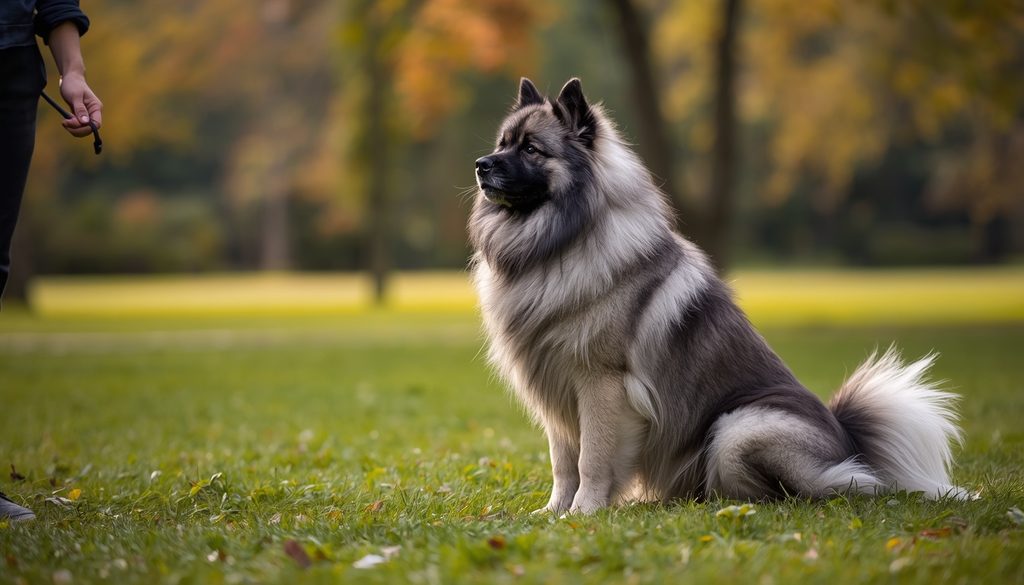
Keeshond Grooming and Coat Care
The Keeshond’s thick double coat is one of the breed’s most distinctive features, but it also creates a regular grooming commitment that owners need to be prepared for. The coat consists of a dense, soft undercoat beneath a longer, harsher outer coat that stands away from the body and creates the breed’s characteristic full outline. The ruff around the neck, feathering on the legs and heavily plumed tail all add to the Keeshond’s dramatic appearance.
Regular brushing is essential to keep the coat healthy and manageable. For most adult Keeshonden, a thorough brushing several times a week is a sensible routine, with more frequent attention during periods of heavier shedding. The goal is not simply to make the coat look neat, but to remove loose undercoat, prevent tangles and maintain airflow close to the skin.
The areas behind the ears, around the neck, under the front legs and through the feathering can be especially prone to tangling if neglected. A slicker brush, pin brush and metal comb can all be useful, depending on the part of the coat being worked through. Brushing in sections rather than only over the surface helps ensure loose undercoat is actually removed.
Keeshonden do shed, and seasonal coat changes can be substantial. During heavier shedding periods, owners may find large amounts of soft undercoat coming away during grooming. More frequent brushing at these times helps reduce loose hair around the home and prevents shed coat from becoming trapped beneath the outer layer.
Bathing should be done as needed rather than on an unnecessarily frequent schedule. The dense coat must be rinsed thoroughly and dried completely, as damp undercoat can hold moisture against the skin and contribute to irritation. A high-velocity dryer can be particularly useful for separating the coat and blowing out loose undercoat, although dogs should be introduced to the sound and sensation gradually.
Despite the amount of coat, routine trimming is usually limited. The Keeshond’s natural outline is part of the breed’s appearance, and extensive clipping or shaving is generally unnecessary. Shaving the double coat simply to reduce shedding or make the dog cooler is not usually recommended unless there is a genuine medical reason. The coat provides insulation and protection, and removing it does not eliminate the need for careful heat management.
Regular grooming also provides an opportunity to check the skin for redness, lumps, irritation or parasites that may otherwise remain hidden beneath the dense fur. The ears should be inspected for debris or odor, nails kept at a comfortable length and teeth maintained with appropriate dental care.
Starting grooming early is one of the easiest ways to make life simpler later. Keeshond puppies that learn to stand calmly for brushing, paw handling and coat inspection are more likely to accept the routine comfortably as adults.
For most owners, the coat becomes manageable once grooming is built into the weekly schedule. The Keeshond is certainly not a low-maintenance breed in terms of coat care, but consistent brushing prevents the task from becoming overwhelming and helps keep the dog comfortable, clean and healthy.
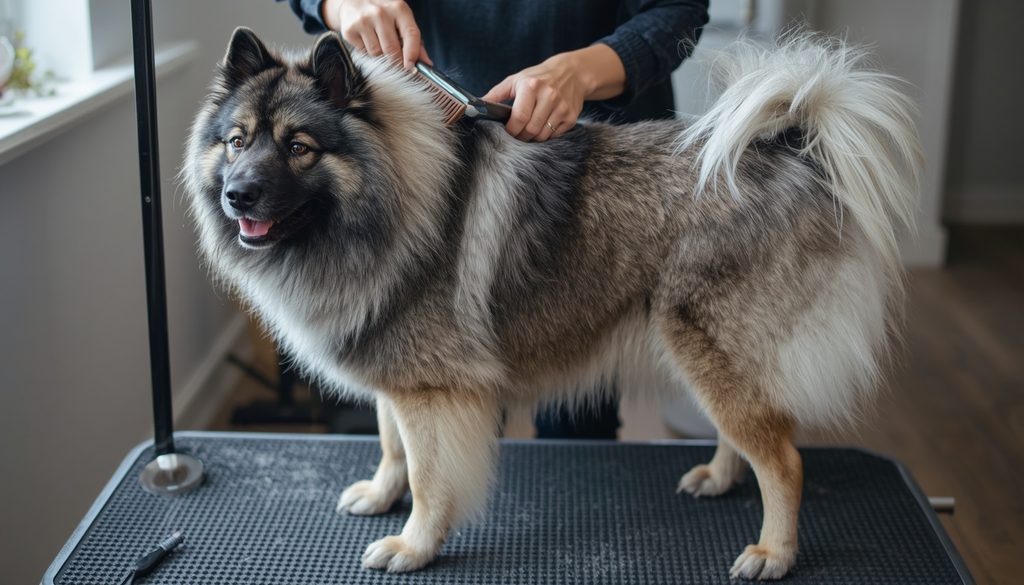
Managing the Keeshond Double Coat
The Keeshond’s coat needs regular attention because loose undercoat can collect beneath the longer outer coat and contribute to tangles or matting. Brushing several times a week is usually enough for routine maintenance, but seasonal shedding periods often require more frequent grooming. Work through the coat in sections rather than brushing only the surface, and pay particular attention behind the ears, under the legs and around the ruff. Thorough drying after bathing is also important because moisture can become trapped close to the skin. Regular grooming makes shedding easier to manage and provides a useful opportunity to check the skin, ears, nails and overall condition.
Keeshond Feeding and Nutrition
Feeding a Keeshond well is largely about maintaining a healthy body condition and choosing a complete, balanced diet that suits the dog’s age, activity level and overall health. Because the breed carries such a dense double coat, gradual weight gain can be surprisingly difficult to spot. A Keeshond may still look beautifully full-coated even when carrying excess weight, so owners should rely on hands-on body-condition checks rather than appearance alone.
A healthy adult Keeshond typically does well on a nutritionally complete diet formulated for adult maintenance. Puppies need food designed for growth, while senior dogs may require adjustments in calories as activity levels decline. The exact amount of food needed varies from dog to dog, depending on metabolism, size, exercise and the calorie density of the diet.
Portion control matters. Free-feeding can make it harder to monitor intake, especially in a breed that may happily eat more than it needs. Measuring meals and dividing the daily allowance into two feedings can help maintain a consistent routine and make changes in appetite easier to notice.
Protein quality is important for supporting muscle condition, while appropriate levels of fat provide energy and help maintain skin and coat health. Essential fatty acids can also contribute to coat quality, although supplements should not be added automatically if the dog is already eating a complete diet. More is not always better, and unnecessary supplementation can upset nutritional balance.
Treats should be counted as part of the dog’s daily calorie intake. Keeshonden are often highly responsive to food rewards, which makes treats useful for training, but frequent extras can quickly add significant calories. Small pieces are usually enough, and part of the dog’s normal meal can be reserved for training sessions when appropriate.
Fresh water should always be available. Hydration is especially important in warm weather because the Keeshond’s heavy coat can make heat more difficult to manage. Dogs exercising in warmer conditions may need more frequent access to water and cooler resting areas.
Owners should also avoid assuming that every skin or coat problem is caused by food. A dull coat, itching or hair loss can sometimes relate to diet, but allergies, parasites, infection and other medical conditions can produce similar signs. Persistent changes should be assessed properly rather than managed through repeated food switching without a clear reason.
As Keeshonden age, calorie requirements often decrease even if appetite remains unchanged. Keeping the dog lean can help reduce stress on the joints and support mobility into the senior years. Regular weighing and body-condition assessment can make portion adjustments easier before excess weight becomes established.
A good feeding plan should therefore be practical, consistent and flexible enough to change as the dog moves through different life stages. The goal is not to follow a single fixed quantity forever, but to support healthy weight, steady energy and long-term wellbeing.
Keep an Eye on Body Condition
The Keeshond’s thick coat can make excess weight difficult to notice, so regular hands-on checks are more useful than judging appearance alone. You should be able to feel the ribs beneath a light covering of tissue and detect a waist when checking the body under the coat. Measuring meals, limiting high-calorie extras and adjusting portions as activity changes can help prevent gradual weight gain. Puppies, adults and seniors all have different nutritional needs, so feeding amounts should be reviewed over time rather than treated as a permanent fixed number.

Keeshond Health and Common Health Problems
Keeshonden are generally healthy, long-lived dogs, but like all breeds they have several health concerns that prospective owners should understand. Good breeding practices, appropriate screening, regular veterinary care and keeping the dog at a healthy weight can all reduce risk or help problems be detected earlier.
One of the most important inherited concerns in the breed is primary hyperparathyroidism. This condition affects the parathyroid glands and can cause abnormally high calcium levels in the blood. Signs may be subtle at first and can include increased thirst, increased urination, weakness, reduced appetite or gastrointestinal upset. Because genetic testing is available for known mutations associated with the condition, responsible breeders can use test results when planning matings and reduce the likelihood of producing affected puppies.
Hip dysplasia can also occur in Keeshonden. This developmental condition affects the hip joint and may lead to pain, reduced mobility or arthritis later in life. Not every dog with hip dysplasia shows obvious symptoms when young, so screening of breeding stock remains important. Keeping a Keeshond lean throughout life also helps reduce unnecessary stress on the joints.
Patellar luxation, where the kneecap slips out of its normal position, is another orthopedic issue seen in some dogs. Mild cases may cause only occasional skipping or brief lameness, while more severe cases can require veterinary management or surgery. Owners should pay attention to unusual gait changes rather than assuming they are simply quirks of movement.
Eye health is another area worth monitoring. Certain inherited eye conditions can occur in the breed, and regular veterinary examinations can help identify problems before they become more advanced. Owners should seek advice if they notice persistent redness, cloudiness, excessive tearing, squinting or changes in vision.
Some Keeshonden may also develop epilepsy or other seizure disorders. A single unusual episode should always be discussed with a veterinarian, and repeated seizures require proper investigation. The cause of seizures can vary widely, so diagnosis should not be based on breed reputation alone.
Thyroid disorders, including hypothyroidism, may also occur. Possible signs can include lethargy, unexplained weight gain, coat changes, reduced tolerance for exercise and changes in skin condition. Because these signs overlap with many other problems, laboratory testing is needed for diagnosis.
Dental health deserves routine attention as well. Plaque, tartar and gum disease can affect comfort and overall health if neglected, so home dental care and professional assessment should form part of the regular health routine.
Because the Keeshond’s dense coat can hide changes in body shape and skin condition, owners should regularly feel through the coat and check for lumps, irritation or unexplained weight change. Regular hands-on checks are particularly useful between veterinary visits.
The aim is not to expect illness, but to understand where the breed may be more vulnerable. Choosing a puppy from health-tested lines, maintaining a healthy body condition and responding quickly to changes in behavior or physical condition can all support a long, comfortable life.
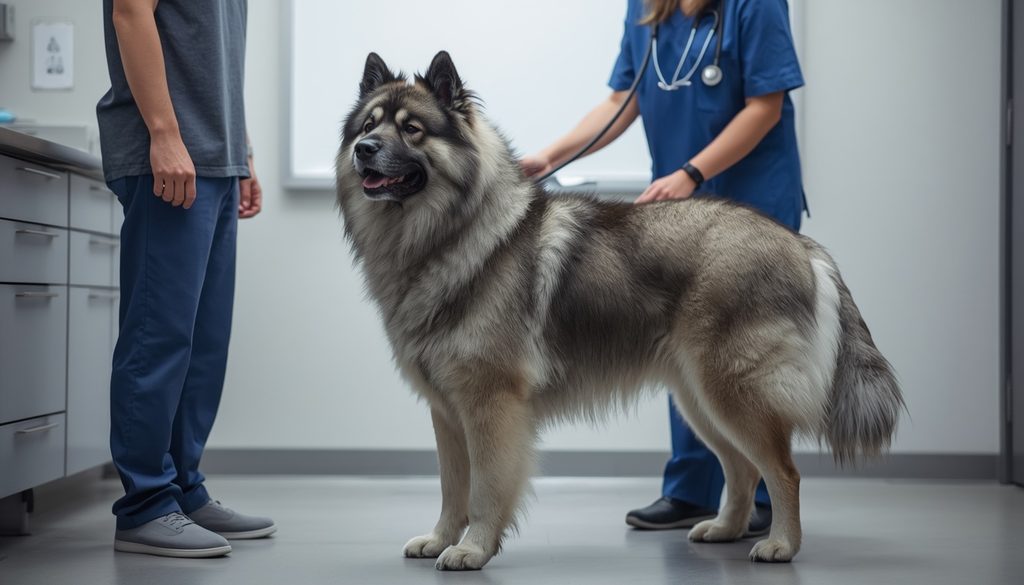
Health Screening Matters
Keeshonden can be affected by several inherited conditions, including primary hyperparathyroidism, hip problems, patellar luxation and certain eye disorders. Responsible breeders should be able to explain which health tests they perform and provide supporting documentation rather than relying on verbal assurances alone. Owners should also watch for subtle changes such as increased thirst, unusual gait, seizures, unexplained weight gain or persistent eye irritation. Regular veterinary checks, healthy body weight and early investigation of unusual symptoms can make a meaningful difference to long-term comfort and quality of life.
Keeshond Hip and Joint Health
Hip and joint health deserves its own attention in the Keeshond because several orthopedic conditions can affect the breed, including hip dysplasia, elbow dysplasia and patellar luxation. These problems vary widely in severity, but they can influence comfort, mobility and quality of life if they are not identified and managed appropriately.
Hip dysplasia develops when the ball-and-socket joint of the hip does not fit together as well as it should. Over time, this abnormal movement can contribute to joint wear, inflammation and arthritis. Some affected Keeshonden may show obvious signs when relatively young, while others remain comfortable for years before stiffness becomes noticeable.
Owners should watch for changes such as reluctance to jump, difficulty getting up after rest, reduced enthusiasm for exercise, stiffness after activity or a shortened stride. Some dogs may also become hesitant on stairs or slippery floors. These signs do not automatically mean hip dysplasia is present, but they are worth investigating rather than assuming the dog is simply slowing down.
Elbow dysplasia can produce similar problems in the front limbs. Affected dogs may show intermittent lameness, stiffness or discomfort after exercise. As with hip problems, severity varies considerably, and veterinary imaging may be needed to determine what is happening inside the joint.
Patellar luxation affects the kneecap and can cause it to slip out of its normal position. Owners may notice an occasional skipping gait, a brief period of carrying one hind leg or more persistent lameness in advanced cases. Mild cases may require monitoring, while more significant instability can sometimes require surgical treatment.
Weight management is one of the most practical things owners can control. Excess body fat places additional stress on already vulnerable joints, so keeping a Keeshond lean can help preserve mobility. The breed’s dense coat makes this especially important because gradual weight gain can be difficult to see. Regular hands-on body-condition checks are therefore more useful than judging appearance alone.
Exercise should support joint health without overloading the dog. Consistent moderate activity helps maintain muscle strength, which supports the joints, while repeated high-impact exercise, excessive jumping or carrying unnecessary body weight can increase strain. Puppies should not be pushed into intense repetitive exercise while their bones and joints are still developing.
Breeder screening is also important. Prospective owners should ask Keeshond breeders what orthopedic screening has been completed on the parents and request documentation rather than relying on general assurances that the dogs are healthy. Health testing cannot guarantee that a puppy will never develop a joint problem, but it is an important part of reducing avoidable risk.
For adult and senior Keeshonden, early veterinary assessment of mobility changes is worthwhile. Joint problems are often easier to manage when they are recognized before pain and muscle loss become advanced. Appropriate weight control, exercise modification, rehabilitation, medication or other veterinary treatment can help many dogs remain active and comfortable for years.
Protecting Keeshond Joint Health
Hip dysplasia, elbow dysplasia and patellar luxation are all orthopedic concerns worth understanding in the Keeshond. Prospective owners should ask breeders for documented joint screening results, while current owners should watch for stiffness, altered gait, reluctance to jump or difficulty rising after rest. Keeping a Keeshond lean is especially important because the dense coat can hide gradual weight gain, which places extra strain on vulnerable joints. Regular moderate exercise, sensible activity during puppyhood and early veterinary assessment of mobility changes can all help protect comfort and movement over the long term.
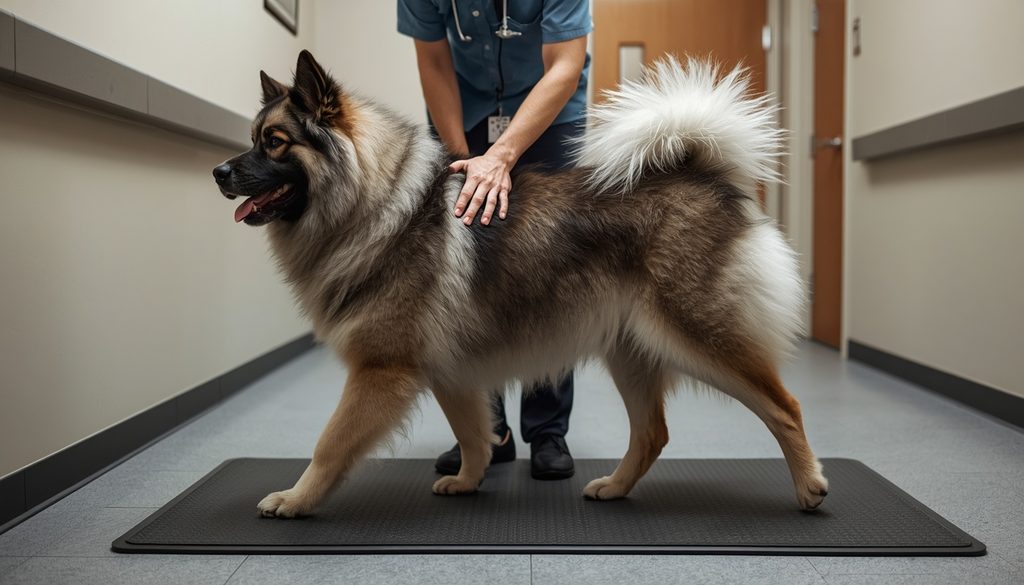
Keeshond Lifespan and Aging
The Keeshond is generally a long-lived breed, with many dogs reaching around 12 to 15 years of age. Individual lifespan can vary according to genetics, overall health, body condition, veterinary care and lifestyle, but the breed often remains active and socially engaged well into its senior years. Supporting healthy aging is therefore less about one single intervention and more about maintaining good habits consistently over time.
As Keeshonden age, owners may notice gradual changes in energy, mobility and recovery after exercise. A senior dog may still enjoy daily walks but prefer a slower pace or shorter outings. Stiffness after rest, hesitation on stairs or reduced enthusiasm for jumping can indicate age-related joint changes rather than simple laziness. These signs are worth discussing with a veterinarian, especially if they begin to affect normal daily activities.
Weight management remains particularly important because the Keeshond’s dense coat can hide gradual increases in body fat. Older dogs often need fewer calories as activity declines, but appetite may remain strong. Regular hands-on body-condition checks and occasional weighing can help owners adjust portions before excess weight places additional strain on joints or reduces stamina.
Senior nutrition should remain complete and balanced. Some older dogs benefit from diets formulated for reduced calorie intake or easier digestion, but changes should be based on the individual rather than age alone. Protein remains important for maintaining muscle mass, and sudden weight loss should always be investigated rather than assumed to be part of normal aging.
Dental health also becomes increasingly important over time. Gum disease, painful teeth and oral infections can affect appetite and comfort, so regular dental checks and appropriate home care are valuable throughout the dog’s life. Owners should also watch for changes in chewing habits or reluctance to eat harder foods.
Vision and hearing may decline gradually. A Keeshond that begins startling more easily, hesitating in dim light or failing to respond to familiar sounds may be experiencing sensory changes. Keeping routines predictable and avoiding sudden environmental changes can help older dogs remain confident.
Cognitive changes can also occur. Some senior dogs may become restless at night, appear confused in familiar spaces or become more dependent on their owners. These changes should be discussed with a veterinarian because they can sometimes be managed and may also overlap with other medical conditions.
Comfort at home matters more as mobility changes. Supportive bedding, non-slip flooring and easy access to favorite resting places can make a noticeable difference. Shorter but regular walks can help preserve muscle tone and joint movement without overtaxing the dog.
The goal is not simply to extend life, but to protect quality of life. A senior Keeshond that remains comfortable, mentally engaged and involved with its family can continue to be a deeply rewarding companion well into old age.

Cost of Owning a Keeshond
The cost of owning a Keeshond goes well beyond the initial price of the dog. Although the breed is not especially large, regular grooming, quality food, veterinary care and the normal costs of training and day-to-day ownership can add up substantially over a lifetime. Anyone considering the breed should think in terms of long-term affordability rather than focusing only on what it costs to bring a puppy home.
The initial purchase price can vary depending on breeder reputation, pedigree, location and the level of health testing carried out on the parents. Responsible Keeshond breeders may charge more because proper breeding involves costs such as health screening, veterinary care, careful puppy raising and socialization. A lower purchase price is not automatically a bargain if those important foundations have been skipped.
New owners also need to budget for setup costs. A suitable bed, food and water bowls, collar or harness, leash, grooming tools, toys, crate or travel restraint and basic veterinary expenses can all arrive at once. Because the Keeshond has a substantial double coat, grooming equipment is not optional. A good brush, comb and appropriate drying tools can make routine coat care much easier.
Food costs are moderate compared with very large breeds, but still represent a significant lifetime expense. A nutritionally complete diet, training treats and occasional chews all contribute to the monthly budget. Portion control also matters, because excess weight can increase strain on the hips and joints and may create further health costs later.
Grooming is another area where expenses vary. Owners who are comfortable brushing thoroughly at home can keep costs lower, but some prefer regular professional grooming, particularly during heavy seasonal shedding. Professional grooming costs can become significant over the course of a year, especially if appointments are frequent.
Veterinary expenses should be planned for carefully. Routine costs include vaccinations, parasite prevention, dental care and annual examinations, but unexpected treatment can be much more expensive. Keeshonden can be affected by orthopedic conditions such as hip or elbow dysplasia, patellar luxation and other health problems that may require imaging, medication, specialist consultation or surgery.
Pet insurance is one way to make larger veterinary expenses more manageable, although policies vary considerably in exclusions, waiting periods, reimbursement levels and limits. Owners should compare coverage carefully and understand what is and is not included before relying on a policy.
Training classes, boarding, pet sitting, dog walkers and travel costs may also become part of the budget. A sociable breed such as the Keeshond may need extra planning if owners are away from home regularly, because extended periods of isolation are not ideal.
The true cost of a Keeshond is therefore best viewed over the dog’s entire life. Owners who budget realistically for grooming, food, preventive care and unexpected veterinary treatment are much better placed to provide consistent care without being caught off guard by predictable expenses.

Plan for Lifetime Costs
The purchase price is only one part of Keeshond ownership. Regular grooming, quality food, preventive veterinary care, training and possible treatment for joint or other health problems can add substantially to lifetime costs. Owners who groom at home may save on professional appointments, but they will still need suitable coat-care equipment. Pet insurance, boarding, dog walking and emergency veterinary care should also be considered. Building both a realistic annual budget and a separate emergency fund can make it much easier to provide consistent care throughout the dog’s life.
Choosing a Keeshond Puppy or Rescue
Choosing a Keeshond puppy or rescue dog should involve far more than simply finding the first available dog with the breed’s distinctive silver-and-black coat. Temperament, health screening, early socialization and the quality of the breeder or rescue organization all have a major influence on what the dog may be like to live with for the next decade or more.
When looking at Keeshond puppies, prospective owners should start by focusing on the people producing them. Responsible Keeshond breeders should be willing to discuss the temperament and health of both parents, explain what screening has been completed and provide supporting documentation. They should also be open about any health issues that have appeared in their lines rather than claiming that their dogs are completely free of problems.
Because orthopedic and inherited health concerns can occur in the breed, health testing matters. Buyers should ask specifically about screening for hips, elbows, patellas, eyes and other conditions relevant to the Keeshond. Good breeders usually regard these questions as a normal part of the process and will often want to know just as much about the prospective owner’s home, lifestyle and expectations.
The way puppies are raised is also important. Young Keeshonden benefit from early exposure to normal household sounds, gentle handling, different surfaces and positive interaction with people. A thoughtfully raised puppy is generally better prepared to adapt to a new home than one that has spent its early life with very limited stimulation.
Temperament should carry as much weight as appearance. Some Keeshond puppies are more outgoing, while others may be calmer or slightly more reserved. A breeder who knows the litter well can often help match individual personalities to different households. Choosing purely by coat shading, sex or which puppy approaches first can overlook more important behavioral differences.
Prospective owners should be cautious of sellers who always seem to have puppies available, refuse to show where dogs are raised, offer little information about the parents or push for rapid payment. These can be warning signs that health, temperament and puppy development are not being prioritized.
Keeshond adoption is another worthwhile option. Adult Keeshonden and mixes occasionally enter breed-specific rescues or general shelters because of changes in an owner’s circumstances, grooming demands, behavioral challenges or other reasons. An adult rescue dog can have the advantage of a more established personality, making it easier to assess sociability, energy level and compatibility with children or other pets.
A reputable rescue should provide as much medical and behavioral history as is available and be realistic about any challenges. Some dogs may settle into a new home quickly, while others need patience and gradual adjustment.
Whether buying from a breeder or pursuing Keeshond adoption, the best choice is rarely the fastest one. Taking time to assess health, temperament and compatibility gives both the dog and the household a much better chance of a successful long-term match.
Choosing Keeshond Puppies Carefully
When considering Keeshond puppies, look for breeders who prioritize health testing, stable temperament and thoughtful early socialization rather than appearance alone. Responsible Keeshond breeders should be willing to provide documentation, discuss the parents openly and help match puppies to suitable homes. Keeshond adoption can also be an excellent route, particularly for owners open to an adult dog with a more established personality. Whether choosing a puppy or rescue, avoid rushing the decision and focus on health, temperament and long-term compatibility.

Is a Keeshond Right for You?
The Keeshond can be an excellent companion for the right household, especially for people who want an affectionate, intelligent dog that genuinely enjoys being part of family life. This is a breed that usually thrives on companionship, regular interaction and predictable routines, so it is best suited to owners who want a dog closely involved in everyday activities rather than one that is content to spend long periods alone.
A major advantage of the breed is its temperament. Keeshonden are typically friendly, alert and responsive, with a strong tendency to bond closely with their people. They often enjoy children, can live successfully with other dogs and pets, and usually adapt well to a range of household environments. Their sociable nature makes them especially appealing to families who want a dog that participates in daily life rather than remaining aloof.
That same sociability, however, can become a challenge if the dog is regularly left without company. Keeshonden may become bored, vocal or unsettled when isolated for long periods. Owners who work away from home for much of the day need to think realistically about how the dog will receive companionship, exercise and mental stimulation.
Grooming is another major consideration. The dense double coat requires consistent brushing, and seasonal shedding can be substantial. Anyone choosing a Keeshond should be comfortable with regular grooming sessions and a certain amount of loose hair around the home. The coat also means hot weather needs to be managed carefully, with cooler exercise times, shade and access to a comfortable indoor environment.
Exercise needs are moderate rather than extreme, which makes the breed more manageable than many high-drive working dogs. Daily walks, play and mental stimulation are usually enough for a healthy adult, but the Keeshond still needs regular activity and should not be expected to remain content with an inactive lifestyle.
Training is generally enjoyable because the breed is intelligent and eager to engage. Positive, reward-based methods usually work well, while harsh handling can quickly reduce confidence or enthusiasm. Owners should also be prepared to manage barking, since alerting to visitors and unusual sounds is part of the breed’s natural behavior.
Prospective owners should consider health as well. Responsible Keeshond breeders should carry out relevant screening, particularly for orthopedic and inherited conditions, and buyers should be willing to ask for documentation. Keeshond adoption can also be an excellent option for people open to an adult dog with an established temperament.
The breed is probably not ideal for someone who dislikes grooming, wants a highly independent dog or expects a pet to tolerate long periods of solitude without difficulty. For owners who value companionship, friendliness and an expressive personality, however, the Keeshond can be a remarkably rewarding choice.
The best Keeshond homes are those where the dog is treated as part of the household rather than an accessory to it. With regular company, thoughtful training, proper grooming and sensible health care, the breed can provide many years of affectionate and engaging companionship.

Who Is the Keeshond Best Suited To?
The Keeshond is usually best suited to people who want a sociable, affectionate dog and are prepared to provide regular companionship, grooming and mental engagement. The breed can adapt well to family homes, apartments and multi-pet households, but it does not usually thrive when left alone for long periods. Owners should also be comfortable managing seasonal shedding, moderate exercise needs and a natural tendency to bark at unfamiliar activity. For the right household, the Keeshond’s friendly temperament, intelligence and strong attachment to people can make it an exceptionally rewarding companion.
Explore More About Non-Sporting Dogs
The Keeshond belongs to the AKC Non-Sporting Group, a diverse collection of breeds with very different histories, sizes, coat types and personalities. If you would like to compare the Keeshond with other breeds in the same group, visit our Non-Sporting Dogs guide and explore more of these distinctive companion dogs.
Discover More About the Keeshond
For official breed information, recognition details, breed standards and additional background on the Keeshond, visit the American Kennel Club Keeshond breed page. It provides a useful authoritative reference for anyone wanting to learn more about the breed.