

Lhasa Apso
The Lhasa Apso is a small but remarkably confident companion dog with an ancient history, a distinctive flowing coat and a personality that is often far more independent than its size suggests. Originally developed in Tibet, the breed was valued for centuries as an alert indoor watchdog and companion in monasteries and noble households, and that background still influences the modern dog today.
Although affectionate with people it trusts, the Lhasa Apso is not typically an indiscriminately friendly breed. Many are reserved with strangers, highly observant and strongly attached to their own family. They can be playful, entertaining and deeply loyal at home, but they often retain a self-assured, watchful nature that makes them quite different from softer or more immediately sociable companion breeds.
The breed’s appearance is dominated by its long, dense coat, which was originally functional protection against the harsh Tibetan climate. That coat remains one of the Lhasa Apso’s most recognizable features, but it also creates a real grooming commitment. Owners need to be prepared for regular brushing, coat maintenance, bathing and trimming, particularly if the coat is kept long rather than in a shorter pet style.
Beneath the coat is a compact, sturdy little dog rather than a fragile lapdog. The breed is small enough to adapt well to apartments and smaller homes, yet it still benefits from daily walks, short play sessions and regular mental stimulation. Exercise needs are moderate, but the Lhasa Apso is intelligent and observant, so it generally does best when everyday life includes both physical activity and opportunities to think, explore and engage with its surroundings.
Training can be rewarding, but the breed often requires patience. Lhasa Apsos were developed to notice changes and make independent judgments rather than simply wait for instructions, so they may not respond with the automatic eagerness seen in some working or sporting breeds. Calm, consistent, reward-based training usually produces the best results, especially when sessions are kept short and interesting.
Health, nutrition and weight management also deserve attention throughout the dog’s life. Because the breed is relatively small and often long-lived, even modest weight gain can affect mobility and comfort over time. Regular veterinary care, sensible feeding, dental care and thoughtful breeding choices all contribute to maintaining quality of life well into the senior years.
For prospective owners, the Lhasa Apso can be a deeply loyal, intelligent and entertaining companion, but it is best suited to people who appreciate a small dog with strong character. Owners should be comfortable with substantial coat care, patient training, respectful handling and a companion that may choose independence as readily as affection.

Table of Contents
Lhasa Apso Fast Facts
Breed Group: Non-Sporting
Origin: Tibet
Height: Around 10–11 inches
Weight: Around 12–18 pounds
Life Expectancy: Approximately 12–15 years
Size: Small
Coat: Long, dense double coat
Coat Care: High
Shedding: Low
Exercise Needs: Moderate
Temperament: Confident, alert, loyal, independent
Primary Role: Companion and indoor watchdog
Lhasa Apso Ratings
Apartment Friendly: ★★★★★
Family Friendly: ★★★★☆
Good With Children: ★★★☆☆
Good With Other Dogs: ★★★☆☆
First-Time Owner Friendly: ★★★☆☆
Easy Grooming: ★★☆☆☆
Affectionate: ★★★★☆
Easy to Train: ★★★☆☆
Low Shedding: ★★★★☆
Adaptable: ★★★★★
High Exercise Needs: ★★☆☆☆
Tolerates Being Alone: ★★★☆☆
History & Origin
The Lhasa Apso origin reaches back more than a thousand years to Tibet, where this small but remarkably self-assured dog developed in one of the most isolated and demanding environments in the world. Long before the breed became known as a household companion in the West, Lhasa Apsos lived alongside people in Tibetan monasteries, temples and the homes of nobility, where they were valued for their alertness, loyalty and ability to notice unfamiliar activity.
Unlike many small breeds developed primarily as lapdogs, the Lhasa Apso had a genuine watchdog role. Larger Tibetan dogs could guard courtyards and entrances, while the smaller Lhasa remained indoors, listening for unusual sounds and alerting the household when someone approached. That history helps explain why modern Lhasa Apsos can still be remarkably watchful, confident and suspicious of strangers despite their small size.
The breed takes its modern name from Lhasa, the historic capital of Tibet. Its traditional Tibetan associations were closely connected with Buddhist monasteries and aristocratic households, where these dogs were highly valued companions. They were not simply decorative pets; they lived closely with the people around them and developed the independence needed to react to changes in their environment.
The harsh Tibetan climate also influenced the breed physically. High altitude, cold winters, strong winds and dramatic temperature changes favored a dog with a dense protective coat and a sturdy body. The long hair that makes the modern Lhasa Apso so recognizable therefore had a practical purpose long before it became associated with the show ring.
For centuries, these dogs remained relatively uncommon outside Tibet. Lhasa Apsos were traditionally highly prized, and dogs were sometimes presented as gifts to honored visitors rather than routinely sold. As contact between Tibet and the outside world increased during the nineteenth and early twentieth centuries, a small number eventually reached Britain and other countries.
Early Lhasa Apso breed history in the West was somewhat complicated because several long-coated Tibetan breeds were not initially classified as clearly as they are today. Dogs that would later be recognized separately as Lhasa Apsos and Tibetan Terriers were sometimes grouped together, and breed names and standards developed gradually as Western breeding programs became established.
The breed also gained an important foothold in the United States during the twentieth century. As more carefully documented dogs became available, breeders were able to establish clearer distinctions in size, coat, structure and temperament, helping the Lhasa Apso develop the international identity it has today.
Despite that transition from Tibetan sentinel to modern companion, much of the original character remains. The Lhasa Apso is still typically alert, intelligent and capable of making its own decisions. It often notices sounds and movement that other dogs ignore, and many individuals prefer to assess unfamiliar people before deciding whether they are welcome.
Understanding Lhasa Apso history is therefore particularly useful when interpreting the breed’s behavior. A Lhasa that watches a visitor carefully, sounds the alarm when someone approaches the house or occasionally chooses independence over immediate obedience is displaying characteristics that were deliberately valued for generations.
Today, the Lhasa Apso is found in homes around the world, but its ancient Tibetan heritage remains central to the breed. Beneath the elegant coat is a tough, confident little dog whose temperament and appearance were shaped by centuries of close companionship, vigilant indoor guarding and life in the Himalayan environment.
A Sentinel Beneath the Coat
The Lhasa Apso was never simply an ornamental lapdog. For centuries, these small Tibetan dogs lived inside monasteries and important households, where their sharp hearing, confidence and natural suspicion of unfamiliar activity made them valuable indoor sentinels.
That history still influences the modern breed. Many Lhasa Apsos remain highly observant, alert to changes in their surroundings and cautious with unfamiliar people. Understanding this background can help owners recognize that some of the breed’s independence and watchfulness are deeply rooted characteristics rather than signs of poor temperament.

Appearance & Size
The Lhasa Apso is a small, sturdy dog whose elegant coat can make it appear more delicate than it really is. Beneath the long hair is a compact, well-balanced body with enough substance to reflect the breed’s hardy Tibetan background. A healthy Lhasa should look refined without appearing fragile, exaggerated or overly fine-boned.
Typical Lhasa Apso weight is around 12 to 18 pounds, with most adults standing roughly 10 to 11 inches at the shoulder. Males are often slightly larger than females, but both should retain the same compact proportions and balanced outline. The body is generally slightly longer than it is tall, giving the breed a rectangular shape rather than a square one.
The head is one of the breed’s most distinctive features. The skull is relatively narrow, the muzzle is moderate in length and the dark eyes are set forward with an alert, intelligent expression. The ears hang close to the head and are heavily feathered, often blending almost completely into the surrounding coat.
The Lhasa Apso also carries its tail high over the back, usually with plenty of feathering. This contributes strongly to the breed’s characteristic silhouette and gives the dog a confident, almost self-important appearance when moving. The legs are comparatively short but should remain straight, strong and capable of supporting easy, balanced movement.
The coat has a major influence on how large the breed appears. A full adult coat can create the impression of a much heavier dog, especially around the chest, shoulders and head. Underneath that hair, however, the Lhasa Apso remains a genuinely small breed with a compact frame.
Because the coat can hide body shape, owners should not rely on appearance alone when judging condition. Regular hands-on checks are useful for monitoring Lhasa Apso weight, as gradual weight gain may be difficult to notice visually. The ribs should be easy to feel without heavy pressure, and the dog should retain a visible waist when the coat is parted or compressed.
Lhasa Apsos can be seen in a wide range of coat colors, including gold, cream, white, black, grizzle, red and parti-color combinations. Color does not alter the basic structure or temperament of the breed, and no color should be valued above sound health, good movement and balanced construction.
Overall, the Lhasa Apso combines a compact physical build with a dramatic outer coat. Its appearance is elegant, but the dog underneath should remain functional, sturdy and well proportioned, reflecting a breed that was shaped as much by environment and purpose as by appearance.

Small, Sturdy and Well Balanced
The Lhasa Apso may look delicate beneath its long coat, but the breed is actually compact, sturdy and surprisingly substantial for its size. A healthy adult should remain well balanced, with enough bone and muscle to support confident movement without looking heavy or coarse.
Because the coat can hide changes in body condition, regular hands-on checks are especially important. Owners should monitor the ribs, waist and overall shape rather than relying on appearance alone when assessing healthy weight.
Temperament & Personality
The Lhasa Apso has a temperament that is far more complex than its small size and glamorous coat might suggest. Affectionate and loyal with people it trusts, the breed can also be independent, watchful and reserved with strangers. That combination reflects centuries of development as an indoor sentinel, where awareness, judgment and confidence were qualities worth preserving.
Many Lhasa Apsos form extremely strong bonds with their families. They often enjoy being close to their owners, following household activity and settling nearby, but they are not always as dependent or openly demonstrative as some other companion breeds. A Lhasa may be deeply attached to its people while still retaining a strong sense of independence.
Confidence is one of the breed’s defining characteristics. A well-socialized Lhasa Apso often approaches the world with a self-assured attitude and can behave as though it is considerably larger than it really is. That confidence can make the breed entertaining and full of character, but without sensible guidance it can also develop into pushy, possessive or overly suspicious behavior.
Stranger awareness is common. Some Lhasas warm up fairly quickly once they have had time to assess a new person, while others remain politely reserved. Owners should avoid forcing interaction and instead allow the dog to approach unfamiliar people at its own pace. This respects the breed’s natural instincts while helping build confidence rather than anxiety.
The Lhasa Apso also has a well-developed sense of territory. Visitors at the door, unfamiliar noises outside or changes around the home may quickly attract its attention. Barking can therefore become part of everyday life if it is not managed thoughtfully. Training should aim to teach the dog when an alert has been acknowledged and when it is time to settle, rather than attempting to eliminate the breed’s natural watchfulness altogether.
At home, the Lhasa can be remarkably playful and humorous. Many retain a mischievous streak well into adulthood and enjoy toys, short games and interaction with familiar people. Their personality often combines dignity with moments of complete silliness, which is one of the reasons owners become so attached to the breed.
Independence can sometimes be mistaken for stubbornness. Lhasa Apsos are intelligent, but they were not developed to follow commands with the automatic responsiveness expected from many working breeds. They may pause, assess what is being asked and decide whether participation seems worthwhile. Positive reinforcement, patience and short, engaging training sessions usually work far better than repetition or confrontation.
Early socialization is particularly important. Puppies should experience a broad range of people, household sounds, surfaces, environments and appropriate interactions with other animals while still feeling secure. The objective is not to turn the Lhasa into an indiscriminately friendly dog, but to help it become confident and capable of handling unfamiliar situations without unnecessary fear or defensiveness.
Owners should also respect the breed’s personal boundaries. Some Lhasas dislike rough handling, excessive restraint or being disturbed while resting. Teaching children and adults to interact appropriately helps prevent conflict and allows the dog to develop trust within the household.
Overall, the Lhasa Apso is affectionate, intelligent, alert and confidently independent. For owners who appreciate a dog with strong character rather than unquestioning obedience, the breed can be an exceptionally loyal and entertaining companion.
Confidence Comes Naturally
The Lhasa Apso was developed to notice unusual activity and make independent judgments, so a degree of watchfulness and reserve is entirely natural. Many are deeply affectionate with their own families while remaining selective about unfamiliar people.
Early socialization is still essential. Calm exposure to different people, places and everyday experiences helps the Lhasa develop confidence without losing the alert, self-assured temperament that makes the breed distinctive.

Living With a Lhasa Apso
Living with a Lhasa Apso is often very different from living with a more openly eager-to-please companion breed. These dogs usually enjoy being part of family life, but they also value routine, personal space and a certain degree of independence. Owners who understand that balance tend to find the breed much easier to live with.
A Lhasa Apso generally does well in a home where it can stay close to its people without being constantly handled or fussed over. Many enjoy following family members from room to room, resting nearby and keeping an eye on household activity. They are usually happiest when included in daily routines rather than left isolated for long periods.
Apartment living can suit the breed very well because of its small size and moderate exercise requirements. A large yard is not essential, provided the dog receives regular walks, play and mental stimulation. However, apartment owners should pay particular attention to barking, since a naturally alert Lhasa may react to footsteps in hallways, doors closing, neighbors arriving or unfamiliar sounds outside.
The breed often thrives on predictability. Regular feeding times, consistent walking routines and clear household rules can help a Lhasa feel secure and understand what is expected. Sudden changes are not necessarily a problem, but some individuals may take time to adjust to new people, new pets or major changes in the home.
Because the Lhasa Apso is naturally observant, it may take an active interest in everything happening around the house. Some owners describe their dogs as little supervisors, always aware of visitors, deliveries, unusual noises and changes in routine. That watchfulness can be useful, but it also means owners need to teach appropriate responses so that alert behavior does not become constant barking or overreaction.
The breed can also be quite particular about handling. Regular grooming, nail trimming, ear care and dental care are important, so puppies should be introduced to gentle handling from an early age. A dog that learns to tolerate brushing, being touched around the feet and face, and standing calmly for care will be much easier to manage throughout life.
Lhasa Apsos are not usually high-energy dogs, but they are not inactive either. Short walks, indoor games and opportunities to explore are often enough to keep them satisfied. They may enjoy bursts of play followed by long periods of relaxation, making them a good fit for owners who want companionship without the exercise demands of a highly athletic breed.
Their independence means they can sometimes cope better with short periods alone than more dependent companion breeds, but this does not mean they should routinely be left for long stretches. A Lhasa still needs social contact, stimulation and involvement with its household to remain content.
Overall, living with a Lhasa Apso tends to suit people who appreciate a small dog with strong opinions, clear preferences and a great deal of character. They are not simply decorative pets; they are observant, intelligent companions that often expect to be treated with respect and consistency.

Lhasa Apso and Children
Lhasa Apsos can live very successfully with children, but the best results usually come from households where both the dog and the child understand how to interact respectfully. The breed is affectionate with its family, yet it often has clear personal boundaries and may not tolerate rough handling as readily as some more easygoing companion breeds.
For that reason, the Lhasa Apso is often a better match for older children who can understand when a dog wants space, rather than very young children who may grab at the coat, disturb the dog while it is sleeping or approach too quickly. A well-socialized Lhasa can be playful, entertaining and deeply attached to the children it grows up with, but supervision still matters.
Early experiences make a significant difference. Puppies that are calmly introduced to children, household activity and gentle handling are more likely to become confident adults. Positive interactions should be encouraged from the beginning, especially around touching the paws, ears and coat, because these areas will need regular attention throughout the dog’s life.
Children should also be taught not to treat the Lhasa Apso like a toy. Its small size can make it tempting to pick the dog up frequently, carry it around or hug it tightly, but many Lhasas prefer to keep their feet on the ground and choose when they want close contact. Respecting those signals can prevent frustration and help build trust.
The breed’s alert nature can also come into play in a busy family home. Sudden shouting, running, visitors and noisy play may excite some Lhasas or trigger barking. Providing a quiet retreat where the dog can rest undisturbed can be especially helpful in households with children.
A Lhasa Apso that has been raised with considerate children may become a very loyal family companion. Many enjoy games, gentle play and simply being near the family, and their compact size can make them easier for older children to interact with than a much larger dog.
That said, no dog should be expected to tolerate teasing, chasing, climbing, tail pulling or interference while eating or sleeping. Even a friendly, well-adjusted Lhasa has limits, and children should learn to recognize signs that the dog is uncomfortable, such as turning away, stiffening, moving off or trying to hide.
Overall, the Lhasa Apso can be a good family dog when the household offers calm supervision, respectful interaction and sensible boundaries. The relationship works best when children are taught to treat the dog as a companion with its own preferences rather than as a small, cuddly object.

Respect Makes the Difference
Lhasa Apsos can form strong bonds with children, particularly when they grow up together in a calm and respectful household. Their small size does not mean they enjoy constant handling, so children should be taught to let the dog approach, rest and move away freely.
Supervision is especially important with younger children. Teaching gentle interaction from the beginning helps protect both the child and the dog and can lead to a very affectionate long-term relationship.
Lhasa Apso and Other Pets
The Lhasa Apso can live successfully with other pets, but introductions and household management matter. This is a confident, observant breed, and some individuals can be selective about which animals they accept into their personal space. Early socialization generally gives the best chance of creating a calm, cooperative multi-pet household.
Many Lhasa Apsos live comfortably with other dogs, especially when they are introduced gradually and given time to adjust. Their small size does not necessarily mean they will behave submissively around larger dogs, and some can be surprisingly assertive. Owners should watch early interactions closely and avoid allowing size differences to create unsafe play or intimidation.
With unfamiliar dogs, the breed may initially be reserved or cautious. A calm introduction in neutral territory often works better than forcing immediate close contact. Parallel walking, brief sniffing opportunities and plenty of space can help both dogs settle before more direct interaction is encouraged.
Lhasa Apsos may also live well with cats, particularly when raised alongside them from puppyhood. A confident adult cat often establishes boundaries quickly, and many Lhasas learn to share the home peacefully. However, individual prey drive and personality vary, so introductions should still be controlled rather than assumed to work automatically.
Smaller pets require more caution. Birds, rabbits, rodents and similar animals should be protected behind secure barriers, even if the dog appears calm around them. The Lhasa Apso was not developed as a hunting breed, but curiosity and chase behavior can still occur, especially when a small animal moves suddenly.
Resource guarding can also influence multi-pet relationships. Food bowls, favorite toys, sleeping areas and attention from owners can become points of competition if household rules are unclear. Feeding pets separately and supervising access to high-value items can prevent many avoidable conflicts.
The breed’s independent nature can actually work in its favor in some multi-pet homes. A Lhasa Apso does not necessarily need constant physical contact with another animal and may be perfectly content sharing space without demanding continuous play. This can create a stable relationship with pets that also prefer a degree of independence.
Owners should pay attention to body language rather than assuming that quiet behavior always means everything is fine. Stiff posture, prolonged staring, blocking access, growling or repeatedly moving away can all indicate that a dog needs more space.
Overall, the Lhasa Apso can be a good companion for other pets when introductions are thoughtful, resources are managed fairly and individual personalities are respected. The goal is not to make every animal inseparable, but to create a household where each pet feels secure and able to relax.
Peaceful Introductions Matter
Lhasa Apsos can share a home successfully with other dogs and cats, particularly when introductions are gradual and neither animal is pressured into immediate interaction. Their confident personality means they may prefer to assess a new companion before becoming comfortable.
Separate feeding areas, careful supervision around valued toys and plenty of individual resting space can help prevent unnecessary competition. A calm household routine usually gives each animal the best chance of developing a stable relationship.

Exercise & Activity Needs
The Lhasa Apso is not a highly athletic breed, but it still benefits from regular daily activity to maintain a healthy weight, good muscle tone and mental well-being. Its small size and moderate exercise needs make it adaptable to many different living situations, including apartments and smaller homes, provided that walks, play and opportunities to explore are part of the routine.
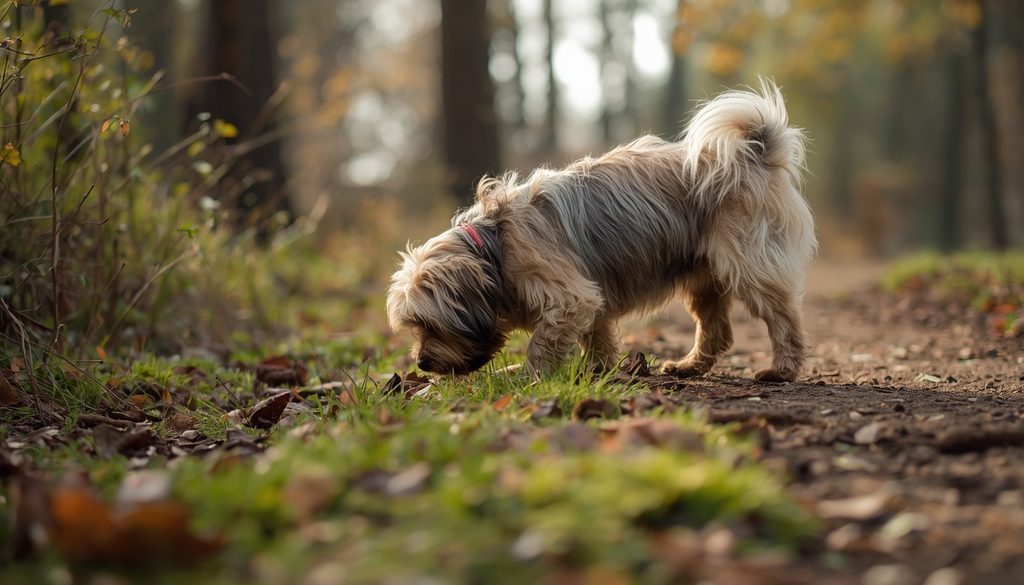
For most adult Lhasa Apsos, a couple of short to moderate walks each day are usually enough, especially when combined with indoor play and mental stimulation. They tend to enjoy sniffing, exploring and investigating their surroundings rather than covering long distances at speed. Walks therefore do not need to be strenuous to be valuable.
Because the breed is naturally observant, exercise also provides important mental enrichment. New scents, different walking routes and quiet opportunities to investigate the environment can be just as satisfying as physical activity. This is one reason why slow, exploratory walks can suit the Lhasa Apso particularly well.
The breed can also enjoy short games at home or in the yard. Gentle fetch, food puzzles, hide-and-seek and simple training exercises can help burn energy without overloading the dog physically. Variety is useful because many Lhasas become bored with repetitive activity more quickly than more task-driven breeds.
Puppies should not be over-exercised while their bodies are still developing. Short periods of play and exploration are generally more appropriate than long forced walks. Owners should allow the puppy to rest when tired and gradually increase activity as strength and coordination improve.
Older Lhasa Apsos often remain interested in walks and household activity well into their senior years, although pace and duration may need to be adjusted. Joint stiffness, dental discomfort, heart or respiratory problems and other age-related issues can all influence how much exercise is appropriate.
Weather should also be considered. A full coat can make the dog uncomfortable in hot conditions, particularly during strenuous activity. Walks in warmer climates are often best scheduled for the cooler parts of the day, with access to shade and fresh water.
Weight control is another reason daily movement matters. Because the Lhasa Apso is small, relatively modest weight gain can have a noticeable impact on mobility and overall condition. Regular exercise, sensible portions and ongoing monitoring of body condition work together to support long-term health.
Many Lhasa Apsos also benefit from having some freedom to choose the pace of their activity. Rather than turning every walk into a structured march, owners can allow time for sniffing, pausing and investigating interesting scents. This kind of low-pressure exploration can be especially valuable for an intelligent, observant breed because it engages the brain as well as the body. On quieter days, a shorter walk combined with indoor enrichment can still provide a very satisfying level of activity.
The aim is not to exhaust the dog. A well-exercised Lhasa Apso should return home satisfied and relaxed rather than completely depleted. Consistent, moderate activity usually suits the breed far better than occasional bursts of intense exercise.
Quality Matters More Than Distance
Lhasa Apsos do not need marathon walks, but they do benefit from getting out every day. A relaxed walk that allows time for sniffing, exploring and observing the environment can provide both physical exercise and valuable mental stimulation.
Short play sessions and simple enrichment activities at home can add variety without placing unnecessary strain on the dog. Regular moderate activity is usually more useful than occasional intense exercise.
Training & Intelligence
The Lhasa Apso is an intelligent breed, but intelligence does not always translate into instant obedience. These dogs were developed to notice changes in their surroundings and make independent judgments, so they often approach training with a strong sense of their own priorities. Owners who expect automatic compliance can become frustrated, while those who work with the breed’s independent nature usually make much better progress.
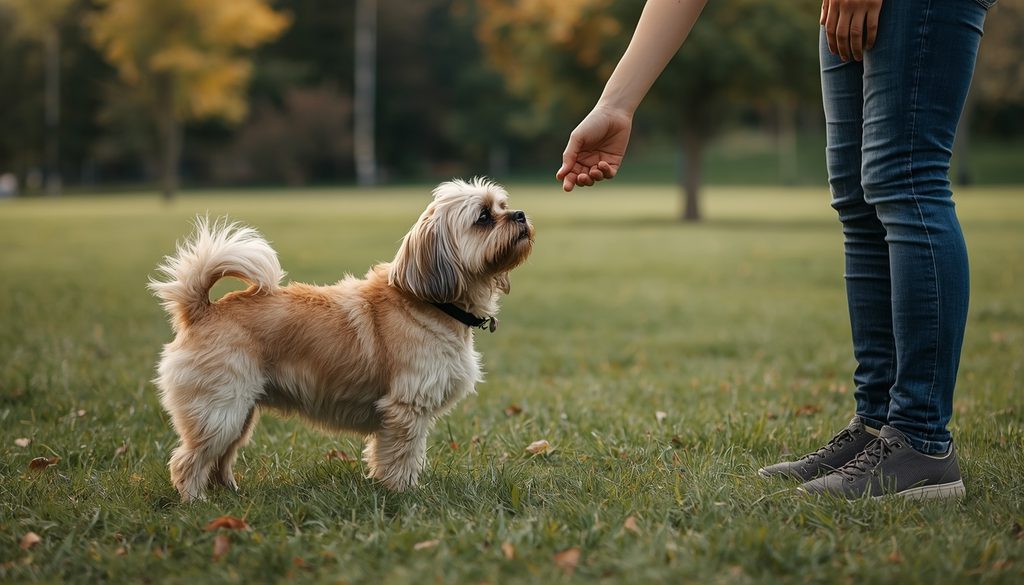
Positive reinforcement is particularly effective. Food rewards, praise, play and access to something the dog enjoys can all help motivate a Lhasa Apso to participate. Harsh corrections or confrontational methods are more likely to damage trust than improve behavior, especially with a breed that tends to remember unpleasant experiences.
Training sessions are usually most productive when they are short and varied. Repeating the same exercise over and over can quickly become boring, and once a Lhasa decides that a task no longer has value, it may simply stop participating. A few focused minutes followed by a break can often achieve more than a long, repetitive session.
Early training should begin with practical household skills. Name recognition, recall, loose-leash walking, waiting at doors, settling on cue and accepting grooming or handling are all useful foundations. These skills help create a dog that is easier to manage in everyday life rather than simply one that can perform formal obedience exercises.
House training can require patience. Some Lhasa Apsos are very clean and learn quickly, while others may take longer to develop reliable habits, particularly in bad weather or if access to the toilet area is inconsistent. A predictable schedule, close supervision and immediate reinforcement for successful toileting usually produce the best results.
Socialization is equally important. Exposure to different people, sounds, surfaces, vehicles, household situations and well-mannered dogs can help a Lhasa develop confidence without losing its natural caution. The aim is not to make the breed excessively outgoing, but to teach it that unfamiliar situations can be handled calmly.
Leash manners deserve particular attention because a small dog can easily develop habits that owners would never tolerate in a larger breed. Pulling, stopping suddenly, barking at passersby or refusing to move can all become ingrained if they are consistently rewarded by the environment. Clear expectations and calm, consistent handling help prevent those habits from becoming established.
Recall training should also be approached realistically. Some Lhasa Apsos develop a reliable response in controlled environments, but their independence means they may not always be the safest choice for unrestricted off-leash freedom. Secure fenced areas are generally a better option, especially in locations with traffic, wildlife or other distractions.
The breed can learn tricks and more advanced behaviors as well. Many Lhasas enjoy puzzle toys, scent games, simple agility exercises and interactive training that requires them to think. Mental challenges can be especially useful for a dog that may not need a large amount of physical exercise but still benefits from having something interesting to do.
Consistency across the household is essential. If one family member allows jumping, barking or begging while another tries to stop it, the dog quickly learns that persistence can sometimes succeed. Simple, shared rules make training much clearer.
The most successful approach is usually one that treats training as a partnership rather than a contest of wills. A Lhasa Apso is capable of learning a great deal, but it often wants a reason to participate. Owners who provide that reason through positive reinforcement, variety and clear communication are far more likely to develop a responsive and confident companion.
Grooming & Shedding
The Lhasa Apso is one of those breeds whose grooming needs are inseparable from its appearance. The long, dense coat is a defining characteristic, but keeping it healthy requires regular maintenance. Even owners who choose a shorter pet trim should expect grooming to be a consistent part of life with the breed.
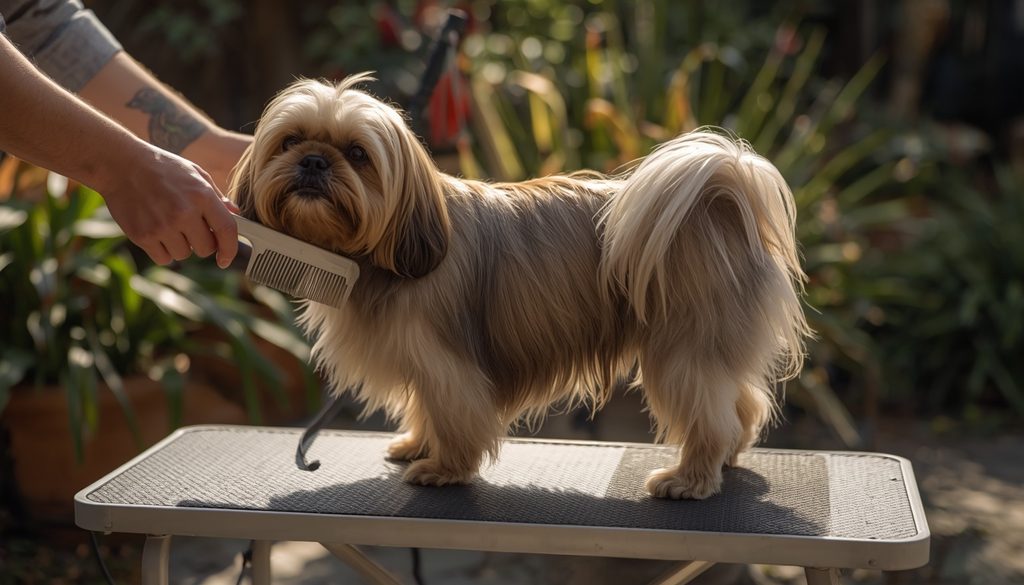
Full-coated Lhasa Apsos need frequent brushing to prevent tangles and mats, especially around the ears, chest, legs, belly and areas where the coat rubs against itself. These tangles can tighten quickly if ignored, so it is usually easier to maintain the coat with short, regular sessions rather than waiting for knots to become difficult to remove.
A pin brush, comb and suitable detangling product can be useful for routine care. Brushing should reach through the full depth of the coat rather than simply smoothing the surface. Sectioning the hair and working carefully from the skin outward helps reduce hidden matting.
Bathing frequency depends on lifestyle and coat length. Dogs kept in a long coat may need more regular bathing because dirt and debris are easily trapped in the hair, while shorter-coated pets may be easier to maintain. Shampoo and conditioner should be chosen for canine skin rather than using human products, which may be too harsh.
Owners often ask about Lhasa Apso grooming because the breed can look extremely high-maintenance in photographs. In reality, the workload varies considerably depending on coat length. A full show-style coat requires significant commitment, while a shorter pet trim can make daily care much more manageable.
Professional grooming may be useful every few weeks, particularly for owners who are not confident trimming around the face, feet or sanitary areas. Regular professional visits do not remove the need for home maintenance, however. Brushing between appointments remains important.
Another common question is, do Lhasa Apso shed? The breed is generally considered relatively low shedding compared with many dogs. Loose hairs tend to become trapped within the coat rather than falling freely around the home, which is one reason regular brushing is necessary.
That low-shedding reputation has also contributed to the widespread description of the Lhasa Apso hypoallergenic coat, although no dog breed is completely hypoallergenic because allergens can be carried in saliva, skin flakes and other biological material, not just loose hair.
Ear care is another important part of grooming. Hair and moisture around the ears can contribute to irritation if the area is not kept clean and dry. Owners should check the ears regularly for redness, unusual odor, discharge or excessive wax.
Dental care should begin early as well. Small breeds can be prone to dental disease, so regular tooth brushing and veterinary dental assessment are worthwhile. Nail trimming should also be routine, as overgrown nails can affect posture and movement.
The hair around the eyes may need particular attention because long strands can rub against the face or collect discharge. Gentle cleaning and sensible trimming can help keep the area comfortable, but anything involving persistent redness or irritation should be discussed with a veterinarian.
Ultimately, grooming for Lhasa Apso dogs is less about achieving a perfect appearance and more about maintaining comfort, skin health and freedom of movement. A well-maintained coat should feel clean, loose and free from painful mats rather than simply looking impressive.
Coat Care Is Part of Everyday Health
The Lhasa Apso’s coat is beautiful, but regular maintenance is essential to keep it comfortable and free from tangles. Short, frequent grooming sessions are usually much easier on both dog and owner than allowing knots and mats to build up.
Owners who prefer a shorter pet trim can reduce the workload significantly, but brushing, ear checks, nail care and dental hygiene still remain important. Grooming is therefore best viewed as part of routine health care rather than simply cosmetic maintenance.
Feeding & Nutrition
Feeding a Lhasa Apso well is less about finding a breed-specific miracle diet and more about matching food quality and portion size to the individual dog. Age, activity level, body condition, health status and lifestyle all influence nutritional needs, and those needs can change significantly between puppyhood, adulthood and the senior years.
Because the Lhasa Apso is a small breed, portion control matters. Even relatively modest overfeeding can lead to noticeable weight gain, and excess weight can place additional strain on the joints, spine and cardiovascular system. Monitoring Lhasa Apso weight regularly is therefore one of the simplest ways to check whether the feeding plan is still appropriate.
A good Lhasa Apso dog food should provide complete and balanced nutrition for the dog’s life stage. Puppies need food formulated to support growth and development, while healthy adults generally need a maintenance diet that provides enough protein, fat, vitamins and minerals without excessive calories. Senior dogs may benefit from adjustments depending on activity level, dental condition and any health issues that emerge with age.
Meal frequency can also vary. Puppies are usually fed more frequently because of their smaller stomach capacity and higher nutritional demands, while most healthy adults do well on two measured meals per day. Feeding set meals rather than leaving food available constantly can make it easier to monitor appetite and control calorie intake.
Treats should be included when calculating the dog’s overall intake. Lhasa Apsos can be highly motivated by food, which makes treats useful for training, but frequent extras can quietly add a significant number of calories. Small training treats or pieces broken into tiny portions are usually more appropriate than repeatedly offering large snacks.
Owners should also pay attention to body condition rather than relying only on feeding instructions printed on a bag. Those recommendations are general starting points, not exact prescriptions. Two dogs of the same weight may require different amounts of food depending on metabolism, exercise and whether they have been neutered.
Some Lhasa Apsos can be selective eaters, while others will eat almost anything offered. In either case, constantly changing foods in response to minor preferences can create more problems than it solves. Unless there is a health reason to change diet, consistency is often useful, with any transition between foods made gradually over several days.
Fresh water should always be available. Long facial hair can occasionally become wet or dirty around the water bowl, so some owners find that regular cleaning of the beard and muzzle area helps keep the dog comfortable and prevents odor or staining.
Dental health can influence feeding as well. Small breeds can be vulnerable to dental disease, and discomfort in the mouth may cause changes in chewing, food preference or appetite. Sudden reluctance to eat, dropping food or chewing only on one side should not automatically be treated as fussiness and may warrant veterinary assessment.
Dogs with allergies, digestive problems, kidney disease, diabetes or other medical conditions may need a more specialized diet. In those cases, the most appropriate feeding plan should be developed with a veterinarian rather than based solely on general breed advice.
Ultimately, the best Lhasa Apso dog food is one that supports healthy body condition, good digestion, steady energy and overall well-being. Careful portion control, sensible treat use and regular monitoring of weight are usually more important than chasing trends or frequently changing brands.

Portion Control Matters
Because the Lhasa Apso is a small breed, even modest overfeeding can lead to noticeable weight gain. Measuring meals and keeping treats small can make a significant difference to long-term body condition.
Food recommendations on packaging are useful starting points, but they should be adjusted according to the individual dog’s age, activity level and body condition. Regular weight checks help owners spot gradual changes before they become a problem.
Health & Common Conditions
The Lhasa Apso is generally a hardy little dog, but like all breeds it can be predisposed to certain health problems. Good breeding, sensible weight management, regular veterinary care and early attention to changes in behavior or mobility can all make a meaningful difference to long-term quality of life.
One of the more important considerations is eye health. Lhasa Apsos can be vulnerable to several inherited or age-related eye conditions, including progressive retinal problems, dry eye and other disorders that may affect vision or comfort. Owners should pay attention to redness, persistent discharge, cloudiness, squinting, rubbing at the face or any sudden change in the way the dog navigates familiar surroundings.
Kidney disease is another concern associated with the breed, particularly in some family lines. Responsible breeders should be aware of inherited health risks and make breeding decisions with long-term health in mind. Owners should seek veterinary advice if they notice unexplained weight loss, increased thirst, changes in urination, reduced appetite or unusual lethargy.
Skin and coat problems can also occur. The Lhasa Apso’s dense coat may trap moisture, debris or irritation close to the skin if grooming is neglected. Mats can pull painfully on the skin and create warm, poorly ventilated areas where irritation develops. Regular grooming therefore plays an important role in health as well as appearance.
Ear problems may develop when moisture, hair or debris accumulates around the ear canal. Routine checks can help owners notice redness, discharge or an unusual odor early. Persistent scratching, head shaking or sensitivity around the ears should be investigated rather than simply cleaned repeatedly at home.
Dental disease deserves particular attention because the Lhasa Apso is a small breed. Crowded teeth, plaque accumulation and gum disease can become significant problems over time. Regular tooth brushing, appropriate dental care and professional veterinary assessment when necessary can help protect both oral health and overall well-being.
Joint and orthopedic problems are possible as well. Patellar luxation, where the kneecap moves out of its normal position, can occur in small breeds and may cause intermittent skipping, limping or reluctance to use a leg normally. Some dogs may require little more than monitoring, while more severe cases can need veterinary treatment.
Back and spinal comfort should also be watched carefully, particularly in older dogs or those carrying excess weight. Sudden reluctance to jump, difficulty using stairs, stiffness or changes in posture can indicate pain and deserve assessment rather than being dismissed as normal aging.
Weight management ties many of these issues together. Excess body weight can increase strain on joints, reduce mobility and make existing health problems harder to manage. Because the long coat can hide body condition, owners should regularly feel along the ribs, spine and waist instead of relying only on visual appearance.
Routine veterinary checks become increasingly important as the dog ages. Many conditions are easier to manage when identified early, and subtle changes in appetite, behavior, thirst, movement or sleep may be the first sign that something is wrong.
The goal is not to assume that every Lhasa Apso will develop serious disease. Many live long, active lives, particularly when they come from responsible breeding programs and receive consistent preventive care. Understanding the breed’s potential health risks simply gives owners a better chance of recognizing problems early and making informed decisions.
Watch for Small Changes
Lhasa Apsos can be very stoic, so early signs of discomfort may be subtle. Changes in appetite, thirst, movement, vision, sleep or willingness to be handled can all provide useful clues that something is not quite right.
Regular veterinary checks, good dental care, sensible weight control and careful grooming all contribute to long-term health. Catching a problem early is often much easier than managing it after symptoms have become advanced.

Lifespan & Aging
The Lhasa Apso is considered a relatively long-lived breed, and many individuals remain active and engaged well into their senior years. Lhasa Apso life expectancy is commonly around 12 to 15 years, although some dogs live beyond that range when genetics, nutrition, preventive care and overall lifestyle are favorable.
Owners asking how long do Lhasa Apso dogs live should think of lifespan as more than a single number. Two dogs of the same age can age very differently depending on inherited health, body condition, dental care, exercise, veterinary support and the presence of chronic disease.
Because the breed is small, aging can sometimes appear gradual at first. A senior Lhasa may still look youthful beneath its coat while beginning to slow down physically. Subtle signs can include taking longer to get up after resting, becoming less enthusiastic about stairs, sleeping more deeply or choosing shorter walks.
Weight management becomes especially important with age. Older dogs often need fewer calories as activity levels decline, so continuing to feed the same amount without adjustment can lead to gradual weight gain. Monitoring body condition regularly helps owners respond before excess weight begins to affect joints, breathing or mobility.
Dental health also deserves increasing attention. Years of plaque buildup can contribute to gum disease, discomfort and difficulty eating. Changes such as chewing on one side, dropping food, bad breath or reluctance to eat harder textures should not be dismissed as normal aging.
Vision and hearing may also change. Some senior Lhasa Apsos become less responsive to sounds, more cautious in dim light or hesitant in unfamiliar environments. Keeping furniture arrangements consistent, using gentle verbal or touch cues and avoiding sudden surprises can help older dogs feel more secure.
Exercise should continue, but the type and duration may need to change. Shorter, more frequent walks are often better tolerated than long outings, and gentle sniffing walks can provide valuable mental stimulation without placing too much strain on the body.
Mental engagement remains important as well. Simple food puzzles, scent games and familiar training exercises can help keep the older dog interested in its surroundings. Even brief sessions can provide useful enrichment.
Routine veterinary checks become increasingly valuable in the senior years because many age-related problems are easier to manage when detected early. Changes in thirst, appetite, urination, sleep, movement, behavior or social interaction can all provide useful clues that something deserves further investigation.
Owners should also pay attention to comfort around the home. Non-slip rugs, easier access to favorite resting areas and softer bedding can make a substantial difference for dogs developing stiffness or reduced mobility.
The goal of senior care is not simply to extend lifespan, but to preserve quality of life. A Lhasa Apso that remains comfortable, interested in family life, willing to eat and able to move without significant pain can continue to enjoy a rich and rewarding old age.

Choosing a Puppy or Rescue
Choosing a Lhasa Apso puppy deserves careful thought because the quality of the breeder can influence temperament, physical health and long-term welfare. The breed has a relatively long lifespan, so the decisions made before bringing a puppy home can affect the household for well over a decade.
Responsible Lhasa Apso breeders should be willing to discuss the health and temperament of both parents, explain how puppies are raised and provide clear information about any health screening carried out within their breeding program. A breeder who is genuinely interested in the future of the puppy will usually ask prospective owners plenty of questions as well.
Good breeders should not simply produce puppies because there is demand. They should be trying to preserve sound structure, stable temperament and the characteristics that define the breed while reducing avoidable inherited health problems. Appearance matters within a breed standard, but health and temperament should never be sacrificed in pursuit of exaggerated features.
When speaking with reputable Lhasa Apso breeders, owners should expect openness rather than pressure. The breeder should be comfortable showing where puppies are raised, introducing the mother when practical and explaining how the litter has been socialized. Puppies raised in a clean, stimulating environment with regular human contact are generally better prepared for the transition into family life.
Prospective owners should be cautious of breeders who always seem to have puppies immediately available, breed numerous unrelated types of dogs, refuse to discuss health history or offer to hand over a puppy with very little information about the buyer. Extremely cheap puppies can also warrant closer investigation because appropriate veterinary care, health screening and responsible breeding involve real costs.
Temperament should be considered alongside appearance. A confident, curious puppy that is comfortable interacting with people may be easier for many households than one that consistently hides, freezes or reacts defensively. That does not mean choosing the most boisterous puppy in the litter, but rather looking for healthy social behavior and discussing individual personalities with the breeder.
Puppies should remain with their mother and littermates until they are developmentally ready to leave. Those early weeks provide important opportunities to learn canine communication, bite inhibition and social skills. Responsible breeders will usually have a clear policy about when puppies can move to their new homes rather than allowing buyers to take them prematurely.
Health documentation should be reviewed carefully. Veterinary records, vaccinations, parasite treatment and any relevant health-testing information should be provided in writing. Owners should also understand what guarantees or support the breeder offers if a serious health problem emerges after purchase.
Rescue can be another excellent route into Lhasa Apso ownership. Breed-specific rescues and reputable general shelters sometimes have adult Lhasas or Lhasa-type dogs needing new homes. An adult dog may be particularly appealing to someone who would prefer to avoid the demands of puppyhood.
Rescue dogs can arrive with very different histories. Some may have been much-loved pets surrendered because of changes in family circumstances, while others may have experienced poor socialization, neglect or inconsistent care. A responsible rescue should be honest about what is known and help match each dog to an appropriate household.
Adopting an adult also offers some advantages. Size and physical development are already apparent, and aspects of temperament may be easier to assess than in a very young puppy. Foster-based rescues can sometimes provide particularly useful information about how a dog behaves in a normal home environment.
Whether choosing a puppy or adopting an adult, owners should avoid making the decision purely on appearance. The Lhasa Apso’s beautiful coat and expressive face may attract attention, but the breed also brings independence, vigilance, significant grooming needs and a long-term commitment to training and health care.
The best match is therefore not necessarily the first available dog. Taking time to find a responsible breeder or reputable rescue increases the likelihood of bringing home a Lhasa Apso whose temperament, needs and background are genuinely compatible with the household.

Choose the Source as Carefully as the Dog
A responsible breeder or rescue should want to place a Lhasa Apso in the right home rather than simply complete a sale or adoption. Expect questions about your lifestyle, experience, household and plans for the dog, along with honest information about temperament and health.
Take time to review health records, ask how the dog has been raised or assessed and avoid pressure to make an immediate decision. A thoughtful start can make an enormous difference over a relationship that may last well over a decade.
Is a Lhasa Apso Right for You?
The Lhasa Apso can be an excellent companion, but it is not the right fit for every household. Its small size and moderate exercise needs may make the breed look easy to manage, yet living successfully with one requires patience, consistent grooming, respectful handling and an appreciation for a dog that often has a strong mind of its own.
This breed tends to suit owners who enjoy companionship without expecting constant obedience. A Lhasa Apso may be affectionate, loyal and deeply bonded to its family, while still choosing when it wants attention and how quickly it responds to requests. People who enjoy a confident, independent little dog often find that personality extremely rewarding.
The grooming commitment is one of the biggest practical considerations. A full coat requires frequent brushing and ongoing maintenance, while even a shorter pet trim still needs regular professional grooming and home care. Anyone who dislikes brushing, coat maintenance or repeated grooming appointments may find the breed more demanding than expected.
The Lhasa Apso can work very well in apartments and smaller homes because it does not require large amounts of space. However, its alert nature means barking can become an issue if every hallway noise, visitor or movement outside triggers a response. Owners living close to neighbors should be willing to work on calm alert behavior from an early age.
Exercise needs are moderate, which can make the breed attractive to people who do not want a highly athletic dog. Daily walks, play and opportunities to sniff and explore are usually sufficient. The Lhasa is therefore often a better match for someone who prefers steady daily activity over long runs, strenuous hikes or hours of intense exercise.
Families with children should think carefully about temperament and household dynamics. Lhasa Apsos can form strong relationships with children who treat them respectfully, but they may not tolerate rough handling, grabbing or constant interference. Homes with older, dog-aware children are often easier than households where very young children may struggle to respect boundaries.
The breed can also live successfully with other pets, particularly when introductions are thoughtful and individual personalities are compatible. Some Lhasas are sociable with other dogs, while others are more selective. Their confidence means owners should not assume that a smaller dog will automatically avoid confrontation with a much larger one.
Potential owners should also consider health and long-term costs. Veterinary care, dental treatment, grooming, quality food and routine preventive care all contribute to the cost of ownership. Because Lhasa Apso life expectancy can extend well into the teenage years, this is potentially a very long commitment rather than a short-term lifestyle choice.
For people with allergies, the breed’s relatively low shedding may be appealing, and searches for Lhasa Apso hypoallergenic dogs are common. However, no breed can guarantee an allergy-free home. Anyone with significant dog allergies should spend time around adult Lhasa Apsos before making a commitment rather than relying solely on the breed’s coat type.
A prospective owner should also be comfortable with the breed’s reserved attitude toward unfamiliar people. Someone wanting a dog that enthusiastically greets every visitor may find the Lhasa’s natural caution frustrating. Others appreciate having a companion that forms a strong inner circle and takes time to decide whom it trusts.
Training style matters as well. Heavy-handed methods are unlikely to work well with a confident, independent dog. The best owners tend to be calm, patient and consistent, using rewards and clear boundaries rather than trying to dominate the dog.
The Lhasa Apso may be especially well suited to singles, couples, retirees and families who want a small companion with a distinctive personality and are prepared to meet its grooming and social needs. It can also be a rewarding choice for experienced dog owners who appreciate breeds that think independently rather than simply waiting for instructions.
Ultimately, choosing a Lhasa Apso should come down to compatibility rather than appearance. The flowing coat and expressive face may initially attract attention, but the real appeal of the breed lies in its loyalty, confidence, intelligence and centuries-old character.
For the right owner, a Lhasa Apso can become an exceptionally devoted companion with a presence far greater than its physical size. For the wrong household, those same qualities can feel demanding. Understanding the breed honestly before bringing one home is one of the best ways to create a successful relationship for both dog and owner.
The Right Match Matters
The Lhasa Apso is best suited to people who appreciate an intelligent, independent companion rather than a dog that automatically obeys every request. Its moderate exercise needs can make everyday life relatively manageable, but grooming, socialization and consistent training still require a genuine commitment.
Prospective owners should think beyond size and appearance. A household that respects the breed’s boundaries, accepts its watchful nature and provides regular coat care is much more likely to enjoy everything that makes the Lhasa Apso such a distinctive companion.
The Lhasa Apso is a confident, intelligent and deeply loyal companion with a character shaped by centuries of Tibetan history. Its grooming needs, independence and watchful nature mean it is not the right dog for everyone, but for owners who understand the breed, those qualities are part of its appeal. With patient training, regular coat care, sensible exercise and good preventive health care, a Lhasa Apso can remain a devoted and entertaining companion for many years.
Explore More Non-Sporting Dogs
The Lhasa Apso is one of a diverse group of breeds within the Non-Sporting Group, each with its own history, temperament and care requirements. Explore the CanineBase Non-Sporting Dogs guide to discover more breeds and compare their characteristics.
Learn More About the Lhasa Apso
For additional breed information, standards and background, visit the American Kennel Club’s Lhasa Apso breed page. The AKC provides further information about the breed’s history, appearance, temperament and recognized breed standard.