

Brittany
The Brittany is a lively, athletic sporting dog developed for bird hunting in the fields and countryside of northwestern France. Compact, fast, and highly responsive to its handler, the breed was created to locate game birds, point their position, and work closely with hunters across open ground and cover. Although it was once widely known as the Brittany Spaniel, the breed is more accurately classified as a pointing dog rather than a traditional flushing spaniel. That working heritage still shapes the modern Brittany, giving it an energetic nature, sharp intelligence, strong prey drive, and an obvious enthusiasm for being outdoors and involved in activity.

One of the Brittany’s greatest attractions is its combination of sporting ability and manageable size. It is smaller and lighter than many retrievers and pointing breeds, yet it has the stamina and determination to remain active for long periods. A well-conditioned Brittany can run, hike, hunt, train, and explore with remarkable enthusiasm, making the breed particularly appealing to owners who want a medium-sized dog with genuine athletic ability.
The Brittany dog characteristics most owners notice first are energy, responsiveness, affection, and sensitivity. Brittanys tend to form close relationships with their families and often want to stay near the people they trust. They are usually eager to learn and highly trainable, but they can also be emotionally sensitive. Calm, consistent training generally produces much better results than harsh corrections or heavy-handed handling.
At home, a well-exercised Brittany can be affectionate, cheerful, and surprisingly settled. Many enjoy curling up near their owners after an active day and are deeply people-focused companions. However, this is not typically a dog that thrives on long periods of inactivity or isolation. Without enough exercise, training, and mental stimulation, a young Brittany may become restless, excitable, vocal, or destructive.
The breed’s hunting background should also be taken seriously. Brittanys were developed to search widely for birds, follow scent, respond to movement, and work energetically across varied terrain. Even dogs that never hunt may show strong interest in birds, wildlife, open spaces, and scent trails. Reliable recall, early socialization, secure outdoor management, and appropriate outlets for natural instincts are therefore important parts of responsible ownership.
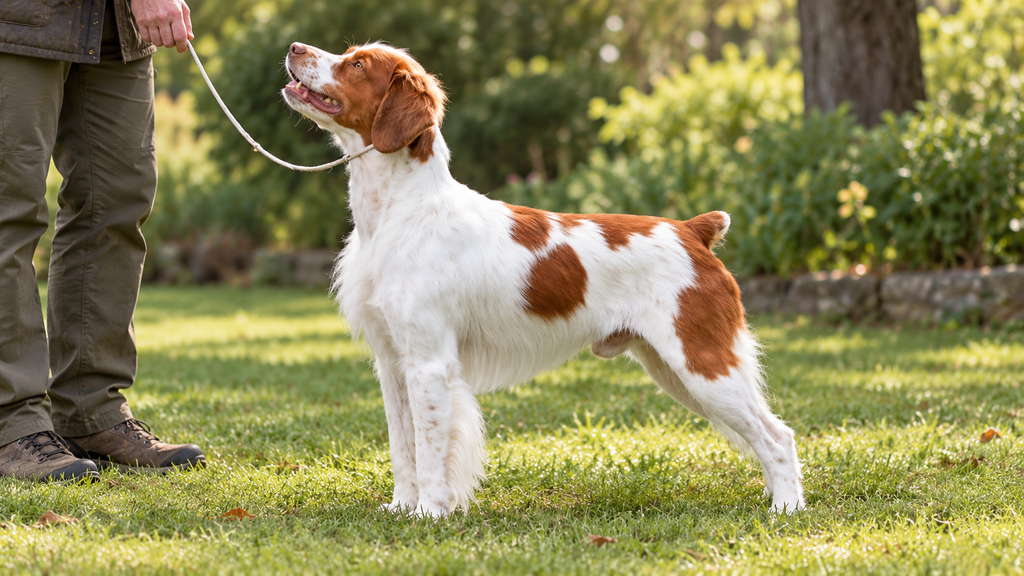
Physically, the Brittany has a lean, athletic outline, expressive face, relatively light frame, and a dense coat that may be flat or slightly wavy. Orange and white and liver and white are among the best-known color combinations, although roan patterns also occur. Some Brittanys are born with naturally short tails, while others have longer tails, and appearance can vary somewhat between different breeding traditions and bloodlines.
For the right owner, the Brittany offers an appealing combination of intelligence, affection, speed, trainability, and sporting versatility. It can be an excellent hunting partner, hiking companion, dog-sport competitor, and family dog, but it suits people who genuinely enjoy being active with their dog. Understanding the breed’s working background is the key to appreciating both its strengths and the level of involvement it usually needs.
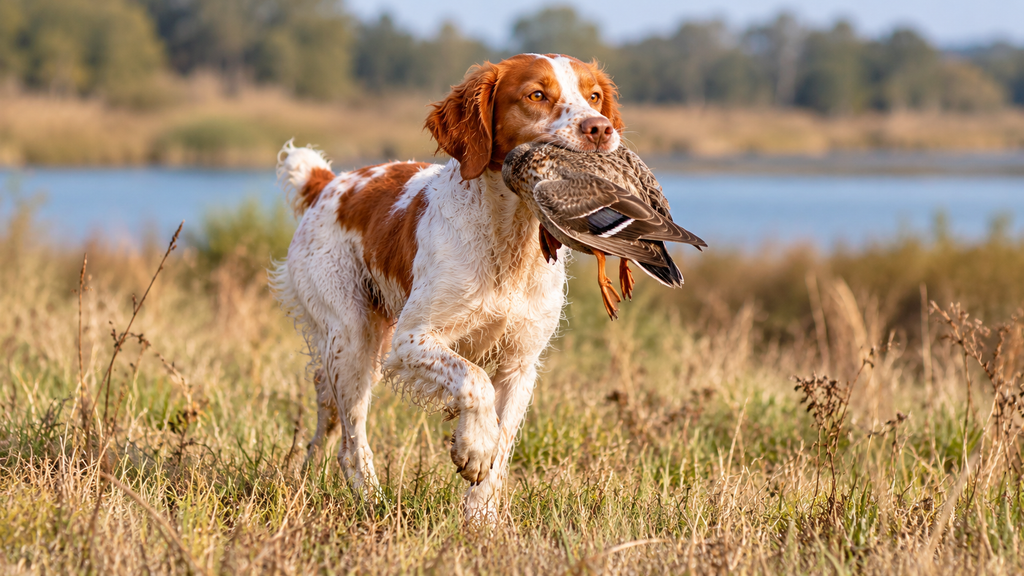
Table of Contents
Brittany At A Glance
Brittany Fast Facts
Breed Group: SportingOrigin: France
Height: 17.5–20.5 inches
Weight: 30–40 pounds
Life Expectancy: 12–14 years
Size: Medium
Coat: Dense, flat or slightly wavy
Colors: Orange and white, liver and white, and roan patterns
Shedding: Moderate
Exercise Needs: High
Temperament: Bright, affectionate, energetic, sensitive
Original Purpose: Pointing and retrieving game birds
Brittany Star Ratings
Affectionate: ★★★★★Family Friendly: ★★★★★
Easy to Train: ★★★★★
Exercise Needs: ★★★★★
Good With Children: ★★★★☆
Good With Other Dogs: ★★★★☆
Adaptability: ★★★★☆
First-Time Owner Friendly: ★★★☆☆
Grooming Needs: ★★★☆☆
Shedding Level: ★★★☆☆
Apartment Friendly: ★★☆☆☆
Tolerates Being Alone: ★★☆☆☆
Brittany History and Origins
The Brittany developed in the Brittany region of northwestern France, where hunters needed a compact, energetic dog that could work efficiently across farms, fields, hedgerows, and rough countryside. Rather than being created as a large-ranging specialist, the breed was valued for versatility. Early Brittanys were expected to locate game birds, point their position, work closely enough to remain responsive to the hunter, and retrieve when required. That combination of speed, sensitivity, intelligence, and cooperation became the foundation of the modern breed.
Historical accounts generally trace the breed’s development to the 1800s, although small bird dogs of Brittany had existed in the region before formal breeding records were established. Local dogs were likely influenced over time by various pointing and setting dogs brought into France by visiting hunters. The exact ancestry is not perfectly documented, but selective breeding gradually produced a recognizable type: compact, athletic, quick-moving, and strongly oriented toward bird work.
The first formal breed standard was established in France in the early twentieth century, helping define the Brittany as a distinct sporting breed. In French, the breed is known as the Épagneul Breton. The search term french brittany dog is commonly used, particularly in North America, to describe Brittanys bred more closely to French or European lines. These dogs may differ somewhat in field style, markings, and breeding tradition from many American lines, but they share the same historical foundation in the Brittany region of France.
The breed reached the United States during the twentieth century and quickly attracted hunters who appreciated its combination of bird-finding ability, manageable size, and enthusiastic working style. American breeders developed their own lines and field traditions, and the breed became firmly established in both hunting and competitive pointing-dog circles.
For many years in the United States, the breed was known as the Brittany Spaniel. That name eventually proved misleading because the Brittany does not hunt in the same way as a traditional flushing spaniel. Its instinctive tendency is to locate birds and point rather than rush in to flush them immediately. In 1982, the American Kennel Club officially shortened the breed name to Brittany, bringing the American name more closely in line with the dog’s true working style.
The phrase english brittany dog sometimes appears in online searches, but there is no recognized English Brittany breed. It may be used informally by people confusing the Brittany with English pointing or spaniel breeds, or with different Brittany bloodlines. Owners researching the breed should therefore look carefully at the breeder, registry, pedigree, and working background rather than relying on informal labels.
Today, the Brittany remains closely connected to its hunting origins. Although many now live primarily as family companions, their alertness, athleticism, prey interest, and desire to work with people are not accidental traits. They are the result of generations of selection for a practical bird dog capable of combining field performance with a cooperative, responsive temperament.
Why the Brittany Lost the “Spaniel” Name
For many years in the United States, the breed was commonly called the Brittany Spaniel. The name was eventually considered misleading because the Brittany works more like a pointing dog than a traditional flushing spaniel. Rather than immediately pushing birds from cover, a Brittany typically searches for scent, locates game, and freezes into a characteristic point so the hunter can approach. The American Kennel Club officially shortened the breed name to Brittany in 1982. The older name is still widely recognized and occasionally used by owners, but “Brittany” is now the standard American breed name and better reflects the breed’s true working style and sporting heritage.
Brittany Appearance and Size
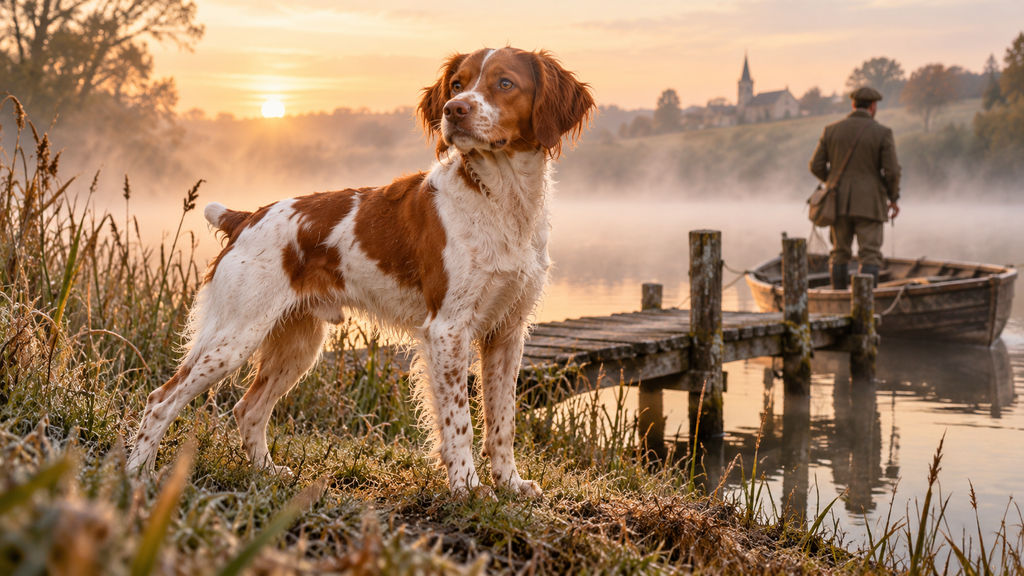
The Brittany is a medium-sized sporting dog with a compact, athletic build designed for speed, endurance, and quick changes of direction. The overall impression should be balanced and functional rather than heavy or exaggerated. A typical Brittany dog size is about 17.5 to 20.5 inches at the shoulder, while Brittany dog weight is generally around 30 to 40 pounds. Males and females may overlap considerably in size, and individual dogs can vary depending on genetics, conditioning, and bloodline.
The body is relatively short and neat, with a firm topline, a moderately deep chest, and strong hindquarters. The legs are long enough to give the breed good ground clearance and an efficient stride, but the Brittany should never look leggy or fragile. Its movement is usually light, energetic, and purposeful, reflecting a dog developed to work across fields, brush, and uneven ground for long periods.
The head is proportionate to the body, with a slightly rounded skull, a moderate muzzle, and an alert, intelligent expression. The eyes are usually soft and expressive, while the ears are set fairly high and hang close to the head with light feathering. The muzzle should be broad enough for strength without appearing coarse, and the overall head shape is gentler and less heavy than that of many larger sporting breeds.
The coat is dense, flat or slightly wavy, and practical rather than profuse. Feathering is usually found on the ears, chest, belly, and backs of the legs, but it should not be so heavy that it interferes with movement in the field. The coat offers useful protection against brush and weather while remaining relatively easy to maintain.
The most familiar Brittany dog colors are orange and white and liver and white. Clear markings are common, but roaning and ticking may also occur. A Brittany dog liver coat refers to the rich brown pigmentation seen in some dogs, while Brittany dog liver and white describes one of the breed’s classic color combinations. A roan Brittany dog has colored hairs intermingled with white hairs, creating a mottled or speckled appearance.
Black coloring is more complicated. Searches for a Brittany dog black or a black and white Brittany dog often produce conflicting results because accepted colors differ between registries. Under the American Kennel Club standard, black is not an accepted color. European standards for the French Épagneul Breton are broader and may include black-and-white and black tricolor dogs, so appearance can vary somewhat between American and European lines.
Tail length also varies. A Brittany dog with tail may be born with a full-length tail, a naturally short tail, or a natural bobtail. Historically, docking has also been practiced in some countries and bloodlines, although laws and customs now differ widely. Tail length alone does not determine whether a dog is a genuine Brittany.
There is no officially recognized mini Brittany dog or miniature Brittany dog variety. Some Brittanys are naturally smaller than others, and different lines can produce modest differences in frame and height, but “miniature Brittany” is not a recognized breed type. Prospective owners should be cautious when unusually small dogs are marketed as a special or separate variety.
Overall, the Brittany should look athletic, alert, and ready to move. Its moderate size, lean frame, practical coat, and balanced proportions all reflect the breed’s working heritage and help explain why it remains such an effective and versatile sporting dog.
A Compact Athlete Rather Than a Small Spaniel
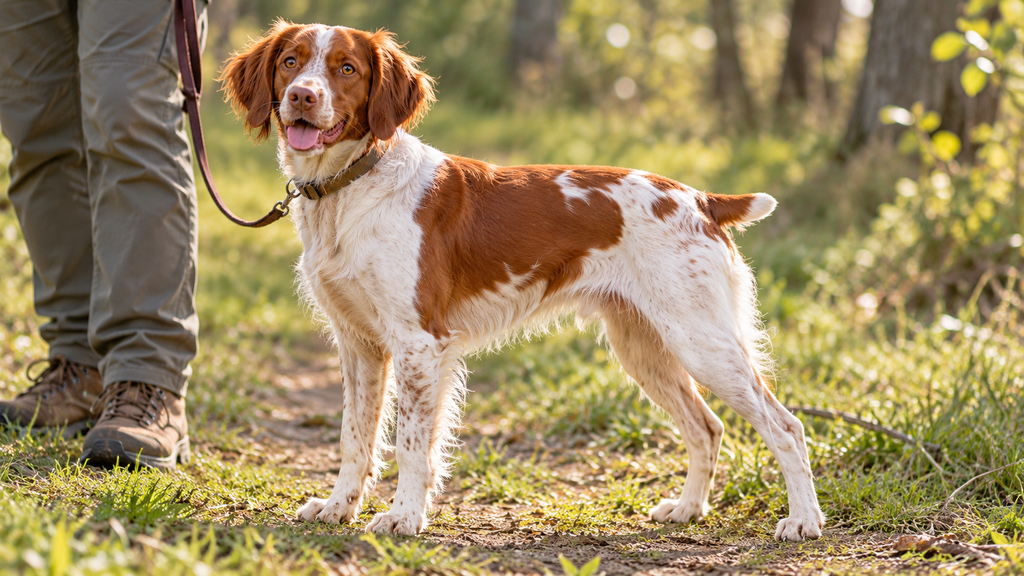
The Brittany’s size is one of its most distinctive practical advantages. At roughly 30 to 40 pounds, it is lighter than many retrievers and setters but still strong enough for demanding field work. The breed should look lean, balanced, and muscular rather than delicate or stocky. Long enough legs provide good ground clearance, while the compact body helps with quick turns and rapid acceleration. This combination makes the Brittany unusually agile for a dog with so much stamina. Even companion-bred Brittanys usually retain the athletic proportions of a working bird dog, which is why regular exercise and good conditioning are so important.
Brittany Temperament and Personality
The Brittany is typically bright, affectionate, energetic, and highly people-oriented. Its working background has produced a dog that wants to stay connected to its handler, respond quickly to direction, and remain actively involved in whatever is happening around it. The Brittany dog temperament is often described as eager and sensitive rather than hard or independent, which helps explain why the breed can be such a rewarding companion for owners who use calm, consistent training.
A well-socialized Brittany is usually friendly and enthusiastic with familiar people. Many form very close bonds with their families and prefer to be near them rather than spending long periods alone. This affectionate nature can make the breed wonderfully companionable, but it also means some Brittanys struggle if they are routinely isolated or left without enough interaction. They generally do best in homes where they are treated as part of daily life rather than simply exercised and then left on their own.
The Brittany dog personality is often lively and expressive. These dogs tend to be curious about their surroundings, quick to investigate movement or scent, and enthusiastic about games, walks, training sessions, and outdoor adventures. Young Brittanys can be especially exuberant and may seem constantly ready for the next activity. With sufficient exercise and mental work, however, many become surprisingly settled indoors and enjoy relaxing close to their owners.
Sensitivity is one of the most important traits to understand. Brittanys usually respond better to encouragement, structure, and reward-based teaching than to harsh corrections. Heavy-handed handling can make some dogs anxious, hesitant, or less willing to engage. A confident owner who gives clear expectations without unnecessary pressure will usually get far better results.
The breed is also highly observant. Many Brittanys seem to notice changes in tone of voice, body language, and household routine quickly. This can make them responsive and intuitive, but it can also mean they pick up on tension or inconsistent handling. Calm households with predictable rules tend to suit them well.
Although affectionate, Brittanys are not usually passive lapdogs. Their sporting instincts remain strong, and they often need purposeful activity to feel satisfied. Scenting, retrieving, running, searching, and training all appeal naturally to them. A dog whose physical and mental needs are being met is far more likely to show the affectionate, cheerful side of the breed at home.
Individual personalities vary, of course. Some Brittanys are bold and outgoing, while others are softer or more reserved, particularly around unfamiliar situations. Early socialization, thoughtful breeding, and positive experiences all influence how confident and adaptable an adult dog becomes.
At their best, Brittanys combine enthusiasm with affection and intelligence with cooperation. They are happiest when they have both a close relationship with their people and something worthwhile to do, making them particularly well suited to active owners who enjoy including their dog in everyday life.
A Sensitive Dog That Reads Its Owner Closely
Brittanys are often remarkably responsive to human tone, body language, and routine. That sensitivity can make them very easy to communicate with, but it also means they may react poorly to shouting, rough handling, or inconsistent expectations. Positive training, clear boundaries, and steady daily routines generally bring out the breed’s best qualities. Owners who remain calm and encouraging often find that their Brittany becomes deeply attentive and eager to cooperate. This emotional sensitivity is not weakness; it is part of the breed’s close-working history and one reason many Brittanys develop such strong bonds with the people they trust.
Living With a Brittany
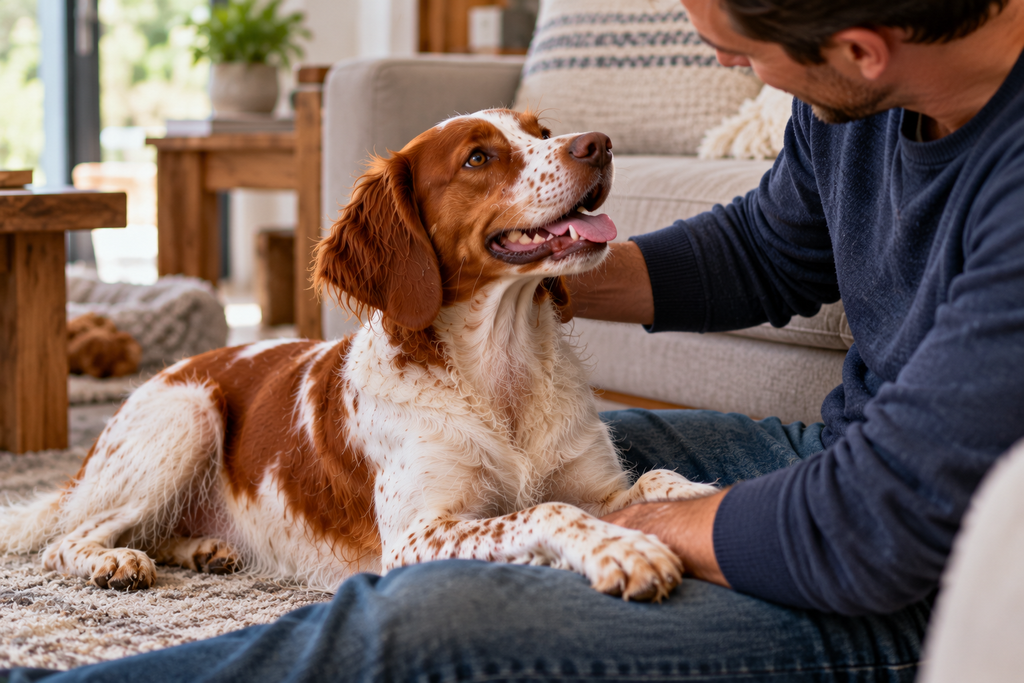
Living with a Brittany is usually easiest for people who enjoy an active, involved relationship with their dog. This is not a breed that simply wants a short walk and then spends the rest of the day quietly in the background. Brittanys tend to be highly engaged with their surroundings, interested in what their owners are doing, and happiest when they have regular opportunities to move, explore, train, and participate in family life.
Indoors, a well-exercised Brittany can be affectionate and pleasantly settled. Many like to follow their owners from room to room, rest nearby while people work or relax, and join in with everyday routines. Their people-focused nature often makes them feel more like a constant companion than an independent pet. However, young dogs in particular can be lively, curious, and easily bored if their physical and mental needs are not being met.
A secure yard can be helpful, but it should not be viewed as a substitute for exercise or interaction. Brittanys were developed to search wide areas and respond strongly to scent and movement, so some will patrol fences, chase birds, or investigate every corner of the garden. Secure fencing is important, especially for dogs with strong prey drive or a tendency to follow scent trails. Even with a yard, most still need structured walks, training, play, and opportunities to explore beyond the home.
The breed’s moderate size makes it easier to live with than many larger sporting dogs, but energy level matters more than body size. A Brittany can adapt to a smaller home if the owner is genuinely committed to daily exercise and mental stimulation, while a large property will not automatically make an under-stimulated dog content. Lifestyle fit is more important than square footage.
Brittanys are also sensitive to routine. Many do best when they know when meals, walks, training, and rest usually happen. Sudden inconsistency is not necessarily a problem, but a generally predictable structure helps many dogs settle. Crate training, calm indoor routines, and teaching an “off switch” from an early age can be especially useful.
Because the breed is affectionate and socially oriented, long periods of isolation can be difficult for some individuals. A Brittany that is frequently left alone for most of the day may become restless, vocal, destructive, or overly dependent when its owner returns. Building independence gradually and providing appropriate enrichment can help, but this is still a breed that usually prefers regular human company.
For active households, the Brittany can fit beautifully into everyday life. It can accompany owners on walks, hikes, weekend trips, training sessions, and outdoor adventures, then return home and relax once its needs have been met. The key is balance: enough activity to satisfy the working dog, enough structure to encourage calm behavior, and enough companionship to support its strongly social nature.
Brittany and Children
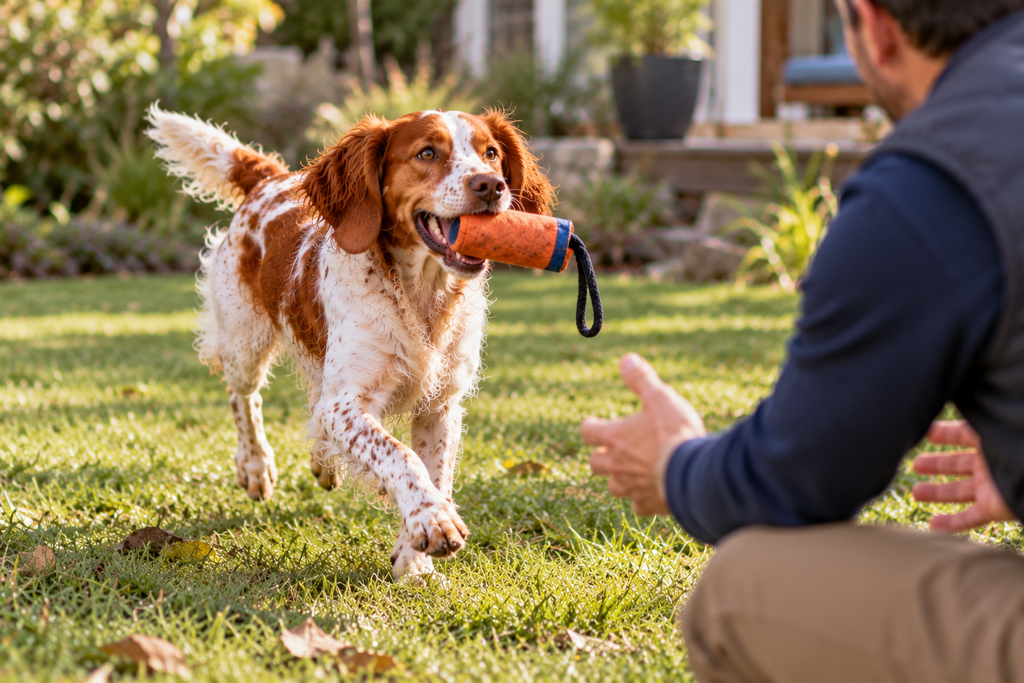
The Brittany can make an excellent companion for children, particularly in an active household where the dog is included in family life and given enough exercise, training, and attention. These dogs are generally affectionate, playful, and strongly connected to their people. Many enjoy joining children in backyard games, walks, outdoor adventures, and simple training activities. Their cheerful nature can make them engaging family dogs, but their considerable energy means successful relationships with children depend on supervision, good manners, and realistic expectations.
Young dogs can be especially exuberant. A puppy or adolescent may race through the house, jump when excited, chase a moving toy at full speed, or become increasingly animated when children are running and shouting. None of this necessarily indicates poor temperament, but a 30- to 40-pound athletic dog moving quickly can easily knock over a toddler. Families with very young children should therefore place particular emphasis on calm greetings, reliable basic cues, and teaching the dog how to settle when activity becomes intense.
Exercise makes a noticeable difference. A dog that has already enjoyed an appropriate walk, training session, or energetic outdoor activity is generally much easier to manage around children than one that has spent hours waiting for something to happen. Families sometimes mistake pent-up sporting-dog energy for disobedience when the dog simply needs more suitable outlets. Providing exercise before busy family periods, visitors, or children’s playtime can help reduce jumping, frantic behavior, and attention-seeking.
The breed’s emotional sensitivity also deserves consideration. These dogs often respond closely to tone of voice and body language, and many dislike rough or unpredictable handling. Children should never be permitted to pull ears or tails, climb onto the dog, take toys forcibly, disturb it while sleeping, or follow it when it tries to move away. Even a tolerant family dog should be allowed to choose when it wants space. Teaching children these rules protects both the dog and the child while encouraging a relationship based on trust rather than tolerance.
A dedicated resting area is particularly useful in a family home. This might be a bed in a quiet corner, an open crate, or another comfortable place where the dog can withdraw without being bothered. Children should understand that when the dog goes to that space, interaction stops. This simple rule can prevent many avoidable problems, especially in a busy household where noise and activity continue for much of the day.
Older children often match the breed extremely well. They can help with supervised obedience practice, hide treats for scent games, throw retrieving toys, assist with grooming, or accompany adults on walks. Giving children structured ways to interact with the dog is generally more beneficial than encouraging uncontrolled wrestling or chasing games. It also teaches children that living with a dog involves responsibility as well as play.
Food and high-value items should be managed sensibly. Children should not remove a food bowl, take a chew away, or test whether the dog will tolerate interference. Adults should handle feeding routines and teach appropriate behaviors such as waiting calmly for meals. Likewise, children should be shown how to recognize when the dog is becoming tired or overwhelmed rather than assuming that every interaction should continue indefinitely.
Individual temperament remains important. Genetics, early socialization, previous experience, and training all influence how comfortable a dog will be around children. A puppy raised with respectful children may adapt naturally to a lively household. An adult rescue with an unknown history may need gradual introductions, careful observation, and more management until its reactions are understood.
Supervision should therefore remain an adult responsibility. Young children and dogs should not be expected to manage one another simply because the dog has always been friendly. Adults can intervene before play becomes too rough, prevent accidental injuries, and teach both child and dog appropriate boundaries.
In the right home, the Brittany can become a deeply affectionate family companion that enjoys growing up alongside children. The strongest relationships develop when the dog receives enough exercise to remain settled, children are taught respectful handling, and adults provide consistent supervision and structure. With those foundations in place, the breed’s playful nature, sensitivity, enthusiasm, and devotion can fit very naturally into active family life.
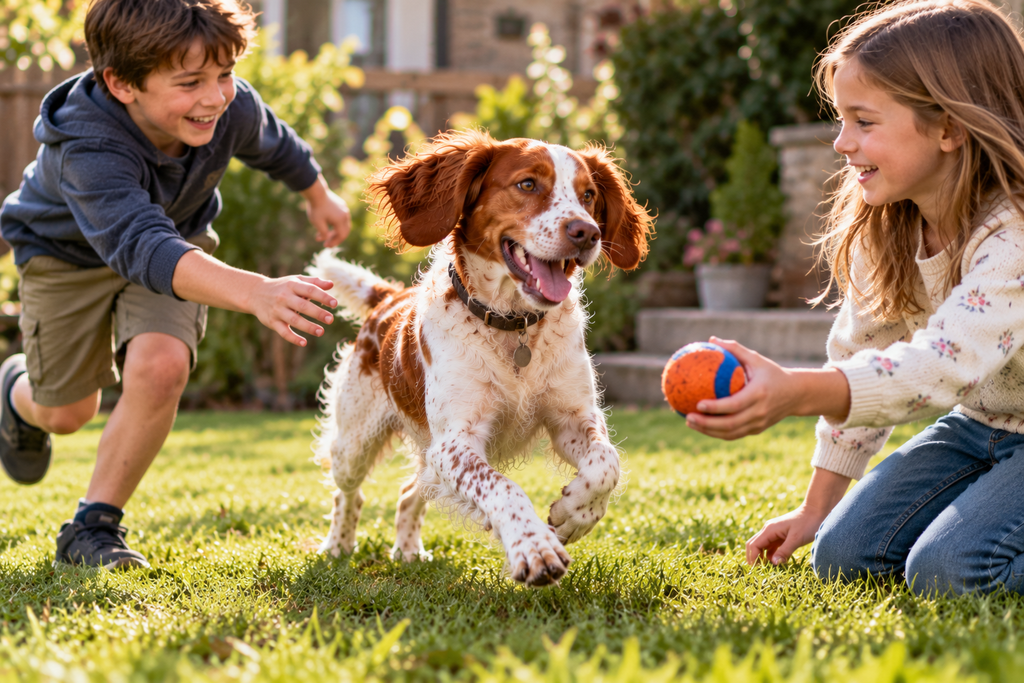
Best With Children Who Understand Dog Manners
These dogs can be affectionate and playful with children, but their energy and sensitivity both need to be respected. Young dogs may become overexcited during chasing games, while sensitive individuals can become uncomfortable if children grab, climb on, or corner them. Families should teach children to approach calmly, leave the dog alone while it is eating or sleeping, and respect its resting space. Older children can often become excellent training partners when supervised by an adult. Clear rules on both sides help create a relationship that is playful, affectionate, and safe rather than chaotic or stressful.
Brittany With Other Dogs and Pets
A well-socialized Brittany can live very successfully with other dogs and, in many homes, with cats as well. The breed is generally sociable, playful, and accustomed by heritage to working around people and other hunting dogs. That cooperative background often translates into a dog that enjoys canine company rather than viewing every unfamiliar dog as a rival. Even so, successful multi-pet living depends on early socialization, sensible introductions, and an understanding of the breed’s strong interest in movement and scent.
With other dogs, the biggest issue is usually energy rather than hostility. Young dogs can be enthusiastic, physical, and persistent in play. They may run hard, chase, shoulder-bump, or repeatedly invite another dog to engage long after the other animal has had enough. This can work beautifully with another active, tolerant dog, but it may overwhelm an older, smaller, shy, or more sedentary companion. Owners should watch interactions closely and interrupt play before it becomes one-sided or too intense.
Compatible exercise styles can make a major difference in multi-dog homes. A similarly active sporting or working breed may enjoy long walks, retrieving games, and outdoor adventures alongside this breed, while a quieter dog may prefer shorter periods of interaction followed by rest. Dogs do not need to match perfectly in energy level, but each should have opportunities to meet its own needs without constantly being pulled into the other dog’s routine.
Introductions are best handled calmly and on neutral ground. Parallel walking, brief sniffing, and short periods of relaxed interaction are usually preferable to immediately putting two unfamiliar dogs together in a confined space. Once indoors, separate feeding areas, individual resting places, and supervision around high-value chews or favorite toys can prevent unnecessary tension. Even friendly dogs benefit from having possessions and spaces they do not have to defend.
Cats require a little more thought because the breed’s hunting instincts can be strong. Many individuals live peacefully with cats, particularly when raised with them from puppyhood, but movement can trigger chasing behavior. A cat sprinting across the room may be far more exciting to a young sporting dog than a cat sitting quietly on the couch. Early exposure, careful supervision, and teaching reliable responses to cues such as “leave it,” recall, and settling can help enormously.
Owners should also give cats escape routes and dog-free areas. Baby gates, elevated shelves, separate rooms, and high resting places allow the cat to control distance and reduce the likelihood of constant pursuit. The goal is not simply to stop the dog from reaching the cat, but to create a household where neither animal feels pressured by the other.
Small pets present a greater challenge. Rabbits, guinea pigs, poultry, and other small animals may trigger predatory interest because this is a breed developed to locate and pursue game birds. Some individuals can learn calm behavior around securely housed small pets, but owners should never assume that friendliness toward people or dogs means the same dog is safe with every species. Management is particularly important around birds, where natural hunting instincts may be very strong.
Outdoor behavior can also differ from indoor behavior. A dog that ignores a household cat indoors may still chase unfamiliar cats, squirrels, rabbits, or birds outside. Secure fencing and reliable recall are therefore important even in homes where the dog appears calm around resident pets.
Early socialization helps shape good habits, but genetics and individual temperament still matter. Some dogs are naturally more intense around prey movement, while others are relatively easygoing. Rescue dogs with unknown histories may need slower introductions and more management until their reactions are understood.
In multi-pet households, success usually comes from structure rather than simply hoping the animals will “work it out.” Separate feeding, supervised introductions, adequate exercise, clear household rules, and safe resting spaces reduce competition and give every animal room to relax. With thoughtful management, many examples of the breed become friendly, playful companions to other dogs and can coexist very comfortably with cats.
Prey Drive Matters More Than Friendliness
A dog can be extremely friendly with people and other dogs while still showing strong hunting interest in smaller animals. This breed was developed to find and pursue game birds, so movement from rabbits, poultry, wildlife, or an unfamiliar cat may trigger an instinctive chase. Cats raised alongside the dog often become accepted family members, especially when introductions begin early, but supervision and escape routes are still sensible. Small pets should be protected by secure housing rather than relying on training alone. Understanding the difference between social friendliness and prey drive helps owners manage mixed-pet households more safely and realistically.

Exercise and Activity Needs
This is an athletic sporting breed with substantial daily exercise needs. These dogs were developed to work across open ground for long periods, using speed, stamina, scenting ability, and close cooperation with a handler. Even when kept purely as companions, most retain a strong desire to move, explore, investigate scent, and participate in purposeful activity. A quick walk around the block is rarely enough for a healthy young adult.
Most dogs do best with a combination of aerobic exercise and mentally engaging work. Long walks, hiking, jogging with a suitably conditioned adult dog, retrieving, structured off-leash running in safe areas, and field-style games can all be valuable. The important point is variety. Repeating the same short route every day may provide physical movement, but it does little to satisfy curiosity, scenting instincts, or the need to solve problems.
Age matters. Puppies should not be pushed into sustained running or repetitive high-impact exercise while their joints are still developing. Shorter walks, free play, gentle exploration, basic training, and age-appropriate retrieving are better foundations. As the dog matures, activity can gradually increase. Healthy adults often have excellent endurance and may comfortably accompany active owners on longer outings, provided fitness is built progressively rather than demanded suddenly.
Mental exercise is just as important as physical activity. These dogs were bred to make decisions in the field, follow scent, locate birds, and respond to direction. Food-search games, scent trails, obedience work, retrieving drills, puzzle feeders, and hide-and-seek can be surprisingly tiring. Ten or fifteen minutes of focused training may settle a dog more effectively than simply adding another unstructured lap around the yard.
A secure area for off-leash movement can be particularly valuable because the breed naturally enjoys covering ground. However, freedom should be earned through reliable recall. Birds, rabbits, wildlife, and interesting scent trails can be difficult to resist, especially for young dogs. Until recall is genuinely dependable, long lines, fenced fields, or other controlled environments provide a safer way to allow exploration.
Owners should also avoid assuming that more exercise is always better. Constantly exhausting a young dog can simply create an athlete that requires ever-increasing amounts of activity. Teaching calm behavior, settling indoors, waiting quietly, and switching off after exercise is equally important. The goal is not to tire the dog into submission but to create a balanced routine that combines movement, thinking, companionship, and rest.
Weather and terrain should influence the exercise plan. The breed is naturally energetic, but activity should still be adjusted for heat, humidity, rough ground, and the dog’s individual condition. Early-morning or evening exercise may be preferable in hot weather, while paws should be checked after working through stubble, rocky tracks, or dense vegetation.
A backyard is useful but is not a complete exercise program. Many dogs left alone outside simply wait for their owners, patrol fences, or develop repetitive habits. Purposeful interaction is far more valuable than merely providing space. A smaller home with an engaged, active owner can suit the breed better than a large property where the dog receives little structured activity.
Signs of insufficient exercise can include restlessness, pacing, excessive barking, destructive chewing, stealing objects, frantic greetings, and difficulty settling. These behaviors are not always caused by under-exercise, but they are common when a high-energy sporting dog has too little to do. Increasing both physical activity and mental engagement often helps.
At the same time, owners should watch for signs of overexertion such as persistent limping, reluctance to move, excessive fatigue, sore pads, or stiffness after activity. Conditioning should build gradually, particularly for dogs beginning hiking, running, or more demanding field work.
For an active owner, this energy can be one of the breed’s greatest strengths. These dogs are often enthusiastic partners for hiking, training, retrieving, outdoor exploration, and dog sports. They thrive when exercise is not treated as a chore but as part of a shared lifestyle. With a thoughtful balance of movement, mental work, and downtime, they can be both impressive athletes outdoors and pleasant companions at home.
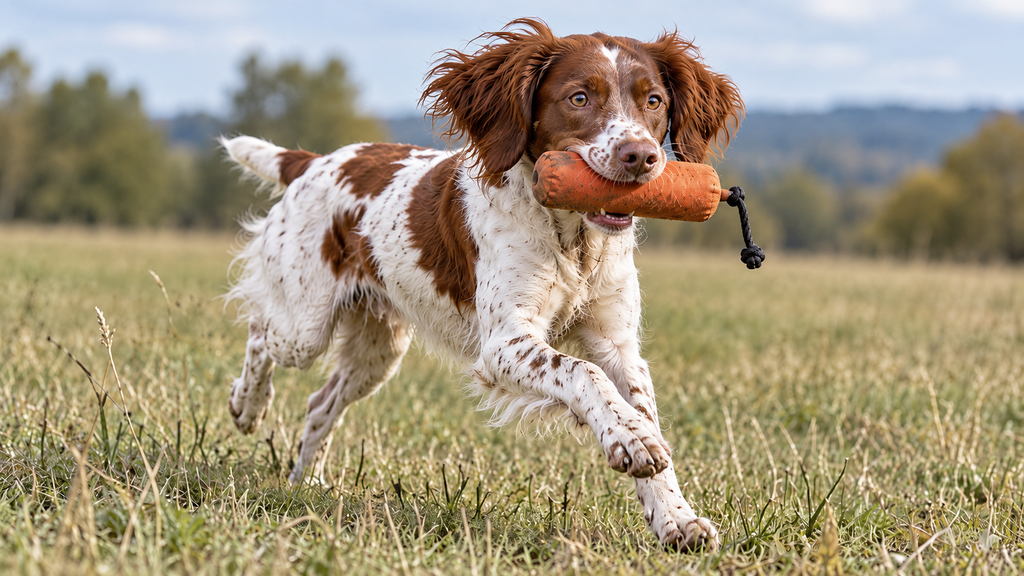
Exercise Should Have Purpose, Not Just Distance
Long walks are useful, but this breed usually benefits even more when exercise includes something to think about. Retrieving, scent games, recall practice, searching for hidden objects, and varied routes give the dog mental work as well as physical movement. This helps prevent the common mistake of simply trying to exhaust an energetic dog with more and more running. A balanced routine should build fitness while also teaching focus and calm behavior. Owners who combine aerobic activity with training and scent-based enrichment often find that their dog settles more easily afterward than one given only repetitive physical exercise.
Brittany Hunting and Field Work
The Brittany was developed first and foremost as a practical bird dog, and its hunting ability remains one of the defining features of the breed. Even dogs that never spend a day in the field usually retain some combination of strong scenting ability, interest in birds, natural pointing behavior, eagerness to range ahead, and a close awareness of their handler. Understanding those instincts helps explain much of the breed’s behavior, including its energy level, trainability, prey drive, and enthusiasm for outdoor work.
In the field, the Brittany is primarily a pointing dog. Rather than immediately flushing birds from cover, it uses scent to locate game and then indicates the bird’s position by becoming still and pointing toward it. This allows the hunter to approach before the bird is flushed. Good field dogs combine this instinct with enough independence to search effectively and enough cooperation to remain responsive to the person working with them.
One of the breed’s greatest strengths is its versatility. Brittanys are small enough to move quickly through cover but athletic enough to work for long periods across open fields, scrub, woodland edges, and farmland. They are commonly used for upland birds such as pheasant, quail, grouse, and woodcock, depending on region and hunting tradition. Their compact size can also make them easier to transport and handle than some larger pointing breeds.
Retrieving ability is another useful part of the breed’s field work. Although the Brittany is best known for locating and pointing birds, many individuals retrieve naturally and can be trained to bring shot game back to the handler. This versatility is one reason the breed has remained popular with hunters who prefer a dog capable of performing several jobs rather than specializing in only one part of the hunt.
The search term brittany dog duck hunting also appears regularly, and Brittanys can certainly retrieve ducks and work around water when properly trained. However, they should not automatically be considered equivalent to specialist waterfowl retrievers such as Labradors or Chesapeake Bay Retrievers. Their coat and build were developed mainly for active upland work rather than prolonged cold-water retrieving. A Brittany may perform very well on occasional waterfowl hunts in suitable conditions, but cold weather, water temperature, distance, and the individual dog’s confidence and conditioning all need to be considered.
Early field training usually builds on instincts the dog already possesses rather than trying to manufacture them from scratch. Young dogs can be introduced gradually to fields, cover, bird scent, retrieving objects, whistles, and directional cues. Confidence is important. A puppy pushed too quickly into loud gunfire, difficult terrain, or overwhelming situations may become hesitant, so careful progression is far more effective than simply exposing the dog to everything at once.
Recall and cooperation are especially important because a hunting dog must be willing to work at a distance without becoming disconnected from the handler. Brittanys are naturally inclined to range, and enthusiastic young dogs may cover ground quickly when they locate scent. Training should therefore reinforce regular check-ins, whistle response, directional control, and returning promptly when called.
Gun introduction also needs to be handled carefully. Gunfire should never simply be fired close to a young dog to see how it reacts. Responsible field training introduces sound gradually and positively, usually when the dog is already engaged in something enjoyable such as chasing or searching for birds. The goal is for the dog to associate the sound with rewarding field activity rather than fear.
Not every Brittany needs to hunt. Many companion dogs can satisfy the same underlying instincts through scent work, retrieving games, tracking, field-style training, and organized dog sports. Owners who do not hunt can still benefit enormously from giving the dog tasks that involve searching, carrying, locating, and responding to direction.
Field work also places physical demands on the dog. Conditioning should be built gradually, particularly before hunting season or demanding outings. Paws, ears, coat, and legs should be checked afterward for cuts, burrs, grass seeds, ticks, and other debris. Water and rest are equally important during long periods of activity.
At its best, the Brittany is an energetic but cooperative hunting partner: fast enough to cover ground, sensitive enough to remain connected to the handler, and versatile enough to point, search, and retrieve. Those same qualities explain why the breed remains so rewarding even outside hunting homes. Whether working birds in the field or simply using scent and retrieving skills in everyday training, the Brittany is happiest when its athletic ability and working instincts are given something useful to do.
A Pointing Dog First, but a Versatile Worker
The Brittany is best known for locating game birds and holding a point so the hunter can approach, but many individuals also retrieve naturally and work confidently around varied terrain. Their moderate size, speed, and close cooperation with the handler make them especially effective for upland hunting. Some can also retrieve waterfowl, although they are not built for prolonged work in very cold water in the same way as specialist retrievers. Even non-hunting owners can make use of these instincts through scent games, retrieving drills, tracking exercises, and other activities that allow the dog to search, locate, and work toward a clear purpose.

Training a Brittany
Training tends to go best when it combines structure, encouragement, and enough variety to keep the dog mentally engaged. This is an intelligent sporting breed that was developed to work closely with people, make decisions in the field, and respond quickly to direction. Those qualities usually make the dog highly trainable, but they also mean repetitive or heavy-handed methods can quickly reduce enthusiasm. The best results generally come from short, purposeful sessions built around clear cues, rewards, and steady expectations.
The most important foundation is attention. Before asking for complex behaviors, owners should teach the dog to check in, respond to its name, and focus around distractions. This becomes especially important outdoors, where birds, wildlife, scent trails, and movement can compete strongly for attention. Building engagement in easier environments first makes later recall and off-leash work much more reliable.
Reliable recall should be treated as a priority rather than an optional extra. The breed’s hunting background means that interesting scent can quickly override casual obedience, particularly in young dogs. Owners should practice recall gradually, beginning indoors or in fenced areas before moving to long lines and more distracting environments. High-value rewards, enthusiastic praise, and frequent reinforcement help make returning to the handler worthwhile. Recall should never be used only to end fun, because dogs quickly learn when coming back means the adventure is over.
Basic household manners are equally important. Sit, down, stay, leave it, place, loose-leash walking, and calm greetings can make daily life much easier. Young dogs often have plenty of enthusiasm but limited impulse control, so teaching them to pause before going through doors, wait for food, and settle on a mat can be just as valuable as teaching formal obedience.
Because the breed is sensitive, training pressure should be carefully judged. Shouting, repeated corrections, or physically forceful methods can cause some dogs to shut down, become hesitant, or avoid working with the handler. This does not mean owners should avoid boundaries. Clear rules and consistent follow-through are still essential, but the correction should fit the mistake and the individual dog. Calm redirection and rewarding the desired behavior generally produce more reliable long-term results.
The search term brittany dog training often leads people toward obedience advice, but field instincts should also be considered. Even companion dogs may enjoy activities that use natural hunting skills. Scent work, retrieving, search games, directional cues, and controlled pointing exercises can provide excellent mental outlets. These activities do not require an owner to hunt; they simply give the dog opportunities to use abilities it was bred to possess.
Training should also include calm behavior. High-energy dogs are sometimes given endless activity without being taught how to switch off. A dog that can run for hours but cannot settle in the house is not truly well trained. Teaching relaxation after exercise, rewarding quiet behavior, and creating predictable periods of rest are extremely useful, particularly during adolescence.
Socialization is another important part of training. Puppies should experience different people, surfaces, noises, environments, vehicles, dogs, and everyday situations in a controlled way. The goal is not simply exposure, but positive exposure. Forcing a nervous puppy into overwhelming situations can create the opposite effect. Confidence grows more reliably when the dog has enough space and support to investigate at its own pace.
Short sessions usually work best. Five to ten focused minutes can be more productive than a long session where the dog loses concentration. Training can also be incorporated into daily life: waiting before meals, recalling from the yard, walking politely to the car, or settling while the family eats.
With consistency, patience, and good reinforcement, these dogs can become exceptionally responsive companions. Their intelligence and desire to work with people are major strengths, but owners get the best results when training remains clear, fair, and purposeful rather than repetitive or confrontational.
Grooming and Coat Care
The Brittany has a practical, relatively easy-care coat, but regular grooming is still important for keeping the skin, ears, feathering, and paws in good condition. The coat is dense, flat or slightly wavy, with moderate feathering on the ears, chest, belly, and backs of the legs. It was developed to protect the dog during field work without becoming excessively heavy, which means most owners can maintain it at home with a simple, consistent routine.
For most dogs, brushing once or twice a week is enough to remove loose hair, prevent small tangles, and distribute natural oils through the coat. A pin brush, slicker brush, or metal comb can all be useful, particularly around the feathering behind the ears, under the front legs, around the belly, and along the backs of the thighs. These areas are more likely to collect burrs, seeds, mud, or small tangles after outdoor activity.
The brittany dog grooming routine becomes more important for dogs that spend a lot of time in fields, woodland, or long grass. After walks in rough vegetation, owners should check the coat carefully for grass seeds, burrs, ticks, thorns, and other debris. The ears, paws, armpits, and feathered areas deserve particular attention because foreign material can become hidden in the hair and cause irritation if left in place.
Bathing is generally needed only when the dog is genuinely dirty or has developed an odor. Too-frequent bathing can strip natural oils from the coat and dry the skin, so there is usually no need for a rigid weekly bathing schedule. A mild dog shampoo is preferable, and the coat should be rinsed thoroughly because leftover shampoo can irritate the skin.
Ear care is especially important. The breed’s dropped ears can restrict airflow and trap moisture, particularly after swimming or wet-weather exercise. Owners should inspect the ears regularly for redness, odor, discharge, or excessive wax. After swimming, the outer ear and surrounding feathering should be dried carefully. Routine cleaning may be helpful for some dogs, but excessive or aggressive cleaning can also irritate the ear canal.
Nails should be trimmed often enough that they do not become long enough to alter the dog’s gait. Active dogs that work on hard ground may naturally wear their nails down more quickly than dogs exercised mostly on grass. Even so, dewclaws and less-used nails still need to be checked. Long nails can affect traction and comfort, especially in an athletic dog that runs and changes direction quickly.
Owners sometimes search for a brittany dog haircut, but this breed does not usually need a formal haircut or extensive clipping. Light tidying around the feet, ears, and feathering may be useful, especially for dogs that pick up mud or debris, but the natural coat should generally be preserved. Shaving the body is unnecessary and can interfere with the coat’s protective function. For pets, neatness and comfort matter far more than creating a highly sculpted outline.
Paw care is another practical part of grooming. Hair growing between the pads can be trimmed if it becomes excessively long or collects dirt. Pads should also be checked for cuts, cracks, grass seeds, or irritation after rough outdoor activity. Dogs that hunt, hike, or run through stubble and rocky terrain may need more frequent paw inspections than dogs living a quieter suburban lifestyle.
Dental care should not be overlooked. Regular tooth brushing with dog-safe toothpaste is the most effective home routine for reducing plaque buildup. Dental chews may provide additional help, but they should not replace brushing entirely.
Grooming also offers a useful opportunity to check the whole dog. Running hands over the body regularly can help owners notice lumps, sore spots, skin irritation, ticks, or changes in body condition before they become obvious. Because these dogs are active and often move through dense vegetation, this kind of hands-on inspection is particularly valuable.
Overall, coat care is straightforward compared with many longer-coated sporting breeds. Regular brushing, ear checks, nail trimming, paw inspection, occasional bathing, and light trimming where necessary are usually enough to keep the dog comfortable and presentable. The goal is not to create a polished show coat, but to maintain a clean, functional coat that supports an active lifestyle.
Field Dogs Need a Quick Check After Every Outing
Dogs that spend time in long grass, woodland, or brush should be checked as soon as they return home. Grass seeds, burrs, ticks, mud, and small twigs can become trapped around the ears, paws, belly, and feathering, where they may cause irritation or work deeper into the skin. A few minutes with a comb and your hands can catch problems early. Pay particular attention between the toes and around the ear feathering. This quick post-walk routine is often more useful than adding extra baths, and it helps keep the coat functional without over-grooming it.

Brittany Shedding
The Brittany is a moderate shedder with a relatively practical coat that is much easier to manage than the heavier coats of many long-haired sporting breeds. Hair loss occurs throughout the year, although owners will often notice an increase during seasonal coat changes, particularly in spring and fall. The amount varies between individual dogs, climate, time spent indoors, and coat type, but prospective owners should expect some loose hair on clothing, furniture, bedding, and floors.
The brittany dog shedding pattern is generally manageable with regular brushing. The breed has a dense coat that may be flat or slightly wavy, with light feathering around the ears, chest, belly, and legs. Loose hairs can become caught within this feathering rather than immediately falling away, so brushing helps remove them before they spread around the home. For most dogs, a thorough brushing once or twice a week is sufficient during ordinary periods.
During heavier seasonal shedding, brushing may be useful several times a week. A pin brush or slicker brush can remove loose surface hair, while a metal comb is useful for checking feathered areas and working through small tangles. Grooming does not need to become aggressive simply because more hair is being released. Gentle, regular removal of loose coat is preferable to repeatedly scraping the skin with heavy-duty deshedding tools.
The brittany dog breed shedding level should not be confused with that of a non-shedding or hypoallergenic breed. Brittanys definitely lose hair, and they are not generally considered suitable for someone specifically seeking a dog that leaves virtually no coat around the house. Their moderate coat and limited feathering do, however, make the shedding relatively straightforward to control compared with breeds carrying much denser or more profuse coats.
Bathing can help loosen dead hair during a seasonal coat change, but frequent washing is unnecessary. An occasional bath followed by thorough drying and brushing can remove a surprising amount of loose coat. Using a dog-appropriate shampoo is important because products intended for people may irritate canine skin. The coat should also be rinsed thoroughly so no shampoo residue remains.
Owners should be aware that sudden or excessive hair loss is different from normal shedding. Bald patches, thinning areas, persistent scratching, redness, flaky skin, sores, or significant changes in coat texture deserve attention. Parasites, allergies, skin infections, hormonal disorders, nutritional problems, and other medical conditions can all affect the coat. If shedding suddenly becomes dramatically heavier without an obvious seasonal explanation, a veterinary examination is sensible.
Nutrition and general health also influence coat condition. A complete and balanced diet provides the protein, fats, vitamins, and minerals needed to maintain healthy skin and hair. Supplements should not automatically be added simply because a dog is shedding; normal seasonal hair loss cannot be eliminated through supplementation, and unnecessary products may provide little benefit.
Outdoor activity adds another dimension to coat maintenance. Because Brittanys often spend considerable time running through grass, brush, woodland, or fields, what appears to be a shedding problem may sometimes be a mixture of loose hair, dust, dried vegetation, and debris caught in the coat. A quick brushing after outdoor adventures removes both dead hair and foreign material while giving the owner an opportunity to check the skin.
Keeping loose hair under control at home is usually simple. Regular brushing, washable dog bedding, routine vacuuming, and occasionally wiping down commonly used resting areas will handle most of it. Owners who brush consistently will generally notice less loose coat accumulating around the house.
Overall, shedding is unlikely to be one of the more demanding aspects of Brittany ownership. The breed sheds enough that owners need to accept some dog hair as part of everyday life, but the coat does not require complicated maintenance. A few minutes of regular brushing, with additional attention during seasonal coat changes, is normally enough to keep both the dog and the home reasonably tidy.
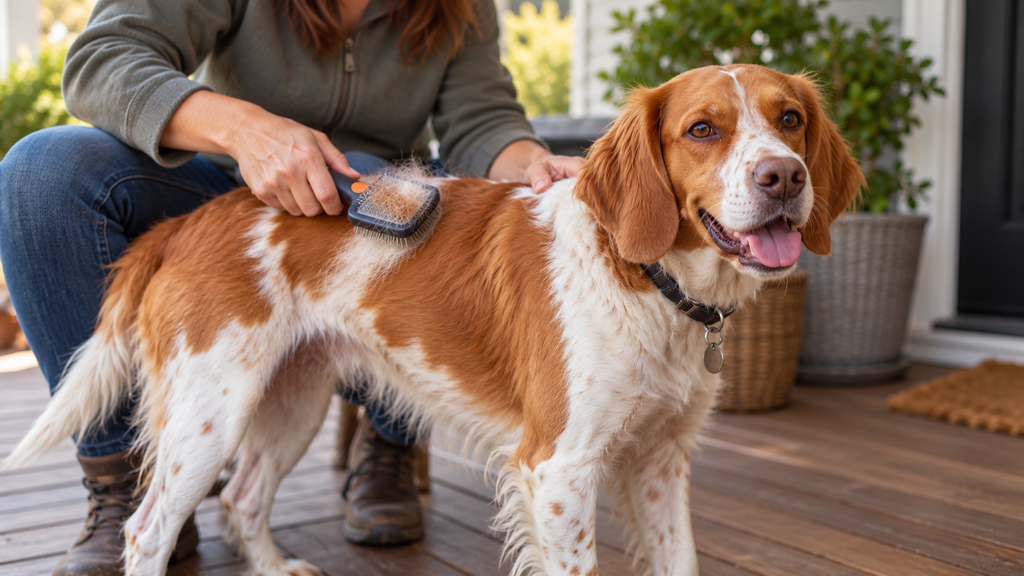
Expect More Loose Hair During Seasonal Coat Changes
Brittanys shed throughout the year, but the amount may become more noticeable when the coat changes seasonally. During these periods, brushing several times a week can remove loose hair before it ends up on furniture, clothing, and floors. There is usually no need for aggressive deshedding or frequent bathing. A pin brush, slicker brush, and metal comb are generally enough for routine coat maintenance. Remember that normal shedding should not create bald areas or irritated skin. Sudden thinning, intense itching, redness, or an unexplained major increase in hair loss should be discussed with a veterinarian rather than treated as an ordinary seasonal coat change.
Feeding and Nutrition
Feeding this active sporting breed is less about finding a special “Brittany diet” and more about matching food intake to age, body condition, activity level, and individual metabolism. These dogs are naturally athletic and often burn considerable energy through running, training, hiking, retrieving, or field work, but calorie requirements can vary dramatically between a working adult and a companion that receives more moderate exercise. The goal is to provide enough nutrition to maintain lean muscle and steady energy without allowing unnecessary weight gain.
A complete and balanced dog food formulated for the appropriate life stage is a sensible starting point. Puppies need food designed specifically for growth, while adults should receive a diet formulated for maintenance or performance depending on activity. Senior dogs may benefit from adjustments in calories, protein, fat, or other nutrients as metabolism and activity change. Rather than choosing food solely because it is marketed for sporting breeds, owners should pay attention to nutritional adequacy, ingredient quality, digestibility, and how the individual dog actually performs on it.
Body condition is one of the best guides to whether feeding amounts are appropriate. A healthy adult should look lean and athletic, with a visible waist when viewed from above and ribs that can be felt easily beneath a light covering of tissue. The ribs should not be buried under a thick layer of fat, but neither should a normally conditioned dog appear excessively thin. Because these dogs have a naturally trim outline, owners sometimes mistake appropriate leanness for underfeeding or, conversely, fail to notice gradual weight gain because the dog remains energetic.
Meal size should also reflect daily activity. A dog that spends several hours working in the field may need substantially more energy than the same dog during a quieter period. However, food intake should not be increased automatically simply because the dog is active by nature. Calories should follow actual workload and body condition. Regular weighing and hands-on body checks are more reliable than relying entirely on feeding guides printed on packaging.
Most healthy adults do well with two measured meals per day. Dividing food rather than offering one very large meal can make portion control easier and may be more comfortable around periods of exercise. Hard running immediately before or after a large meal is best avoided. Allowing time for the dog to settle before and after eating is a sensible routine for any active sporting dog.
Treats should be included in the overall calorie picture. Training often involves frequent rewards, and an enthusiastic learner can accumulate a surprising number of extra calories during a single session. Owners can use part of the normal daily ration for training, choose very small treats, or reduce meal portions slightly when substantial rewards have been given. Treats should support training rather than quietly becoming a second diet.
Protein is especially important for maintaining muscle in active dogs, while dietary fat provides a concentrated source of energy. However, more protein or fat is not automatically better. A lightly exercised household companion may gain weight quickly on a high-calorie performance diet designed for dogs working for hours each day. Conversely, a genuinely hard-working dog may struggle to maintain condition on a low-energy food. Matching the diet to workload is more useful than selecting the richest food available.
Fresh water should always be readily available. Hydration deserves extra attention during warm weather, long walks, field work, and travel. Dogs that exercise intensely should have opportunities to drink regularly rather than waiting until the end of an outing. Water bowls should also be cleaned frequently, particularly when kept outdoors.
Sudden food changes can cause digestive upset, so transitions between diets are usually best made gradually over several days. Persistent diarrhea, vomiting, excessive gas, unexplained weight change, or poor coat condition deserves veterinary attention rather than repeated experimentation with different foods.
Owners may also encounter grain-free, raw, home-cooked, or boutique diets marketed as more “natural.” These approaches are not automatically superior. Home-prepared feeding in particular can become nutritionally unbalanced unless formulated carefully. Anyone considering a specialized diet should discuss it with a veterinarian or a board-certified veterinary nutritionist rather than relying on internet recipes.
The most successful feeding plan is therefore practical and individualized. Measure meals, monitor body condition, adjust calories when activity changes, keep treats under control, and choose a complete diet that the dog digests well. For an athletic breed, staying lean and well muscled is far more valuable than simply feeding a large amount of food.

Feed the Dog in Front of You, Not the Bag
Feeding guides on dog-food packaging are useful starting points, but they cannot account for every dog’s metabolism or activity level. A companion that enjoys moderate daily exercise may need far fewer calories than a dog working in the field for several hours. Check body condition regularly rather than automatically increasing portions because the breed is energetic. You should be able to feel the ribs easily and see a clear waist without the dog appearing bony. Small adjustments made early are much easier than trying to remove significant excess weight later, particularly in an athletic dog whose joints benefit from staying lean.
Brittany Health and Common Health Problems
The Brittany is generally a healthy, athletic breed, and many individuals remain active well into their senior years. Responsible breeding, appropriate exercise, good nutrition, routine veterinary care, and keeping the dog at a lean body weight all contribute to long-term health. However, like every established breed, there are several inherited and acquired conditions that prospective owners should understand before choosing a puppy or adopting an adult dog.
Hip dysplasia is one of the better-known orthopedic concerns. The condition occurs when the hip joint does not develop normally, allowing excessive movement between the ball and socket. Some affected dogs show obvious stiffness, reluctance to jump, difficulty rising, or reduced willingness to exercise, while mildly affected dogs may show few signs until arthritis develops later in life. Because the breed is naturally active, maintaining good muscle condition without allowing excessive weight gain can help reduce unnecessary stress on the joints. Reputable breeders should screen breeding dogs for hip health rather than relying solely on the absence of symptoms.
Epilepsy also occurs within the breed and deserves serious consideration. Idiopathic epilepsy typically causes recurring seizures without an identifiable structural cause in the brain. Seizures can vary from brief episodes of unusual behavior or staring to more obvious collapse, muscle contractions, paddling movements, and loss of awareness. A single seizure does not automatically mean that a dog has epilepsy, but repeated events require veterinary investigation. Owners who witness a seizure should note its duration and behavior and, when safe to do so, record a video for their veterinarian.
Hypothyroidism is another condition seen in sporting breeds. It develops when the thyroid gland does not produce adequate thyroid hormone and can cause symptoms such as unexplained weight gain, reduced energy, poor coat quality, recurrent skin problems, or intolerance to cold. These signs can overlap with many other conditions, so diagnosis requires veterinary assessment and appropriate blood testing rather than relying on symptoms alone. When properly diagnosed, hypothyroidism can usually be managed successfully with lifelong medication.
Eye health should also be monitored. Inherited and age-related eye disorders can occur, including cataracts and other abnormalities that may affect vision. Responsible breeders use appropriate eye examinations when selecting breeding dogs, while owners should seek veterinary advice if they notice cloudiness, redness, persistent squinting, unusual discharge, difficulty seeing in dim light, or changes in confidence when navigating familiar environments.
The ears require routine attention because their dropped shape and feathering can reduce airflow. Dogs that swim regularly or spend time working through wet vegetation may be particularly prone to moisture remaining around the ear canal. Persistent scratching, head shaking, redness, odor, or discharge can indicate infection or inflammation. Regular inspection and careful drying after swimming are preferable to aggressive cleaning, which can itself irritate sensitive ear tissue.
Active dogs are also exposed to injuries that may have little to do with inherited disease. Field work, hiking, running through brush, and retrieving can lead to torn nails, cuts, strained muscles, grass seeds, paw-pad injuries, or foreign material caught in the coat or skin. A quick inspection after demanding outings allows owners to identify small problems before they become more serious.
Dental disease is another preventable health issue. Plaque and tartar accumulate gradually and can eventually contribute to painful gum disease, loose teeth, and oral infection. Regular tooth brushing with dog-safe toothpaste remains one of the most effective home-care measures. Veterinary dental examinations should form part of routine preventive care.
Weight management has a major influence on overall health. These dogs are built to be lean and athletic, and even moderate excess weight places additional strain on joints while reducing stamina. Owners should monitor the dog’s waistline and rib coverage rather than assuming that an enthusiastic appetite means more food is required.
Preventive care should include regular veterinary examinations, vaccinations appropriate to lifestyle and location, parasite control, dental monitoring, and discussion of any changes in behavior, appetite, mobility, thirst, or body condition. Working and highly active dogs may also benefit from periodic assessments of joints, paws, and overall conditioning.
Prospective puppy owners can reduce some health risks by asking breeders about screening rather than simply asking whether the parents “seem healthy.” Hip evaluations, eye examinations, knowledge of seizure history, and honest discussion of problems occurring within the wider family line are all more meaningful than assurances based only on appearance.
No screening program can guarantee that an individual dog will never become ill, and even carefully bred dogs can develop health problems. However, combining thoughtful breeding with sensible weight management, regular exercise, preventive veterinary care, and early attention to symptoms gives the breed an excellent chance of enjoying a long and active life.
Health Screening Matters Before Breeding
A dog can look fit, energetic, and completely healthy while still carrying inherited conditions that may affect its puppies. Responsible breeders therefore use health screening rather than relying on appearance alone. Hip evaluations and eye examinations are particularly useful, while family history can provide important information about conditions such as epilepsy and thyroid disease. Prospective owners should feel comfortable asking what tests have been completed and whether significant health problems have occurred in related dogs. Good breeders will usually welcome these questions and explain both the strengths and the health risks present within their lines rather than claiming that problems never occur.
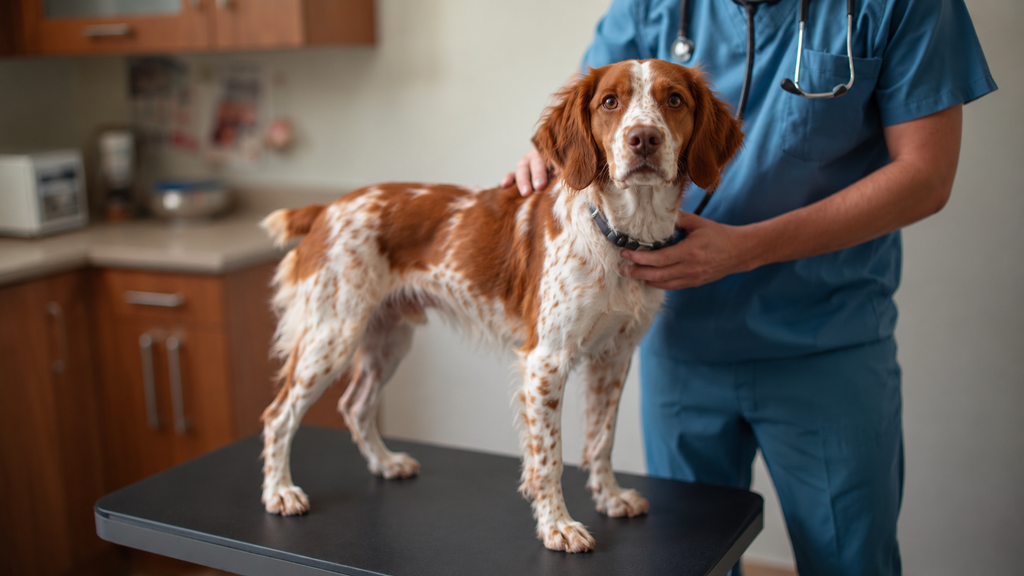
Brittany Health Screening and Breed-Specific Health Alerts
The Brittany is generally regarded as a healthy sporting breed, but responsible ownership still means paying attention to the conditions that breeders are specifically advised to screen for. The most important breed-specific health concerns are not unusual enough to make the breed unhealthy overall, but they are significant enough that buyers should ask for documented screening before choosing a puppy.
Hip health deserves particular attention. The American Brittany Club recommends evaluation for hip dysplasia using OFA or PennHIP. Hip dysplasia occurs when the ball-and-socket joint of the hip does not develop normally, allowing excessive looseness and abnormal wear. Severity varies considerably. Some affected dogs may show stiffness, reluctance to jump, reduced endurance, or difficulty rising, while others can appear outwardly normal for years despite changes visible on X-rays. Because the condition has both genetic and environmental influences, screening breeding dogs helps reduce risk but cannot eliminate it completely.
For owners considering a puppy, asking whether the parents “have good hips” is not enough. Reputable breeders should be able to provide actual OFA or PennHIP results. Ideally, prospective owners should also look beyond the parents and ask whether hip problems have appeared in siblings, previous litters, or other close relatives. A pedigree containing generations of evaluated dogs provides more useful information than a single normal result.
Eye health is the other major screening priority. The American Brittany Club recommends examination by a board-certified veterinary ophthalmologist each year from ages two through eight for breeding dogs. Eye disease can develop even when a young dog appears to see perfectly normally, which is why repeated examination is more meaningful than a one-time check. Owners should seek veterinary attention if they later notice cloudiness, redness, persistent squinting, unusual discharge, reduced confidence in dim light, or changes in vision.
The breed club also recommends that breeding dogs complete at least one additional health assessment submitted to OFA. Accepted options include cardiac evaluation, elbow evaluation, patellar luxation evaluation, or thyroid testing. These are not necessarily indications that every Brittany is at unusually high risk of all four conditions. Instead, they form part of a broader screening program intended to provide more information about the health of breeding stock.
Thyroid disease deserves some awareness because reduced thyroid function can cause subtle symptoms that owners sometimes mistake for normal aging or lack of fitness. Unexplained weight gain, lethargy, coat deterioration, recurrent skin problems, and reduced tolerance for activity should prompt veterinary discussion rather than simply reducing exercise or food without investigating the cause.
Epilepsy is another condition owners should ask breeders about even though it is not one of the core AKC-listed screening tests. There is no simple routine screening test that can guarantee a dog will never develop idiopathic epilepsy. Family history therefore becomes particularly valuable. Prospective owners should ask whether seizures have occurred in parents, siblings, earlier litters, or other close relatives and should be cautious of breeders unwilling to discuss health problems within their lines.
A DNA test for chondrodysplasia, or CDPA, has also been identified for the breed by the AKC. It is currently listed as an additional DNA test identified in Brittanys rather than one of the principal parent-club health requirements. That distinction is important: the existence of a DNA test does not automatically mean every dog needs every available genetic test. Breeding decisions should be guided by the breed club’s recommendations, pedigree knowledge, and veterinary genetic advice rather than simply accumulating as many test certificates as possible.
Owners should also remember that screening protects future generations rather than replacing normal veterinary care. A puppy from health-tested parents can still experience injuries, infections, dental disease, ear problems, cancer, or illnesses unrelated to the conditions being screened.
The strongest approach is therefore a combination of good breeding and good ownership. Choose breeders who openly provide health records, understand the problems occurring within their bloodlines, and are willing to discuss risk without claiming their dogs are completely free of health concerns. Once the dog comes home, keeping it lean, maintaining sensible exercise, attending routine veterinary examinations, and investigating changes early all contribute to long-term health.
For prospective Brittany owners, the key message is reassuring rather than alarming: this is generally a healthy breed, but documented hip and eye screening should be treated as important evidence of responsible breeding rather than an optional extra.

Brittany Lifespan and Aging
The Brittany is generally a long-lived sporting breed, particularly when compared with many larger working and retriever breeds. The typical brittany dog life span is around 12 to 14 years, although some individuals live beyond this range when they remain lean, active, and free from serious disease. Genetics play an important role in longevity, but everyday factors such as body weight, dental care, exercise, preventive veterinary attention, and early treatment of developing health problems can also make a meaningful difference.
One advantage of the breed is its moderate size. Medium-sized dogs often avoid some of the longevity disadvantages seen in very large breeds, while the Brittany’s naturally athletic construction encourages owners to keep it active throughout adulthood. A healthy dog may continue enjoying walks, retrieving games, scent work, and outdoor adventures well into its senior years, although intensity usually needs to be adjusted gradually as the dog ages.
There is no single age at which every dog suddenly becomes “senior.” Many begin showing subtle changes around eight or nine years old, while particularly fit individuals may remain remarkably youthful for longer. Early signs of aging can include taking slightly longer to recover after strenuous exercise, sleeping more deeply, becoming less enthusiastic about jumping into vehicles, or showing mild stiffness after resting. These changes do not necessarily mean that vigorous activity must stop, but they are useful signals that exercise may need to become more carefully managed.
Maintaining movement is important. Older dogs generally benefit from regular moderate exercise because it helps preserve muscle mass, joint mobility, cardiovascular fitness, and mental engagement. Long periods of inactivity can contribute to muscle loss and stiffness. Rather than eliminating exercise, owners can reduce intensity, choose flatter walking routes, shorten demanding sessions, and provide more frequent opportunities for gentle movement.
Weight control becomes especially important during the senior years. A dog that once burned substantial calories through running or field work may gradually become less active while continuing to receive the same amount of food. Even relatively modest weight gain places additional strain on aging hips, knees, and spine. Portions should therefore be reviewed as activity changes rather than automatically remaining the same throughout adulthood.
Mental stimulation should continue as well. Older dogs may not want to run at the same speed, but many still enjoy scent games, short training sessions, food searches, gentle retrieving, and exploring new walking routes. These activities provide enrichment without requiring intense physical exertion and can help preserve confidence and engagement.
Regular veterinary examinations become increasingly valuable with age. Senior dogs can develop conditions that are difficult to detect at home during their early stages, including dental disease, arthritis, thyroid disorders, eye problems, kidney changes, and other age-related illnesses. Periodic blood and urine testing may help identify changes before obvious symptoms develop, allowing treatment or management to begin earlier.
Owners should pay attention to subtle changes rather than dismissing everything as “just old age.” Difficulty rising, persistent limping, unexplained weight loss or gain, increased thirst, changes in appetite, coughing, confusion, altered sleep patterns, or reduced enthusiasm for normal activities deserve veterinary discussion. Pain can be surprisingly easy to overlook in an athletic dog that remains eager to participate despite discomfort.
The home environment may also need small adjustments. Non-slip rugs can help an older dog feel secure on smooth flooring, ramps can reduce repeated jumping into vehicles, and a supportive bed can make resting more comfortable. Food and water should remain easy to reach, and claws may need more frequent attention if reduced exercise means they no longer wear down naturally.
Dental care remains important throughout old age. Chronic dental disease can cause considerable discomfort and may discourage eating even when appetite initially appears normal. Continuing tooth brushing and veterinary dental assessments helps preserve comfort rather than accepting poor oral health as an inevitable consequence of aging.
Perhaps the most important change is learning to judge the dog in front of you rather than comparing it with its younger self. A senior companion may no longer spend an entire day running through fields, but it may still love a morning walk, a scenting game in the garden, and an afternoon resting near the family.
Aging does not erase the breed’s characteristic enthusiasm or attachment to its people. With sensible adjustments to exercise, nutrition, home comfort, and veterinary care, many older dogs continue enjoying an active and deeply involved family life for years after their most athletic period has passed.
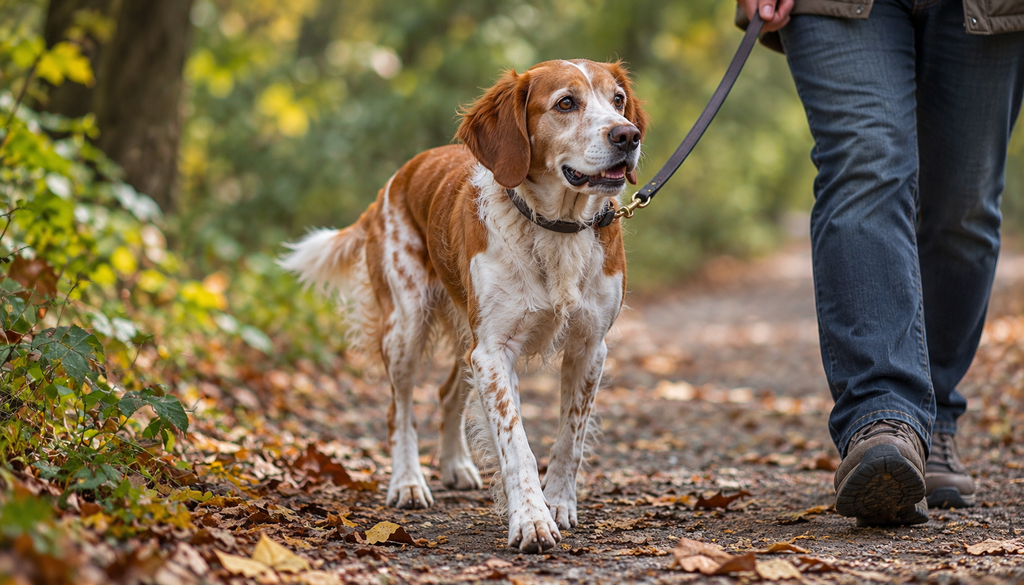
Keep Senior Dogs Moving, but Adjust the Pace
Older dogs still benefit from regular exercise, even when they can no longer manage the intensity they enjoyed when younger. Shorter walks, flatter routes, gentle retrieving, and scent-based games can help preserve muscle strength, mobility, and mental engagement without placing unnecessary strain on aging joints. Watch recovery time as closely as enthusiasm: a senior dog may eagerly continue long after its body has had enough. If stiffness, limping, or reluctance to move persists after activity, discuss it with a veterinarian rather than assuming discomfort is simply an unavoidable part of getting older.
Cost of Owning a Brittany
Owning a Brittany involves more than the initial cost of bringing a puppy or rescue dog home. This is an active, medium-sized sporting breed, so ongoing expenses are usually manageable compared with those of a very large dog, but exercise, training, veterinary care, quality food, and suitable equipment should all be included in the household budget. Over a lifespan that commonly reaches well into the teenage years, routine expenses can add up considerably.
Food is one of the most predictable costs. A healthy adult does not generally require enormous quantities, but an active dog working regularly in the field or participating in demanding sports may consume more calories than a quieter companion. Owners should prioritize a nutritionally complete diet that maintains good body condition rather than assuming the most expensive food is necessarily the best. Treats used during training should also be included in the food budget, particularly during puppyhood and adolescence when rewards may be used frequently.
Routine veterinary care represents another continuing expense. Annual examinations, vaccinations appropriate to the dog’s lifestyle, parasite prevention, dental care, and occasional diagnostic testing should all be expected. Senior dogs may eventually require more frequent examinations, blood tests, medication, or treatment for age-related conditions. Pet insurance or a dedicated emergency savings fund can help owners prepare for unexpected illness or injury.
Emergency veterinary costs deserve particular consideration with an energetic sporting breed. Dogs that run through woodland, fields, rough vegetation, or unfamiliar terrain can suffer cuts, torn nails, paw injuries, strains, grass-seed problems, or other accidents. Hunting and highly active dogs may face additional exposure to environmental hazards. These risks do not make the breed unusually fragile, but they make having a financial plan for unexpected veterinary treatment sensible.
Training can range from relatively inexpensive group puppy classes to private lessons, field training, or organized dog sports. Many owners can handle everyday obedience themselves once they understand the basics, but professional guidance during puppyhood can be a worthwhile investment. A well-run puppy class provides opportunities to practice around distractions while helping owners establish recall, leash manners, calm greetings, and other useful behaviors.
Equipment costs are generally moderate. A secure collar or harness, sturdy leash, long training line, identification tag, comfortable bed, crate if used, food and water bowls, grooming equipment, toys, and retrieving items cover most household needs. Because these dogs are active, owners may replace toys, leads, beds, or outdoor equipment more frequently than they would for a very sedentary breed.
Grooming costs can be comparatively low because the coat does not normally require elaborate professional maintenance. Regular brushing, nail care, ear checks, bathing when necessary, and minor tidying can usually be performed at home. Owners who prefer professional nail trimming or occasional grooming should budget for those services, but frequent salon visits are not normally essential.
Secure containment can become a significant one-time expense. A dog with hunting instincts may be strongly attracted to birds, rabbits, or interesting scents, so a secure yard is valuable. Owners moving into a property with inadequate fencing may need to upgrade gates or boundary fencing before bringing the dog home. This is a much better investment than discovering after an escape that an energetic sporting dog can travel considerable distances.
Dog walking, daycare, or pet-sitting may also become relevant for households where everyone works long hours. These dogs generally enjoy companionship and activity, so regularly leaving one alone for very long periods may create both behavioral and practical problems. Paying for appropriate care during long workdays or vacations should be considered before ownership rather than treated as an unexpected expense later.
Owners interested in hunting or competitive dog sports may spend considerably more. Travel, entry fees, specialist training, equipment, club memberships, and field activities can turn the breed into a relatively expensive hobby. These costs are optional, however, and a companion dog does not need competitive activities to live a fulfilling life.
The initial acquisition cost should never be considered in isolation. A responsibly bred puppy may involve substantial upfront expense because appropriate health screening, veterinary care, puppy raising, and responsible breeding all cost money. Rescue and adoption usually involve a lower initial fee, but adopted dogs still require the same long-term commitment to food, healthcare, equipment, training, and enrichment.
Ultimately, the most important financial question is not whether someone can afford to obtain a Brittany, but whether they can comfortably support one for its entire life. Budgeting for routine care while maintaining an emergency reserve provides much greater security than concentrating only on the cost of bringing the dog home.
Budget for an Active Dog, Not Just a Medium-Sized Dog
The Brittany’s moderate size can make everyday food and equipment costs fairly manageable, but its active lifestyle can create expenses that are easy to overlook. Training classes, durable outdoor equipment, secure fencing, pet care during long workdays, and treatment for occasional field or exercise injuries can all become part of ownership. Owners who hunt or participate in dog sports may spend considerably more on travel, training, and equipment. Keeping an emergency veterinary fund or suitable pet insurance can also prevent an unexpected accident from becoming a financial crisis. The best budget considers the dog’s entire lifestyle rather than its size alone.

Choosing a Brittany Puppy or Rescue
Choosing where your dog comes from can have a major influence on temperament, health, and how easily the dog fits into your household. Whether you are considering a puppy from a responsible breeder or adopting an adult through rescue, the goal should be the same: find a healthy, well-adjusted dog whose energy level and personality genuinely suit your lifestyle.
When looking at Brittany dog breeders, health testing should be one of the first things you investigate. Responsible breeders should be able to provide documented hip and eye screening for breeding dogs and discuss other health testing relevant to their lines. They should also be willing to talk openly about epilepsy, thyroid problems, orthopedic issues, and other conditions that have occurred in related dogs. Statements such as “we’ve never had a problem” are far less useful than actual health records and a detailed knowledge of the pedigree.
Temperament matters just as much as physical health. This breed is naturally energetic, responsive, and people-oriented, but individual lines can differ considerably. Some breeders emphasize field performance and produce dogs with exceptionally strong hunting drive and stamina. Others may breed dogs that participate in conformation, companion activities, or a combination of working and family roles. Neither approach is automatically better, but the breeder should understand what you want from the dog and help determine whether a particular litter is suitable.
A reputable Brittany dog breeder should also ask plenty of questions about you. Expect discussion about your home, work schedule, exercise habits, fencing, previous dog experience, children, other pets, and what you hope to do with the dog. A breeder who is willing to place any puppy with anyone who asks is not demonstrating much concern for long-term compatibility.
Meeting the mother of the litter can provide useful information. She should appear healthy and comfortable, although nursing mothers may naturally look somewhat leaner than usual. Her behavior should also be considered in context. A mother protecting young puppies may be more watchful than she normally would be, but extreme fearfulness or uncontrolled aggression deserves careful consideration. The father may live elsewhere, particularly when breeders select a stud dog from another kennel.
Puppies should be raised in a clean environment with opportunities for normal handling, play, exploration, and exposure to everyday sights and sounds. Early experiences matter greatly in a sensitive, intelligent sporting breed. A puppy raised with little human interaction or environmental stimulation may require considerably more work to build confidence later.
People searching online for a puppy Brittany dog may encounter listings emphasizing unusual colors, unusually small size, immediate availability, or other marketing claims. Those features should never take priority over health, temperament, and responsible breeding. As discussed earlier, there is no recognized miniature variety, and unusual appearance does not make a puppy more valuable or more suitable as a companion.
A good breeder should provide veterinary records, information about vaccinations and parasite control, registration details where appropriate, feeding guidance, and a written contract. Many responsible breeders also require that a dog be returned to them if the owner can no longer keep it rather than being surrendered elsewhere. This lifetime responsibility is one of the clearest signs that the breeder cares about the dogs beyond the initial placement.
Rescue is another excellent route to ownership. Breed-specific rescue organizations sometimes have young adults, retired hunting dogs, former breeding dogs, or household pets whose circumstances have changed. General shelters and sporting-dog rescues may also occasionally have Brittanys or Brittany mixes available.
An adult rescue can offer some advantages. Size and coat are already apparent, and foster carers may be able to describe the dog’s behavior around children, other dogs, cats, visitors, vehicles, and household routines. Energy level may also be easier to judge than it is in an eight-week-old puppy. However, background information is sometimes incomplete, so adopters need to be comfortable allowing the dog time to settle and reveal its personality gradually.
Ask rescue organizations what they know about recall, prey drive, separation behavior, house training, previous injuries, veterinary history, and reactions to other animals. A dog with a strong history of hunting or roaming may need particularly secure fencing, while another may already be accustomed to suburban family life.
Avoid choosing purely on appearance. A beautifully marked dog may be entirely wrong for a quiet household if it has intense working drive, while a less striking individual may be the perfect family companion. Compatibility should always outrank color, markings, sex, or age.
Prospective owners should also resist pressure to make an immediate decision. Responsible breeders and rescues generally want placements to succeed and should be willing to answer questions rather than creating artificial urgency. Taking time to evaluate health, temperament, activity needs, and household compatibility is far more important than obtaining a dog quickly.
Whether you choose a carefully bred puppy or an adult rescue, the best outcome comes from selecting for the life you actually lead rather than the life you imagine you might lead. An active sporting dog needs commitment long after the excitement of bringing it home has passed. Choosing thoughtfully at the beginning gives both owner and dog the strongest possible foundation for the years ahead.
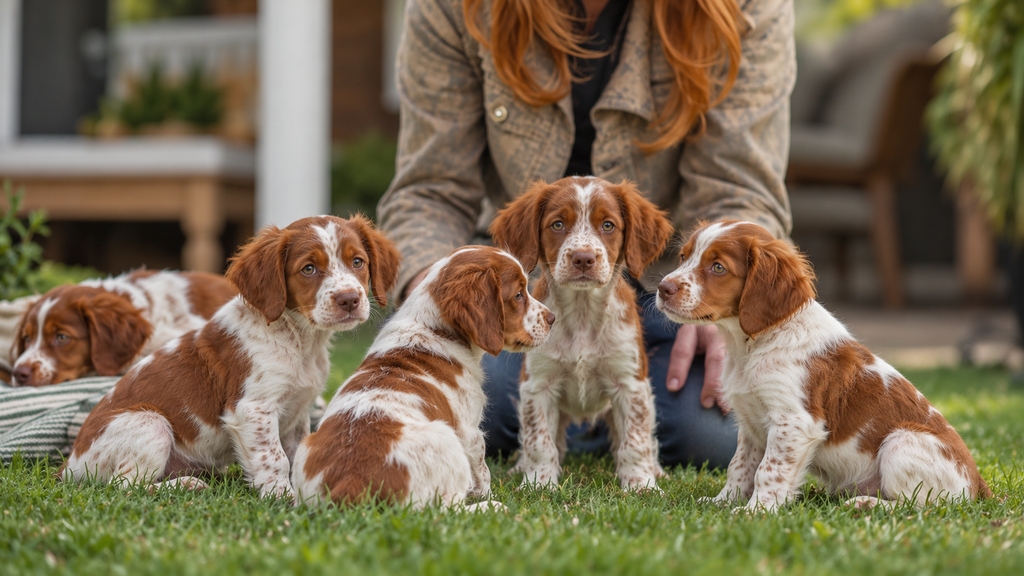
Choose for Temperament Before Color or Markings
Orange and white, liver and white, roan patterns, and other attractive markings can make individual puppies immediately appealing, but appearance should never drive the decision. Ask instead about the parents’ temperament, health screening, energy level, hunting drive, and how the puppies have been raised. A responsible breeder or rescue should help match the dog to your household rather than encouraging you to choose solely from photographs. The calmest-looking puppy in one moment is not necessarily the easiest adult, and the most outgoing puppy is not automatically the best choice for an active owner. Long-term compatibility matters far more than coat pattern.
Is a Brittany Right for You?
The Brittany can be an outstanding companion, but it is not a breed that suits every household. The qualities that make these dogs so appealing — intelligence, athleticism, sensitivity, affection, and enthusiasm — also mean they need an owner who is prepared to be actively involved in their daily life. Before choosing the breed, it is worth considering not only whether you like the way these dogs look, but whether their energy level, temperament, and need for companionship genuinely fit the way you live.
An active lifestyle is one of the clearest indicators of a good match. These dogs usually thrive with owners who enjoy walking, hiking, training, exploring outdoors, or participating in dog sports. They do not necessarily need to hunt, but they do need meaningful physical activity and mental stimulation. A household that enjoys spending time outdoors will usually find it much easier to meet the breed’s needs than one looking for a quiet companion that is content with minimal exercise.
Time and availability matter just as much as fitness. This is a people-oriented sporting dog that often wants to be involved in family life. Long periods of isolation can be difficult for some individuals, particularly if they are also under-exercised. Owners who work very long hours may need to arrange dog walking, daycare, help from family, or another form of structured companionship rather than expecting the dog to cope alone every day.
The breed can suit first-time owners, but only if they are prepared to learn. Intelligence and eagerness to work make training rewarding, while sensitivity means inexperienced owners need to avoid harsh or inconsistent methods. Someone who is willing to attend puppy classes, practice recall, establish household rules, and learn how to manage a high-energy sporting dog can do very well. Someone looking for an easygoing dog requiring little training may find the experience frustrating.
Housing size is less important than lifestyle. A large rural property can be ideal, but it does not automatically provide enough stimulation if the dog is simply left outside. Conversely, a smaller suburban home can work perfectly well when the owner provides substantial daily exercise, training, and interaction. Secure fencing is a major advantage because wildlife, birds, and interesting scents can tempt these dogs to wander.
Families with children can also be a good fit. The breed is often affectionate and playful, but the household should be comfortable managing youthful excitement. Very young children may be accidentally knocked over by an energetic adolescent dog, while older children can often become excellent walking and training companions under adult supervision.
Other pets require realistic expectations. Many individuals live happily with other dogs and can learn to coexist with cats, particularly when introductions are handled carefully. Small prey animals, however, are a different matter. Hunting instinct should never be ignored simply because the dog is friendly in other situations.
Prospective owners should also think about noise, mud, shedding, and everyday management. A dog that runs through wet fields, investigates brush, swims, or plays outdoors will bring some of the outdoors back into the house. Moderate shedding, muddy paws, occasional burrs in the coat, and frequent cleaning are normal parts of life with an active sporting breed. Owners who expect an immaculate home at all times may find this frustrating.
There is also the question of what you want from your dog emotionally. These dogs often form close bonds and can be very affectionate, attentive, and involved. For people who enjoy that level of connection, it can be one of the breed’s greatest strengths. For someone who prefers a more independent dog, the constant desire to participate may feel demanding.
A good owner does not need to be a competitive athlete or hunter. What matters is consistency. Regular walks, training, outdoor activity, companionship, and opportunities to use the dog’s brain are more important than occasional extreme exercise. The breed tends to do particularly well with owners who enjoy building routines around their dog rather than trying to fit the dog into a mostly sedentary lifestyle.
You should also be comfortable with long-term commitment. A healthy dog may live 12 to 14 years or more, meaning the decision affects travel, housing, finances, work routines, and family plans for many years. Puppies eventually become adolescents, adults, and seniors, each with different needs.
For the right person, the Brittany can be one of the most rewarding sporting companions available: affectionate at home, athletic outdoors, responsive in training, and deeply connected to its people. The best match is an owner who wants an active relationship with their dog rather than simply a pet that shares the house.
Best Suited to an Active, Involved Owner
This breed is usually happiest with someone who genuinely enjoys doing things with their dog. Regular exercise, training, outdoor exploration, and companionship matter far more than simply providing a large yard. Owners should also be comfortable with a sensitive temperament, strong hunting instincts, moderate shedding, and a dog that may want to follow them from room to room. You do not need to hunt or compete in dog sports, but you should enjoy an active lifestyle and be willing to provide consistent structure. If you want an affectionate, intelligent companion that participates closely in everyday life, the breed can be an excellent match.

Final Thoughts
The Brittany is a breed that makes the most sense when viewed through the lens of its original purpose. It was developed to work closely with people, move efficiently across open country, locate game, and remain responsive over long periods of activity. Those instincts are still very much present in modern dogs, even when they live entirely as family companions. Understanding that working heritage helps explain nearly every major trait owners encounter, from the breed’s energy and sensitivity to its enthusiasm for scent, movement, training, and human interaction.
For active households, those qualities can be enormously rewarding. These dogs often bring a combination of athleticism and affection that is difficult to match. They are capable of covering serious ground outdoors, learning quickly, participating in dog sports, hiking, retrieving, and exploring, yet many are equally content to settle close to their people once their needs have been met. That contrast between energetic outdoor worker and affectionate household companion is one of the breed’s greatest strengths.
The challenge is that the balance only works when the dog receives enough meaningful activity. Exercise cannot be treated as an occasional weekend project. Daily movement, mental stimulation, training, and interaction form part of normal ownership. Without those outlets, a bright sporting dog may invent its own entertainment through barking, chewing, stealing objects, chasing wildlife, or constant attention-seeking. Owners who enjoy doing things with their dog usually find these needs far easier to meet than people hoping for a companion that mostly fits around a sedentary routine.
Sensitivity is just as important as energy. These dogs tend to respond closely to their owners and often notice tone, body language, and changes in routine quickly. That makes them highly trainable, but it also means harsh handling can be counterproductive. Calm consistency, reward-based teaching, and clear expectations generally produce a much more confident and willing companion than heavy correction.
Families should also remember that prey drive is part of the breed rather than an undesirable flaw that training will completely erase. Birds, rabbits, scent trails, and fast-moving animals can be intensely interesting. Good recall, secure fencing, careful introductions to other pets, and sensible management are all part of responsible ownership. A well-trained dog can develop excellent self-control, but owners should still respect the instincts generations of selective breeding have created.
Health is generally a positive part of the picture. Responsible breeding, documented hip and eye screening, awareness of seizure history and thyroid concerns, and good preventive care can all reduce avoidable risk. Prospective owners should take time choosing a breeder or rescue organization rather than making decisions based only on availability or appearance. A healthy, well-socialized dog with an appropriate temperament is far more important than achieving a particular marking pattern or finding the smallest puppy in a litter.
Grooming is comparatively straightforward. Regular brushing, ear checks, paw inspection, nail care, and occasional bathing usually keep the coat in good condition. The more significant commitment is lifestyle rather than coat maintenance. Muddy feet, grass seeds, wet feathering, shedding, and outdoor debris are all normal realities of sharing a home with an energetic sporting dog.
The breed also ages relatively well when kept lean and active. Senior dogs may need shorter walks and gentler routines, but many continue enjoying scent work, leisurely exploration, training games, and close involvement with family life for years. The same sensitivity and attachment that characterize a young dog often remain strong into old age.
For the right owner, the Brittany can offer an unusually rich relationship. It is not simply an attractive medium-sized dog or a smaller alternative to a retriever. It is an intelligent, athletic, emotionally responsive sporting breed that thrives on partnership. Owners who enjoy training, walking, exploring, and including their dog in everyday life are likely to appreciate just how versatile and engaging these dogs can be.
The best match is someone who wants a dog to participate rather than merely coexist. Give this breed structure, exercise, purposeful activity, patient training, and genuine companionship, and it can become a remarkably devoted family dog, outdoor partner, and sporting companion for many years.
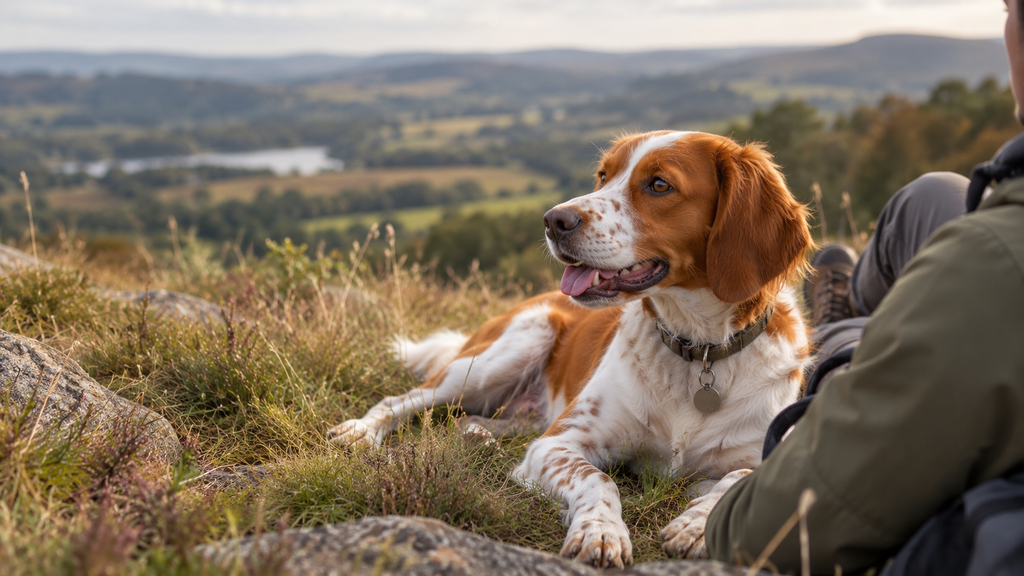
Explore More Sporting Dog Breeds
The Brittany is one of many sporting dogs developed to work closely with people in the field. If you enjoy its intelligence, athleticism, and working instincts, explore our Sporting Dogs guide to discover retrievers, pointers, setters, and spaniels with their own distinctive histories, temperaments, and working styles.
Official Brittany Breed Information
For additional information about the Brittany breed standard, recognized characteristics, history, and responsible ownership, visit the American Kennel Club Brittany breed profile. The AKC provides authoritative breed information and further resources for prospective and current Brittany owners.