

Nova Scotia Duck Tolling Retriever
The Nova Scotia Duck Tolling Retriever is an intelligent, energetic, and remarkably versatile sporting dog with a distinctive red coat and an enthusiasm for life that rarely goes unnoticed. Affectionately known as the Toller, this compact Canadian retriever combines the retrieving instincts of a traditional gundog with the agility, curiosity, and playful personality of a natural entertainer.
Although smaller than most retrievers, Tollers possess extraordinary stamina, strong working instincts, and a deep attachment to their families, making them fascinating companions for people who enjoy an active lifestyle. With their striking foxlike appearance, remarkable swimming ability, and natural enthusiasm for retrieving, Tollers stand apart from more familiar sporting breeds. Their combination of intelligence, athleticism, and affectionate companionship makes them especially appealing to owners who want an active and engaging dog.
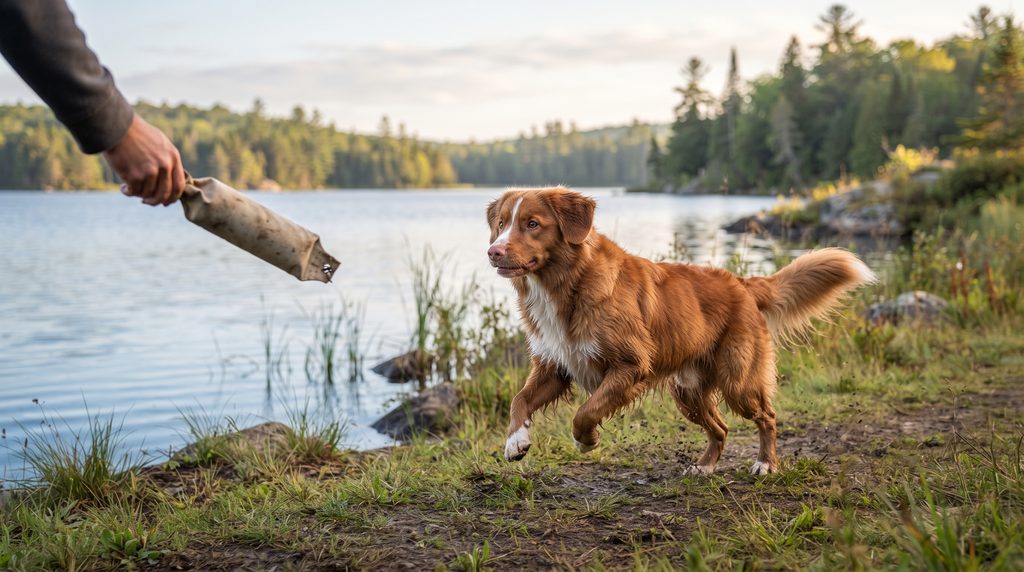
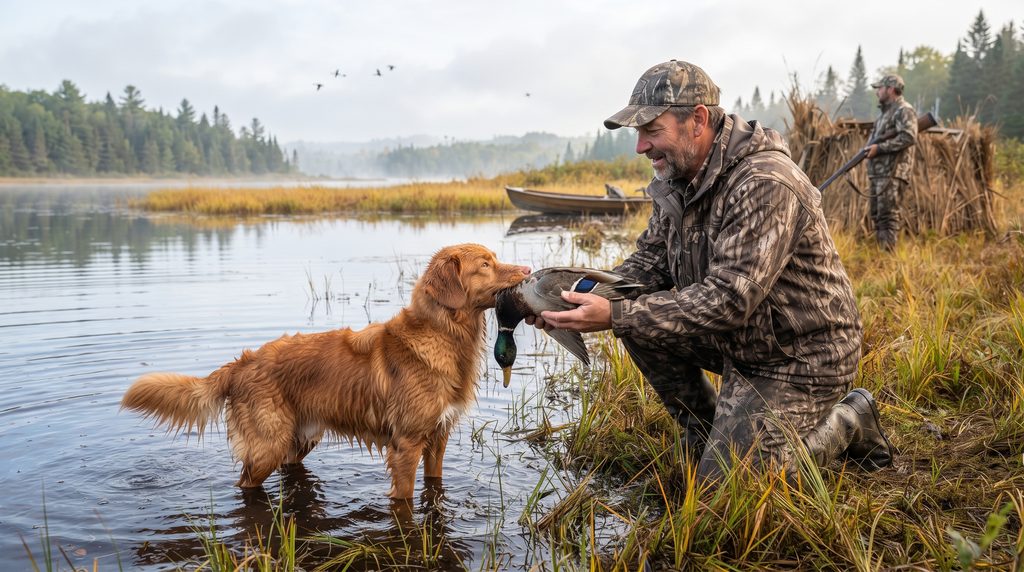
Developed along the rugged coastline of Nova Scotia, Canada, the Toller has one of the most unusual working histories in the sporting dog world. Unlike retrievers bred primarily to collect fallen game, this breed was developed to attract waterfowl toward hunters before retrieving birds from land or water. By running, jumping, and playing along the shoreline, these clever dogs aroused the curiosity of nearby ducks. Their animated movements helped bring waterfowl closer, creating a distinctive hunting technique known as tolling.
The breed’s unusual background helps explain many of the qualities that make Tollers such engaging modern companions. They are quick-thinking, observant dogs that enjoy having something meaningful to do. Whether retrieving a ball, navigating an agility course, learning advanced obedience exercises, or exploring woodland trails, they approach activities with impressive determination. A Toller is rarely satisfied with simply watching the world go by when there is an opportunity to participate.
Sometimes called the Nova Scotia Retriever, the breed is frequently mistaken for a small Golden Retriever because of its reddish coat, feathered tail, and friendly expression. However, the similarities are largely superficial. Tollers are generally more compact, often more intense during activities, and can be considerably more reserved around unfamiliar people. Their intelligence and sensitivity also mean that successful ownership requires patience, consistency, and an understanding of their distinctive working temperament.
One of the breed’s most appealing characteristics is its ability to combine energetic enthusiasm with close family companionship. A well-adjusted Toller can be affectionate, entertaining, and deeply loyal, often developing particularly strong relationships with the people who provide regular interaction and stimulating activities. Many enjoy participating in everyday family routines, from outdoor adventures to quiet evenings at home. However, their ability to relax indoors is usually supported by sufficient physical exercise, mental enrichment, and opportunities to satisfy their natural instincts.
Despite their manageable size, Tollers should never be mistaken for low-maintenance dogs. Their impressive energy levels and desire for engagement can become challenging when their needs are overlooked. Without appropriate exercise and mental stimulation, some develop excessive barking, restlessness, destructive habits, or demanding attention-seeking behaviors. They generally thrive with owners who appreciate interactive training, structured activities, and regular outdoor time rather than households seeking a particularly relaxed or independent companion.
Training can be extremely rewarding because Tollers are capable learners with excellent memories and a natural enthusiasm for retrieving. Many respond particularly well to reward-based methods that incorporate play, food, and varied challenges. However, intelligence does not always mean automatic obedience. Some individuals are independent thinkers, easily distracted by movement, or sensitive to harsh handling. Establishing clear expectations while keeping lessons enjoyable helps develop a confident dog that is willing to cooperate rather than simply react to pressure.
Their appearance is equally distinctive. Tollers have a weather-resistant double coat in shades ranging from golden red to deeper copper, with white markings often appearing on the chest, feet, face, or tail tip. Their athletic bodies are designed for efficient movement, while their strong swimming ability reflects generations of waterfowl work. The thick coat provides protection in challenging outdoor conditions, although it also requires regular grooming and becomes more demanding during seasonal shedding periods.
Prospective owners should also recognize that Tollers have breed-specific health considerations and benefit from careful breeding, appropriate early socialization, and lifelong preventive care. Responsible ownership includes understanding inherited conditions, maintaining a healthy weight, and selecting exercise appropriate to the dog’s age and physical development. Their affectionate nature and manageable proportions can make them wonderful family companions, but their needs extend well beyond those of a typical casual household pet.
For active individuals and families who enjoy training, outdoor recreation, and a close relationship with their dog, the Nova Scotia Duck Tolling Retriever offers an exceptional combination of intelligence, athleticism, and personality. Its appeal lies not simply in its beautiful appearance, but in the lively, curious, and capable companion beneath that red coat. Understanding both the rewards and responsibilities of Toller ownership is the key to deciding whether this distinctive Canadian sporting breed is the right addition to your home.
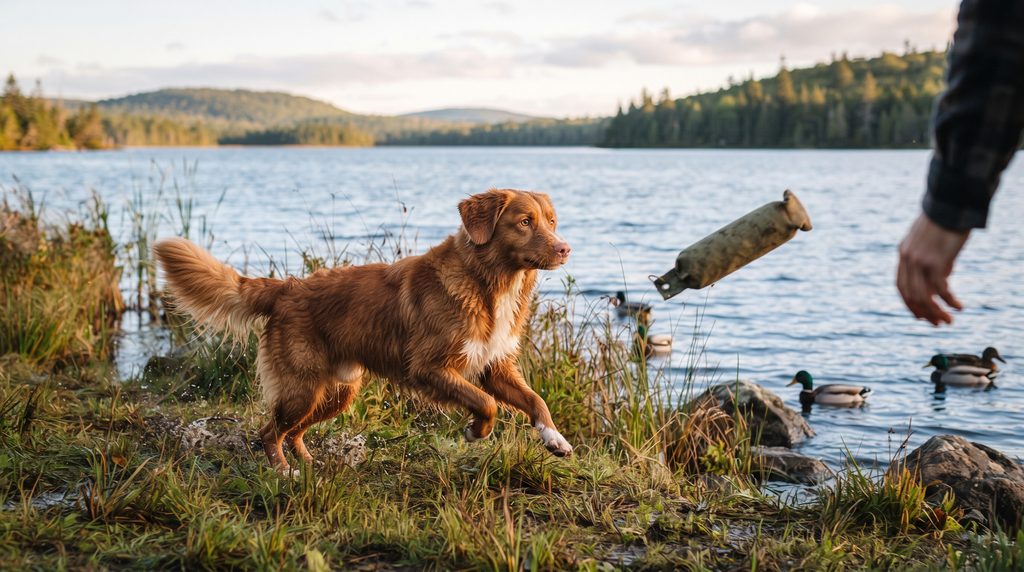
Table of Contents
Nova Scotia Duck Tolling Retriever Fast Facts
Breed Group: Sporting
Origin: Nova Scotia, Canada
Height: Males 18–21 inches; females 17–20 inches
Weight: 35–50 pounds
Life Expectancy: 12–14 years
Size: Medium
Coat: Medium-length, water-repellent double coat
Coat Care: Weekly brushing; more during seasonal shedding
Shedding: Moderate, with heavier seasonal shedding
Exercise Needs: High; daily physical and mental activity
Temperament: Intelligent, energetic, affectionate, alert
Primary Role: Tolling and retrieving waterfowl
Nova Scotia Duck Tolling Retriever Star Ratings
Apartment Friendly: ★★☆☆☆
Family Friendly: ★★★★☆
Good With Children: ★★★★☆
Good With Other Dogs: ★★★★☆
First-Time Owner Friendly: ★★☆☆☆
Easy Grooming: ★★★☆☆
Affectionate: ★★★★☆
Easy to Train: ★★★★☆
Low Shedding: ★★☆☆☆
Adaptable: ★★★☆☆
High Exercise Needs: ★★★★★
Tolerates Being Alone: ★★☆☆☆
Nova Scotia Duck Tolling Retriever History and Origins
The history of the Nova Scotia Duck Tolling Retriever begins along the rugged Atlantic coastline of southwestern Nova Scotia, Canada, where hunters needed an adaptable dog capable of working in challenging wetlands, cold water, and unpredictable coastal weather. Developed during the nineteenth century, this distinctive retriever emerged from a practical hunting tradition that combined an unusual method of attracting waterfowl with the familiar task of retrieving fallen birds. Its origins are closely associated with the Little River area of Yarmouth County, where generations of local hunters refined the breed’s remarkable working abilities.
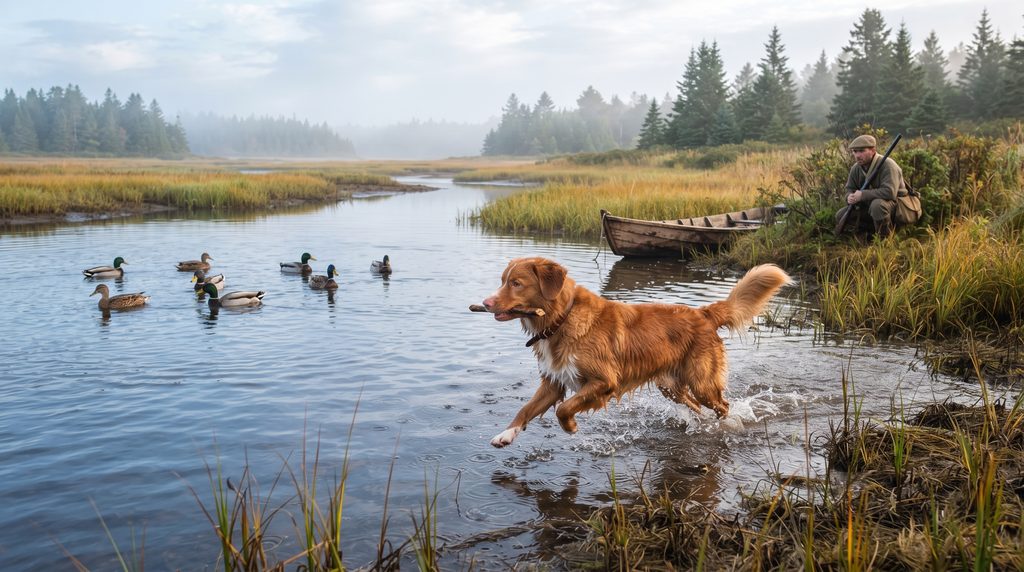
Unlike conventional retrievers, which were primarily expected to collect game after shooting, the Toller was developed to perform an additional task before the hunt began. The practice, known as tolling, involved encouraging the dog to run, jump, disappear, and reappear along the shoreline while chasing small sticks or other objects thrown by its handler. These playful movements attracted the attention of curious ducks swimming offshore. As the birds approached to investigate, the hunter remained concealed among reeds or natural vegetation.
The technique was inspired partly by observations of foxes, whose lively movements along shorelines could attract the curiosity of waterfowl. Hunters recognized that a small, agile, reddish dog might produce a similar response. The Toller developed the ability to perform these energetic shoreline activities while remaining responsive to its handler. Once the ducks moved within range and birds were brought down, the same dog was expected to swim into the water, retrieve them gently, and return efficiently to shore.
The development of Nova Scotia Duck Tolling Retriever duck hunting required a combination of characteristics that were not always found together in traditional sporting dogs. Breeders needed strong swimming ability, an enthusiastic retrieving instinct, exceptional endurance, and a willingness to engage in animated play. The dog’s compact size allowed it to maneuver efficiently through shoreline vegetation, while its dense, water-resistant double coat offered protection against cold water and harsh weather. Its distinctive reddish appearance also became closely associated with the breed’s specialized working identity.
Although the exact ancestry of the Toller remains uncertain, historical accounts suggest that several types of sporting and working dogs contributed to its development. Retriever-type dogs, spaniels, setters, and possibly farm collies are frequently mentioned as likely influences. Some breed historians have also suggested connections with European decoy dogs, including the Dutch Kooikerhondje, although a direct ancestral relationship has not been conclusively established. What is clear is that local hunters selected dogs for useful working qualities rather than attempting to create a fashionable appearance.
During its early development, the breed was commonly known as the Little River Duck Dog or Yarmouth Toller, reflecting the coastal communities where it became established. These dogs were valued by hunters who relied upon their versatility, resilience, and natural ability to work in demanding conditions. Over successive generations, careful selection helped produce a more consistent type, combining the recognizable red coat, agile movement, retrieving enthusiasm, and distinctive tolling behavior that remain important characteristics of the modern breed.
The broader tradition of Nova Scotia Duck Tolling Retriever hunting also extended beyond attracting ducks. These dogs were capable of retrieving game from both land and water, working alongside hunters in varied environments and adapting to changing conditions. Their ability to remain attentive between bursts of activity was particularly valuable during traditional waterfowl hunts. Although tolling was their defining specialty, their willingness to retrieve, swim, and cooperate with people made them practical, versatile companions for hunters throughout the region.
An important milestone arrived in 1945, when the Canadian Kennel Club officially recognized the breed under its present name. This recognition helped establish a formal identity for a dog that had previously been known mainly within regional hunting communities. Nevertheless, the Toller remained relatively uncommon for much of the twentieth century. Dedicated Canadian breeders and enthusiasts worked to maintain breeding populations, preserve the breed’s distinctive characteristics, and ensure that its specialized hunting instincts were not lost.
Interest gradually expanded beyond Canada, particularly as sporting dog enthusiasts in the United States discovered the Toller’s combination of intelligence, agility, and retrieving ability. The Nova Scotia Duck Tolling Retriever Club (USA) was established in 1984, helping coordinate efforts to promote responsible breeding and protect the breed’s working heritage. On July 1, 2003, the American Kennel Club officially recognized the Toller as a member of the Sporting Group, giving the breed greater visibility in American dog shows and organized canine activities.
Today, the Nova Scotia Duck Tolling Retriever is appreciated internationally as both a capable sporting dog and an engaging family companion. Although many Tollers no longer participate in traditional waterfowl hunting, their instincts remain visible in their love of retrieving, fascination with movement, enthusiasm for swimming, and willingness to tackle demanding physical challenges. Modern activities such as dock diving, agility, obedience, and hunt tests provide opportunities to express these inherited abilities. Understanding the breed’s unusual origins helps explain why Tollers are happiest when their natural intelligence, energy, and enthusiasm are given meaningful outlets.
The Little River Duck Dog: Canada’s Coastal Hunting Heritage
Before receiving its official breed name in 1945, the Nova Scotia Duck Tolling Retriever was widely associated with the Little River area of Yarmouth County, where local hunters developed and maintained its distinctive working characteristics. Unlike many sporting breeds imported from Europe, the Toller was refined in Canada to meet specific regional hunting needs. Its unusual method of enticing ducks toward shore set it apart from conventional retrievers, while its ability to retrieve from cold coastal waters made it especially valuable. Today, the breed remains an enduring symbol of Nova Scotia’s sporting traditions and practical hunting ingenuity.
Nova Scotia Duck Tolling Retriever Appearance and Size
The Nova Scotia Duck Tolling Retriever is a beautifully balanced, medium-sized sporting dog with a distinctive foxlike appearance, rich reddish coat, and compact athletic build. Although it is the smallest of the American Kennel Club’s recognized retriever breeds, the Toller possesses remarkable strength, agility, and endurance. Its appearance reflects generations of selective breeding for demanding waterfowl work, combining the power needed for swimming and retrieving with the flexibility to move quickly along uneven shorelines, marshes, and wooded terrain.
Understanding Nova Scotia Duck Tolling Retriever size is particularly important for prospective owners who may assume this breed is simply a miniature Golden Retriever. Adult males generally stand between 18 and 21 inches at the shoulder, while females typically measure 17 to 20 inches. Males usually have a slightly more substantial appearance, although both sexes should display the same athletic proportions and purposeful movement. The breed’s manageable dimensions make it easier to transport and accommodate than larger retrievers without reducing its considerable exercise requirements.
Typical Nova Scotia Duck Tolling Retriever weight ranges from approximately 35 to 50 pounds, depending on sex, height, bone structure, and individual development. A healthy adult should feel firm and muscular rather than heavy or bulky. The ribs should be easily felt beneath a light covering of tissue, and a defined waist should be visible when viewed from above. Maintaining an appropriate body condition is especially important because excess weight can affect athletic performance, joint health, and overall mobility.
The breed’s overall proportions are slightly longer than tall, creating a strong, balanced outline without appearing excessively stretched. When evaluating Nova Scotia Duck Tolling Retriever height, measurements are taken at the withers, the highest point of the shoulders. However, height alone does not determine whether a dog has correct proportions. A well-constructed Toller should have a level topline, moderately deep chest, strong back, and muscular hindquarters capable of producing the powerful, efficient movement required for swimming and retrieving.
The Toller’s head is another defining feature. Its clean, slightly wedge-shaped skull, moderately tapered muzzle, and high-set triangular ears create an alert, intelligent expression often compared to that of a fox. The eyes are almond-shaped and typically range from amber to brown, conveying warmth and attentiveness. Nose pigmentation may be black or flesh-colored, blending naturally with the coat. At rest, some Tollers appear thoughtful or almost serious, but their expression often transforms when an exciting activity begins.
The breed’s weather-resistant double coat is one of its most important physical adaptations. A soft, dense undercoat provides insulation, while the medium-length outer coat helps repel water and protect the dog from challenging outdoor conditions. The coat is generally straight, although a slight wave may appear along the back. Moderate feathering develops behind the ears, along the legs, beneath the body, and around the tail, producing a naturally attractive appearance without the excessive coat volume sometimes associated with show-bred sporting dogs.
Among the most recognizable Nova Scotia Duck Tolling Retriever colors are beautiful shades of golden red, orange-red, and deep copper. Some dogs have lighter feathering beneath the tail and along the hindquarters, creating subtle variations within the same coat. White markings commonly appear on the chest, feet, tail tip, or as a narrow facial blaze. However, white markings are not essential, and a completely red Toller can still meet the breed standard. Rich, naturally pigmented red remains the defining coat characteristic.
Occasionally, online searches for a Black Nova Scotia Duck Tolling Retriever Puppy or a Chocolate Nova Scotia Duck Tolling Retriever create confusion about the breed’s accepted appearance. Under the American breed standard, black coat areas and brown coats are disqualifying colors rather than recognized varieties. A black nose is perfectly normal, but an entirely black or chocolate-colored coat is not characteristic of a purebred Toller. Dogs advertised with these unusual colors should be evaluated carefully, particularly when their pedigree or breed identification is uncertain.
The tail is heavily feathered and carried naturally as an extension of the body, often rising into an expressive curve when the dog becomes excited or begins working. Strong, well-arched feet with webbing between the toes contribute to effective swimming, while balanced shoulders and muscular hindquarters support quick acceleration and sustained activity. Despite the breed’s attractive appearance, its physical structure should always emphasize working efficiency rather than exaggerated features or an unnecessarily heavy coat.
Toller puppies undergo noticeable changes as they mature. Young dogs may appear relatively leggy or lightly built before their adult proportions develop, while the coat gradually becomes fuller and more heavily feathered. Some individuals continue developing muscle and overall substance after reaching their adult height. For prospective owners, the most important consideration is not simply coat color or appearance, but whether the dog possesses sound structure, healthy movement, and the athletic qualities that define this remarkable Canadian retriever.
Why Tollers Are Sometimes Mistaken for Small Golden Retrievers
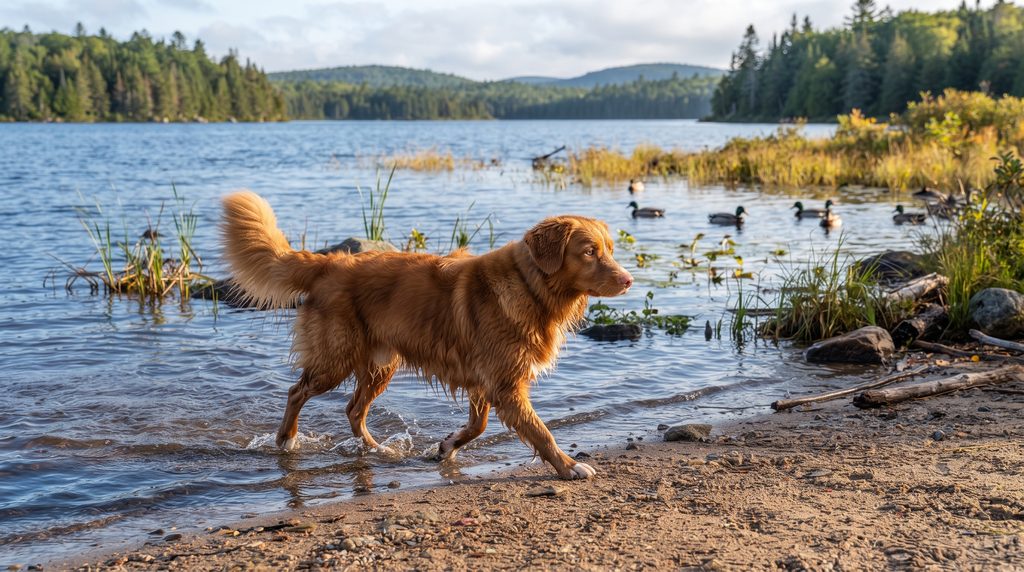
The Nova Scotia Duck Tolling Retriever shares several visible characteristics with the Golden Retriever, including a reddish-gold coat, feathered tail, and friendly expression. However, the Toller is substantially smaller, typically weighing 35–50 pounds compared with the Golden Retriever’s usual 55–75 pounds. Tollers also have a more compact, agile build, a distinctly wedge-shaped head, and coat colors concentrated in rich red and copper shades. Their movements are often particularly quick and springy, reflecting their specialized shoreline hunting heritage. Although the breeds share retrieving ancestry and a love of water, they remain distinctly different dogs with their own physical and behavioral characteristics.
Nova Scotia Duck Tolling Retriever Temperament and Personality
The Nova Scotia Duck Tolling Retriever Temperament is a fascinating combination of intelligence, enthusiasm, affection, and determination. These lively sporting dogs are naturally alert, quick to respond, and deeply interested in the world around them. Although their beautiful red coats and friendly expressions may suggest an easygoing family retriever, Tollers often possess a more intense and sensitive personality than prospective owners expect. Their behavior reflects generations of selective breeding for demanding hunting work, where independence, concentration, and close cooperation with human handlers were equally important.
One of the breed’s most distinctive qualities is its remarkable enthusiasm for purposeful activity. A Toller can appear perfectly relaxed while resting beside its family, yet transform almost instantly when presented with a favorite retrieving toy or the possibility of swimming. This ability to switch between quiet companionship and energetic action is characteristic of the breed. However, developing a reliable off-switch requires appropriate exercise, consistent routines, and opportunities to practice calm behavior rather than constant excitement.
The Nova Scotia Duck Tolling Retriever Personality is typically affectionate, playful, curious, and strongly attached to familiar people. Many Tollers enjoy physical closeness, following household members between rooms or settling nearby during quieter moments. They often develop particularly strong connections with the individuals who regularly train, exercise, and interact with them. Despite this affection, some retain an independent streak and prefer making their own decisions when activities become repetitive or insufficiently rewarding. Their loyalty is genuine, but their cooperation is usually strengthened through enjoyable shared experiences.
Unlike some retrievers that enthusiastically greet almost everyone, Tollers can be naturally reserved around unfamiliar people. This reserve should not be confused with fearfulness or aggression. A confident, well-socialized Toller may simply prefer observing a newcomer before deciding whether to interact. Early exposure to different people, places, sounds, and experiences helps puppies develop appropriate confidence. Owners should respect the dog’s individual comfort level rather than expecting enthusiastic greetings or forcing physical contact with strangers.
Intelligence is one of the breed’s greatest strengths, but it can also create challenges. Tollers are exceptionally observant and often notice subtle changes in routines, body language, and environmental movement. They can learn complicated tasks quickly, remember previously rewarded behaviors, and anticipate their owner’s next actions. However, this awareness also means they may become frustrated by inconsistent expectations or excessive repetition. Training that combines clear communication, varied challenges, and positive reinforcement generally produces the most enthusiastic and reliable responses.
Sensitivity is another important characteristic. Many Tollers respond strongly to their owner’s tone of voice, emotional state, and handling style. Harsh corrections, unpredictable reactions, or intimidating training methods can undermine confidence and damage the cooperative relationship these dogs need. Calm guidance and consistent boundaries are far more effective. Their sensitivity does not necessarily make them timid; a confident Toller can be remarkably determined and persistent when pursuing an exciting task. The key is maintaining enthusiasm while teaching appropriate self-control.
One particularly memorable breed characteristic is the famous Toller scream, a loud, high-pitched vocalization sometimes produced during intense excitement or anticipation. It may occur when a favorite toy appears, a swimming session is about to begin, or the dog becomes eager to retrieve. Although not every Toller exhibits this behavior, the sound can surprise people unfamiliar with the breed. In addition to excitement-related vocalizations, some Tollers bark to alert their families to unusual activity. Teaching quiet behavior and rewarding composure are useful parts of responsible ownership.
Their strong retrieving instincts and attraction to movement also influence everyday behavior. Birds lifting from a pond, squirrels crossing a garden, or objects moving quickly through the air may immediately capture a Toller’s attention. Some individuals possess considerable prey drive, making reliable recall and appropriate management important around wildlife and smaller animals. Their hunting background does not prevent them from living successfully with other pets, but introductions, supervision, and sensible boundaries are essential. A well-managed environment helps direct natural instincts into acceptable activities.
Social interaction is important because Tollers generally enjoy being involved in family activities rather than spending long periods without meaningful engagement. Their combination of intelligence, attachment, and energy can contribute to restlessness or unwanted behaviors when they are consistently understimulated. However, these dogs also need adequate rest and opportunities to settle independently. Providing enrichment activities, manageable training challenges, and predictable downtime helps create a balanced companion rather than a dog that expects constant entertainment.
At their best, Tollers are wonderfully engaging dogs that bring humor, enthusiasm, and affection into everyday life. Their playful nature can make them entertaining family companions, while their intelligence and athletic ability appeal to owners who enjoy active participation in their dog’s development. Nevertheless, their sensitivity, vocal tendencies, and strong working instincts mean they are not ideally suited to every household. For people who appreciate their distinctive character and are prepared to provide consistent guidance, the Nova Scotia Duck Tolling Retriever can become an extraordinarily rewarding companion.
Understanding the Famous Toller Scream
Some Nova Scotia Duck Tolling Retrievers produce a remarkably loud, high-pitched sound when they become intensely excited, particularly before swimming, retrieving, or participating in an anticipated activity. Often called the “Toller scream,” this vocalization can resemble a distressed cry, even when the dog is simply enthusiastic. Not every Toller screams, and individual vocal tendencies vary considerably. Owners can help manage excitement-related noise by teaching calm waiting, rewarding quiet behavior, and avoiding situations that repeatedly encourage frantic anticipation. However, sudden or unusual vocalizations should never automatically be dismissed as normal breed behavior, particularly if accompanied by signs of pain or distress.
Living With a Nova Scotia Duck Tolling Retriever
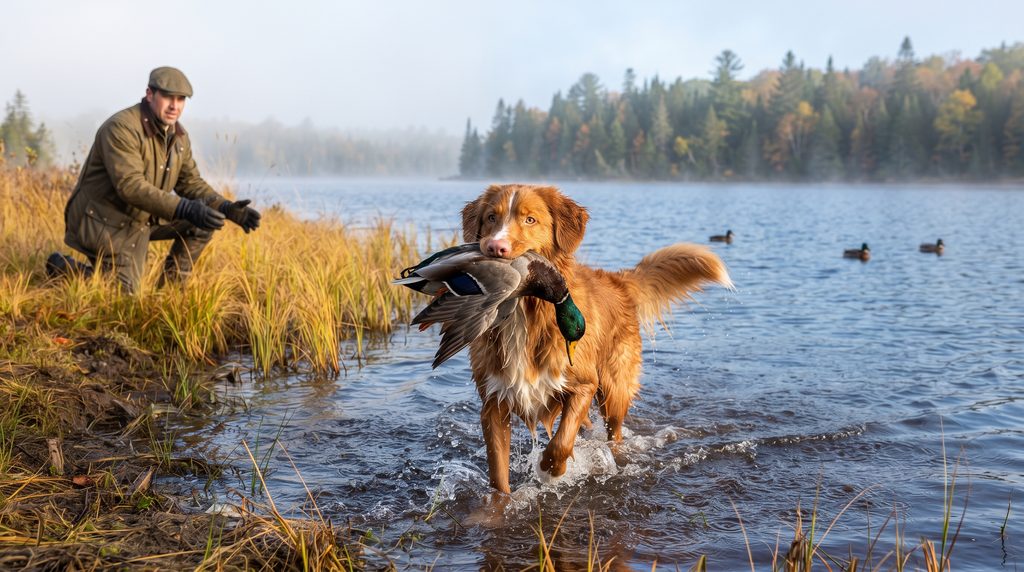
Living with a Nova Scotia Duck Tolling Retriever is a rewarding experience for people who appreciate an intelligent, energetic dog that wants to participate in everyday life. These affectionate Canadian sporting dogs form close relationships with their families and often display a remarkable awareness of household routines. However, sharing a home with a Toller involves more than providing companionship and occasional exercise. Their working instincts, enthusiasm for activity, and need for meaningful interaction require owners to establish a lifestyle that balances physical adventures, mental stimulation, and opportunities for relaxation.
Daily routines are particularly important because Tollers thrive when they understand what to expect from their environment. A typical morning might include an energetic walk, retrieving practice, or an opportunity to explore an interesting outdoor area before breakfast. Short training exercises and interactive feeding activities can provide additional mental engagement throughout the day. Establishing predictable periods for exercise, meals, rest, and family interaction helps prevent the constant anticipation and attention-seeking behavior that can develop when an intelligent dog expects entertainment at every opportunity.
Although Tollers are capable of living in different types of homes, access to suitable outdoor exercise opportunities is essential. A spacious property with secure fencing provides useful freedom for exploration and play, but a large backyard does not automatically satisfy their needs. Many Tollers quickly become bored when left outside without companionship or direction. Owners living in smaller houses or apartments may still succeed with the breed, provided they can offer sufficient daily activity, enrichment, and appropriate outlets for their dog’s energy.
One practical consideration is the breed’s enthusiasm for water, mud, and outdoor exploration. A Toller returning from a lakeside adventure may carry considerable moisture, sand, leaves, and debris in its coat. Keeping absorbent towels near entrances, providing washable bedding, and establishing a routine for drying the dog after swimming can make everyday care considerably easier. Their water-resistant double coat is a valuable working adaptation, but it also means that regular maintenance is necessary to keep both the dog and household comfortable.
Inside the home, Tollers often prefer being close to their people rather than spending extended periods isolated from family activities. Some enjoy resting beneath a desk while their owner works, following someone into the kitchen, or settling nearby during a quiet evening. However, constant companionship should not become an expectation that prevents healthy independence. Teaching puppies to relax in a comfortable designated area, tolerate short separations, and occupy themselves with appropriate enrichment helps reduce the likelihood of distress-related behaviors developing later.
Household management also involves recognizing the breed’s curiosity and natural retrieving instincts. Young Tollers may investigate shoes, children’s toys, laundry, and other objects that resemble something interesting to carry. Providing suitable chew toys, teaching reliable leave-it and drop-it cues, and keeping tempting household items out of reach are sensible preventive measures. Their intelligence makes them quick to discover patterns, including which behaviors attract attention, so consistency among family members is particularly valuable.
Noise can become another consideration, especially in homes with close neighbors. Tollers are generally attentive to movement and unfamiliar sounds, and some become vocal when visitors arrive or exciting activities are anticipated. Their distinctive high-pitched excitement vocalization can be surprisingly loud. Rather than allowing the dog to rehearse escalating excitement before every outing, owners should establish calm departure routines and reward quiet, controlled behavior. This is particularly important in apartments, townhouse developments, or busy residential neighborhoods.
Providing an appropriate resting environment is just as important as encouraging activity. Tollers are enthusiastic athletes, but excessive stimulation without adequate recovery can leave them overtired and difficult to settle. A comfortable sleeping area away from constant household movement gives the dog an opportunity to relax undisturbed. Quiet enrichment activities, gentle handling, and predictable evening routines help reinforce the distinction between energetic outdoor adventures and calmer indoor family life. A balanced Toller should be capable of enjoying both.
Owners should also plan realistically for changing circumstances. Work commitments, family responsibilities, poor weather, and travel can interfere with regular outdoor activities, so alternative forms of enrichment are valuable. Scent games, food puzzles, short obedience sessions, and controlled indoor retrieving exercises can provide useful engagement when longer adventures are temporarily impractical. However, mental games should supplement rather than permanently replace physical exercise. Arrangements for dependable dog care may also be necessary when household members are away for extended periods.
The greatest pleasure of living with a Nova Scotia Duck Tolling Retriever often comes from developing a genuine partnership. These dogs bring enthusiasm to outdoor activities, curiosity to everyday routines, and considerable affection to the home. Their manageable size and engaging personality make them appealing companions, but their exercise requirements and sensitive working temperament demand consistent commitment. For owners willing to incorporate training, recreation, and companionship into daily life, a Toller can become a wonderfully loyal, entertaining, and deeply rewarding member of the family.
Nova Scotia Duck Tolling Retriever and Children
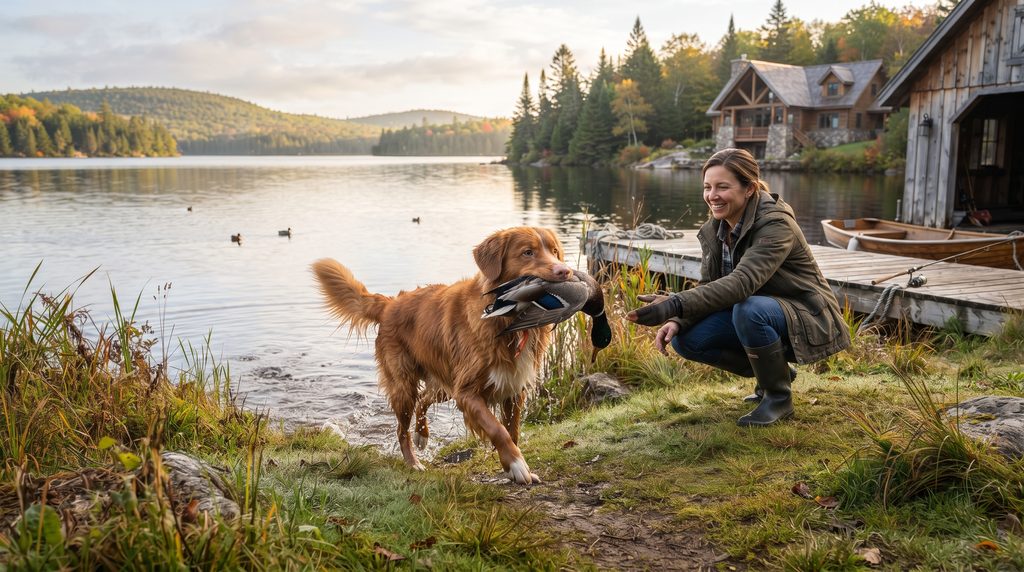
The Nova Scotia Duck Tolling Retriever can be a wonderful companion for children, particularly in active families that enjoy outdoor adventures, games, and spending time together. These intelligent, affectionate dogs often develop close relationships with younger household members and appreciate opportunities to participate in family activities. Their playful personality, manageable size, and enthusiasm for retrieving can make them especially entertaining companions. However, successful relationships depend on appropriate socialization, consistent training, and an understanding of the breed’s energetic and sometimes sensitive temperament.
Tollers are naturally enthusiastic dogs that often enjoy interactive games with children who understand how to behave respectfully around animals. Playing fetch, exploring nature trails, practicing simple obedience exercises, or participating in supervised water activities can provide enjoyable opportunities for bonding. Their retrieving instincts make games involving balls and suitable toys particularly appealing. However, young children should not be expected to manage an excited Toller independently, especially when the dog becomes highly stimulated by movement or anticipation.
One important consideration is the breed’s considerable energy. A young Toller may become boisterous during play, jumping enthusiastically or rushing toward a thrown toy without fully considering who might be standing nearby. Although generally smaller than Golden Retrievers or Labrador Retrievers, Tollers are strong, athletic dogs capable of accidentally knocking over smaller children. Teaching polite greetings, controlled retrieving, and calm behavior around family members helps reduce these risks. Children should also learn not to encourage jumping, chasing, or excessively rough play.
The breed’s sensitivity deserves particular attention in households with younger children. Many Tollers are highly responsive to sudden movements, loud voices, and changes in their environment. While some adapt comfortably to busy family life, others may become overwhelmed by unpredictable handling or constant excitement. Children should be taught to approach calmly, avoid grabbing the dog’s ears or tail, and recognize when the animal needs space. Respecting these boundaries helps build trust and reduces the likelihood of defensive reactions when a dog feels uncomfortable.
Early socialization plays an important role in developing positive relationships with children. Puppies that experience gentle, supervised interactions with children of different ages are more likely to become comfortable with normal family activities. These experiences should be positive and carefully managed rather than overwhelming. Rewarding relaxed behavior around children, introducing new situations gradually, and allowing the puppy to move away when necessary encourages confidence. Socialization should continue throughout adolescence, when excitement levels and responses to unfamiliar situations may change.
Tollers can be particularly engaging companions for older children who enjoy participating in dog training. Their intelligence and enthusiasm make them responsive to short, rewarding exercises involving basic obedience, simple tricks, and structured retrieving games. Children can help teach cues such as sit, stay, come, and drop it under adult supervision. These activities provide valuable mental stimulation for the dog while helping children understand responsible animal care. Adults should remain responsible for training decisions, safety, and managing situations that require greater physical control.
Water activities can also create memorable family experiences. Many Tollers enjoy swimming and retrieving floating toys, making supervised outings to suitable lakes or calm waterways especially appealing. Children may enjoy watching the dog’s natural swimming ability or helping an adult organize controlled retrieving games. However, strong swimming instincts do not eliminate the risks associated with open water. Adults should supervise both children and dogs, assess currents and water conditions, and prevent the dog from becoming overly excited around people swimming nearby.
Another factor is the breed’s tendency toward vocal excitement. Some Tollers produce their characteristic high-pitched scream when anticipating particularly enjoyable activities, while others bark enthusiastically during games. This behavior can surprise younger children who are unfamiliar with the sound. Teaching the dog to wait calmly before play begins and encouraging children not to provoke excessive excitement helps maintain a more comfortable environment. Predictable routines are especially helpful because they allow both the dog and children to understand when active play is appropriate.
Rest and personal space are essential in family households. Even affectionate Tollers need opportunities to sleep, eat, and relax without interruption. Children should understand that a dog resting in its bed, chewing an appropriate toy, or eating a meal should not be disturbed. A quiet retreat that children respect can help prevent unnecessary stress, particularly in busy homes. Adults must supervise interactions between dogs and young children rather than relying on the dog’s generally friendly nature or previous good behavior as a guarantee of safety.
For families prepared to provide guidance, supervision, and plenty of appropriate activity, the Nova Scotia Duck Tolling Retriever can become an exceptionally rewarding companion for children. These dogs often bring enthusiasm, affection, and a wonderful sense of fun to shared adventures. Their intelligence also creates opportunities for children to learn patience, empathy, and responsible pet ownership. The most successful relationships develop when the dog’s needs are respected, interactions remain positive, and the entire family participates in creating a safe, consistent, and enjoyable home.

Safe Family Activities for Children and Tollers
Structured activities provide excellent opportunities for children and Nova Scotia Duck Tolling Retrievers to build positive relationships. Older children can help with short training sessions, supervised retrieving games, scent-search activities, and preparing simple enrichment toys. Family walks and suitable lakeside outings can also provide enjoyable shared experiences. Keep games controlled, use toys rather than hands for play, and avoid encouraging chasing or jumping around younger children. During swimming activities, adults should manage the dog and supervise children separately whenever necessary. Allow the Toller regular breaks, particularly during exciting activities, and always provide a quiet place where the dog can rest undisturbed.
Nova Scotia Duck Tolling Retriever With Other Dogs and Pets
The Nova Scotia Duck Tolling Retriever can live successfully with other dogs and household pets, particularly when introductions are thoughtful and appropriate socialization begins early. These intelligent, energetic sporting dogs often enjoy companionship with animals that share their enthusiasm for activity, exploration, and interactive play. However, their hunting background, sensitivity, and strong interest in movement can influence how they respond to unfamiliar animals. Understanding individual temperament and providing consistent guidance are important for maintaining a peaceful, comfortable household.
Many Tollers enjoy the company of other dogs, especially those with compatible energy levels and communication styles. Their enthusiasm for running, retrieving, and outdoor adventures can make them entertaining companions for other active sporting breeds. Golden Retrievers, Labrador Retrievers, and similarly sociable dogs may become excellent playmates when individual personalities are compatible. Nevertheless, breed alone cannot predict whether two dogs will get along. Differences in confidence, age, play preferences, and tolerance for excitement are often more important than physical size or breed group.
Early socialization helps puppies learn appropriate canine communication and develop confidence around unfamiliar dogs. Positive experiences with calm, well-adjusted companions are generally more valuable than repeated exposure to large groups of unpredictable animals. Tollers should have opportunities to practice polite greetings, recognize another dog’s signals, and disengage from interactions when necessary. Puppy classes led by experienced trainers can provide useful structured experiences, although owners should avoid overwhelming sensitive youngsters with excessive stimulation or uncontrolled play.
When introducing an adult Toller to another household dog, neutral territory is often preferable to immediately bringing the newcomer into an established dog’s living space. Parallel walks, relaxed observation, and brief supervised interactions allow both animals to become familiar without unnecessary pressure. Gradually increasing their time together can help establish a positive relationship. Food bowls, favorite toys, and resting areas should initially be managed separately, particularly when either dog has a history of guarding valuable resources or becoming possessive during exciting activities.
The Toller’s strong retrieving instincts can occasionally complicate play with other dogs. Some individuals become intensely focused on balls, floating toys, or retrieving equipment and may struggle when another dog attempts to participate. Owners should watch for stiff body language, blocking, persistent chasing, or escalating competition around desirable objects. Teaching reliable recall, waiting, and release cues can help maintain control. During shared retrieving sessions, giving each dog a separate task may be more successful than encouraging several excited dogs to compete for the same toy.
Living with cats requires particular attention to the Toller’s natural attraction to movement. Some individuals coexist comfortably with familiar cats, especially when raised together, while others may become highly interested in chasing animals that run suddenly. Introductions should be gradual, using barriers, controlled distances, and rewards for calm observation. Cats must have access to elevated resting places and secure areas where dogs cannot follow. Even when a Toller appears friendly, interactions should be supervised until its behavior around the individual cat is reliably predictable.
Smaller household animals, including rabbits, guinea pigs, hamsters, and pet birds, present additional challenges. Although Tollers were developed to attract and retrieve waterfowl rather than function as specialized vermin hunters, many retain strong responses to fluttering wings, rapid movement, and unfamiliar animal sounds. Their retrieving ancestry should not be mistaken for an assurance that they will handle small animals gently. Secure enclosures, physical separation, and careful household management remain essential, and direct contact with vulnerable pets is generally best avoided.
Outdoor environments can also reveal hunting instincts that are less obvious at home. Ducks moving across a pond, birds taking flight, or squirrels crossing a trail may immediately capture a Toller’s attention. Some dogs remain responsive to their handlers, while others become so absorbed in the movement that recall becomes difficult. Reliable training, appropriate leash use, and controlled access to wildlife areas help prevent unwanted chasing. Owners should never allow their dogs to harass wild birds or enter sensitive nesting habitats, regardless of the breed’s traditional working purpose.
Multi-dog households benefit from predictable routines and opportunities for individual attention. Although Tollers may enjoy playing with canine companions, they still need direct interaction, training, and exercise with their owners. Separate feeding areas, individual resting spaces, and occasional one-on-one activities help reduce competition and strengthen relationships. Owners should also recognize that adolescent dogs may become more excitable or selective about their companions as they mature. Relationships that appear effortless during puppyhood sometimes require additional supervision and management during this developmental stage.
With appropriate introductions, socialization, and thoughtful supervision, a Nova Scotia Duck Tolling Retriever can become a wonderful companion to other dogs and, in suitable circumstances, familiar household pets. Their playful nature and enthusiasm for shared activities often make them enjoyable members of active multi-dog families. However, their sensitivity, retrieving drive, and interest in moving animals require realistic expectations. The most successful households respect each animal’s individual needs while providing clear boundaries, positive experiences, and opportunities for everyone to feel safe and comfortable.
Managing Retrieving Games in Multi-Dog Households
Tollers often become intensely enthusiastic when retrieving toys, especially around water. In households with multiple dogs, this excitement can create competition even between otherwise friendly companions. Begin with separate retrieving sessions before introducing controlled shared activities. Teach each dog to wait for its turn, return objects reliably, and release them without conflict. Avoid throwing a single toy into water for several excited dogs to chase simultaneously, as collisions and competition can create unnecessary risks. During swimming sessions, supervise closely and provide sufficient space for each dog to enter and leave the water safely. Calm, structured activities generally encourage more cooperative interactions than unrestricted competition.
Nova Scotia Duck Tolling Retriever Exercise and Activity Needs
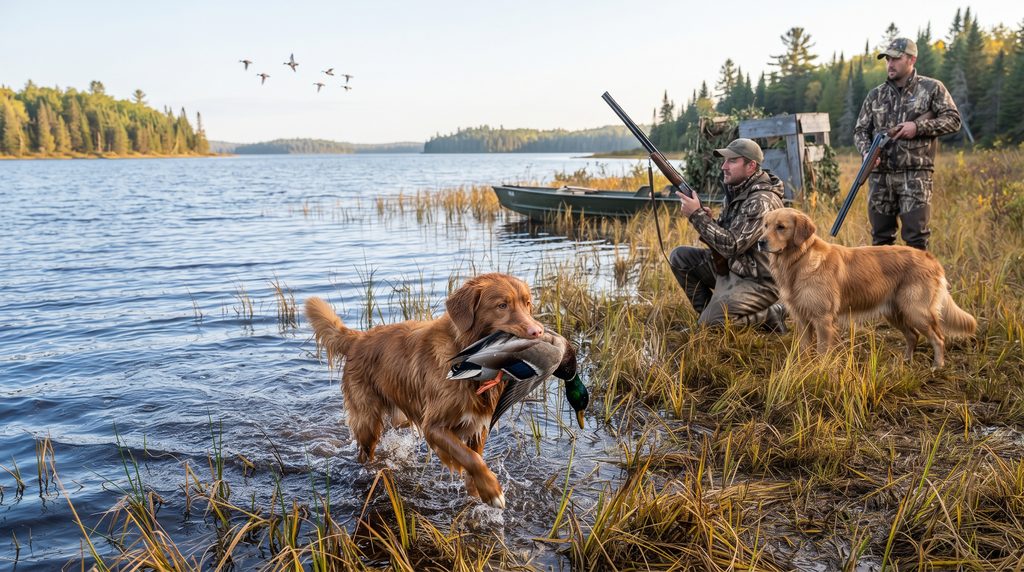
The Nova Scotia Duck Tolling Retriever is an energetic, athletic sporting dog with exercise requirements that reflect its demanding working heritage. Originally developed to attract and retrieve waterfowl along the rugged coastline of Canada, this intelligent breed possesses impressive stamina, agility, and an enthusiasm for physical activity. Although Tollers are smaller than many traditional retrievers, their compact build should never be mistaken for modest exercise needs. They thrive when given regular opportunities to move, explore, retrieve, swim, and participate in activities that challenge both their physical abilities and their naturally inquisitive minds.
A healthy adult Toller generally benefits from substantial daily activity, although the precise amount varies according to age, fitness, temperament, and individual energy levels. Many enjoy an hour or more of varied exercise, while others may be satisfied with somewhat less or require additional opportunities for structured activity. Rather than concentrating exclusively on the number of minutes exercised, owners should consider the quality and variety of each session. Combining brisk walks, controlled retrieving, exploration, and short training exercises is often more beneficial than relying on one repetitive activity.
Walking and hiking provide excellent foundations for a Toller’s daily exercise routine. These naturally curious dogs enjoy investigating unfamiliar scents, exploring woodland paths, and accompanying their owners through varied environments. A countryside walk with opportunities to sniff, observe, and move across different surfaces provides considerably more enrichment than simply covering a fixed distance. Secure off-leash exploration can be particularly rewarding for dogs with reliable recall, although leads or long lines remain important around wildlife, roads, and other potential distractions.
Retrieving is one of the breed’s most instinctive and satisfying activities. Many Tollers enthusiastically chase balls, training dummies, and other suitable objects, displaying remarkable concentration when anticipating a throw. However, unlimited high-speed retrieving can encourage excessive excitement and place unnecessary strain on joints and muscles. Controlled sessions that incorporate waiting, directional cues, searching, and returning objects to hand are generally preferable. Varying the location of retrieves and occasionally hiding objects in safe vegetation also encourages the dog to use its intelligence rather than relying entirely on speed.
Swimming is another outstanding activity for many Nova Scotia Duck Tolling Retrievers. Their water-resistant double coats, webbed feet, and natural retrieving instincts make them capable swimmers that often approach lakes, ponds, and suitable waterways with tremendous enthusiasm. Swimming provides useful low-impact cardiovascular exercise and allows dogs to work against water resistance without the repeated landing forces associated with jumping. Nevertheless, owners should introduce water gradually, supervise every session, and assess currents, water temperature, submerged obstacles, and potentially harmful algae. Even confident swimmers can become exhausted or encounter unexpected hazards.
Traditional fieldwork offers perhaps the most natural expression of the Toller’s extraordinary abilities. During waterfowl hunting, the dog performs its distinctive tolling behavior by running and playing along a shoreline while its concealed handler encourages repeated retrieves. These animated movements attract the curiosity of nearby ducks, after which the dog may be sent to retrieve downed waterfowl. Modern hunt tests and field training preserve elements of this demanding work, including steadiness, marking, scenting, swimming, and reliable delivery. For interested owners, organized field activities offer meaningful opportunities to develop the breed’s inherited skills.
Tollers also excel in a remarkable range of organized canine sports. Agility challenges their coordination, speed, and responsiveness through carefully designed obstacle courses, while dock diving appeals to dogs that love jumping into water after retrieving toys. Flyball, rally, competitive obedience, scent work, and tracking provide additional outlets for their enthusiasm and intelligence. Individual dogs may prefer certain activities over others, and participation should reflect physical maturity and soundness. The aim is not necessarily competitive success, but providing enjoyable work that strengthens cooperation between dog and handler.
Mental stimulation is equally important because physical tiredness alone does not always produce a contented Toller. These dogs are observant problem-solvers that often enjoy activities requiring concentration, memory, and decision-making. Searching for hidden toys, following scent trails, practicing new commands, or completing structured retrieving exercises can be surprisingly satisfying. Short sessions distributed throughout the day help maintain engagement without creating unnecessary frustration. Owners should also encourage calmness between activities so the dog learns that relaxation is an expected and rewarding part of everyday life.
Exercise must be adapted carefully during puppyhood and adolescence. Growing Tollers need opportunities to play, explore, socialize, and develop coordination, but they should not be pushed through prolonged forced running, repetitive high-impact jumping, or demanding endurance activities before physical maturity. Short, age-appropriate adventures and gentle retrieving games provide a useful foundation. Puppies also require substantial sleep and regular recovery periods. As their strength and coordination develop, activity can be increased gradually, ideally with veterinary guidance for more strenuous pursuits.
Seasonal conditions and advancing age should influence activity choices. Although their dense coats provide protection in cold, wet environments, Tollers can still experience hypothermia or exhaustion during prolonged exposure to cold water. In hot weather, vigorous exercise should be scheduled for cooler periods, with frequent access to shade and drinking water. Senior Tollers often remain enthusiastic about exploring and retrieving, but shorter walks, gentle swimming, and low-impact scent activities may become more appropriate as mobility changes.
A well-exercised Toller should be physically satisfied without being continually exhausted. Persistent restlessness, excessive barking, destructive behavior, or difficulty settling may suggest that its routine lacks appropriate enrichment, although these behaviors can also have other causes. Increasing exercise indiscriminately is not always the answer; improving training, relaxation skills, and activity variety may be more effective. For active owners who enjoy outdoor adventures and working closely with their dogs, the Nova Scotia Duck Tolling Retriever offers an exceptionally engaging exercise companion whose enthusiasm and athletic ability can make everyday recreation a genuine pleasure.
Making Retrieving Sessions More Rewarding
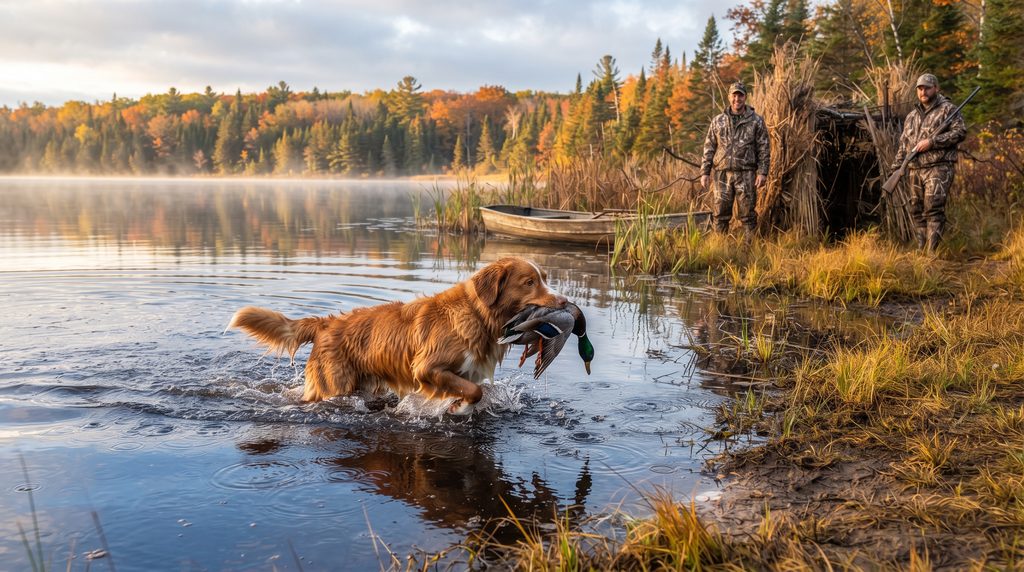
Rather than repeatedly throwing a ball until your Toller becomes exhausted, introduce variety into retrieving exercises. Ask the dog to wait while a training dummy is placed in suitable cover, then release it to search and retrieve. Practice short land retrieves before progressing to controlled water entries, and reward calm delivery directly to your hand. Experienced handlers can introduce directional cues, multiple retrieving locations, and longer searches as skills develop. Keep sessions short enough to maintain enthusiasm without encouraging frantic excitement. When training around water, use safe entry and exit points, supervise closely, and avoid hazardous conditions. Purposeful retrieving engages the Toller’s instincts while developing concentration, patience, and cooperation.
Training a Nova Scotia Duck Tolling Retriever
Training a Nova Scotia Duck Tolling Retriever can be an exceptionally rewarding experience, but these intelligent Canadian sporting dogs require a thoughtful approach that recognizes their sensitivity, determination, and enthusiasm for working. Tollers learn quickly, often anticipating instructions before their handlers have finished giving them. However, their intelligence does not automatically translate into effortless obedience. Some individuals combine a remarkably soft response to correction with a strong independent streak, making patience, consistency, and positive reinforcement particularly important. Successful training should develop confidence, cooperation, and self-control without diminishing the energetic personality that makes this breed distinctive.
Training should begin as soon as a Toller puppy arrives home, concentrating initially on communication, trust, and simple household routines. Teaching recognition of its name, responding to a recall cue, settling on a mat, and accepting gentle handling creates a valuable foundation. Short sessions lasting only a few minutes are often more productive than prolonged exercises that overwhelm a young puppy’s attention span. Early experiences should emphasize enjoyment and successful learning, allowing the puppy to discover that cooperating with its owner produces rewarding and predictable outcomes.
Reward-based training is especially effective because Tollers are often highly motivated by food, toys, retrieving games, and opportunities to participate in interesting activities. Individual preferences vary, so owners should identify which rewards genuinely capture their dog’s attention. Some Tollers will enthusiastically work for small food rewards, while others become particularly engaged when offered a brief retrieving game. Using a consistent reward marker, such as a clicker or a clearly spoken word, helps communicate precisely which behavior earned reinforcement. Gradually increasing difficulty keeps training challenging without creating unnecessary frustration.
One of the most important skills to develop is reliable recall. Tollers possess strong hunting instincts and may become intensely interested in birds, moving wildlife, or unfamiliar scents. A dog that returns enthusiastically in a quiet backyard may respond very differently when ducks suddenly take flight across a lake. Recall should therefore be practiced gradually in increasingly distracting environments, beginning with controlled situations and progressing to secure outdoor spaces. Long training lines provide additional safety while reinforcing the expectation that returning to the handler is consistently worthwhile.
Impulse control is equally valuable because many Tollers become extremely excited when retrieving opportunities appear. Teaching a dog to remain seated while a toy is thrown, wait for a release cue, and return calmly after collecting an object creates greater reliability during everyday activities. These exercises should begin with simple distractions before progressing to demanding situations. The objective is not to suppress natural enthusiasm, but to develop a dog capable of controlling its excitement while remaining attentive. This distinction becomes especially important when training around water, wildlife, or other energetic dogs.
Retrieving training offers an excellent opportunity to develop the breed’s inherited abilities. Begin with short, uncomplicated retrieves using a soft training dummy or suitable toy, rewarding the dog for returning willingly and releasing the object into the handler’s hand. As confidence develops, introduce hidden retrieves, different surfaces, and carefully managed water entries. Teaching a reliable delivery prevents the common habit of dropping objects several feet away or turning retrieval into an unwanted chasing game. More advanced dogs can learn directional signals, multiple retrieves, and searching exercises that require concentration and cooperation.
For owners interested in traditional fieldwork, the Toller offers capabilities that extend beyond conventional retrieving. Its distinctive tolling technique involves animated shoreline movement that attracts the curiosity of waterfowl. Field training may therefore incorporate playful shoreline retrieves alongside steadiness, marking fallen birds, searching, and controlled delivery. These skills are best developed progressively with experienced sporting dog trainers. Where actual hunting is involved, dogs must also become comfortable with the surrounding environment and equipment. Any introduction to gunfire should be carefully supervised by qualified professionals, using gradual sound conditioning that protects the dog’s hearing and confidence.
The breed’s sensitivity makes training style particularly important. Harsh physical corrections, shouting, or inconsistent expectations can cause some Tollers to withdraw, become anxious, or lose enthusiasm for learning. Others may respond to frustration by becoming increasingly distracted or overexcited. When a dog struggles with an exercise, owners should first consider whether the instructions are clear, the environment is too challenging, or the reward is sufficiently motivating. Breaking difficult tasks into smaller steps often produces better progress than repeatedly demanding a response the dog does not yet understand.
Managing vocal excitement is another useful training priority. Some Tollers produce their characteristic high-pitched scream when anticipating swimming, retrieving, or other highly rewarding activities. Rather than waiting until the dog becomes frantic, owners can practice calm behavior before excitement escalates. Rewarding quiet waiting, introducing predictable release cues, and temporarily pausing an activity when the dog becomes excessively aroused can help develop emotional control. Progress requires consistency, particularly when the anticipated reward is something the Toller finds irresistible.
Adolescence can introduce additional challenges as Tollers become more confident, physically capable, and interested in their surroundings. A previously responsive puppy may begin testing boundaries or become distracted by unfamiliar dogs and wildlife. Owners should continue reinforcing established behaviors rather than assuming early training is permanently secure. Practicing familiar cues in different locations, maintaining appropriate management, and introducing new challenges gradually help strengthen reliability. Adolescence is also an excellent time to develop more complex scent-search exercises, controlled retrieving, and other activities that engage the dog’s increasingly capable mind.
Training should extend beyond sporting activities into everyday household manners. Tollers benefit from learning to greet visitors calmly, walk without pulling, remain settled during meals, and tolerate routine grooming and veterinary handling. Teaching a comfortable station or mat cue can be especially helpful in busy households. Cooperative care exercises, including voluntarily offering a paw or allowing ear examinations, encourage confidence during necessary handling. These practical skills make daily life more comfortable while strengthening the trusting relationship between dog and owner.
Ultimately, successful Toller training depends on creating an enjoyable partnership rather than demanding mechanical obedience. These dogs thrive when lessons are varied, expectations are consistent, and opportunities for independent thinking are balanced with clear guidance. Whether learning advanced hunting retrieves, competing in canine sports, or mastering reliable household manners, a well-trained Nova Scotia Duck Tolling Retriever can demonstrate remarkable versatility. Owners who appreciate the breed’s intelligence and sensitivity, while investing time in patient, rewarding instruction, are likely to develop an enthusiastic companion that genuinely enjoys working alongside them.
Nova Scotia Duck Tolling Retriever Grooming and Coat Care
The Nova Scotia Duck Tolling Retriever has a beautiful, weather-resistant double coat designed to protect it during demanding outdoor activities, particularly swimming and retrieving in cold Canadian waters. Although its rich red coloring and attractive feathering give the breed an elegant appearance, the coat is fundamentally practical rather than ornamental. Tollers generally require less elaborate grooming than some heavily coated sporting breeds, but consistent maintenance remains important. Regular brushing, appropriate bathing, ear care, and attention to the feet help preserve the coat’s natural condition while keeping these enthusiastic outdoor companions comfortable and healthy.
Understanding the coat’s structure makes grooming considerably easier. The Toller possesses a soft, dense undercoat beneath a medium-length outer coat that helps repel water and protect against the elements. The outer hair is generally straight, although slight waviness may occur along the back. Longer feathering develops around the ears, chest, legs, thighs, and tail, creating the breed’s distinctive appearance. These softer areas are more vulnerable to tangling than the relatively smooth coat across the back and shoulders, making them particularly important during routine grooming sessions.
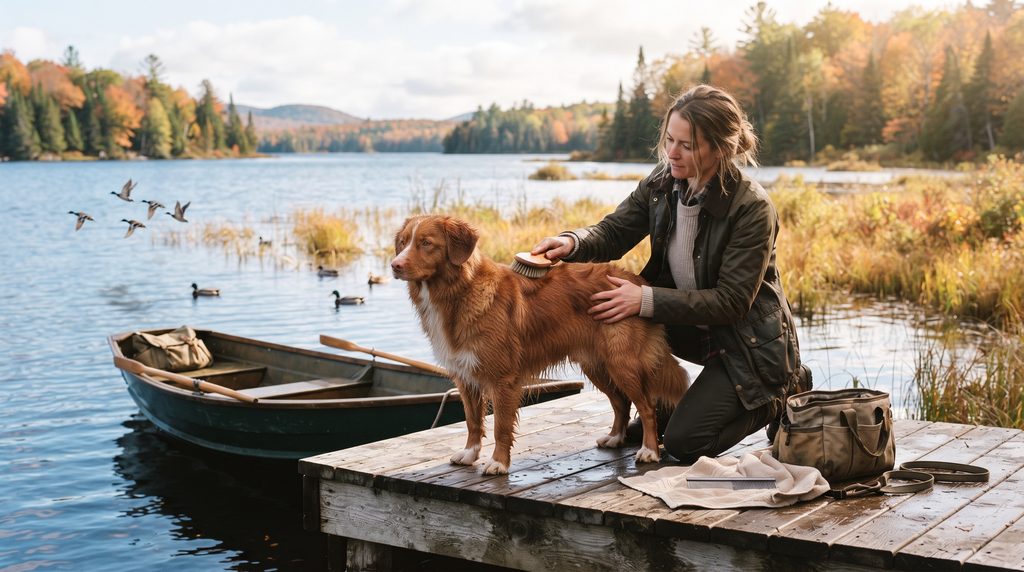
For most adult Tollers, a thorough brushing once or twice weekly provides a practical starting point. A quality slicker brush can help remove loose hair and work through minor tangles, while a stainless-steel comb is useful for checking the finer feathering. Begin with gentle strokes in the direction of hair growth, gradually working through the coat without pulling against the skin. Pay particular attention to the areas behind the ears, beneath the collar, around the hindquarters, and along the feathered tail. During heavier seasonal coat changes, additional brushing will be necessary, as discussed in the dedicated shedding section.
Grooming should always be comfortable rather than forceful. When a tangle develops, carefully separate the hair with your fingers before using a suitable comb or brush. Pulling aggressively can cause discomfort, damage the coat, and make the dog reluctant to cooperate during future sessions. Particularly stubborn mats may require professional assistance, especially when they form close to sensitive skin. Owners should avoid cutting tight mats with ordinary scissors because it is surprisingly easy to injure the skin beneath them. Maintaining a consistent brushing routine prevents most tangles from becoming serious problems.
Bathing requirements depend largely on the dog’s activities and living conditions. A Toller that spends considerable time swimming, exploring muddy trails, or working in marshland environments may need more frequent cleaning than one that primarily enjoys neighborhood walks. However, excessive shampooing is unnecessary and can leave the skin or coat dry. Use a mild shampoo formulated for dogs when bathing is required, rinse thoroughly, and ensure that residual product does not remain trapped within the undercoat. Between baths, rinsing away mud, sand, or saltwater and allowing the coat to dry properly is often sufficient.
Drying deserves particular attention because the dense undercoat can retain moisture long after the outer hair appears dry. After swimming or bathing, gently squeeze excess water from the feathering with an absorbent towel, then allow the dog to dry in a comfortable, well-ventilated environment. A pet-safe dryer on a cool or low-heat setting may help when used carefully, provided the dog has been gradually accustomed to the sound. Avoid excessive heat and prolonged dampness, particularly beneath collars, behind the ears, and around densely coated areas where moisture may contribute to skin irritation.
Ear care is especially important for this enthusiastic water-loving breed. Tollers have triangular drop ears that can retain moisture following swimming, bathing, or repeated exposure to wet vegetation. Check the ears regularly for unusual redness, discharge, unpleasant odors, or persistent scratching. After water activities, gently dry the visible outer ear and surrounding hair without inserting cotton swabs into the ear canal. Routine cleaning should follow veterinary advice, particularly if the dog experiences recurring infections. Excessive cleaning or inappropriate products can irritate delicate tissues rather than improve ear health.
The feet also require regular maintenance, especially in dogs that frequently work outdoors. Inspect the paw pads for cuts, embedded grass seeds, small stones, or irritation after hiking, retrieving, and swimming. Hair growing excessively between the pads can reduce traction on smooth indoor floors and may collect debris during outdoor activities. Carefully trimming this hair when necessary helps maintain comfort and secure footing. The Toller should retain a natural appearance, so elaborate sculpting or extensive coat trimming is unnecessary. Small adjustments around the ears, feet, and hocks are generally all that is needed.
Nail maintenance is another essential part of grooming. Active Tollers sometimes wear their nails naturally through regular movement on firm surfaces, but this does not eliminate the need for inspection. Nails that become too long can affect foot placement, reduce traction, and interfere with comfortable movement. Check them frequently and trim or grind as needed, taking care to avoid the sensitive quick. The dewclaws deserve particular attention because they may not contact the ground during ordinary exercise. Introducing calm, reward-based nail handling during puppyhood makes lifelong maintenance considerably easier.
Dental care should also form part of the regular grooming routine. Brushing with a dog-specific toothbrush and toothpaste helps reduce plaque accumulation and supports long-term oral health. Daily brushing is ideal, although owners may need to build gradually toward this frequency. Veterinary dental examinations remain important because brushing cannot address every dental problem. During grooming sessions, owners can also check the dog’s eyes, skin, and body for unusual changes. Lumps, irritated areas, persistent itching, or changes in coat quality deserve attention, particularly when they appear suddenly or worsen over time.
Toller puppies benefit from positive grooming experiences long before their adult coats fully develop. Begin with brief, gentle brushing sessions, rewarding calm behavior and gradually introducing different tools. Handling the ears, paws, and tail in a relaxed environment helps prepare puppies for necessary care throughout adulthood. Sensitive individuals may need particularly gradual introductions to dryers, nail grinders, or unfamiliar grooming equipment. Establishing trust early helps prevent routine maintenance from becoming stressful as the dog grows stronger and more energetic.
One important principle is preserving the Toller’s natural working coat. Shaving or clipping the entire double coat is generally inappropriate unless required for veterinary treatment or another specific medical reason. Removing the protective outer hair can disrupt normal coat function and may lead to uneven regrowth. Responsible grooming emphasizes cleanliness, comfort, and practical maintenance rather than altering the breed’s characteristic appearance. With regular attention and a few suitable grooming tools, owners can keep their Nova Scotia Duck Tolling Retriever looking healthy and attractive while preserving the functional coat that has served generations of hardworking waterfowl retrievers.
Post-Swimming Coat Care for Working Tollers
A Toller returning from a lake, marsh, or coastal retrieving session benefits from a simple post-swimming care routine. Rinse away saltwater, mud, and other debris when necessary, paying attention to the legs, chest, underside, and feathered tail. Check the paw pads for sharp objects, inspect the coat for burrs or grass seeds, and gently dry the outer ears. Use an absorbent towel to remove excess moisture, particularly from densely coated areas, before allowing the dog to finish drying in a comfortable environment. Once the coat is sufficiently dry, a gentle comb-through can remove tangles and remaining debris. These small habits help protect the coat and make regular grooming considerably easier.
Nova Scotia Duck Tolling Retriever Shedding
The Nova Scotia Duck Tolling Retriever has a beautiful, weather-resistant double coat that provides essential protection during swimming, hunting, and outdoor activities. However, this practical working coat also means that shedding is an unavoidable part of ownership. Tollers typically lose some hair throughout the year, with noticeably heavier shedding during seasonal coat changes. Although their moderate size and relatively manageable coat may suggest otherwise, they are not low-shedding dogs. Owners should be prepared for regular brushing, loose hair around the home, and periods when considerably more grooming is needed.
Understanding Nova Scotia Duck Tolling Retriever Shedding begins with the breed’s distinctive double coat. The longer outer layer consists of protective guard hairs that help repel moisture and shield the skin from vegetation and challenging weather. Beneath this sits a softer, denser undercoat that provides insulation during cold-water retrieving. Both layers naturally renew themselves, but the undercoat is responsible for much of the loose fur owners encounter. Its density can vary between individuals and throughout the year, depending on seasonal conditions and other factors.
One of the most common questions prospective owners ask is, “How much does a Nova Scotia Duck Tolling Retriever shed?” Under ordinary conditions, shedding is generally moderate, although individual dogs vary considerably. Owners may notice reddish hairs on furniture, clothing, carpets, and bedding, particularly in areas where their dog frequently rests. The longer outer hairs are often easy to spot, while the softer undercoat can accumulate beneath furniture or cling to upholstery. Regular housekeeping is usually sufficient outside the heavier seasonal shedding periods.
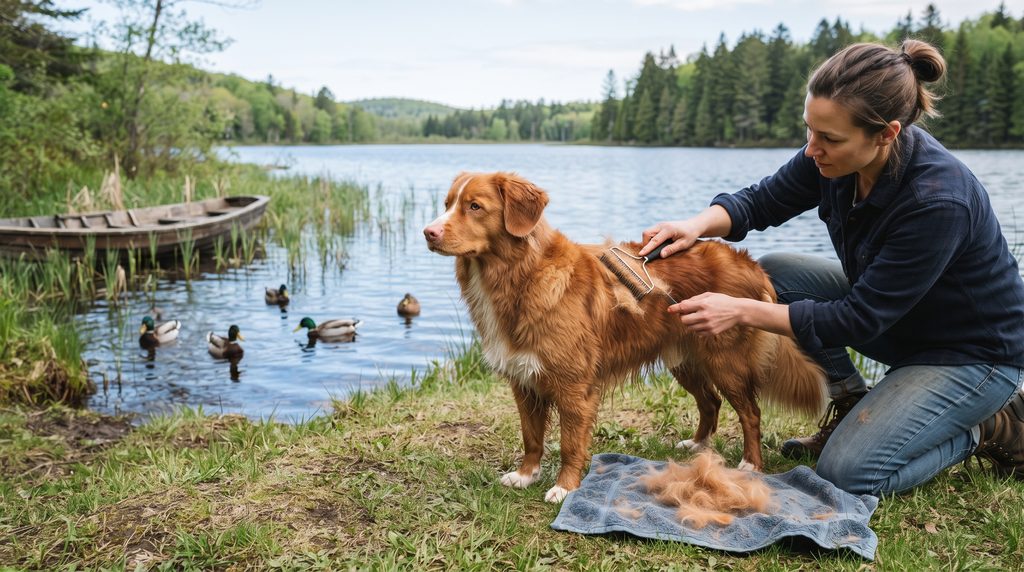
Spring and fall are commonly associated with the most noticeable coat changes. During spring, a Toller may release considerable amounts of its denser winter undercoat as the days become longer and warmer. Autumn often brings another shedding period as the coat adjusts for colder conditions. This process is sometimes called blowing the coat, particularly when loose undercoat begins coming away in noticeable tufts. The timing and intensity vary, and dogs living in consistently warm environments or heated homes may experience less clearly defined seasonal patterns.
During an especially heavy shedding period, an otherwise healthy Toller may appear to lose an astonishing amount of hair. Brushing can produce substantial collections of soft undercoat, sometimes making owners wonder how so much fur could come from a medium-sized dog. This is generally normal when the hair releases evenly and the skin beneath remains healthy. The dog’s overall appearance may become slightly less full as the seasonal coat changes, particularly around the hindquarters, chest, and feathered tail.
Managing these seasonal changes requires a more frequent brushing routine than the breed needs during quieter periods. Weekly grooming may be sufficient for much of the year, but daily brushing can become useful when the undercoat is shedding heavily. A suitable slicker brush, stainless-steel comb, or carefully selected undercoat rake can help remove loose hair before it accumulates around the home. Work gently through the coat in sections, paying particular attention to the feathering behind the ears, around the thighs, and beneath the tail.
Owners should avoid attempting to remove every loose hair in a single session. Excessive brushing or aggressive use of deshedding tools can irritate the skin, break healthy guard hairs, and damage the coat’s protective structure. Short, comfortable sessions are usually more effective than prolonged grooming that leaves the dog restless or uncomfortable. A properly maintained double coat should retain its natural thickness and appearance. Removing loose undercoat is beneficial, but stripping away healthy hair in an effort to eliminate shedding is neither necessary nor appropriate.
Swimming and outdoor activities introduce additional practical considerations. Tollers that regularly enter lakes, rivers, and coastal waters may carry loose undercoat, mud, and vegetation home after their adventures. Once the coat has dried, gently combing through areas where debris collects can help remove hairs that have already loosened. Drying the dog thoroughly after swimming also helps prevent moisture from remaining trapped beneath the coat. However, frequent bathing does not stop shedding, and unnecessary shampooing may irritate the skin or reduce the coat’s natural condition.
Prospective owners should also understand that the Nova Scotia Duck Tolling Retriever is not considered hypoallergenic. Despite occasional claims about particular coat types, no dog breed is guaranteed to be suitable for people with dog allergies. Allergic reactions are commonly associated with proteins found in dander, saliva, and other biological materials rather than loose hair alone. A Toller’s regular shedding can distribute allergen-bearing material around the home. People with known sensitivities should spend time around adult Tollers and seek appropriate medical guidance before deciding whether the breed is suitable.
Household management can make shedding considerably easier to live with. Washable dog bedding, easily cleaned furniture covers, regular vacuuming, and a practical grooming area help control loose hair. Brushing outdoors is particularly convenient during seasonal coat changes, provided the dog is comfortable and environmental conditions are suitable. Owners who enjoy keeping their homes completely free of pet hair may find the breed frustrating, especially during peak shedding periods. However, most households can manage normal coat loss with consistent grooming and sensible cleaning routines.
Although shedding is natural, unusual hair loss should never automatically be attributed to seasonal coat changes. Bald patches, persistent scratching, inflamed skin, unpleasant odors, excessive dandruff, or a sudden dramatic change in coat condition may indicate an underlying problem. Parasites, allergies, infections, nutritional deficiencies, and hormonal disorders can all affect the skin and hair. Tollers also have recognized autoimmune health concerns, making persistent or unexplained coat changes worth discussing with a veterinarian. Normal seasonal shedding should not produce obvious baldness or significant skin discomfort.
A Toller’s shedding pattern may also change throughout its life. Puppies gradually lose their softer juvenile coats as adult hair develops, sometimes creating an uneven or temporarily less feathered appearance. Mature dogs may experience changes associated with seasonal conditions, reproductive hormones, or general health. Older Tollers can develop alterations in coat density or texture, particularly when medical conditions affect their skin or metabolism. Maintaining appropriate nutrition, preventive veterinary care, and regular coat inspections helps owners recognize meaningful changes rather than assuming every variation is normal.
Despite the extra maintenance required during seasonal coat changes, shedding should not overshadow the many qualities that make this breed appealing. The same dense double coat that leaves reddish hair around the house helps protect Tollers during the cold-water retrieving work for which they were developed. Owners who appreciate the breed’s sporting heritage are generally willing to accept this practical trade-off. With regular brushing, appropriate grooming equipment, and realistic expectations, the Nova Scotia Duck Tolling Retriever’s shedding can be managed without compromising its beautiful natural coat.
Recognizing a Toller’s Seasonal Coat Blow
During a seasonal coat blow, a Nova Scotia Duck Tolling Retriever may release noticeably larger amounts of soft undercoat than usual. Loose fur often collects around the hindquarters, chest, shoulders, and feathered tail, sometimes coming away in small tufts during brushing. Increase grooming frequency temporarily, using gentle tools that remove dead hair without damaging the protective outer coat. Avoid shaving the dog to control shedding, since this can interfere with normal coat function and regrowth. Healthy seasonal shedding should leave the skin comfortable and free from bald patches. If hair loss becomes uneven, excessive, or accompanied by itching or redness, arrange a veterinary examination rather than assuming the change is seasonal.
Nova Scotia Duck Tolling Retriever Feeding and Nutrition
The Nova Scotia Duck Tolling Retriever is an energetic, athletic sporting dog whose nutritional requirements should support an active metabolism, strong muscles, healthy joints, and overall well-being. Developed for demanding waterfowl hunting along Canada’s Atlantic coastline, this breed possesses considerable stamina and enthusiasm for physical activity. However, feeding requirements vary significantly between individuals, particularly when comparing a regularly working hunting dog with a companion enjoying moderate daily exercise. Providing balanced nutrition, maintaining an appropriate body weight, and adjusting food portions to match activity levels are essential responsibilities throughout a Toller’s life.
A high-quality, complete and balanced commercial dog food is a practical foundation for most Tollers. Choose a formula appropriate to the dog’s life stage, whether puppy, adult, or senior, and look for a nutritional adequacy statement confirming that it meets established standards such as those developed by the Association of American Feed Control Officials (AAFCO). Quality animal or plant protein sources, appropriate dietary fats, essential vitamins, and minerals all contribute to normal body function. The overall nutritional formulation is more important than selecting a product simply because its packaging emphasizes particular ingredients.
Protein supports muscle maintenance, tissue repair, and normal growth, while dietary fat provides concentrated energy that can be particularly valuable for active sporting dogs. However, higher protein or fat percentages do not automatically make a food superior. Nutritional needs depend on the dog’s age, health, workload, and individual metabolism. Owners should also consider the manufacturer’s nutritional expertise, quality-control procedures, and feeding research rather than relying exclusively on ingredient lists or marketing claims. Grain-free diets are not inherently healthier, and unnecessary dietary restrictions should be discussed with a veterinarian.
Determining appropriate food portions requires more than following the recommendations printed on a package. Most feeding charts provide useful starting points, but individual calorie requirements can differ considerably. A moderately active adult Toller weighing 40 pounds may require a different amount of food from an equally sized dog participating regularly in hunting, agility, or endurance activities. Age, reproductive status, environmental temperature, and body condition all influence energy expenditure. Measuring meals accurately and reviewing the dog’s weight regularly helps prevent gradual overfeeding or inadequate nutrition.
Maintaining a lean, muscular condition is particularly important for this agile retriever. Owners should be able to feel the ribs beneath a light covering of tissue without excessive pressure, observe a visible waist from above, and recognize an abdominal tuck when viewing the dog from the side. Excess body fat places additional strain on joints and can reduce endurance, swimming efficiency, and general mobility. Conversely, a Toller that consistently loses weight despite adequate feeding may need a dietary adjustment or veterinary assessment. Body condition is generally a more useful guide than weight alone.
Working Tollers sometimes require nutritional adjustments during periods of intensive field activity. A dog participating in regular waterfowl hunting may expend considerably more energy than during quieter months, particularly when swimming repeatedly through cold water or traveling long distances over difficult terrain. Increased energy requirements should be addressed gradually, using an appropriate diet and carefully monitored portions. Owners should avoid suddenly doubling meals before demanding outings. Instead, evaluate the dog’s workload, body condition, and recovery while seeking veterinary guidance when substantial changes in feeding are necessary.
Hydration is equally important, particularly because many Tollers enthusiastically swim, retrieve, and exercise for extended periods. Fresh drinking water should always be available, including during hunting trips, training sessions, and outdoor adventures. Dogs should not be encouraged to drink untreated lake or pond water, which may contain harmful microorganisms, pollutants, or toxic algal blooms. During warm weather or prolonged activity, offer regular opportunities to drink and rest. After swimming, provide clean fresh water rather than assuming that time spent in a lake has satisfied the dog’s hydration needs.
Toller puppies require food specifically formulated to support growth and development. Their rapidly developing bones, muscles, and nervous systems depend on an appropriate balance of energy, protein, calcium, phosphorus, and other nutrients. Puppies generally benefit from several smaller meals daily, gradually transitioning toward a more typical adult feeding schedule as they mature. Avoid unnecessary calcium supplementation or excessive feeding intended to accelerate growth. Maintaining steady development and a healthy body condition is more important than encouraging a puppy to become unusually large or heavy.
As Tollers enter their senior years, their nutritional needs may change. Some older dogs become less active and require fewer calories, while others remain enthusiastic about swimming and retrieving well into later life. Maintaining muscle mass becomes increasingly important, so dietary changes should consider protein quality, digestibility, and overall health rather than simply reducing food intake. Senior dogs with arthritis, kidney disease, digestive problems, or other medical conditions may benefit from specialized nutrition recommended by their veterinarian. Sudden weight changes in an older Toller should always be investigated.
Training rewards deserve particular attention because Tollers are intelligent, food-motivated learners that often participate in frequent obedience and retrieving exercises. Small treats can be extremely effective for reinforcing desirable behavior, but their calories accumulate surprisingly quickly. As a general guideline, treats and other extras should account for no more than approximately 10% of daily calorie intake. Owners can reserve part of the dog’s ordinary food allowance for training, use small portions of suitable rewards, and adjust meals when additional treats have been provided.
Food sensitivities and digestive problems should be approached carefully rather than assuming a particular ingredient is responsible. Persistent itching, recurring ear problems, vomiting, diarrhea, or changes in appetite can have numerous causes, including conditions unrelated to food. A veterinarian may recommend a controlled dietary trial when an adverse food reaction is suspected. Homemade diets also require professional formulation to ensure nutritional adequacy, while raw feeding carries additional risks from harmful bacteria and nutritional imbalances. Any major dietary change should be based on the dog’s actual needs rather than popular feeding trends.
Establishing a consistent feeding routine supports digestion, weight management, and predictable household behavior. Many adult Tollers do well with two measured meals daily, although schedules can be adjusted according to individual circumstances. Introduce new foods gradually over approximately a week or longer if necessary, monitoring stool quality and appetite. Avoid large meals immediately before or after strenuous exercise, and allow the dog time to settle following demanding activity. With sensible portion control, appropriate food selection, and regular veterinary guidance, a Nova Scotia Duck Tolling Retriever can maintain the strength, stamina, and healthy condition needed for an active and fulfilling life.
Feeding Your Toller During Hunting Season
When preparing for a full day of waterfowl hunting, plan your Toller’s feeding around its anticipated workload rather than offering an unusually large meal immediately before departure. Maintain a familiar diet, carry an adequate supply of clean drinking water, and schedule regular rest periods between demanding retrieves. For extended outings, discuss additional energy requirements and suitable field snacks with your veterinarian. Allow the dog to recover and settle before providing a substantial meal after strenuous exercise. Monitor body condition throughout the hunting season, particularly if activity levels change significantly. Consistent feeding practices help maintain stamina without placing unnecessary demands on digestion during intensive physical work.
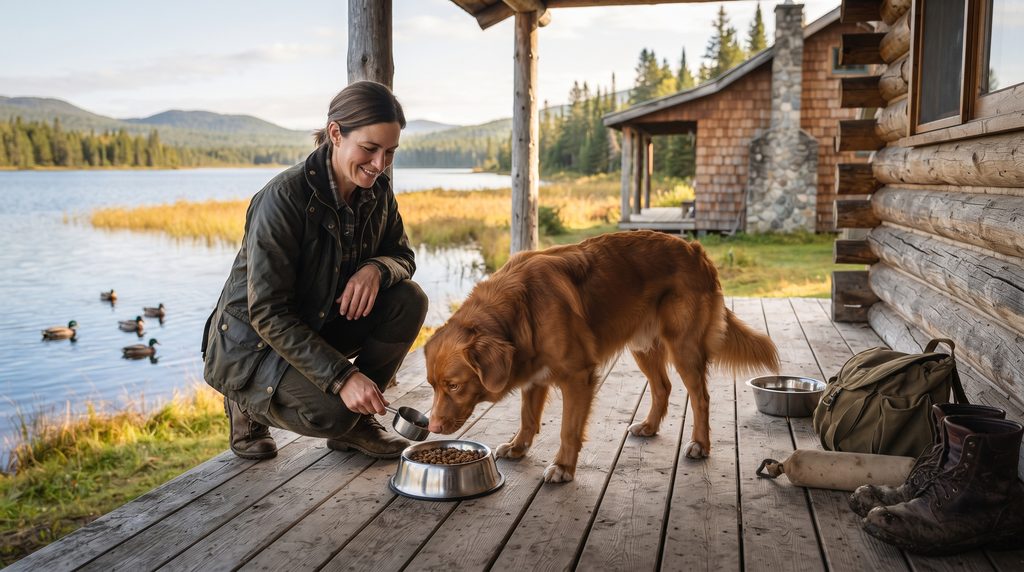
Nova Scotia Duck Tolling Retriever Health and Common Health Problems
The Nova Scotia Duck Tolling Retriever is generally an athletic, resilient sporting dog capable of enjoying many years of active companionship. However, the breed has several important inherited and immune-mediated health conditions that prospective owners should understand. Although many Tollers remain healthy throughout their lives, responsible breeding, appropriate genetic testing, and attentive veterinary care play particularly important roles in protecting their well-being. Understanding Nova Scotia Duck Tolling Retriever Health Issues helps owners recognize potential warning signs, make informed decisions when selecting a puppy, and provide appropriate preventive care throughout the dog’s life.
One of the breed’s most significant health considerations is its predisposition to autoimmune and immune-mediated diseases. These conditions develop when the immune system mistakenly attacks or inflames the body’s own tissues. Tollers have been associated with several disorders affecting the joints, nervous system, and hormone-producing glands. Research involving Scandinavian Toller populations has identified an increased occurrence of certain immune-mediated conditions compared with other breeds. Although these findings do not mean every Toller will develop illness, they emphasize the importance of family health histories, early diagnosis, and continued veterinary monitoring.
Addison’s Disease: Also called hypoadrenocorticism, Addison’s disease develops when the adrenal glands fail to produce sufficient hormones needed for normal body function. Symptoms may include lethargy, vomiting, diarrhea, reduced appetite, weight loss, and intermittent weakness. Severe episodes can cause life-threatening collapse requiring emergency treatment. Tollers are particularly important in Addison’s disease research because an inherited juvenile form, known as Juvenile Addison’s Disease (JADD), can affect puppies during their first year. Research published in 2026 identified a genetic variant associated with this early-onset condition, providing breeders with a valuable additional screening tool. Adult-onset Addison’s can also occur and is not excluded by a negative JADD genetic test.
Steroid-Responsive Meningitis-Arteritis (SRMA): This inflammatory condition affects the protective membranes surrounding the central nervous system and associated blood vessels. It is particularly relevant to young Tollers, often appearing before two years of age. Warning signs may include sudden neck pain, stiffness, fever, reluctance to move, and unusual sensitivity when touched. A normally energetic dog may become withdrawn or unwilling to lower its head. Prompt veterinary investigation is essential because these symptoms can resemble other serious illnesses. Many affected dogs respond favorably to appropriate immunosuppressive treatment, although relapses can occur and continued monitoring may be necessary.
Immune-Mediated Rheumatic Disease (IMRD): Tollers have a recognized predisposition to inflammatory rheumatic conditions that can cause persistent joint pain, stiffness, and intermittent lameness. Some affected dogs display discomfort involving several joints rather than one clearly injured limb. Symptoms may fluctuate, making the underlying disease difficult to recognize initially. In some cases, muscle discomfort, fatigue, fever, or skin abnormalities may accompany joint problems. Diagnosis can require blood tests, examination of joint fluid, and investigations to exclude infectious or orthopedic causes. Treatment depends on the individual condition and commonly involves medications that control inappropriate immune activity.
Eye Diseases: Hereditary eye disorders are another important consideration. Progressive retinal atrophy (PRA), particularly the progressive rod-cone degeneration form, causes deterioration of light-sensitive cells within the retina and can eventually lead to blindness. Early signs may include difficulty seeing in dim lighting or reluctance to navigate unfamiliar surroundings. Collie Eye Anomaly (CEA) is another inherited developmental eye condition identified in Tollers, although its severity varies. Some affected dogs retain useful vision, while more serious cases may experience visual impairment. Regular examinations by veterinary ophthalmologists and appropriate breeding assessments help identify eye abnormalities before they become serious problems.
Hip Dysplasia and Joint Disorders: Despite their compact size and athletic construction, Tollers can develop hip dysplasia, a condition involving abnormal development of the hip joint. Affected dogs may experience discomfort, reduced mobility, difficulty rising, or changes in their normal gait. Elbow abnormalities and other orthopedic problems may also occur. Maintaining a healthy body weight, avoiding excessive strain during growth, and seeking veterinary assessment for persistent lameness help protect long-term mobility. Responsible breeders use recognized hip evaluation programs to identify potential concerns before selecting breeding pairs.
Inherited Neurological and Cardiac Conditions: Certain less common genetic disorders deserve particular attention because of their potential severity. Cerebellar Degeneration-Myositis Complex (CDMC) affects neurological coordination and muscle function, potentially causing abnormal movement, weakness, or balance difficulties in young dogs. Cardiac Laminopathy (CLAM) is a serious inherited condition associated with dilated cardiomyopathy and sudden death in affected young Tollers. Genetic tests are available for both disorders. Other recognized inherited concerns include forms of cleft palate, degenerative encephalopathy, and degenerative myelopathy. These conditions are not equally common, but their identification demonstrates the importance of breed-specific genetic screening.
Cancer: Like many dog breeds, Tollers can develop cancer, particularly as they age. Research involving Swedish Tollers has identified increased risks for certain cancers, including lymphoma, although findings from individual populations should not be interpreted as universal lifetime risks. Warning signs can include unexplained lumps, swollen lymph nodes, persistent weight loss, reduced appetite, or unusual fatigue. Routine veterinary examinations and prompt investigation of new abnormalities improve the chances of recognizing disease at an earlier stage. Treatment options depend on the type, location, and progression of the cancer.
Working and recreational activities also create everyday health considerations. Tollers that regularly swim, retrieve, and explore marshland environments may experience minor paw injuries, muscle strains, ear infections, or irritation caused by vegetation and contaminated water. Owners should inspect their dogs after demanding outdoor activities, paying attention to the paws, ears, skin, and overall movement. Persistent limping, unusual tiredness, or reluctance to retrieve should not automatically be attributed to ordinary exercise fatigue. Their enthusiasm for working can sometimes make subtle changes in performance an important early indication that something is wrong.
Among the Nova Scotia Duck Tolling Retriever Health Problems owners should monitor, immune-mediated disorders deserve particular awareness because their symptoms can initially appear vague or intermittent. Unexplained stiffness, repeated digestive disturbances, fever, sudden changes in energy, or unusual pain warrant veterinary attention. A family history of autoimmune illness may also provide useful information when assessing a dog’s symptoms. Owners should keep accurate veterinary records and communicate any known inherited conditions to their veterinarian, particularly when moving between clinics or arranging specialized treatment.
Preventive health care offers the best foundation for maintaining a Toller’s quality of life. Regular veterinary examinations, vaccinations appropriate to individual risk, parasite prevention, dental care, and healthy weight management all contribute to long-term well-being. Owners should also discuss the breed’s specific inherited conditions with responsible breeders and request documented health assessments rather than relying on verbal assurances. The following health screening section explains these evaluations in greater detail. With informed breeding decisions, appropriate medical care, and close attention to changes in behavior or physical condition, many Nova Scotia Duck Tolling Retrievers can enjoy active, fulfilling lives as beloved family companions.
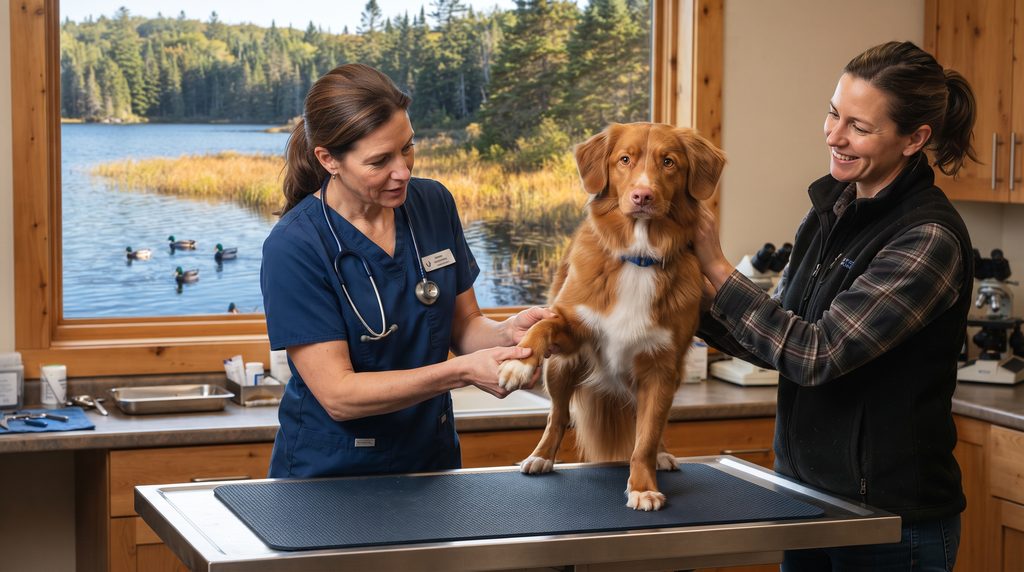
Nova Scotia Duck Tolling Retriever Health Screening and Genetics
Health screening and responsible genetic management are particularly important for the Nova Scotia Duck Tolling Retriever because the breed has several recognized inherited conditions affecting the immune system, eyes, heart, nervous system, and skeletal development. Although many Tollers enjoy healthy, active lives, their relatively specialized breeding history makes careful selection of breeding pairs essential. Modern veterinary testing provides valuable opportunities to identify certain inherited risks before puppies are produced. However, no screening program can guarantee perfect health, and responsible breeders must combine laboratory results with physical examinations, family histories, and a commitment to maintaining genetic diversity.
A comprehensive Toller screening program should begin with established orthopedic and ophthalmic evaluations. Hip Dysplasia Screening involves radiographs assessed through recognized programs such as the Orthopedic Foundation for Animals (OFA) or PennHIP. Standard final OFA hip certification is performed when dogs are at least 24 months old, while PennHIP can assess hip laxity at an earlier age. These evaluations help breeders identify structural concerns that may increase the likelihood of painful joint disease. Elbow assessments may also be recommended, particularly when orthopedic problems have appeared within related breeding lines.
Eye Examinations performed by board-certified veterinary ophthalmologists are another essential component of responsible breeding. The OFA Companion Animal Eye Registry provides a recognized method of documenting examinations for inherited and potentially inherited eye abnormalities. Annual examinations are commonly recommended for active breeding dogs because some conditions develop after puppyhood. These examinations may identify cataracts, retinal changes, or other abnormalities that cannot be detected through simple observation. Importantly, a normal eye examination at one point in a dog’s life does not guarantee that every inherited eye condition will remain absent.
Genetic screening for Progressive Retinal Atrophy (PRA-prcd) helps identify dogs carrying the variant associated with progressive rod-cone degeneration. This inherited condition can gradually destroy retinal cells and eventually cause significant vision loss. Because PRA-prcd follows an autosomal recessive inheritance pattern, dogs carrying one copy of the relevant variant are generally unaffected but can pass it to offspring. Testing both parents allows breeders to avoid producing puppies with two copies of the disease-associated variant. Screening for Collie Eye Anomaly may also be appropriate, since this inherited developmental eye disorder has been identified in Tollers.
One of the breed’s most significant genetic advances concerns Juvenile Addison’s Disease (JADD). Research published in 2026 identified a variant in the RESF1 gene associated with early-onset Addison’s disease and other autoimmune manifestations in young Tollers. Affected puppies may develop adrenal insufficiency within their first year, sometimes accompanied by additional inflammatory or eye-related problems. Genetic testing can identify dogs with zero, one, or two copies of the associated variant. Importantly, the condition demonstrates incomplete penetrance: approximately 75% of dogs carrying two copies develop juvenile disease. A negative result does not exclude unrelated forms of Addison’s disease later in life.
Cardiac Laminopathy (CLAM) represents another important inherited condition for which specific DNA testing is available. This disorder is associated with dilated cardiomyopathy and potentially sudden death in young affected Tollers. The identified LMNA genetic variant is generally described as following an autosomal recessive inheritance pattern, although research has raised questions about possible cardiac effects in some dogs carrying a single copy. Responsible breeders should evaluate genetic results carefully and seek specialist advice when interpreting unusual findings. Clinical cardiac examinations remain valuable because DNA screening for CLAM cannot detect every possible cause of heart disease.
Cerebellar Degeneration-Myositis Complex (CDMC) is a serious inherited disorder affecting neurological coordination and muscle function. Affected puppies may show signs such as abnormal walking, weakness, poor coordination, exercise intolerance, or episodes of collapse from an early age. The condition follows an autosomal recessive inheritance pattern, making genetic screening useful for identifying carriers and preventing affected puppies through appropriate breeding decisions. Another recognized inherited neurological condition is degenerative encephalopathy, for which breed-relevant DNA testing is also available. These disorders demonstrate why comprehensive testing is preferable to relying on a small selection of familiar screening results.
Developmental abnormalities also deserve attention. Cleft Palate and Syndactyly Genetic Testing can identify certain inherited variants associated with cleft lip or palate and, in some cases, fused toes. Tollers have more than one known genetic cause of cleft palate, including variants commonly identified as CP1 and CLPS. Testing helps breeders understand specific risks, but a negative result for one variant does not necessarily exclude every possible cause of these abnormalities. Additional DNA tests may assess other inherited traits or disease risks, although their relevance should be discussed with a veterinarian or canine genetic specialist rather than assuming every available test carries equal importance.
The breed’s autoimmune predisposition introduces an important limitation to genetic screening. Conditions such as steroid-responsive meningitis-arteritis and immune-mediated rheumatic disease do not currently have straightforward predictive DNA tests that reliably identify every dog destined to develop them. Consequently, responsible breeders should maintain detailed family health records, discuss autoimmune conditions affecting close relatives, and avoid treating a negative genetic panel as evidence that a dog is free from all inherited risks. A careful review of previous generations may reveal patterns that are not apparent through individual laboratory results alone.
The Canine Health Information Center (CHIC) provides a useful framework for evaluating health testing in American breeding dogs. Working with participating parent breed clubs, the Orthopedic Foundation for Animals establishes breed-specific screening requirements and maintains a publicly accessible database. Prospective owners can search registered dogs and examine available results rather than relying entirely on a breeder’s verbal assurances. However, receiving a CHIC number does not mean a dog passed every examination. It confirms that the applicable required screenings were completed and publicly reported. The actual findings must still be evaluated.
Responsible genetic management also requires understanding the difference between a carrier and an affected dog. For many autosomal recessive conditions, carriers remain clinically healthy and can produce unaffected offspring when paired appropriately with genetically clear dogs. Automatically excluding every carrier from breeding could unnecessarily reduce an already limited gene pool and potentially concentrate other inherited problems. Experienced breeders therefore consider the entire genetic picture, including health, temperament, structure, working ability, and relatedness. Genetic testing should support thoughtful breeding decisions rather than encourage simplistic selection based on a single result.
For prospective owners, the most practical approach is to request copies of both parents’ relevant health certificates, genetic test reports, and available pedigree information. Results should be identifiable to the individual dogs through registered names, microchip numbers, or other reliable records. Ask which examinations have been completed, whether any hereditary conditions have appeared among close relatives, and how the breeder manages known carriers. A responsible breeder should be willing to discuss limitations and explain why a particular pairing was selected. Combined with ongoing veterinary care, transparent screening provides the strongest available foundation for healthier Nova Scotia Duck Tolling Retrievers in future generations.

Health Records to Request From a Toller Breeder
Before choosing a Toller puppy, ask for documented hip evaluations, current ophthalmologist examination results, relevant cardiac assessments, and breed-specific DNA screening reports. Important genetic tests include Juvenile Addison’s Disease (JADD), PRA-prcd, Cardiac Laminopathy (CLAM), Cerebellar Degeneration-Myositis Complex (CDMC), and recognized cleft palate variants. Additional screening may be appropriate according to current breed-club guidance and family history. Verify available records through the OFA database where possible, and ask whether autoimmune disorders or other significant illnesses have occurred among close relatives. Remember that a CHIC number confirms completion and public reporting of required tests, not necessarily normal results. Transparent health records are an important indicator of responsible breeding.
Nova Scotia Duck Tolling Retriever Lifespan and Aging
The Nova Scotia Duck Tolling Retriever Lifespan typically ranges from 12 to 14 years, although individual dogs may live beyond this range with favorable genetics, appropriate veterinary care, and a healthy lifestyle. These intelligent, athletic Canadian sporting dogs often retain their enthusiasm for retrieving, swimming, and outdoor exploration well into their senior years. However, aging gradually changes their physical abilities, nutritional requirements, and recovery times. Understanding these changes allows owners to adapt daily routines while preserving the companionship, mental stimulation, and enjoyable activities that make life so rewarding for this energetic breed.
The commonly cited Nova Scotia Duck Tolling Retriever Life Expectancy of 12 to 14 years represents a general guideline rather than a prediction for any individual dog. Longevity is influenced by inherited health conditions, body weight, environmental factors, preventive care, and circumstances that cannot always be controlled. Some Tollers remain remarkably active into their early teens, while others develop health problems considerably earlier. Responsible breeding and comprehensive health screening provide an important foundation, but ongoing attention to physical condition and changes in behavior remains essential throughout adulthood.
Tollers generally begin entering their senior years around eight to ten years of age, although aging is a gradual process rather than an event tied to a particular birthday. An older Toller may still enthusiastically retrieve a favorite toy or investigate every interesting scent along a woodland trail. However, its recovery after vigorous exercise may become slower, and longer periods of rest may be necessary. Owners should assess individual mobility, stamina, and general well-being rather than assuming that every dog of a particular age requires identical restrictions.
Maintaining appropriate exercise is particularly important because Tollers have strong working instincts that rarely disappear simply because they are getting older. Many senior dogs continue enjoying retrieving games, gentle swimming, and countryside walks when these activities are adapted to their physical abilities. Shorter outings with opportunities for rest are generally preferable to demanding sessions that leave the dog exhausted. Repeated high-impact jumping, sharp turns, and strenuous water retrieves may become less suitable, especially when arthritis or previous injuries affect mobility. Exercise adjustments should be guided by the dog’s comfort and veterinary advice.
Joint health deserves careful attention throughout the senior years. Although Tollers are compact and athletic, they can develop arthritis, hip problems, or other conditions that affect comfortable movement. Early signs may include stiffness after sleeping, hesitation before jumping into a vehicle, reduced enthusiasm for stairs, or difficulty rising from a resting position. Some dogs continue attempting familiar activities despite discomfort, making subtle changes particularly important. Veterinary treatment, appropriate exercise, weight management, and suitable home modifications can often improve mobility and help older Tollers remain active.
Nutrition also plays an important role in healthy aging. As activity levels change, an older Toller may require fewer calories to maintain a suitable body condition. However, unnecessarily restricting food or switching automatically to a low-protein diet can contribute to unwanted muscle loss. Senior dogs need balanced nutrition that supports lean muscle, digestive health, and any existing medical conditions. Owners should monitor weight, appetite, and body condition regularly, seeking veterinary advice when adjustments are needed. Sudden weight loss, increased thirst, or unexplained changes in appetite should never be dismissed as normal aging.
Preventive veterinary care becomes increasingly valuable as Tollers grow older. Wellness examinations approximately every six months can help identify developing problems before they significantly affect quality of life. A veterinarian may recommend blood tests, urinalysis, dental assessments, blood pressure measurements, or other investigations based on the dog’s history and examination findings. Because Tollers have recognized autoimmune predispositions, persistent weakness, gastrointestinal disturbances, or unexplained stiffness deserve particular attention. Their inherited health risks remain relevant throughout adulthood, even when earlier screening results were reassuring.
Eye and hearing changes can also influence an aging Toller’s everyday behavior. Some older dogs develop reduced vision, hearing impairment, or greater uncertainty in unfamiliar environments. A dog that suddenly becomes reluctant to retrieve in dim light or appears startled when approached may be experiencing sensory changes rather than disobedience. Maintaining predictable routines, using clear visual or tactile cues, and avoiding unnecessary rearrangement of familiar surroundings can improve confidence. Veterinary examinations are important because certain changes may have treatable causes rather than representing unavoidable age-related deterioration.
Mental stimulation remains essential for this exceptionally intelligent breed. Older Tollers often appreciate opportunities to solve problems, follow familiar commands, and participate in gentle scent-search activities. Short retrieving games, hidden food searches, and simple training exercises can help maintain engagement without requiring strenuous movement. However, owners should also recognize possible signs of cognitive dysfunction, including nighttime restlessness, confusion, altered interactions, or changes in previously reliable house-training habits. These symptoms warrant veterinary investigation because pain, sensory impairment, and other medical conditions can produce similar behavior.
Creating a comfortable home environment helps senior Tollers maintain independence. Supportive bedding, nonslip flooring, accessible water bowls, and ramps for entering vehicles can reduce unnecessary physical strain. Older dogs may also become less tolerant of extreme temperatures, particularly after swimming in cold water or exercising during hot weather. Drying the coat thoroughly, providing suitable shelter, and allowing additional recovery time are sensible precautions. Family members should respect the dog’s changing energy levels while continuing to include it in normal household activities and enjoyable outings.
When evaluating the Nova Scotia Duck Tolling Retriever Life Span, owners should place as much importance on quality of life as on the number of years their dog reaches. Comfortable movement, a healthy appetite, restful sleep, social engagement, and continued interest in familiar activities are valuable indicators of well-being. If chronic illness develops, veterinarians can help families evaluate treatment options, pain management, and supportive care. Regular discussions about comfort and changing needs are especially important when a dog can no longer enjoy previously familiar activities.
Aging does not diminish the remarkable character of the Nova Scotia Duck Tolling Retriever. Many older Tollers retain their affectionate personalities, alert expressions, and enthusiasm for spending time with their families. A senior dog may no longer retrieve ducks through icy marshes or participate in demanding sporting competitions, but gentle lakeside walks, relaxed games, and quiet companionship can remain deeply satisfying. With attentive care and realistic expectations, owners can help their Tollers enjoy dignified, comfortable, and meaningful senior years while celebrating the unique partnership developed over a lifetime together.
Keeping Senior Tollers Active Without Overexertion
Older Nova Scotia Duck Tolling Retrievers often retain a strong desire to retrieve and explore, even when their physical stamina has declined. Replace demanding field sessions with shorter, controlled activities that allow frequent rest. Gentle swimming may remain enjoyable for dogs with suitable mobility, but avoid cold water, strong currents, and difficult entry points. Low-impact walks, scent-search games, and short retrieves across level ground provide alternatives to jumping or strenuous running. Monitor stiffness, fatigue, and recovery after each activity, adjusting intensity when necessary. Regular veterinary assessments can help identify pain or mobility problems early, allowing senior Tollers to continue participating in familiar activities comfortably and safely.
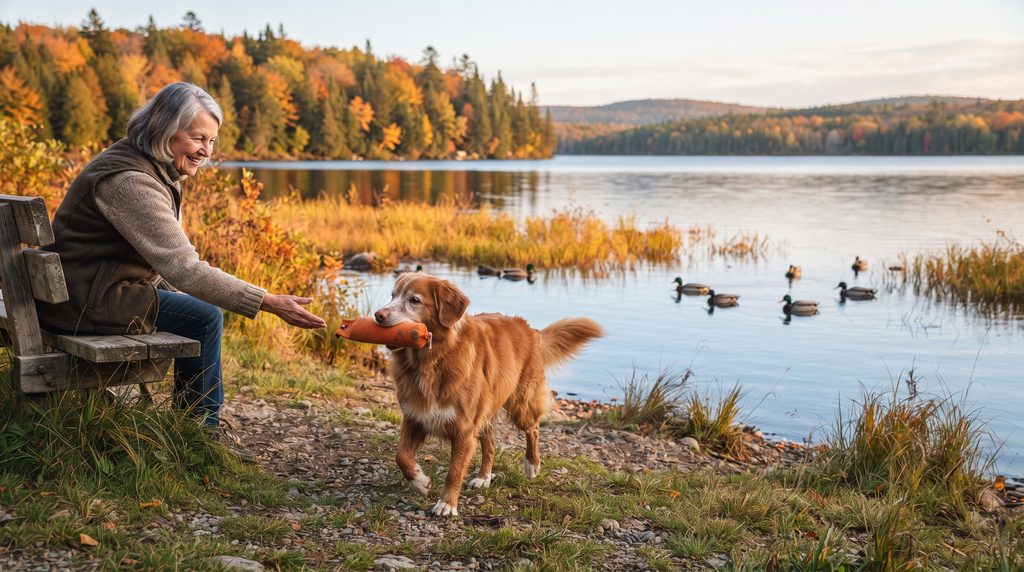
Cost of Owning a Nova Scotia Duck Tolling Retriever
The cost of owning a Nova Scotia Duck Tolling Retriever extends well beyond the initial expense of bringing a puppy or adult dog into the family. Although Tollers are medium-sized and generally manageable in terms of routine grooming, their energetic lifestyle, specialized health considerations, and need for regular training can create additional financial responsibilities. Prospective owners should budget for nutritious food, preventive veterinary care, grooming equipment, exercise activities, and unexpected medical expenses. Understanding these commitments before welcoming a Toller helps ensure that the dog receives consistent, appropriate care throughout its life.
For American households, a reasonable preliminary planning allowance is approximately $2,000–$4,000 or more annually for routine ownership, depending on location, food choices, insurance, veterinary requirements, and lifestyle. This is an illustrative budget rather than a verified breed-specific average, and it excludes the initial acquisition of the dog, major medical emergencies, and unusually expensive services. Active Tollers participating in organized sporting activities or requiring professional care may cost considerably more. Owners should calculate their likely expenses using local veterinary estimates and their individual circumstances.
Food represents one of the most predictable recurring expenses. A typical adult Toller weighs approximately 35–50 pounds and requires a complete, balanced diet appropriate to its age and activity level. Annual food and treat expenses might reasonably fall between $500 and $1,000 or more, depending on the product selected and the dog’s individual needs. Working Tollers participating in demanding hunting or sporting activities may require additional calories during periods of intensive exercise. Owners should prioritize nutritional adequacy and body condition rather than assuming that the most expensive food automatically provides the greatest benefits.
Routine veterinary care is another essential expense. Annual wellness examinations, vaccinations, parasite prevention, and dental assessments help maintain health and identify developing problems. Depending on geographic location and the services required, preventive care can account for several hundred dollars annually, with additional costs for diagnostic tests or treatments. Puppies often require more frequent appointments during their first year, while senior Tollers may benefit from twice-yearly examinations. Establishing a relationship with a veterinarian familiar with sporting breeds can be particularly valuable for owners whose dogs regularly swim, hunt, or participate in demanding exercise.
The breed’s inherited health considerations make planning for medical expenses especially important. Tollers have recognized predispositions to Addison’s disease, immune-mediated disorders, eye diseases, and certain orthopedic conditions. Diagnosis and treatment may involve specialist consultations, imaging, laboratory testing, prescription medication, or ongoing monitoring. Not every Toller will experience these problems, but unexpected veterinary expenses can be substantial. Owners should consider how they would manage a serious illness requiring repeated appointments or long-term medication, rather than assuming routine wellness care will cover every medical need.
Pet insurance is one way to reduce exposure to certain unexpected veterinary expenses, although coverage varies considerably between policies. Monthly premiums depend on factors such as the dog’s age, location, deductible, reimbursement percentage, and selected benefits. When comparing policies, examine exclusions relating to hereditary disorders, chronic illnesses, pre-existing conditions, and waiting periods. This is particularly relevant for Tollers because some inherited conditions may require expensive diagnosis and ongoing treatment. Owners choosing not to purchase insurance should consider maintaining a dedicated emergency savings fund capable of supporting substantial veterinary expenses.
Grooming is generally less expensive than for breeds requiring frequent professional clipping or elaborate coat styling. Tollers have a natural double coat that benefits from regular brushing, occasional bathing, nail trimming, and appropriate ear care. Many owners can handle most routine grooming at home using a quality brush, stainless-steel comb, nail trimmers, and suitable shampoo. Initial equipment purchases may be modest, although occasional professional grooming can provide additional convenience. Seasonal shedding may increase the time spent maintaining the coat, but it does not normally require expensive salon treatments.
Training expenses should also be considered, particularly during puppyhood and adolescence. Tollers are intelligent, enthusiastic learners, but their sensitivity, strong retrieving instincts, and occasional independence can make professional guidance worthwhile. Puppy socialization classes, basic obedience courses, and individual training sessions may help establish reliable manners and communication. Owners interested in advanced retrieving, agility, or other canine sports may face additional instruction and facility fees. Group classes are often more economical than private instruction, although individual training can be useful when addressing specific behavioral challenges.
Exercise equipment can represent a meaningful additional expense because Tollers are active sporting dogs that benefit from purposeful recreation. Everyday essentials include a comfortable harness, sturdy leash, secure collar, identification tags, retrieving toys, and durable outdoor equipment. Owners who regularly visit lakes may also invest in a properly fitted canine flotation vest, absorbent towels, and suitable travel equipment. Serious waterfowl hunters may require specialized training dummies, field equipment, and membership in sporting organizations. These additional purchases are optional for ordinary companion ownership but may be important for households actively participating in traditional fieldwork.
Organized canine activities can introduce further costs. Agility instruction, dock diving sessions, obedience competitions, and hunt tests may involve registration fees, club memberships, equipment, and travel. Some owners enjoy relatively inexpensive local activities, while others travel regularly to competitions or training events. The breed does not need costly competitive participation to remain happy and fulfilled. Hiking, scent games, controlled retrieving, and suitable swimming opportunities can provide excellent enrichment at comparatively little expense. The important consideration is whether owners can consistently provide appropriate activity rather than relying on expensive equipment to compensate for limited interaction.
Household arrangements and travel can also affect the overall budget. Secure fencing may be necessary for a Toller that spends time in a private yard, while crates, bedding, feeding equipment, and puppy-proofing supplies create initial setup expenses. Working households may need dependable dog walkers, pet sitters, or boarding services when family members are unavailable. These services can become significant recurring costs, particularly because Tollers generally thrive on meaningful companionship and structured activity. Prospective owners should consider how changing employment, travel, or family responsibilities might affect their ability to provide consistent care.
Over a typical lifespan of 12–14 years, the financial commitment to a Toller can become substantial. Using the illustrative annual allowance of $2,000–$4,000, routine expenses alone could total approximately $24,000–$56,000 across that period, before accounting for inflation, acquisition costs, or major emergencies. These figures should be treated as broad planning examples rather than predictions of what every household will spend. The actual amount may be considerably higher or lower depending on the dog’s health, lifestyle, and location. Planning early and reviewing expenses regularly helps reduce financial pressure when unexpected circumstances arise.
Ultimately, responsible Toller ownership involves budgeting for the dog’s physical, medical, and behavioral needs rather than focusing exclusively on initial expenses. Their manageable size can make everyday care relatively practical, but their sporting heritage and breed-specific health considerations deserve thoughtful financial preparation. Families who maintain suitable insurance or emergency savings, prioritize preventive care, and invest in appropriate training are better positioned to support their dog throughout its life. For owners prepared to meet these responsibilities, the Nova Scotia Duck Tolling Retriever offers years of companionship, adventure, and an exceptionally rewarding relationship.
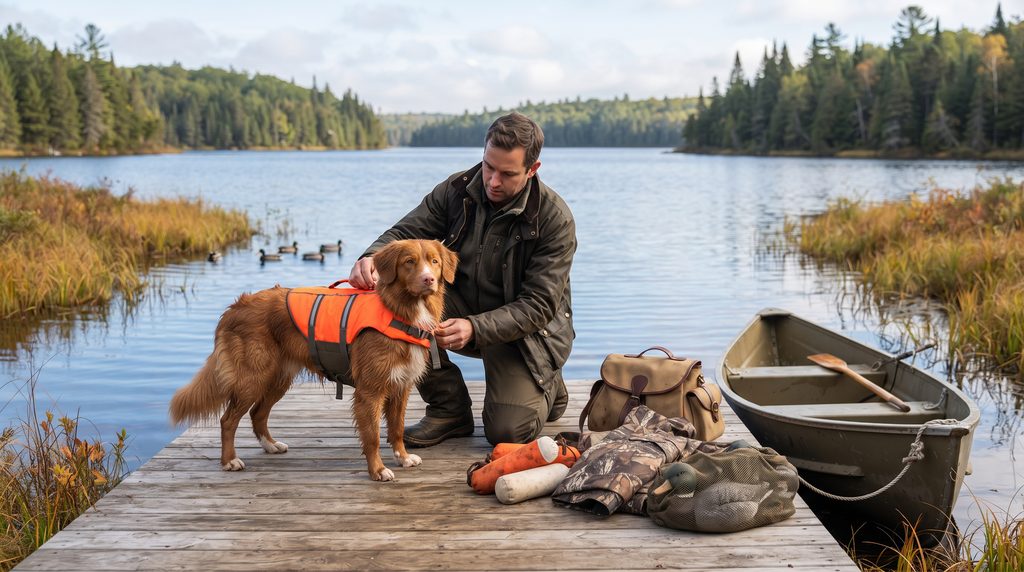
Planning an Annual Toller Ownership Budget
For a typical American household, an illustrative annual allowance of $2,000–$4,000 or more can help organize routine Toller expenses. Budget separately for quality food, veterinary examinations, parasite prevention, insurance or emergency savings, training, grooming supplies, and replacement equipment. Sporting activities, professional pet care, and travel may increase annual spending considerably. Initial setup expenses, acquiring the dog, and unexpected medical treatment should be calculated separately rather than absorbed into the routine estimate. Owners can reduce unnecessary costs through consistent preventive care, home grooming, appropriate weight management, and inexpensive enrichment activities. Maintaining an emergency fund is particularly sensible given the breed’s recognized inherited health concerns.
Choosing a Nova Scotia Duck Tolling Retriever Puppy or Rescue
Choosing a Nova Scotia Duck Tolling Retriever is an exciting decision, but finding the right dog requires careful research and realistic expectations. These intelligent, energetic Canadian sporting dogs offer extraordinary companionship for active owners, yet their sensitivity, strong retrieving instincts, and demanding exercise requirements make thoughtful selection particularly important. Whether welcoming a young puppy or adopting an older dog, prospective owners should consider temperament, health, socialization, and compatibility with their lifestyle. Taking time to understand the breed and identify a responsible source provides the strongest foundation for a successful lifelong relationship.
Finding a reputable Nova Scotia Duck Tolling Retriever Breeder is one of the most important steps for anyone considering a puppy. Responsible breeders prioritize health, temperament, genetic diversity, and preservation of the breed’s working characteristics rather than simply producing attractive red puppies. They should willingly discuss the parents’ personalities, explain their breeding decisions, and provide opportunities to learn about their dogs. Established breed clubs, including the Nova Scotia Duck Tolling Retriever Club (USA), offer breeder referral resources that can help prospective owners begin their search, although inclusion in a directory does not guarantee quality.
Health documentation deserves particular attention because Tollers have several recognized inherited conditions. Responsible breeders should provide verifiable screening results for the parents, including appropriate hip evaluations, veterinary ophthalmologist examinations, and relevant genetic tests. Important inherited conditions include juvenile Addison’s disease, progressive retinal atrophy, cardiac laminopathy, and cerebellar degeneration-myositis complex. As discussed in the health screening section, test results must be interpreted carefully because no single genetic panel excludes every possible disorder. A breeder who openly discusses health limitations and family histories is generally more reassuring than one who claims that inherited disease never occurs in their dogs.
When meeting a litter of Nova Scotia Duck Tolling Retriever Puppies, observe their behavior rather than choosing solely by appearance. Healthy, appropriately socialized puppies should show age-appropriate curiosity, movement, and interest in their surroundings. Some may approach visitors enthusiastically, while others prefer watching briefly before investigating. Individual differences are normal, and the boldest puppy is not necessarily the best choice for every household. An experienced breeder who has observed the litter throughout its development can often recommend a puppy whose confidence, energy, and sensitivity suit the prospective owner’s circumstances.
Early development is particularly important for this intelligent and sometimes sensitive breed. A Nova Scotia Duck Tolling Retriever Puppy benefits from gentle handling, exposure to ordinary household sounds, opportunities to explore safe environments, and positive experiences with different people. Responsible breeders begin these experiences before puppies leave for their new homes. Prospective owners should ask how the litter has been raised, whether puppies have encountered varied surfaces and everyday activities, and what early veterinary care they have received. Puppies should remain with their mother and littermates until at least eight weeks of age, or longer when required by local law or individual circumstances.
People searching for a Nova Scotia Retriever Puppy should also consider the dog’s likely adult temperament and activity requirements. Toller puppies can be wonderfully affectionate and entertaining, but they are often highly inquisitive, quick to learn, and easily excited by moving objects. Their future needs may include substantial daily exercise, structured retrieving activities, and patient training. Prospective owners should discuss their experience, household routines, available outdoor space, and expectations with the breeder. Choosing a puppy whose temperament complements the household is considerably more important than selecting the deepest red coat or most prominent white markings.
The search for Nova Scotia Retriever Puppies may require patience because Tollers are less common than Labrador Retrievers and Golden Retrievers. Responsible breeders often plan litters carefully and may maintain waiting lists rather than having puppies available throughout the year. Be cautious of sellers who cannot provide meaningful information about the parents, refuse reasonable questions, or pressure buyers to make immediate commitments. A written agreement should clearly explain the responsibilities of both parties, available health documentation, registration arrangements, and what happens if the owner can no longer keep the dog. Ethical breeders generally remain interested in the welfare of their puppies throughout their lives.
Adoption provides another worthwhile option. A Nova Scotia Duck Tolling Retriever Rescue organization may occasionally assist with dogs whose owners can no longer meet their needs because of changing circumstances, illness, relocation, or behavioral challenges. Breed-specific rescue programs often understand the temperament and activity requirements of Tollers and work to identify appropriate permanent homes. However, this is a relatively uncommon breed, and available rescue dogs may be limited. Prospective adopters should be prepared for waiting periods and should avoid assuming that a particular age, sex, or coat appearance will become available quickly.
Searching for a Nova Scotia Duck Tolling Retriever for Adoption may lead to breed-club rescue programs, established animal welfare organizations, or reputable shelters. The Nova Scotia Duck Tolling Retriever Club (USA) maintains a rescue program dedicated to rehoming dogs and supporting suitable placements. Rescue coordinators may ask detailed questions about household experience, other pets, exercise routines, and the amount of time available for companionship. These assessments help protect dogs that have already experienced changes in their living arrangements. Patience and honesty throughout the application process improve the likelihood of finding a compatible companion.
People hoping to Adopt a Nova Scotia Duck Tolling Retriever should carefully discuss the individual dog’s history and current needs. Ask about its previous living environment, interactions with children and other animals, medical records, training progress, and responses to unfamiliar situations. Some rescue Tollers settle readily into new households, while others need additional time to develop confidence and adjust to unfamiliar routines. Adult dogs may arrive with established habits, strong preferences, or specific sensitivities that require thoughtful management. A realistic understanding of these characteristics helps prevent unnecessary disappointment and supports a successful transition.
A specialist Nova Scotia Duck Tolling Retriever Dog Rescue can sometimes offer valuable guidance concerning the breed’s distinctive behaviors, including vocal excitement, sensitivity, and strong retrieving instincts. However, individual rescue arrangements differ, and not every dog will have a fully documented history. Prospective adopters should request veterinary information, discuss any known behavioral concerns, and establish whether post-adoption support is available. When possible, spending time with the dog before adoption provides an opportunity to observe its responses and assess compatibility. Responsible rescue organizations prioritize appropriate placement rather than simply arranging the quickest possible transfer.
Preparing the home is important regardless of whether the new arrival is a puppy or an adult rescue. Secure fencing, comfortable bedding, suitable chewing and retrieving toys, and a predictable daily routine help support the transition. Puppies require gradual house-training, socialization, and age-appropriate activity, while adopted adults may benefit from quieter introductions and additional time to establish trust. Avoid overwhelming either dog with visitors, unfamiliar environments, or demanding training immediately after arrival. Instead, focus on calm interactions, consistent expectations, and opportunities to settle comfortably into family life.
Ultimately, choosing the right Toller involves matching the dog’s individual personality and needs with an owner’s experience, expectations, and available time. Responsible breeders and rescue organizations should welcome thoughtful questions and demonstrate genuine concern for long-term welfare. Whether a lively puppy or an affectionate adult, a carefully selected Nova Scotia Duck Tolling Retriever can become an extraordinary companion. Patience during the selection process is a worthwhile investment in the many years of outdoor adventures, learning, affection, and companionship that may follow.
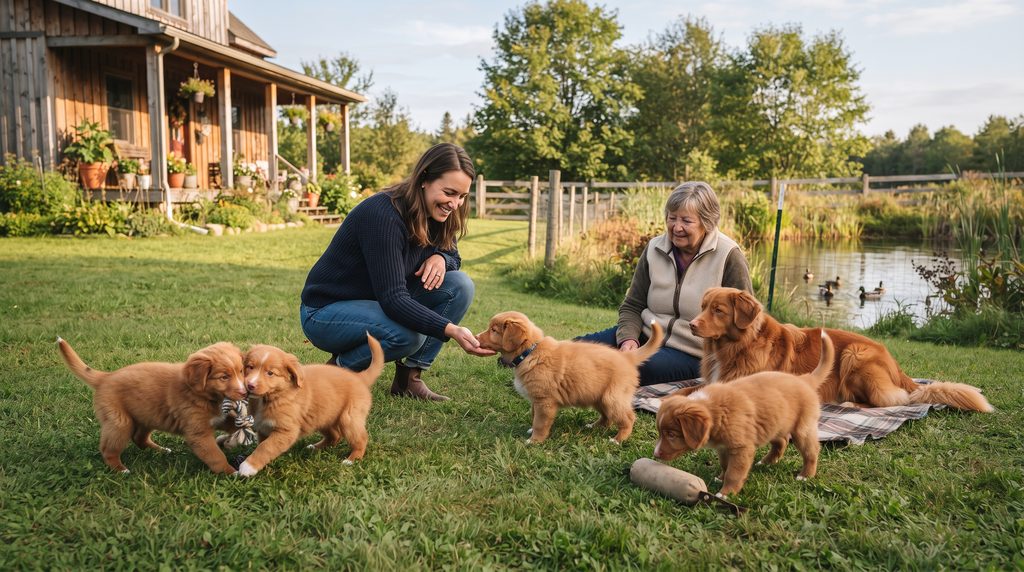
Is a Nova Scotia Duck Tolling Retriever Right for You?
The Nova Scotia Duck Tolling Retriever is an extraordinary companion for the right household, combining intelligence, affection, athleticism, and an infectious enthusiasm for life. However, its striking copper-red coat and manageable size can sometimes attract people who underestimate the demands of living with a working retriever. Tollers are energetic, sensitive dogs that thrive when their owners actively participate in their lives. Before choosing this distinctive Canadian sporting breed, it is important to consider whether your daily routine, experience, home environment, and long-term expectations genuinely match its physical and behavioral needs.
An active lifestyle is one of the strongest indicators that a Toller may suit your household. These dogs generally enjoy long countryside walks, swimming, retrieving, hiking, and activities that challenge their agility and endurance. Owners who already spend considerable time outdoors often find it easier to incorporate a Toller into their routine. However, enthusiasm for occasional weekend adventures is not necessarily enough. Tollers require meaningful activity throughout the week, including days when the weather is unpleasant, schedules are demanding, or outdoor recreation is less convenient.
Mental engagement is equally important because Tollers are intelligent problem-solvers that enjoy learning and participating in purposeful activities. A household that appreciates training, interactive games, and shared challenges is often better suited to this breed than one seeking a dog content with minimal interaction. Retrieving exercises, scent work, obedience training, and canine sports provide valuable opportunities for engagement. Owners do not need to participate in competitive events or traditional hunting, but they should enjoy finding constructive ways to exercise their dog’s mind.
The amount of time available for companionship deserves careful consideration. Many Tollers form strong attachments to their families and prefer being involved in ordinary household activities. Although adults can learn to remain comfortable alone for reasonable periods, regularly spending long working days without adequate exercise, company, or enrichment may prove difficult for some individuals. A predictable schedule, gradual independence training, and reliable arrangements for exercise or companionship can help. Households with demanding work commitments should honestly assess whether they can provide consistent care rather than relying on occasional intensive exercise.
Housing arrangements matter, although property size alone does not determine suitability. Tollers can adapt to different living environments when their exercise and enrichment requirements are met. A securely fenced yard offers practical opportunities for play and supervised outdoor activities, but it does not replace interaction with the owner. Apartment living may be possible for a well-trained individual receiving sufficient exercise, although vocal tendencies and limited outdoor access can create challenges. Easy access to suitable walking routes, parks, and safe recreational areas is often more important than simply owning a large property.
Noise tolerance is another consideration that prospective owners sometimes overlook. Some Tollers produce a remarkably loud, high-pitched vocalization when excited, commonly known as the Toller scream. This behavior may appear when the dog anticipates retrieving, swimming, or another particularly rewarding activity. Although calmness and impulse-control training can help manage excessive vocalization, owners should not assume that every dog will become completely quiet. Families living in noise-sensitive environments or seeking an exceptionally peaceful companion may find this aspect of the breed challenging.
Families with children can enjoy wonderful relationships with Tollers, particularly when everyone understands appropriate interactions and boundaries. Their playful nature makes them engaging companions for older children who enjoy outdoor activities and supervised training games. However, an enthusiastic young Toller may accidentally knock over smaller children or become overwhelmed by unpredictable handling. Adults must supervise interactions and ensure that the dog has opportunities to rest undisturbed. Households willing to teach children respectful behavior and maintain consistent routines are generally better prepared for successful family life with this breed.
Existing pets also influence whether a Toller is an appropriate choice. Many individuals coexist comfortably with other dogs, particularly when introduced carefully and matched with compatible companions. However, their attraction to movement and inherited hunting instincts can make interactions with cats, rabbits, birds, or other small animals more complicated. Some Tollers learn to live peacefully with familiar cats, while others retain a strong desire to chase. Owners must be prepared to provide supervision, secure boundaries, and ongoing training rather than expecting every Toller to behave identically around smaller animals.
Grooming responsibilities are relatively manageable compared with some heavily coated breeds, but Tollers are not suitable for households expecting a virtually hair-free home. Their dense, water-resistant double coats shed throughout the year, with heavier seasonal coat changes requiring additional brushing. Dogs that regularly swim or explore muddy environments also bring moisture, debris, and outdoor dirt into the household. Owners should be comfortable maintaining the coat, checking the ears and paws after adventures, and accepting that a working retriever’s lifestyle occasionally involves considerable cleaning.
Training experience can be particularly helpful because Tollers combine impressive intelligence with sensitivity and occasional independence. They generally respond best to positive reinforcement, consistent expectations, and enjoyable learning experiences. Harsh handling may undermine confidence, while repetitive exercises can reduce enthusiasm. First-time owners are not automatically unsuitable, but they should be prepared to invest in appropriate training guidance and learn how to manage an energetic sporting dog. Someone who enjoys building a cooperative relationship will often find the breed deeply rewarding, even when progress requires patience.
Financial and long-term responsibilities should also influence the decision. Although their medium size can make routine ownership more manageable than that of larger breeds, Tollers still require quality nutrition, preventive veterinary care, training, grooming supplies, and appropriate recreational equipment. Their inherited health risks, particularly certain autoimmune, cardiac, neurological, and eye conditions, make responsible breeding and financial preparation especially important. Prospective owners should consider veterinary insurance or emergency savings and recognize that maintaining an active dog’s health and mobility becomes increasingly important as it ages.
A Toller may not be the best match for someone seeking a particularly independent, low-energy, or consistently quiet companion. Similarly, households unable to provide reliable exercise, regular interaction, or patient training may struggle with the breed’s demanding qualities. However, these challenges should not overshadow its many strengths. For owners who genuinely enjoy the outdoors, appreciate an intelligent and occasionally mischievous personality, and want an affectionate dog that participates enthusiastically in daily life, the Toller offers an exceptional combination of companionship and sporting ability.
Ultimately, choosing a Nova Scotia Duck Tolling Retriever means embracing both the pleasures and responsibilities of living with a highly capable working dog. Its loyalty, intelligence, playful nature, and love of water can enrich family life in countless ways, provided its needs are consistently respected. A well-matched Toller can become a devoted hiking partner, enthusiastic retrieving companion, talented sporting dog, and affectionate member of the household. For people prepared to invest time, patience, and genuine involvement, this remarkable Canadian retriever can offer a deeply satisfying relationship lasting many wonderful years.
Before Choosing a Toller: Five Practical Questions
Can you provide meaningful physical exercise and mental stimulation every day, not just on weekends? Are you comfortable training an intelligent but sometimes sensitive and independent dog? Can your household accommodate seasonal shedding, wet coats, and occasional excitement-related barking? Do you have enough time for companionship, socialization, and consistent routines? Finally, are you financially prepared for preventive veterinary care and possible inherited health conditions? If you can confidently answer these questions and genuinely enjoy an active relationship with your dog, the Nova Scotia Duck Tolling Retriever may be an excellent choice. If several answers raise concerns, consider whether a less demanding breed would better suit your lifestyle.
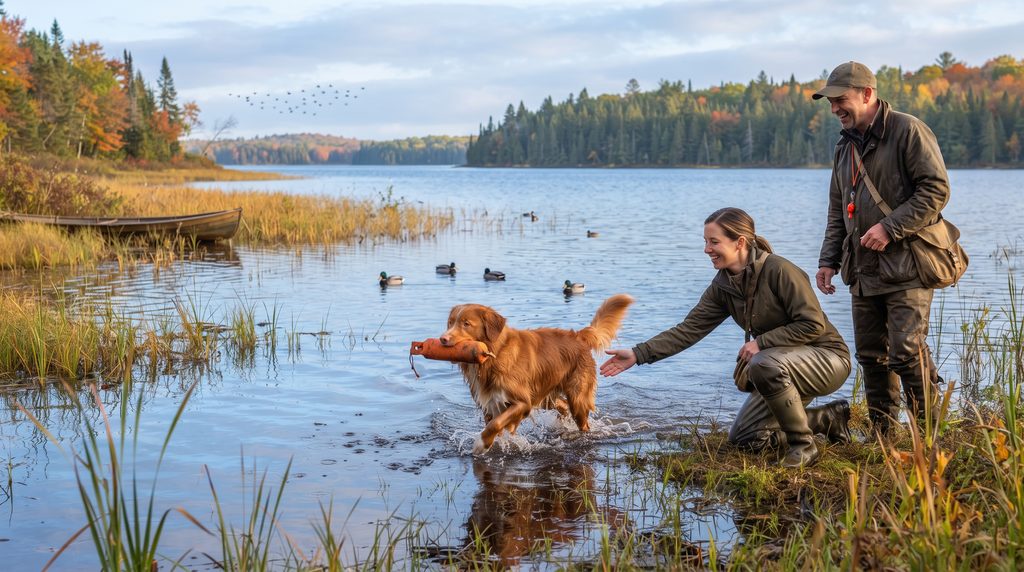
Nova Scotia Duck Tolling Retriever Final Thoughts
The Nova Scotia Duck Tolling Retriever is a remarkable example of how generations of specialized working heritage can produce a dog with an extraordinary combination of intelligence, athleticism, and personality. Developed along the rugged coastlines of Canada, this distinctive red retriever has evolved from a dedicated waterfowl hunting companion into an increasingly appreciated family dog. Yet beneath its beautiful copper coat and expressive eyes remains the determined, enthusiastic sporting animal that originally attracted the curiosity of ducks along Nova Scotia’s marshy shorelines.
What makes the Toller particularly special is its ability to combine intense working enthusiasm with genuine affection for its family. These dogs often approach outdoor adventures with remarkable energy, whether swimming across a lake, searching for a hidden retrieving dummy, or exploring unfamiliar woodland trails. At home, a well-adjusted Toller can be an affectionate, attentive companion that enjoys participating in everyday family life. Developing this balance requires appropriate exercise, mental stimulation, consistent training, and opportunities for relaxation.
However, prospective owners should look beyond the breed’s attractive appearance and manageable size. Tollers are not simply smaller versions of Golden Retrievers, nor are they universally easygoing companions. Their sensitivity, independent thinking, considerable energy, and occasional vocal excitement can present challenges for inexperienced or unprepared households. They generally thrive with people who appreciate positive reinforcement, enjoy spending time outdoors, and are willing to provide meaningful activities rather than expecting their dog to remain content with minimal interaction.
Responsible ownership also means understanding the breed’s inherited health considerations. Careful breeder selection, documented health screening, balanced nutrition, regular veterinary care, and appropriate exercise help provide a strong foundation for long-term well-being. Their distinctive double coat requires consistent maintenance, while their natural enthusiasm for swimming and retrieving makes practical grooming and outdoor care part of everyday life. These responsibilities are manageable for committed owners but deserve serious consideration before bringing a Toller home.
One of the greatest pleasures of sharing life with this breed is watching its natural abilities unfold. A young Toller learning its first retrieve, an experienced dog working confidently alongside its handler, or a senior companion enjoying a gentle lakeside walk all demonstrate the enduring qualities that define the breed. Their intelligence and enthusiasm create opportunities for a particularly close partnership, built through shared experiences, clear communication, and mutual trust.
For active individuals and families seeking an affectionate, capable, and endlessly engaging companion, the Nova Scotia Duck Tolling Retriever can be an exceptional choice. Its combination of working instinct, playful character, and devotion makes it unlike any other retriever. When provided with the guidance, companionship, and meaningful activity it deserves, this remarkable Canadian sporting dog can become a treasured family member and an enthusiastic partner in many years of memorable adventures.

Explore More Sporting Dog Breeds
The Nova Scotia Duck Tolling Retriever belongs to a fascinating group of athletic, intelligent dogs developed to work closely with hunters. From enthusiastic waterfowl retrievers to versatile spaniels, pointers, and setters, Sporting breeds offer remarkable variety in temperament, appearance, and working ability. Discover how these dogs compare in exercise requirements, training, grooming, health, and family suitability in our comprehensive CanineBase Sporting Dogs guide. Exploring the wider group can help you understand what makes the Toller distinctive and whether another Sporting breed might better suit your lifestyle.
Learn More About the Nova Scotia Duck Tolling Retriever
For additional information about the Nova Scotia Duck Tolling Retriever, the American Kennel Club provides an authoritative overview of the breed’s history, appearance, temperament, and characteristics. Its official breed information explains the Toller’s unusual waterfowl hunting background, distinctive physical features, and place within the Sporting Group. Visit the American Kennel Club’s Nova Scotia Duck Tolling Retriever profile to explore recognized breed standards and further educational resources. This information provides a useful reference for prospective owners, enthusiasts, and anyone interested in understanding this exceptional Canadian retriever.