

Weimaraner
Elegant, athletic, and unmistakably distinctive, the Weimaraner is one of Germany’s most recognizable sporting dogs. Famous for its beautiful silver-gray coat, striking light-colored eyes, and powerful yet graceful appearance, this remarkable breed has earned the affectionate nickname “Gray Ghost.” Originally developed to accompany German nobility on demanding hunts, the Weimaraner combines exceptional endurance, keen intelligence, and remarkable determination with a deeply affectionate attachment to its family. Beneath its aristocratic appearance lies an energetic, enthusiastic companion that thrives on meaningful activity and close human interaction. For owners who appreciate an intelligent working dog with a strong personality and an adventurous spirit, the Weimaraner offers a uniquely rewarding partnership.

The Weimaraner’s origins are closely connected to the historic German city of Weimar, where aristocratic hunters developed versatile dogs capable of tracking and pursuing game across demanding countryside. Early breeding emphasized courage, stamina, scenting ability, and a willingness to work alongside a human handler. Originally associated with hunting larger animals, including deer and wild boar, the breed gradually developed into a versatile sporting companion equally capable of locating, pointing, and retrieving smaller game. This demanding working heritage remains central to understanding the modern Weimaraner’s physical abilities and behavioral needs.
Among the most recognizable Weimaraner Traits is the extraordinary combination of athletic confidence and emotional attachment. In outdoor environments, these dogs can display impressive determination, curiosity, and enthusiasm for following interesting scents. At home, many become remarkably affectionate companions that prefer remaining close to their owners. They frequently follow family members through the house, seek regular attention, and enjoy participating in ordinary household activities. This strong attachment can create a wonderful relationship, but it also means the Weimaraner is rarely satisfied with a lifestyle involving extended isolation or minimal companionship.
Physically, the Weimaraner is a substantial, muscular sporting dog with a sleek outline and exceptionally graceful movement. Adult males generally stand between 25 and 27 inches at the shoulder and weigh approximately 70–90 pounds, while females typically measure 23–25 inches and weigh 55–75 pounds. Its short, smooth coat ranges from mouse-gray to silver-gray, creating the distinctive appearance that separates it from other continental pointing breeds. The long, softly hanging ears, expressive eyes, and elegantly shaped head contribute to an intelligent, attentive expression that has become one of the breed’s defining features.
Although admired for its striking appearance, the Weimaraner is not naturally suited to a quiet or sedentary household. This breed possesses considerable physical energy and requires regular opportunities for purposeful exercise, exploration, and mental engagement. A short daily walk around the neighborhood is unlikely to satisfy a healthy adult. Hiking, running with a mature and properly conditioned dog, retrieving activities, tracking, and organized dog sports can provide valuable outlets. However, successful ownership involves balancing physical activity with training, companionship, and opportunities to develop calm behavior indoors.
The Weimaraner’s intelligence can make training both rewarding and occasionally challenging. These dogs are generally capable learners that respond well to engaging, consistent instruction, but they also possess an independent streak inherited from their hunting background. Their curiosity and determination can become particularly noticeable when wildlife or unfamiliar scents capture their attention. Positive reinforcement, clear boundaries, and early socialization help establish reliable manners and confidence. Harsh handling is unnecessary and may undermine cooperation, particularly with sensitive individuals. Owners who make training part of everyday life often develop an exceptionally responsive companion.
Family life with a Weimaraner can be affectionate, entertaining, and highly interactive. Many individuals develop strong bonds with familiar adults and enjoy participating in supervised activities with older children. However, their substantial size, physical enthusiasm, and sometimes exuberant greetings can overwhelm smaller family members. Their hunting instincts also deserve consideration in households containing cats, rabbits, poultry, or other small animals. Successful relationships depend on individual temperament, early experiences, careful introductions, and appropriate management rather than assuming that an affectionate dog will automatically behave gently around every animal.
Grooming requirements are comparatively straightforward for the familiar short-coated Weimaraner. Occasional brushing, routine bathing when necessary, nail care, and regular ear inspections usually provide the foundation of coat maintenance. A less familiar long-haired variety also exists and is recognized by several international kennel organizations, although it does not meet the American Kennel Club’s conformation coat standard. Regardless of coat type, owners should understand that the Weimaraner’s relatively fine covering provides limited insulation during prolonged cold or wet conditions, making sensible protection and appropriate living arrangements important.
Health and responsible breeding are further considerations for anyone interested in this distinctive sporting dog. Although many Weimaraners enjoy active, healthy lives, the breed has recognized inherited and acquired medical concerns, including orthopedic disorders, gastric dilatation-volvulus, and certain genetic conditions. Appropriate health screening, thoughtful breeding practices, regular veterinary care, and maintaining a healthy body condition can all contribute to long-term well-being. With a typical lifespan of approximately 10–13 years, bringing home a Weimaraner represents a substantial commitment that extends through energetic adolescence, active adulthood, and the changing needs of senior life.
For the right household, the Weimaraner offers an exceptional combination of elegance, intelligence, loyalty, and sporting versatility. It is a breed that rewards involvement, responds to consistent guidance, and develops particularly meaningful relationships with owners who understand its need for activity and companionship. Those seeking a naturally independent or undemanding pet may find its intensity difficult to accommodate. However, active families prepared to embrace its distinctive personality often discover an affectionate, entertaining, and remarkably devoted companion. This guide explores the practical realities of Weimaraner ownership, helping prospective owners understand whether Germany’s famous Gray Ghost is the right dog for their lifestyle.

Table of Contents
Fast Facts
Breed Group: Sporting
Origin: Germany
Height: Males 25–27 inches; females 23–25 inches
Weight: Males 70–90 pounds; females 55–75 pounds
Life Expectancy: 10–13 years
Size: Large
Coat: Short, smooth, silver-gray to mouse-gray
Coat Care: Low maintenance; occasional brushing
Shedding: Low to moderate
Exercise Needs: Very high; vigorous daily activity and mental stimulation
Temperament: Affectionate, energetic, intelligent, confident, and devoted
Primary Role: Versatile hunting, pointing, tracking, and retrieving companion
Star Ratings
Apartment Friendly: ★★☆☆☆
Family Friendly: ★★★★☆
Good With Children: ★★★☆☆
Good With Other Dogs: ★★★☆☆
First-Time Owner Friendly: ★★☆☆☆
Easy Grooming: ★★★★★
Affectionate: ★★★★★
Easy to Train: ★★★★☆
Low Shedding: ★★★☆☆
Adaptable: ★★★☆☆
High Exercise Needs: ★★★★★
Tolerates Being Alone: ★☆☆☆☆
Weimaraner History and Origins
The Weimaraner’s history is closely associated with the aristocratic hunting traditions of nineteenth-century Germany, where powerful, intelligent dogs were developed to accompany hunters across forests, open countryside, and challenging terrain. Unlike many sporting breeds whose histories extend back several centuries, the modern Weimaraner emerged as a recognizable type during the 1800s. Its distinctive silver-gray coloring, impressive scenting ability, and versatile working instincts became defining characteristics of a breed carefully developed for demanding hunting responsibilities. Understanding these origins provides valuable insight into the intelligence, determination, and strong attachment to people that remain central to the Weimaraner’s personality today.
The breed takes its name from Weimar, a historic German city in the region now known as Thuringia. Its early development is traditionally associated with the court of Grand Duke Karl August of Saxe-Weimar-Eisenach, an enthusiastic supporter of hunting and outdoor pursuits. According to longstanding breed accounts, the Grand Duke and other members of the German nobility encouraged the development of capable hunting dogs combining endurance, courage, and excellent scenting ability. However, surviving historical records do not establish every detail of the Weimaraner’s earliest ancestry, and the precise involvement of individual aristocratic breeders remains partly uncertain.
Several theories have been proposed concerning the dogs that contributed to the Weimaraner’s development. German tracking hounds, early pointing dogs, and other continental hunting breeds are frequently mentioned, with particular attention given to traditional Leithund and Schweisshund bloodlines. These dogs were valued for locating and following the scent of game, including wounded animals. Although some accounts suggest contributions from Bloodhounds, German Shorthaired Pointers, or other European breeds, no single ancestry theory has been conclusively established. What is clear is that German hunters selectively developed dogs capable of combining strong scenting instincts with physical endurance and reliable working ability.
Early Weimaraner Hunting focused heavily on larger game animals found throughout the forests of Central Europe. Deer, wild boar, and other demanding quarry required dogs with considerable stamina, determination, and the courage to work in difficult conditions. Hunters particularly valued dogs capable of following complicated scent trails while remaining responsive to their handlers. The Weimaraner’s muscular build, powerful stride, and excellent nose suited these responsibilities. Its development was therefore driven primarily by practical field performance, with the distinctive silver-gray coat becoming one of the breed’s most recognizable physical characteristics.
As hunting traditions changed during the nineteenth century, the Weimaraner’s responsibilities gradually expanded. The decline of certain large-game hunting opportunities encouraged German sportsmen to develop more versatile dogs capable of working with smaller mammals and game birds. Weimaraner Hunting Dogs increasingly needed to locate game, indicate its position through pointing, track wounded animals, and retrieve when required. This transition helped establish the breed as a versatile continental sporting dog rather than a specialist large-game hunter. Its ability to work across woodland, agricultural fields, and wetlands became especially valuable to hunters seeking one dependable companion.
The relationship between the Weimaraner and its handler was another important feature of its development. German hunting traditions placed considerable emphasis on dogs capable of combining independent judgment with close human cooperation. A successful Weimaraner needed the initiative to investigate scent and terrain while remaining sufficiently attentive to respond to direction. This balance encouraged intelligence, determination, and a strong working relationship with familiar people. The same inherited tendencies remain recognizable in modern Weimaraners, which often display remarkable enthusiasm for shared activities while maintaining a strong desire to remain involved in their owners’ lives.
By the late nineteenth century, German enthusiasts had begun establishing more systematic breeding records and standards. In 1897, the German Weimaraner Club was formed to preserve and regulate the developing breed. Membership was restricted, and the club exercised considerable control over breeding and ownership. Dogs were evaluated for their suitability as hunting companions, with working ability and desirable physical characteristics playing important roles in breeding decisions. These restrictions helped maintain the breed’s distinctive identity, although they also limited its availability outside established German hunting circles.
The Weimaraner’s early breeding history also explains why it remained relatively unfamiliar beyond Germany for many years. Unlike breeds that quickly became fashionable household companions, the Weimaraner was largely maintained by dedicated hunters and sporting enthusiasts. Access to breeding stock was closely controlled, and exporting suitable dogs was not always straightforward. This exclusivity contributed to the breed’s reputation as an unusual and prestigious German hunting companion. Its development remained closely associated with practical fieldwork rather than the rapidly expanding companion-dog market emerging elsewhere in Europe.
The breed’s introduction to the United States is particularly associated with Howard Knight, an American sporting enthusiast who became interested in the Weimaraner during the late 1920s. Knight initially obtained two dogs from Germany, but they had been sterilized and could not establish a breeding population. He continued working to secure suitable breeding stock, eventually importing dogs that contributed to the foundations of the American Weimaraner. His determination helped introduce the breed to American hunters and establish interest in preserving its distinctive appearance, temperament, and sporting abilities.
In 1942, the Weimaraner Club of America was established to support the breed’s development and recognition in the United States. The American Kennel Club granted recognition around the end of that year, with the breed entering the American show scene in 1943. Interest expanded during the following decades as more dogs arrived from Europe and American enthusiasts discovered their abilities in hunting, obedience, and companionship. The Weimaraner’s distinctive silver-gray appearance attracted considerable attention, although its considerable exercise requirements and strong personality sometimes challenged owners unfamiliar with demanding sporting breeds.
The breed also became established in other countries during the twentieth century. Weimaraners arrived in Britain in the early 1950s, where dedicated enthusiasts developed breeding programs and sporting opportunities. International recognition gradually expanded, and both short-haired and long-haired varieties became part of the breed’s development in countries recognizing both coat types. Although conformation standards differ between kennel organizations, the underlying emphasis on athletic structure, scenting ability, and versatile hunting performance remains an important connection to the breed’s German origins.
Today, the Weimaraner continues to demonstrate many of the abilities for which it was originally developed. Modern dogs participate in field trials, tracking, scent work, retrieving activities, obedience, and other competitive sports. Many are also cherished family companions, although their natural working instincts remain important considerations for prospective owners. The breed’s history explains why a Weimaraner may display exceptional determination outdoors, strong interest in wildlife, and an equally powerful desire for human companionship. Beneath its distinctive silver-gray appearance lies a sporting heritage built on intelligence, endurance, versatility, and generations of close cooperation with people.
The Meaning and Pronunciation of Weimaraner
The name Weimaraner comes from Weimar, the German city associated with the breed’s development. For readers unfamiliar with Weimaraner Pronunciation, the name is commonly pronounced WHY-muh-rah-ner in American English, while the German pronunciation begins with a V sound rather than a W. Weimaraner is also associated with the German term Weimaraner Vorstehhund, referring to a pointing dog from Weimar. The breed’s famous nickname, “Gray Ghost,” reflects its distinctive silvery coat and quiet, purposeful movement in the field. Despite its unusual name, the Weimaraner is firmly established as one of Germany’s recognizable continental sporting breeds.

Weimaraner Appearance and Size
The Weimaraner is an elegant, powerful sporting dog recognized for its distinctive silver-gray coat, aristocratic appearance, and athletic proportions. Although its graceful outline suggests refinement, this is a substantial working breed developed for speed, endurance, and demanding hunting activities. Its muscular frame, deep chest, long legs, and confident movement reflect generations of selective breeding for physical performance. The Weimaraner’s unusual coloring and expressive eyes make it immediately recognizable, but its overall structure is equally important in distinguishing a healthy, well-proportioned example of Germany’s famous Gray Ghost.
Adult male Weimaraners generally stand between 25 and 27 inches at the shoulder, while females typically measure between 23 and 25 inches. These measurements follow the American Kennel Club breed standard and reflect a dog considerably taller than many other sporting breeds. Males usually possess a more substantial frame, although females should display the same athletic balance and muscular development. The breed’s relatively long legs and deep body give it an imposing appearance without the excessive bulk associated with some large working dogs. Height should contribute to efficient movement rather than simply creating an impressive outline.
Typical Weimaraner Weight ranges from approximately 70–90 pounds for males and 55–75 pounds for females. Individual dogs may fall toward either end of these ranges depending on genetics, sex, conditioning, and overall build. A healthy adult should possess well-developed muscle definition, a noticeable waist, and sufficient body substance to support sustained physical activity. Excessive weight can place unnecessary strain on joints, while an overly thin dog may lack the strength and reserves needed for demanding exercise. Assessing body condition is therefore more useful than concentrating exclusively on a particular number on the scale.
The Weimaraner’s body is moderately long, with a strong, level back, broad muscular loin, and a deep, well-developed chest reaching toward the elbows. Its shoulders should be laid back appropriately to support an efficient forward stride, while powerful hindquarters provide the propulsion needed for running and jumping. The legs are straight, strong, and proportionate to the body, with compact feet and well-arched toes. Webbing between the toes reflects the breed’s versatility as a hunting companion capable of working across varied ground and retrieving from water when required.
The head is one of the Weimaraner’s most distinctive features. It is moderately long, cleanly shaped, and proportionate to the body, with a clearly defined muzzle and a gently pronounced stop. The ears are broad, long, and softly textured, hanging close to the cheeks and contributing to the breed’s refined expression. When alert, a Weimaraner may lift its ears slightly forward while concentrating on an unfamiliar sound or movement. The neck is muscular and gracefully arched, flowing smoothly into the shoulders without appearing excessively thick or short.
Particularly striking are the Weimaraner Eyes, which contribute enormously to the breed’s unusual appearance. Adult eye colors generally range from light amber to gray or blue-gray, creating an intelligent, observant expression. Many puppies are born with beautiful blue eyes that gradually change as they mature. Searches for a Weimaraner Dog With Blue Eyes often feature these young puppies, although some adults retain a gray-blue appearance within the accepted standard. Eye color alone is not a reliable indicator of pedigree or overall health, and sudden changes in eye appearance should always receive veterinary attention.
The Silver Weimaraner is perhaps the breed’s most recognizable appearance, with a smooth coat that reflects natural light in subtle shades of pale gray. However, the accepted color range extends from mouse-gray to silver-gray, meaning some individuals appear considerably darker or warmer than others. The coat may be slightly lighter around the head and ears, creating a gentle contrast with the body. Among the recognized Colors of Weimaraner Dogs, these variations belong to the same gray spectrum rather than representing several completely separate color varieties.
A Brown Weimaraner is a common subject of online searches, partly because certain shades of gray can appear warm, taupe, or brownish under particular lighting conditions. Prolonged exposure to sunlight may also cause the coat to develop a slightly brownish cast. However, true chocolate-brown or liver coloring is not recognized by the American breed standard. The correct coat retains an underlying grayish-taupe quality rather than appearing distinctly brown. Owners comparing photographs should remember that camera settings, indoor lighting, and seasonal coat changes can influence the apparent color considerably.
Searches for a Black Weimaraner or Blue Weimaraner require a different explanation. Distinctly black and blue coats are disqualifications under the American Kennel Club’s breed standard. Blue Weimaraners do exist, but their coloring is not accepted for AKC conformation competition, and they should not be presented as a special or superior variety. The term blue generally describes a darker, cool-toned coat that differs from the accepted silver-gray and mouse-gray range. Although unusual colors may attract attention, reputable breeders should prioritize health, temperament, and responsible breeding practices rather than marketing nonstandard coloring as exclusive or unusually valuable.
Other searches include White Weimaraner, Piebald Weimaraner, and red-colored variations. These are not recognized standard color varieties. The American standard permits a small white marking on the chest, while extensive white patches or distinctly different coat colors fall outside the accepted appearance. Some dogs may develop white hairs through aging, injury, or other changes without belonging to a separate color variety. A dog with substantial white markings, reddish coloring, or an unusual pattern should not automatically be assumed to represent a rare purebred Weimaraner. Pedigree documentation and appropriate genetic information provide more reliable evidence of ancestry than appearance alone.
The Weimaraner Tail is another feature that can vary noticeably between individuals. The American breed standard describes a traditionally docked tail, generally measuring approximately six inches at maturity. However, many Weimaraners around the world retain their natural tails because docking is prohibited or restricted in various countries. A natural tail is strong, tapering, and proportionate to the dog’s athletic frame, commonly carried below the topline when relaxed and raised when alert or active. The presence of an undocked tail does not make a Weimaraner less authentic, although specific conformation requirements differ between kennel organizations.
Another misconception concerns the Miniature Weimaraner. There is no officially recognized miniature variety of this breed. Some females and naturally smaller individuals may have lighter frames, but they remain members of the same established size category. Dogs marketed as unusually small or miniature Weimaraners may have mixed ancestry or simply fall outside typical breed proportions. Prospective owners should be cautious of claims suggesting that a separate miniature variety has official recognition. A healthy Weimaraner should be assessed according to its overall structure, age, medical condition, and documented ancestry rather than an invented size classification.
The familiar short coat lies smoothly against the body, emphasizing the dog’s muscular structure and clean outline. Although longer-coated Weimaraners also exist and are recognized by several international kennel organizations, the American conformation standard specifies a short, sleek coat. The differences between these coat types will be explored more fully in the grooming section. Regardless of coat length, the Weimaraner’s movement should remain smooth, coordinated, and efficient, with a ground-covering stride that demonstrates strength without unnecessary exaggeration.
Ultimately, the Weimaraner’s appearance is defined by much more than its famous silver-gray coloring. Every element of its physical structure reflects the demands placed on a versatile German hunting companion, from the strong legs and deep chest to the expressive head and powerful hindquarters. A well-proportioned Weimaraner should look capable of sustained athletic work while retaining the elegance and balance that distinguish the breed. For prospective owners, understanding these characteristics helps establish realistic expectations about adult size, physical development, and the practical responsibilities of living with such an impressive sporting dog.
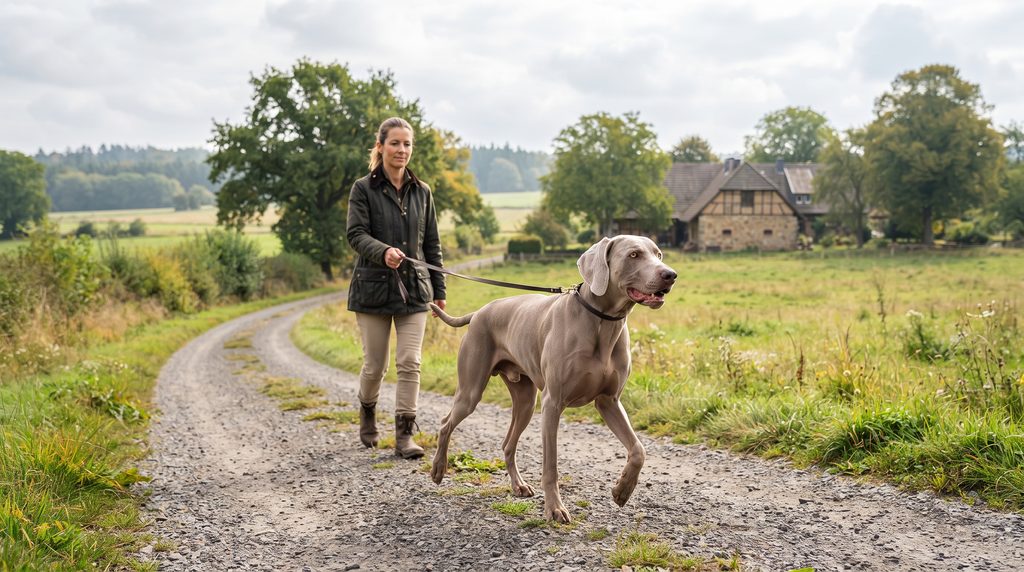
How a Weimaraner’s Appearance Changes With Age
Weimaraner puppies often look noticeably different from mature adults. Their eyes may begin as a vivid blue before developing the amber, gray, or blue-gray tones associated with the breed. Young dogs also tend to have softer outlines, larger-looking paws, and less developed muscle definition. As they mature, the chest deepens, the body becomes more substantial, and the distinctive athletic proportions become increasingly apparent. Coat shades can appear slightly different with changing light, seasonal conditions, and age. Owners should focus on steady physical development and healthy body condition rather than expecting a young Weimaraner to display the finished appearance of a fully mature sporting dog.
Weimaraner Temperament and Personality
The Weimaraner possesses a distinctive personality that combines intelligence, confidence, affection, and an unmistakable enthusiasm for life. Originally developed as a versatile hunting companion for German aristocracy, this athletic sporting breed retains the determination, alertness, and independent thinking required for demanding fieldwork. The American Kennel Club describes the ideal Weimaraner temperament as friendly, fearless, alert, and obedient, although achieving reliable obedience requires thoughtful training and consistent guidance. Beneath its elegant silver-gray appearance lies a strong-willed, emotionally connected dog that thrives when its natural abilities are understood and appropriately directed.
One of the most appealing aspects of the Weimaraner’s personality is its extraordinary devotion to familiar people. Many individuals form exceptionally close attachments to their owners, following them around the home, seeking physical contact, and showing genuine enthusiasm whenever family activities begin. This people-oriented nature can make the Weimaraner a wonderfully affectionate companion, but it also creates expectations that prospective owners should take seriously. A dog that prefers constant involvement may struggle in a household where companionship is limited or human interaction is treated as an occasional activity rather than part of everyday life.
The breed’s intelligence is particularly noticeable in the way it approaches unfamiliar situations. Weimaraners are observant, curious, and often remarkably quick to recognize patterns in their environment. They may learn household routines after only a few repetitions, anticipate their owner’s next activity, or discover how to obtain something they find interesting. This ability to think independently can be entertaining, but it also means that inconsistent rules are quickly noticed. A Weimaraner that discovers an effective way to gain attention or access a forbidden object may repeat the behavior with impressive persistence.
Confidence and determination are equally important characteristics. A well-adjusted Weimaraner should approach new experiences with interest rather than excessive fear, although individual dogs vary in their reactions to unfamiliar environments. Its historical working responsibilities required the courage to investigate difficult terrain, follow scent trails, and remain focused despite distractions. These qualities can create a capable, adventurous companion that enjoys challenging activities. However, confidence should never be confused with aggression or uncontrolled dominance. A balanced Weimaraner combines self-assurance with appropriate social behavior and responsiveness to its handler.
The Weimaraner’s playful personality often surprises people who expect such an elegant dog to behave with permanent dignity. Many individuals are enthusiastic, expressive, and occasionally mischievous, particularly during adolescence. They may carry favorite toys around the house, invent games to attract attention, or enthusiastically investigate anything new that appears in their environment. Their substantial size can make this behavior especially noticeable, as an excited young Weimaraner may move through a room with little appreciation of its own strength. Teaching appropriate manners helps ensure that this entertaining personality remains manageable.
Emotional sensitivity is another important part of the breed’s character. Although Weimaraners are frequently described as confident and strong-willed, many respond closely to their owner’s voice, body language, and emotional reactions. They generally learn best when communication is consistent, fair, and encouraging. Harsh corrections or unpredictable discipline can create confusion, frustration, or avoidance rather than reliable cooperation. At the same time, their determination means they are not always naturally compliant. Owners should aim for a balanced approach that respects the dog’s sensitivity while establishing clear expectations and encouraging thoughtful decisions.
With unfamiliar people, Weimaraners may display a combination of curiosity, confidence, and watchfulness. Some enthusiastically welcome visitors, while others prefer to observe newcomers before becoming comfortable. The breed has historically been associated with a degree of protective instinct, and many individuals will alert their families when someone approaches the property. However, excessive suspicion or threatening behavior should not be encouraged as desirable characteristics. A properly socialized Weimaraner should be able to distinguish ordinary visitors and unfamiliar situations from genuine concerns without displaying persistent fear or inappropriate aggression.
The Weimaraner’s natural hunting instincts strongly influence its everyday behavior. Movement, unfamiliar scents, and the presence of wildlife can capture its attention almost immediately. A dog that appears relaxed in the garden may suddenly become intensely focused when a bird lands nearby or an interesting scent crosses its path. This concentration reflects the breed’s inherited working abilities rather than simple disobedience. Owners who understand these instincts can provide satisfying outlets through scent work, retrieving activities, tracking, and other cooperative challenges that encourage the dog to use its abilities constructively.
Because the breed combines intelligence with considerable energy, emotional balance is closely connected to appropriate stimulation. A Weimaraner that regularly experiences frustration, boredom, or insufficient interaction may become restless, demanding, or destructive. Some individuals develop excessive attention-seeking habits, persistent vocalization, or difficulty relaxing when everyday routines lack structure. However, simply providing increasingly strenuous exercise is not always the solution. Learning to settle quietly, tolerate ordinary household activity, and enjoy calm periods is just as important as developing physical fitness. A balanced adult should be capable of both energetic participation and comfortable relaxation.
The strength of the Weimaraner’s attachment to its family can also influence its response to separation. Some dogs learn to remain comfortable alone for reasonable periods, while others find departures particularly difficult. Genuine separation distress may involve persistent barking, pacing, destructive behavior, or attempts to escape when familiar people leave. These responses should not be interpreted as deliberate stubbornness or spite. Gradual independence training, predictable routines, and positive experiences with short absences can help many young dogs develop confidence. Persistent distress may require professional behavioral support.
Individual temperament is influenced by inherited characteristics, early socialization, training, and everyday experiences. A thoughtfully bred, well-socialized Weimaraner may develop into a confident, affectionate companion that approaches new situations with curiosity and composure. Another individual may be more reserved, excitable, independent, or sensitive. Prospective owners should therefore avoid assuming that every Weimaraner will behave identically. Responsible breeders should be able to discuss the temperaments of their breeding dogs and help families understand the personality differences that may emerge among puppies from the same litter.
Ultimately, the Weimaraner is best suited to people who appreciate an intelligent, emotionally expressive, and occasionally demanding companion. Its remarkable combination of affection, confidence, curiosity, and sporting determination can create an exceptionally rewarding relationship, but these same qualities require patience and understanding. Owners willing to provide consistent guidance, meaningful interaction, and appropriate opportunities for mental engagement often discover a loyal, entertaining dog with a truly distinctive character. The Weimaraner’s personality is every bit as memorable as its famous silver-gray appearance, making it a remarkable companion for households prepared to embrace its enthusiastic nature.
Understanding a Weimaraner’s Strong-Willed Nature
A Weimaraner that repeatedly investigates boundaries is not necessarily trying to challenge its owner. This intelligent breed often learns through experimentation and quickly discovers which behaviors produce interesting results. Inconsistent household rules can unintentionally reward jumping, attention-seeking, or taking objects. Clear expectations, rewarding desirable choices, and providing suitable outlets for curiosity are generally more effective than confrontation. Owners should also learn to recognize when excitement or frustration is affecting their dog’s concentration. Short, successful interactions and opportunities for quiet recovery help develop emotional control. The goal is a confident, cooperative companion that understands household expectations without losing the curiosity and enthusiasm that make the breed distinctive.
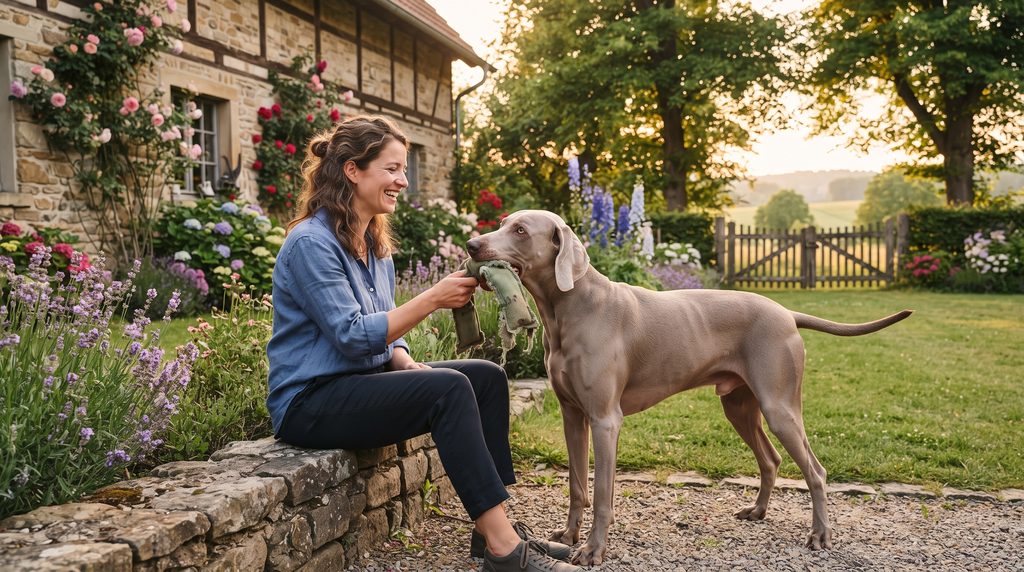
Living With a Weimaraner
Living with a Weimaraner can be an enormously rewarding experience, but it requires considerably more commitment than simply providing food, shelter, and occasional exercise. This intelligent, athletic German sporting breed thrives on close human companionship, predictable routines, and regular opportunities to participate in meaningful activities. Its impressive physical abilities are matched by an unusually strong interest in everything happening around the household. For owners who appreciate an affectionate, energetic dog that becomes deeply involved in everyday life, the Weimaraner can be a wonderful companion. However, families seeking an independent or naturally undemanding pet may find its needs surprisingly challenging.
One of the first things new owners notice is how closely a Weimaraner prefers to remain connected to its people. Many individuals follow family members from room to room, investigate household activities, and settle wherever their favorite person happens to be. Cooking dinner, working at a desk, or relaxing in the garden may all attract an attentive silver-gray companion. Although this devotion can be endearing, it also means owners need to establish healthy boundaries from an early age. Teaching a Weimaraner to relax independently is important for developing confidence and preventing constant attention-seeking from becoming an established habit.
The breed’s substantial size and physical enthusiasm also influence the home environment. An adult Weimaraner can weigh between 55 and 90 pounds, depending on sex and individual build, and its long legs and powerful body require sufficient space for comfortable movement. Narrow hallways, fragile furnishings, and cluttered rooms may present difficulties when a young dog becomes excited. A house with access to a securely fenced garden can be particularly convenient, although a large property is not essential when owners provide suitable activity elsewhere. What matters most is that the living environment accommodates a substantial, energetic dog safely and comfortably.
Secure outdoor boundaries deserve particular attention. Weimaraners are naturally curious hunters with strong instincts to investigate wildlife, unfamiliar scents, and interesting movement. A dog that notices a rabbit beyond the fence may become intensely focused on reaching it, regardless of how reliably it behaves indoors. Fencing should therefore be appropriate for the dog’s size, athletic ability, and individual behavior, with gates secured against accidental escapes. Some individuals may also dig or investigate weak points along boundaries. A secure garden provides valuable opportunities for supervised play and relaxation, but it should never replace regular walks and purposeful interaction.
Household management becomes especially important during puppyhood and adolescence. Young Weimaraners can be energetic, inquisitive, and remarkably inventive when exploring their surroundings. Shoes, clothing, children’s toys, and other accessible objects may quickly become interesting targets for chewing or investigation. The breed is also known for swallowing inappropriate items, creating a potential risk of intestinal obstruction. Owners should store small objects, medications, electrical cords, and hazardous materials securely while providing suitable chew items and supervision. Preventing access to dangerous objects is far safer than expecting an inexperienced puppy to recognize what should be left alone.
Establishing a predictable daily routine can make living with a Weimaraner significantly easier. Regular feeding times, scheduled exercise, short training sessions, and opportunities for quiet rest help create a household environment the dog can understand. Many individuals respond well when they know what is expected and when enjoyable activities are likely to occur. However, routines should also allow some flexibility so the dog does not become distressed whenever plans change. Teaching calm behavior during ordinary household activities is particularly useful for a breed whose natural enthusiasm can otherwise make relaxation difficult.
Time alone is one of the most important considerations for prospective owners. Weimaraners often form powerful attachments and may find prolonged isolation particularly difficult. Some individuals develop separation-related distress, which can involve persistent vocalization, destructive behavior, pacing, or attempts to escape. Not every Weimaraner experiences these difficulties, and many can learn to remain comfortable alone for reasonable periods. Gradually introducing independence, providing appropriate enrichment, and maintaining consistent departure routines can help. However, a household where everyone is routinely absent for extended periods may need reliable dog walking, pet care, or other arrangements.
Crate training can provide a useful management tool when introduced positively and used appropriately. A comfortable crate or designated resting area may help a young Weimaraner learn to relax, prevent unsafe wandering during brief periods, and establish a predictable place for rest. However, confinement should never be treated as a solution for inadequate exercise or genuine separation anxiety. Dogs experiencing panic may become more distressed when confined. Owners should observe how their individual dog responds and choose arrangements that support comfort and safety. A quiet resting space should remain available even when the dog has unrestricted access to the home.
Visitors and everyday household activity can present additional challenges, particularly with enthusiastic young Weimaraners. A friendly dog may greet guests by jumping, rushing toward the doorway, or attempting to investigate bags and belongings. Because the breed is physically substantial, these behaviors can become uncomfortable even when no aggression is involved. Establishing polite greeting routines, rewarding calm behavior, and using gates or temporary separation when necessary can help prevent problems. Some individuals are naturally more reserved with unfamiliar people, making positive social experiences and the ability to approach at their own pace equally important.
Climate and comfort also influence everyday ownership. The Weimaraner’s short, sleek coat provides limited protection against prolonged cold, wet, or windy conditions. Many dogs appreciate warm sleeping areas and may benefit from suitable protective clothing during particularly cold outings. Hot weather presents different challenges because energetic individuals may remain eager to exercise despite rising temperatures. Owners should provide shade, fresh water, and opportunities for cooling while avoiding strenuous activity during extreme heat. A Weimaraner is generally better suited to living indoors with its family than spending long periods isolated outside.
Travel arrangements are another practical consideration for households that regularly take their dogs on adventures. Weimaraners often enjoy accompanying familiar people, but their size requires adequate vehicle space and appropriate restraint. A crash-tested harness or suitable secured travel crate can help improve safety during journeys. Puppies should be introduced gradually to car travel, while adult dogs may benefit from planned rest stops during longer trips. Owners should also consider how their dog will respond to unfamiliar accommodation, busy environments, and changes in routine. Thoughtful preparation makes traveling together more comfortable and reduces unnecessary stress.
Ultimately, successful Weimaraner ownership depends on creating a household where companionship, structure, safety, and appropriate independence are balanced. The breed’s intelligence and affectionate nature can make it a delightful presence, but its physical strength, curiosity, and need for involvement demand responsible management. Owners who enjoy including their dog in everyday activities while maintaining consistent boundaries often develop an exceptionally rewarding partnership. For the right family, living with a Weimaraner means sharing ordinary routines and memorable adventures with a loyal, expressive companion whose personality is every bit as distinctive as its famous silver-gray coat.

Weimaraner and Children
The Weimaraner can be a wonderfully affectionate and entertaining family companion, particularly in households with older children who enjoy an active outdoor lifestyle. Known for forming exceptionally strong attachments to familiar people, this intelligent German sporting breed often becomes deeply involved in family activities, from exploring countryside trails to playing games in the garden. However, its considerable size, physical enthusiasm, and strong personality mean that relationships with children require thoughtful supervision and consistent guidance. A successful family environment depends on understanding both the Weimaraner’s natural behavior and the different needs of children at various stages of development.
One of the breed’s greatest attractions is its enthusiasm for shared activities. Many Weimaraners enjoy accompanying children on supervised walks, participating in retrieving games, and exploring outdoor environments together. Their playful personalities can create particularly rewarding relationships with older children who understand how to interact appropriately with a large, energetic dog. A mature, well-trained Weimaraner may become a loyal companion during family adventures, offering opportunities for children to develop confidence, patience, and an appreciation of responsible animal care. These relationships are most successful when adults remain actively involved rather than expecting children to manage the dog independently.
The Weimaraner’s substantial physical presence is an important consideration around younger family members. An adult can weigh between 55 and 90 pounds, and even friendly individuals may accidentally knock over small children when turning quickly, greeting visitors, or becoming excited. Young Weimaraners are especially exuberant and may struggle to regulate their movements during stimulating activities. Their enthusiasm can sometimes make them appear rough or overwhelming despite entirely friendly intentions. Families with toddlers should therefore consider whether they have sufficient time and experience to manage both an energetic sporting dog and the everyday demands of caring for young children.
Puppyhood and adolescence often present the greatest practical challenges. Young Weimaraners may jump, mouth during play, grab moving objects, or chase children running across the garden. These behaviors are not necessarily signs of aggression, but they can become frightening or unsafe when a large dog loses control of its excitement. Adults should establish clear rules around greetings, retrieving games, and appropriate interaction from the beginning. Teaching a reliable sit, leave it, recall, and settle cue helps develop safer household manners. Management through barriers or temporary separation is also useful when excitement exceeds the dog’s current level of self-control.
Early socialization plays an important role in helping Weimaraners become comfortable around children. Puppies should encounter appropriately managed situations involving different ages, voices, movements, and ordinary family activities. The aim is to create positive associations rather than overwhelming the puppy with constant handling or attention. A young dog should be allowed to observe children calmly and approach voluntarily when comfortable. Rewarding relaxed behavior helps establish confidence, while forced interactions can contribute to uncertainty or defensive responses. Because individual Weimaraners vary in sensitivity, social experiences should always reflect the puppy’s temperament and developmental stage.
Children also need guidance about appropriate behavior around dogs. Even a gentle Weimaraner should never be expected to tolerate ear pulling, tail grabbing, climbing, or unwanted hugging. Children should understand that dogs need personal space when eating, sleeping, chewing, or resting. Approaching an unfamiliar dog requires permission, and interactions should remain calm enough for the animal to move away whenever it chooses. Teaching these boundaries protects children while also helping the Weimaraner feel comfortable and secure. A dog’s willingness to remain close to a child does not mean it enjoys every kind of physical attention.
Recognizing canine body language is particularly valuable in a busy family home. A Weimaraner that turns its head away, repeatedly licks its lips, becomes unusually still, avoids contact, or moves toward an exit may be communicating discomfort. Some dogs display subtle signs before growling or taking more obvious defensive action. Adults should intervene when these signals appear rather than expecting the dog to continue tolerating an uncomfortable interaction. Growling should be treated as meaningful communication, not punished simply because it is undesirable. Providing space and addressing the cause of discomfort is safer than suppressing warning signals.
The breed’s protective instincts deserve thoughtful attention in households where children regularly invite friends to visit. Some Weimaraners become particularly attached to their families and may be watchful around unfamiliar people. Excited games involving shouting, chasing, or pretend fighting can occasionally create confusion for a dog that interprets the situation differently from the children involved. Owners should supervise visits carefully and prevent the dog from becoming involved in rough play. A comfortable resting area away from busy activities allows the Weimaraner to relax without feeling responsible for monitoring every interaction.
Older children may enjoy participating in basic training and enrichment activities under adult guidance. Asking the dog to perform familiar cues, hiding treats for scent games, or practicing calm retrieving can create positive opportunities for cooperation. These activities are particularly suitable for a breed that enjoys intellectual challenges and close interaction with people. However, adults should remain responsible for leash handling, structured exercise, veterinary care, and behavioral management. A strong Weimaraner distracted by wildlife can pull suddenly, making independent walks unsuitable for children who cannot safely control the dog.
Family routines should also provide opportunities for the Weimaraner to rest without interruption. Although these dogs often enjoy constant involvement, excessive excitement can make it difficult for young individuals to settle. A designated bed, quiet room, or comfortable resting area gives the dog somewhere to relax away from active play. Children should understand that this space is not an invitation to approach or disturb the animal. Teaching the dog to settle calmly while family activities continue nearby helps develop emotional balance and reduces the likelihood of overexcitement during everyday interactions.
When choosing a puppy, families should discuss the ages and behavior of their children with the breeder. Responsible breeders can explain the temperaments of the parents and help identify puppies whose developing personalities may suit a particular household. Families considering an adult Weimaraner from rescue should ask about previous experiences with children, reactions to unfamiliar visitors, and any known resource guarding or handling sensitivities. An adult dog with an established history of positive family interactions may be a suitable option, although introductions should still proceed gradually and under supervision.
Ultimately, the Weimaraner can become a deeply valued companion for children when its physical strength, emotional needs, and natural enthusiasm are properly managed. The breed’s affectionate personality and eagerness to participate in family activities offer considerable rewards, especially for households that enjoy spending time outdoors together. However, friendliness alone does not guarantee safety, and even a well-trained dog should never be left unsupervised with babies or young children. Families that combine consistent training, respectful interactions, appropriate boundaries, and active adult involvement are best positioned to develop a lasting and rewarding relationship between their Weimaraner and children.

Safe Family Games for a Weimaraner
Structured games help children enjoy the Weimaraner’s playful nature without encouraging excessive excitement. Older children can participate in supervised scent searches, gentle retrieving, and simple reward-based training. Adults should interrupt play before the dog becomes overly stimulated and avoid games involving wrestling, chasing children, or grabbing clothing. Teach children to offer toys calmly and allow the dog to release them voluntarily rather than pulling objects from its mouth. A quiet resting area should always remain available. Because Weimaraners are large, powerful dogs, all interactions with younger children require attentive adult supervision, regardless of how affectionate or well-trained the individual may be.
Weimaraner With Other Dogs and Pets
The Weimaraner can develop rewarding relationships with other dogs, particularly when raised with appropriate social experiences and introduced to compatible companions. However, this powerful German sporting breed is not universally sociable with every animal it encounters. Its confident personality, physical enthusiasm, and substantial hunting instincts can influence interactions with unfamiliar dogs and smaller household pets. Although many Weimaraners enjoy canine companionship, their suitability for multi-pet households depends on individual temperament, early experiences, training, and careful management. Prospective owners should understand these considerations before assuming that a friendly, affectionate Weimaraner will automatically coexist peacefully with other animals.
Many Weimaraners enjoy spending time with familiar dogs, particularly those that share their enthusiasm for running, exploring, and outdoor activities. Confident sporting breeds such as Labrador Retrievers and Golden Retrievers may provide compatible companionship when their personalities and play styles are appropriately matched. A Weimaraner may appreciate having another dog nearby during walks, supervised play, and ordinary household routines. However, breed alone cannot predict compatibility. A calm, socially experienced companion may be an excellent match, while another equally friendly dog might find the Weimaraner’s energetic approach overwhelming or intrusive.
Early socialization is particularly important because Weimaraners can develop strong preferences about unfamiliar dogs as they mature. Puppies should encounter friendly, appropriately vaccinated dogs in controlled environments where interactions remain comfortable and positive. These experiences help young Weimaraners recognize canine communication, respond to social boundaries, and develop confidence around different personalities. Supervised puppy classes and carefully selected canine companions can be valuable, but successful socialization does not mean encouraging unrestricted play with every dog. Learning to remain relaxed in the presence of other animals is often just as important as learning to interact directly.
The Weimaraner’s considerable size and strength deserve attention when selecting suitable playmates. Young dogs may enjoy vigorous chasing, wrestling, and physical games, sometimes continuing long after another animal has lost interest. Smaller or more reserved companions can become uncomfortable when faced with persistent invitations to play. Owners should watch for balanced interactions in which both dogs willingly participate, take breaks, and respond appropriately to one another’s signals. Repeated pinning, relentless pursuit, stiff body language, or an inability to disengage suggests that play should be interrupted before tension develops.
Some mature Weimaraners become selective about their canine companions, particularly when interacting with unfamiliar dogs of similar confidence or assertiveness. Same-sex conflict can occur in certain individuals, although it should not be assumed that every pair of males or females will experience problems. Previous social experiences, inherited temperament, resource guarding, and the dogs’ communication styles may all influence compatibility. Owners should avoid forcing greetings or expecting every adult Weimaraner to enjoy crowded dog parks. A dog that prefers familiar companions can still lead a socially fulfilling life without regularly interacting with unfamiliar animals.
Introducing a Weimaraner to an existing household dog should be approached gradually and thoughtfully. Initial meetings are often most successful in a quiet, neutral location where neither animal feels pressured to defend familiar territory. Parallel walking at a comfortable distance allows the dogs to observe one another before closer contact is encouraged. If both appear relaxed, brief supervised interaction may follow. Once indoors, separate feeding areas, individual resting spaces, and careful management of valued toys or chews help reduce competition. Allowing the relationship to develop naturally is generally safer than expecting immediate friendship.
The situation becomes more complicated when cats are involved. Weimaraners were developed to locate, track, and pursue game, and these instincts remain strongly expressed in many modern dogs. A cat moving suddenly across a room or garden can trigger an immediate chasing response, even when the Weimaraner has previously appeared calm. Some individuals live successfully with cats, particularly when introduced carefully during puppyhood and raised alongside confident, dog-experienced felines. However, peaceful coexistence cannot be guaranteed, and certain Weimaraners may never be suitable companions for cats regardless of training.
Households containing cats should use controlled introductions and secure physical barriers. Initially, the animals can become familiar with each other’s scent while remaining in separate areas. Gradual visual introductions through a suitable gate or other secure barrier allow owners to observe reactions without permitting direct pursuit. Calm behavior can be rewarded, but the cat must always be free to retreat. Elevated resting areas, separate feeding locations, and dog-free rooms are especially important. If the Weimaraner repeatedly stalks, fixates on, or attempts to chase the cat, continued separation and qualified behavioral guidance may be necessary.
Small mammals and birds present even greater concerns. Rabbits, guinea pigs, hamsters, ferrets, pet rodents, and domestic poultry may stimulate the Weimaraner’s natural hunting responses. Unlike dogs bred primarily for companionship, the Weimaraner was developed to locate and work with game animals, making its interest in vulnerable species particularly significant. Even an individual that behaves gently around people and other dogs may react suddenly when a small animal runs or flutters. Secure enclosures and reliable physical separation are essential, and unsupervised direct contact should never be considered safe simply because previous interactions appeared peaceful.
Outdoor environments introduce additional challenges because wildlife can attract a Weimaraner’s attention very quickly. Squirrels, rabbits, birds, and other animals may trigger pursuit, particularly when the dog is exercising in unfamiliar countryside. Reliable recall is valuable, but owners should not assume that obedience alone will override an intense hunting response. Secure fencing, appropriate leash use, and long-line training provide important safeguards. Dogs should remain under control around livestock, protected wildlife, and areas where off-leash exercise is prohibited. Preventing opportunities for chasing is generally more effective than attempting to interrupt a dog already fully engaged in pursuit.
Resource guarding can also influence relationships within a multi-dog household. Some Weimaraners may become uncomfortable when another dog approaches food, favorite toys, resting areas, or valued human attention. This behavior is not unique to the breed, but its size and strength make appropriate management particularly important. Feeding dogs separately, avoiding competition over high-value chews, and recognizing early signs of tension can help prevent disagreements. Owners should never punish warning signals such as growling without addressing the underlying situation. Persistent guarding or escalating conflict warrants guidance from a qualified behavior professional.
Families considering an adult Weimaraner through rescue should investigate its known experiences with other animals before agreeing to adoption. Some individuals have lived successfully with multiple dogs or household cats, while others have limited social experience or established prey-driven behaviors. Rescue organizations and foster carers may be able to provide useful information about the dog’s responses to different situations, although behavior can change after settling into a new environment. Carefully managed introductions with existing pets, realistic expectations, and appropriate contingency arrangements are particularly important when the dog’s background is incomplete.
Ultimately, the Weimaraner can become a wonderful companion for compatible dogs, but its relationships with smaller animals require careful assessment and realistic expectations. Strong hunting instincts are a fundamental part of the breed’s identity and cannot always be eliminated through training or early socialization. Owners who understand these instincts, provide appropriate supervision, and respect each animal’s individual needs are better positioned to maintain a peaceful household. For families with suitable canine companions, the Weimaraner’s affectionate nature and enthusiasm for shared activities can create rewarding relationships that enrich everyday life.
Recognizing Prey Drive in a Weimaraner
A Weimaraner showing strong interest in a smaller animal may become unusually still, stare intently, lower its body, or begin stalking before attempting to chase. These behaviors can appear suddenly and should not be mistaken for harmless curiosity. Interrupt the situation calmly while the dog remains responsive, and create distance before excitement escalates. Secure barriers and appropriate leash management are particularly important around cats, rabbits, birds, and other vulnerable pets. Never rely on a successful previous encounter as proof that unsupervised contact is safe. If persistent fixation or chasing develops, seek advice from a qualified behavior professional experienced with prey-driven dogs.

Weimaraner Exercise and Activity Needs
The Weimaraner is an exceptionally energetic sporting dog whose exercise requirements reflect generations of selective breeding for endurance, speed, and demanding hunting work. Originally developed to accompany German hunters across forests, fields, and challenging terrain, this powerful breed possesses remarkable stamina and a natural enthusiasm for physical activity. A healthy adult Weimaraner requires considerably more stimulation than occasional neighborhood walks can provide. However, satisfying its needs involves more than simply encouraging continuous movement. The most effective routines combine purposeful exercise, opportunities for exploration, mental engagement, and regular interaction with the people it considers its family.
For many healthy adult Weimaraners, approximately 90 minutes to two hours of varied daily activity provides a reasonable starting point, although particularly energetic individuals may require additional exercise. Others may remain comfortable with a somewhat lighter routine when physical activity is balanced with appropriate mental challenges. Age, fitness, health, and individual temperament all influence the amount required. A brisk morning walk, an afternoon exploring suitable countryside, and shorter periods of structured activity can provide a satisfying combination. The important consideration is whether the dog receives meaningful opportunities to use its physical abilities rather than simply accumulating exercise minutes.
One of the Weimaraner’s most impressive qualities is its capacity for sustained activity across considerable distances. A physically mature, properly conditioned individual can become an excellent companion for hiking, trail running, and other demanding outdoor pursuits. Its long muscular legs, deep chest, and efficient movement allow it to cover varied ground with impressive determination. Nevertheless, owners should build endurance gradually rather than assuming that an enthusiastic dog is automatically prepared for prolonged exercise. Conditioning should begin with manageable distances and increase progressively, allowing muscles, joints, and cardiovascular fitness to adapt without unnecessary strain.
The breed’s hunting heritage also provides valuable opportunities for activities that engage both body and mind. Traditional Weimaraner fieldwork involves locating game through scent, pointing to indicate its position, tracking wounded animals, and retrieving when required. Modern owners can develop these natural abilities through appropriate hunting programs, field trials, and organized sporting activities. Even dogs that never participate in a traditional hunt can benefit from searching for hidden objects, following carefully prepared scent trails, or retrieving training dummies. These experiences provide purposeful challenges that are often more satisfying than repetitive physical exercise alone.
Scent-based activities are particularly useful because they allow the Weimaraner to exercise its remarkable ability to investigate the environment through smell. Owners can begin with simple searches for treats or toys in a secure garden before introducing more complicated scent trails. Tracking and organized scent work provide additional challenges for dogs that enjoy concentrating on specific tasks. These activities require comparatively little equipment and can be adapted for different ages and fitness levels. They are also valuable during poor weather or periods when strenuous physical activity must be temporarily reduced.
Swimming can provide another excellent exercise opportunity for Weimaraners that enjoy water. Although individual enthusiasm varies, many members of the breed are capable swimmers and enjoy retrieving from lakes or other suitable environments. Swimming allows substantial muscular activity while reducing some of the repetitive impact associated with running on firm ground. However, dogs should be introduced to water gradually, never forced to enter, and supervised throughout every session. Owners should check water quality, currents, underwater hazards, and local safety conditions. A properly fitted canine life jacket may be appropriate, particularly in deeper or unfamiliar water.
Off-leash exploration can be especially rewarding because it allows the Weimaraner to move at a natural pace and investigate interesting surroundings. However, the breed’s powerful hunting instincts can make reliable recall challenging when birds, rabbits, or other wildlife appear. Even a well-trained dog may become intensely focused on an exciting scent or moving animal. Off-leash exercise should therefore be restricted to safe, legally permitted areas where the individual dog can be controlled reliably. Secure fields and suitable long-line arrangements provide alternatives for dogs still developing recall or those exercising near livestock and wildlife.
Organized dog sports offer further opportunities to channel the Weimaraner’s athletic abilities. Agility, tracking, rally, obedience, and field events can provide challenging activities that strengthen cooperation between dog and handler. Canicross may appeal to experienced runners seeking an energetic companion, provided the dog is fully mature and properly conditioned. Some Weimaraners also enjoy recreational retrieving, structured swimming, and controlled obstacle exercises. Owners should select activities according to their dog’s interests and physical condition rather than assuming that every individual will enjoy the same sporting challenges. Variety often helps maintain enthusiasm while reducing repetitive physical strain.
Exercise during puppyhood requires particular care because the Weimaraner is a large breed whose bones and joints continue developing well beyond the earliest months of life. Young puppies may appear tireless, but their enthusiasm should not be interpreted as readiness for prolonged running or demanding hikes. Short walks, supervised free play, gentle exploration, and age-appropriate training provide more suitable opportunities for development. Repetitive jumping, forced jogging, and running beside bicycles should be avoided until physical maturity. Veterinary guidance can help determine when an individual Weimaraner is ready to begin more demanding conditioning, particularly if joint development is a concern.
Weather conditions also influence how safely the breed can exercise. The Weimaraner’s short coat provides limited insulation during prolonged cold or wet conditions, particularly when the dog is stationary between activities. In hot weather, its enthusiasm can sometimes encourage continued exertion despite increasing fatigue. Walks and demanding activities should be scheduled during cooler periods, with regular access to drinking water and shade. Owners should watch for excessive panting, unusual weakness, uncoordinated movement, or reluctance to continue. Hot pavement and sustained exercise in humid conditions can create serious risks even for physically fit dogs.
An important aspect of exercise management is teaching the Weimaraner that relaxation is just as valuable as activity. Some owners unintentionally encourage increasingly intense routines in an attempt to exhaust a naturally energetic dog. However, constant high-speed running, repetitive ball chasing, or continuous excitement can make it difficult for an individual to develop calm household behavior. Slower walks that allow sniffing, controlled scent games, quiet enrichment, and appropriate recovery periods help create a more balanced routine. A fulfilled Weimaraner should be able to enjoy vigorous activity outdoors and settle comfortably once the day’s adventures are over.
Exercise requirements also change as Weimaraners approach their senior years. Many older dogs retain considerable enthusiasm for walking and exploring, but their stamina, joint flexibility, and recovery time may gradually decline. Shorter, more frequent outings can help maintain mobility without causing unnecessary fatigue. Gentle scent work, comfortable walks, and suitable low-impact activities often remain rewarding. Sudden reluctance to exercise, persistent stiffness, or changes in gait should prompt veterinary assessment rather than being dismissed as ordinary aging. Maintaining an appropriate body condition and adjusting activity to the dog’s abilities can help preserve comfort and independence.
Ultimately, meeting the Weimaraner’s exercise needs requires a genuine commitment to an active, engaging lifestyle. This is a breed that thrives when physical activity has purpose and when its owner participates rather than simply providing access to a large garden. A thoughtful combination of conditioning, scent-based challenges, outdoor exploration, structured activities, and adequate rest supports both physical fitness and emotional well-being. For owners who enjoy spending substantial time outdoors, the Weimaraner’s endurance and enthusiasm can make it an exceptional companion. For those seeking a dog content with occasional leisurely walks, its considerable exercise requirements may prove difficult to accommodate.

Building Fitness Without Overexercising a Weimaraner
A Weimaraner’s enthusiasm can sometimes disguise fatigue, particularly during exciting outdoor activities. Build fitness gradually, increasing distance and difficulty over several weeks rather than introducing demanding exercise suddenly. Watch for changes in gait, excessive panting, reluctance to continue, or unusual tiredness afterward. Check paw pads following rough-terrain adventures and provide access to fresh water and suitable rest periods. Puppies should avoid forced endurance exercise while their joints are developing, and senior dogs may need shorter, more frequent outings. If a Weimaraner develops persistent stiffness or reduced exercise tolerance, seek veterinary advice before continuing strenuous activity.
Training a Weimaraner
Training a Weimaraner is an engaging and rewarding experience that requires patience, consistency, and an understanding of the breed’s exceptional intelligence. Developed in Germany as a versatile hunting companion, the Weimaraner was expected to make independent decisions while remaining responsive to its handler. This combination of initiative and cooperation continues to influence the breed’s approach to learning. Weimaraners can master new behaviors remarkably quickly, but their curiosity, determination, and enthusiasm also mean they may discover undesirable habits just as easily. Successful training depends on making cooperation worthwhile while establishing clear, dependable boundaries.
The Weimaraner generally responds best to positive reinforcement methods that reward desirable behavior through food, toys, praise, and enjoyable activities. Short, engaging sessions encourage concentration without allowing frustration or boredom to develop. Many individuals particularly enjoy training that involves movement, problem-solving, and interaction with their owner. Harsh corrections, intimidation, or unpredictable discipline can undermine confidence and damage the cooperative relationship essential to successful training. Although the breed can be strong-willed, this does not mean it requires forceful handling. Clear expectations and well-timed rewards are usually more effective than confrontation.
Training should begin as soon as a Weimaraner puppy arrives home. Simple exercises such as responding to its name, coming when called, sitting politely, and following a familiar person establish useful foundations. Puppies can also begin learning to accept gentle handling, walk comfortably on a leash, and settle in a designated resting area. Early lessons should remain brief and enjoyable, particularly while attention spans are developing. Rewarding good choices throughout ordinary household routines helps the puppy understand that cooperation is valuable even when a formal training session is not taking place.
Socialization is equally important, but it should involve more than meeting unfamiliar people and dogs. Young Weimaraners benefit from positive experiences with different surfaces, environments, sounds, vehicles, and everyday situations. Carefully managed exposure helps develop confidence without overwhelming the puppy. A dog that learns to observe unfamiliar activity calmly is often better prepared for adult life than one repeatedly encouraged to greet everything it encounters. Structured puppy classes can be useful when they emphasize appropriate social behavior, reward-based instruction, and the individual needs of developing dogs.
Recall training deserves particular attention because the Weimaraner’s inherited hunting instincts can quickly override its interest in ordinary surroundings. A dog that reliably returns in the garden may become completely absorbed by a pheasant, rabbit, or unfamiliar scent during an outdoor walk. Owners should begin recall exercises in quiet locations, using especially valuable rewards and gradually introducing distractions. A secure long line provides opportunities to practice without allowing uncontrolled pursuit. Recall should remain a positive experience, and owners should avoid repeatedly calling when they cannot reasonably expect the dog to respond.
Loose-leash walking is another essential skill for this powerful sporting breed. A mature Weimaraner can pull with considerable strength when excited by wildlife, unfamiliar dogs, or interesting surroundings. Training should begin before pulling becomes an established habit, rewarding the dog for remaining near its handler and maintaining a comfortable leash. Frequent changes of direction, brief attention exercises, and opportunities to sniff appropriately can make walks more cooperative. Owners should distinguish between ordinary recreational walks and situations requiring closer control, teaching the dog when exploration is permitted and when focused walking is expected.
Adolescence can be a particularly demanding period. As confidence and physical strength develop, a young Weimaraner may become more easily distracted, less responsive in familiar situations, or increasingly interested in exploring independently. Behaviors that seemed reliable during puppyhood may temporarily become inconsistent. This stage should not be interpreted as evidence that earlier training has failed. Instead, owners should revisit established exercises, reduce unnecessary distractions, and reinforce successful responses. Maintaining appropriate boundaries during adolescence prevents temporary experimentation from developing into persistent adult habits.
Impulse control is especially valuable because Weimaraners often respond enthusiastically to exciting opportunities. Teaching a dog to wait before moving through a doorway, remain calm while its leash is attached, and release objects when requested can improve everyday safety. A reliable leave-it cue is useful when food, wildlife, or unfamiliar objects attract attention. These exercises should develop gradually, beginning in situations where the dog can succeed before introducing more difficult challenges. The objective is not to suppress the Weimaraner’s natural enthusiasm but to help it make manageable, cooperative decisions when excitement increases.
The breed’s strong attachment to people also makes independence training an important consideration. Some Weimaraners become uncomfortable when separated from familiar family members, particularly if they have never learned to relax alone. Owners can begin by rewarding calm behavior in a nearby resting area before introducing brief, manageable periods out of sight. Departures should progress at a pace the dog can comfortably tolerate. Persistent distress, destructive escape attempts, or prolonged vocalization may indicate separation-related anxiety rather than simple disobedience. These problems require an individualized approach and, when necessary, qualified professional guidance.
Training can also embrace the Weimaraner’s natural working abilities. Scent discrimination, tracking, retrieving, and introductory field exercises provide opportunities to develop concentration and cooperation. A dog that enjoys carrying objects may learn to retrieve specific toys, deliver them to hand, and wait for further instructions. Structured nose-work activities encourage controlled investigation rather than unrestricted searching. Owners interested in formal hunting work should seek experienced instructors familiar with versatile pointing breeds. Working-dog training should remain appropriate to the individual’s age, physical development, and temperament.
Household manners should receive the same attention as sporting abilities. Weimaraners are large enough for jumping, counter surfing, and enthusiastic greetings to become serious practical problems. Rather than waiting until these habits are established, owners can reward four paws on the floor, teach a dependable place cue, and reinforce calm behavior when visitors arrive. Consistent management is especially important when food or interesting objects are left within reach. A Weimaraner that repeatedly succeeds in obtaining something from a kitchen counter may find that behavior more rewarding than its owner’s attempts to discourage it.
Cooperative care training provides additional benefits throughout the dog’s life. Teaching a Weimaraner to remain comfortable during ear inspections, nail handling, toothbrushing, and routine veterinary examinations can reduce stress for both dog and owner. Begin with brief, gentle handling paired with rewards, allowing the dog to remain relaxed before progressing. Because the breed is physically strong and can become sensitive to uncomfortable procedures, establishing positive associations early is particularly valuable. Practicing simple handling exercises outside veterinary appointments helps prevent routine care from becoming an unfamiliar or frightening experience.
Ultimately, successful Weimaraner training is built on cooperation, consistency, and the ability to maintain the dog’s interest without creating unnecessary pressure. This intelligent breed thrives when lessons are meaningful, expectations are clear, and desirable behavior is rewarded regularly. Its determination can occasionally challenge inexperienced owners, but the same qualities make it capable of impressive achievements in obedience, tracking, fieldwork, and everyday companionship. For people prepared to invest in thoughtful, ongoing training, the Weimaraner can become an exceptionally responsive and rewarding partner whose abilities extend far beyond basic household manners.

Weimaraner Grooming and Coat Care
The Weimaraner is generally a relatively low-maintenance breed when it comes to grooming, particularly compared with sporting dogs that possess dense, heavily feathered coats. Its familiar short, sleek coat lies close to the body, highlighting the muscular structure and elegant proportions that make the breed so recognizable. However, while routine coat maintenance is straightforward, the Weimaraner’s active lifestyle introduces additional responsibilities. Regular ear inspections, nail care, dental hygiene, and checks for injuries or skin irritation are essential for keeping this adventurous German sporting dog comfortable and healthy throughout its life.
The short-haired Weimaraner requires relatively little brushing to maintain its characteristic smooth appearance. A soft-bristle brush, rubber grooming mitt, or suitable grooming glove used once or twice weekly will usually remove loose hair, distribute natural skin oils, and help maintain a healthy coat. Brushing also provides an opportunity to examine the skin for unusual lumps, irritation, insect bites, or minor injuries. Because Weimaraners frequently explore woodland, long grass, and rough countryside, these routine checks are particularly valuable following outdoor adventures.
Although most Americans recognize the short-coated variety, the Long Haired Weimaraner is a genuine variation of the breed with an established history in Europe and other countries. Long-haired Weimaraners possess a soft, moderately longer coat that may be smooth or gently wavy, with distinctive feathering around the ears, chest, underside, legs, and tail. Their appearance remains unmistakably Weimaraner, retaining the same athletic structure and elegant proportions as their short-haired relatives. The longer coat creates a softer silhouette without developing the exceptionally dense or abundant hair associated with some other sporting breeds.
An important distinction concerns official breed recognition. The American Kennel Club’s Weimaraner standard requires a short, smooth coat and disqualifies distinctly long coats from conformation competition. However, the long-haired variety is recognized under the Fédération Cynologique Internationale standard and by several other national kennel organizations. A Long Haired Weimaraner Dog is therefore not necessarily a mixed breed or an unusual cross. It represents an established coat variation whose eligibility for conformation showing depends on the governing kennel organization’s rules.
Grooming requirements differ between the two coat types. Short-haired Weimaraners generally need only occasional brushing, while longer-coated individuals benefit from more frequent attention, often several times weekly. A pin brush or appropriate slicker brush can help maintain feathered areas, while a metal comb is useful for checking behind the ears, beneath the chest, and along the backs of the legs. These areas are more likely to collect loose hair, grass seeds, and small tangles. Gentle, regular grooming is preferable to allowing knots to develop and attempting to remove them during an uncomfortable session.
The Longhair Weimaraner also requires particular attention after exploring wooded trails, meadows, or damp ground. Feathering around the legs and underside can collect leaves, burrs, mud, and other outdoor debris. Owners should inspect these areas carefully after walks, removing small objects before they become entangled or cause skin irritation. The coat does not normally require elaborate styling or extensive trimming, although minor tidying around the paws may occasionally improve cleanliness. Shaving the coat unnecessarily is generally undesirable because it removes natural protection without addressing the underlying cause of grooming difficulties.
Bathing requirements are usually modest for both coat types. A Weimaraner with a healthy coat may only need a bath when noticeably dirty or developing an unpleasant odor. Frequent bathing with unsuitable products can remove protective oils and contribute to dry or irritated skin. A mild shampoo formulated for dogs is generally appropriate, followed by thorough rinsing and drying. Long-haired individuals may require additional attention to ensure that feathered areas dry comfortably. After swimming, rinsing away lake water, mud, or environmental contaminants can also help maintain skin and coat condition.
Ear care deserves special attention because the Weimaraner’s long, hanging ears can restrict airflow and retain moisture. This becomes particularly relevant for dogs that enjoy swimming, retrieving from water, or exploring wet vegetation. Owners should inspect the ears regularly for redness, unusual odor, excessive discharge, or discomfort. The outer ear can be gently dried after water activities, while deeper cleaning should follow veterinary advice using a suitable canine ear-cleaning solution. Cotton swabs should never be pushed into the ear canal. Persistent irritation, head shaking, or scratching warrants veterinary examination rather than repeated home treatment.
Nail maintenance is another important part of routine care, even for physically active dogs. Although regular walking on firm surfaces may naturally wear the nails, this does not guarantee that they remain appropriately short. Overgrown nails can affect comfort, paw placement, and movement, particularly in an athletic breed that spends considerable time running and exploring. Owners should inspect nail length regularly and trim or grind them as necessary. Dewclaws, where present, require particular attention because they may not contact the ground sufficiently to wear down naturally.
Dental hygiene should also become an established part of the Weimaraner’s grooming routine. Regular toothbrushing with dog-safe toothpaste helps reduce plaque accumulation and supports long-term oral health. Dental chews or appropriately selected products may provide supplementary benefits, but they do not replace effective brushing or veterinary dental examinations. Owners should also become familiar with their dog’s normal mouth appearance and seek veterinary advice when noticing persistent bad breath, inflamed gums, broken teeth, or difficulty chewing. Introducing these procedures gradually during puppyhood helps make routine handling more comfortable throughout adulthood.
The Weimaraner’s short coat also makes certain skin changes easier to notice. Redness, flaky patches, unusual hair loss, persistent licking, or developing lumps should be investigated rather than dismissed as minor cosmetic concerns. Outdoor activity can occasionally result in scratches, insect bites, or irritation from vegetation. A brief inspection after demanding walks provides an opportunity to identify problems early, particularly around the feet, ears, chest, and underside. Grooming is therefore more than a matter of appearance; it is a practical opportunity to monitor the health of a dog that enjoys physically demanding activities.
Ultimately, Weimaraner grooming is manageable for most owners, provided routine care remains consistent. Short-coated individuals require relatively little brushing, while long-haired Weimaraners need additional attention to feathered areas and potential tangles. Both varieties benefit from regular ear inspections, nail maintenance, dental care, and checks following outdoor activities. Establishing calm, positive grooming habits early helps prevent handling difficulties and makes it easier to recognize changes in the dog’s condition. With straightforward maintenance and appropriate veterinary care, the Weimaraner’s distinctive coat can remain healthy, comfortable, and beautifully characteristic of this elegant sporting breed.
Short-Haired vs. Long-Haired Weimaraner Grooming
Short-haired Weimaraners generally need brushing once or twice weekly with a rubber grooming mitt or soft brush. Long-haired individuals benefit from brushing several times a week, particularly around the ears, chest, legs, and feathered tail. Both coat types require regular nail trimming, dental care, and ear inspections. After countryside walks, check for grass seeds, burrs, ticks, and minor injuries. Longer coats may hold more outdoor debris, but they rarely require elaborate professional styling. For either variety, gentle handling and positive reinforcement help make grooming a comfortable part of everyday life.

Weimaraner Shedding
The Weimaraner is famous for its sleek, silver-gray coat, which creates an impression of effortless elegance and minimal maintenance. However, despite its extremely short hair, this German sporting breed does shed throughout the year. Its smooth coat makes loose hair less noticeable than the longer strands produced by heavily coated breeds, but owners should still expect some hair on clothing, furniture, bedding, and household surfaces. Understanding the Weimaraner’s natural shedding cycle helps establish realistic expectations and makes it easier to distinguish ordinary coat changes from potential skin or health problems.
Prospective owners frequently ask, Do Weimaraner Dogs Shed? The answer is yes, although shedding is generally considered moderate and relatively easy to manage. Unlike breeds with thick, abundant coats that may release large amounts of visible fur, the short-haired Weimaraner typically loses smaller, finer hairs. These can collect on upholstered furniture, become embedded in fabrics, or remain noticeable against dark clothing. The amount varies between individuals, and some Weimaraners shed more heavily than others. Regular coat care helps control loose hair, but it cannot prevent the natural shedding process.
Seasonal changes can influence the amount of hair a Weimaraner releases. Many individuals experience periods of increased shedding during spring and fall as their coats respond to changing environmental conditions. However, the intensity of these changes varies according to climate, coat characteristics, and individual biology. Dogs living primarily indoors may experience less distinct seasonal patterns because artificial lighting and controlled temperatures reduce some natural environmental differences. Owners should therefore expect variations rather than assuming every Weimaraner will shed heavily during exactly the same months.
The breed’s short, close-fitting coat makes everyday shedding management comparatively straightforward. A rubber grooming mitt or soft-bristle brush used once or twice weekly will usually remove much of the loose surface hair before it spreads throughout the home. During periods of increased shedding, more frequent gentle brushing may be helpful. The process should remain comfortable and brief, particularly because the Weimaraner’s short coat offers relatively little protection against excessive pressure. Aggressive brushing or inappropriate deshedding tools can irritate the skin without providing meaningful additional benefits.
Long-haired Weimaraners also shed, although their longer coat creates a somewhat different experience for owners. Loose hairs may become caught within the feathering around the ears, chest, legs, and tail rather than falling immediately onto household surfaces. Regular brushing and careful combing help remove these hairs before tangles develop. Because individual strands are longer, shedding may appear more noticeable even when the overall amount of hair loss is similar. Coat length alone does not reliably determine how much a particular Weimaraner will shed, and both varieties require ongoing maintenance throughout the year.
The Weimaraner’s distinctive coloring can influence how noticeable shed hair appears around the home. Pale silver-gray hairs may blend into light-colored upholstery but stand out against dark clothing, carpets, and furniture. Conversely, darker mouse-gray individuals may leave hairs that are more visible on pale fabrics. These differences are primarily cosmetic and should not be confused with meaningful variations in shedding behavior. Owners concerned about household cleanliness may find washable dog bedding, removable furniture covers, and regular vacuuming particularly useful. Keeping grooming equipment near an outdoor seating area also makes routine coat maintenance convenient.
Shedding can change temporarily during different stages of a Weimaraner’s life. Puppies gradually develop their adult coats, while older dogs may experience changes in hair texture, skin condition, and coat density. Hormonal fluctuations, reproductive status, stress, and recovery from illness can also influence hair growth and shedding. These changes do not necessarily indicate disease, but owners should pay attention to their timing and severity. Gradual, evenly distributed hair loss is generally less concerning than sudden patches of missing fur, persistent irritation, or dramatic changes in coat quality.
Nutrition plays an important supporting role in maintaining healthy skin and normal hair growth. A complete and balanced diet appropriate for the Weimaraner’s age and activity level should provide the protein, essential fatty acids, vitamins, and minerals necessary for coat maintenance. Nutritional deficiencies can contribute to poor coat condition, although they are not the usual explanation for ordinary seasonal shedding in dogs eating balanced commercial diets. Supplements marketed as shedding solutions should not be added automatically. If coat quality deteriorates or excessive hair loss develops, veterinary assessment is more appropriate than experimenting with numerous dietary products.
An important distinction concerns normal shedding versus abnormal hair loss. Ordinary shedding usually occurs across the body without creating bald patches, inflamed skin, or significant discomfort. Persistent scratching, excessive licking, broken hairs, scaly areas, unusual odor, or red and irritated skin may indicate an underlying problem. Allergies, parasites, infections, endocrine disorders, and other medical conditions can cause changes in coat appearance. The Weimaraner’s short hair often makes these problems easier to notice, which can be helpful when monitoring skin health. Unexplained or persistent changes should be assessed by a veterinarian.
Owners should also understand that the Weimaraner is not considered a hypoallergenic breed. Dog allergies are primarily associated with proteins found in dander, saliva, and urine rather than the visible hair itself. Shed hairs can carry allergens into the surrounding environment, but even a dog that releases relatively little hair may trigger symptoms in sensitive individuals. There is no guarantee that choosing a short-coated Weimaraner will make living with dog allergies comfortable. Families with known allergies should discuss their concerns with an appropriate healthcare professional and spend time around the breed before making a long-term commitment.
Maintaining a clean household can help reduce accumulated loose hair and environmental allergens. Regular vacuuming, laundering dog bedding, wiping washable surfaces, and grooming the dog outdoors when practical are sensible measures. Owners should use appropriate cleaning products and avoid excessive bathing intended solely to reduce shedding. Frequent washing with harsh shampoos can dry or irritate the skin, potentially making coat problems worse. A healthy Weimaraner generally needs bathing when dirty rather than following an intensive bathing schedule designed to eliminate every loose hair.
Ultimately, Weimaraner shedding is a manageable aspect of ownership rather than a major grooming challenge. Most short-haired individuals require only modest brushing, while the long-haired variety benefits from additional attention to feathered areas. Seasonal fluctuations are normal, and a certain amount of loose hair should always be expected. For prospective owners attracted to the breed’s elegant appearance, the important distinction is that low-maintenance grooming does not mean a completely shed-free coat. With regular brushing, sensible household cleaning, and attention to skin health, maintaining the Weimaraner’s distinctive silver-gray coat is generally straightforward.

When Weimaraner Shedding Needs Veterinary Attention
Normal shedding should not leave obvious bald patches or cause persistent discomfort. If your Weimaraner develops sudden excessive hair loss, inflamed skin, repeated scratching, unusual odors, or a noticeably thinning coat, arrange a veterinary examination. Allergies, parasites, infections, and hormonal conditions can sometimes cause abnormal shedding or hair loss. Avoid treating unexplained symptoms with repeated bathing or unproven coat supplements. Keep track of when the changes began, whether your dog appears uncomfortable, and any recent dietary or environmental changes. This information can help your veterinarian identify the cause and recommend appropriate treatment.
Weimaraner Feeding and Nutrition
Feeding a Weimaraner correctly is essential for maintaining the strength, stamina, and overall health of this athletic German sporting breed. Developed for demanding hunting activities, the Weimaraner combines a substantial muscular body with considerable physical endurance. Its nutritional requirements therefore depend on age, activity level, body condition, and individual health rather than appearance alone. A carefully selected, nutritionally balanced diet supports muscular development, healthy joints, skin condition, and everyday energy needs. Just as importantly, sensible feeding routines can help address some of the digestive risks associated with large, deep-chested dogs.
When comparing Weimaraner Dog Food options, owners should prioritize complete and balanced nutrition appropriate for the dog’s life stage. A reputable commercial diet formulated to meet established AAFCO nutritional standards provides a practical foundation for most healthy individuals. The nutritional adequacy statement on the packaging is more useful than marketing claims about fashionable ingredients or supposedly superior formulations. Dry food, wet food, or an appropriate combination can all be suitable when the overall diet meets nutritional requirements. Owners should consider the manufacturer’s nutritional expertise, quality-control procedures, and ability to provide reliable product information.
Protein plays an important role in supporting the Weimaraner’s muscular structure and normal tissue maintenance. However, selecting a food with the highest possible protein percentage does not automatically produce better health or athletic performance. Protein quality, digestibility, the balance of essential amino acids, and the dog’s overall energy intake are more important considerations. Dietary fats provide concentrated energy and essential fatty acids, while carbohydrates can contribute readily available energy and useful nutrients. A balanced formulation should supply these components in proportions appropriate for the dog’s circumstances rather than emphasizing a single ingredient as the measure of quality.
Calorie requirements can vary considerably between individual Weimaraners. A mature dog participating in demanding fieldwork or regular endurance activities may require substantially more energy than one enjoying moderate daily exercise. Age, reproductive status, metabolism, environmental conditions, and body condition also influence feeding needs. The feeding directions supplied by the manufacturer provide a useful starting point, but they should not be treated as an exact prescription. Owners should monitor their dog’s weight and physical condition regularly, adjusting portions with veterinary guidance when necessary rather than increasing food automatically whenever activity levels change.
Maintaining a lean, muscular body condition is particularly important for this large sporting breed. Ideally, a Weimaraner’s ribs should be easily felt beneath a modest covering of tissue without appearing excessively prominent. Viewed from above, the dog should have a noticeable waist, while a gentle abdominal tuck should be visible from the side. Excess body fat can increase the burden on joints and reduce comfort during athletic activities. Conversely, excessive leanness may indicate inadequate nutrition, illness, or another underlying problem. Regular body-condition assessments provide a more dependable measure of appropriate feeding than weight alone.
Weimaraner puppies require special nutritional consideration because their bones, joints, and muscular systems develop rapidly. Puppies expected to reach a large adult size should receive a complete and balanced diet specifically suitable for large-breed growth. In the United States, owners should check that the nutritional adequacy statement includes growth of large-size dogs weighing 70 pounds or more as adults. These formulations are designed to support controlled growth with appropriate mineral balance, particularly calcium and phosphorus. Excessive calorie intake and unnecessary mineral supplementation can interfere with healthy skeletal development, so owners should avoid attempting to accelerate growth.
Young puppies generally benefit from several measured meals throughout the day, with feeding frequency gradually decreasing as they mature. Many adult Weimaraners do well with two or three meals daily rather than one particularly large serving. Consistent feeding times make appetite changes easier to recognize and help owners monitor overall food intake. When transitioning between puppy and adult diets, the timing should reflect individual growth and veterinary advice. Abrupt dietary changes can cause digestive upset, so a gradual transition over approximately a week, or longer for sensitive dogs, is usually preferable.
One of the most important considerations in Weimaraner nutrition is the breed’s susceptibility to gastric dilatation-volvulus, commonly known as GDV or bloat. This potentially fatal condition occurs when the stomach expands and may twist, interfering with circulation and requiring immediate emergency treatment. Large, deep-chested dogs, including Weimaraners, have an increased risk. Although no feeding practice can guarantee prevention, offering smaller meals rather than one large daily portion and discouraging rapid eating are sensible precautions. Owners should also avoid unnecessary excitement and vigorous exercise around feeding times.
Dogs that consume meals particularly quickly may benefit from a suitable slow-feeder bowl or food-dispensing equipment, provided these products do not create frustration or encourage frantic feeding. Meals should take place in a calm environment, especially in multi-dog households where competition may increase excitement. Elevated feeding bowls should not be assumed to prevent bloat, as some research has associated their use with increased GDV risk. Owners of Weimaraners should also discuss preventive gastropexy with their veterinarian, particularly when there is a family history of GDV. This procedure reduces the risk of stomach twisting but does not prevent every episode of gastric expansion.
Treats and training rewards can be valuable nutritional and behavioral tools, particularly for an intelligent breed that enjoys frequent interaction with its owner. However, treats should generally contribute no more than approximately 10% of daily calorie intake, with the remainder supplied by complete and balanced food. Small portions of the dog’s regular kibble can sometimes be reserved for training, reducing the need for additional calories. Table scraps and rich human foods should be limited, while dangerous ingredients such as chocolate, grapes, raisins, onions, and products containing xylitol must be kept completely out of reach.
Fresh drinking water should always be available, with particular attention during warm weather and after physical activity. Weimaraners can lose substantial amounts of fluid during prolonged exercise, making hydration important for maintaining normal bodily function. Owners should offer opportunities to drink during outings without encouraging the dog to consume excessive quantities rapidly after intense exertion. Food and water intake should also be monitored for unusual changes. Persistent refusal to eat, repeated vomiting, unexplained weight loss, or significant increases in thirst may indicate a medical concern requiring veterinary assessment.
As Weimaraners approach their senior years, nutritional priorities may change. Older dogs often become less active, reducing calorie requirements, although some continue enjoying substantial exercise well into later life. Maintaining muscle condition becomes increasingly important, and a diet providing appropriate high-quality protein may help support healthy aging. Dogs with kidney disease, gastrointestinal disorders, allergies, or other diagnosed conditions may require individually tailored nutritional plans. Senior-specific products are not automatically necessary for every older Weimaraner, and veterinary recommendations should take precedence over age-related marketing claims.
Ultimately, the best Weimaraner Food choices support healthy growth, lean muscular condition, comfortable digestion, and the dog’s individual activity level. Owners do not need elaborate feeding programs or unnecessary supplements to maintain a healthy companion. A nutritionally complete diet, appropriate portions, regular body-condition monitoring, and sensible mealtime routines provide a dependable foundation. Because the breed is susceptible to GDV, feeding habits deserve particular attention throughout adulthood. With consistent care and veterinary guidance, good nutrition can help a Weimaraner maintain the strength, energy, and well-being needed to enjoy an active and fulfilling life.
Feeding Precautions for a Deep-Chested Weimaraner
Because Weimaraners have an increased risk of gastric dilatation-volvulus (GDV), feeding routines deserve particular care. Offer two or more appropriately sized meals rather than one large daily serving, discourage rapid eating, and provide a calm feeding environment. Avoid vigorous exercise immediately around meals and discuss preventive gastropexy with your veterinarian. These precautions may help manage risk but cannot guarantee prevention. Unproductive retching, sudden abdominal swelling, excessive drooling, restlessness, weakness, or collapse can indicate GDV and require immediate emergency veterinary treatment. Never wait to see whether suspected bloat resolves on its own.

Weimaraner Health and Common Health Problems
The Weimaraner is generally a robust, athletic sporting breed capable of enjoying an active and fulfilling life when supported by responsible breeding, appropriate nutrition, regular exercise, and consistent veterinary care. However, like all purebred dogs, the Weimaraner has certain inherited and acquired health concerns that prospective owners should understand. Some conditions are associated with its large, deep-chested structure, while others involve specific genetic disorders recognized within the breed. Understanding these risks does not mean expecting every Weimaraner to develop serious illness. Instead, it allows owners to recognize warning signs, make informed decisions, and provide appropriate care throughout their dog’s life.
Gastric Dilatation-Volvulus (GDV), commonly called bloat, is among the most serious medical emergencies affecting Weimaraners. Their deep-chested anatomy increases susceptibility to this potentially fatal condition, in which the stomach expands with gas or other contents and may rotate, restricting circulation and causing rapid deterioration. Warning signs can include repeated unsuccessful attempts to vomit, abdominal swelling, excessive drooling, restlessness, weakness, and collapse. Suspected GDV requires immediate emergency veterinary treatment, often involving surgery. Owners should familiarize themselves with these symptoms and discuss preventive gastropexy with their veterinarian, particularly when there is a family history of the condition.
Hip Dysplasia is another important concern in this large, physically active breed. The condition involves abnormal development or instability of the hip joint, potentially leading to pain, reduced mobility, and osteoarthritis. Affected Weimaraners may show stiffness after resting, reluctance to jump, changes in running movement, or difficulty rising from a lying position. Some dogs remain relatively comfortable for years, while others develop substantial limitations. Responsible breeding programs use recognized hip evaluations to help reduce inherited risk. Maintaining a healthy body condition, avoiding excessive weight gain, and seeking veterinary advice when mobility changes appear can also support long-term joint health.
Although less emphasized than hip disease, Elbow Dysplasia can occur in Weimaraners and may contribute to front-leg lameness and degenerative joint changes. This term covers several developmental abnormalities affecting the elbow joint. Symptoms may become apparent during growth or emerge later as arthritis progresses. Young dogs that repeatedly limp, shorten their stride, or show discomfort following activity should receive veterinary assessment rather than simply being allowed to exercise through the problem. Treatment depends on the severity and may involve weight management, rehabilitation, medication, or surgery. Elbow evaluations are also available as an additional screening measure for breeding dogs.
Hypothyroidism, including cases associated with autoimmune thyroiditis, is an endocrine disorder recognized within the breed. It develops when insufficient thyroid hormone affects normal metabolism and bodily functions. Signs may include unexplained weight gain, reduced energy, thinning hair, recurrent skin problems, and difficulty tolerating cold conditions. Because these symptoms can develop gradually, owners sometimes mistake them for ordinary aging or reduced fitness. Diagnosis requires veterinary examination and appropriate blood testing, as thyroid hormone levels can be influenced by other illnesses and medications. Dogs with confirmed hypothyroidism can often maintain a good quality of life through prescribed hormone replacement and regular monitoring.
Eye problems also deserve attention, particularly Entropion and Distichiasis. Entropion occurs when an eyelid rolls inward, allowing hair to rub against the eye’s surface and potentially cause painful irritation or corneal injury. Distichiasis involves eyelashes growing from abnormal locations along the eyelid margin, where they may contact the eye. Affected Weimaraners may squint, tear excessively, rub their faces, or develop persistent redness and discharge. Some cases require only monitoring, while others need medication or corrective procedures. Because inherited eye conditions may not be obvious during a routine examination, specialist ophthalmic screening is particularly valuable in breeding programs.
A less familiar but important condition is Hypertrophic Osteodystrophy (HOD), also called metaphyseal osteopathy. This inflammatory bone disorder primarily affects growing puppies and has been documented in Weimaraners, sometimes involving multiple closely related animals. Affected puppies may develop fever, severe limb pain, swelling near the joints, reluctance to move, and a sudden loss of appetite. Some cases also involve broader inflammatory symptoms. Research has investigated genetic and immune-related factors, including reports of illness following vaccination, but a specific vaccine has not been established as the cause. Owners should discuss individual concerns with their veterinarian rather than delaying essential puppy vaccinations without professional guidance.
The Weimaraner also has several recognized inherited neurological conditions. Spinal Dysraphism results from abnormal development of the spinal cord during embryonic growth and may cause an unusual gait, weakness, or poor coordination, particularly in the hindquarters. The severity varies between affected dogs. Hypomyelination, sometimes associated with the term shaking puppy syndrome, can produce noticeable tremors during early puppyhood because nerve fibers have insufficient myelin. In affected Weimaraner puppies, these tremors often improve substantially by three or four months of age. Both conditions have breed-specific DNA tests, allowing responsible breeders to identify relevant genetic risks before planning litters.
Another inherited disorder, Hyperuricosuria (HUU), affects the way certain dogs handle uric acid. Affected individuals produce urine containing elevated concentrations of uric acid, increasing the risk of developing urate stones within the urinary tract. Symptoms can include frequent urination, blood in the urine, straining, or recurring urinary discomfort. A complete urinary obstruction is a medical emergency, particularly when a dog repeatedly attempts to urinate without producing a normal stream. Not every genetically affected dog develops stones, but confirmed cases may require ongoing dietary management, monitoring, and veterinary treatment. Genetic testing helps identify affected dogs and carriers within breeding populations.
Some Weimaraners may also experience Skin Allergies and Ear Infections, particularly when environmental allergens, moisture, or other irritants affect the skin. Persistent paw licking, scratching, redness, recurrent ear discharge, or repeated head shaking should not be dismissed as ordinary grooming behavior. The breed’s long, hanging ears can retain moisture after swimming or outdoor activities, creating conditions that may encourage irritation and infection. Allergic skin disease can have several underlying causes, and successful management depends on obtaining an accurate diagnosis. Regular ear inspections and prompt veterinary attention are generally more effective than repeatedly applying home remedies without identifying the problem.
Heart Disease and certain cancers are additional health concerns that owners should remain aware of, especially as Weimaraners mature. Although not every individual faces an increased risk of the same condition, routine cardiovascular examinations can help identify abnormalities that require investigation. Unusual exercise intolerance, unexplained coughing, fainting, or weakness should prompt veterinary assessment. Similarly, persistent lumps, unexplained weight loss, recurring lameness, or changes in appetite warrant attention. Cancer is not a single disease, and its symptoms vary considerably. Early examination can help determine whether a change is harmless or requires additional diagnostic testing.
Preventive care remains particularly valuable throughout the Weimaraner’s life. Routine veterinary appointments provide opportunities to assess body condition, joint mobility, dental health, heart function, and changes that may otherwise develop unnoticed. Appropriate vaccination, parasite prevention, dental care, and a nutritionally balanced diet form the foundation of everyday health management. Owners should also protect their dogs from excessive heat, maintain physical fitness without overexertion, and monitor recovery after strenuous exercise. Because Weimaraners are often enthusiastic about activity, subtle signs of discomfort may be more noticeable during ordinary household routines than during an exciting outdoor adventure.
Responsible breeding makes an important contribution to reducing inherited health risks. Prospective owners should ask about the health history of both parents, relevant genetic testing, orthopedic evaluations, and any significant conditions appearing in related dogs. Even extensive screening cannot guarantee that a puppy will remain free from every illness, particularly where environmental influences or complex inheritance patterns are involved. Nevertheless, transparent health records and thoughtful breeding decisions provide valuable information. The Weimaraner Club of America supports a breed-specific health testing program that addresses several important inherited conditions and provides a framework for responsible breeding.
Ultimately, understanding Weimaraner health means recognizing the difference between a breed predisposition and an inevitable diagnosis. Many Weimaraners remain healthy, energetic companions throughout much of their lives, while others require treatment or ongoing management for inherited or acquired conditions. Owners who recognize emergency symptoms, investigate unexplained changes promptly, and maintain a strong relationship with their veterinarian are better prepared to protect their dog’s well-being. Combined with responsible breeding and appropriate everyday care, informed health management gives the Weimaraner the best opportunity to enjoy an active, comfortable, and rewarding life.
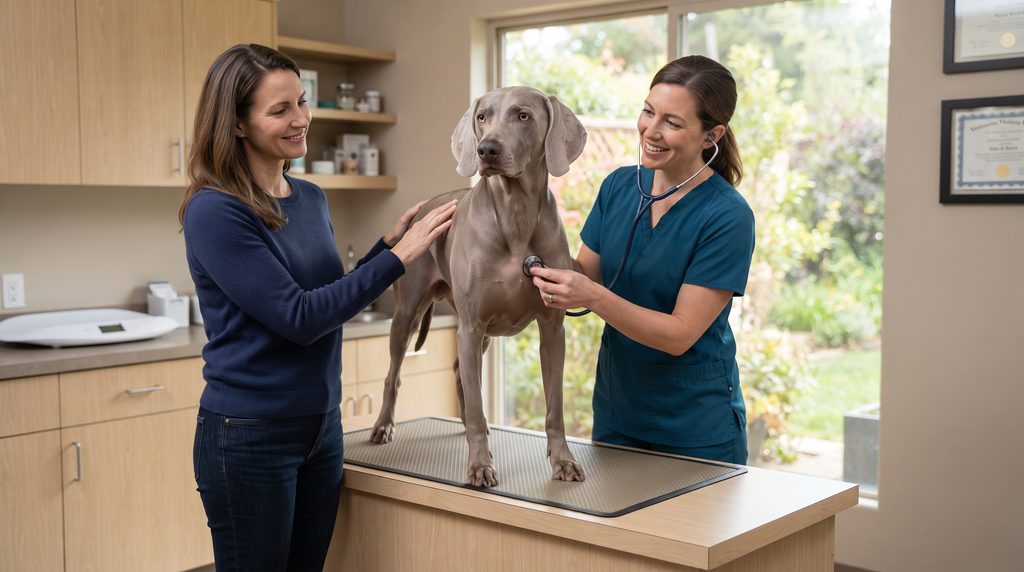
Weimaraner Health Screening and Genetics
Responsible health screening plays an important role in preserving the Weimaraner’s athletic abilities, physical well-being, and long-term quality of life. Although this distinctive German sporting breed is generally capable of enjoying a healthy, active life, several inherited conditions can affect its joints, eyes, thyroid function, and nervous system. Modern veterinary testing allows breeders to identify certain risks before producing puppies, helping them make more informed decisions about breeding combinations. For prospective owners, understanding these evaluations provides a practical way to assess breeding practices and distinguish genuine health documentation from reassuring claims that lack supporting evidence.
The Weimaraner Club of America participates in the Canine Health Information Center (CHIC) program, administered through the Orthopedic Foundation for Animals (OFA). The breed’s published CHIC requirements include hip evaluation, ophthalmic examination, autoimmune thyroiditis testing, and DNA screening for three inherited conditions. Advanced cardiac and elbow evaluations are also recognized as additional screening options. Importantly, receiving a CHIC number does not mean a dog has passed every examination or is guaranteed to remain healthy. It confirms that the required testing has been completed and the results made publicly available.
Hip screening is particularly relevant because the Weimaraner is a large, muscular breed whose working ability depends on sound joint structure. Breeding dogs should undergo recognized evaluations for hip dysplasia using OFA radiographs or the PennHIP method. OFA final hip certification generally requires a dog to be at least 24 months old, while PennHIP can assess hip laxity at younger ages. These methods provide different information but share the objective of identifying potentially problematic joint characteristics. Owners should ask to see actual results for both parents rather than accepting verbal assurances that their hips have been examined.
Eye examinations provide another important layer of preventive screening. The Weimaraner Club of America recommends evaluation by a board-certified veterinary ophthalmologist, with findings recorded through the OFA Companion Animal Eye Registry. These examinations may identify inherited or potentially hereditary abnormalities that ordinary observation cannot reliably detect. Certain eye conditions develop gradually, meaning a normal examination early in life does not guarantee permanently healthy eyes. OFA eye certifications are valid for 12 months, making periodic reassessment important for breeding animals. Prospective owners should check examination dates as well as the reported findings.
Thyroid testing focuses particularly on autoimmune thyroiditis, a condition that can eventually interfere with normal thyroid hormone production. Screening involves appropriate blood tests performed through an OFA-approved laboratory. Unlike a permanent DNA result, thyroid findings can change as a dog matures, making repeat testing relevant. OFA recommends reexaminations at several ages throughout adulthood, particularly during the years when autoimmune abnormalities may emerge. A normal result is encouraging but does not eliminate the possibility of later disease. Breeders should therefore maintain current thyroid records rather than relying indefinitely on a single examination performed when a dog was young.
Cardiac screening is another valuable consideration for Weimaraner breeding programs. The American Kennel Club includes a cardiac examination among the breed’s recommended health tests, while the Weimaraner Club of America’s published CHIC checklist lists advanced cardiac evaluation as optional for obtaining a CHIC number. A comprehensive examination performed by a board-certified veterinary cardiologist can help identify structural or functional abnormalities that may not be apparent during a routine physical examination. Depending on the assessment, diagnostic procedures may include echocardiography. Prospective owners should ask whether the parents have undergone cardiac evaluation and whether any abnormalities were identified.
Elbow screening is also available as an additional orthopedic evaluation. Although the breed’s CHIC checklist does not make elbow testing mandatory, examining the elbows may provide useful information about joint development and inherited orthopedic risks. This is particularly relevant in breeding programs where related dogs have experienced lameness or developmental joint problems. Radiographic assessments can identify abnormalities that may eventually contribute to arthritis or reduced mobility. Responsible breeders should be willing to discuss their approach to orthopedic screening, including any known problems within related bloodlines.
Three breed-specific DNA tests form an especially important part of Weimaraner genetic screening. Hyperuricosuria (HUU) testing identifies a variant associated with an increased risk of urate urinary stones. Hypomyelination (HYM) testing detects an inherited neurological disorder that can cause tremors in young puppies. Spinal Dysraphism (SD) testing identifies a genetic condition associated with abnormal spinal cord development and impaired coordination. These tests are included in the Weimaraner’s CHIC requirements and are available through laboratories offering validated breed-specific assays, including the University of California, Davis Veterinary Genetics Laboratory.
Understanding genetic test results is essential because a carrier is not necessarily an affected dog. All three conditions follow an autosomal recessive inheritance pattern, meaning an individual generally needs two copies of the relevant disease-associated variant to be genetically affected. A dog carrying only one copy can remain healthy while passing that variant to some offspring. When two carriers of the same condition are bred together, each puppy has a 25% probability of inheriting two copies. Responsible breeders use this information to select appropriate mating combinations without unnecessarily excluding every healthy carrier from the breeding population.
Genetic screening also has important limitations. Available DNA tests identify specific known variants, not every possible inherited health problem. Conditions such as hip dysplasia involve complex genetic and environmental influences, while gastric dilatation-volvulus has no routine genetic test capable of reliably predicting which individual dogs will experience an episode. Hypertrophic osteodystrophy and other breed-associated concerns also require careful consideration of family history and clinical information rather than assuming that a clear DNA panel eliminates all risk. Thoughtful breeding decisions therefore depend on combining laboratory results with physical examinations, pedigree knowledge, and veterinary expertise.
Prospective owners should request the registered names of both parents and independently review their available OFA records. These should identify the relevant tests, examination dates, and actual findings. It is also reasonable to ask about significant health conditions affecting grandparents, siblings, or previous litters, particularly when a disorder has appeared repeatedly within a family. A responsible breeder should be comfortable discussing both favorable results and known concerns. Statements that a veterinarian has checked the parents, or that the puppies appear healthy, are not substitutes for breed-appropriate screening documentation.
Health screening should also be viewed as an ongoing responsibility rather than a one-time exercise completed before the first litter. Some evaluations require repeating as breeding dogs mature, while new genetic discoveries may introduce additional testing opportunities. Breeders who maintain detailed records, follow current recommendations, and consider overall genetic diversity contribute to the long-term health of the breed. No screening program can guarantee a disease-free puppy, but a transparent approach substantially improves the information available to prospective owners. For anyone choosing a Weimaraner, documented health testing provides a meaningful foundation for responsible decisions and a healthier future for this remarkable sporting breed.

What to Check in Weimaraner Health Records
Before choosing a Weimaraner puppy, request documented hip, eye, thyroid, and breed-specific DNA results for both parents. The three important genetic tests cover hyperuricosuria, hypomyelination, and spinal dysraphism. Ask about cardiac screening and any additional orthopedic evaluations. Check that certificates identify the correct dogs and that examinations were performed at appropriate ages. OFA records can often be verified through the organization’s public database. Remember that a CHIC number confirms completion and publication of the required tests, not necessarily normal findings. Responsible breeders should explain the results openly and discuss significant health concerns within their breeding lines.
Weimaraner Lifespan and Aging
The Weimaraner is a powerful, athletic sporting dog that can remain an affectionate and enthusiastic companion well into its senior years. Although famous for its extraordinary energy and physical endurance, this distinctive German breed gradually experiences changes in strength, mobility, metabolism, and overall health as it ages. Understanding these changes helps owners provide appropriate support throughout every stage of life. With responsible breeding, preventive veterinary care, balanced nutrition, and suitable exercise, many Weimaraners enjoy active and fulfilling lives, maintaining their strong attachment to family members even as their physical abilities begin to change.
The Weimaraner Life Expectancy is generally estimated at 10–13 years, according to the American Kennel Club. Some individuals live beyond this range, while others develop health problems that shorten their lives. Genetics, body condition, environmental factors, veterinary care, and chance all influence longevity. The breed’s relatively large size contributes to a shorter typical lifespan than that of many smaller companion breeds. However, a published lifespan range represents an estimate rather than a predetermined limit for an individual dog.
When considering the Average Lifespan of a Weimaraner, owners should remember that the number of years lived is only one measure of well-being. Maintaining mobility, comfort, mental engagement, and opportunities for companionship is equally important. A healthy ten-year-old Weimaraner may still enjoy countryside walks, gentle retrieving, and exploring familiar surroundings. Another dog of the same age may require shorter outings and additional medical support. Individual aging patterns vary considerably, making it important to adapt expectations to the dog rather than relying exclusively on its chronological age.
Because the Weimaraner is a large breed, changes associated with senior life may become noticeable from approximately seven or eight years of age. This does not mean every Weimaraner suddenly becomes elderly at that point. Many remain exceptionally energetic and physically capable. However, owners should become increasingly attentive to subtle changes in stamina, recovery time, appetite, and everyday behavior. Regular veterinary examinations can help establish a clear picture of the dog’s health and identify emerging concerns before they begin significantly affecting comfort or mobility.
Joint health is particularly important for an aging Weimaraner. Years of running, jumping, and exploring challenging terrain can place considerable demands on the muscular and skeletal systems. Some older dogs develop osteoarthritis, especially when inherited joint abnormalities or previous injuries are present. Early signs may include stiffness after resting, hesitation before climbing stairs, difficulty entering a vehicle, or reluctance to participate in previously enjoyable activities. These changes should not simply be dismissed as inevitable aging. Veterinary assessment can identify treatable problems and support an appropriate pain-management and mobility plan.
Exercise should remain part of senior life, but its intensity may need adjusting. Older Weimaraners frequently retain their enthusiasm for outdoor exploration even when their physical endurance begins to decline. Shorter, more frequent walks can provide valuable movement without creating unnecessary fatigue. Gentle scent work, relaxed garden activities, and comfortable outings on even ground may be more appropriate than demanding runs or prolonged retrieving sessions. Owners should also pay attention to recovery after activity, as persistent stiffness or unusual tiredness may indicate that the routine needs modification.
Maintaining a healthy body condition becomes increasingly important as activity levels change. A Weimaraner that previously required substantial calories to support intensive exercise may gradually need smaller portions. Continuing to feed the same quantities despite reduced activity can contribute to unwanted weight gain, placing additional strain on aging joints. However, excessive calorie restriction can also result in the loss of valuable muscle mass. Senior nutrition should therefore focus on appropriate energy intake, adequate high-quality protein, and maintaining strength. Veterinary guidance is particularly useful when an older dog has kidney disease, digestive problems, or other medical conditions.
Changes in hearing, vision, and cognitive function can also influence everyday behavior. An older Weimaraner may become less responsive to familiar sounds, hesitate in dim lighting, or appear uncertain in unfamiliar surroundings. Some dogs develop altered sleeping patterns, unusual vocalization, disorientation, or changes in their usual interactions with family members. These signs are not automatically evidence of canine cognitive dysfunction, since pain, sensory loss, and other medical conditions can produce similar symptoms. A veterinary examination is important whenever noticeable behavioral changes occur, particularly when they develop suddenly.
Regular senior health examinations become especially valuable during this stage of life. Many veterinarians recommend checkups approximately every six months for older dogs, although the appropriate schedule depends on individual circumstances. These appointments may include physical examinations, dental assessments, blood and urine testing, and investigations guided by the dog’s symptoms or medical history. For Weimaraners, particular attention should be given to mobility, unexplained lumps, changes in appetite, exercise tolerance, and urinary function. Detecting illness early can improve treatment options and help preserve quality of life.
The home environment may also require practical adjustments. Nonslip rugs can help an older Weimaraner move confidently across polished floors, while supportive bedding provides a comfortable place to rest tired joints. Ramps or carefully positioned steps may reduce the need for repeated jumping into vehicles. Food and water should remain easily accessible, and owners may need to provide more frequent opportunities to go outside. Because the breed has a short coat and relatively limited insulation, warm sleeping arrangements are particularly helpful for older individuals that become less tolerant of cold conditions.
Emotional companionship remains central to the Weimaraner’s well-being throughout senior life. Even when strenuous exercise is no longer appropriate, many older dogs continue to seek close contact with their owners and enjoy participating in familiar household routines. Gentle grooming, relaxed outdoor visits, simple scent games, and comfortable time together can maintain a sense of involvement. Significant changes in routine should be introduced thoughtfully, particularly if an older dog is experiencing reduced hearing, vision, or confidence. Preserving predictable daily activities can provide reassurance while allowing the dog to remain an active member of the household.
Ultimately, supporting a Weimaraner through its senior years involves balancing physical care with continued emotional connection. Aging does not automatically mean the end of outdoor adventures or enjoyable activities, but it does require greater attention to comfort, health, and individual limitations. Owners who adjust exercise, monitor body condition, investigate behavioral changes, and maintain appropriate veterinary care can help their dogs remain comfortable and engaged. The Weimaraner’s remarkable devotion often remains unchanged with age, making its later years a particularly meaningful stage of the relationship between dog and owner.
Recognizing When a Weimaraner Is Becoming a Senior
Although the typical Weimaraner age span is approximately 10–13 years, individual dogs age at different rates. From around seven or eight years, owners should pay closer attention to changes in movement, appetite, hearing, vision, and recovery after exercise. Increased stiffness, unexplained weight changes, persistent coughing, unusual tiredness, or changes in behavior deserve veterinary assessment rather than being attributed automatically to old age. Regular senior health examinations, comfortable bedding, appropriate nutrition, and shorter but enjoyable walks can help preserve quality of life. A healthy older Weimaraner should still have opportunities to explore, interact, and participate in family activities.

Cost of Owning a Weimaraner
Owning a Weimaraner represents a substantial financial commitment that extends well beyond the initial expense of bringing a dog into the household. This large, energetic German sporting breed requires appropriate nutrition, regular veterinary care, durable equipment, training, and opportunities for meaningful daily activity. Although its short coat makes routine grooming relatively inexpensive, the Weimaraner’s size, athletic lifestyle, and potential medical needs can create considerable ongoing expenses. Prospective owners should evaluate the full financial responsibility before committing to a dog that may remain a much-loved family companion for 10–13 years.
In the United States, the annual cost of caring for an adult dog varies significantly according to size, location, lifestyle, and health. Rover’s 2026 Cost of Pet Parenthood report estimates general annual adult dog expenses at approximately $1,930–$5,305. These figures are not specific to Weimaraners, but they provide a useful starting point. Owners of large, active dogs may spend toward the higher end, particularly when regular professional care, premium equipment, insurance, or extensive veterinary treatment is involved. Unexpected medical expenses can also push annual spending substantially beyond ordinary estimates.
Initial preparations involve purchasing equipment suitable for a strong, athletic adult dog. A properly sized crate, supportive bed, secure harness, sturdy leash, food and water bowls, identification tags, and appropriate chew toys are among the essentials. Because Weimaraners grow into substantial dogs, purchasing equipment with adult dimensions in mind can help reduce unnecessary replacements. However, collars and harnesses must always fit correctly at the dog’s current size. Secure fencing or modifications to an existing garden may create additional expenses, particularly for owners whose properties were not originally designed to contain a powerful sporting breed.
Food is one of the most predictable recurring expenses. Adult Weimaraners generally weigh between 55 and 90 pounds, depending on sex and individual build, and their nutritional needs can increase considerably during periods of demanding physical activity. A complete and balanced diet should be selected according to age, body condition, and exercise requirements rather than promotional claims alone. Monthly spending varies with the manufacturer’s formulation and the quantity required. Treats, training rewards, and suitable chews should also be included in the household budget, particularly during puppyhood and adolescence when regular training is especially valuable.
Routine veterinary care includes wellness examinations, recommended vaccinations, parasite prevention, and dental assessments. Puppies typically require more frequent appointments during their first year, while older Weimaraners may benefit from additional monitoring as age-related conditions develop. Preventive medications for large dogs can cost more than equivalent treatments for smaller breeds because dosing often depends on body weight. Owners should also anticipate expenses associated with occasional diagnostic testing, minor injuries, and unexpected illness. These costs vary considerably between veterinary practices and regions, making local estimates particularly useful when establishing a realistic budget.
Emergency veterinary treatment presents one of the largest financial uncertainties associated with Weimaraner ownership. The breed’s deep-chested structure increases susceptibility to gastric dilatation-volvulus, a potentially fatal emergency that may require immediate surgery and hospitalization. Orthopedic injuries, intestinal obstructions, and other serious medical problems can also result in substantial bills. Preventive gastropexy, when recommended by a veterinarian, introduces an additional planned expense but may reduce the risk of stomach twisting. Owners should investigate local emergency veterinary costs and establish a realistic strategy for handling treatment that cannot be postponed.
Pet insurance is one option for managing certain unexpected veterinary expenses. Premiums depend on the dog’s age, location, medical history, coverage limits, deductible, and reimbursement arrangements. Policies can differ considerably in their treatment of hereditary disorders, orthopedic conditions, preventive procedures, and preexisting illnesses. Owners should review exclusions carefully rather than assuming that every medical expense will be covered. An alternative is maintaining a dedicated emergency savings fund, although substantial treatment costs may exceed the amount accumulated. Some households choose a combination of insurance and accessible savings to manage their financial risk.
Training is another worthwhile investment, particularly for this intelligent and sometimes demanding sporting breed. Group puppy classes, individual instruction, and specialized training can help address important skills such as recall, leash manners, independence, and appropriate social behavior. Owners interested in fieldwork, tracking, or organized dog sports may also encounter membership fees, instruction costs, and equipment expenses. Professional support can be especially valuable when a Weimaraner develops persistent behavioral difficulties. Investing in suitable training early may help prevent manageable problems from becoming more complicated and expensive during adulthood.
Although the Weimaraner’s familiar short coat requires relatively little professional grooming, routine maintenance still involves some expense. Brushes, nail trimmers, ear-cleaning products, dental supplies, and occasional shampoo are generally sufficient for everyday care. Long-haired individuals may require additional grooming equipment or occasional professional assistance when feathered areas become difficult to maintain. Most owners can perform much of this work at home after learning safe handling techniques. Compared with heavily coated breeds requiring frequent professional clipping, the Weimaraner is relatively economical to groom, although veterinary treatment for ear or skin problems remains a separate consideration.
Travel and household arrangements can create additional costs that are easy to overlook. Because Weimaraners thrive on companionship, owners who regularly work long hours may need dog walkers, suitable daycare, or reliable assistance from family members. Boarding arrangements during vacations can also be expensive, particularly when an individual dog requires careful handling or additional exercise. Active owners may need appropriate vehicle restraints, travel crates, or specialized outdoor equipment. These expenses are not unavoidable for every household, but they should be considered before assuming that a Weimaraner’s basic needs can be met without additional support.
Costs often change as a Weimaraner enters its senior years. Some older dogs require more frequent veterinary appointments, diagnostic testing, ongoing medication, or treatment for arthritis and other chronic conditions. Supportive bedding, vehicle ramps, rehabilitation appointments, and adjustments to nutrition may also become necessary. While exercise-related equipment and training expenses might decline, medical spending can increase considerably. Planning for these later-life responsibilities is an important part of long-term ownership, particularly because the breed’s strong attachment to familiar people makes maintaining comfort and companionship throughout aging especially meaningful.
Ultimately, the cost of owning a Weimaraner reflects both the responsibilities of caring for a large dog and the demands of supporting an energetic, people-oriented sporting breed. Food, preventive healthcare, secure accommodation, and dependable training should take priority over unnecessary accessories or luxury services. Prospective owners who prepare for routine expenses while maintaining financial flexibility for unexpected medical needs are better equipped to provide consistent care. With thoughtful budgeting and realistic expectations, the financial commitment becomes part of sustaining a healthy, rewarding relationship with this remarkable silver-gray companion.

Budgeting for a Weimaraner’s Unexpected Expenses
Routine costs are relatively predictable, but emergency veterinary treatment can create substantial financial pressure. Weimaraner owners should consider how they would manage unexpected surgery, hospitalization, or treatment for a chronic condition. Pet insurance may help, but deductibles, exclusions, reimbursement limits, and waiting periods require careful review. A separate emergency savings fund can provide additional flexibility. When preparing a budget, include food, veterinary care, parasite prevention, training, replacement equipment, and occasional pet-sitting services. Request estimates from local providers rather than relying entirely on national averages. Planning ahead helps ensure that important decisions about a Weimaraner’s care are guided by medical needs rather than immediate financial constraints.
Choosing a Weimaraner Puppy or Rescue
Choosing a Weimaraner is an important decision that should begin with a realistic understanding of the breed’s considerable physical energy, intelligence, and strong attachment to people. Whether welcoming a young puppy or adopting an adult through rescue, prospective owners should prioritize temperament, health, and suitability for their household rather than appearance alone. The Weimaraner’s distinctive silver-gray coat may initially attract attention, but its demanding sporting heritage makes responsible selection especially important. Finding a suitable companion requires patience, careful research, and an appreciation of the commitment involved in raising or caring for such an energetic, emotionally connected dog.
A responsible Weimaraner Breeder should demonstrate a genuine commitment to preserving the breed’s health, temperament, and working ability. Reputable breeders carefully select breeding pairs, maintain appropriate veterinary records, and raise puppies in clean, stimulating environments. They should willingly discuss the personalities of their dogs, explain common inherited health concerns, and provide realistic information about the challenges of Weimaraner ownership. Involvement with recognized breed clubs, field activities, or other organized canine events can provide useful evidence of long-term dedication, although membership or participation alone does not guarantee responsible breeding practices.
Health documentation is one of the most important considerations when evaluating a litter. Prospective owners should request evidence that both parents have undergone the screening recommended by the Weimaraner Club of America, including hip, eye, and thyroid evaluations and relevant DNA testing. Genetic screening for hyperuricosuria, hypomyelination, and spinal dysraphism is particularly valuable. Results should be independently verifiable where possible through recognized databases such as the Orthopedic Foundation for Animals. Responsible breeders should also discuss significant health problems occurring among related dogs rather than suggesting that a particular bloodline is entirely free from inherited disease.
Meeting the mother and observing the puppies’ living environment can provide useful information about their early experiences. The mother should appear appropriately cared for, and the puppies should have access to clean surroundings, suitable enrichment, and regular positive human interaction. A healthy Weimaraner Pup will generally display curiosity appropriate to its age, although individual puppies differ in confidence and energy. Some may approach unfamiliar visitors enthusiastically, while others prefer to investigate gradually. Prospective owners should avoid interpreting the boldest puppy as automatically the best choice or assuming that a quieter individual will necessarily remain calm throughout adulthood.
Early socialization is especially important for a breed combining sensitivity, determination, and considerable physical strength. Responsible breeders introduce age-appropriate experiences involving ordinary household sounds, gentle handling, different surfaces, and appropriate human interaction. Puppies should also have opportunities to develop normal canine communication through time with their mother and littermates. In most circumstances, a puppy should remain with its breeder until at least eight weeks of age, subject to applicable state laws and veterinary guidance. Moving puppies too early can interfere with important developmental experiences and should not be treated as a convenience.
Prospective owners should discuss their household circumstances openly with the breeder. Working hours, previous dog experience, children, other pets, fencing, and access to suitable exercise opportunities all influence whether a particular puppy is a sensible match. A knowledgeable breeder who understands the litter’s developing personalities may be better positioned to recommend an appropriate companion than someone selecting solely from photographs. Owners should also expect questions about their lifestyle and long-term plans. A breeder who carefully screens potential homes is demonstrating responsibility toward the puppies rather than creating unnecessary obstacles.
Coat color should never become more important than health and temperament. Online searches for Blue Weimaraner Puppies or Brown Weimaraner Puppies sometimes lead to advertisements emphasizing supposedly unusual or exclusive coloring. Distinctly blue coats are disqualified under the American Kennel Club’s conformation standard, while true brown is not an accepted standard color. Some recognized mouse-gray coats can appear warm or brownish under particular lighting conditions. Buyers should be cautious when unusual colors are marketed as especially rare or desirable. Responsible breeders should be able to explain the breed standard honestly without making exaggerated claims about appearance.
A written agreement is another important part of responsible puppy placement. It should clearly explain registration arrangements, veterinary records, the breeder’s responsibilities, and any conditions associated with ownership. Reputable breeders generally provide guidance following placement and remain available when problems arise. The Weimaraner Club of America’s ethical guidance emphasizes responsibility for dogs produced, including helping with their return or appropriate rehoming when circumstances change. Prospective owners should review agreements carefully before committing and avoid breeders unwilling to answer reasonable questions or provide clear documentation.
Adoption offers an alternative for people who would prefer to welcome an older dog. Weimaraner Rescue Dogs may enter shelters or breed-specific organizations for many reasons, including changes in family circumstances, insufficient time for exercise, housing difficulties, or behavioral challenges. Some have previously lived in loving homes and already understand basic household routines. Others may require additional training, medical treatment, or support while adjusting to a new environment. An adult rescue Weimaraner can be a wonderful companion, particularly when its established personality and activity requirements align with the prospective owner’s lifestyle.
People hoping to Adopt a Weimaraner should begin with reputable breed-specific rescue networks, established animal welfare organizations, and recognized shelters. The Weimaraner Club of America provides rescue contact information and can be a useful starting point for locating organizations familiar with the breed. Listings for Weimaraner Dogs for Adoption may include young adults, mature dogs, and occasionally seniors. Availability varies considerably between regions. Prospective adopters should expect an application process and may be asked about their home environment, dog-handling experience, and ability to provide appropriate exercise and companionship.
When evaluating a rescue dog, honest discussion of its known history is particularly important. Ask whether the dog has lived with children, other dogs, or cats, and whether it has displayed separation distress, resource guarding, excessive reactivity, or strong chasing behavior. Veterinary records, medication requirements, and any known orthopedic concerns should also be reviewed. Rescue organizations may have valuable observations from foster homes, although a dog’s behavior can change as it becomes comfortable in a new environment. A carefully managed introduction to existing pets can help identify potential concerns before adoption.
If you hope to Rescue a Weimaraner, prepare for an adjustment period rather than expecting the dog to behave perfectly from the first day. A newly adopted Weimaraner may initially appear unusually quiet, uncertain, or overstimulated by unfamiliar surroundings. Establish predictable routines, provide a comfortable resting space, and introduce household activities gradually. Avoid immediately overwhelming the dog with visitors, busy parks, or excessive demands. Reward calm behavior and allow trust to develop through consistent, positive experiences. Dogs showing significant anxiety, aggression, or separation-related distress may benefit from early professional support.
Ultimately, selecting a Weimaraner puppy or rescue should be guided by compatibility rather than convenience or appearance. A thoughtfully bred puppy provides an opportunity to shape early experiences, while an adult rescue may offer a clearer picture of established temperament and behavior. Both require patience, responsible care, and a willingness to accommodate the breed’s substantial physical and emotional needs. Owners who research carefully, ask meaningful questions, and choose a dog suited to their circumstances are more likely to develop the lasting, rewarding companionship for which the Weimaraner is so highly valued.

Is a Weimaraner Right for You?
The Weimaraner is a remarkable companion for the right household, but its distinctive combination of intelligence, physical endurance, emotional sensitivity, and strong hunting instincts makes careful consideration essential. Behind the breed’s beautiful silver-gray appearance lies a substantial sporting dog that expects to participate actively in everyday life. Weimaraners form exceptionally close bonds with their families and can be affectionate, entertaining, and deeply rewarding companions. However, their considerable needs are not easily accommodated by every lifestyle. Before choosing a Weimaraner, prospective owners should honestly assess their available time, experience, living arrangements, and willingness to provide consistent involvement throughout the dog’s life.
An active lifestyle is one of the strongest indicators of a potentially successful match. Weimaraners generally thrive with people who already enjoy spending substantial time outdoors and are comfortable incorporating a dog into regular activities. Hiking, exploring countryside trails, participating in dog sports, and engaging in structured outdoor pursuits can provide valuable opportunities for shared enjoyment. However, being physically active is only part of the equation. A person who enjoys occasional weekend adventures but has little time for the dog during the working week may struggle to meet its everyday needs.
Companionship is equally important. Many Weimaraners strongly prefer being near their owners and become involved in almost everything happening around the household. People who work from home, have flexible schedules, or can arrange dependable daytime care may find this characteristic particularly rewarding. However, even households with someone present most of the time should teach their dogs to remain comfortable during short periods of independence. A Weimaraner should not need continuous attention to feel secure. Families whose circumstances require a dog to remain completely alone for long working days may find a less people-dependent breed easier to accommodate.
Previous dog-handling experience is another consideration. The Weimaraner is intelligent and capable of learning quickly, but its determination, sensitivity, and enthusiasm can challenge owners unfamiliar with powerful sporting dogs. Adolescence may involve pulling on the leash, testing familiar rules, investigating household objects, or becoming intensely distracted by wildlife. Experienced owners often recognize these behaviors as developmental and instinctive rather than deliberate defiance. First-time owners are not automatically unsuitable, but they should be prepared to invest additional effort in education, structured training, and professional guidance when necessary.
Living arrangements should also be evaluated realistically. A securely fenced garden is convenient for a Weimaraner, particularly when providing supervised outdoor activities and opportunities for relaxation. However, a large yard cannot compensate for insufficient companionship or meaningful daily engagement. Apartment living may be possible for an individual dog with excellent household manners and an owner who provides substantial activity elsewhere, but it is generally a more demanding arrangement. Building restrictions, limited outdoor access, neighbors sensitive to barking, and difficulties managing an energetic young dog in confined spaces can all influence suitability.
Families with children should consider both the dog’s affectionate nature and its considerable physical strength. Many well-socialized Weimaraners become devoted companions to older children who understand appropriate interactions and enjoy shared activities. However, the breed’s enthusiastic movements and sometimes exuberant greetings can overwhelm toddlers or smaller children. Adults must remain responsible for supervision, training, and management. A household already balancing the considerable demands of caring for several young children may find raising a lively Weimaraner puppy particularly challenging, especially during its energetic adolescent stage.
Other household animals require equally thoughtful consideration. Some Weimaraners live happily with compatible dogs, particularly when introductions and everyday interactions are managed appropriately. However, the breed’s historical role as a hunting companion means that cats, rabbits, poultry, and other smaller animals may trigger strong chasing instincts. Early socialization can improve familiarity, but it cannot guarantee safe coexistence. Prospective owners should never assume that affection toward people translates into gentleness around every species. Existing pets, their individual temperaments, and the household’s ability to maintain safe separation when necessary should influence the decision.
Financial readiness matters beyond the ordinary expenses associated with keeping a dog. The Weimaraner’s substantial size affects food requirements, preventive medications, equipment, and certain veterinary costs. Its energetic lifestyle may also create additional spending on training, secure fencing, transportation, and suitable care during unavoidable absences. Medical emergencies, including gastric dilatation-volvulus, can be especially expensive. Owners should have a realistic plan for routine expenses and unexpected treatment. A household struggling to cover essential care may find the long-term responsibilities of a large sporting breed difficult to sustain.
Prospective owners should also think about how their circumstances might change during the dog’s lifetime. A Weimaraner may remain part of the family for 10–13 years or longer, during which employment, housing, relationships, and physical abilities can change substantially. A dog that fits comfortably into an active lifestyle today will still require suitable care if working hours increase or family responsibilities change. Choosing a Weimaraner means accepting responsibility for adapting routines as necessary. Its strong attachment to familiar people makes stability and thoughtful long-term planning particularly valuable.
The breed’s emotional character is sometimes overlooked by people attracted primarily to its elegant appearance. Weimaraners can be affectionate, expressive, persistent, and highly observant. They often seek reassurance and involvement, yet may also display remarkable independence when following an interesting scent. Owners who appreciate a close relationship with a thinking, responsive dog are likely to enjoy these characteristics. Those who prefer a companion content to entertain itself for much of the day may find the Weimaraner’s intensity frustrating. Neither preference is inherently better; the important issue is whether the dog’s nature genuinely complements the household.
Choosing between a puppy and an adult Weimaraner can also influence suitability. Puppies require extensive supervision, socialization, patient training, and careful management during physical development. An adult rescue dog may offer a more established temperament and sometimes a clearer indication of how comfortably it settles in a particular environment. However, adult dogs may also arrive with existing habits, medical needs, or behavioral challenges. Prospective owners should work with responsible breeders or rescue organizations that assess compatibility thoughtfully rather than concentrating solely on appearance or availability.
A Weimaraner is generally best suited to an involved household that appreciates outdoor activity, consistent training, affectionate companionship, and the challenges of living with an intelligent sporting breed. It is less suitable for people seeking a naturally independent, low-energy dog requiring minimal supervision or daily engagement. These are broad tendencies rather than rigid rules, and individual Weimaraners differ in personality, activity requirements, and adaptability. The most successful relationships develop when owners choose a dog whose actual needs they can meet rather than expecting the breed to adapt automatically to every circumstance.
Ultimately, deciding whether a Weimaraner is right for you means looking beyond its extraordinary appearance and considering the realities of everyday ownership. For people who enjoy sharing their lives with an active, emotionally connected companion, the breed can offer remarkable loyalty, enthusiasm, intelligence, and affection. Its demanding qualities are inseparable from many of the characteristics that make it special. When matched with a prepared and committed household, the Weimaraner can become an exceptional partner in outdoor adventures, family routines, and the quieter moments that make living with a dog so rewarding.
The Household Best Suited to a Weimaraner
The ideal Weimaraner household offers regular companionship, substantial outdoor activity, consistent training, and a secure living environment. Owners should enjoy working with an intelligent, energetic dog and have the patience to manage its sometimes demanding adolescent behavior. Previous experience with sporting breeds is helpful, although committed first-time owners can succeed with appropriate support. Consider carefully whether your working hours, other pets, family responsibilities, and long-term finances allow you to provide dependable care. The best match is not necessarily the most athletic household, but one that consistently meets the Weimaraner’s physical, behavioral, and emotional needs.

Weimaraner Final Thoughts
The Weimaraner is a remarkable combination of elegance, athletic ability, intelligence, and unwavering devotion. From its aristocratic hunting origins in Germany to its modern role as an affectionate family companion, this distinctive sporting breed has retained the qualities that made it such a valued working partner. Its beautiful silver-gray coat and expressive eyes may capture attention immediately, but the Weimaraner’s personality leaves the most lasting impression. Intelligent, enthusiastic, and deeply connected to familiar people, it offers a particularly rewarding relationship to owners who appreciate an active and involved canine companion.
Living successfully with a Weimaraner requires more than admiration for its appearance. Its considerable energy, determination, and hunting instincts demand appropriate outlets, while its emotional sensitivity and strong attachment to family members make companionship especially important. Consistent training, thoughtful socialization, and dependable household routines help transform an enthusiastic young dog into a confident, cooperative adult. These responsibilities should be viewed as an essential part of ownership rather than optional additions.
The breed’s versatility is among its greatest strengths. Whether exploring countryside trails, participating in scent work, retrieving, learning new skills, or simply sharing a quiet evening at home, a well-adjusted Weimaraner can become an enthusiastic partner in many aspects of everyday life. However, individual temperament matters, and not every dog will possess identical levels of confidence, sociability, or independence. Responsible breeding, appropriate early experiences, and realistic expectations help establish the foundations for a successful relationship.
Long-term health and well-being also deserve careful consideration. Choosing a responsibly bred puppy or thoughtfully matched rescue dog, maintaining a healthy body condition, arranging regular veterinary care, and understanding the breed’s medical risks all contribute to responsible ownership. As the Weimaraner matures, exercise and daily routines should gradually adapt to changing physical abilities without sacrificing companionship or opportunities for enjoyment.
For the right person or family, the Weimaraner offers something truly special: a powerful sporting dog with an affectionate heart and a remarkable desire to share life with its people. It is not the easiest choice for every household, nor should it be selected simply for its extraordinary appearance. But when its physical, emotional, and behavioral needs are genuinely understood, Germany’s famous Gray Ghost can become an exceptionally loyal, entertaining, and unforgettable companion.

Explore More Sporting Dog Breeds
The Weimaraner belongs to the American Kennel Club’s Sporting Group, alongside many other intelligent and athletic hunting companions. From energetic pointing breeds to versatile retrievers and enthusiastic spaniels, these dogs share a remarkable working heritage while offering different personalities and care requirements. Visit our Sporting Dogs guide to explore related breeds, compare their characteristics, and discover which sporting companion may best suit your lifestyle.
Official Weimaraner Breed Information
For additional information about the Weimaraner’s official breed characteristics, history, appearance, and temperament, the American Kennel Club provides a valuable reference. Its breed profile introduces the qualities that distinguish Germany’s famous Gray Ghost and explains the characteristics expected of this distinctive sporting dog. Visit the American Kennel Club’s Weimaraner breed profile for authoritative information to complement the practical ownership guidance provided throughout this CanineBase article.