

Airedale Terrier
The Airedale Terrier is the largest of all recognized terrier breeds, combining remarkable intelligence, confidence, and working ability with a playful, affectionate personality. Often called the King of Terriers, this distinctive English dog is immediately recognizable by its rugged black-and-tan coat, expressive beard, and alert, purposeful expression. Developed for demanding work in the Yorkshire countryside, the Airedale Terrier possesses the determination traditionally associated with terriers alongside unusual versatility and athletic endurance. Today, it remains an engaging family companion for owners who appreciate an independent thinker, enjoy an active lifestyle, and are prepared to provide the training, exercise, and companionship this spirited breed requires.
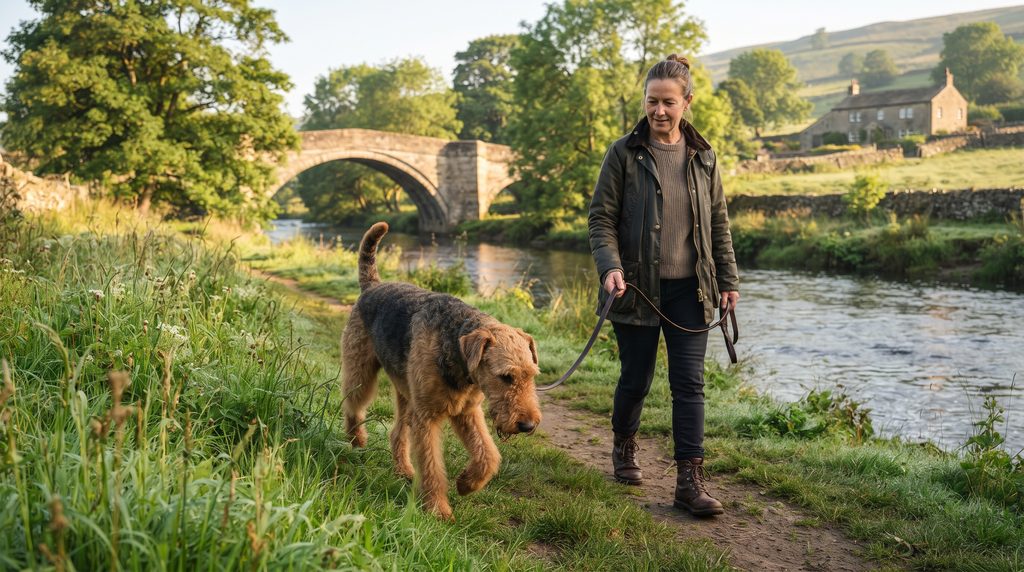
The Airedale Terrier originated during the nineteenth century in the Aire Valley of Yorkshire, where local working people needed a versatile dog capable of hunting along rivers, controlling vermin, and performing a variety of practical tasks. Developed from working terriers and Otterhounds, the breed combined the persistence and courage of traditional terriers with greater size, scenting ability, and an aptitude for water. Its capabilities eventually extended far beyond its original hunting responsibilities, leading to service in police work, military communications, search operations, and numerous other demanding roles.
Unlike many smaller terriers developed primarily to enter underground burrows, the Airedale Terrier was built to work over larger areas and handle more substantial challenges. Its strong limbs, muscular body, and weather-resistant coat supported movement through wet vegetation, uneven ground, and difficult countryside. These practical qualities remain evident in the modern breed. Although many Airedale Terriers now live comfortably as family companions, they retain the physical ability, curiosity, and determination of dogs originally expected to work independently while remaining responsive to their handlers.
The breed’s appearance reflects this functional heritage. A properly built Airedale Terrier is substantial without appearing cumbersome, with an athletic outline, strong jaws, dark expressive eyes, and a distinctive harsh double coat. Its characteristic black or grizzle saddle contrasts with rich tan coloring across the head, legs, and much of the body. The naturally rugged beard and eyebrows create an unmistakable expression that often appears both serious and mischievous. Regular coat maintenance helps preserve this appearance, although the traditional wiry texture requires a different approach from grooming an ordinary soft-coated companion dog.
Personality is one of the Airedale Terrier’s greatest attractions, but also one of the reasons ownership requires careful consideration. These dogs are intelligent, confident, inquisitive, and frequently entertaining. Many display an unmistakable sense of humor, approaching everyday situations with enthusiasm and occasionally testing whether household rules are genuinely consistent. Their independence should not be mistaken for an inability to learn. Airedale Terriers are highly capable dogs, but they tend to respond best when training is engaging, rewarding, and clearly connected to meaningful activities rather than endless repetition.
Despite their independent streak, Airedale Terriers often develop strong attachments to their families. They generally enjoy being included in household routines and can become affectionate, entertaining companions for people who appreciate an active, interactive dog. Their physical enthusiasm and substantial size make appropriate supervision important around younger children, particularly during energetic play. Early socialization also helps develop confidence and appropriate responses to unfamiliar people and animals. The breed’s hunting background means interactions with smaller pets require realistic expectations and sensible management.
Daily activity is essential to a well-balanced Airedale Terrier. These dogs thrive when they can explore interesting environments, follow scents, engage in structured games, and participate in activities that challenge both body and mind. Long walks, hiking, tracking, retrieving, and appropriately managed canine sports can all provide satisfying outlets. Airedales often enjoy having a job to do, even when that job is simply locating a hidden toy or practicing a new skill. Without sufficient engagement, their intelligence and determination may find less desirable outlets, including digging, destructive chewing, or persistent demands for attention.
Training an Airedale Terrier requires patience, consistency, and an appreciation of the breed’s natural initiative. Many learn new behaviors remarkably quickly but may become distracted when something more interesting captures their attention. Strong recall foundations, polite leash manners, and reliable household boundaries are particularly valuable. Positive reinforcement and varied training sessions generally encourage greater cooperation than harsh corrections or repetitive drilling. Owners who enjoy developing a genuine working relationship with their dog often find the Airedale exceptionally rewarding, while those expecting unquestioning obedience may encounter more challenges.
Although its wiry coat is relatively practical, the Airedale Terrier is not a maintenance-free breed. Brushing, regular inspection, and periodic coat management are necessary to prevent tangles and preserve healthy skin. Traditional hand-stripping maintains the characteristic coarse coat, while some companion owners choose clipping for convenience. These methods produce different results, making knowledgeable grooming advice worthwhile. The breed also sheds, although loose hair may be less conspicuous than with some heavily shedding dogs. Prospective owners should understand these requirements rather than assuming the rugged appearance means the coat needs little attention.
Health and longevity are equally important considerations. Airedale Terriers are generally robust, athletic dogs, but responsible breeding and ongoing veterinary care remain essential. Orthopedic conditions, certain cancers, cardiac concerns, and other inherited or acquired problems deserve informed attention. Maintaining a healthy body condition, providing suitable exercise, and selecting a puppy from responsibly screened parents can support long-term well-being. Owners should also prepare for the financial and practical responsibilities of caring for an energetic, substantial dog throughout its life, including the changes that naturally accompany aging.
The Airedale Terrier is particularly well suited to individuals and families who appreciate intelligence, character, and genuine involvement in everyday life. It is not necessarily the easiest terrier for an inexperienced owner, nor is it an ideal choice for someone seeking a quiet, highly compliant companion requiring minimal exercise. However, for people prepared to embrace its working instincts, independent thinking, and affectionate nature, the Airedale offers a deeply rewarding relationship. This guide explores the breed’s history, appearance, temperament, training, grooming, nutrition, health, and practical ownership requirements, helping prospective owners understand what makes the King of Terriers such a distinctive and enduring companion.
Table of Contents
Airedale Terrier Fast Facts
Breed Group: Terrier Dogs
Origin: Aire Valley, Yorkshire, England
Height: Approximately 22–24 inches
Weight: 50–70 pounds
Life Expectancy: 11–14 years
Size: Medium to large; largest recognized terrier
Coat: Dense, harsh, wiry double coat; black and tan or grizzle and tan
Coat Care: Weekly brushing; periodic hand-stripping or clipping
Shedding: Low; regular coat maintenance helps control loose hair
Exercise Needs: High; daily physical activity and mental stimulation
Temperament: Intelligent, confident, loyal, playful, courageous, and independent
Primary Role: Versatile hunting and working dog; family companion
Airedale Terrier Star Ratings
Apartment Friendly: ★★☆☆☆
Family Friendly: ★★★★☆
Good With Children: ★★★★☆
Good With Other Dogs: ★★★☆☆
First-Time Owner Friendly: ★★☆☆☆
Easy Grooming: ★★★☆☆
Affectionate: ★★★★☆
Easy to Train: ★★★☆☆
Low Shedding: ★★★★☆
Adaptable: ★★★☆☆
High Exercise Needs: ★★★★★
Tolerates Being Alone: ★★☆☆☆
Airedale Terrier History and Origins
The History of the Airedale Terrier begins in the industrial valleys of Yorkshire, England, during the middle of the nineteenth century. Unlike many traditional British dog breeds associated with wealthy landowners and organized sporting estates, the Airedale was developed largely by ordinary working people. Factory workers, mill employees, and local hunters wanted a versatile dog capable of accompanying them through the countryside, controlling vermin, and hunting along rivers. The Aire Valley provided the setting for the development of a remarkable working terrier that would eventually become known throughout the world as the King of Terriers.
During the early nineteenth century, Yorkshire’s rivers and surrounding farmland supported populations of otters, water rats, and other animals pursued by local hunters. Smaller working terriers possessed determination and courage but were not always sufficiently strong swimmers or effective scent trackers for demanding river work. Otterhounds, meanwhile, offered excellent scenting ability, substantial physical strength, and confidence in water. Combining these qualities became the foundation of the Airedale Terrier’s development, producing a dog capable of handling considerably more varied work than a conventional small terrier.
The breed’s principal ancestors are generally considered to have been the now-extinct Old English Black and Tan Terrier and the Otterhound. Rough-coated working terriers supplied the characteristic determination, hunting instincts, and practical coat texture, while Otterhounds contributed size, scenting ability, and an aptitude for swimming. Historical accounts suggest that additional breeds may have influenced development, although the precise ancestry is not completely documented. Early breeders prioritized usefulness rather than a standardized appearance, selecting dogs that could work effectively across rivers, fields, farms, and difficult countryside.
Traditional Airedale Terrier Hunting reflected the practical needs of Yorkshire’s working communities. These dogs were expected to locate rats along riverbanks, pursue small game, retrieve when required, and accompany their owners over considerable distances. Some participated in organized rat-hunting competitions that were popular among local mill workers. Such activities demanded persistence, quick reactions, strong swimming ability, and independence when following an animal through thick cover. The Airedale’s combination of terrier determination and hound-like scenting ability made it particularly suitable for these challenging conditions.
The earliest dogs were known by several names, including Waterside Terrier, Working Terrier, and Bingley Terrier. These descriptions reflected their geographical origins and working responsibilities rather than an established breed standard. By 1864, dogs of this emerging type were appearing at local exhibitions in Yorkshire, although they were still entered under different classifications. As interest increased, breeders began seeking a more consistent identity. The name Airedale Terrier was adopted during the late 1870s, honoring the River Aire and the surrounding valley where the breed had developed.
Formal recognition gradually followed. The Kennel Club in England accepted the Airedale Terrier name in 1886, helping establish the breed within organized canine competition. The American Kennel Club recognized the Airedale in 1888, reflecting its growing popularity beyond Britain. During the following decades, breeders worked toward greater consistency in height, coat texture, coloration, and overall construction. The distinctive black-and-tan appearance became increasingly established, although responsible enthusiasts continued to value the practical athleticism and working temperament inherited from the breed’s Yorkshire ancestors.
The Airedale Terrier’s abilities soon attracted attention beyond traditional hunting. Its intelligence, strong scenting ability, courage, and physical endurance made it useful for police work and guarding duties. German and British authorities were among the early adopters of Airedales for organized police service. Their versatility was especially appealing at a time when specialist working-dog programs were still developing. Although later generations of police dogs became more closely associated with other breeds, the Airedale played a significant role in demonstrating how dogs could assist with tracking, protection, and demanding public-service responsibilities.
The First World War brought the Airedale Terrier international recognition for an entirely different kind of work. Military handlers employed Airedales as messengers, sentries, search dogs, and assistants in locating wounded soldiers. Their ability to travel through difficult terrain, tolerate harsh conditions, and remain determined under pressure made them valuable in wartime environments. Some carried important communications between military positions when ordinary methods were disrupted. These responsibilities required more than physical courage; they demanded concentration, conditioning, careful training, and the capacity to continue working despite unfamiliar surroundings.
By the early twentieth century, the Airedale Terrier had become increasingly popular in North America. Its combination of strength, independence, and versatility appealed to hunters, farmers, and families seeking an athletic companion. American owners also employed Airedales in hunting situations involving larger animals, demonstrating the breed’s ability to adapt to different environments and working demands. A capable Airedale Terrier Hunting Dog could pursue varied quarry, track through difficult terrain, and contribute to practical farm work. However, the breed’s increasing popularity also encouraged considerable variation in breeding priorities and physical size.
One unusual chapter in American breed history involved the Oorang Airedale Terrier, associated with breeder Walter Lingo of LaRue, Ohio, during the early twentieth century. Lingo promoted his Oorang kennels and developed a strain of Airedale Terriers intended to emphasize substantial size and versatile working ability. His dogs attracted considerable publicity, particularly during the 1920s. The Oorang name became associated with unusually large Airedales, but it did not represent a separately recognized breed. Modern references to giant or Oorang Airedales should therefore be understood within this historical context rather than interpreted as evidence of an official alternative size variety.
The breed’s popularity extended into American political and cultural life. President Warren G. Harding’s Airedale, Laddie Boy, became a widely recognized White House companion during the early 1920s. Airedales also continued serving in various military, police, and working roles during the twentieth century. Over time, however, their principal role increasingly shifted toward companionship, showing, and organized dog activities. Despite this transition, enthusiasts continued to preserve the intelligence, athletic construction, and independent working character that had made the breed so useful in earlier generations.
Understanding Airedale Terrier History helps explain why the modern breed retains such a distinctive personality. Its confidence comes from generations of independent working decisions, while its curiosity, athleticism, and persistence reflect the demands of the Yorkshire countryside. Although today’s Airedale Terrier is more likely to accompany its family on walks than hunt along the River Aire, its original instincts remain recognizable. The breed’s development from a practical working-class hunting dog into an internationally respected terrier illustrates an extraordinary combination of adaptability, courage, intelligence, and enduring character.
Why the Airedale Terrier Became the King of Terriers
The title King of Terriers reflects the Airedale’s position as the largest recognized terrier breed, but its reputation also grew from exceptional working versatility. Unlike smaller terriers developed primarily for underground hunting, the Airedale could track, swim, retrieve, guard, and work across substantial distances. Its combination of courage, athleticism, and intelligence allowed it to perform jobs usually associated with several different dog types. Although the modern Airedale Terrier is primarily a companion, its working heritage remains an important part of responsible breeding, training, and understanding the breed’s distinctive temperament.

Airedale Terrier Appearance and Size
The Airedale Terrier is the largest recognized terrier breed, possessing a distinctive combination of strength, elegance, and athletic ability. Often called the King of Terriers, this substantial English working dog has a squarely built body, muscular legs, a long rectangular head, and a dense black-and-tan wiry coat. Despite its size, a correctly proportioned Airedale should never appear excessively heavy or cumbersome. Its construction reflects generations of breeding for demanding work across the Yorkshire countryside, producing a dog capable of moving efficiently through rough terrain while retaining the alert expression and unmistakable determination associated with terriers.
Understanding Airedale Terrier Size begins with the official breed standards. According to the American Kennel Club, adult males should stand approximately 23 inches at the shoulder, with females slightly smaller. The British breed standard describes males as approximately 23–24 inches tall and females as approximately 22–23 inches. These measurements place the Airedale Terrier among medium-to-large dogs, although its impressive height and substantial appearance often make it seem considerably bigger than smaller terrier breeds. Individual variation is normal, but the goal remains a balanced, athletic dog rather than one bred for exaggerated height.
Typical Airedale Terrier Weight falls around 50–70 pounds for many mature adults, although actual weight varies with sex, height, bone structure, muscle development, and individual condition. Unlike some breed standards that prescribe a narrow weight range, the Airedale standard places greater emphasis on correct proportions and physical soundness. A healthy adult should have substantial muscle without carrying unnecessary fat. Its ribs should be easily felt beneath an appropriate covering of tissue, with a recognizable waist when viewed from above. Owners should assess body condition rather than assuming that a heavier Airedale is automatically stronger or better developed.
The breed’s body is compact and approximately square in outline, with the height at the shoulders broadly corresponding to the length from the front of the shoulder to the buttocks. The chest should be deep without excessive width, allowing sufficient room for the heart and lungs while preserving freedom of movement. A strong back, muscular loin, and well-developed hindquarters contribute to endurance and stability. Although an Airedale Terrier is noticeably taller than most terriers, it should not appear excessively long-legged, narrow, or disproportionate. Its overall appearance should communicate strength, agility, and readiness for activity.
The Airedale Terrier’s head is one of its most recognizable features. Long, flat, and moderately narrow, the skull blends into a strong muzzle without a pronounced stop. A substantial jaw gives the breed its characteristic determined expression, while dark, relatively small eyes convey alertness and intelligence. The ears are V-shaped, carried to the sides, and fold forward rather than standing upright. Their size and position contribute to the Airedale’s distinctive facial appearance. A coarse beard and expressive eyebrows complete the familiar terrier expression, making the breed immediately recognizable even among other rough-coated dogs.
Strong, straight forelegs and well-developed hindquarters support the Airedale Terrier’s athletic movement. The feet should be compact and rounded, with well-cushioned pads suited to practical outdoor work. When trotting, the dog should move freely and efficiently, with coordinated forward reach and powerful propulsion from behind. Excessive rolling, awkward foot placement, or restricted movement is undesirable. The tail is set relatively high and carried confidently, although it should not curl tightly over the back. Traditionally, tails were sometimes docked, but natural tails are common where docking is prohibited or discouraged.
The coat is another defining characteristic. A correct Airedale Terrier possesses a harsh, dense outer coat supported by a shorter, softer undercoat. The wiry covering should lie reasonably close to the body rather than appearing excessively long, curly, or woolly. Slight waves or a crinkled texture can occur naturally, particularly in the harshest coats. The protective covering originally helped working Airedales tolerate wet vegetation, rough countryside, and changing weather conditions. Although trimming can considerably change the dog’s outline, its characteristic coat texture remains an important feature that distinguishes the breed from soft-coated companion dogs.
The recognized coat colors are black and tan or grizzle and tan. The head, ears, legs, chest, and underside are predominantly tan, while the upper body displays a dark saddle extending across the back. Grizzle describes a mixture of dark and lighter hairs that creates a less uniformly black appearance. People occasionally search for a Black Airedale Terrier, but an entirely black coat is not consistent with the recognized breed standard. An Airedale Terrier may have an exceptionally dark saddle, particularly before grooming, but the characteristic tan areas should remain clearly identifiable.
White markings require a more nuanced explanation. Although some people search for an entirely white Airedale Terrier, solid white is not a recognized color for this breed. However, the American breed standard permits a small white blaze on the chest, while the British standard allows a few white hairs between the forelegs. Such limited markings do not automatically indicate mixed ancestry. Extensive white areas, white feet, or predominantly white coloring are not characteristic of a correctly colored Airedale. Prospective owners should understand the difference between a small permitted marking and a coat pattern outside the breed standard.
One persistent misconception concerns the Miniature Airedale Terrier. There is no officially recognized miniature variety of the Airedale Terrier. Smaller dogs with similar black-and-tan coloring and wiry coats may resemble the breed, but appearance alone does not establish that they are miniature Airedales. The Welsh Terrier is a particularly common source of confusion because it shares several recognizable features, including a rectangular head, folded ears, coarse beard, and dark saddle. However, the Welsh Terrier is a separate, considerably smaller recognized breed with its own history and standard.
Similarly, descriptions such as Mini Airedale Terrier or Small Airedale Terrier should be approached carefully. An individual Airedale may naturally fall below the usual height range, particularly when it is a smaller female, but this does not establish a separate size classification. Young dogs may also appear surprisingly slender or comparatively small before reaching full physical maturity. Breeders who deliberately advertise miniature Airedales as a rare, officially recognized variety may be creating confusion about the breed’s established characteristics. Prospective owners seeking a smaller terrier should consider recognized breeds rather than assuming a miniature Airedale exists.
At the opposite extreme, the term Giant Airedale Terrier is sometimes associated with unusually large individuals or historical American breeding strains. During the early twentieth century, Walter Lingo’s Oorang kennels promoted substantial Airedales for their working abilities. That history continues to influence descriptions of oversized dogs today. However, the Airedale Terrier Club of America emphasizes that there is only one recognized standard size. A particularly tall or heavy dog may still be an Airedale, but unusual size alone does not represent a distinct official variety or demonstrate superior working ability.
Descriptions such as Large Airedale Terrier and Big Airedale Terrier are therefore relative terms rather than formal breed classifications. The Airedale is already the largest terrier, and selecting dogs specifically for exceptional size can compromise the balanced proportions that make the breed athletic and functional. Excessive height or weight may also place additional demands on joints and reduce efficiency of movement. Responsible breeders should prioritize sound construction, appropriate temperament, and health rather than encouraging exaggerated dimensions. The goal is a strong, capable dog that remains recognizably within the established Airedale type.
Puppies undergo substantial physical changes before developing the appearance of mature Airedales. Youngsters may have softer coats, less pronounced beards, relatively large paws, and bodies that temporarily appear awkward as their legs lengthen. Their black-and-tan markings can also change in intensity as the adult coat develops. During adolescence, the chest broadens, muscle definition increases, and the body gradually becomes more balanced. Coat texture and facial furnishings may continue maturing after the dog has approached its adult height. Owners should avoid judging a young Airedale’s final appearance too early.
Ultimately, the Airedale Terrier’s appearance reflects the practical requirements of its original working role. Its substantial size, muscular construction, compact proportions, and protective wiry coat were developed for strength, endurance, and versatility rather than decorative exaggeration. The characteristic black-and-tan coloring and expressive face make it instantly recognizable, but correct physical structure is equally important. Whether accompanying its owner through woodland, competing in organized activities, or enjoying everyday family life, a healthy Airedale Terrier should retain the athleticism, confidence, and distinctive presence that earned it the title King of Terriers.

Airedale Terrier or Welsh Terrier?
The Welsh Terrier is frequently mistaken for a miniature Airedale because both breeds have wiry black-and-tan coats, rectangular heads, folded ears, and distinctive beards. However, they are separate recognized breeds with different size standards and histories. A mature Welsh Terrier typically stands around 15 inches tall, considerably shorter than the approximately 23-inch Airedale. Differences in body proportions and overall substance also become apparent when the dogs are compared directly. Anyone seeking a smaller dog with a similar appearance should investigate the Welsh Terrier rather than looking for an unofficial miniature Airedale variety.
Airedale Terrier Temperament and Personality
The Airedale Terrier Temperament is a distinctive combination of intelligence, confidence, independence, affection, and unmistakable terrier determination. Often described as the King of Terriers, the Airedale possesses a strong personality shaped by generations of demanding working responsibilities. This is not a dog that simply follows instructions without considering its surroundings. Airedales are inquisitive, observant, and frequently capable of making decisions independently. Their character can be wonderfully entertaining, but it also requires owners who appreciate an intelligent companion with opinions, instincts, and a considerable appetite for involvement in everyday life.
Among the most recognizable Airedale Terrier Characteristics is the breed’s alert, self-assured approach to unfamiliar situations. A well-socialized Airedale should display confidence without unnecessary aggression or excessive nervousness. Many carefully observe unfamiliar people or changes in their surroundings before deciding how to respond. Their natural vigilance comes from a working background that rewarded awareness and initiative. Although individual personalities vary, a sound Airedale generally approaches the world with curiosity and composure rather than fearfulness. Owners should encourage this confidence through appropriate experiences rather than expecting the dog to confront every unfamiliar situation.
Intelligence is central to the Airedale Terrier Personality, but intelligence does not always translate into effortless obedience. Airedales often understand new instructions remarkably quickly, sometimes appearing to anticipate what their owners want before a command is completed. However, understanding an instruction and deciding to follow it are not always the same thing. An Airedale distracted by an interesting scent or unexpected movement may briefly consider its own priorities more compelling. This independence is not necessarily defiance. It reflects the initiative historically required of working terriers expected to solve problems without constant human direction.
Despite their independent nature, Airedale Terriers can develop exceptionally affectionate relationships with their families. Many enjoy following household activity, settling near familiar people, and participating in ordinary routines. Their attachment is often expressed through enthusiasm and companionship rather than constant demands for physical contact. Some readily seek cuddles and attention, while others prefer remaining nearby without being handled continuously. This variation makes understanding the individual dog particularly important. Owners who respect an Airedale’s preferences often discover a loyal companion that values both family involvement and a degree of personal independence.
Playfulness is another particularly appealing aspect of the breed’s character. Among the most enjoyable Airedale Terrier Traits is a sense of humor that frequently remains evident well into adulthood. An Airedale may invent games, carry household objects around with obvious satisfaction, or approach familiar routines with an almost theatrical enthusiasm. Many enjoy interactive play that allows them to chase, search, tug, or solve a simple problem. Their playful nature can make them delightful family companions, although owners should establish boundaries so entertaining puppy behavior does not develop into inconvenient adult habits.
The breed’s traditional hunting instincts influence temperament in important ways. Airedales were developed to pursue vermin and other quarry across difficult countryside, requiring persistence, quick reactions, and substantial determination. Modern dogs may retain a strong interest in moving animals, unfamiliar scents, and activity beyond the garden fence. Some become particularly focused when investigating an interesting trail or watching wildlife. These responses should not automatically be interpreted as disobedience or aggression. They are expressions of inherited working behavior that require appropriate management and constructive outlets within an ordinary household.
Airedales can be friendly toward unfamiliar people, although they are not necessarily as immediately welcoming as some traditionally sociable sporting breeds. Many prefer to assess strangers briefly before approaching, especially when someone enters their home or behaves unusually. The breed standard emphasizes confidence, friendliness, and courage without aggression. Excessive suspicion, uncontrolled hostility, or persistent fearfulness should not be accepted as desirable expressions of terrier character. Early positive socialization helps establish the confidence needed for relaxed encounters, while respecting the dog’s personal boundaries supports more comfortable interactions.
Relationships with other dogs depend considerably on individual temperament, social experiences, and the behavior of the animals involved. Some Airedales enjoy compatible canine companions and participate enthusiastically in shared activities. Others can be assertive, particularly when interacting with unfamiliar dogs that behave intrusively or challenge their personal space. Their substantial size and physical confidence mean disagreements can become difficult to manage if owners fail to recognize early warning signals. Thoughtful introductions, appropriate supervision, and opportunities to disengage are essential. Social confidence should never be confused with a need to dominate other dogs.
Although Airedales are often considered robust and self-assured, they still respond strongly to the quality of human handling. Harsh punishment, inconsistent rules, and unnecessary confrontation can damage cooperation or encourage defensive behavior. Airedales generally respond better when owners communicate clearly, reward desirable choices, and maintain predictable expectations. Their intelligence means they quickly notice inconsistency, while their independence makes repeated conflict particularly unproductive. An owner who remains calm and confident without becoming forceful usually finds it easier to build a trusting relationship with this determined breed.
Puppyhood and adolescence can reveal the most challenging aspects of the Airedale’s personality. Young dogs are often exuberant, physically enthusiastic, and remarkably curious about everything within reach. Chewing, digging, jumping, and experimenting with household boundaries may occur as they explore their environment. Adolescence can bring additional independence and temporary lapses in responsiveness. These stages require patient guidance rather than assuming the puppy will naturally become well behaved through maturity alone. With appropriate structure and positive experiences, many Airedales develop greater steadiness while retaining their characteristic enthusiasm for life.
An adult Airedale Terrier should also be capable of enjoying quieter periods with its family. Although energetic outdoors, the breed does not need to remain constantly active indoors when its physical and mental requirements are met. Many settle comfortably after satisfying activities and appreciate predictable household routines. However, prolonged boredom can encourage unwanted behaviors because the Airedale is naturally inclined to investigate and occupy itself. Providing opportunities for problem-solving, companionship, and appropriate rest helps create a balanced household companion rather than a dog that continually seeks stimulation.
Understanding the Temperament of Airedale Terrier dogs also means recognizing that individuals vary considerably. Genetics, early socialization, training, age, and everyday experiences all influence adult behavior. Some Airedales are particularly outgoing and sociable, while others display greater reserve or independence. Working background and breeding priorities can also affect temperament. Prospective owners should spend time with mature examples of the breed and discuss the personalities of breeding dogs before choosing a puppy. General breed characteristics provide useful guidance, but they cannot predict every individual’s behavior.
Ultimately, the Airedale Terrier combines the affectionate qualities of a family companion with the confidence and initiative of a traditional working dog. Its intelligence, playfulness, courage, and independent thinking make it exceptionally rewarding for people who appreciate a dog with genuine character. However, these same qualities can challenge owners who expect automatic obedience or effortless cooperation. In a household that provides patient guidance, meaningful involvement, and appropriate outlets for its instincts, the Airedale can become a remarkably loyal, entertaining, and deeply satisfying companion.
Confidence Without Unnecessary Aggression
The Airedale Terrier breed standard calls for a confident, friendly, courageous dog that remains alert without displaying unnecessary aggression. Natural watchfulness should not be confused with hostility toward unfamiliar people or animals. A well-adjusted Airedale may investigate new situations carefully, but should remain capable of responding calmly to appropriate guidance. Early socialization, consistent household boundaries, and positive experiences help develop this balanced character. Persistent fearfulness, excessive suspicion, or uncontrolled aggressive behavior should be addressed rather than dismissed as ordinary terrier temperament. Responsible breeders place considerable importance on producing dogs with stable, dependable personalities.
Living With an Airedale Terrier
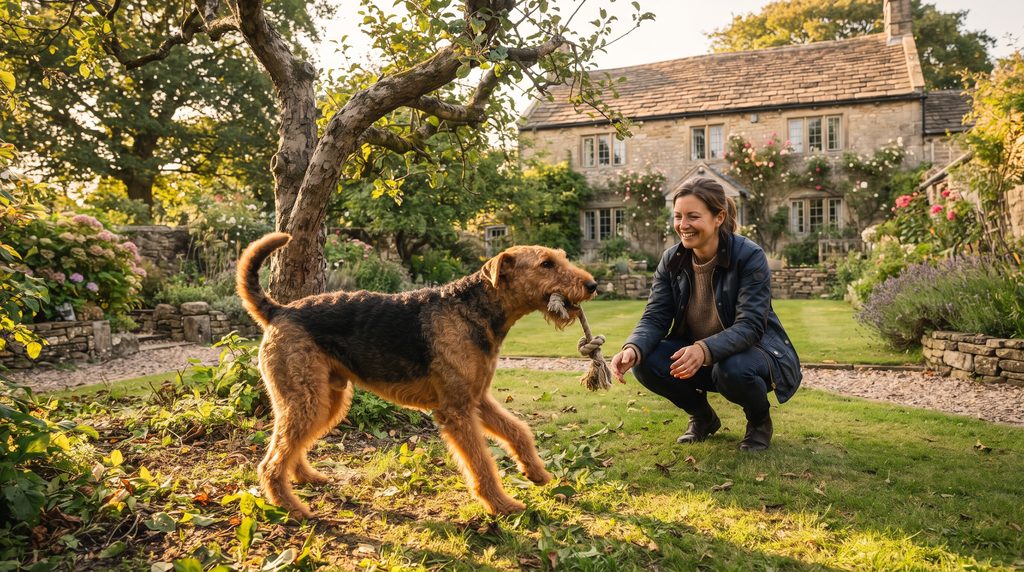
Living with an Airedale Terrier is often deeply rewarding, but it is rarely passive or undemanding. This is a breed that tends to be fully present in household life, noticing routines, watching people closely, and wanting some level of involvement in whatever is happening. An Airedale is not usually content to be treated as a decorative pet that spends the day quietly occupying a corner of the yard. It wants activity, companionship, and opportunities to use its mind. For the right owner, that creates a lively and enjoyable partnership. For the wrong one, particularly someone expecting easy compliance or low-energy companionship, daily life can become frustrating surprisingly quickly.
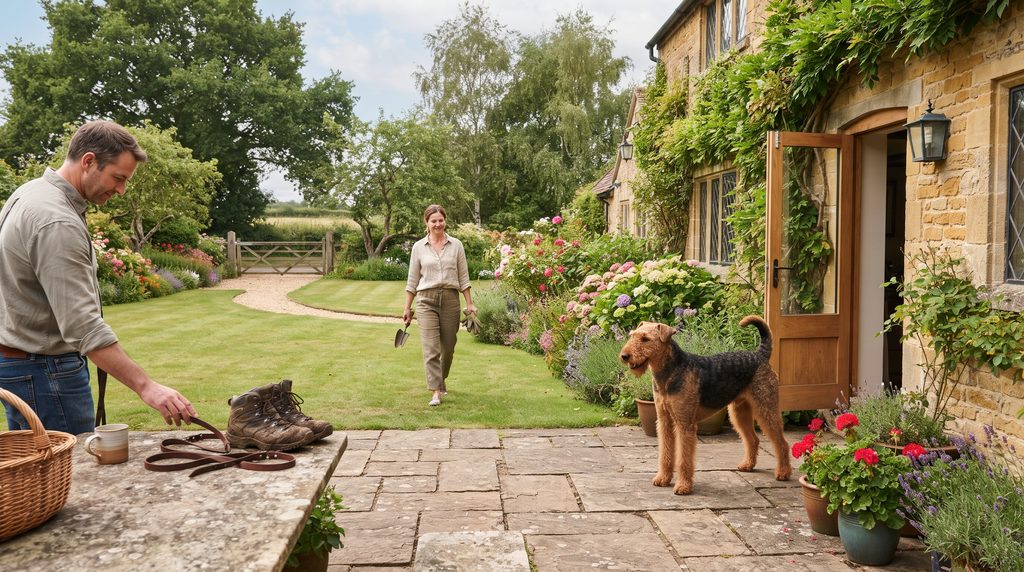
One of the first things many owners notice is how observant the breed is. Airedales often keep track of movement around the home, respond to changes in routine, and quickly learn what different household patterns mean. Pick up boots, a lead, or car keys, and many Airedales will immediately anticipate what comes next. This awareness is part of their charm, but it also means they notice inconsistency. If rules change from day to day, or if one family member allows behavior another tries to discourage, the dog will often detect that weakness immediately. Living comfortably with an Airedale usually means combining affection with steady, unified household expectations.
The home itself does not need to be grand, but it does need to support an active and engaged lifestyle. A secure yard is very helpful because the Airedale is athletic, curious, and often interested in what lies beyond the boundary. Strong fencing matters more than sheer size. A large but poorly secured property can be less suitable than a smaller, well-managed home where the dog receives regular walks and daily interaction. Apartment living is possible in theory, but in practice it requires a particularly committed owner prepared to provide enough outdoor time, training, and mental stimulation to prevent restlessness and frustration.
Inside the home, a well-exercised Airedale is often more manageable than people expect. Despite their lively outdoor energy, many adults can settle well after a satisfying walk, training session, or structured game. They often enjoy lying where they can observe family activity without necessarily being the center of it. However, that calmer indoor behavior is usually earned. A bored Airedale may invent its own entertainment, and that entertainment may not align with household preferences. Digging in the garden, barking at movement outside, stealing objects, chewing belongings, or patrolling windows can all emerge when the dog lacks enough structure and meaningful outlets.
Because the breed is naturally alert, many people wonder whether it makes a good Airedale Terrier Guard Dog. In practical terms, many Airedales do have useful watchdog qualities. They are often aware of unfamiliar sounds, attentive when visitors approach, and confident enough to let their owners know when something unusual is happening. However, natural alertness is not the same as turning the dog into one of the so-called Airedale Terrier Protection Dogs often imagined in advertising or romanticized breed descriptions. Most family owners should value the breed’s awareness and confidence while focusing on stability, self-control, and reliable household behavior rather than trying to encourage defensive behavior unnecessarily.
This makes socialization particularly important in daily life. Airedales should learn to distinguish ordinary events from genuine reasons for concern. Delivery people, visitors, neighborhood sounds, passing dogs, and routine activity outside the home all need to become familiar parts of normal life. An adult Airedale that has been introduced thoughtfully to a range of environments is generally much easier to live with than one left to form its own conclusions about everything unfamiliar. Calm exposure helps the dog remain confident without becoming noisy, suspicious, or overreactive every time something changes around it.
Families often enjoy the Airedale’s sense of humor and obvious personality. Many individuals seem to approach everyday life with a combination of confidence and mischief. They may carry objects around proudly, watch household routines with sharp interest, or test whether a familiar rule still applies. This character is a major part of the breed’s appeal, but it also means living with an Airedale is often interactive. Owners who appreciate a dog with initiative usually find the breed engaging. Those who prefer an automatically compliant companion may find its independent streak more demanding than charming, especially during adolescence.
Airedales also do best in homes where they are given meaningful things to do. That does not mean every owner must participate in formal dog sports, but it does mean the breed benefits from purposeful activity. Walks that include opportunities to sniff and explore, short training sessions, retrieving games, scent searches, and structured play all help. Repetition for its own sake rarely satisfies an Airedale for long. What usually works better is a routine that alternates activity, mental work, and rest. A dog that uses its brain as well as its body is often much easier to live with than one that receives only physical exercise.
Time alone deserves realistic consideration. Some Airedales cope reasonably well with moderate periods of independence once properly trained, but they generally do not thrive when left isolated for long hours day after day with little interaction. They are too intelligent and too engaged with their environment for that lifestyle to suit them well. Owners who work away from home for long stretches should think carefully about dog walkers, midday breaks, help from family members, or other arrangements. Puppies and adolescents are especially likely to struggle with too much unsupervised time before good habits and emotional resilience are well established.
Households with children, other dogs, or smaller pets require appropriate management rather than assumptions. Airedales can be affectionate with children and can live successfully with other dogs, but their size, energy, and terrier instincts mean introductions and boundaries matter. Their prey drive also means that rabbits, rodents, or free-roaming smaller animals require particular caution. A successful multi-pet home is certainly possible, but it should be built on structure, supervision, and realistic expectations rather than hope alone. The breed’s independence means it is much easier to prevent problems early than to reverse established habits later.
Routine care and house rules also shape daily life. Muddy paws, garden mess, coat maintenance, and the occasional strong terrier opinion are all part of the package. Owners need patience during puppyhood, consistency during adolescence, and enough humor to enjoy the breed’s personality without letting it run the household. In return, an Airedale often offers tremendous loyalty, lively companionship, and a strong sense of partnership. This is a dog that tends to feel like a real household participant rather than a detached pet.
Ultimately, living with an Airedale Terrier suits people who want an active, intelligent companion and are genuinely prepared to share life with a dog of substance and character. The breed can be affectionate, entertaining, and deeply devoted, but it asks for more involvement than many owners first imagine. When given structure, exercise, training, and inclusion in daily life, the Airedale usually rewards that effort with a relationship that feels vivid, engaging, and full of personality. For the right home, it can be one of the most satisfying terrier breeds to live with.
Airedale Terrier and Children
The Airedale Terrier can be an affectionate, entertaining, and energetic companion for children, particularly in families that appreciate an active dog with a confident personality. Its playful nature, intelligence, and enthusiasm for shared activities can make the breed especially appealing to households with school-aged youngsters. However, the Airedale is also the largest recognized terrier, possessing considerable physical strength and an independent character. Successful relationships with children depend on thoughtful socialization, appropriate training, realistic expectations, and consistent adult supervision rather than assuming that a friendly dog will automatically understand how to behave around younger family members.
One of the Airedale Terrier’s most appealing qualities is its willingness to participate in family activities. Many enjoy accompanying children on supervised garden adventures, joining countryside walks, and participating in games that involve searching, retrieving, or problem-solving. Their intelligence makes them responsive to interactive activities, while their playful temperament often encourages enthusiastic participation. An Airedale that learns to retrieve gently, follow familiar instructions, and settle calmly near children can become a wonderful family companion. These positive relationships develop most successfully when adults guide activities and teach children how to interact appropriately.
The breed’s substantial size deserves particular attention in households with toddlers and preschool-aged children. A young Airedale Terrier can be physically exuberant, jumping, turning suddenly, or charging enthusiastically toward something interesting. Even without aggressive intentions, a strong, energetic dog can accidentally knock over a small child or cause injury during rough play. Families should establish calm greeting routines, discourage jumping, and separate particularly energetic activities from situations involving younger children. Physical enthusiasm is a normal characteristic of many young Airedales, but it requires careful management until the dog develops greater self-control.
Families with older children may find the Airedale particularly rewarding because youngsters can participate more meaningfully in structured activities. Under adult supervision, school-aged children can help prepare enrichment games, practice familiar training cues, or take part in gentle retrieving sessions. Such experiences encourage cooperation while helping children understand how dogs learn and communicate. However, responsibility for physical control, training decisions, and overall welfare must remain with adults. Even a confident teenager should not automatically be expected to manage an excited Airedale around livestock, unfamiliar dogs, or other challenging distractions.
Teaching respectful handling is essential because Airedale Terriers do not necessarily enjoy every form of physical attention. Children should never pull the dog’s beard, tug its ears, climb onto its back, or attempt to ride it. Tight hugging, restraining the head, or repeatedly interrupting rest can make an otherwise affectionate dog uncomfortable. Instead, children should learn to offer gentle contact when the dog approaches willingly and allow it to move away whenever it chooses. Respecting these boundaries helps prevent misunderstandings and supports a relationship in which both children and the Airedale feel comfortable.
Understanding canine body language provides another important safeguard. A relaxed Airedale Terrier may approach voluntarily, display loose body movements, and seek further interaction. Signs of discomfort can include turning away, lip licking, sudden stillness, a tense facial expression, or attempts to leave. Growling should be treated as meaningful communication rather than punished or dismissed. Children need to understand that a dog asking for space must be left alone. Adults should intervene before discomfort escalates, rather than expecting the Airedale Terrier to tolerate increasingly intrusive attention because it has previously behaved patiently.
Supervision remains essential regardless of the dog’s age, training, or affectionate reputation. Young children should never be left alone with an Airedale Terrier, even when the dog has lived peacefully with them for years. Adults need to be present, attentive, and capable of intervening when play becomes too energetic or either participant appears uncomfortable. Particular care is needed around food bowls, valuable toys, sleeping areas, and crowded family gatherings. A securely established resting area gives the dog somewhere to withdraw when household activity becomes overwhelming and helps children understand the importance of respecting personal space.
The Airedale’s hunting heritage can also influence games involving children. Fast running, shouting, waving toys, or sudden changes of direction may trigger chasing and excited play. A young dog might grab at loose clothing, jump toward moving hands, or become increasingly difficult to redirect when enthusiasm builds. Although these behaviors do not necessarily indicate aggression, they can be frightening or unsafe for smaller children. Controlled retrieving, scent-searching activities, and games involving clear starts and finishes generally encourage more manageable behavior than rough wrestling or unrestricted chasing around the garden.
Introducing an Airedale Terrier puppy to children provides an opportunity to establish good habits from the beginning. Early encounters should be calm, positive, and brief enough to prevent the puppy from becoming overwhelmed. Children can help with appropriate reward-based training, but they should not be responsible for correcting unwanted behavior or managing difficult situations. Puppies also need substantial sleep, and overtired youngsters may become increasingly mouthy, excitable, or impulsive. Adults should provide regular rest periods and redirect playful biting toward suitable toys rather than allowing children to become part of a rough game.
Bringing an adult Airedale Terrier into a family requires particular consideration when its previous experiences with children are uncertain. Some adult dogs have lived successfully with youngsters and already understand ordinary family routines. Others may be unfamiliar with sudden movements, loud voices, or unpredictable handling. Rescue organizations and responsible breeders can provide valuable information about known behavior, but introductions should still be gradual and carefully supervised. Allowing the dog time to settle before expecting close interaction helps establish confidence. A good match depends on the individual Airedale’s temperament and history, not simply its breed.
As children grow older, their relationship with an Airedale may develop into a particularly satisfying partnership. Teenagers who enjoy walking, training, and outdoor activities can become important participants in the dog’s daily routine. Airedales often appreciate interactive companionship, and familiar shared activities can strengthen trust over time. Nevertheless, the dog’s needs continue even when school, friendships, or other interests become more demanding. Parents should remain responsible for ensuring appropriate exercise, grooming, veterinary care, and consistent handling throughout the dog’s life.
Ultimately, the Airedale Terrier can be a devoted and entertaining family companion when children are taught respectful behavior and adults provide suitable guidance. Its intelligence, confidence, and playful personality offer considerable advantages, particularly for active households with older children. However, its strength, terrier independence, and youthful exuberance mean that supervision and clear boundaries should never be overlooked. Families prepared to manage these characteristics thoughtfully may discover that an Airedale becomes a much-loved participant in childhood adventures, family routines, and lasting shared experiences.
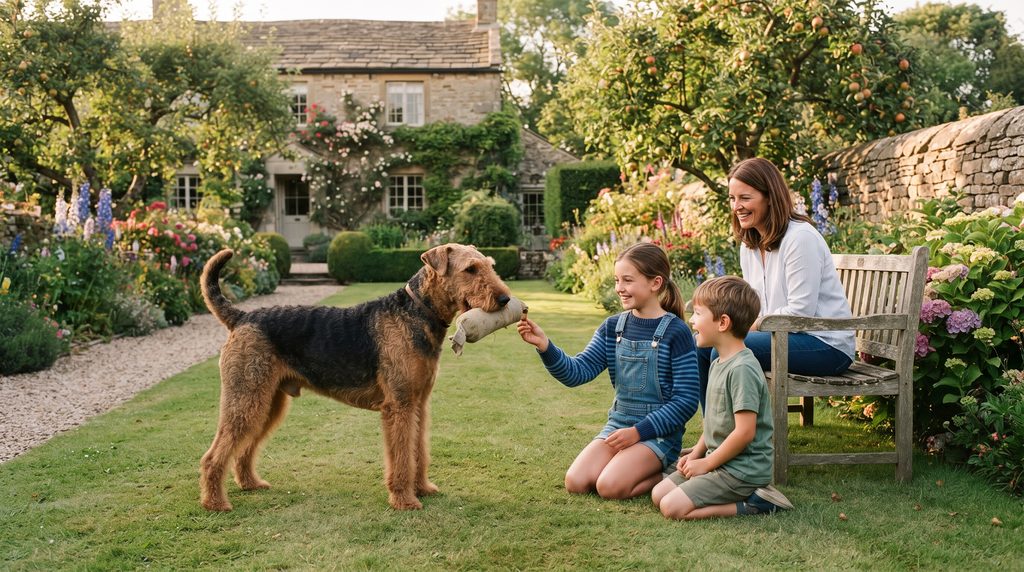
Teaching Children to Respect an Airedale Terrier
Children should learn that an Airedale Terrier needs personal space, predictable interactions, and opportunities to rest undisturbed. Establish simple household rules: never disturb the dog while sleeping or eating, avoid pulling its beard or ears, and allow it to walk away from unwanted attention. Encourage calm games and reward gentle behavior rather than rough play. Adults should supervise interactions closely, especially with younger children, and recognize signs of discomfort before situations escalate. Providing a quiet resting area that children understand is off-limits helps create a safer, more comfortable home for everyone.
Airedale Terrier With Other Dogs and Pets
The Airedale Terrier can live successfully with other dogs and, in some circumstances, cats or other household animals. However, compatibility depends on individual temperament, early socialization, previous experiences, and appropriate management. As the largest recognized terrier, the Airedale combines considerable physical strength with independence, confidence, and strong hunting instincts. These characteristics do not automatically make the breed aggressive toward other animals, but they can influence how it responds to unfamiliar dogs, energetic play, and smaller creatures. Prospective owners should consider the personalities and needs of every animal in the household rather than assuming that friendliness toward people guarantees compatibility with other pets.
With other dogs, many Airedales are sociable, playful, and capable of developing lasting friendships. They may particularly enjoy companions that appreciate energetic games, shared exploration, and outdoor adventures. Golden Retrievers, Labrador Retrievers, and similarly active breeds can make suitable housemates when individual temperaments are compatible. Nevertheless, the Airedale’s confident personality means it may not tolerate persistent crowding or intrusive behavior from unfamiliar dogs. Good relationships depend on appropriate communication and mutual respect rather than simply matching two dogs with similar exercise requirements.
Some Airedale Terriers can be assertive during canine interactions, particularly when excitement increases or another dog behaves confrontationally. However, same-sex aggression should not be treated as an inevitable breed characteristic, and many Airedales coexist peacefully with dogs of either sex. Individual history, reproductive status, maturity, and household circumstances can influence compatibility. Owners should avoid encouraging competitive encounters or interpreting repeated confrontations as harmless demonstrations of dominance. When an Airedale Terrier shows tension around another dog, careful management and appropriate behavioral guidance are more useful than allowing the animals to resolve disagreements through fighting.
Early socialization provides an important foundation for comfortable relationships with other dogs. Airedale puppies benefit from controlled encounters with calm, well-mannered dogs of different ages, sizes, and personalities. These experiences should emphasize positive communication rather than unrestricted play. Learning to walk quietly past another dog, remain relaxed while observing unfamiliar animals, and disengage when requested can be just as valuable as friendly greetings. Well-managed puppy classes may help develop these skills, provided the environment is not overwhelming and interactions are supervised by knowledgeable instructors.
Introducing an adult Airedale Terrier to an existing household dog requires particular care. Initial meetings are generally best arranged in neutral surroundings, where neither animal feels responsible for defending familiar space. Parallel walking at a comfortable distance allows the dogs to become accustomed to one another without pressure. If both remain relaxed, brief greetings can be introduced before continuing the walk. Returning home should involve controlled access to shared areas, with opportunities for separation whenever necessary. Rushing the process can create tension that might otherwise have been avoided through gradual introductions.
Managing a multi-dog household also involves more than arranging successful introductions. Even compatible companions may disagree over food, toys, resting places, or attention from family members. Feeding dogs separately, supervising valuable chews, and providing individual beds can reduce unnecessary competition. Owners should watch for subtle problems such as blocking doorways, guarding resting areas, or repeatedly interrupting another dog’s attempts to relax. Each animal needs opportunities for individual attention and quiet time. A harmonious household allows both dogs to feel secure without requiring them to share every resource or activity.
An Airedale’s substantial size and enthusiastic play style deserve consideration around smaller dogs. Although many Airedales interact appropriately with little companions, energetic chasing, wrestling, or sudden changes of direction can unintentionally cause injury. Owners should observe whether play remains balanced and whether both animals can pause or disengage comfortably. A smaller dog that repeatedly hides, freezes, or attempts to escape may be overwhelmed rather than enjoying the interaction. Short, supervised sessions with compatible dogs are generally more valuable than allowing increasingly intense play to continue without interruption.
Cats present a different challenge because the Airedale’s hunting heritage can influence its response to small, fast-moving animals. Some individuals live peacefully with familiar cats, especially when raised together and taught appropriate boundaries from an early age. Others remain strongly interested in movement and may attempt to chase even a cat they encounter regularly. Compatibility therefore cannot be guaranteed. An Airedale that behaves calmly beside a sleeping cat may still become excited when that same animal suddenly runs across the room or garden.
Introducing an Airedale Terrier to a resident cat should begin with secure separation and gradual exposure. The cat needs elevated resting places, reliable escape routes, and areas the dog cannot access. Early encounters can take place through a sturdy barrier while the Airedale is rewarded for relaxed observation and voluntarily turning away. Progress should depend on both animals remaining comfortable rather than following a fixed schedule. Persistent staring, stalking, trembling with excitement, lunging, or an inability to disengage indicates that further separation and professional guidance may be needed.
Smaller pets such as rabbits, guinea pigs, hamsters, and birds require particularly cautious management. Airedales were originally developed to pursue vermin and other quarry, and these instincts may remain strong even in dogs that have never hunted. Small animals moving quickly or making unfamiliar sounds can trigger intense interest or pursuit. Owners should not assume that affection toward family members or good obedience eliminates these instincts. Secure enclosures and separate living areas are generally the safest arrangements. Direct contact should never be treated as automatically safe simply because previous encounters appeared peaceful.
The same instincts can influence encounters with wildlife and livestock outside the home. Airedales may become interested in squirrels, rabbits, birds, or unfamiliar scents while exploring countryside paths. Reliable recall is valuable, but off-leash freedom should be limited to situations where the dog can be managed safely. Secure fencing and suitable leash arrangements help prevent chasing and unwanted encounters. Dog parks are not essential for an Airedale’s social well-being; some individuals benefit more from familiar walking companions and carefully organized play sessions than from unpredictable gatherings of unfamiliar dogs.
Ultimately, the Airedale Terrier can become a compatible and enjoyable member of a multi-pet household when relationships are evaluated individually and managed thoughtfully. Its confidence, intelligence, and playful nature can support rewarding friendships with other dogs, while successful coexistence with cats requires greater attention to hunting instincts and previous experience. Smaller vulnerable pets need reliable physical protection. Early socialization, gradual introductions, appropriate supervision, and respect for each animal’s boundaries provide the strongest foundation for peaceful relationships throughout the Airedale’s life.
Introducing an Airedale to Another Household Pet
Successful introductions should progress at a pace that keeps both animals comfortable. For dogs, begin with parallel walks in neutral surroundings before allowing brief, relaxed greetings. For cats, use secure barriers and provide elevated escape routes while rewarding the Airedale for calm behavior. Never permit chasing to become an established habit, even when it initially appears playful. Separate food, resting spaces, and valuable toys until relationships are well established. Remember that peaceful coexistence does not require close friendship. An Airedale that calmly ignores another pet may be demonstrating exactly the behavior needed for a harmonious household.

Airedale Terrier Exercise and Activity Needs
The Airedale Terrier is an energetic, athletic working breed that needs regular physical activity and opportunities to explore its surroundings. Developed in Yorkshire for hunting, tracking, and other demanding outdoor work, this substantial terrier possesses considerable stamina and a natural enthusiasm for movement. However, meeting its exercise requirements involves more than simply covering a particular distance each day. Airedales benefit most from varied activities that combine walking, exploration, play, and mental engagement. Owners who understand this balance are better equipped to maintain their dog’s physical condition while preventing the frustration and restlessness that can develop when an intelligent working breed has too little to do.
For a healthy adult Airedale Terrier, approximately an hour of daily physical activity is a useful starting point, although individual requirements vary considerably. Some dogs are satisfied with several purposeful walks and an enjoyable play session, while particularly energetic individuals benefit from additional activity. Age, fitness, weather conditions, and general health should influence the routine. There is no need to pursue an arbitrary exercise target if the dog is already maintaining a healthy weight, settling comfortably indoors, and displaying balanced behavior. Consistency and the quality of activities generally matter more than forcing every Airedale to follow the same demanding schedule.
Walking provides the foundation of most exercise routines. Airedales are naturally curious dogs, and a walk through woodland, parkland, or countryside offers opportunities to investigate scents and observe their surroundings. Rather than maintaining a brisk pace throughout every outing, owners can alternate purposeful walking with periods of relaxed exploration. Allowing the dog to sniff vegetation, examine unfamiliar areas, and follow appropriate scent trails can make an ordinary walk substantially more satisfying. Different routes also introduce variety, preventing daily exercise from becoming a repetitive activity that provides physical movement but little mental interest.
Secure outdoor play offers another valuable outlet for the breed’s energy. Many Airedales enjoy retrieving toys, participating in structured tug games, and chasing suitable objects across open ground. Their enthusiasm can be considerable, so games should encourage control rather than continuous excitement. Brief pauses, opportunities to release toys willingly, and predictable endings help prevent play from becoming excessively intense. A securely fenced garden is particularly useful, although it should supplement regular walks rather than replace them. Simply allowing an Airedale into the yard does not guarantee that it will exercise meaningfully without human involvement.
Scent-based activities are especially appropriate because of the Airedale Terrier’s historical development as a versatile hunting and tracking dog. Simple games involving hidden treats, favorite toys, or scent trails encourage the dog to investigate and solve problems independently. Owners can scatter a portion of the dog’s regular food across a safe grassy area or hide several suitable objects around the garden. As the dog becomes more experienced, searches can become increasingly challenging. These activities provide concentration and satisfaction without requiring continuous high-impact exercise, making them useful during bad weather or when a dog needs a physically gentler day.
Organized dog sports can provide additional opportunities for active Airedale Terriers and their owners. Agility, scent work, rally, obedience competitions, and suitable retrieving activities all offer different combinations of movement and mental engagement. An Airedale’s intelligence and athleticism can make these activities particularly enjoyable, provided training remains positive and varied. Not every individual will enjoy the same sport, and owners should consider temperament, physical development, and personal preferences before committing to a particular discipline. The objective is enjoyable participation and sound conditioning rather than pushing the dog toward activities that create unnecessary stress or physical strain.
Hiking is another activity well suited to many healthy adult Airedales. Their substantial construction and working heritage make them capable companions on woodland paths, rolling hills, and varied countryside terrain. However, endurance should develop gradually. A dog accustomed to short neighborhood walks should not suddenly be expected to complete a lengthy mountain hike. Owners should increase distance progressively, choose suitable surfaces, and provide regular opportunities for drinking and rest. Jogging may also suit a physically mature, appropriately conditioned Airedale, but sustained running should not begin before the dog’s musculoskeletal development is sufficiently advanced.
Some Airedale Terriers also enjoy swimming, reflecting the breed’s historical association with rivers and water-based hunting. Nevertheless, swimming ability and enthusiasm differ between individuals. An Airedale should never be forced into water or assumed to be a confident swimmer simply because its ancestors worked along riverbanks. Introductions should begin in calm, shallow conditions with secure footing and easy access to shore. A properly fitted canine life jacket is sensible around deeper water, boats, or unfamiliar conditions. Owners should also consider currents, water quality, submerged hazards, and the need to rinse and dry the dog’s coat appropriately afterward.
Exercise requirements change considerably throughout puppyhood. Young Airedale Terriers are naturally active, but their developing joints, bones, and supporting tissues should not be subjected to sustained forced running, repetitive high jumping, or excessive distances. Short exploratory walks, gentle play, age-appropriate training, and opportunities to rest are more suitable than attempting to exhaust an enthusiastic puppy. Puppies frequently continue playing even when overtired, so owners need to provide sensible limits. Exercise can gradually increase as the dog matures, with veterinary guidance particularly useful before beginning demanding sporting activities or sustained running.
Adolescent Airedales often present a different challenge. Their bodies become increasingly powerful while their judgment and responsiveness may remain inconsistent. A young dog may suddenly pursue an interesting scent or become distracted by wildlife, making reliable leash handling particularly important. Secure exercise areas and long training lines can provide additional freedom while reducing the risk of uncontrolled chasing. Owners should avoid relying on recall alone in unfamiliar surroundings until the dog has demonstrated dependable responses around realistic distractions. This stage is an opportunity to build controlled outdoor habits that will remain valuable throughout adulthood.
Older Airedale Terriers generally continue benefiting from daily movement, although exercise should be adjusted to their changing physical abilities. Shorter walks, gentle exploration, low-impact scent games, and comfortable swimming sessions may help maintain mobility without unnecessary strain. Owners should monitor stiffness, reluctance to exercise, changes in gait, or unusual fatigue rather than attributing every change to normal aging. Maintaining an appropriate body weight also becomes increasingly important as activity levels decline. Veterinary assessment can help distinguish ordinary changes in stamina from painful joint conditions or other health concerns requiring treatment.
Weather conditions deserve attention because a physically enthusiastic Airedale may continue exercising even when temperatures become uncomfortable. During hot or humid weather, walks should be scheduled for cooler periods, with ready access to drinking water and shade. Heavy panting, slowing down, weakness, or disorientation can indicate dangerous overheating and require immediate attention. Hot pavement and exposed ground can also injure paw pads. In cold or wet weather, the breed’s protective coat provides some insulation, but owners should still consider wind, prolonged exposure, and the comfort of puppies, seniors, or dogs with health problems.
Ultimately, the Airedale Terrier thrives on an exercise routine that reflects its practical working heritage without demanding excessive physical exertion. Regular walking, opportunities to sniff, enjoyable play, and occasional more challenging activities provide a useful foundation. Equally important is teaching the dog to relax between outings rather than encouraging constant excitement. A well-conditioned Airedale that receives appropriate physical and mental activity can be a satisfying companion for active owners, combining enthusiasm for outdoor adventures with the ability to enjoy quieter family life afterward.
Exercise Should Challenge the Mind, Not Just the Body
An Airedale Terrier may return from a lengthy walk physically tired but still interested in finding something to investigate. Adding scent searches, varied walking routes, and short problem-solving games helps satisfy the breed’s natural curiosity. For many healthy adults, around an hour of daily physical activity provides a reasonable starting point, adjusted for individual fitness and energy levels. Avoid increasing exercise endlessly in response to restlessness. Instead, combine suitable activity with predictable rest periods and opportunities to settle calmly. Puppies, seniors, and dogs with health conditions need individually adjusted routines.
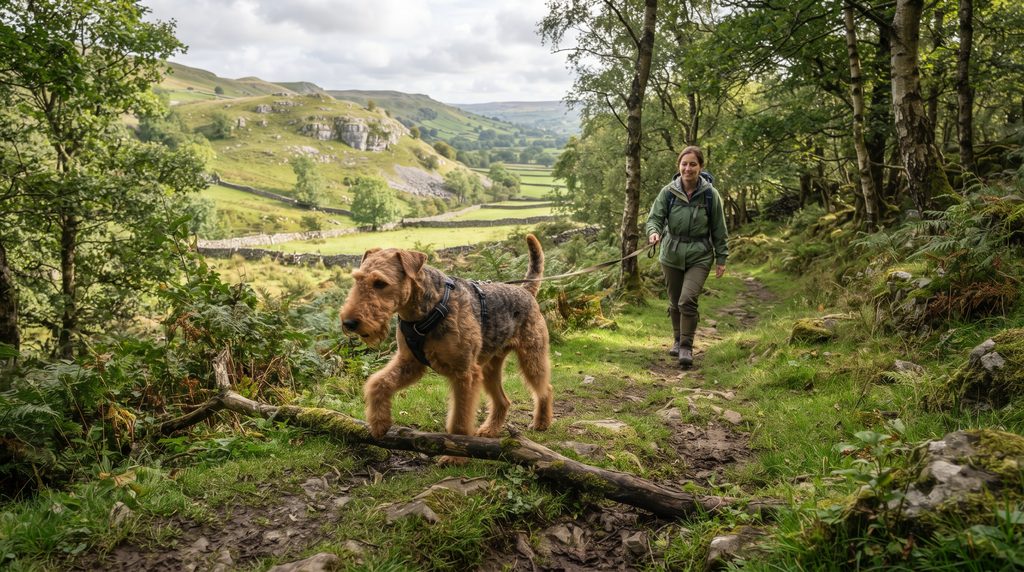
Training an Airedale Terrier
Training an Airedale Terrier is often rewarding, but it is rarely effortless. This breed is intelligent, observant, and highly capable, yet it is also independent enough to question whether a request is worth following at that particular moment. Owners often discover that the Airedale Terrier learns quickly but does not always respond with the automatic compliance seen in some other breeds. That combination of intelligence and self-direction is central to the breed’s appeal, but it also means training works best when it is approached as a thoughtful partnership rather than a battle of wills.
One of the first things to understand is that an Airedale Terrier usually notices far more than people expect. These dogs watch body language, household routines, tone of voice, and environmental changes with impressive attention. That awareness can be a major training advantage because the dog often recognizes patterns quickly and starts predicting what happens next. However, it also means inconsistency is quickly exposed. If jumping is discouraged one day but tolerated the next, or if different family members apply different rules, the Airedale Terrier is likely to notice and adjust its behavior accordingly.
Early training should focus on practical foundations rather than trying to impress people with advanced tricks too soon. Name recognition, recall foundations, polite leash behavior, calm greetings, gentle handling, and the ability to settle indoors matter enormously. An Airedale Terrier that learns these basics well is usually much easier to live with than one that knows several showy behaviors but has little self-control. House training, crate training, and comfort with grooming should also begin early, because a large, strong terrier is much easier to manage when these routines have been established during puppyhood.
Positive reinforcement is usually the most productive approach. Food rewards, toys, praise, and access to enjoyable activities can all be valuable motivators when used with good timing and clarity. The Airedale Terrier often responds best when it understands exactly what behavior earned the reward and when the lesson feels engaging rather than repetitive. Endless drilling tends to reduce enthusiasm. Short sessions with a clear goal, followed by a break or a change of activity, usually produce better results than trying to force the dog through prolonged repetition after its interest has faded.
At the same time, positive reinforcement does not mean vague or permissive training. The Airedale Terrier generally benefits from clear boundaries and calm follow-through. Owners should be patient, but they should also be consistent. If the dog is not allowed on certain furniture, that rule should remain stable. If doorway manners matter, they should be practiced routinely rather than occasionally. This breed tends to respect fair, predictable leadership far more than emotional reactions or repeated scolding. Calm consistency builds reliability, while frustration often creates confusion or unnecessary conflict.
Recall deserves particular emphasis because the Airedale Terrier’s hunting instincts can become highly relevant outdoors. A dog that seems attentive in the garden may react very differently when confronted with wildlife, strong scents, or sudden movement on a walk. Reliable recall is built gradually through repetition in controlled environments, not simply expected because the dog knows its name. Long lines, fenced areas, and high-value rewards are especially useful while recall is still developing. Owners should make returning to them consistently rewarding, rather than only calling the dog when the fun is about to end.
Leash manners are another priority. Airedales are powerful dogs, and an enthusiastic adult that pulls consistently can become difficult to manage. Teaching loose-leash walking requires patience because the breed is naturally curious and often wants to investigate the environment. It helps to reward check-ins, reinforce walking beside the handler, and give the dog structured opportunities to sniff and explore. Many owners get better results when they separate relaxed sniffing time from moments when more controlled walking is expected, rather than trying to maintain formal heelwork for the entire outing.
Because the Airedale Terrier is intelligent and energetic, training should also provide constructive outlets for problem-solving. Retrieving games, scent work, hide-and-seek, basic obedience, rally, and other structured activities can all help channel the breed’s mind productively. Training becomes much easier when the dog has appropriate ways to use its instincts and curiosity. Airedales often enjoy tasks that feel purposeful, especially when they involve movement, searching, or a little initiative. This is one reason they can do well in dog sports when handled with patience and a sense of humor.
Socialization is closely connected to training. The goal is not to create a dog that runs toward every person or dog it sees, but one that can remain calm and confident in a range of ordinary situations. Exposure to visitors, traffic, grooming, veterinary handling, different surfaces, and normal neighborhood activity helps build that steadiness. Because the Airedale Terrier can be naturally self-assured, poor experiences or unmanaged overexcitement can contribute to pushy or reactive behavior later. Thoughtful, low-pressure experiences usually build better long-term confidence than forcing too much too quickly.
Adolescence can be the most challenging stage. A young Airedale Terrier may suddenly seem more selective about listening, more interested in distractions, and more willing to test familiar rules. This does not mean training has failed. It usually means the dog is maturing and requires even greater consistency. During this period, owners often need to revisit basic skills, reduce freedom temporarily, and manage distractions more carefully. Patience matters enormously. Many well-trained adult Airedales pass through an unruly adolescent phase before becoming steadier, more responsive companions.
Owners should also make a deliberate effort to teach calmness. It is easy to focus only on activity, obedience, and entertainment, but a dog that cannot settle is difficult to live with, no matter how clever it is. Mat work, quiet crate time, waiting routines, and reinforcement for relaxed behavior are all valuable. An Airedale Terrier should learn that not every moment is exciting and that resting calmly is part of normal family life. This balance between engagement and relaxation often makes the difference between a merely trained dog and a genuinely pleasant household companion.
Ultimately, training an Airedale Terrier requires respect for the breed’s real nature. This is an intelligent, capable, humorous, and sometimes stubborn terrier that wants meaningful interaction rather than mechanical control. Owners who remain consistent, keep training interesting, and provide practical outlets for the dog’s instincts usually find the breed deeply rewarding to work with. The process may take patience, especially during adolescence, but a well-trained Airedale Terrier often develops into a confident, responsive, and highly enjoyable companion whose personality remains one of its greatest strengths.

Airedale Terrier Grooming and Coat Care
The Airedale Terrier’s distinctive black-and-tan coat is one of the breed’s most recognizable features, but maintaining its characteristic appearance requires more attention than many prospective owners expect. Beneath the rugged, weather-resistant exterior lies a dense double coat that needs regular brushing, careful trimming, and periodic removal of dead hair. Although Airedales are not generally considered excessively demanding in terms of daily brushing, they are not maintenance-free dogs. A consistent Airedale Terrier Grooming routine helps preserve the coat’s condition, prevents uncomfortable tangles, and provides an opportunity to monitor the skin and overall health.
The Airedale possesses a harsh, wiry outer coat supported by a shorter, softer undercoat. The protective outer hairs were historically valuable for dogs working through rough vegetation and damp Yorkshire countryside. A properly maintained coat should feel relatively coarse rather than silky or fluffy, with the hair lying close to the body. The beard, eyebrows, and leg furnishings are generally longer and softer, creating the familiar terrier outline. These different coat areas require slightly different handling, which is why simply running a brush over the back is insufficient for maintaining the entire dog.
Brushing several times a week is a sensible routine for most Airedale Terriers. A suitable slicker brush can help loosen debris and separate longer hair, while a metal comb is useful for checking whether tangles remain close to the skin. Particular attention should be given to the beard, chest, legs, armpits, and areas where a collar or harness creates friction. These regions can develop knots even when the shorter saddle appears tidy. Work gently in small sections rather than pulling repeatedly through tangled hair. If matting becomes tight or uncomfortable, professional assistance is preferable to aggressive brushing.
One of the most important decisions involves hand stripping versus clipping. Hand stripping removes mature, loose outer hairs from a coat that is ready to release them, allowing newer wiry growth to develop. The technique is traditionally used to preserve the Airedale’s correct coat texture and rich coloring, particularly in dogs prepared for conformation shows. Skilled groomers use their fingers or appropriate stripping tools to work gradually through the coat. When performed correctly on suitable hair, the process should not cause significant discomfort. However, it requires knowledge, patience, and an understanding of the individual dog’s skin and coat condition.
Clipping offers a practical alternative for many family companions. An Airedale Terrier Haircut performed with electric clippers and scissors can maintain a neat appearance without the time and specialist technique required for hand stripping. However, repeated clipping may gradually soften the coat’s texture and alter its color, sometimes producing a lighter or fluffier appearance. These changes are largely cosmetic, but they are worth understanding before deciding on a grooming method. Clipping may be particularly appropriate for older dogs, those with sensitive skin, or individuals unable to tolerate lengthy grooming sessions comfortably.
The traditional Airedale Terrier Breed Cut emphasizes the dog’s athletic construction rather than creating an exaggerated decorative style. The back, neck, and sides are maintained relatively short, revealing the strong shoulder and body outline. The legs retain enough hair to look substantial and straight without becoming excessively bulky. The head is shaped to preserve its long rectangular appearance, with neatly controlled eyebrows and a distinctive beard. The chest and underside should blend naturally into the rest of the coat. A well-maintained Airedale should look powerful, balanced, and unmistakably terrier-like.
Understanding the Airedale Terrier Grooming Pattern can help owners communicate more effectively with professional groomers. The dark saddle generally covers the upper neck, back, and sides, while the tan areas include the head, chest, legs, and underside. Grooming follows these natural divisions while maintaining smooth transitions rather than abrupt lines. An Airedale Terrier Grooming Chart may be useful for understanding where coat lengths differ, but diagrams cannot replace practical experience with coat direction, texture, and individual proportions. Owners interested in home trimming should seek instruction before attempting detailed work around the face, ears, or sensitive areas.
People researching an Airedale Terrier Cut will encounter considerable variation between traditional show preparation and everyday pet grooming. Show coats generally require ongoing hand stripping and careful shaping, sometimes over several weeks, to achieve the correct finish. Companion dogs are often maintained with a simpler, shorter trim that is easier to keep clean. Many pet Airedales receive a full grooming appointment approximately every eight to twelve weeks, although some benefit from more frequent visits. Coat growth, the chosen technique, and the desired appearance determine the most suitable schedule.
The Airedale’s beard deserves particular attention because food, drinking water, and outdoor debris can collect in the longer facial hair. Wiping the beard after meals and checking it regularly helps prevent unpleasant odors and tangling. The hair beneath the lower lip can become knotted if neglected. Similarly, the longer hair on the legs may trap seeds, mud, and small pieces of vegetation after countryside walks. Owners should check these areas rather than waiting until the next full grooming appointment. Keeping the hair around the feet and between the paw pads tidy also helps prevent uncomfortable matting.
Bathing should be based on the dog’s actual needs rather than a rigid calendar. An Airedale that regularly explores muddy paths may need more frequent cleaning than one enjoying comparatively dry conditions. Use a gentle, dog-appropriate shampoo and rinse thoroughly to avoid residue that can irritate the skin. Frequent bathing with unsuitable products can affect the coat’s natural texture or contribute to dryness. After bathing, dry the beard, legs, and undercoat carefully, paying particular attention to areas where moisture may remain trapped. Persistent itching, redness, or unusual odors deserve veterinary attention rather than repeated bathing.
Routine grooming should also include inspection of the ears, eyes, teeth, nails, and paws. The Airedale’s folded ears can retain moisture, particularly after swimming or bathing, so owners should check for redness, discharge, discomfort, or unpleasant smells. Ear cleaning should be gentle and performed only when appropriate, without inserting cotton swabs deep into the canal. Nails need trimming whenever ordinary activity fails to keep them adequately short, while regular toothbrushing supports dental health. Checking paw pads for cuts, embedded debris, or irritation is especially useful after outdoor adventures.
Introducing grooming during puppyhood makes future care considerably easier. Young Airedale Terriers should become comfortable with gentle brushing, having their paws handled, standing briefly on a secure surface, and allowing someone to inspect their mouth and ears. Keep early sessions short and reward cooperation generously. Gradually increasing duration helps the dog understand that grooming is a predictable, comfortable routine rather than an unpleasant restraint. Owners planning to use professional groomers should introduce the puppy to appropriate handling and grooming environments before the coat requires extensive work.
Ultimately, maintaining an Airedale Terrier’s coat involves balancing appearance, comfort, and practicality. Hand stripping offers the best opportunity to preserve the traditional harsh texture, while clipping provides a reasonable alternative for many family dogs. Neither approach eliminates the need for regular brushing, attention to facial furnishings, and basic hygiene. A consistent routine keeps the coat manageable, helps prevent painful tangles, and allows owners to recognize changes in skin condition early. With appropriate care, the Airedale retains the rugged, handsome appearance that has distinguished the breed for generations.
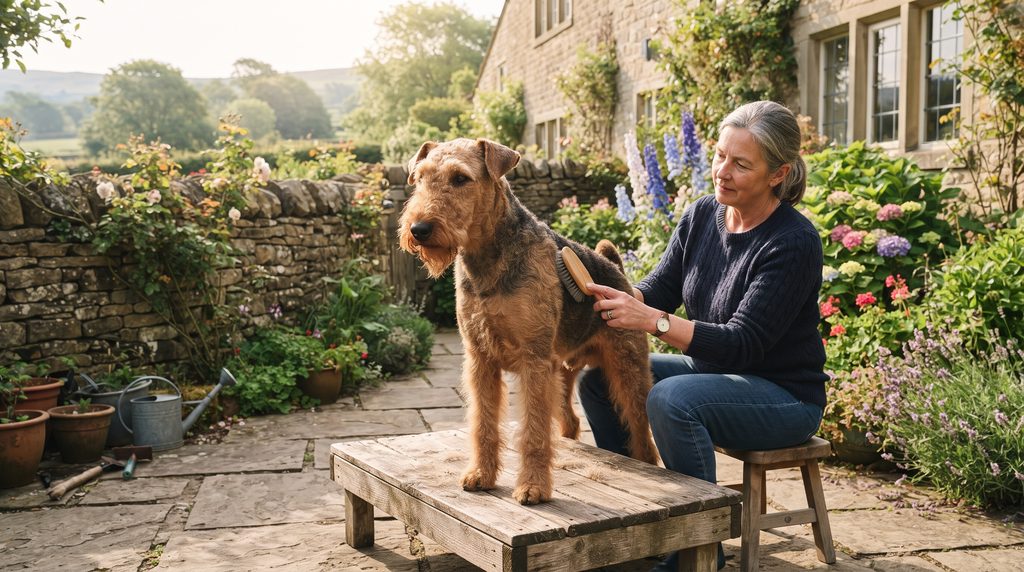
Hand Stripping or Clipping: Which Is Better?
Hand stripping removes loose, mature outer hairs and is the preferred method for maintaining the Airedale Terrier’s traditional harsh coat texture and coloring. Clipping shortens the hair instead and is a practical option for many family companions, although repeated clipping may soften the coat and lighten its appearance. The best choice depends on the dog’s age, skin condition, lifestyle, and tolerance for grooming. Owners interested in preserving a hand-stripped coat should choose a groomer experienced with wire-haired terriers. Whichever method is used, regular brushing and careful attention to the beard and leg furnishings remain essential.
Airedale Terrier Shedding
Many people are drawn to the Airedale Terrier because its harsh, wiry coat often appears tidier and less obviously shed-prone than the softer coats of many other breeds. That impression is partly true, but it can also be misleading if prospective owners assume the breed is completely non-shedding. The Airedale Terrier Shed pattern is generally low to moderate, especially when compared with many double-coated breeds, but the dog still loses hair throughout the year. The difference is that loose coat often remains trapped within the wiry outer layer until it is brushed, stripped, or clipped out, rather than drifting visibly across floors and furniture in the same way as short, smooth hairs.
This characteristic is closely related to the structure of the Airedale’s coat. The breed has a harsh outer layer and a softer undercoat beneath. As hairs mature and die, many of them do not immediately fall clear of the body. Instead, they stay caught in the coat until grooming removes them. That is why an Airedale may seem to shed very little on a day-to-day basis, yet still produce a surprising amount of loose hair during brushing or professional grooming. Owners sometimes mistake this for a dog that hardly sheds at all, when in reality the coat is simply holding on to dead hair until someone actively removes it.
In practical terms, this means the amount of visible hair around the home depends heavily on grooming routine. A well-maintained Airedale that is brushed regularly and professionally groomed at sensible intervals will usually leave much less hair around the house than an Airedale whose coat is neglected. When dead hair is allowed to build up, the dog may start dropping more coat, or loose fibers may come away in clumps during play, walking, or resting on furniture. Regular coat care does not stop shedding altogether, but it does make a noticeable difference to how much loose hair owners actually see.
Seasonal changes can also influence shedding. Although the breed is not usually associated with dramatic coat blows like some heavy double-coated dogs, some Airedales do shed more noticeably during seasonal transitions. This is often most apparent in spring and fall, when changes in daylight and temperature can influence the undercoat. Dogs living in centrally heated homes may show less dramatic seasonal patterns than those spending more time outdoors, but many still go through quieter and heavier periods. Because loose hair can remain trapped in the coat, these seasonal changes may only become obvious once the dog is brushed or professionally groomed.
Hand stripping and clipping can affect how shedding appears. A hand-stripped coat is managed by removing mature outer hairs that are ready to come away, which helps maintain the proper harsh texture while also controlling retained dead coat. In an Airedale that is stripped regularly, the coat often looks tidier and the amount of loose hair in the home may remain relatively modest. A clipped coat can still be perfectly practical for a companion dog, but repeated clipping may change the coat’s texture and allow softer hair to become more noticeable. Some owners of clipped Airedales feel that shedding seems a little more obvious because the coat no longer holds its structure in quite the same way.
The beard and leg furnishings can create their own type of mess, although this is not strictly the same as shedding. Facial hair may collect food particles, water, and outdoor debris, while the hair on the legs can trap seeds, mud, and bits of vegetation. Owners sometimes interpret these daily realities as part of general coat messiness, even when loose hair itself is not a major problem. In a practical sense, the Airedale’s coat is often easier to live with than that of many heavily shedding breeds, but it still requires regular maintenance and a willingness to deal with the ordinary untidiness that comes with an active terrier.
A common question is whether the Airedale Terrier Hypoallergenic reputation is accurate. The honest answer is that Airedales are often described as more suitable for some allergy-sensitive households because they tend to shed less visibly than many breeds, but they are not truly hypoallergenic. No dog breed can guarantee that an allergic person will remain symptom-free. Allergic reactions are usually triggered by proteins found in dander, saliva, and skin secretions rather than by hair alone. Airedales may spread fewer loose hairs through the home than some breeds, but they still produce dander and other allergens. Someone with dog allergies should spend meaningful time around adult Airedales before making any commitment.
Housekeeping is still part of ownership, even with a relatively low-shedding breed. An Airedale’s bedding should be washed regularly, floors and upholstery will still need vacuuming, and grooming should be carried out consistently. These measures can help reduce loose hair and dander in the home, but they will not eliminate allergens completely. Grooming outdoors can help keep some coat debris from accumulating inside, and wiping the dog down after muddy or dusty walks can also make the home easier to manage. Still, people who need a completely hair-free environment are unlikely to find any dog breed truly compatible with that expectation.
It is also important to distinguish normal shedding from abnormal coat loss. A few loose hairs on a brush or small amounts of coat on bedding are expected. Bald patches, persistent scratching, inflamed skin, a strong odor, or sudden heavy hair loss are different concerns. These signs may point to allergies, parasites, infection, hormonal problems, or other medical conditions rather than ordinary shedding. Because the Airedale’s coat can conceal early skin changes surprisingly well, owners should examine the skin during grooming rather than focusing only on the outer appearance of the hair. Veterinary advice is sensible whenever coat loss seems excessive or the skin looks unhealthy.
Puppies also go through coat changes that can temporarily affect shedding. Young Airedales have softer coats that gradually mature into the harsher adult texture. During this process, owners may notice changes in texture, color, and the amount of loose hair found during grooming. This transition is a normal part of development, although the exact timing varies between dogs. As adults, some Airedales retain a particularly harsh, easy-to-manage coat, while others develop a softer or fuller texture that requires more attention. Individual variation explains why one owner may describe the breed as almost non-shedding, while another reports that coat maintenance matters a great deal.
For most households, the Airedale Terrier’s coat is one of the breed’s practical advantages. It usually sheds less obviously than many other medium-to-large dogs, and the hair that does come away is often easier to manage through regular grooming. However, that advantage depends on owner involvement. An Airedale is not a wash-and-wear dog that can simply be left alone. Brushing, trimming or stripping, cleaning the beard, and monitoring coat condition are all part of keeping shedding manageable. When those needs are met, the breed’s coat often proves relatively tidy and comfortable to live with.
Ultimately, the Airedale Terrier should be described as a low-shedding but not non-shedding breed. It is often a reasonable choice for people who want less visible fur around the home, but it is not truly hypoallergenic and it still requires regular coat care. Owners who understand this balance are less likely to be disappointed. The reward is a dog with a distinctive, practical coat that reflects its terrier heritage while remaining more manageable than many heavier-shedding alternatives.
Managing Airedale Terrier Shedding and Allergens at Home
An Airedale Terrier’s wiry coat often retains loose hair until grooming removes it, which helps explain why the breed may leave relatively little visible fur around the home. However, this does not eliminate shedding or the allergens carried in dander and saliva. Owners can manage coat debris by brushing outdoors, maintaining regular professional grooming appointments, washing dog bedding, and vacuuming carpets and upholstery. Anyone with dog allergies should spend time with adult Airedales before choosing the breed, as individual reactions vary considerably. During grooming, check for irritated skin, bald patches, or unusual hair loss that may indicate a health problem rather than normal shedding. Consistent coat maintenance helps keep the Airedale comfortable while making everyday household cleaning considerably easier.
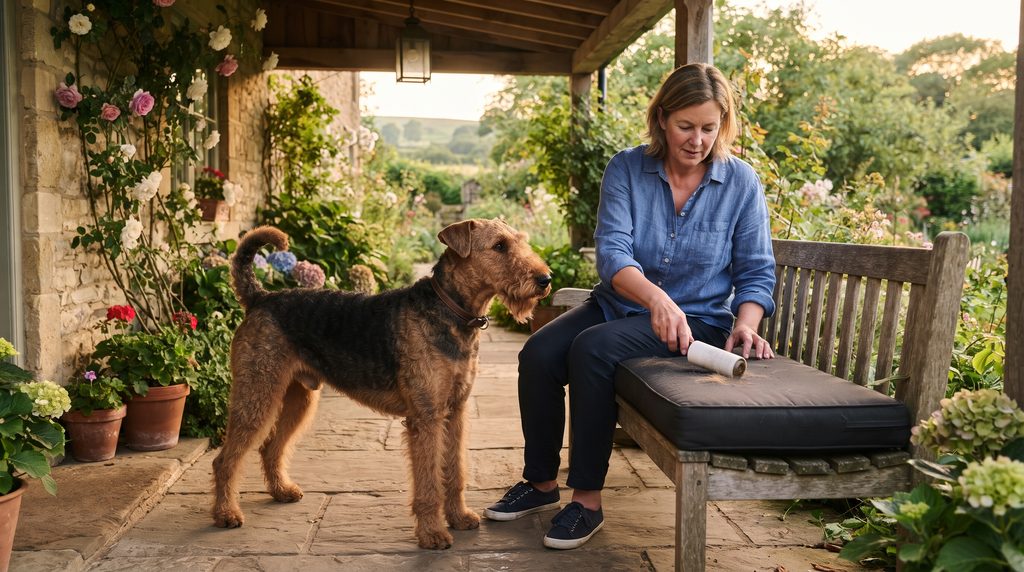
Airedale Terrier Feeding and Nutrition
Feeding an Airedale Terrier properly involves supporting the nutritional needs of an athletic, intelligent dog whose energy requirements can vary considerably throughout its life. Originally developed for demanding outdoor work, the breed possesses a strong, muscular physique that benefits from balanced nutrition, appropriate portion control, and consistent feeding habits. However, not every Airedale requires the same amount of food. A highly active adult accompanying its owner on long countryside hikes may need substantially more energy than a comparatively relaxed family companion. The goal is to provide enough nutrition to maintain healthy muscle and body condition without encouraging unnecessary weight gain.
Choosing appropriate Airedale Terrier Food begins with selecting a complete and balanced diet suited to the dog’s life stage. Commercial foods formulated to meet recognized nutritional standards can provide the protein, fats, vitamins, minerals, and other nutrients required for everyday health. Owners should look for a nutritional adequacy statement indicating that the food is suitable for growth, adult maintenance, or another relevant life stage. Ingredient lists alone do not establish nutritional quality. The manufacturer’s expertise, quality-control procedures, feeding guidance, and willingness to provide detailed nutritional information are also important considerations.
Protein is essential for maintaining the Airedale Terrier’s muscular construction, supporting normal tissue repair, and providing the building blocks needed throughout growth and adulthood. High-quality, digestible protein sources are therefore important, but unusually high protein percentages are not automatically necessary for every dog. Dietary fat supplies concentrated energy and essential fatty acids that contribute to normal skin and coat condition. Carbohydrates can also provide useful energy within a balanced diet. Rather than selecting food based on a single impressive ingredient or nutrient percentage, owners should consider the overall formulation and how well it supports their individual Airedale.
Portion control is particularly important because the breed’s substantial frame can sometimes conceal gradual weight gain. Many adult Airedales weigh approximately 50–70 pounds, but an appropriate weight depends on height, sex, muscle development, and body structure. Owners should be able to feel the ribs beneath a modest covering of tissue and see a recognizable waist when looking down from above. Regular weighing, combined with body-condition assessments, provides more useful information than relying entirely on the feeding recommendations printed on a bag. Those recommendations are starting points and should be adjusted according to the dog’s actual condition.
Most healthy adult Airedale Terriers can be fed two measured meals each day, although individual feeding schedules may vary. Dividing the daily allowance makes it easier to establish predictable routines and monitor appetite. It also avoids placing the entire daily ration into a single large meal. Owners should measure portions using a consistent scoop or, preferably, a kitchen scale, because kibble density and calorie content differ between products. Feeding freely from a constantly replenished bowl can make it difficult to recognize changes in appetite or prevent gradual overconsumption, particularly in dogs that readily eat more than they need.
Puppy nutrition requires additional attention because Airedales grow from relatively small youngsters into substantial, athletic adults. A complete diet formulated for growing dogs should supply the nutrients needed for normal skeletal and muscular development without encouraging unnecessarily rapid growth. Owners should avoid deliberately overfeeding puppies in an attempt to produce a larger or more impressive adult. Depending on expected mature size and veterinary advice, a formula appropriate for larger growing dogs may be suitable. Puppies generally benefit from several smaller meals each day, gradually transitioning toward an adult schedule as they mature.
The transition from puppy food to adult maintenance food should reflect the Airedale’s physical development rather than simply reaching a particular birthday. Many individuals approach their adult height before fully developing mature musculature and body condition. A veterinarian can help determine when the dog’s growth has progressed sufficiently to justify changing diets. Switching too early or continuing energy-dense puppy food unnecessarily may create nutritional imbalances or contribute to unwanted weight gain. When changing foods, introducing the new diet gradually over approximately a week often helps reduce digestive upset.
The Airedale Terrier’s enthusiasm for training creates another nutritional consideration: treats. Food rewards can be exceptionally useful when teaching recall, polite leash walking, grooming cooperation, and other practical skills. However, repeatedly offering generous rewards can add substantial calories to the daily diet. Treats should generally account for no more than approximately ten percent of daily calorie intake, with the remaining nutrition supplied by complete and balanced food. Small rewards are often sufficient, particularly during frequent training sessions. Owners can also reserve some of the dog’s normal food allowance for training rather than adding extra calories throughout the day.
Skin and coat condition deserve attention because Airedales can experience allergies and other dermatological problems. Adequate essential fatty acids and balanced nutrition support healthy skin, but a dull coat or persistent itching does not automatically indicate a dietary deficiency. Food allergies are possible, although environmental allergies, parasites, infections, and other conditions can cause similar symptoms. Owners should avoid repeatedly switching foods or eliminating ingredients without establishing the underlying problem. When a food allergy is suspected, a veterinarian may recommend a properly controlled elimination diet using an appropriate therapeutic formula.
Owners considering homemade or raw diets should understand the additional responsibilities involved. Preparing nutritionally complete meals requires more than combining meat, vegetables, and supplements according to an appealing online recipe. Imbalances involving calcium, phosphorus, essential fatty acids, or other nutrients can have serious consequences, especially during growth. Raw diets also introduce potential bacterial and parasite risks for dogs and household members. Anyone interested in a home-prepared diet should work with a board-certified veterinary nutritionist to develop a properly balanced formulation rather than improvising meals from individual ingredients.
Fresh drinking water should always be available, particularly because Airedale Terriers often enjoy physically demanding activities. Water requirements change with temperature, exercise intensity, diet, and individual health. Dogs eating primarily dry food may obtain less moisture from meals than those receiving wet food, making access to drinking water especially important. During longer walks or warm-weather activities, owners should carry water and offer regular drinking opportunities. Sudden changes in thirst, excessive urination, repeated vomiting, or persistent diarrhea should prompt veterinary advice, as these signs may indicate a medical problem rather than an ordinary feeding issue.
The Airedale’s relatively deep chest also makes sensible mealtime management worthwhile. Gastric dilatation-volvulus, commonly called GDV or bloat, is a life-threatening emergency more frequently associated with large, deep-chested dogs. Although the Airedale is not among the breeds most prominently associated with this condition, owners should understand the warning signs, including unproductive retching, a swollen abdomen, restlessness, and sudden weakness. Feeding measured meals, discouraging rapid gulping, and avoiding vigorous activity immediately around mealtimes are reasonable precautions, but no feeding routine can guarantee prevention.
Nutritional needs change again as an Airedale reaches its senior years. Older dogs may require fewer calories as activity decreases, yet maintaining muscle becomes particularly important. A senior diet is not automatically necessary simply because a dog reaches a certain age; the decision should depend on body condition, appetite, muscle mass, and veterinary findings. Dogs with kidney disease, digestive problems, or other medical conditions may benefit from specific therapeutic nutrition. Owners should monitor unexplained weight loss, changes in eating habits, or difficulty chewing rather than assuming these developments are normal consequences of aging.
Ultimately, successful Airedale Terrier nutrition is based on consistency, appropriate food quality, and individual assessment rather than complicated feeding trends. A complete and balanced diet, measured portions, sensible treats, and regular monitoring of body condition provide a strong foundation. Adjustments should reflect the dog’s age, activity, health, and changing needs throughout life. With thoughtful feeding habits and appropriate veterinary guidance, owners can help their Airedale maintain the muscular physique, healthy coat, and everyday vitality that characterize this capable working terrier.
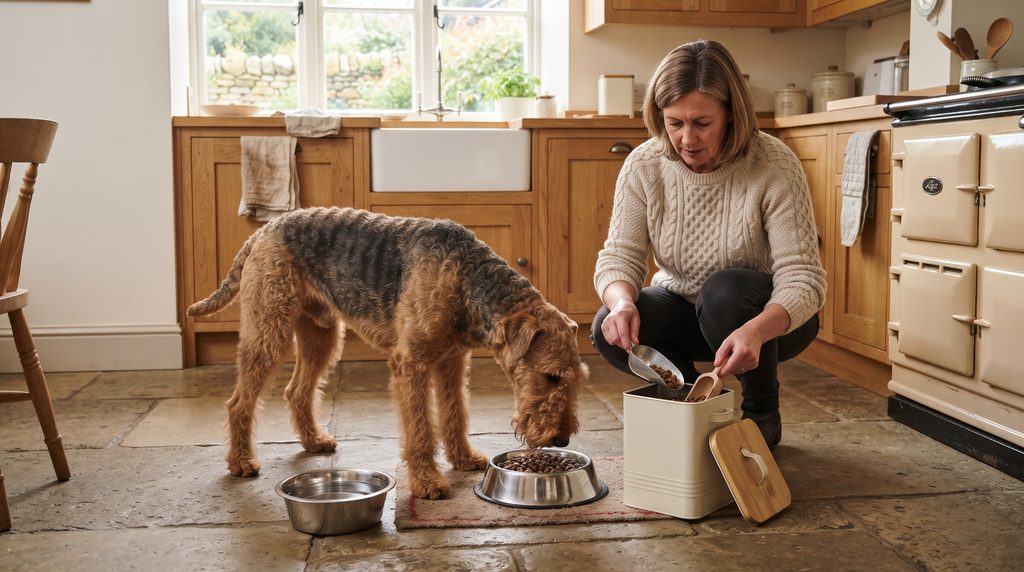
Keeping an Airedale Terrier at a Healthy Weight
The Airedale Terrier’s substantial build can make gradual weight gain difficult to recognize, particularly beneath its dense, wiry coat. Check body condition regularly by feeling for the ribs beneath a light covering of tissue and looking for a visible waist from above. Most healthy adults do well with two measured meals daily, although portions should reflect activity level and individual condition rather than package directions alone. Remember to include training rewards and other treats in the daily calorie allowance. Regular weighing helps identify small changes before they become significant. If your Airedale gains weight unexpectedly, loses muscle, or experiences persistent digestive problems, consult your veterinarian before making major dietary changes.
Airedale Terrier Health and Common Health Problems
The Airedale Terrier is generally regarded as a robust, athletic breed, reflecting its origins as a versatile working dog in the Yorkshire countryside. Many Airedales remain active and healthy well into their senior years, particularly when supported by responsible breeding, appropriate nutrition, regular exercise, and good veterinary care. Nevertheless, the breed can develop several inherited and acquired medical conditions that prospective owners should understand. Awareness of potential Airedale Terrier Health Issues is not intended to suggest that every dog will become ill. Instead, it helps owners recognize early warning signs, make informed decisions, and provide appropriate care throughout their dog’s life.
Hip dysplasia is one of the principal orthopedic concerns in the breed. This condition develops when the hip joint does not form or function normally, potentially leading to instability, inflammation, pain, and degenerative joint disease. Affected Airedales may show stiffness after resting, reluctance to jump, reduced enthusiasm for exercise, or an unusual gait. Some continue moving energetically despite considerable discomfort, making subtle changes important. Genetics contribute to the condition, but body weight, growth, and environmental influences can affect its development and severity. Maintaining healthy body condition and avoiding excessive physical strain during growth are sensible precautions.
Although less prominent than hip dysplasia, elbow dysplasia can also affect the breed. This term describes several developmental abnormalities involving the elbow joint, which may cause pain, inflammation, or progressive arthritis. An affected dog might limp intermittently, shorten its stride, or become reluctant to place weight on a foreleg. Diagnosis generally involves veterinary examination and appropriate imaging. Treatment depends on the specific abnormality and severity, sometimes involving medication, rehabilitation, weight management, or surgery. Owners should avoid dismissing persistent lameness as a minor sporting injury, especially when a young dog shows recurring discomfort.
Skin allergies and dermatitis are another consideration for Airedale Terrier owners. Despite the protective appearance of the breed’s dense, wiry coat, some individuals experience irritation associated with environmental allergens, parasites, infections, or adverse food reactions. Signs may include persistent scratching, paw licking, red skin, recurrent ear problems, or thinning hair. Localized moist skin infections, commonly called hot spots, can develop when irritation leads to repeated scratching or licking. Because the coat can conceal affected areas, regular skin inspection during grooming is especially useful. Effective treatment depends on identifying the underlying cause rather than repeatedly bathing the dog or changing its food without veterinary guidance.
Hypothyroidism occurs when the thyroid gland produces insufficient hormone, affecting metabolism and several important body functions. Affected Airedales may gradually become less energetic, gain weight without a corresponding increase in food intake, or develop changes in coat quality and skin condition. Some experience recurrent skin or ear infections. These signs can resemble ordinary aging or unrelated health problems, so diagnosis requires appropriate veterinary assessment and blood testing. Hypothyroidism is generally manageable with prescribed thyroid hormone replacement and ongoing monitoring. Owners should not assume that unexplained weight gain or a sudden decline in stamina is simply part of the breed’s normal maturation.
Heart conditions also deserve consideration because congenital cardiac abnormalities are among the concerns addressed through the breed’s recommended health evaluations. Some heart problems produce few outward symptoms during their early stages, while others may cause reduced exercise tolerance, weakness, coughing, or fainting. An abnormal heart sound detected during a routine examination may lead to further investigation by a veterinary cardiologist. Not every heart murmur indicates serious disease, and the significance depends on the underlying cause. Regular veterinary examinations provide opportunities to identify changes that might otherwise go unnoticed in an energetic dog.
Kidney disease is an additional concern reflected in the health-screening recommendations for breeding Airedale Terriers. Kidney disorders can have different causes and may develop gradually, sometimes producing few obvious signs until kidney function has declined. Increased thirst, frequent urination, reduced appetite, weight loss, or unusual tiredness may indicate a problem requiring investigation. Blood tests and urine analysis can help assess kidney function and identify abnormalities. Owners should report persistent changes in drinking or urination rather than assuming they are caused by warm weather or increased activity. Early recognition can make an important difference in managing certain kidney conditions.
Eye conditions reported in Airedale Terriers include progressive retinal atrophy, retinal dysplasia, and corneal disorders, although these do not affect every family line or occur with equal frequency. Some conditions may interfere with vision, while others produce visible cloudiness, irritation, or changes in the eye’s appearance. Owners might notice hesitation in dim lighting, difficulty navigating unfamiliar surroundings, or increased sensitivity around the face. Eye problems cannot be reliably identified through appearance alone, and seemingly minor changes can occasionally require urgent treatment. Routine veterinary care and appropriate specialist examinations help identify abnormalities before they significantly affect comfort or vision.
Among the potentially life-threatening Airedale Terrier Health Problems owners should recognize is gastric dilatation-volvulus (GDV), often called bloat. This emergency occurs when the stomach becomes distended and twists, compromising circulation and potentially causing rapid deterioration. Large, deep-chested dogs are generally at greater risk, although the condition can occur in other breeds. Warning signs include repeated attempts to vomit without producing anything, a distended abdomen, restlessness, excessive salivation, weakness, or collapse. Suspected GDV requires immediate emergency veterinary treatment. Owners should never wait to see whether symptoms resolve, as delays can be fatal.
Bleeding disorders, including von Willebrand disease, have also been reported in Airedales, although they should not be assumed to be widespread throughout the breed. Such disorders affect normal blood clotting and may become apparent through unusually prolonged bleeding after an injury, surgery, or dental procedure. Some affected dogs show nosebleeds, gum bleeding, or excessive bruising. Appropriate veterinary testing may be recommended when symptoms or family history raise concerns. Owners should inform their veterinarian about any unusual bleeding episodes before elective procedures. Understanding a dog’s medical history can help veterinary teams identify potential risks and plan treatment appropriately.
Like many breeds, Airedale Terriers may also develop cancer, particularly as they age. Lymphoma is among the conditions reported in the breed, but the presence of a diagnosis in breed-health literature does not mean every Airedale faces a high individual risk. Warning signs can include persistent enlarged lymph nodes, unexplained weight loss, abnormal lumps, reduced appetite, or changes in energy. Some growths are benign, while others require prompt investigation. Owners should regularly check their dog’s body during grooming and arrange veterinary examinations when new lumps appear or existing ones change in size, texture, or appearance.
Maintaining an appropriate body weight is one of the most practical steps owners can take to support long-term health. Excess weight increases demands on joints and can complicate management of orthopedic or metabolic conditions. Airedales benefit from regular activity that maintains muscle strength without repeatedly overloading developing or painful joints. Dental care, parasite prevention, vaccination, and routine veterinary examinations are equally important. Because the breed can remain enthusiastic despite discomfort, owners should pay attention to subtle changes in movement, appetite, behavior, and willingness to participate in familiar activities.
Ultimately, the Airedale Terrier’s reputation for strength and resilience is well deserved, but responsible ownership includes understanding its possible medical vulnerabilities. Most of these conditions are neither inevitable nor unique to the breed. Good breeding decisions, appropriate health screening, early veterinary intervention, and sensible everyday care can help reduce preventable risks. Prospective owners should seek reliable information about the health of a puppy’s parents, while existing owners should monitor their dog’s condition throughout adulthood and aging. With attentive care, many Airedales enjoy active, comfortable lives as valued family companions.
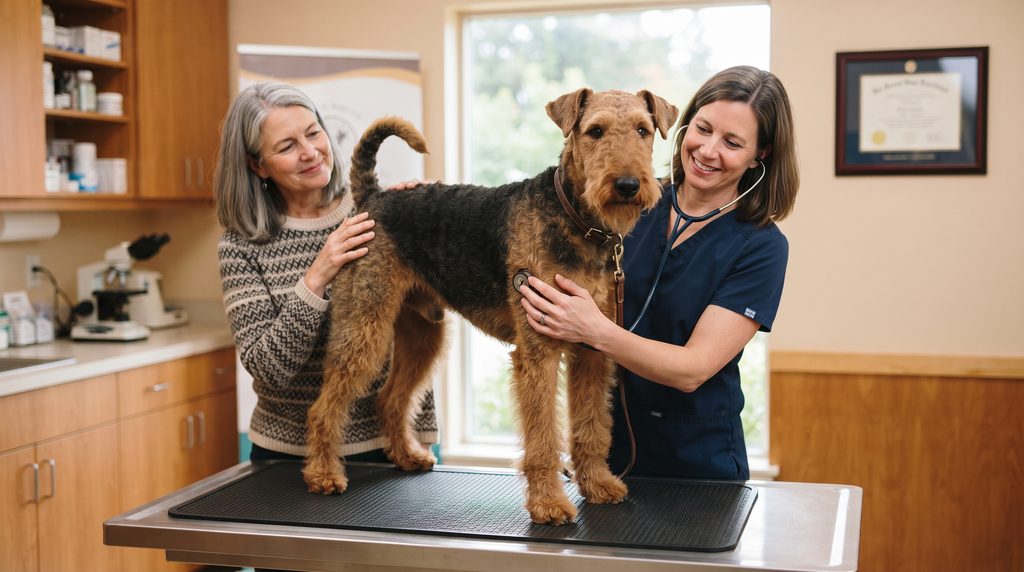
Airedale Terrier Health Screening and Genetics
Health screening and genetics are especially important in the Airedale Terrier because this is a distinctive purebred dog with well-documented inherited health concerns. Many Airedales live active, healthy lives, but responsible breeding depends on more than choosing physically attractive dogs with appealing temperaments. Good breeders try to reduce inherited risk by screening breeding stock, reviewing family health history, and making thoughtful decisions about which dogs should be paired. For puppy buyers, understanding what proper health screening actually involves is one of the best ways to distinguish a carefully planned litter from one produced with little attention to long-term breed health.
A useful starting point is recognizing that health screening is not the same as an ordinary veterinary checkup. A routine wellness exam is important, but it does not replace formal testing for inherited conditions. Screening refers to specific evaluations designed to identify structural, ocular, cardiac, renal, or other concerns that may affect breeding decisions. A dog can appear lively and healthy in everyday life while still carrying a significant inherited problem or showing abnormalities detectable only through specialist assessment. That is why responsible breeders provide documentation rather than simply saying that the parents are “healthy” or “vet checked.”
Hip evaluation is one of the most important recommendations in the breed. Because hip dysplasia is a recognized concern in Airedales, breeding dogs should have their hips formally assessed through a recognized program such as the Orthopedic Foundation for Animals or PennHIP. These systems do not guarantee that every puppy will have perfect joints, but they provide a more objective way to evaluate breeding stock than visual impressions alone. A powerful, athletic Airedale can move enthusiastically despite underlying joint changes, which makes formal screening especially valuable. Buyers should ask not only whether hips were checked, but also whether the results were documented and available for review.
Cardiac screening also matters. Heart disease is one of the areas highlighted in Airedale health recommendations, and some problems are not obvious without a more focused assessment. In some cases a primary veterinarian may detect a murmur during a routine exam, but breeding decisions ideally rely on more deliberate evaluation. Depending on the dog and the breeder’s program, that may mean auscultation by an experienced veterinarian or, when indicated, additional testing through a veterinary cardiologist. A responsible breeder should be willing to discuss what type of cardiac assessment was performed and whether there is any known history of heart disease in the pedigree.
Eye screening is another important part of responsible Airedale breeding. Hereditary eye conditions can develop even in dogs that appear to see normally in everyday life, and some are not apparent without a specialist examination. A formal eye exam performed by a board-certified veterinary ophthalmologist can help identify concerns that might affect comfort, vision, or breeding suitability. Because eye status can change over time, repeat examinations are often more meaningful than a single normal result obtained years earlier. Buyers should not hesitate to ask whether current eye-clearance documentation is available for both parents.
Kidney screening deserves special attention because renal concerns are also among the health issues noted in the breed. Kidney disease is not always something an owner would recognize early without testing, and some forms can have a hereditary component. For that reason, responsible breeders may include renal evaluation as part of their breeding program, sometimes through laboratory assessment such as urine testing or other veterinary recommendations current at the time. What matters most for the puppy buyer is that the breeder understands kidney health as a breed consideration and can explain what was done to assess breeding dogs rather than responding vaguely or dismissively.
Genetics involves more than individual test results. A single dog can have acceptable screening results and still come from a line where certain problems appear repeatedly. That is why knowledgeable breeders pay attention to the health of siblings, parents, grandparents, and previous offspring, not just the sire and dam standing in front of them. This broader view helps identify patterns involving orthopedic disease, allergies, thyroid problems, kidney disease, autoimmune issues, or early cancer. A breeder who openly discusses both strengths and weaknesses in a pedigree is usually more trustworthy than one who claims their line has never had any health concerns at all.
Prospective owners should also understand that no health-screening program can guarantee a disease-free puppy. Some conditions are influenced by multiple genes, and others may be affected by environmental factors, growth rate, body condition, or simple bad luck. Responsible breeders know this and do not make unrealistic promises. What screening can do is reduce risk and improve the odds of producing healthier dogs. It also demonstrates that the breeder takes long-term responsibility seriously. Buying from screened parents does not eliminate every possibility of future illness, but it usually gives a puppy a much better starting point than buying from unscreened stock.
When evaluating a breeder, documentation is important. Ask to see actual records rather than relying on verbal assurances. If the breeder participates in OFA or a similar registry, request the registered names of the sire and dam so results can be verified. Ask whether hips, heart, eyes, and kidney-related evaluations were completed and whether the breeder follows the recommendations associated with the breed. Also ask how the breeder uses those results in decision-making. A test performed simply to satisfy a checklist is less meaningful than one used thoughtfully within a broader breeding strategy.
It is also worth asking about temperament, longevity, and cancer history within the line. Formal screening panels do not capture everything that matters in a breed. An Airedale with strong structure but unstable temperament should not be considered ideal breeding stock, just as a physically attractive dog from a line of repeated early health losses deserves careful scrutiny. Breeding well requires balancing physical soundness, working ability, stable character, and genetic diversity. In a breed with a strong personality and a substantial body, those factors all matter to the future owner.
For current Airedale owners, health screening is not only a breeding topic. If your dog develops unexplained lameness, vision changes, urinary abnormalities, unusual bleeding, or signs of thyroid or skin disease, prior screening results and family health history may help your veterinarian interpret what is happening. Keeping copies of test results, specialist reports, and breeder information can be genuinely useful throughout the dog’s life. Even owners with no breeding plans benefit from understanding what conditions were screened in the parents and what issues may be worth monitoring as the dog matures.
Ultimately, health screening and genetics are about preserving what makes the Airedale Terrier such a rewarding breed while reducing avoidable inherited problems wherever possible. Airedales are athletic, intelligent, and full of character, but those strengths should be supported by thoughtful breeding and informed ownership. Responsible screening for hips, heart, eyes, and kidneys, combined with honest pedigree knowledge and long-term breeder accountability, gives puppy buyers the strongest foundation. It is one of the clearest signs that a breeder is working for the future of the breed rather than simply producing puppies.
What Health Records Should an Airedale Breeder Show You?
A responsible Airedale Terrier breeder should be prepared to show documented health information for the sire and dam rather than relying on general reassurances. Ask about formal hip evaluation, cardiac screening, current eye examinations, and kidney-related testing appropriate to the breed. Good breeders should also discuss family health history, longevity, and any known problems in related dogs. Clear records, honest explanations, and a willingness to answer detailed questions are far more meaningful than vague claims that the parents are simply healthy or come from excellent lines.
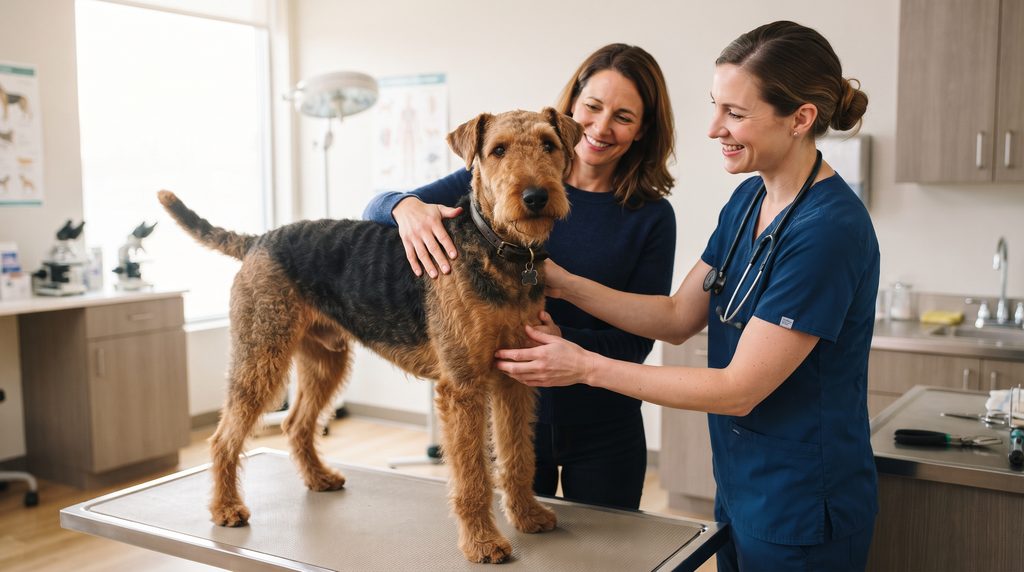
Airedale Terrier Lifespan and Aging
The Airedale Terrier Lifespan is generally estimated at 11–14 years, although individual dogs may live shorter or longer lives depending on genetics, health, environment, and veterinary care. As the largest recognized terrier, the Airedale combines a substantial physical build with impressive stamina and a naturally active temperament. Many remain enthusiastic companions well into their senior years, continuing to enjoy walks, family activities, and opportunities to explore. However, aging gradually changes their physical abilities and nutritional requirements. Understanding these changes allows owners to support comfort, independence, and quality of life throughout the dog’s later years.
When discussing Airedale Terrier Life Expectancy, it is important to distinguish a general breed estimate from a prediction for an individual dog. The commonly cited 11–14-year range provides useful guidance, but it cannot account for every inherited condition, illness, accident, or difference in lifestyle. Responsible breeding and preventative healthcare can improve the prospects for long-term well-being, although neither guarantees longevity. Owners should focus on factors they can influence, including maintaining appropriate body weight, providing regular veterinary care, supporting dental health, and responding promptly when familiar behavior or physical condition changes.
The Life Expectancy of an Airedale Terrier is influenced partly by the health and longevity of its family line. Prospective puppy owners can ask breeders about the ages reached by parents, grandparents, and other related dogs, along with any recurring medical problems. Although a long-lived pedigree is encouraging, it cannot guarantee that every puppy will enjoy the same outcome. Genetic diversity, responsible health screening, and honest disclosure of family medical history are all relevant. Once an Airedale joins its new home, everyday care becomes an equally important part of supporting long-term health.
There is no exact birthday when every Airedale Terrier suddenly becomes a senior. Aging is a gradual process influenced by physical condition, genetics, and individual health. Some dogs begin showing noticeable changes around seven or eight years of age, while others remain remarkably energetic much later. Owners should look beyond the calendar and consider how their dog is functioning. Changes in recovery after exercise, sleeping habits, movement, appetite, and responsiveness may indicate that its needs are evolving. A healthy older Airedale may still be playful and active, even when its stamina is no longer what it once was.
Mobility often becomes an important consideration during the senior years. Years of activity, combined with possible inherited orthopedic problems, can contribute to arthritis or other painful joint conditions. An older Airedale may become slower when rising, hesitate before climbing stairs, or take longer to settle comfortably after exercise. These changes should not simply be dismissed as unavoidable consequences of age. Veterinary assessment can identify treatable causes of discomfort, while appropriate weight management, rehabilitation, medication, and changes to the home environment may improve mobility and everyday comfort.
Exercise should continue throughout aging, but intensity and duration may need adjustment. Many senior Airedale Terriers still enjoy countryside walks, familiar parks, and opportunities to investigate interesting scents. Shorter, more frequent outings can be preferable to occasional strenuous adventures that leave the dog stiff or exhausted afterward. Gentle walking helps maintain muscle condition and supports joint mobility, while scent-based activities offer mental engagement without excessive physical demands. Owners should allow the dog to set a comfortable pace and pay attention to signs of fatigue rather than expecting it to maintain the performance of its younger years.
Mental stimulation remains especially valuable because the Airedale Terrier’s intelligence and curiosity rarely disappear with age. Older dogs may enjoy searching for hidden treats, practicing familiar cues, exploring safe new environments, or participating in gentle problem-solving activities. These experiences help maintain engagement and provide enjoyment even when vigorous exercise becomes less appropriate. Training sessions should remain positive, with allowances for slower movement or sensory changes. Sudden confusion, altered sleep patterns, unusual anxiety, or apparent disorientation deserve veterinary investigation, as these may indicate medical problems or canine cognitive dysfunction rather than ordinary aging alone.
Nutrition often requires adjustment as an Airedale becomes less active. Older dogs may burn fewer calories, making gradual weight gain possible if their food portions remain unchanged. Excess weight can worsen joint discomfort and reduce mobility, particularly in a substantial breed. At the same time, preserving muscle is important, so simply reducing food without considering nutritional quality may be inappropriate. Regular body-condition assessments and veterinary advice help determine whether adjustments are needed. A diet marketed for senior dogs is not automatically necessary; suitability depends on the individual dog’s health, appetite, weight, and nutritional requirements.
Preventative veterinary care becomes increasingly important in later life. Senior Airedales generally benefit from wellness examinations at least every six months, allowing veterinarians to monitor changes that may develop between annual visits. Blood tests, urine analysis, dental assessment, and other investigations may be recommended according to individual needs. Particular attention should be given to mobility, heart health, kidney function, unexplained weight changes, and new lumps or skin abnormalities. Early investigation can sometimes reveal manageable conditions before they seriously affect the dog’s comfort or quality of life.
Grooming routines may also need modification. An older Airedale might find prolonged standing, repeated repositioning, or lengthy professional grooming appointments more tiring than before. Shorter sessions, nonslip surfaces, and gentle handling can make coat maintenance more comfortable. Beard cleaning, brushing, nail care, and inspection of the skin remain important, particularly if reduced mobility makes self-cleaning more difficult. Owners should discuss any discomfort with their groomer and veterinarian. A tidy coat is desirable, but the dog’s comfort should always take priority over achieving a particular traditional appearance.
Small household adjustments can make a substantial difference to an aging Airedale Terrier. Supportive bedding, nonslip rugs, easier access to favorite resting areas, and ramps where appropriate may reduce physical strain. Food and water should remain readily accessible, particularly if the dog has become less comfortable using stairs. Older Airedales with declining vision or hearing often benefit from predictable furniture arrangements and consistent routines. These changes help preserve confidence and independence without requiring the dog to give up familiar parts of family life.
Quality of life should remain the central consideration throughout the senior years. Owners can observe whether their Airedale continues enjoying meals, familiar people, comfortable rest, gentle activities, and other experiences that have always mattered to it. Persistent pain, declining mobility, repeated illness, or increasing distress may require a more detailed discussion with a veterinarian. Treatment options, supportive care, and individual preferences should guide decisions rather than age alone. Even when serious medical conditions arise, carefully planned care may help maintain meaningful comfort and enjoyment.
Ultimately, the Airedale Terrier Life Span is best understood as an opportunity to provide many years of active companionship while preparing thoughtfully for the changes that come with age. A senior Airedale may no longer charge enthusiastically through the countryside, but it can still enjoy a familiar garden, an interesting scent, a gentle walk, or a quiet afternoon beside its family. With attentive veterinary care, sensible adjustments, and an appreciation of the dog’s changing abilities, owners can help make these later years comfortable, dignified, and deeply rewarding.
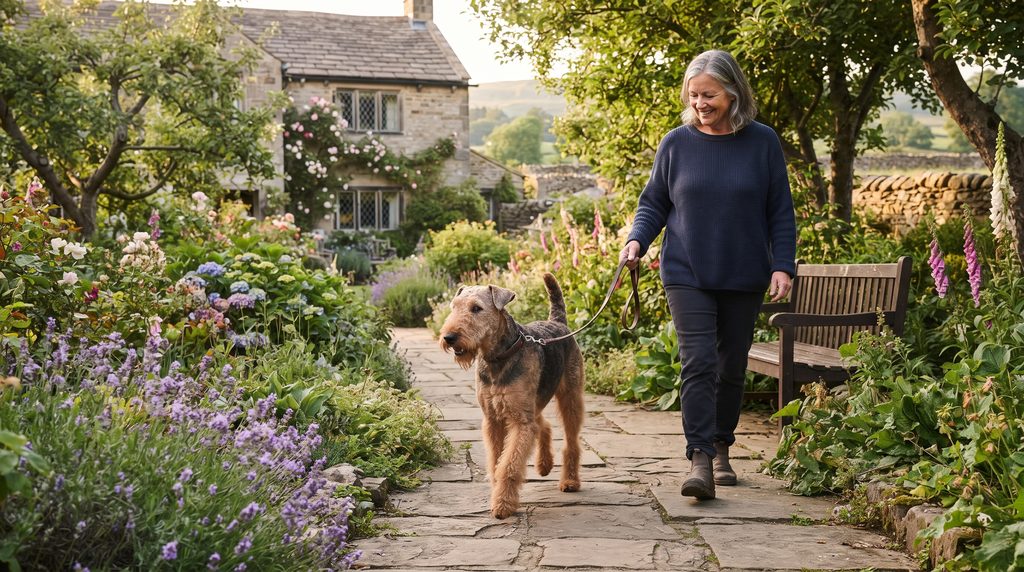
Helping a Senior Airedale Stay Comfortable and Active
Older Airedale Terriers often remain enthusiastic about family activities, even when their physical stamina begins to decline. Support their changing needs with shorter, comfortable walks, gentle scent games, supportive bedding, and nonslip surfaces around the home. Monitor body weight, muscle condition, appetite, and the ease with which your dog rises or climbs stairs. Senior wellness examinations approximately every six months provide opportunities to identify developing problems before they significantly affect quality of life. Do not assume that stiffness, confusion, or withdrawal is simply normal aging, as treatable conditions may be responsible. Above all, preserve the familiar routines and enjoyable activities that help your Airedale feel secure, engaged, and included in everyday family life.
Choosing an Airedale Terrier Puppy or Rescue
Choosing an Airedale Terrier deserves patience and realism. This is an intelligent, energetic, strong-willed breed with a substantial adult size and a very distinctive personality. The decision should never be based only on appearance, nostalgia, or a general liking for terriers. Airedales can be exceptionally rewarding companions, but they are not the easiest fit for every household. Whether you are planning to buy a puppy or adopt an adult dog, the most important goal is finding an individual whose health, temperament, and needs genuinely suit your lifestyle. Rushing into the first available dog is one of the easiest ways to end up with a poor match.
Finding responsible Airedale Terrier Breeders is the best starting point for prospective puppy owners. The Airedale Terrier Club of America and regional breed clubs can often help direct people toward breeders who are active in the breed and committed to health, temperament, and responsible placement. That said, being listed in a directory should not automatically end your research. A reputable breeder should welcome questions, explain their breeding goals clearly, and be genuinely interested in learning about the home they are considering for one of their puppies. Good breeders are trying to place puppies well, not simply move them on quickly.
A responsible Airedale Terrier Breeder should be able to discuss health screening, family history, temperament, and the practical realities of living with the breed. Ask about the sire and dam, including their personalities, activity levels, and any known health concerns in related dogs. A breeder should also be able to explain what kind of home each puppy is likely to suit, since not every youngster in a litter will have exactly the same confidence level or intensity. It is a positive sign when a breeder talks honestly about challenges as well as strengths. Someone who claims every puppy is perfect for every home is usually not helping you make a careful decision.
Meeting the mother is particularly valuable, and meeting the father can also be helpful if possible. The mother’s behavior gives important clues about everyday temperament, confidence, and how the puppies are being raised. She should not appear panicked, unstable, or in poor condition. The environment itself also matters. Puppies should be raised in clean, secure surroundings with regular human contact, normal household experiences, and opportunities for age-appropriate exploration. Early handling and socialization do not replace later training, but they can make a meaningful difference to confidence and adaptability.
When evaluating puppies, look beyond the one that runs up first or the one that seems especially quiet. A healthy puppy should appear bright, curious, and physically well. Eyes should be clear, the body should be in good condition, and movement should look comfortable. Some puppies are naturally bolder, while others are more thoughtful. Neither is automatically better. What matters is whether the puppy’s temperament suits your household. A very busy, assertive puppy may not be ideal for a novice owner, while a gentler puppy may be a better fit in a calm family home. A good breeder should help you think through that match rather than leaving the choice entirely to chance.
Prospective owners should also be realistic about coat care, training, and long-term responsibility before taking home a puppy. A young Airedale Terrier will need supervision, socialization, house training, chewing management, and consistent boundaries. Its adult size and independence do not appear overnight, but they are coming. It is much easier to prepare honestly for those demands than to be surprised by them later. A breeder who sends a puppy home with thoughtful guidance, feeding information, grooming advice, and a clear willingness to remain in touch is usually offering much more than a puppy alone.
For some households, Airedale Terrier Rescue may be a better path. Adult dogs sometimes become available through breed rescue because of changes in family circumstances, health issues affecting the owner, or a home that simply was not well matched to the breed. Rescue Airedales are not automatically problem dogs. Some are well-loved companions who need a second chance through no fault of their own. Others may need more patient behavioral or medical support. Breed rescue organizations can often provide valuable information about personality, daily habits, and compatibility with children or other animals, which makes matching easier.
If you are considering an Airedale Terrier For Adoption, ask detailed questions about the dog’s background, training, medical history, and behavior in ordinary situations. How does the dog respond to strangers, grooming, car travel, or time alone? Has it lived with other dogs, cats, or children? Is it reliable in the house? These details matter far more than a dramatic rescue story or a flattering photograph. Adult dogs often settle more quickly than puppies, but they still need time, structure, and realistic expectations while adjusting to a new home. A thoughtful transition is essential, especially if the dog has experienced upheaval.
Some prospective owners are also drawn to an Airedale Terrier Mix. Mixed-breed dogs can be wonderful companions, and some inherit attractive traits from both sides of their ancestry. However, predicting the final temperament, coat care needs, prey drive, and adult size of an Airedale cross is not always easy. Different Airedale Terrier Mix Breeds can vary enormously. One may inherit the Airedale’s wiry coat and terrier independence, while another may be softer-coated, more biddable, or more intense than expected. When considering a mix, focus on the individual dog rather than assuming it will offer a simplified or easier version of the purebred breed.
Whether choosing a puppy, an adult rescue, or a mixed-breed dog with Airedale ancestry, it is wise to think carefully about your actual daily life. Who will exercise the dog? How much time can you devote to training? Are you prepared for grooming and terrier-style independence? What will happen during workdays, travel, or family changes? These questions may feel less exciting than meeting puppies, but they often determine whether the match succeeds. The best choice is rarely the first available dog. It is the one whose needs, temperament, and background make sense for your household.
Ultimately, choosing an Airedale Terrier well is about patience, honesty, and willingness to look beyond surface appeal. A reputable breeder or rescue organization should help you make a thoughtful match, not pressure you into a quick decision. When the right dog finds the right home, the result can be tremendously rewarding. An Airedale brought into suitable circumstances has every chance of becoming the lively, loyal, intelligent companion that makes the breed so memorable.
Questions to Ask Before Bringing an Airedale Home
Ask whether the dog’s temperament suits your lifestyle, how much grooming and training it will need, and what health information is available. If you are buying a puppy, request documentation for parental health screening and ask how the litter was raised and socialized. If you are adopting, ask about behavior around children, other dogs, and time alone. A responsible breeder or rescue should answer honestly and want the placement to succeed. Find out what ongoing guidance or support is available after bringing your new companion home. The best choice is not always the quickest one, but the dog whose needs and personality truly fit your home.

Is an Airedale Terrier Right for You?
The Airedale Terrier is a remarkable companion for people who appreciate intelligence, confidence, humor, and a dog with a strong sense of individuality. However, the qualities that make this breed memorable also mean it is not suitable for every household. An Airedale is substantial, energetic, curious, and capable of independent decisions. It needs more than affection and occasional exercise to thrive. Choosing this breed successfully means considering how its personality will fit your daily routine, living arrangements, experience, and long-term expectations. For the right owner, the relationship can be exceptionally rewarding, but a realistic assessment before committing is essential.
Active individuals and families are often particularly well suited to the Airedale Terrier. People who enjoy regular walks, outdoor exploration, hiking, and involving their dogs in everyday activities can provide the varied experiences this breed appreciates. An Airedale usually enjoys having something meaningful to do, whether that involves investigating a woodland trail, participating in training, or accompanying its owner on a weekend adventure. However, enthusiasm for outdoor activity must translate into a dependable routine. Occasional energetic outings cannot fully compensate for long stretches of inactivity or isolation during the working week.
The amount of time available for companionship is another important consideration. Airedales are intelligent dogs that frequently take an active interest in household life. They often enjoy being near their families, observing routines, and participating in ordinary activities. A home where the dog receives consistent attention, suitable exercise, and opportunities for mental engagement is generally preferable to one where it spends most of its time alone. Owners working long hours away from home need realistic arrangements for companionship and care. Without sufficient interaction, an Airedale may develop frustrating habits that are difficult to change once established.
Prospective owners should also consider whether they genuinely enjoy an independent personality. The Airedale Terrier is capable of learning quickly, but it is not always inclined to obey mechanically. This breed often responds best to patient, imaginative training that gives it a reason to cooperate. People who appreciate problem-solving and are prepared to remain consistent usually find this character entertaining. However, someone seeking effortless obedience may become frustrated. The Airedale is best suited to an owner who can maintain clear expectations without becoming confrontational and who recognizes that intelligence and automatic compliance are not necessarily the same thing.
First-time dog owners should approach the breed thoughtfully rather than assuming it is unsuitable. An inexperienced owner who researches the Airedale carefully, attends appropriate training classes, and commits to consistent handling may succeed very well. Nevertheless, this is rarely the easiest introduction to dog ownership. Its size, hunting instincts, enthusiasm, and independent nature create challenges that more accommodating breeds may not present as strongly. Owners with previous experience handling terriers or other confident working dogs may find the adjustment easier, but patience and willingness to learn matter more than experience alone.
Living arrangements deserve equally careful consideration. A securely fenced garden is a genuine advantage for an Airedale Terrier, providing opportunities for supervised outdoor activity and relaxed exploration. However, a large property is not essential, and access to a yard does not replace purposeful exercise. A well-managed suburban home with nearby parks and dependable walking routines may suit the breed better than an isolated property where the dog receives little attention. Apartment living is considerably more demanding, particularly when access to suitable outdoor spaces is limited. Owners should judge the practicality of their environment rather than its size alone.
Families with children may find the Airedale Terrier affectionate, playful, and entertaining, especially when children are old enough to participate responsibly in shared activities. However, the breed’s substantial strength and youthful exuberance mean supervision and clear boundaries are essential. Homes with toddlers or very young children may require additional management during the dog’s energetic developmental stages. Airedales can also live successfully with other dogs, but compatibility should never be assumed. Their terrier instincts can make households with rabbits, guinea pigs, or other small vulnerable pets more challenging, even when the dog is otherwise friendly.
Grooming commitment is another factor that deserves an honest assessment. The Airedale Terrier’s coat may leave relatively little loose hair around the house, but maintaining its characteristic appearance involves regular brushing and periodic professional grooming or hand stripping. Owners need to be comfortable checking the beard, legs, paws, and skin, particularly after outdoor activities. Professional grooming also adds to the ongoing responsibilities of ownership. Those seeking a dog that requires almost no coat maintenance may find the Airedale more demanding than expected, even though its shedding is comparatively manageable.
Financial preparation should extend beyond food and routine veterinary appointments. An Airedale Terrier needs appropriate preventive healthcare, grooming, training equipment, secure containment, and potentially professional assistance during periods when its owner cannot provide care. Unexpected veterinary expenses can arise with any breed, and orthopedic problems or other medical conditions may require specialist assessment or treatment. Pet insurance or a dedicated emergency fund can help owners prepare for these possibilities. The ability to provide consistent care throughout the dog’s life matters far more than simply being ready for its arrival.
Owners should also think about how their circumstances might change during the next decade or longer. Employment, moving home, family responsibilities, travel, and personal health can all affect the ability to care for an active dog. Airedales generally remain engaged and physically capable for many years, even as their needs change with age. A suitable owner should be prepared to adjust activities as the dog matures while maintaining companionship and veterinary care. This long-term perspective is particularly important for anyone whose current lifestyle is unusually flexible but may become substantially busier in the future.
There are also households where another breed may be a more comfortable choice. People wanting a very small companion, minimal grooming, consistently easy off-leash reliability, or a dog content with limited daily interaction are unlikely to find the Airedale ideal. Similarly, homes where small pets must share unrestricted space with the dog may present unnecessary difficulties. Recognizing these limitations does not diminish the breed’s appeal. It simply acknowledges that the characteristics developed for independent working responsibilities do not align equally well with every modern lifestyle.
For suitable owners, however, the advantages are considerable. An Airedale Terrier can offer remarkable companionship, an entertaining personality, enthusiasm for shared adventures, and a strong connection with familiar people. Its confidence and curiosity make everyday experiences engaging, while its intelligence creates opportunities for rewarding training and activities. Many owners particularly appreciate the breed’s combination of rugged working-dog capability and affectionate family involvement. The relationship often becomes more satisfying as the dog matures and communication develops through years of consistent, respectful interaction.
Ultimately, an Airedale Terrier is right for someone who welcomes its independence rather than merely tolerating it. The ideal household offers meaningful companionship, regular activity, patient training, sensible boundaries, and a genuine appreciation of the breed’s lively character. It is not necessary to live in the Yorkshire countryside or participate in competitive dog sports, but it is important to provide a lifestyle that respects the Airedale’s working heritage. For people willing to make that commitment, this distinctive terrier can become an exceptionally loyal, capable, and deeply enjoyable companion.
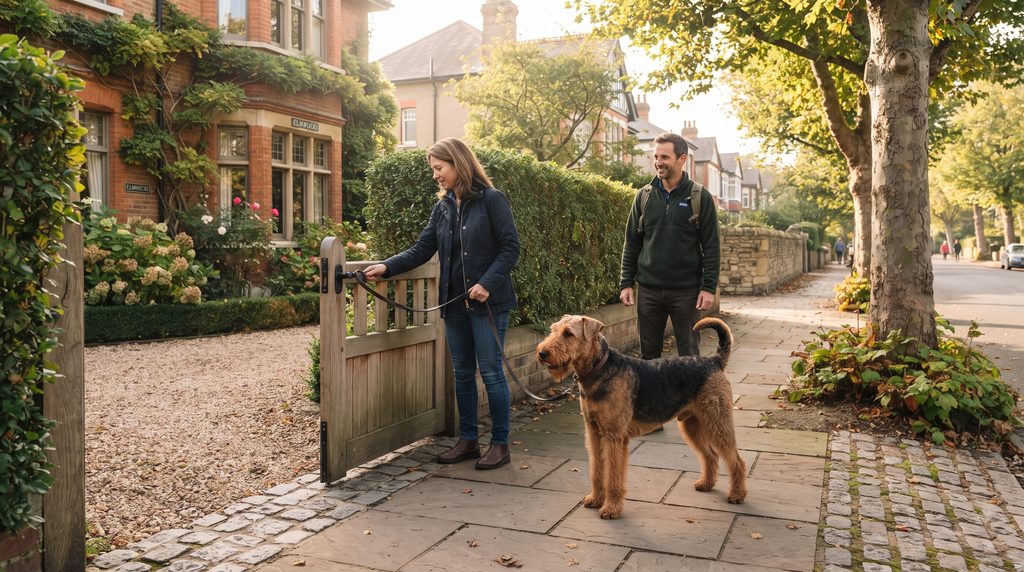
Airedale Terrier Final Thoughts
The Airedale Terrier is a breed with an extraordinary combination of history, intelligence, courage, and personality. From its beginnings among the working communities of Yorkshire’s Aire Valley to its development as a hunting companion, police dog, military messenger, and much-loved family pet, the Airedale has demonstrated remarkable versatility. Its imposing size, distinctive black-and-tan coat, and confident expression have earned it the title King of Terriers, but its enduring appeal extends well beyond appearance.
What truly distinguishes the Airedale Terrier is its character. Intelligent, curious, affectionate, and frequently mischievous, this is a dog that approaches life with enthusiasm and initiative. Its independent thinking can make training challenging, particularly during adolescence, but that same intelligence creates opportunities for meaningful communication and rewarding shared activities. Owners who understand the breed’s working instincts and appreciate its individuality often develop exceptionally strong relationships with their dogs.
The Airedale is also a breed that benefits from thoughtful, committed ownership. Regular exercise, mental stimulation, consistent training, appropriate socialization, and ongoing coat care are important parts of everyday life. Its physical strength and natural hunting instincts deserve respect, particularly around smaller animals or in unfamiliar environments. Responsible breeding, suitable health screening, and attentive veterinary care further support the breed’s long-term well-being.
For active families and individuals who enjoy outdoor adventures, engaging training, and sharing daily life with an intelligent companion, the Airedale Terrier offers considerable rewards. It can be playful with children, affectionate with familiar people, and wonderfully entertaining around the home. However, its independence and substantial energy make it less suitable for households seeking a particularly undemanding or consistently obedient dog.
Perhaps the most appealing quality of the Airedale Terrier is the balance between its rugged working heritage and its capacity for genuine companionship. It remains unmistakably a terrier, with the determination, confidence, and curiosity that implies, yet it can also become an affectionate and deeply valued member of the family.
For those prepared to embrace its character and provide the care it deserves, the Airedale Terrier is far more than the largest member of the Terrier Group. It is a capable, engaging, and wonderfully distinctive companion whose loyalty, intelligence, and enthusiasm can make sharing life together exceptionally rewarding.

Explore More Terrier Breeds
The Airedale Terrier is the largest member of a remarkably diverse group of dogs celebrated for confidence, intelligence, and determination. From compact vermin hunters to substantial working companions, Terriers vary considerably in size, temperament, grooming needs, and activity levels. Explore our complete Terrier Breeds guide to discover other fascinating breeds, compare their individual characteristics, and find a Terrier that suits your home and lifestyle.
Official Airedale Terrier Breed Information
For additional information, visit the American Kennel Club’s Airedale Terrier profile. This authoritative resource covers the breed’s history, recognized physical characteristics, temperament, exercise requirements, and grooming needs. It also provides guidance on responsible ownership and recommended health evaluations, making it a valuable reference alongside our detailed CanineBase guide when researching the breed and considering the long-term responsibilities of Airedale Terrier ownership.