

Lakeland Terrier
The Lakeland Terrier is a spirited, intelligent, and remarkably courageous small dog whose lively personality reflects centuries of working heritage in England’s rugged Lake District. Originally developed to pursue foxes across steep hillsides, rocky outcrops, and difficult mountain terrain, this determined little terrier possesses far more strength, stamina, and confidence than its compact appearance might suggest. With its distinctive wiry coat, expressive bearded face, and unmistakably alert expression, the Lakeland Terrier combines the charm of a traditional English working breed with the affectionate, mischievous personality of an engaging modern companion. For people who appreciate a small dog with genuine character, intelligence, and an adventurous spirit, the Lakeland Terrier offers something particularly special.

Despite standing only around 14–14.5 inches tall and typically weighing approximately 15–17 pounds, the Lakeland Terrier was never intended to be delicate. Its ancestors needed the agility to navigate narrow rocky passages, the endurance to accompany hunting hounds across demanding countryside, and the determination to confront foxes threatening farmers’ sheep. These working characteristics remain evident in the breed’s athletic movement, quick reactions, curiosity, and considerable self-confidence. A Lakeland Terrier may be physically small, but it often approaches the world with the enthusiasm and assurance of a much larger dog.
The breed’s appearance is equally distinctive. Lakeland Terriers have compact, well-balanced bodies, relatively long legs, small folded ears, and characteristic facial furnishings that create an alert, intelligent expression. Their dense, weather-resistant double coats come in several recognized colors, including red, wheaten, black, blue, liver, and various combinations. The traditional hand-stripped coat maintains the harsh outer texture that once protected these dogs while working in challenging conditions. Although the coat sheds relatively little, regular brushing, professional trimming, and appropriate maintenance are important for keeping it healthy and comfortable.
Temperament is one of the Lakeland Terrier’s greatest attractions. These dogs are typically friendly, confident, curious, and entertaining, often displaying a playful sense of humor that brings considerable personality into everyday family life. Many develop strong relationships with their owners and enjoy participating in household activities, particularly when games, outdoor adventures, or opportunities to investigate something interesting are involved. However, their affectionate nature should not be confused with unquestioning obedience. Lakeland Terriers retain the independence and determination of genuine working terriers, and they can be surprisingly resourceful when something captures their attention.
Living with a Lakeland Terrier dog requires an understanding of these natural instincts. The breed benefits from daily exercise, engaging activities, and consistent positive reinforcement training. Its intelligence makes learning enjoyable, but an independent Lakeland may become distracted by wildlife, interesting scents, or opportunities to explore. Secure fencing and appropriate leash management are important, particularly because many retain a strong instinct to pursue small animals. Early socialization can also help develop confidence and appropriate behavior around unfamiliar people, dogs, and everyday situations.
Although energetic outdoors, Lakeland Terriers can become affectionate and comfortable indoor companions when their needs are satisfied. Their manageable size makes them suitable for different living arrangements, including some apartments and smaller homes, provided owners can meet their requirements for exercise, companionship, and mental stimulation. They frequently enjoy being involved in family routines and may happily alternate between active play and relaxing beside their favorite people. Nevertheless, this is not a breed that should be expected to remain content with minimal interaction or spend long periods without meaningful engagement.
Families with children may find the Lakeland Terrier an entertaining and affectionate companion, particularly when children understand how to interact respectfully with dogs. Its sturdy build and enthusiasm for games can make it an enjoyable playmate, although supervision remains important. Relationships with other animals require more individual consideration. Some Lakelands coexist successfully with compatible dogs, while their hunting instincts may create difficulties around cats, rabbits, and other smaller pets. As with any breed, temperament varies between individuals, and responsible breeding, early experiences, and thoughtful management all influence behavior.
The Lakeland Terrier also deserves attention from prospective owners interested in maintaining a distinctive but relatively low-shedding coat. Its traditional wiry texture benefits from hand-stripping, although many companion dogs are professionally clipped into shorter, practical styles. The difference between these grooming methods affects the coat’s appearance and texture, making it important to understand the maintenance involved before choosing the breed. Health, appropriate nutrition, and ongoing veterinary care are equally important responsibilities, particularly for owners hoping to enjoy many active years with their companions.
What makes the Lakeland Terrier especially appealing is the contrast between its modest size and its extraordinary character. This is a dog shaped by demanding countryside work, yet capable of developing a warm, playful, and deeply rewarding relationship with the right household. Its confidence, intelligence, independence, and affectionate personality make it an engaging companion for owners who appreciate the distinctive qualities of traditional terriers. Understanding the breed’s history, temperament, exercise requirements, grooming needs, and health considerations is the best starting point for deciding whether this lively little English dog is the right addition to your family.

Table of Contents
Lakeland Terrier Fast Facts
Breed Group: Terrier
Origin: Lake District, England
Height: 14.5–15 inches (male); females slightly smaller
Weight: Approximately 17 pounds (male); 15 pounds (female)
Life Expectancy: 12–15 years
Size: Small
Coat: Dense, harsh, wiry, weather-resistant double coat
Coat Care: Regular brushing and periodic hand-stripping or clipping
Shedding: Very low
Exercise Needs: Moderate to high; daily activity and mental stimulation
Temperament: Confident, friendly, bold, intelligent, and independent
Primary Role: Fox-hunting terrier, working farm dog, and companion
Lakeland Terrier Star Ratings
Apartment Friendly: ★★★☆☆
Family Friendly: ★★★★☆
Good With Children: ★★★★☆
Good With Other Dogs: ★★★☆☆
First-Time Owner Friendly: ★★☆☆☆
Easy Grooming: ★★☆☆☆
Affectionate: ★★★★☆
Easy to Train: ★★★☆☆
Low Shedding: ★★★★★
Adaptable: ★★★★☆
High Exercise Needs: ★★★★☆
Tolerates Being Alone: ★★☆☆☆
Lakeland Terrier History and Origins
The Lakeland Terrier originated among the rugged mountains, rocky valleys, and traditional sheep farms of England’s Lake District, where generations of farmers needed small, courageous dogs capable of working in some of Britain’s most demanding countryside. Developed primarily in the historic counties of Cumberland and Westmorland, this determined terrier was expected to pursue foxes threatening young lambs and to navigate terrain that larger hunting dogs could not easily enter. Its compact body, considerable stamina, powerful jaws, and extraordinary determination were shaped by practical working requirements rather than appearance. These qualities established the Lakeland Terrier as one of Britain’s most distinctive working terriers, with a heritage closely connected to the farming communities of northern England.
The breed’s early development dates back several centuries, although detailed breeding records are limited. During the eighteenth and nineteenth centuries, farmers and hunting enthusiasts throughout the Lake District maintained different strains of small, rough-coated terriers suited to their local conditions. These dogs were often known by regional names rather than belonging to clearly defined modern breeds. Their appearance varied considerably, but they generally shared the characteristics needed for difficult underground work: courage, agility, physical toughness, and the ability to make independent decisions when pursuing quarry through narrow rocky passages.
The ancestors of today’s Lakeland Terrier were commonly associated with the broader population of Fell Terriers, named after the northern English hills where they worked. Different local strains were also known as Patterdale, Cumberland, Westmorland, Ennerdale, or other regional terriers. These historical names reflected the communities, valleys, and hunting traditions associated with particular dogs. However, they should not all be treated as interchangeable names for the modern standardized Lakeland Terrier, since some later developed into distinct working types. The gradual consolidation of these regional strains helped establish the breed recognized today.
The exact combination of ancestors responsible for the Lakeland Terrier remains uncertain. Historical accounts commonly identify the now-extinct Old English Black and Tan Terrier as an important influence, alongside early rough-coated working terriers from northern England. Connections with the Border Terrier, Bedlington Terrier, Welsh Terrier, and Fox Terrier have also been suggested. Because breeding was traditionally organized around working ability rather than detailed pedigree documentation, it is difficult to establish the precise contribution of each type. What is clear is that the Lakeland Terrier developed within a rich regional tradition of breeding hardy dogs for demanding practical work.
Fox control was central to this development. In the Lake District, foxes could threaten vulnerable lambs during the spring, creating a serious concern for farmers whose livelihoods depended on their flocks. The mountainous landscape made conventional mounted fox hunting impractical in many locations, so huntsmen and their dogs frequently traveled on foot across steep, uneven ground. Terriers accompanied hounds and hunters, following quarry into rocky crevices, underground passages, and inaccessible hiding places. Unlike dogs used solely to locate or flush foxes, Lakeland Terrier ancestors were also expected to confront and dispatch quarry when necessary. This demanding work required exceptional determination and the ability to operate independently.
The breed’s physical structure reflects these original responsibilities. A narrow chest helped the dog enter confined spaces, while relatively long legs provided agility and endurance across difficult terrain. Its strong jaws and compact muscular body offered the power needed for close underground work. A harsh, weather-resistant outer coat and protective undercoat helped shield the terrier from cold, wet vegetation and rough surroundings. Working dogs were valued for their ability to perform these tasks reliably, and farmers had little reason to maintain animals that lacked the necessary courage, stamina, or practical instincts.
Although fox hunting was particularly important, Lakeland Terriers also helped control rats and other vermin around farms and rural properties. Their curiosity, quick reactions, and willingness to investigate confined spaces made them useful in barns, outbuildings, and areas where unwanted animals could become established. Many worked alongside larger hounds rather than operating entirely alone, which required considerable physical endurance and familiarity with other working dogs. These experiences contributed to the breed’s distinctive combination of confidence, independence, and enthusiasm for activity.
As organized dog shows became increasingly popular during the late nineteenth century, interest grew in preserving and distinguishing the regional terriers of northern England. Local agricultural shows and shepherds’ gatherings provided opportunities for working dogs to be compared, initially with considerable emphasis on practical ability. In 1912, enthusiasts organized an early breed club associated with the Keswick show. Progress was interrupted by the First World War, when breeding and organized exhibition became more difficult, but interest revived during the years that followed.
An important milestone occurred in 1921, when a group of enthusiasts established the Lakeland Terrier Association and adopted the name Lakeland Terrier to bring several regional strains together under a more consistent identity. The new name reflected the dogs’ shared geographical heritage rather than one particular valley or hunting pack. Breed enthusiasts worked toward a more recognizable standard, with growing attention to structure, coat texture, proportions, and temperament. During the 1920s, the Lakeland Terrier became increasingly established within the British pedigree dog world, marking its gradual transition from regional working terrier to formally recognized breed.
International recognition followed as the breed attracted interest beyond Britain. The American Kennel Club admitted the Lakeland Terrier to its stud book in 1934, introducing American enthusiasts to a compact, energetic terrier with a distinctive appearance and considerable working history. Although the breed never achieved the widespread popularity of some other terriers, dedicated breeders and exhibitors helped establish it in the United States. Its characteristic rectangular head, carefully maintained wiry coat, and confident movement became familiar features of the show ring.
The Lakeland Terrier subsequently achieved remarkable success in prestigious international competitions. One particularly notable example was Champion Stingray of Derryabah, who won Best in Show at both Crufts in Britain and the Westminster Kennel Club Dog Show in New York in 1967. This exceptional achievement demonstrated the breed’s growing recognition within the international dog-show community. However, the Lakeland Terrier’s competitive success should not overshadow its original purpose. The elegant modern exhibition dog remains descended from determined working terriers developed to navigate unforgiving countryside.
Today, most Lakeland Terriers are kept as companions rather than working farm dogs, although some remain involved in traditional terrier activities and organized earthdog sports. Their historical instincts are still evident in their enthusiasm for exploration, willingness to investigate unfamiliar spaces, strong prey drive, and independent approach to problem-solving. Understanding these characteristics helps modern owners recognize why Lakeland Terriers often benefit from secure boundaries, engaging activities, consistent training, and appropriate opportunities to use their intelligence.
The Lakeland Terrier’s history is therefore more than an interesting account of an English dog breed. It explains the character of a small terrier shaped by generations of demanding work and close association with farming communities. From the rocky fells of Cumberland to modern family homes, the breed has retained much of the courage, curiosity, determination, and resourcefulness that distinguished its ancestors. Appreciating this heritage allows owners to understand the genuine working instincts beneath the Lakeland Terrier’s attractive appearance and helps preserve the qualities that make this spirited little dog so distinctive.
From the Northern Fells to the Show Ring
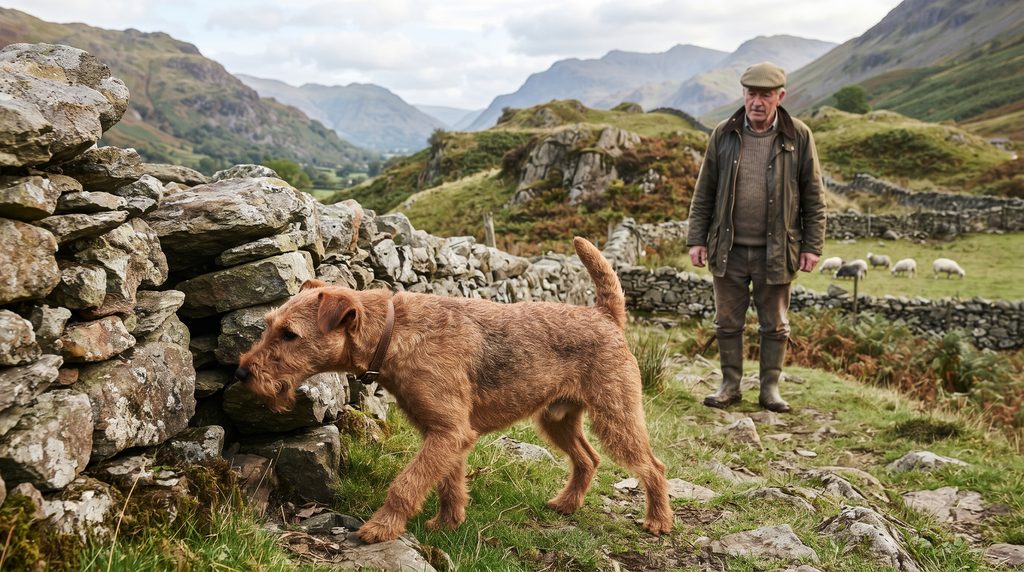
Before the Lakeland Terrier became an established pedigree breed, similar working dogs were known throughout northern England as Fell, Cumberland, Westmorland, and other regional terriers. Farmers valued their courage, endurance, and ability to pursue foxes through narrow rocky passages that larger dogs could not enter. The Lakeland Terrier Association was formed in 1921, helping establish a consistent breed identity. American Kennel Club recognition followed in 1934. One of the breed’s greatest exhibition achievements came in 1967, when Champion Stingray of Derryabah won Best in Show at both Crufts and Westminster. Despite this international success, the modern Lakeland Terrier retains the intelligence, confidence, and determination of its working ancestors.
Lakeland Terrier Appearance and Size
The Lakeland Terrier is a small, sturdy, and beautifully proportioned dog whose distinctive appearance reflects generations of demanding work in England’s rugged Lake District. Although its carefully maintained coat, expressive beard, and confident posture give it an elegant appearance, the breed was developed primarily for strength, agility, and endurance. Its compact body, relatively long legs, narrow chest, and powerful jaws were essential for pursuing foxes across steep hillsides and through confined rocky passages. Today, these practical characteristics remain central to the Lakeland Terrier’s recognizable appearance, creating a dog that combines genuine working ability with considerable charm and individuality.
According to the American breed standard, the ideal adult male Lakeland Terrier stands approximately 14.5 inches at the shoulder, with a variation of half an inch either way permitted. Females may stand as much as one inch shorter. Mature males typically weigh around 17 pounds, while females average approximately 15 pounds. Individual dogs may vary slightly depending on genetics, body condition, and overall development. The breed is therefore small enough to be a manageable household companion but substantial enough to participate in energetic outdoor activities. Its physical proportions are more important than achieving a particular number on the scale.
The Lakeland Terrier has a compact, approximately square outline, meaning its height and body length are relatively similar. Its back is short, strong, and well coupled, while the chest is deep enough to accommodate the heart and lungs without becoming excessively broad. This relatively narrow construction was particularly valuable to working terriers that needed to enter confined spaces among rocks and underground passages. The shoulders are well positioned, the forelegs are straight and strong, and the muscular hindquarters provide efficient propulsion. Despite its modest size, a properly proportioned Lakeland should appear athletic and capable rather than delicate or excessively refined.
The breed’s relatively long legs distinguish it from several shorter-legged terriers. These provide the reach and agility needed to move across uneven ground, climb rocky slopes, and maintain an energetic pace. The feet are small, compact, and well padded, supporting confident movement on difficult surfaces. When walking or running, the Lakeland Terrier should move freely and efficiently, with good forward reach and strong drive from the hindquarters. Its gait should convey balance and purpose without exaggerated stepping or unnecessary effort. A healthy Lakeland typically moves with the alertness and confidence expected of a traditional working dog.
The head is another defining characteristic. It has a distinctive rectangular appearance when viewed from different angles, with a relatively flat skull, strong jaws, and a muzzle that should not appear excessively long or narrow. Small, dark or hazel eyes contribute to the breed’s intelligent, lively expression. The ears are moderately small, V-shaped, and carried folded forward, reinforcing the alert appearance. The nose is black, while the characteristic beard and longer facial furnishings provide the familiar Lakeland Terrier silhouette. When correctly maintained, these furnishings emphasize the natural structure of the head without completely obscuring the dog’s eyes or expression.
One of the breed’s most important physical features is its dense, harsh, weather-resistant double coat. The outer coat consists of firm, wiry hair that helps protect the dog against rough vegetation and challenging weather, while the softer undercoat provides additional insulation. This combination developed through generations of work in the damp, rocky countryside of northern England. Unlike breeds with silky or continuously growing soft hair, the Lakeland Terrier’s traditional coat has a distinctly coarse texture. Its appearance can vary considerably depending on whether the hair has been properly hand-stripped, professionally clipped, or allowed to grow longer between maintenance appointments.
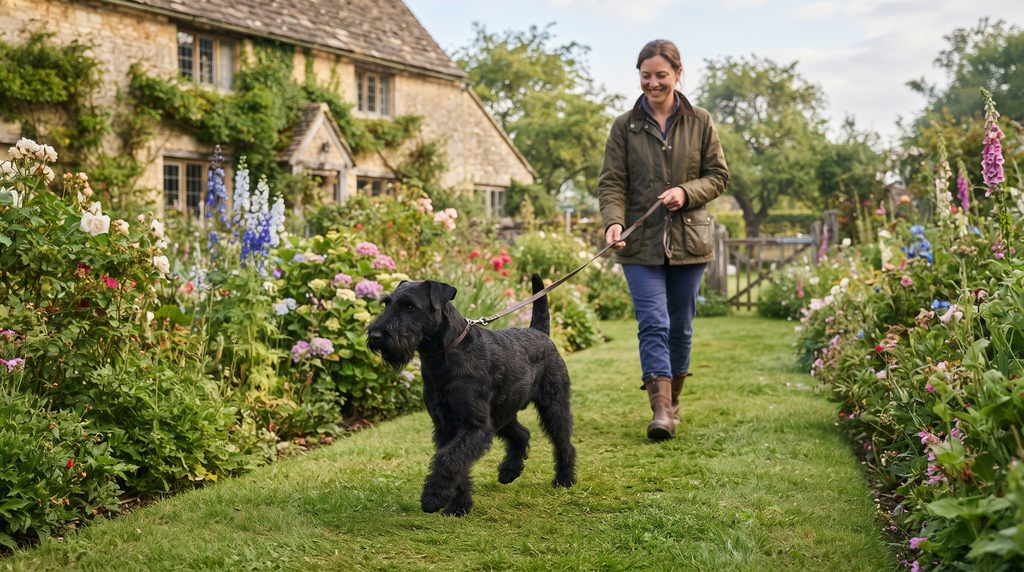
Lakeland Terriers occur in an unusually attractive range of recognized colors. These include red, wheaten, red grizzle, blue, liver, and black, together with combinations such as black and tan or blue and tan. Some dogs have a darker saddle covering the back and sides, contrasting with lighter tan or wheaten coloring on the head, chest, and legs. A black Lakeland Terrier may have an entirely dark coat, creating a particularly striking appearance when the wiry texture catches natural light. All recognized colors are acceptable, and prospective owners should prioritize health, temperament, and sound construction rather than choosing a puppy exclusively for a preferred shade.
Grizzle coloring deserves particular explanation because it is frequently misunderstood. In Lakeland Terriers, grizzle refers to a mixture of differently colored hairs, often combining red or wheaten tones with black, blue, or liver pigmentation. This creates a shaded, textured appearance rather than a completely uniform color. Grizzle-and-tan dogs may display a darker saddle with warmer facial and leg furnishings, while red-grizzle individuals can have a more evenly blended appearance. Coat color may also change as puppies mature and their adult coats develop. Early photographs cannot always predict the precise appearance of a fully mature Lakeland Terrier.
Grooming has a substantial influence on the breed’s overall silhouette. A traditionally hand-stripped Lakeland displays a closely maintained body coat, distinctive rectangular head, and fuller furnishings on the legs and muzzle. These contrasting lengths help emphasize its compact proportions, strong neck, and athletic movement. A shorter companion trim can create a more understated appearance, while an overgrown coat may make the dog seem bulkier and conceal its underlying structure. The difference is particularly noticeable around the head, where longer facial hair can substantially alter the expression. Regardless of styling preferences, the dog’s natural physical proportions remain unchanged.
The tail is set relatively high and traditionally carried in a confident, upright position. Historically, tail docking was common in working and exhibition Lakeland Terriers, particularly where shortened tails were part of established breed presentation. Today, natural undocked tails are increasingly familiar, especially in countries where cosmetic docking is prohibited or restricted. An undocked tail should remain balanced with the dog’s body and be carried confidently without curling tightly over the back. Tail carriage contributes to the breed’s lively appearance, although it should always be considered alongside overall body language rather than interpreted as a reliable measure of temperament by itself.
Although the Lakeland Terrier shares certain visual characteristics with the Welsh Terrier and Airedale Terrier, important differences distinguish these breeds. The Lakeland is considerably smaller than the Airedale and generally lighter and more compact than the Welsh Terrier. It also occurs in a much wider range of coat colors, whereas the Welsh Terrier is characterized by its black-and-tan or grizzle-and-tan appearance. These similarities reflect their shared working-terrier background, but each breed has its own established proportions, size requirements, and physical characteristics. Careful observation of body structure, head shape, and coat color helps distinguish them accurately.
Ultimately, the Lakeland Terrier’s appearance represents a successful balance between elegance and functional working ability. Its compact build, narrow chest, strong legs, expressive head, and weather-resistant coat were developed for practical reasons rather than decoration. Although modern grooming can enhance its already distinctive outline, the essential character of the breed remains that of a courageous, agile, and remarkably capable small terrier. Prospective owners should appreciate this natural athleticism and remember that a healthy Lakeland Terrier is defined by sound movement, appropriate body condition, and balanced structure rather than elaborate styling or a particular coat color.
How to Recognize a True Lakeland Terrier
The Lakeland Terrier is sometimes confused with the larger Welsh Terrier or a miniature Airedale because all three can display a wiry coat, rectangular head, and distinctive beard. However, the Lakeland is a separate breed with its own established standard. Adult males ideally stand around 14.5 inches tall and weigh approximately 17 pounds, with females generally smaller. Its compact, square body, narrow chest, relatively long legs, and confident carriage reflect its working heritage. Unlike the Welsh and Airedale Terriers, Lakelands also occur in several solid colors, including red, wheaten, black, blue, and liver. A well-maintained coat should retain its characteristic harsh texture and weather-resistant qualities.
Lakeland Terrier Temperament and Personality
The Lakeland Terrier is a bold, cheerful, intelligent, and remarkably self-confident little dog whose personality reflects its long history as a determined working terrier. Although small in stature, the breed possesses an abundance of courage, curiosity, and independence, often approaching unfamiliar situations with an enthusiasm that seems entirely disproportionate to its size. Lakeland Terriers are known for their lively expressions, playful behavior, and strong sense of individuality. They can be affectionate and entertaining family companions, but their independent thinking means they are not naturally inclined to obey every request without question. Understanding this distinctive combination of confidence, intelligence, and terrier determination is essential for appreciating the breed.
One of the most appealing characteristics of the Lakeland Terrier temperament is its generally friendly and optimistic outlook. The official breed standard describes the Lakeland as bold, friendly, and self-confident, qualities that should be evident in a well-adjusted adult. Many Lakelands approach everyday activities with an almost infectious enthusiasm, investigating unfamiliar objects, greeting familiar people, and seeking opportunities for amusement. Their confidence should not be mistaken for aggression, however. The ideal Lakeland Terrier is neither excessively shy nor unnecessarily confrontational. A balanced temperament combines courage with emotional stability and the ability to respond appropriately to different situations.
Affection is another important part of the breed’s personality. Despite its independent working heritage, the Lakeland Terrier often develops strong relationships with familiar people and enjoys being included in household activities. Some individuals are enthusiastic about physical affection, while others express attachment by remaining close to their owners, bringing toys, or initiating games. They may follow family members from room to room, settle nearby during quiet evenings, or become particularly animated when someone suggests a favorite activity. Their affectionate nature is often accompanied by a degree of self-reliance, creating a companion that enjoys human company without necessarily demanding constant physical contact.
Lakeland Terriers also have a mischievous, entertaining side that can make everyday life particularly enjoyable. These observant little dogs are quick to notice changes in their surroundings and may investigate anything that appears unusual or interesting. A misplaced gardening glove, unfamiliar shopping bag, or newly rearranged room can become the subject of an enthusiastic inspection. Some Lakelands enjoy carrying household objects, initiating games, or finding imaginative ways to attract attention. This behavior is not necessarily deliberate disobedience. It often reflects a naturally curious, resourceful dog that enjoys discovering how its environment works and how people respond to its actions.
Intelligence is one of the breed’s greatest strengths, although it comes with a distinctly independent approach to learning. Lakeland Terriers are capable of understanding instructions quickly, remembering familiar routines, and solving practical problems. Their working ancestors needed to make decisions without constant human direction while pursuing quarry through difficult terrain. Modern Lakelands retain much of that independence, sometimes appearing to consider their options before responding to a familiar request. Owners may discover that their dog understands an instruction perfectly well but finds an interesting scent or unexpected movement temporarily more compelling. Positive reinforcement, engaging activities, and consistent expectations generally produce better results than confrontation or repetitive demands.
Confidence can also influence how a Lakeland Terrier responds to unfamiliar people. Many individuals are outgoing and willing to investigate visitors, particularly when introductions are relaxed and positive. Others may initially observe from a comfortable distance before approaching. Although a degree of caution is normal in unfamiliar circumstances, persistent fearfulness or threatening behavior should not be accepted simply because the dog belongs to a courageous terrier breed. Early social experiences, genetics, and individual personality all contribute to how a Lakeland responds to strangers. A well-adjusted dog should be able to become comfortable with ordinary visitors without feeling compelled to challenge them or retreat in distress.
The breed’s alertness makes it a capable little watchdog. Lakeland Terriers often notice approaching visitors, unusual sounds, and activity around the property, responding with an enthusiastic bark when something attracts their attention. Their confidence may give them a surprisingly formidable presence despite their modest size. However, alert barking should not be confused with a need for aggressive guarding behavior. A Lakeland that repeatedly patrols windows, reacts intensely to every passing animal, or becomes difficult to settle may be experiencing excessive arousal rather than demonstrating desirable confidence. Owners should encourage calm observation and help the dog learn which everyday events require no particular response.
Another important aspect of Lakeland Terrier personality is its natural determination. These dogs were developed for work that required persistence, physical courage, and an unwillingness to abandon an interesting challenge easily. Today, those qualities may appear when a Lakeland investigates a scent trail, attempts to retrieve a toy from an awkward location, or concentrates intensely on movement beyond the garden fence. Such persistence can be valuable during training and canine activities, but it also means the dog may struggle to disengage once something captures its attention. Owners should understand that this intensity is rooted in the breed’s working history and provide appropriate outlets rather than attempting to suppress curiosity altogether.
Relationships with other dogs can vary considerably. Although the Lakeland Terrier is generally described as friendly, some individuals are assertive and may react strongly when challenged or crowded by unfamiliar dogs. Others enjoy canine companionship and develop relaxed relationships with familiar playmates. The breed’s confident attitude does not automatically make it aggressive, but it does mean that owners should recognize individual social preferences and avoid assuming that every Lakeland will enjoy unrestricted interactions. Appropriate early socialization and continued positive experiences can support comfortable behavior, while careful management helps prevent unnecessary confrontations.
Emotional maturity is another consideration. Lakeland Terrier puppies are often energetic, inquisitive, and enthusiastic about exploring their surroundings, but their confidence and social preferences may change as they move through adolescence. A young dog that once greeted every unfamiliar animal may become more selective with maturity, while previously reliable responses can temporarily deteriorate when new distractions become particularly exciting. These changes require patience and continued guidance. Consistent routines, positive experiences, and opportunities to practice calm behavior help young Lakelands develop into more predictable adult companions without diminishing their spirited personalities.
Individual temperament also depends on genetics and early experience. Responsible breeders should prioritize sound, stable behavior alongside physical health and correct breed characteristics. Prospective owners benefit from meeting adult relatives when possible and asking how the dogs respond to unfamiliar people, other animals, handling, and ordinary household activity. An excessively fearful or persistently aggressive individual should not be regarded as an ideal example of the breed simply because terriers have a reputation for courage. The best Lakeland Terrier temperament combines confidence, friendliness, curiosity, and the ability to remain comfortable in everyday environments.
Ultimately, the Lakeland Terrier is a charming and spirited companion whose greatest appeal lies in its combination of affection, independence, humor, and fearless enthusiasm. Its lively personality can bring enormous enjoyment to households that appreciate an intelligent dog with strong opinions and a natural curiosity about the world. However, these same qualities require owners who can provide patient guidance, appropriate boundaries, and meaningful engagement. When its temperament is understood and respected, the Lakeland Terrier can develop into a confident, affectionate, and deeply entertaining family companion while retaining the distinctive character of its working ancestors.
What Healthy Lakeland Terrier Confidence Looks Like
A confident Lakeland Terrier should be curious, alert, and comfortable investigating unfamiliar situations without becoming excessively fearful or confrontational. Watch for relaxed movement, willingness to explore, and the ability to recover after something unexpected happens. Confidence does not require a dog to approach every stranger, challenge unfamiliar dogs, or remain constantly excited. Some Lakelands are naturally more reserved than others, and individual preferences deserve respect. Encourage calm observation, reward appropriate responses, and allow the dog to move away when uncomfortable. Persistent fear, intense reactivity, or aggression should be addressed through appropriate veterinary or qualified behavioral guidance rather than dismissed as normal terrier boldness.

Living With a Lakeland Terrier
Living with a Lakeland Terrier is an entertaining and rewarding experience for owners who appreciate an intelligent, affectionate, and confidently independent little dog. Although its compact size makes it relatively easy to accommodate in different households, the Lakeland Terrier has the energy, curiosity, and determination of a genuine working breed. It enjoys being involved in everyday activities, investigating its surroundings, and maintaining close relationships with familiar people. However, this is not a dog that should be expected to remain content with minimal attention or a monotonous routine. Successful ownership involves creating a comfortable home environment while providing the structure, companionship, and opportunities for exploration that suit its spirited personality.
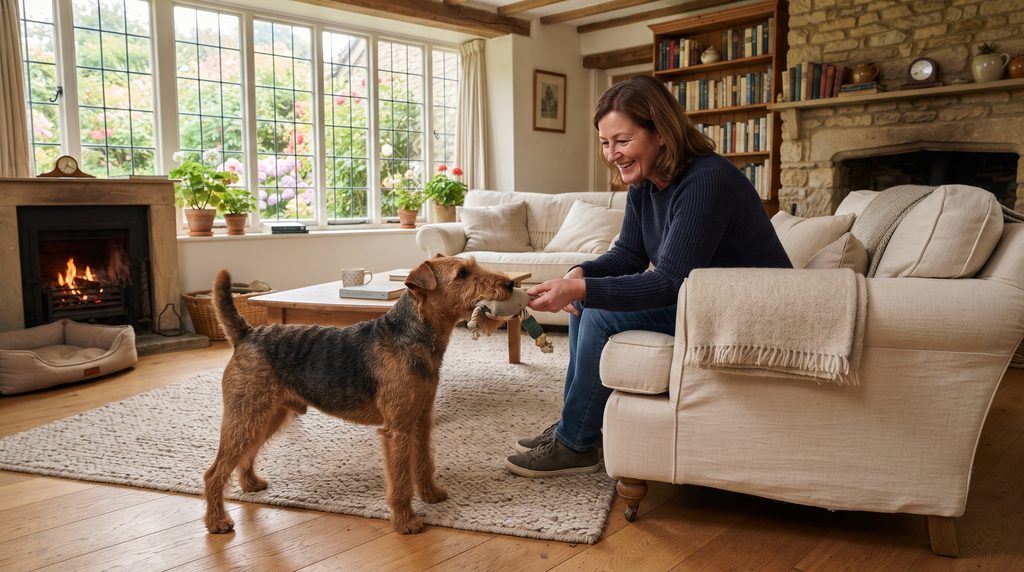
One of the most appealing aspects of sharing a home with a Lakeland Terrier is its enthusiasm for family life. Many Lakelands enjoy following their owners between rooms, observing household activities, and finding opportunities to participate in whatever is happening. A dog may watch meal preparation with interest, accompany its owner into the garden, or appear carrying a favorite toy when the family settles down for the evening. Although affectionate, Lakelands often retain a degree of independence and may prefer settling nearby rather than constantly demanding physical attention. This combination of companionship and self-reliance can be particularly enjoyable for people who appreciate a dog with a distinct personality.
Despite their lively nature, Lakeland Terriers can become comfortable indoor companions when their needs are met. A well-adjusted adult may enjoy an active morning before relaxing in a familiar resting place while its owner works or attends to household responsibilities. However, the ability to settle quietly is something that should be encouraged from puppyhood rather than taken for granted. Young Lakelands can become easily distracted by movement, unfamiliar sounds, and opportunities for mischief. Providing predictable quiet periods, comfortable bedding, and appropriate activities can help them learn that everyday life includes relaxation as well as excitement.
The Lakeland Terrier can adapt to suburban homes, rural properties, and some apartments, provided its owners are prepared to accommodate its natural behavior. A large house is not essential for a dog of this size, and a modest home can be perfectly suitable when accompanied by reliable outdoor access and meaningful daily interaction. However, apartment owners should consider the breed’s alertness and tendency to bark at unfamiliar activity. Neighbors, delivery workers, passing dogs, and noises in communal areas may attract considerable attention. Teaching calm responses and managing exposure to frequent distractions can make shared residential living more comfortable.
Secure outdoor boundaries are especially important. Lakeland Terriers were developed to pursue foxes into narrow rocky passages, and many retain an impressive willingness to investigate small openings or pursue interesting scents. A determined Lakeland may discover gaps beneath gates, explore loose fencing, or begin digging where wildlife has passed through the garden. Its modest size can make seemingly insignificant openings surprisingly accessible. Fences should be secure at ground level, gates should close reliably, and outdoor areas should be checked regularly. Owners should not assume that a Lakeland will remain within an unfenced garden simply because it normally enjoys staying close to the family.
Household organization can also prevent unnecessary difficulties. Lakeland Terriers are curious dogs that may investigate unattended food, accessible trash, gardening equipment, or objects left within reach. Their problem-solving abilities can make ordinary household items unexpectedly interesting, particularly during puppyhood. Keeping potentially dangerous substances secure, storing food appropriately, and providing suitable toys can help redirect curiosity toward acceptable activities. A comfortable crate or designated resting area may also be useful when introduced positively, offering a quiet place where the dog can relax without being disturbed.
Time spent alone requires realistic consideration. Although some adult Lakeland Terriers can become comfortable with reasonable periods of solitude, the breed generally enjoys regular companionship and involvement in family activities. Puppies need frequent supervision, toilet breaks, and gradual opportunities to develop independence. Leaving a young Lakeland alone for extended periods without preparation may contribute to distress, barking, or destructive behavior. Owners should introduce absences progressively, provide a safe resting environment, and observe how the individual dog responds. Persistent distress when left alone should be addressed through appropriate behavioral guidance rather than assuming the dog is simply being stubborn.
Visitors and changes in household activity can be particularly interesting to an observant Lakeland Terrier. Some greet familiar guests enthusiastically, while others prefer to investigate before becoming comfortable. Establishing a predictable greeting routine can help prevent excessive jumping, persistent barking, or attempts to rush through open doors. During parties, deliveries, or visits from tradespeople, access to a quiet room or secure resting area may be useful. The goal is not to isolate the dog unnecessarily but to provide clear expectations and prevent situations where excitement becomes difficult to manage.
The breed’s wiry coat brings several practical considerations to everyday life. Although Lakeland Terriers shed relatively little, their coats can collect dust, grass seeds, mud, and other outdoor material during countryside walks or garden activities. Owners should be prepared to check the paws and coat after outings, particularly when the dog has been exploring rough vegetation. Regular maintenance also helps preserve the coat’s protective texture and prevents uncomfortable tangles in the longer facial and leg furnishings. The dedicated grooming section explains these requirements in greater detail, but prospective owners should understand that a low-shedding dog is not necessarily a low-maintenance one.
Travel and changes in routine are worth considering, especially for households that enjoy holidays or frequently spend time away from home. Many Lakeland Terriers enjoy accompanying their owners on suitable outings and can become enthusiastic traveling companions when gradually introduced to car journeys, unfamiliar environments, and temporary accommodation. Their compact size is convenient, but their curiosity and hunting instincts still require secure handling. Families who travel without their dogs should arrange reliable care with someone who understands terrier behavior and can maintain familiar routines. A Lakeland that feels comfortable with a trusted alternative caregiver will generally be easier to accommodate when unexpected circumstances arise.
Daily life with a Lakeland Terrier also requires patience during the transition from puppyhood to adulthood. Young dogs may test household boundaries, become distracted by new experiences, or display enthusiastic behavior that needs gentle guidance. Consistency between family members is particularly valuable because an intelligent Lakeland quickly notices when expectations differ. Predictable routines, positive reinforcement, and opportunities to make appropriate choices can help establish a cooperative household relationship. Owners should remember that independence is part of the breed’s character rather than something that must be eliminated.
Ultimately, the Lakeland Terrier is best suited to a home that welcomes its affection, curiosity, and distinctive working-terrier spirit. Its small size makes it physically manageable, but its personality requires an engaged and thoughtful approach to ownership. When provided with companionship, secure surroundings, appropriate boundaries, and opportunities to explore, the Lakeland can become a delightful indoor companion while retaining its natural enthusiasm for outdoor adventures. For people who appreciate a lively dog with intelligence, humor, and individuality, sharing everyday life with a Lakeland Terrier can be exceptionally satisfying.
Lakeland Terrier and Children
The Lakeland Terrier can be an affectionate, playful, and entertaining companion for children, particularly in families that appreciate its energetic personality and understand the importance of respectful interaction. Although small, this confident English terrier is sturdy, athletic, and enthusiastic about participating in family activities. Many Lakelands enjoy games, outdoor adventures, and spending time with familiar children, often forming close relationships that develop through shared experiences. However, the breed’s independent nature, quick reactions, and strong terrier instincts mean that successful family life requires appropriate supervision, consistent boundaries, and an understanding of how dogs and children should interact safely.
One of the Lakeland Terrier’s most appealing qualities is its enthusiasm for play. Many individuals enjoy retrieving toys, exploring the garden, and joining children in activities that involve movement and interaction. Their compact size makes them relatively manageable for older children, while their sturdy construction allows them to participate in active games without being as physically imposing as larger breeds. Nevertheless, the Lakeland is not a delicate lapdog or an animal that should be treated as a toy. Its determination and energetic character are important considerations when deciding whether the breed suits a particular family.
Families with older, dog-aware children may find the Lakeland Terrier especially rewarding. Children who understand basic canine communication and can follow appropriate rules often enjoy participating in simple training exercises, supervised retrieving games, and outdoor exploration. A Lakeland may enthusiastically learn to find a hidden toy, respond to a familiar cue, or complete a short obstacle course designed for its size. These activities offer children opportunities to develop patience and responsibility while strengthening their relationship with the dog. Adult involvement remains important, particularly when introducing new games or managing excitement.
Younger children require more careful supervision. Toddlers and preschoolers frequently move unpredictably, make sudden noises, and reach toward animals without understanding their boundaries. Although a well-socialized Lakeland Terrier may enjoy the company of young children, not every individual will be comfortable with unexpected grabbing, hugging, or rough handling. Because the breed is small, children may also be tempted to pick it up or carry it around the house. This can cause discomfort or insecurity, particularly if the dog struggles to escape. Adults should prevent children from lifting or restraining the dog unless they have been specifically taught safe handling techniques.
The Lakeland Terrier’s natural hunting instincts can also influence play with children. Fast movement, squealing, and running may trigger chasing behavior in some individuals, particularly during puppyhood and adolescence. A young Lakeland may become excited when children race across the garden, occasionally attempting to grab clothing or nip at moving feet. These behaviors do not necessarily indicate aggression, but they should be addressed promptly through appropriate training and management. Calm games, supervised play, and rewarding the dog for maintaining appropriate behavior are preferable to encouraging uncontrolled chasing or rough physical interaction.
Teaching children to recognize canine body language is one of the most valuable parts of responsible family ownership. A Lakeland Terrier may communicate discomfort by turning its head away, moving out of reach, licking its lips, becoming unusually still, or retreating to a quieter location. More obvious signals, including growling or showing teeth, indicate that the interaction needs to stop immediately. Adults should never punish a dog simply for communicating discomfort, since suppressing warning signals can make future interactions less predictable. Instead, children should learn that the dog is entitled to personal space and should never be forced to accept unwanted attention.
Resting areas are particularly important in busy households. Every Lakeland Terrier should have a comfortable place where it can sleep, relax, or enjoy a chew without being disturbed. Children should understand that this space is not somewhere they can follow the dog for additional attention. Similarly, the dog should be left alone when eating or resting, and children should never attempt to remove food directly from its mouth. These boundaries protect everyone involved while helping the Lakeland feel secure within the family environment.
Play involving toys deserves thoughtful management because Lakeland Terriers can be enthusiastic and determined. Some individuals enjoy tug games or become particularly attached to favorite objects. Children should not compete physically with the dog over toys or attempt to force an item from its mouth. Instead, adults can teach a reliable exchange routine using treats or another appealing toy. Structured retrieving games are particularly useful because they allow the dog to participate energetically while practicing cooperation. If excitement increases to the point where the Lakeland begins grabbing clothing, barking persistently, or ignoring attempts to redirect it, the activity should pause until everyone is calm.
Introducing a Lakeland Terrier puppy into a household with children offers opportunities to establish positive habits from the beginning. Puppies should experience gentle, supervised handling and learn that children are associated with predictable, enjoyable interactions. However, young Lakelands can be impulsive, mouthy, and easily overstimulated, particularly when tired. Families should provide appropriate chew toys, regular rest periods, and a consistent routine rather than expecting a puppy to remain available for play throughout the day. Children should participate in age-appropriate activities while adults retain responsibility for feeding, grooming, veterinary care, and training.
Adopting an adult Lakeland Terrier requires consideration of its previous experiences with children. A dog raised successfully in a family environment may already understand household routines, while one with limited exposure to young children may require gradual introductions and additional management. Rescue organizations and responsible breeders should be asked about handling tolerance, reactions to sudden movement, resource guarding, and previous interactions with children. Prospective owners should avoid assuming that a friendly adult will automatically enjoy living in a busy household. Individual temperament and experience are more informative than breed reputation alone.
Visiting children can present additional challenges, especially during birthdays, sleepovers, or lively gatherings. A Lakeland Terrier that behaves calmly with familiar family members may become excited or uncomfortable when unfamiliar children run through the house. Owners should supervise carefully and provide a quiet, separate area whenever the environment becomes too stimulating. Children visiting the home should receive simple instructions about approaching the dog, handling toys, and respecting its resting space. There is no need to include the Lakeland in every activity, particularly when separation would create a safer and more comfortable situation.
Ultimately, the Lakeland Terrier can make a delightful family companion when its lively character is matched with appropriate expectations. Its affectionate personality, confidence, and enthusiasm for shared activities may be particularly appealing to families with older children who enjoy spending time with dogs. However, no Lakeland should be expected to tolerate constant attention, rough handling, or unsupervised interaction simply because it belongs to a friendly breed. The strongest relationships develop when adults provide guidance, children learn respect and responsibility, and the dog is allowed to participate in family life while maintaining the personal space and security it needs.
Choosing Safe Games for Children and Lakelands
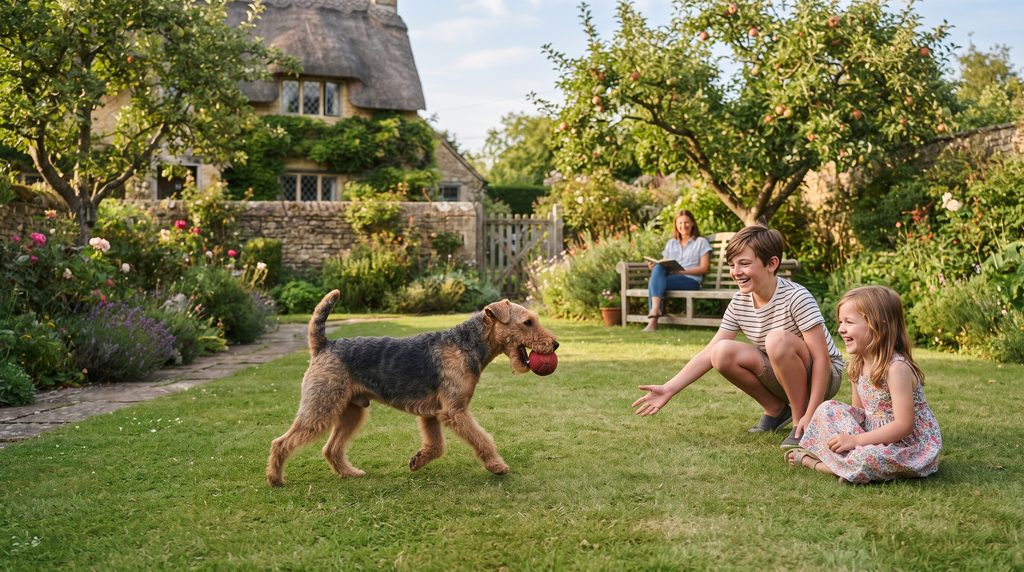
Lakeland Terriers often enjoy interactive games, but activities should encourage cooperation rather than excessive excitement. Gentle retrieving, supervised scent-searching games, and simple trick training are particularly suitable for older children. Avoid wrestling, chasing games that encourage grabbing clothing, or attempts to remove toys forcibly from the dog’s mouth. Teach children to pause when the Lakeland becomes overexcited and allow the dog to leave whenever it chooses. Adults should supervise every interaction, especially with younger children, and provide a quiet resting area that remains off-limits to play. Short, enjoyable sessions help build confidence and trust while allowing the Lakeland Terrier’s playful personality to shine.
Lakeland Terrier With Other Dogs and Pets
The Lakeland Terrier’s relationships with other dogs and household animals are strongly influenced by its confident personality, independent nature, and centuries of development as a determined working terrier. Although many Lakeland Terriers can develop positive relationships with compatible dogs and may learn to live peacefully alongside certain other pets, their natural hunting instincts and assertive character require careful consideration. A Lakeland that is affectionate and playful with its human family may behave quite differently around unfamiliar animals, particularly when excitement, competition, or rapid movement is involved. Understanding these characteristics is essential for anyone considering the breed for a multi-pet household.
Historically, Lakeland Terriers worked alongside hunting hounds in England’s rugged Lake District, pursuing foxes into rocky passages and underground hiding places. Their working responsibilities required considerable courage, persistence, and the ability to operate independently. Although modern Lakelands are primarily family companions, many retain a strong interest in wildlife, unfamiliar scents, and rapidly moving animals. These instincts are not necessarily signs of aggression or poor training. They are deeply rooted characteristics of a breed developed to pursue quarry, and responsible owners should recognize their influence rather than expecting them to disappear completely.
Relationships with other dogs vary considerably between individuals. Some Lakeland Terriers are sociable, playful, and comfortable sharing their homes with canine companions, particularly when introduced appropriately during puppyhood. Others are more selective and may become assertive when unfamiliar dogs approach too closely or challenge their personal space. The breed’s modest size should not lead owners to underestimate its confidence. A Lakeland may be surprisingly unwilling to retreat from a larger dog, making careful supervision particularly important. Successful canine relationships depend on individual temperament, social experience, compatibility, and thoughtful household management rather than breed reputation alone.
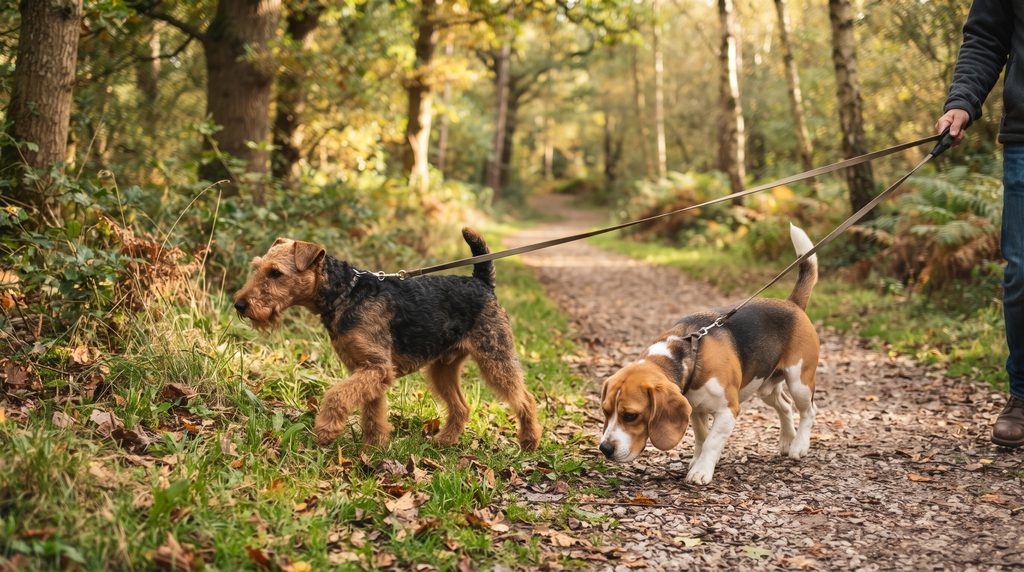
Introducing a Lakeland Terrier to a resident dog should begin in a neutral, controlled environment whenever possible. Parallel walking is often useful because it allows both animals to become familiar with one another without the pressure of an immediate face-to-face greeting. Separate handlers can maintain comfortable distances while rewarding relaxed behavior. As the dogs demonstrate appropriate body language, interactions can gradually become closer. Owners should avoid forcing contact, tightening leashes unnecessarily, or assuming that a brief friendly greeting guarantees compatibility. Some dogs become comfortable sharing space without developing an interest in physical play, and peaceful coexistence is a perfectly acceptable outcome.
Once dogs share a household, careful arrangements can help prevent unnecessary tension. Separate feeding areas, individual resting spaces, and supervision around favorite toys or chews are particularly valuable. Some Lakeland Terriers may guard desirable objects or become frustrated when another dog repeatedly approaches them during rest. Owners should watch for stiff posture, prolonged staring, blocking behavior, or attempts to move away from unwanted attention. These signals indicate that additional space or intervention may be necessary. Persistent guarding or aggressive behavior should be addressed with help from a qualified, reward-based behavior professional rather than through punishment or confrontation.
Dog parks are not automatically suitable for every Lakeland Terrier. Although some well-socialized individuals enjoy interacting with familiar dogs, crowded off-leash environments can create unpredictable situations involving different sizes, play styles, and tolerance levels. A confident Lakeland may respond poorly to rough play or repeated challenges, particularly from dogs that ignore its attempts to disengage. Controlled walks with compatible companions, carefully supervised play sessions, and structured training activities often provide more positive experiences. Owners should judge success by their dog’s comfort and behavior rather than expecting it to enjoy meeting every unfamiliar dog.
Living with cats requires a different level of caution because the Lakeland Terrier’s hunting instincts may be triggered by sudden movement. Some Lakelands raised alongside cats develop comfortable household relationships, learning to regard familiar feline companions as part of their everyday environment. However, early exposure cannot guarantee reliable behavior, and a dog that calmly ignores a resting cat may still chase when the animal runs. Cats should always have access to elevated resting places, escape routes, and dog-free areas. Owners should avoid interpreting occasional calm interactions as evidence that unrestricted contact will always be safe.
When introducing an adult Lakeland Terrier to a cat, gradual exposure behind secure barriers is generally preferable to immediate direct contact. Baby gates, separate rooms, and controlled visual introductions allow both animals to become familiar without feeling trapped. The dog should be rewarded for relaxed observation and voluntarily looking away from the cat. If the Lakeland becomes intensely focused, repeatedly lunges, or attempts persistent pursuit, greater separation is necessary. Some individuals may never be suitable for unrestricted contact with cats, particularly when their hunting behavior is strongly developed. Protecting both animals must take precedence over the desire to create a harmonious mixed-species household.
Small mammals present an even greater concern. Rabbits, guinea pigs, hamsters, mice, and similar pets resemble the types of quarry Lakeland Terriers were historically developed to pursue. Even a friendly, obedient Lakeland may react instinctively when a small animal runs, squeaks, or moves unexpectedly. Owners should never rely on supervision alone when the potential consequences of an encounter are serious. Secure enclosures, separate rooms, and reliable physical barriers are essential. Direct contact between a Lakeland Terrier and vulnerable small mammals is generally inappropriate, regardless of the dog’s apparent curiosity or calm behavior.
Pet birds and backyard poultry also require careful management. Flapping wings, sudden movement, and unfamiliar sounds may attract a Lakeland Terrier’s attention and stimulate pursuit. Chickens, ducks, and other birds should remain behind appropriate fencing or within secure enclosures that prevent accidental access. Although some individuals can learn to behave calmly around farm animals, this should never be treated as a guarantee that their natural instincts have disappeared. Owners living on rural properties should also consider wildlife, livestock fencing, and the possibility that an enthusiastic Lakeland may attempt to investigate neighboring animals.
Early socialization can significantly influence how a Lakeland Terrier responds to other animals throughout life. Puppies benefit from carefully arranged experiences with calm, socially appropriate adult dogs and controlled exposure to different environments. However, socialization should emphasize emotional stability and appropriate communication rather than encouraging unrestricted contact with every animal encountered. As Lakelands mature, some become increasingly selective about canine companionship, making continued reinforcement of calm behavior especially valuable. Learning to walk past unfamiliar dogs, respond to a familiar cue, and disengage from distractions are important practical skills.
Prospective owners who already have pets should discuss compatibility with a knowledgeable breeder or rescue organization before bringing a Lakeland Terrier home. The individual dog’s previous experiences, social preferences, prey drive, and reactions to unfamiliar animals are more informative than general assurances that the breed is friendly. In some households, a carefully matched Lakeland may become a playful companion to another dog or coexist peacefully with an established cat. In others, permanent separation or choosing a different breed may be the more responsible decision.
Ultimately, the Lakeland Terrier can enjoy positive relationships with compatible animals, but successful multi-pet ownership requires realistic expectations and thoughtful management. Its confidence, independence, and strong hunting instincts are part of the character that makes this little terrier so distinctive. Owners who respect these qualities, introduce animals gradually, supervise interactions, and provide appropriate boundaries are better equipped to create a safe and comfortable household. The goal is not to make every Lakeland universally sociable, but to allow each animal to live securely while respecting the terrier’s natural behavior and individual preferences.
Introducing a Lakeland Terrier to Another Dog
Begin introductions on neutral ground, with both dogs walking in the same direction on separate loose leashes. Maintain enough distance for relaxed behavior before gradually allowing closer interaction. Avoid forcing nose-to-nose greetings or expecting immediate play. Once the dogs enter the same home, provide separate feeding areas, comfortable resting spaces, and supervision around valuable toys. Watch for stiffness, prolonged staring, guarding, or attempts to retreat, and intervene calmly before tension escalates. Some Lakeland Terriers become more selective about canine companions as they mature, so successful early introductions do not remove the need for ongoing management. Calm coexistence is often more important than enthusiastic friendship.
Lakeland Terrier Exercise and Activity Needs
The Lakeland Terrier is a small but remarkably energetic and athletic dog whose exercise requirements reflect its demanding working heritage in England’s Lake District. Originally developed to accompany hunting hounds across steep hillsides and pursue quarry through difficult rocky terrain, this determined little terrier possesses considerable stamina, agility, and enthusiasm for physical activity. Although its compact size makes it manageable in many homes, the Lakeland Terrier is not naturally suited to a sedentary lifestyle. Regular exercise, opportunities to explore, and activities that engage its intelligence are essential for maintaining physical fitness and encouraging balanced behavior.
Most healthy adult Lakeland Terriers benefit from approximately 45–60 minutes of daily physical activity, although individual needs vary according to age, fitness, temperament, and lifestyle. Some particularly energetic dogs may enjoy considerably longer adventures, while quieter individuals may remain content with a more moderate routine. The Royal Kennel Club describes the breed as generally requiring up to an hour of daily exercise, reflecting its ability to remain active without necessarily demanding the intensive workload associated with some larger working breeds. Owners should assess their individual dog’s energy, recovery, and overall behavior rather than treating a particular exercise duration as an inflexible requirement.
Daily walking provides an important foundation for physical and mental wellbeing. Lakeland Terriers are naturally inquisitive and enjoy investigating unfamiliar scents, exploring different environments, and observing activity around them. Walks through woodland paths, quiet parks, countryside trails, and suitable residential neighborhoods can offer valuable stimulation beyond simple physical movement. Allowing time for relaxed sniffing is particularly rewarding because the breed’s hunting background gives it a strong interest in scent information. A moderately paced exploratory walk may be more satisfying than a hurried outing that provides little opportunity to investigate the surroundings.
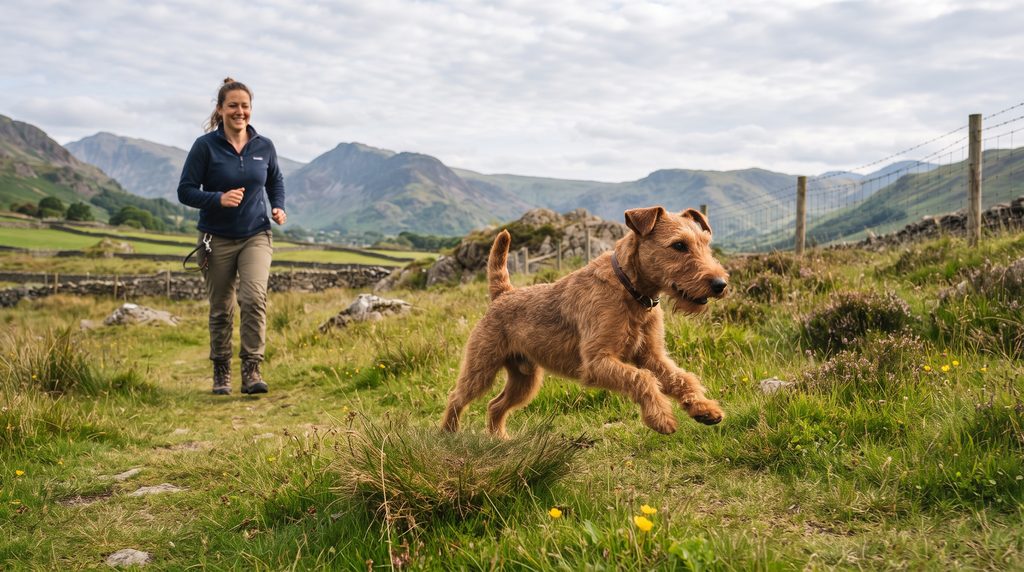
The breed’s compact, muscular structure makes it well suited to a variety of outdoor activities. Healthy adult Lakeland Terriers often enjoy hiking, jogging with appropriately conditioned owners, and energetic games involving movement and exploration. Their relatively long legs and athletic proportions allow them to navigate uneven ground confidently, although owners should select routes that are appropriate for the individual dog’s experience and physical condition. Long hikes should be introduced gradually, with opportunities for rest and access to drinking water. Despite its impressive stamina, a Lakeland Terrier is still a small dog that can become tired, overheated, or injured when pushed beyond its capabilities.
Interactive play offers another useful form of exercise, particularly because Lakeland Terriers often enjoy activities that involve familiar people. Short retrieving sessions, controlled tug games, and opportunities to investigate hidden toys can provide satisfying physical outlets. However, repetitive high-speed chasing and abrupt turns should not dominate every activity, especially on slippery or uneven surfaces. Owners can make games more engaging by introducing variety, changing locations, and incorporating brief pauses between energetic efforts. These breaks also help the dog learn to transition comfortably between excitement and relaxation rather than remaining continuously stimulated.
Secure outdoor access is especially important because the Lakeland Terrier retains a strong instinct to pursue wildlife. A squirrel crossing a pathway, a rabbit emerging from vegetation, or an unfamiliar scent may quickly capture the dog’s attention. Even a well-trained Lakeland can become intensely focused on an interesting target, making unrestricted freedom in unfenced areas potentially dangerous. Securely enclosed fields and gardens provide opportunities for running and exploring, while a suitably managed long training line can offer additional freedom in appropriate locations. Owners should remember that this breed was developed to investigate narrow spaces, making secure fencing and careful supervision particularly important.
Mental activity is equally valuable because the Lakeland Terrier combines physical energy with independent intelligence. A dog that receives sufficient walking but has few opportunities to think, investigate, or make appropriate choices may still become restless or frustrated. Scent-searching games are particularly suitable because they draw upon the breed’s natural abilities without requiring constant physical exertion. Hiding small treats in safe locations, encouraging the dog to find a favorite toy, or creating simple scent trails can provide satisfying challenges. Puzzle feeders and short problem-solving activities also offer useful enrichment, particularly during periods when outdoor exercise must be reduced.
Organized canine sports can provide further opportunities to develop the Lakeland Terrier’s athleticism and concentration. Many individuals enjoy agility, rally, scent work, and other activities that combine movement with cooperation. Earthdog and similar terrier activities may be especially appealing because they offer structured outlets for natural hunting behaviors. Not every Lakeland Terrier will enjoy formal competition, and participation is not essential for maintaining good health. Owners can incorporate similar principles into everyday life through appropriate obstacle games, searching activities, and short interactive sessions that reward attention and enthusiasm.
Puppies require a different approach because their bones, joints, and muscles are still developing. Young Lakeland Terriers may appear almost endlessly energetic, but they should not be subjected to prolonged forced running, demanding hikes, or repetitive high-impact activities. Short exploratory walks, gentle play, and opportunities to investigate safe environments are generally more appropriate. Puppies also need substantial rest, and excessive excitement may sometimes indicate tiredness rather than a need for more exercise. Owners should gradually increase activity as the puppy matures, taking account of individual development and veterinary advice rather than following rigid exercise formulas.
Senior Lakeland Terriers can often remain active and enthusiastic well into their later years. Although an older dog may no longer enjoy the same intensity of running or jumping, familiar walks and gentle exploratory activities can continue providing important physical and emotional benefits. Shorter, more frequent outings may be easier for dogs experiencing reduced stamina or joint discomfort. Owners should watch for stiffness, limping, unusual fatigue, or reluctance to participate in previously enjoyable activities. These changes deserve veterinary assessment rather than being dismissed as inevitable consequences of aging. Maintaining comfortable movement can contribute considerably to an older Lakeland’s quality of life.
Weather and environmental conditions should also influence exercise routines. Although the Lakeland Terrier’s harsh double coat was developed to provide protection in the challenging climate of northern England, it does not make the dog immune to heat, cold, or exhaustion. During hot weather, walks should be scheduled for cooler periods, with drinking water and shaded rest available. Owners should avoid prolonged activity on hot pavement and recognize signs of overheating, including excessive panting, weakness, or difficulty recovering. In cold or wet conditions, healthy Lakelands may remain enthusiastic about outdoor adventures, but their comfort should still be monitored and wet coats dried appropriately afterward.
Ultimately, meeting the Lakeland Terrier’s exercise needs involves balancing purposeful movement, mental stimulation, exploration, and adequate rest. Its working heritage gives it impressive stamina and curiosity, but it does not require endless strenuous activity to remain happy. Owners who provide varied daily outings, secure opportunities for energetic play, and engaging activities that use the dog’s natural abilities are more likely to enjoy a fit, contented, and responsive companion. The most successful routine respects the Lakeland Terrier’s adventurous spirit while recognizing that companionship, appropriate recovery, and consistent everyday habits are just as important as physical exertion.
A Practical Daily Exercise Routine for a Lakeland Terrier
A healthy adult Lakeland Terrier may enjoy a 25–30-minute morning walk, followed by a shorter afternoon outing and an interactive game in a secure garden. Allow time for sniffing and exploration rather than concentrating entirely on distance or speed. Brief scent-searching activities, retrieving games, or simple problem-solving exercises provide additional mental stimulation. Adjust the routine according to age, fitness, weather, and individual energy levels, and encourage quiet rest between activities. Because Lakelands can become intensely interested in wildlife, use secure fencing or appropriate leash control wherever chasing could create a risk. A balanced routine supports fitness without encouraging constant excitement.
Training a Lakeland Terrier
Training a Lakeland Terrier is often enjoyable, sometimes challenging, and almost always more successful when owners understand the breed’s combination of intelligence, confidence, and independence. These small English terriers are quick learners, but they were not developed to respond with unquestioning obedience in the way some highly handler-focused breeds were. Their working ancestors needed to make decisions independently while pursuing quarry through difficult terrain, and modern Lakeland Terriers still retain much of that self-reliant mindset. This does not make them untrainable. On the contrary, a well-motivated Lakeland Terrier can learn quickly and perform impressively. The key is building cooperation through consistency, positive reinforcement, and realistic expectations.
One of the most important foundations is starting early. Lakeland Terrier puppies benefit from clear routines, calm guidance, and exposure to ordinary household expectations from the moment they arrive home. Name recognition, coming when called indoors, settling quietly for short periods, accepting gentle handling, and learning where to toilet are all valuable early priorities. Because Lakelands are observant and quick to notice patterns, they often learn household habits rapidly, whether those habits are helpful or not. Consistency from the start makes a real difference. If jumping up, barking for attention, or snatching household objects is occasionally rewarded, an intelligent terrier will quickly recognize that those behaviors can work.
Positive reinforcement is usually the most effective approach. Lakeland Terriers tend to respond well when desirable behavior leads to something they value, such as food rewards, praise, toys, or the opportunity to continue an enjoyable activity. Harsh corrections and repetitive drilling often create frustration rather than better understanding. A Lakeland that feels pressured or bored may simply disengage, become stubborn, or redirect its energy into something more interesting. Short, varied training sessions are generally much more productive than long formal lessons. A few focused minutes practiced several times a day usually achieve more than a single session that continues until the dog loses interest.
Socialization is particularly important for the Lakeland Terrier because confidence must be supported by emotional stability and appropriate behavior. A good socialization program introduces the puppy to different people, surfaces, sounds, places, and ordinary daily experiences in a calm, positive way. The goal is not to make the dog greet every stranger or play with every dog it meets. Instead, it is to help the Lakeland develop into an adult that can remain composed and confident in a wide variety of situations. Well-run puppy classes can be useful, especially when they emphasize calm learning, controlled interaction, and appropriate recovery from mild novelty rather than chaotic free-for-all play.
Loose-leash walking deserves early attention. Lakeland Terriers are naturally curious, and interesting scents or movement can pull their attention away quickly. Teaching the dog to check in regularly, follow gentle changes of direction, and stay reasonably close on the leash can make everyday walks much more pleasant. At the same time, owners should allow appropriate opportunities for sniffing and exploring, since these activities are mentally satisfying and part of what makes walks rewarding for a terrier. A balance between structure and freedom is usually more successful than expecting perfect heelwork at all times.
Reliable recall is another important goal, although owners should remain realistic. A Lakeland Terrier may come beautifully in the garden and then hesitate when confronted by the sudden appearance of wildlife or a particularly exciting scent. Recall should therefore be built gradually, beginning in quiet environments and strengthened with generous rewards. A long training line is especially useful because it provides freedom without sacrificing safety. Owners should avoid repeatedly calling when the dog is unlikely to respond, since this only teaches the Lakeland that recall is optional. Returning to the owner should consistently lead to something worthwhile, not the immediate end of all fun.
Impulse control is particularly valuable for this breed. Teaching a Lakeland Terrier to pause briefly before chasing a toy, wait at a doorway, settle on a mat, or disengage from an interesting distraction can improve daily life considerably. These skills help the dog practice thinking before reacting, which is useful for a confident terrier with quick instincts. Progress is usually best when exercises are broken into small steps and rewarded generously. Expecting long, motionless stays too early often produces frustration. Building brief moments of self-control throughout ordinary routines tends to be more practical and more effective.
Training should also include cooperative handling. Because Lakeland Terriers require regular grooming, puppies should learn from an early age to accept brushing, combing, beard cleaning, nail trimming, and examination of the ears, paws, and mouth. These exercises should be introduced gently and paired with rewards so the dog forms positive associations. A Lakeland that is comfortable standing quietly and being handled will find both grooming and veterinary care much easier throughout life. This is especially important for a breed with a wiry coat that needs ongoing maintenance and, ideally, periodic professional grooming or hand-stripping.
Barking and alert behavior also benefit from training. Lakeland Terriers are observant and often quick to announce visitors or unusual sounds. Rather than trying to suppress all barking, owners should teach an alternative response such as coming away from the window, settling on a mat, or responding to a cue that signals the situation has been acknowledged. Rewarding calm behavior after the initial alert can help prevent barking from escalating into prolonged excitement. If a dog is repeatedly barking at every outside sound or movement, management may also be needed, such as reducing visual access to busy areas.
Adolescence can be a testing time. A young Lakeland Terrier that seemed highly cooperative as a puppy may become more distractible, more interested in the outside world, and less automatically responsive. This stage is normal and does not mean the previous training failed. Owners usually get the best results by simplifying exercises, returning to easier environments, and reinforcing familiar behaviors more generously. It is also a time when some dogs become more selective socially, which makes calm exposure and reliable disengagement especially useful skills. Patience matters greatly here. Pushing too hard often creates conflict, while steady guidance maintains progress.
Many Lakeland Terriers enjoy advanced activities once their basics are in place. Rally, agility, scent work, trick training, and earthdog-style activities can provide excellent outlets for their intelligence and enthusiasm. Not every Lakeland will want formal competition, but most benefit from having something meaningful to do. These activities strengthen communication between dog and owner while giving the terrier appropriate ways to use its natural instincts. Even simple home-based games, such as searching for hidden toys or learning fun tricks, can be highly rewarding when practiced regularly.
Ultimately, training a Lakeland Terrier is less about enforcing constant obedience and more about developing a cooperative partnership with a bright, confident, and independent little dog. Owners who stay consistent, keep lessons engaging, and respect the breed’s working-terrier nature are usually rewarded with a companion that is responsive, enjoyable, and full of character. A Lakeland Terrier may never behave like a dog bred solely to please, but with thoughtful training it can become a wonderfully capable, entertaining, and well-mannered companion.
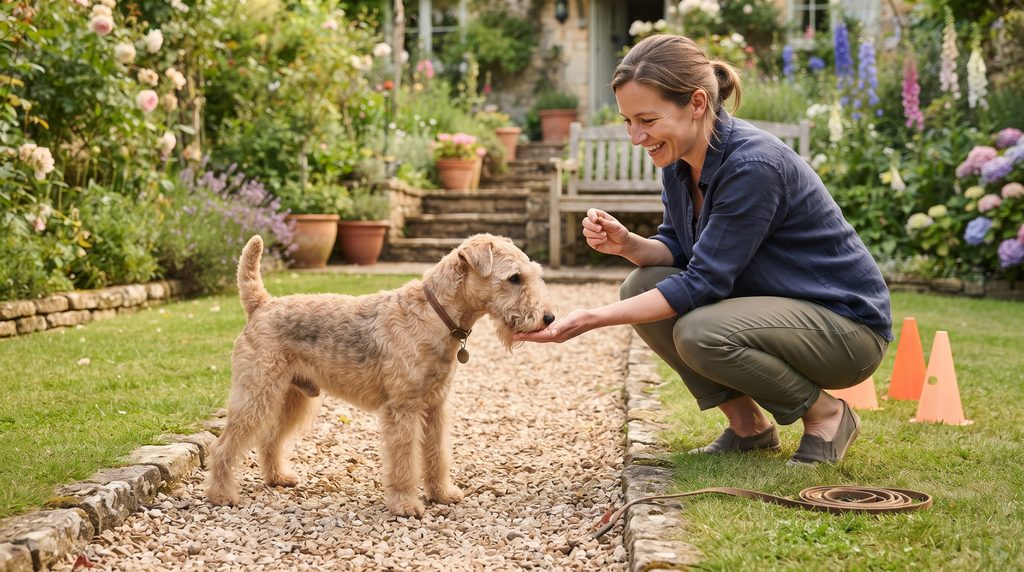
Lakeland Terrier Grooming and Coat Care
The Lakeland Terrier has a distinctive harsh, wiry double coat that requires regular attention to maintain its characteristic texture, tidy appearance, and protective qualities. Although this small English terrier is often admired for its neatly shaped body coat, expressive beard, and attractive leg furnishings, achieving that appearance involves more than occasional brushing. Owners must decide whether to maintain the traditional hand-stripped coat or choose a shorter, professionally clipped companion trim. Both approaches can be appropriate, but they produce noticeably different results. Understanding these grooming options is particularly important because the Lakeland Terrier’s coat was originally developed for protection in the rugged, wet countryside of northern England.
The breed’s double coat consists of a dense, relatively soft undercoat beneath a harsh outer layer of wiry hair. This combination helped protect working Lakeland Terriers against rough vegetation, damp conditions, and the physical demands of pursuing foxes through rocky terrain. When properly maintained, the outer coat lies relatively close to the body while retaining a coarse, weather-resistant texture. The hair around the legs and muzzle is traditionally left longer, creating the distinctive rectangular head and furnishings associated with the breed. Without appropriate maintenance, these longer areas can become tangled, collect dirt, and lose their carefully balanced appearance.
Hand-stripping is the traditional method of maintaining a Lakeland Terrier’s coat. Rather than cutting the outer hair, a skilled groomer removes mature, loosened hairs by hand or with appropriate stripping tools, allowing new coat growth to develop. When performed correctly on a coat that is ready to be stripped, the process preserves the characteristic harsh texture and often maintains richer, more clearly defined coloring. The technique requires knowledge of coat growth, appropriate handling, and the correct direction of hair removal. Owners unfamiliar with hand-stripping should seek instruction from an experienced terrier groomer rather than attempting to remove large amounts of hair themselves.
Some groomers maintain the coat through a technique known as rolling, in which small amounts of mature hair are removed regularly instead of allowing the entire coat to become overgrown before a major grooming session. This approach can help maintain a relatively consistent appearance and coat texture throughout the year. However, the frequency of hand-stripping varies according to the individual dog’s coat, grooming goals, and the experience of the person maintaining it. Show dogs generally require more precise coat management than household companions, particularly when preparing for exhibitions.
Clipping offers a practical alternative for many pet Lakeland Terriers. Professional clippers shorten the coat without removing mature hairs from their roots, creating a tidy appearance that some owners find easier to maintain. However, repeated clipping generally produces a softer, sometimes curlier texture and may reduce the intensity of the dog’s natural coloring. The protective qualities of the traditional harsh outer coat may also become less pronounced. Clipping is not inherently harmful when performed appropriately, and it can be a sensible option for older dogs, individuals with sensitive skin, or families who do not wish to maintain a hand-stripped coat.
People looking for a short haired Lakeland Terrier are usually seeing a dog with a neatly clipped companion trim rather than a separate short-coated variety. Likewise, photographs showing Lakeland Terrier short hair styles generally represent different grooming choices applied to the same breed. A shorter body coat can be particularly practical for active household companions, but the facial furnishings and leg hair still require regular attention. Owners should discuss their preferred appearance with an experienced groomer and ensure that coat length remains appropriate for the dog’s comfort, skin condition, and lifestyle.
Regardless of the chosen trimming method, routine brushing and combing remain essential. Most Lakeland Terriers benefit from a thorough coat check at least once or twice weekly, with additional attention when longer furnishings are maintained. A suitable slicker brush can help separate hair and remove small tangles, while a stainless-steel comb is useful for checking that the coat is free of knots close to the skin. Particular attention should be given to the beard, legs, behind the ears, around the collar, and areas where the limbs meet the body. These locations can become tangled even when the shorter body coat appears tidy.
Owners should brush gently rather than pulling forcefully through resistant knots. If the comb catches repeatedly, the affected area should be separated into smaller sections and worked through carefully. Tight matting may require professional removal, particularly when it lies close to delicate skin. Cutting knots with ordinary scissors is risky because the skin can become drawn into the tangle and accidentally injured. A professional groomer can determine whether careful detangling or controlled clipping is the safest option. Preventing difficult matting through consistent maintenance is considerably more comfortable for the dog than attempting to correct extensive tangles after they develop.
The Lakeland Terrier’s distinctive beard deserves special attention. Facial furnishings can collect food particles, moisture, dust, and debris during normal activities. Checking the beard after meals and wiping it gently with a damp cloth can help keep the area comfortable and clean. The hair should be allowed to dry properly rather than remaining continually damp against the skin. Owners should also ensure that longer facial hair does not obstruct the dog’s eyes or interfere with normal vision. Trimming around the eyes and muzzle requires care and is often best performed by an experienced groomer, especially when the dog moves unexpectedly.
Bathing should be guided by the dog’s activity and coat condition rather than an inflexible schedule. A Lakeland Terrier that spends considerable time exploring muddy countryside may require more frequent cleaning than one whose coat remains relatively clean. A mild shampoo formulated for dogs is generally appropriate, followed by thorough rinsing to prevent residue from irritating the skin. Frequent unnecessary bathing with unsuitable products can leave the coat dry or uncomfortable. After bathing, the coat should be dried carefully, particularly around the beard, ears, and longer furnishings. Owners maintaining a traditional hand-stripped coat may wish to follow their groomer’s recommendations regarding bathing products and timing.
Professional grooming appointments are an important part of long-term coat care. Many companion Lakeland Terriers benefit from a tidy-up or clipping appointment approximately every six to ten weeks, although intervals vary considerably. Some hand-stripped coats are maintained through smaller, more frequent sessions, while other dogs may need only periodic major coat work supported by regular home maintenance. A knowledgeable groomer can advise on the appropriate schedule and help owners recognize changes in texture, coat growth, or skin condition. Choosing someone familiar with wire-coated terriers is especially worthwhile because the Lakeland Terrier’s traditional outline differs from that of many other small breeds.
Coat care should be combined with routine attention to the ears, nails, paws, and teeth. The small folded ears should be checked for redness, unusual odor, discomfort, or discharge, particularly after wet outdoor adventures. Owners should avoid placing objects deep inside the ear canal or removing ear hair unnecessarily without veterinary guidance. Nails should be trimmed whenever they become too long, generally requiring checks every few weeks. Hair between the paw pads may also need careful maintenance to prevent uncomfortable buildup of debris. Regular toothbrushing with dog-safe toothpaste is particularly valuable because small breeds can be susceptible to dental problems.
Puppyhood is the ideal time to establish positive grooming habits. A young Lakeland Terrier should gradually become comfortable standing on a secure surface, having its paws handled, accepting gentle brushing, and allowing examination of its mouth and ears. Short sessions paired with rewards can develop cooperation without making grooming stressful. Owners should progress at the puppy’s pace and avoid forcing prolonged handling when it becomes uncomfortable. These early experiences are especially valuable for a breed whose adult coat requires ongoing professional attention.
Ultimately, Lakeland Terrier grooming is about preserving comfort, coat health, and the breed’s distinctive appearance through consistent, appropriate maintenance. Hand-stripping offers the most traditional result, while clipping provides a practical option for many family companions. Neither approach eliminates the need for regular brushing, careful facial maintenance, and attention to general hygiene. Owners who establish a manageable routine and develop a relationship with an experienced terrier groomer can keep their Lakeland Terrier looking attractive and feeling comfortable throughout its life.
Hand-Stripping or Clipping: Which Is Better?
Hand-stripping maintains the Lakeland Terrier’s traditional harsh coat texture and often preserves its natural color more effectively. It requires a groomer experienced with wire-coated terriers and a coat that is ready for appropriate hair removal. Clipping provides a practical alternative for family companions, although the coat usually becomes softer and may develop a curlier appearance over time. Neither method removes the need for regular brushing and attention to facial furnishings. The best choice depends on the individual dog’s skin, coat condition, age, lifestyle, and tolerance of grooming. Discuss your preferences with a knowledgeable professional before establishing a long-term maintenance routine.

Lakeland Terrier Shedding
The Lakeland Terrier is widely regarded as a very low-shedding breed, making it particularly appealing to people who prefer a dog that leaves relatively little loose hair around the home. Unlike many breeds that regularly release noticeable amounts of fur onto furniture, carpets, and clothing, the Lakeland Terrier has a distinctive wiry double coat that retains much of its loosened hair until it is removed through brushing, combing, or appropriate coat maintenance. This characteristic can make everyday household cleaning more manageable, although it is important to understand that low shedding does not mean the breed is completely hairless, maintenance-free, or guaranteed to be suitable for people with allergies.
The Lakeland Terrier’s unusual shedding pattern is closely connected to its traditional working coat. Its dense, harsh outer layer protects the body against rough vegetation and challenging weather, while a softer undercoat provides insulation. As individual hairs reach the end of their growth cycle, some become loosened but remain caught among the surrounding coat rather than falling freely onto household surfaces. This is one reason owners may notice relatively little hair on their clothing or furnishings even when their Lakeland Terrier has a substantial coat. However, those loosened hairs still need to be removed to maintain comfort and prevent the coat from becoming excessively tangled.
A properly maintained Lakeland Terrier generally sheds considerably less visibly than breeds with coats that naturally release large quantities of undercoat. Owners may occasionally discover individual hairs on bedding, upholstery, or clothing, particularly after energetic play or close physical contact. However, large amounts of loose fur are not normally associated with the breed’s healthy, regularly maintained coat. The amount of visible shedding can vary between individual dogs, depending on coat texture, age, health, grooming methods, and environmental conditions. Prospective owners should therefore regard the breed as low-shedding rather than completely non-shedding.
One important distinction concerns the difference between natural hair loss and the accumulation of loose hair within the coat. A Lakeland Terrier may appear to shed almost nothing while still carrying mature hairs that need attention. If these hairs remain in place for extended periods, they can contribute to tangling, particularly around longer furnishings and areas subject to friction. Regular combing helps remove loose material before it becomes uncomfortable. Owners should pay attention to the dog’s coat condition rather than judging maintenance requirements solely by the amount of hair visible around the house.
Hand-stripping can influence how the Lakeland Terrier’s coat behaves. This traditional technique removes mature, loosened outer hairs in a controlled manner, encouraging the development of a fresh harsh coat. When maintained appropriately, the result is a relatively close-fitting outer layer that retains the breed’s characteristic texture and weather resistance. Hand-stripping does not stop the natural hair-growth cycle, but it helps manage older coat before it accumulates excessively. Owners who prefer this approach should work with someone experienced in wire-coated terriers, particularly because removing hair that is not ready to release can cause discomfort.
Clipped Lakeland Terriers may develop a noticeably different coat texture over time. Repeated clipping tends to soften the outer hair and can create a curlier or fluffier appearance. Although clipping does not automatically cause heavy shedding, changes in texture can influence how loose hairs behave and how readily they become trapped among surrounding hair. Some clipped coats require particularly careful combing to prevent tangles. Owners should not assume that shortening the coat eliminates the need for maintenance or guarantees that loose hair will become less noticeable. The dog’s individual coat condition remains the most useful guide.
Seasonal changes may also influence the amount of loose hair an owner notices, although Lakeland Terriers do not usually experience the dramatic seasonal coat loss associated with some heavily shedding breeds. Changes in daylight, temperature, coat growth, and household conditions can affect individual hair cycles. Some owners may notice modest variations during spring or fall, while others see little obvious difference throughout the year. A small increase in loose hair is not necessarily concerning, provided the coat remains healthy and the dog shows no signs of irritation, patchy hair loss, or skin discomfort.
The Lakeland Terrier is sometimes described as hypoallergenic because it sheds relatively little, but this description requires qualification. No dog breed is completely allergen-free. Allergic reactions are caused by proteins found in a dog’s skin flakes, saliva, and urine rather than simply by visible hair. These allergens can attach to the coat and spread through the environment even when very little hair is released. A low-shedding Lakeland Terrier may be easier for some households to manage, but its coat cannot guarantee that an allergic person will remain symptom-free.
For anyone with an established dog allergy, spending time with individual Lakeland Terriers before committing to ownership is sensible, although a short visit cannot reliably predict the effects of continuous exposure. Reactions vary considerably between individuals, and an allergy specialist can provide appropriate testing and advice. People with significant allergies or asthma should be especially cautious about assuming that choosing a low-shedding breed will prevent symptoms. Maintaining clean household surfaces, washing bedding regularly, and following medical advice may help reduce exposure, but no particular cleaning routine can make a dog completely nonallergenic.
Another consideration is the difference between normal shedding and abnormal hair loss. A healthy Lakeland Terrier should generally maintain a consistent coat without developing unexplained bald patches, persistent redness, excessive scaling, or significant itching. Sudden increases in hair loss, repeated scratching, unpleasant skin odors, or changes in coat texture may indicate allergies, parasites, infections, hormonal problems, or other underlying conditions. Owners should seek veterinary advice when these changes appear rather than assuming the dog is simply experiencing a seasonal shed. Early assessment can help identify problems before they become more uncomfortable or difficult to manage.
The breed’s relatively low visible shedding can make it convenient for owners who enjoy close companionship indoors. Lakeland Terriers often spend time resting beside family members, climbing onto permitted furniture, or participating in household activities without leaving the quantities of hair associated with some other dogs. Nevertheless, coat maintenance remains a regular responsibility. The small amount of hair found around the home should not become the sole measure of whether grooming is necessary, particularly when the wiry outer coat and longer furnishings require ongoing attention.
Ultimately, the Lakeland Terrier offers a genuine advantage for households seeking a small, energetic companion with minimal visible hair loss. Its distinctive double coat naturally retains many loosened hairs, allowing owners to manage them through appropriate brushing, combing, and professional maintenance. However, responsible ownership means understanding that low shedding is not the same as no shedding, and it certainly does not guarantee freedom from allergies. With sensible coat care and attention to skin health, the Lakeland Terrier can remain a tidy, comfortable household companion while retaining the protective coat that has characterized the breed for generations.
Low Shedding Does Not Mean Allergy-Free
Lakeland Terriers release relatively little visible hair, but they still produce allergens through their skin, saliva, and urine. Their wiry coats often retain loosened hairs until these are removed during routine maintenance, which can help reduce the amount of hair found around the home. However, no dog breed is completely hypoallergenic, and allergic reactions vary between individuals. Regular coat care, clean bedding, and appropriate household hygiene may help manage exposure without guaranteeing protection. Anyone with significant dog allergies or asthma should consult an allergy specialist before choosing a Lakeland Terrier. Unusual hair loss, persistent itching, or irritated skin also deserves veterinary attention rather than being dismissed as normal shedding.
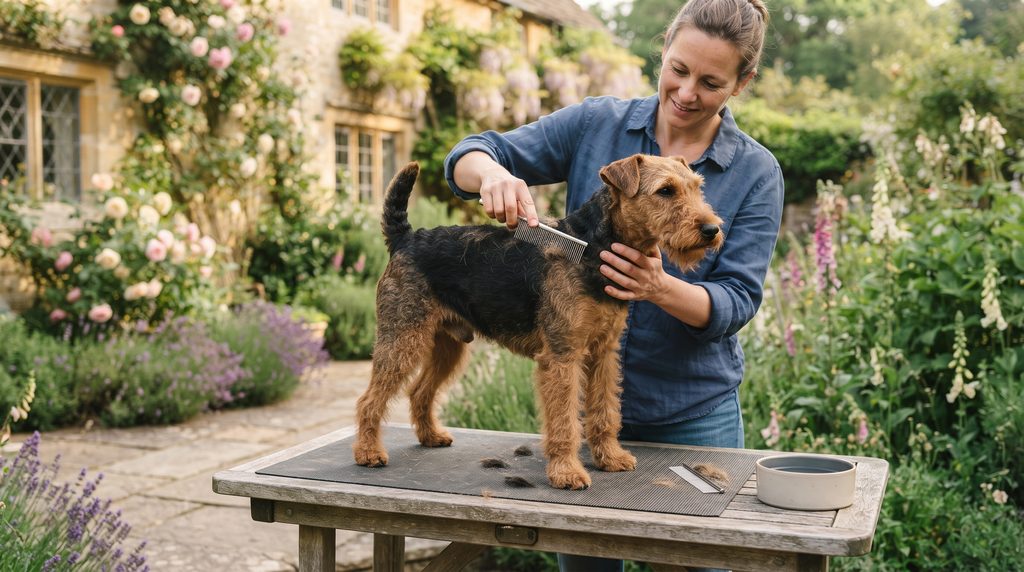
Lakeland Terrier Feeding and Nutrition
The Lakeland Terrier is a small, athletic, and naturally energetic breed that benefits from a carefully balanced diet suited to its size, age, activity level, and overall health. Although its ancestors developed impressive stamina while working across the rugged hills of England’s Lake District, most modern Lakeland Terriers live as household companions with more predictable daily routines. Their nutritional needs therefore depend on how much energy they actually expend rather than their historical working abilities. Providing appropriate portions of complete and balanced food helps maintain healthy muscle condition, supports normal bodily functions, and gives these lively little dogs the energy needed for everyday adventures.
Adult Lakeland Terriers generally weigh around 15–17 pounds, although healthy individual dogs may fall outside this range depending on their build and body condition. Because they are relatively small, modest changes in daily food intake can have a noticeable effect on their weight over time. A few additional treats or an oversized serving may represent a significant proportion of the dog’s total daily calorie requirements. Owners should therefore avoid estimating portions by eye and instead measure meals consistently, adjusting the amount according to the individual dog’s condition and veterinary recommendations.
Choosing a suitable food begins with nutritional completeness rather than marketing claims or fashionable ingredients. A good-quality commercial diet should provide the correct balance of protein, fat, essential fatty acids, vitamins, and minerals for the dog’s life stage. In the United States, owners can look for an Association of American Feed Control Officials (AAFCO) nutritional adequacy statement confirming that the food is complete and balanced for the intended life stage. A healthy adult Lakeland Terrier generally requires a maintenance diet, while puppies need food specifically formulated to support growth. Dogs with particular medical conditions may require a veterinary therapeutic diet.
Protein plays an important role in maintaining the Lakeland Terrier’s muscular, athletic structure. Adequate amounts of digestible protein supply the amino acids needed for normal tissue maintenance, muscle repair, and other essential functions. Dietary fat provides concentrated energy and contributes essential fatty acids that support healthy skin and coat function. However, more protein or fat is not automatically better, and there is no established requirement for Lakeland Terriers to consume unusually high-protein diets simply because they belong to a working terrier breed. Nutritional balance and individual suitability are more important than selecting food based on one prominent ingredient or nutrient percentage.
A healthy adult Lakeland Terrier will often do well with two measured meals each day. Dividing the daily allowance between morning and evening can help establish a predictable routine and makes it easier to monitor appetite. Some owners prefer using part of the dog’s regular food allowance during training, which is particularly practical for an intelligent breed that enjoys interactive activities. This approach allows positive reinforcement without adding large numbers of additional calories. Regardless of feeding frequency, the total daily intake should remain appropriate for the dog’s energy requirements.
Determining exactly how much to feed requires more than consulting the portion chart on a food package. Feeding guidelines provide useful starting estimates, but calorie requirements vary with age, body condition, neuter status, activity, and individual metabolism. A highly active Lakeland Terrier accompanying its owner on regular countryside hikes may require more energy than a quieter adult enjoying shorter daily walks. The calorie content of commercial foods also varies considerably, so equal-sized portions of different products may supply very different amounts of energy. Owners should consider the manufacturer’s calorie information alongside their dog’s weight trends and physical condition.
Body condition is one of the most useful indicators of whether a Lakeland Terrier is receiving an appropriate amount of food. At a healthy weight, the ribs should generally be easy to feel beneath a thin covering of tissue, with a visible waist when viewed from above and an abdominal tuck when viewed from the side. Because the breed’s wiry coat can conceal changes in body shape, regular hands-on assessment is particularly important. Owners should not rely exclusively on appearance or the number displayed on the scales. A veterinarian can help establish an appropriate target weight and body condition score for the individual dog.
Treats require careful management, especially during training. Lakeland Terriers are intelligent and enthusiastic learners, and food rewards can be highly effective for developing cooperation. However, treats, table scraps, and other extras should generally provide no more than 10% of total daily calories, leaving the remainder for complete and balanced meals. Small rewards are usually sufficient for a dog of this size, and larger treats can often be divided into several pieces. Owners should also account for edible chews and food used to administer medication, since these calories can accumulate without being included in the regular meal allowance.
Feeding Lakeland Terrier puppies requires particular attention to growth and development. Puppies need a complete and balanced growth diet that provides sufficient energy and nutrients without encouraging excessive weight gain. Young puppies generally benefit from three or four smaller meals daily, gradually transitioning toward fewer meals as they mature. Their portions should be reviewed regularly because nutritional requirements change throughout development. Owners should avoid adding calcium, vitamins, or other supplements to an appropriate commercial puppy food unless specifically directed by a veterinarian, as unnecessary supplementation can disrupt nutritional balance.
Senior Lakeland Terriers may need adjustments as their activity levels, muscle condition, or health change. Some older dogs require fewer calories because they exercise less, while others benefit from a diet that helps maintain muscle mass and adequate protein intake. Age alone does not automatically mean a dog needs a reduced-protein diet. Veterinary assessment is particularly important when an older Lakeland develops dental discomfort, unexplained weight changes, reduced appetite, or a diagnosed medical condition. In these circumstances, nutritional recommendations should address the dog’s actual needs rather than relying on a standard senior-food label.
Food sensitivities and digestive problems can occur in Lakeland Terriers, but the breed does not have a universally recognized requirement for a special diet or the routine avoidance of particular ingredients. Persistent itching, recurring ear inflammation, vomiting, or diarrhea may have several possible causes, including conditions unrelated to food. Owners should avoid repeatedly changing diets or eliminating entire ingredient groups without appropriate veterinary guidance. When a food allergy is suspected, a veterinarian may recommend a properly controlled elimination trial using a suitable diet. This is more reliable than choosing a food solely because it is advertised as hypoallergenic or grain-free.
Raw and homemade diets also deserve careful consideration. Although some owners prefer preparing their dogs’ meals, these approaches can create nutritional imbalances if they are not formulated correctly. Raw animal products may additionally carry harmful bacteria that pose risks to dogs and people handling the food. Anyone considering a long-term homemade diet should seek guidance from a board-certified veterinary nutritionist to ensure that essential nutrients are supplied in suitable proportions. For most healthy Lakeland Terriers, an established, complete and balanced commercial diet is a practical and dependable choice.
Fresh drinking water should always be available, particularly after energetic play, warm-weather walks, or extended outdoor activity. Owners should clean food and water bowls regularly and monitor changes in drinking habits. When introducing a new food, gradually mixing increasing amounts of the replacement diet into the existing food over approximately five to seven days can help reduce digestive upset. Dogs with sensitive digestion or medical conditions may require a more individualized transition. Persistent vomiting, diarrhea, marked appetite loss, or unusual thirst should be discussed with a veterinarian.
Ultimately, feeding a Lakeland Terrier successfully is about maintaining appropriate body condition, supplying balanced nutrition, and adapting meals to the dog’s changing needs. Its small size and energetic personality make consistent portion control particularly worthwhile, while regular assessment helps prevent gradual weight gain from affecting mobility and overall wellbeing. Owners who choose suitable food, measure portions, manage treats, and seek veterinary advice when necessary can support their Lakeland Terrier’s health and active lifestyle throughout every stage of life.
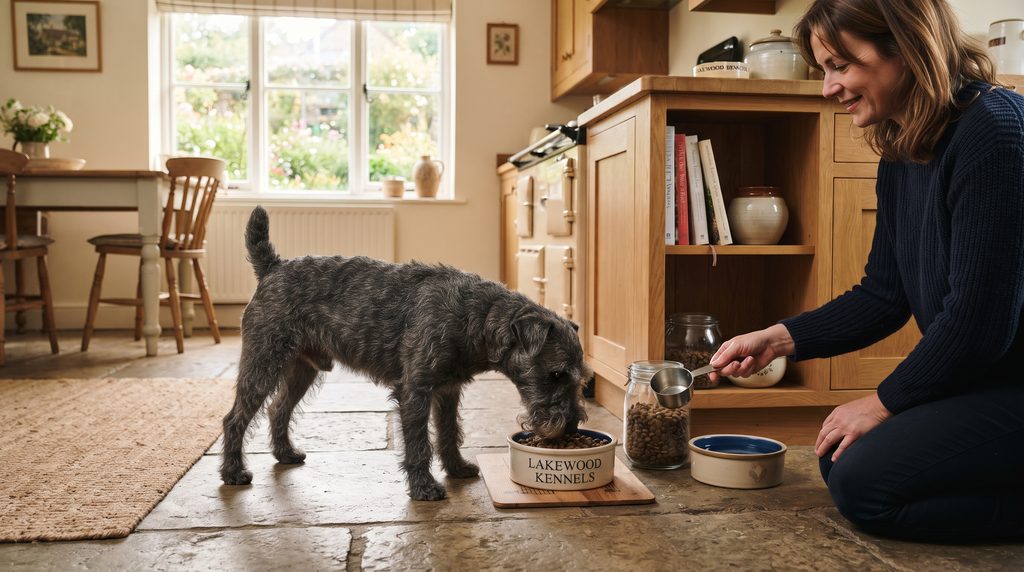
Keeping a Lakeland Terrier at a Healthy Weight
Because Lakeland Terriers are small, even modest amounts of additional food can contribute to unwanted weight gain. Measure meals using the feeding guidance for your chosen food, then adjust portions according to the dog’s body condition and veterinary recommendations. The ribs should be easy to feel beneath a light covering of tissue, with a recognizable waist and abdominal tuck. Remember that the breed’s wiry coat can conceal changes in body shape. Keep treats below 10% of daily calories, account for food used during training, and monitor weight regularly. Sudden weight changes or unexplained appetite differences should prompt veterinary assessment rather than an automatic change in feeding amounts.
Lakeland Terrier Health and Common Health Problems
The Lakeland Terrier is generally regarded as a healthy, hardy, and relatively long-lived small dog, reflecting its development as a capable working breed in England’s demanding Lake District. Its compact, athletic construction avoids many of the exaggerated physical characteristics associated with certain other breeds, and well-cared-for Lakelands frequently remain active into their senior years. Nevertheless, like all purebred dogs, the Lakeland Terrier can develop inherited disorders, age-related conditions, and everyday health problems that owners should understand. Particular attention should be given to eye health, certain orthopedic conditions, dental disease, and changes in skin or coat condition. Awareness of these potential problems helps owners recognize symptoms early and make informed decisions about veterinary care.
An important distinction is that a condition reported in a breed is not necessarily common throughout its population. Lakeland Terriers have a comparatively limited number of widely documented serious inherited disorders, and reliable prevalence figures are unavailable for several conditions discussed in veterinary breed references. Some problems are uncommon but important because of their potential severity, while others occur in many small dogs regardless of breed. Prospective owners should therefore avoid assuming that every Lakeland Terrier is likely to develop these conditions. Family health history, responsible breeding, appropriate preventive care, and prompt attention to changes in behavior or physical health all contribute to better outcomes.
Eye disorders deserve particular attention. One of the most significant conditions associated with Lakeland Terriers is primary lens luxation, a disorder in which the eye’s natural lens moves out of its normal position because the supporting fibers become weakened or break. Depending on where the lens moves, the condition can cause inflammation, increased pressure inside the eye, severe pain, and loss of vision. Primary lens luxation is particularly concerning because it may develop suddenly and require urgent veterinary treatment. Owners should seek immediate veterinary attention if their Lakeland develops a red or painful eye, sudden cloudiness, squinting, or apparent vision loss. Early intervention can be critical for protecting the affected eye.
Cataracts are another potential eye problem. A cataract develops when the normally transparent lens becomes cloudy, interfering with the passage of light and potentially reducing vision. Cataracts can occur with advancing age, although some forms have inherited or other medical causes. Owners may notice cloudiness within the eye, hesitation in unfamiliar surroundings, or difficulty navigating in reduced light. However, not every cloudy-looking eye has a cataract, and age-related changes to the lens can sometimes produce a similar appearance without the same degree of visual impairment. A veterinary examination is needed to establish the cause and determine whether treatment or specialist assessment is appropriate.
Other reported eye abnormalities include distichiasis, in which additional eyelashes grow from abnormal positions along the eyelid margin, and microphthalmia, a developmental condition involving an abnormally small eye. Distichiasis may cause irritation, excessive tearing, blinking, or damage to the surface of the eye when the hairs contact the cornea. Some affected dogs experience little discomfort, while others require treatment. Microphthalmia is uncommon but may be associated with impaired vision or additional abnormalities within the eye. These conditions reinforce the importance of having unusual ocular appearances or persistent irritation examined rather than assuming they are harmless breed characteristics.
Legg-Calvé-Perthes disease is an orthopedic condition reported in Lakeland Terriers and several other small breeds. It affects the head of the femur, the rounded upper portion of the thigh bone that fits into the hip socket. Disruption of the blood supply causes deterioration of the bone and may eventually lead to painful joint damage. The condition typically becomes apparent in young dogs, often during their first year of life. Signs can include progressive hind-leg lameness, reluctance to exercise, discomfort when the hip is moved, or loss of muscle around the affected limb. Diagnosis usually involves veterinary examination and imaging, with treatment determined by the severity of the damage. Surgery is frequently recommended for significantly affected dogs.
Patellar luxation is another orthopedic problem that may occur in Lakeland Terriers. This condition develops when the kneecap moves out of its normal position within the groove at the front of the knee. Some dogs experience intermittent symptoms, such as briefly lifting a hind leg or skipping several steps before walking normally again. More severe cases can cause persistent lameness, pain, or abnormal joint movement. Treatment depends on the degree of displacement and its effect on the dog’s comfort and mobility. Mild cases may require monitoring and weight management, while dogs with significant clinical problems may need surgery. Owners should not dismiss repeated hopping or unexplained lameness simply because the dog appears energetic between episodes.
Dental disease is a particularly practical concern because Lakeland Terriers, like many small dogs, can develop plaque accumulation, tartar, and inflammation of the gums. As periodontal disease progresses, infection and damage to the tissues supporting the teeth may cause discomfort, loose teeth, or eventual tooth loss. Dogs frequently continue eating despite considerable dental pain, so owners should watch for persistent bad breath, red gums, difficulty chewing, or reluctance to allow handling around the mouth. Daily toothbrushing with dog-safe toothpaste is one of the most effective preventive measures. Regular veterinary dental examinations and professional cleaning when necessary can help maintain oral health throughout the dog’s life.
Skin allergies and irritation can also affect Lakeland Terriers, although these problems are not unique to the breed. Environmental allergens, parasites, infections, and occasionally food-related reactions may cause itching, redness, recurrent ear inflammation, or excessive licking of the paws. The Lakeland’s dense wiry coat can sometimes conceal early skin changes, making regular hands-on inspection useful. Owners should investigate persistent scratching, unpleasant odors, inflamed skin, or recurring hot spots rather than repeatedly changing grooming products without understanding the cause. Appropriate treatment depends on identifying the underlying problem, which may require veterinary examination, parasite assessment, or a carefully managed diagnostic plan.
Less frequently reported conditions include hypothyroidism, certain congenital heart abnormalities, and bleeding disorders such as von Willebrand disease. These have been mentioned in breed health literature, but available information does not establish them as widespread problems among Lakeland Terriers. Owners should remain attentive to unexplained fatigue, exercise intolerance, unusual bleeding, or other persistent changes without assuming that these symptoms indicate a particular inherited disease. Routine veterinary examinations and targeted investigations provide a more reliable approach than attempting to diagnose uncommon conditions from generalized breed information.
Preventive healthcare is especially valuable for maintaining the Lakeland Terrier’s active lifestyle. Regular veterinary examinations provide opportunities to assess body condition, joint mobility, heart and lung function, dental health, skin condition, and changes in vision. Vaccinations should be tailored to the dog’s individual circumstances and regional disease risks, while parasite prevention should reflect local exposure to fleas, ticks, intestinal parasites, and heartworm where relevant. Owners should also discuss appropriate screening as their dog ages, particularly if changes in appetite, drinking, weight, mobility, or energy become apparent.
Maintaining a healthy body weight is one of the most useful ways to protect the Lakeland Terrier’s long-term wellbeing. Excess weight places additional strain on the joints and can make existing orthopedic problems more uncomfortable. Because the breed’s coat can disguise gradual weight gain, owners should regularly feel the ribs and monitor body condition rather than relying solely on visual appearance. Appropriate exercise, measured feeding, and timely veterinary treatment can help preserve mobility. A sudden reluctance to jump, climb stairs, or participate in familiar activities should not automatically be attributed to stubbornness or normal aging.
Owners should also understand when a symptom requires urgent veterinary attention. Sudden eye pain or vision loss, difficulty breathing, collapse, severe unexplained lameness, repeated vomiting with marked weakness, and uncontrolled bleeding are all reasons to seek immediate professional care. Lakeland Terriers are often confident and determined dogs, and some individuals may continue attempting normal activities despite discomfort. Recognizing subtle changes in movement, expression, appetite, and behavior can therefore be particularly useful. Veterinary intervention is generally more effective when problems are identified before they become advanced.
Ultimately, the Lakeland Terrier’s reputation for robustness is well deserved, but it should never replace responsible preventive care or careful attention to potential health concerns. Eye conditions, developmental hip disease, kneecap instability, and dental problems are particularly worthwhile areas for owners to understand, while other reported disorders remain comparatively uncommon or poorly quantified. Choosing a responsible breeder, reviewing family health history, maintaining appropriate veterinary care, and responding promptly to warning signs can help give this spirited little terrier the best possible opportunity for a long, comfortable, and active life.
Health Warning Signs Lakeland Owners Should Recognize
A Lakeland Terrier may remain energetic even when experiencing discomfort, so subtle changes deserve attention. Sudden eye redness, cloudiness, squinting, or apparent vision loss can indicate a serious eye problem and require immediate veterinary assessment. Repeated skipping, hind-leg lameness, or reluctance to jump may suggest an orthopedic condition. Persistent bad breath, inflamed gums, excessive scratching, and recurring ear irritation also warrant investigation. Monitor appetite, drinking habits, body weight, and activity as your dog matures. Regular examinations help establish what is normal for the individual Lakeland Terrier, making unusual changes easier to recognize before they become more serious.
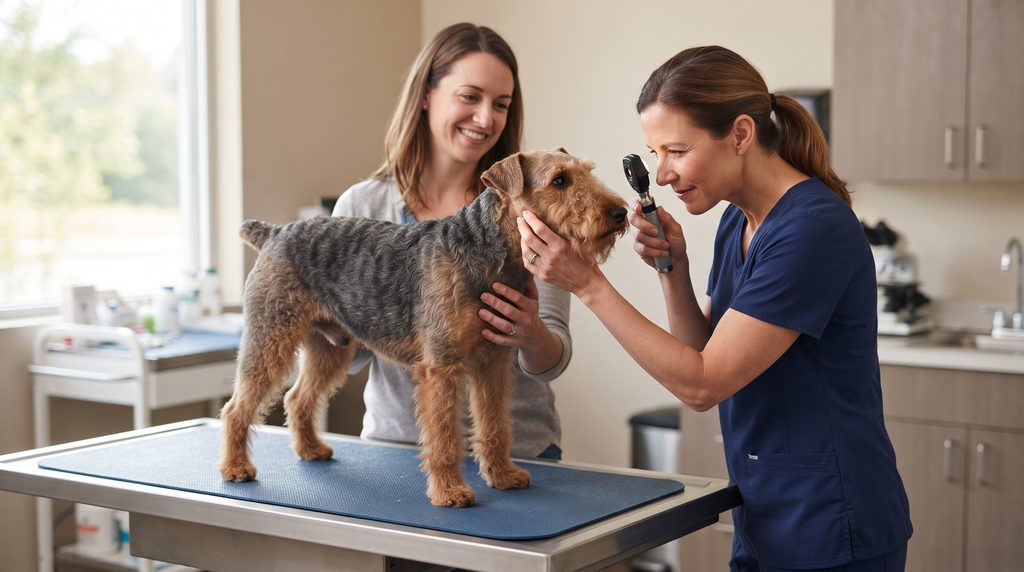
Lakeland Terrier Health Screening and Inherited Conditions
Responsible health screening plays an important role in preserving the Lakeland Terrier’s reputation as a hardy, athletic, and relatively long-lived breed. Although these small English terriers generally enjoy good health, inherited conditions can occur, and prospective owners should understand how breeders evaluate the dogs they intend to use for breeding. The purpose of screening is not to guarantee that every puppy will remain free from disease, but to identify known risks, support informed breeding decisions, and reduce the likelihood of passing preventable conditions to future generations. For the Lakeland Terrier, eye health and the thoughtful use of available genetic testing deserve particular consideration.
An important characteristic of the breed is that its health-testing recommendations differ between countries and canine organizations. In the United States, the American Kennel Club currently lists no formally recommended health tests from the national breed club for Lakeland Terriers. This reflects the position of the United States Lakeland Terrier Club, which has historically considered the breed relatively healthy and has not required a standardized panel of tests. However, the absence of mandatory testing should never be interpreted as evidence that screening has no value. Responsible breeders may still choose to investigate particular conditions, monitor family health histories, and use appropriate veterinary examinations to support their breeding decisions.
The United Kingdom takes a somewhat different approach. The Royal Kennel Club includes eye examination through the BVA/RKC/ISDS Eye Scheme within its Best Practice health recommendations for Lakeland Terriers. This provides a structured method for identifying certain inherited or potentially inherited eye abnormalities. The recommendation is particularly relevant because eye problems, including lens luxation, have been documented in the breed. Prospective owners should therefore recognize the distinction between a formal requirement, an organizational recommendation, and an additional test selected by an individual breeder. These categories are not interchangeable, and the most appropriate approach depends on current breed guidance and the health history of the breeding dogs.
Primary lens luxation is one of the most important inherited conditions for Lakeland Terrier breeders to understand. It occurs when the fibers supporting the eye’s natural lens weaken or fail, allowing the lens to move away from its normal position. This displacement can cause significant pain, inflammation, glaucoma, and potentially permanent vision loss. A mutation in the ADAMTS17 gene has been associated with inherited primary lens luxation in several terrier breeds, including the Lakeland Terrier. A DNA test is available to identify the relevant genetic variant, allowing breeders to assess the risk associated with particular breeding combinations.
The inheritance of the tested form of primary lens luxation is generally autosomal recessive. This means that a dog inheriting two copies of the associated variant is at substantially greater risk of developing the condition than one carrying only a single copy. A dog with one copy is classified as a carrier and can pass that variant to its offspring. Importantly, carriers are not necessarily completely free from risk themselves, although their likelihood of developing the disease is much lower. Breeding decisions should therefore consider the genetic status of both parents and be guided by an understanding of how the condition is inherited.
DNA results are usually reported as clear, carrier, or genetically affected or high risk. A clear result indicates that the particular disease-associated variant was not detected, while a carrier result identifies one copy. An affected or high-risk result identifies two copies of the tested variant. These classifications are valuable for understanding inherited risk, but they do not provide a complete assessment of the dog’s eye health. A clear result for primary lens luxation does not rule out cataracts, other eye disorders, or lens displacement caused by injury or unrelated disease. Owners should always understand exactly which condition and genetic variant a test evaluates.
Importantly, responsible breeding does not necessarily require eliminating every healthy carrier from the breeding population. When an autosomal recessive disorder is involved, carefully planned matings can avoid producing genetically affected puppies while preserving valuable genetic diversity. A carrier bred to a genetically clear dog would not be expected to produce puppies with two copies of the tested variant, although some offspring may themselves be carriers. Breeding choices should account for the individual dog’s overall health, temperament, structure, family history, and genetic contribution to the population. Excluding otherwise healthy dogs unnecessarily can reduce the diversity of an already relatively uncommon breed.
Veterinary ophthalmic examinations provide another important layer of screening. A qualified veterinary ophthalmologist can examine the eyes for abnormalities that a DNA test alone cannot identify, including certain lens changes, cataracts, and structural problems. Some inherited eye diseases develop later in life, so a normal examination at a young age does not necessarily guarantee that abnormalities will never appear. Breeders may arrange repeat examinations where appropriate, particularly when advised by a specialist or when a family history raises concerns. These examinations are valuable because inherited eye health involves more than a single known mutation.
Orthopedic health may also be considered when evaluating breeding Lakeland Terriers. Patellar luxation and Legg-Calvé-Perthes disease have been reported in the breed, although they are not subject to a universal Lakeland Terrier-specific testing requirement in the United States. Patellar evaluation can identify abnormal movement of the kneecap, while concerns about hip discomfort or abnormal development may justify clinical assessment and diagnostic imaging. Legg-Calvé-Perthes disease does not have a routinely established, reliable single-gene screening test for Lakeland Terriers. Consequently, examination findings and family medical histories are particularly important when assessing these risks.
Some conscientious breeders also choose to arrange cardiac examinations or other investigations when family history or veterinary advice justifies them. The United States Lakeland Terrier Club has acknowledged that certain breeders voluntarily examine eyes, hearts, or patellas as a precautionary measure. However, these optional checks should not be presented as mandatory national breed-club requirements. Equally, the existence of a commercial genetic testing panel does not automatically mean that every condition included on it is established as a significant inherited concern in Lakeland Terriers. Responsible screening should be informed by recognized veterinary evidence rather than the number of tests a breeder can advertise.
Genetic diversity is especially relevant to the long-term health of relatively uncommon breeds. Maintaining a sufficiently varied breeding population helps reduce the risks associated with excessive inbreeding and the concentration of harmful inherited variants. Responsible Lakeland Terrier breeders should consider relationships between prospective parents, broader pedigree information, and the genetic contribution of frequently used breeding dogs. Selecting breeding pairs solely for fashionable coat colors, show achievements, or repeated use of a particularly successful bloodline may create avoidable difficulties over time. Preserving the breed’s sound structure, stable temperament, and working character should remain important alongside screening for identifiable health conditions.
Prospective owners should feel comfortable asking breeders direct questions about health testing and family history. Useful information includes whether either parent has undergone specialist eye examination, whether DNA testing for primary lens luxation has been considered, and whether any close relatives have experienced significant eye or orthopedic problems. Where testing has been performed, breeders should be willing to explain the results and provide supporting documentation. Some results can be checked through recognized registries, including the Orthopedic Foundation for Animals in the United States or the Royal Kennel Club’s health records in Britain. Transparent communication is more informative than broad claims that an entire bloodline has never experienced health problems.
Health screening should also continue to influence responsible ownership after a puppy has joined its new home. A normal genetic result does not eliminate the need for routine veterinary examinations, and inherited conditions can sometimes become apparent only as a dog matures. Sudden redness, cloudiness, squinting, or apparent loss of vision requires urgent veterinary attention, regardless of previous screening results. Unexplained lameness, changes in mobility, or persistent discomfort also deserve investigation. Keeping accurate health records and informing the breeder of significant diagnoses may help identify patterns within related dogs and improve future breeding decisions.
Ultimately, Lakeland Terrier health screening is most effective when viewed as part of a wider commitment to responsible breeding rather than a simple checklist. DNA testing for primary lens luxation, appropriate eye examinations, consideration of orthopedic health, and careful pedigree management all have potential value when used thoughtfully. The breed’s generally favorable health reputation is encouraging, but it should not discourage open discussion of inherited risks. Owners who seek knowledgeable breeders, understand the limitations of individual tests, and maintain good veterinary care are better equipped to support the health of their Lakeland Terrier and the future wellbeing of the breed.
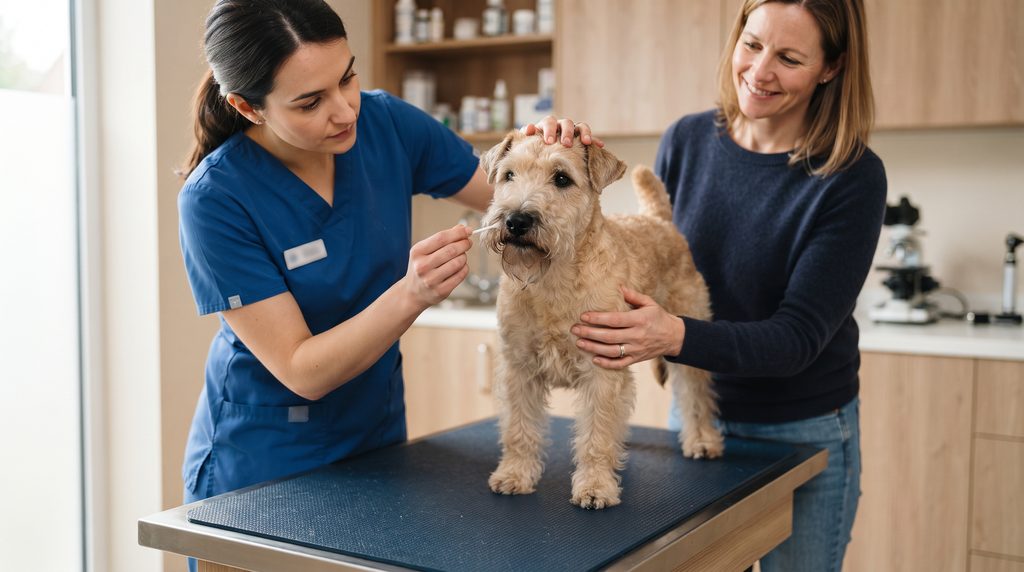
Understanding Lakeland Terrier Health Testing Requirements
The American Kennel Club currently lists no formally recommended national breed-club health tests for Lakeland Terriers. However, the Royal Kennel Club includes specialist eye examinations among its Best Practice recommendations. DNA testing is also available for the ADAMTS17 variant associated with primary lens luxation. Responsible breeders may additionally arrange veterinary assessments of the eyes, knees, or heart where appropriate. No single test can guarantee a healthy puppy, and a clear genetic result does not exclude unrelated conditions. Prospective owners should ask which examinations have been performed, request documented results when available, and discuss significant medical problems affecting close relatives. Transparent health records and thoughtful breeding decisions are more valuable than unsupported assurances.
Lakeland Terrier Lifespan and Aging
The Lakeland Terrier is a relatively long-lived small dog, with a typical life expectancy of approximately 12–15 years. Many individuals remain energetic, curious, and affectionate well into their senior years, reflecting the breed’s naturally athletic construction and reputation for resilience. Developed for demanding work across England’s rugged Lake District, the Lakeland Terrier possesses a combination of physical toughness and lively intelligence that can remain evident throughout much of its life. However, longevity depends on several factors, including genetics, nutrition, body condition, preventive healthcare, and the management of age-related conditions. Understanding how these dogs mature helps owners provide appropriate care while preserving the qualities that make the breed such an engaging companion.
Research provides encouraging evidence of the breed’s longevity. A major British study published in Scientific Reports in 2024 examined lifespan patterns across more than half a million dogs and reported a median lifespan of 14.2 years for the Lakeland Terrier. This placed the breed among the longer-lived dogs included in the research. The figure is particularly useful because it is based on population data rather than simply an estimated breed range. However, a median does not predict an individual dog’s lifespan, and results from a British population may not apply equally to every country or breeding population. Some Lakeland Terriers live considerably longer than the typical range, while others develop health problems that shorten their lives.
The breed’s relatively small size may contribute to its favorable longevity. Smaller dogs generally live longer than larger breeds, although substantial variation exists between individuals and breeds. The Lakeland Terrier also benefits from a functional physical structure without the extreme body proportions or exaggerated facial features that can create particular health difficulties in certain other dogs. Its compact, athletic build was developed for agility and endurance rather than purely decorative purposes. Nevertheless, sound construction does not eliminate inherited disease, and responsible breeding remains important for maintaining the breed’s long-term health.
Aging tends to occur gradually, and there is no exact birthday at which every Lakeland Terrier becomes a senior. Some individuals begin displaying subtle changes around eight to ten years of age, while others remain remarkably active well beyond this stage. Owners may notice that a previously tireless dog takes longer to recover from demanding outings, sleeps more deeply after exercise, or prefers familiar routines over intense activity. These changes can be part of normal maturation, but they should not automatically be dismissed as inevitable aging. Pain, dental disease, vision problems, and other treatable conditions may produce similar changes in behavior.
Mobility deserves particular attention as a Lakeland Terrier grows older. Although the breed is naturally agile, years of running, jumping, and navigating uneven ground can contribute to wear on joints and supporting tissues. Arthritis may develop gradually, sometimes presenting as stiffness after rest, hesitation before jumping, reduced enthusiasm for stairs, or difficulty settling comfortably. Because Lakeland Terriers are determined dogs, some continue participating in familiar activities despite discomfort. Owners should recognize changes in movement and seek veterinary assessment rather than assuming the dog is simply becoming less enthusiastic. Appropriate pain management, environmental adjustments, and controlled exercise can make a substantial difference.
Regular physical activity remains important during the senior years, but exercise should be adapted to the individual dog’s comfort and stamina. Many older Lakeland Terriers continue enjoying daily walks, gentle exploring, and familiar games, even when they no longer have the endurance for long countryside adventures. Shorter outings may be preferable to a single demanding walk, particularly for dogs with joint stiffness or reduced cardiovascular fitness. Allowing time to investigate interesting scents provides valuable mental stimulation without requiring strenuous movement. Owners should monitor recovery after exercise and avoid pushing an older dog to maintain the pace it enjoyed during early adulthood.
Weight management becomes increasingly important as activity levels change. A senior Lakeland Terrier that exercises less may require fewer calories, although dietary adjustments should be based on body condition rather than age alone. Excess weight can place additional pressure on aging joints and contribute to reduced mobility, while unintended weight loss may indicate dental discomfort, metabolic disease, or another underlying problem. Because the breed’s dense wiry coat can conceal changes in body shape, owners should regularly feel the ribs and monitor muscle condition. Veterinary advice can help distinguish normal changes in body composition from problems requiring investigation.
Dental health is another significant consideration. Many small dogs develop periodontal disease as they age, and Lakeland Terriers are no exception. Accumulated plaque and tartar can lead to gum inflammation, infection, loose teeth, and considerable discomfort. An older Lakeland may continue eating despite dental pain, making changes difficult to recognize. Persistent bad breath, reluctance to chew hard food, dropping food, or sensitivity around the mouth can indicate a problem. Daily toothbrushing and regular veterinary dental assessments remain valuable throughout life. Advanced age alone should not be a reason to leave painful dental disease untreated; individual anesthetic risks and treatment options should be discussed with a veterinarian.
Vision and hearing may also change during the later years. Some Lakeland Terriers develop age-related lens changes or cataracts, while others experience gradual reductions in hearing. Because certain eye disorders have been reported in the breed, new cloudiness, persistent squinting, eye redness, or sudden changes in vision deserve particular attention. A dog that appears reluctant to navigate unfamiliar surroundings or becomes startled when approached may be experiencing sensory changes rather than behavioral stubbornness. Maintaining familiar furniture arrangements, using consistent communication, and approaching the dog where it can see or hear you can help preserve confidence. Sudden eye pain or vision loss always requires urgent veterinary care.
Changes in sleep patterns, awareness, and behavior can occasionally indicate canine cognitive dysfunction, a condition associated with aging in some dogs. Owners may notice confusion in familiar rooms, disrupted sleep, unusual vocalization, changes in social interaction, or previously reliable house-training habits deteriorating. However, these signs can also result from pain, hearing loss, urinary problems, or other medical conditions. Veterinary assessment is therefore essential before assuming that a senior Lakeland Terrier is experiencing cognitive decline. Predictable routines, gentle mental stimulation, appropriate medical treatment, and environmental support can help maintain comfort and quality of life.
Preventive veterinary care becomes particularly valuable as the Lakeland Terrier enters its later years. Many veterinarians recommend examinations approximately every six months for senior dogs, although the ideal schedule depends on the individual’s health. These appointments provide opportunities to assess weight, muscle condition, joint mobility, dental health, vision, heart function, and behavioral changes. Blood tests and urinalysis may help identify developing medical problems before obvious symptoms appear. Owners should keep a record of changes in appetite, drinking, mobility, sleep, and activity, since seemingly minor observations can provide useful information during veterinary consultations.
Grooming may also require adjustment. An older Lakeland Terrier may find prolonged standing on a grooming table uncomfortable, particularly if arthritis or reduced muscle strength develops. Shorter sessions, nonslip surfaces, supportive handling, and a comfortable grooming position can make maintenance easier. Some owners choose a practical clipped coat when traditional hand-stripping becomes difficult for an elderly dog to tolerate. The dog’s comfort should take priority over maintaining an elaborate show-style appearance. Regular coat checks remain important because older dogs may be less able to groom themselves or communicate discomfort associated with tangles and irritated skin.
As a Lakeland Terrier approaches advanced age, quality of life becomes more important than maintaining a particular activity level or reaching a specific birthday. A senior dog can continue enjoying familiar people, comfortable rest, gentle exploration, and small daily pleasures even when its physical abilities decline. Owners should pay attention to appetite, mobility, sleep, social engagement, and the balance between comfortable and difficult days. If a serious or progressive illness develops, veterinary guidance can help establish an appropriate treatment or palliative-care plan. Decisions should be based on the individual dog’s wellbeing rather than age alone.
Ultimately, the Lakeland Terrier’s encouraging longevity gives many families the opportunity to enjoy a long and rewarding relationship with this lively English breed. Its confident personality, curiosity, and affectionate nature often remain recognizable even as the pace of daily life becomes gentler. With appropriate nutrition, regular veterinary care, adapted exercise, and thoughtful attention to changing needs, many Lakeland Terriers can continue enjoying comfortable, fulfilling lives well into their teens. The goal is not simply to extend lifespan, but to preserve the health, dignity, companionship, and everyday enjoyment that make those later years so valuable.
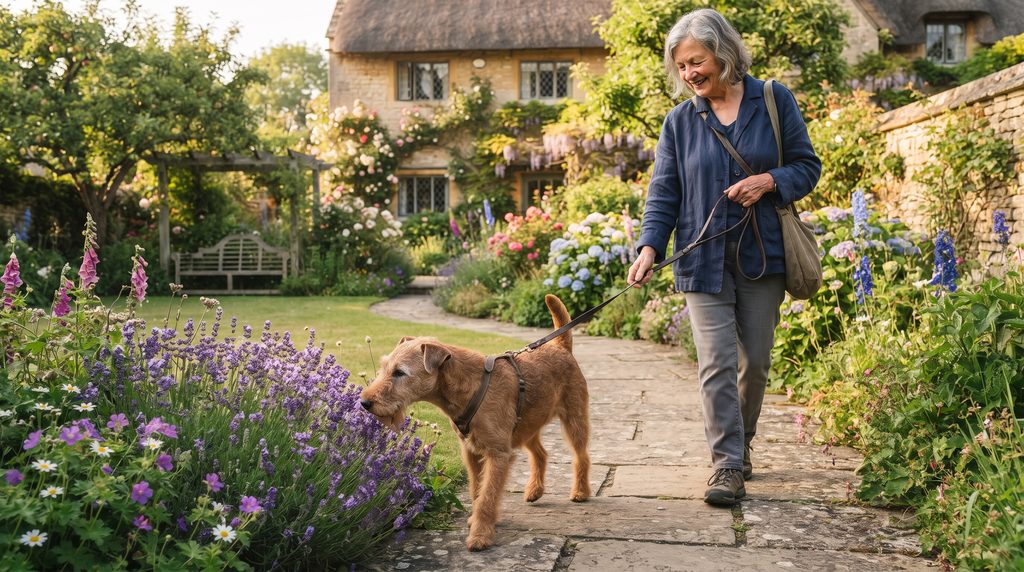
Cost of Owning a Lakeland Terrier
The cost of owning a Lakeland Terrier extends well beyond bringing a puppy or adult dog into the household. Although its compact size can make certain everyday expenses relatively manageable, this spirited English terrier has particular requirements that deserve careful financial planning. Regular professional grooming, preventive veterinary care, quality nutrition, training, and appropriate equipment all contribute to the long-term commitment. The breed’s relatively low food consumption may offer some savings compared with larger dogs, but its specialized wiry coat can make grooming considerably more expensive than owners initially expect. Understanding these costs helps prospective families prepare realistically for the responsibilities of Lakeland Terrier ownership.
As a broad planning estimate, many American households should allow approximately $1,500–$3,500 annually for routine Lakeland Terrier care, with higher expenses possible depending on grooming arrangements, veterinary costs, insurance, and local living expenses. This is an illustrative budget rather than a published breed-specific average, and it does not include the initial acquisition of the dog or unexpected major medical treatment. Owners using specialist hand-stripping services, professional dog walkers, or regular boarding facilities may spend substantially more. Conversely, families who manage appropriate routine care themselves may have lower ongoing expenses.
The initial financial commitment varies according to whether a Lakeland Terrier comes from a responsible breeder or a reputable rescue organization. The breed is relatively uncommon in the United States, and established breeders may produce only occasional litters. Prospective owners should expect that locating a suitable puppy may involve considerable research, travel, and time on a waiting list. A responsible breeder’s arrangements should reflect appropriate care of breeding dogs, veterinary attention, early socialization, and a commitment to the puppies’ long-term welfare. An adoption fee may be lower than the cost of obtaining a responsibly bred puppy, but it does not eliminate the ongoing expenses of ownership.
Preparing the home creates additional first-year costs. A secure crate or comfortable resting area, suitable bedding, food and water bowls, a well-fitting harness, collar, identification tags, leash, and appropriate toys are all useful purchases. Lakeland Terriers are curious, determined dogs, so durable and correctly sized equipment is particularly important. Owners with gardens may also need to repair fencing or secure gaps beneath gates. Because these small terriers can investigate surprisingly narrow openings, ensuring the outdoor environment is safe may be a more significant expense than anticipated. These preparations are investments in everyday safety rather than optional decorative purchases.
Food represents a predictable recurring expense. An adult Lakeland Terrier generally weighs around 15–17 pounds and consumes considerably less food than a large working or sporting breed. Depending on the chosen diet, owners might budget approximately $250–$600 annually for complete and balanced commercial food, although premium fresh diets, veterinary therapeutic foods, and particular feeding preferences can increase costs. Treats and edible chews should be included in the household allowance rather than treated as insignificant extras. The most economical feeding approach is not necessarily the cheapest product, but one that provides suitable nutrition, maintains healthy body condition, and avoids unnecessary supplements.
Grooming is one of the most distinctive expenses associated with Lakeland Terrier ownership. The breed’s harsh double coat traditionally requires hand-stripping to maintain its characteristic texture and appearance. Finding a professional experienced in this technique may be difficult, especially outside larger population centers or areas with established terrier enthusiasts. Specialist hand-stripping generally costs more than an ordinary clipping appointment because it demands additional skill and time. Depending on the dog’s coat, appointment frequency, and local charges, professional coat maintenance can account for several hundred dollars to well over $1,000 annually.
Owners who choose a practical clipped companion trim may reduce some grooming expenses, although the coat will generally become softer and may lose some of its traditional color definition. Routine brushing, combing, beard cleaning, nail trimming, and attention to the ears remain necessary regardless of styling method. Purchasing appropriate brushes, combs, and basic maintenance equipment can reduce reliance on additional services between appointments. However, learning to hand-strip properly requires instruction and practice, and owners should not assume that specialized coat care can be mastered immediately. A sensible grooming budget should reflect both the chosen method and the dog’s comfort.
Routine veterinary care is another essential commitment. Annual examinations, appropriate vaccinations, parasite prevention, and dental assessments form the foundation of responsible ownership. Veterinary expenses vary significantly between American regions and practices, but allowing several hundred dollars each year for routine preventive services and medications is a reasonable starting point. Some years will involve additional blood tests, dental treatment, diagnostic imaging, or management of an illness. Although Lakeland Terriers are generally considered a healthy breed, their favorable reputation does not eliminate the possibility of unexpected veterinary expenses.
Dental care deserves particular financial consideration because small dogs can develop periodontal disease requiring professional treatment. Daily toothbrushing is inexpensive and can help reduce plaque accumulation, but it does not guarantee that professional dental cleaning will never be necessary. Veterinary dental procedures may involve anesthesia, radiographs, cleaning below the gumline, and treatment of diseased teeth. Costs can be substantial, particularly when extractions are required. Setting aside funds for dental treatment is therefore sensible even when a Lakeland Terrier appears healthy and continues eating normally.
Inherited and acquired health conditions can also create financial pressure. Eye problems such as primary lens luxation may require urgent specialist assessment and potentially expensive treatment. Orthopedic conditions, including patellar luxation or Legg-Calvé-Perthes disease, can sometimes require imaging, medication, rehabilitation, or surgery. These are not inevitable outcomes, and many Lakeland Terriers never experience significant hereditary disease. Nevertheless, the possibility of an unexpected medical emergency should form part of financial planning. A dog that suddenly requires specialist treatment can generate expenses far beyond an ordinary annual care budget.
Pet insurance is one way of managing some of this uncertainty. Policies vary according to the dog’s age, location, medical history, coverage limits, deductibles, reimbursement percentages, and exclusions. As an industry benchmark, North American Pet Health Insurance Association data for 2025 placed average annual U.S. accident-and-illness premiums for dogs at approximately $836, although individual Lakeland Terrier quotations may differ substantially. Owners should examine waiting periods, preexisting-condition exclusions, annual limits, and the treatment of hereditary disorders before selecting coverage. Alternatively, maintaining a dedicated emergency fund can help households manage unexpected expenses, although substantial veterinary bills may exceed the amount saved.
Training and enrichment should also be considered. Lakeland Terriers are intelligent, independent dogs that benefit from consistent positive reinforcement and engaging activities. Group puppy classes, individual training sessions, secure exercise facilities, and occasional canine sports can all contribute to a rewarding ownership experience. Formal training is not necessary for every activity, and many useful exercises can be practiced at home, but professional assistance may be valuable when addressing specific behavioral challenges. Budgeting for appropriate training early can help prevent manageable problems from becoming more difficult or expensive later.
Lifestyle-related expenses can vary just as widely. Owners who work long hours may need professional dog walkers or occasional daycare, while frequent travelers may require boarding or reliable pet-sitting arrangements. Lakeland Terriers often enjoy accompanying their families on adventures, but their energetic nature and confident personality make choosing suitable caregivers important. Costs can also arise from replacing worn harnesses, maintaining secure fencing, purchasing weather-appropriate equipment, and arranging additional care during illness or family emergencies. These expenses may be occasional rather than monthly, but they are worth considering before making a long-term commitment.
Over a potential lifespan of 12–15 years, even moderate annual expenses represent a substantial financial responsibility. Veterinary costs may rise during the senior years, while changing mobility, dental health, or chronic conditions can require additional treatment. Inflation and changes in household circumstances should also be considered. A family that can comfortably afford routine puppy care today should think about whether it can continue providing appropriate support as the dog ages. Planning ahead is particularly important for a breed that may remain an active family companion for well over a decade.
Ultimately, the Lakeland Terrier is not necessarily an expensive breed to feed or accommodate, but its grooming requirements and potential veterinary needs make responsible budgeting essential. Owners should look beyond the initial cost and consider the full financial commitment involved in providing safe surroundings, appropriate nutrition, professional coat care, preventive healthcare, and meaningful companionship. With thoughtful preparation, the Lakeland Terrier can offer many years of enjoyment without creating avoidable financial pressure. The most important investment is a realistic commitment to meeting the dog’s needs throughout its entire life.
The Lakeland Terrier’s Biggest Budget Consideration
Specialist grooming is an expense prospective Lakeland Terrier owners should investigate before bringing a dog home. Maintaining the breed’s traditional harsh coat through hand-stripping requires a knowledgeable groomer, and these services may cost considerably more than ordinary clipping. Ask local grooming professionals about their experience with wire-coated terriers, appointment frequency, and expected charges. Also budget for regular veterinary care, parasite prevention, food, dental treatment, and an emergency fund or suitable pet insurance. As a broad planning guide, annual routine ownership expenses may reach several thousand dollars, depending on individual circumstances. Preparing for these commitments helps ensure that cost does not interfere with the dog’s long-term care.

Choosing a Lakeland Terrier Puppy or Rescue
Choosing a Lakeland Terrier puppy or adopting an adult dog is an important decision that deserves careful research, particularly because this distinctive English breed is relatively uncommon. Although Lakeland Terriers are appealing for their compact size, affectionate personalities, and attractive wiry coats, their independent nature and strong working instincts make finding a suitable individual especially important. Prospective owners should consider temperament, health, early experiences, grooming requirements, and the realities of living with an energetic terrier before making a commitment. Whether choosing a puppy from a responsible breeder or welcoming an older rescue dog, the goal should be to establish a secure, lasting relationship that meets the needs of both the dog and its new household.
Finding responsibly bred Lakeland Terrier puppies may require patience. Unlike more widely established companion breeds, Lakeland Terriers are maintained by a relatively small community of dedicated breeders in the United States and elsewhere. Planned litters may be infrequent, and suitable puppies are not necessarily available when a family first begins searching. The United States Lakeland Terrier Club maintains breeder information and provides guidance for prospective owners, making it a useful starting point. Waiting for a carefully bred, appropriately raised puppy is preferable to making a rushed decision based solely on immediate availability.
A responsible breeder should demonstrate a genuine understanding of the Lakeland Terrier’s working heritage, temperament, health, and traditional coat requirements. Their breeding decisions should prioritize physical soundness, stable behavior, and preservation of recognizable breed characteristics rather than fashionable appearances or unusual marketing claims. Ideally, prospective owners should have an opportunity to meet the breeder, observe the environment in which the puppies are raised, and discuss the characteristics of the parents. When an in-person visit is impractical, a live video conversation and appropriate documentation may provide useful additional information, although neither replaces careful evaluation of the breeder’s practices.
The puppy’s mother can offer valuable insight into the temperament and appearance that may be expected as the litter matures. A well-adjusted adult Lakeland Terrier should generally appear confident, alert, and comfortable in familiar surroundings. Some individuals may initially observe unfamiliar visitors rather than approaching immediately, but persistent fearfulness or threatening behavior deserves closer consideration. The mother should be in appropriate physical condition and interact comfortably with her puppies. The father may live elsewhere, particularly when breeders select a suitable mate from another established breeding program, but information about his temperament, health, and pedigree should still be available.
Health history is another essential part of selecting a responsibly bred Lakeland Terrier. Although the American Kennel Club does not currently list a mandatory national breed-club health-testing panel, prospective owners should still ask what veterinary evaluations or genetic investigations have been undertaken. Primary lens luxation is a relevant inherited eye condition for which a DNA test is available. Specialist eye examinations and other assessments may also be appropriate, depending on family history and the breeder’s veterinary advice. A responsible breeder should be willing to discuss known health concerns honestly, explain available test results, and provide information about significant conditions affecting close relatives.
Early socialization and puppy rearing deserve equal attention. The first weeks of life provide important opportunities for puppies to experience gentle handling, ordinary household sounds, different surfaces, appropriate play, and interaction with familiar people. A well-managed environment should expose puppies to suitable experiences without overwhelming them. Prospective owners should look for puppies that appear healthy, curious, and comfortable exploring their surroundings. However, not every puppy will be equally outgoing, and the most assertive individual is not automatically the best choice. A breeder who observes the litter regularly may be particularly helpful in identifying a puppy whose personality suits the prospective household.
Selecting an individual Lakeland Terrier puppy should involve more than choosing the prettiest face or preferred coat color. The breed occurs in several attractive colors, including red, wheaten, black, blue, and combinations featuring tan or grizzle. Puppy coats can also change as adult hair develops, meaning early appearance does not always predict the final shade or texture. More importantly, a prospective owner should consider the puppy’s confidence, ability to recover from unfamiliar experiences, interest in people, and response to handling. A lively puppy may be a wonderful match for an experienced terrier owner, while a more measured individual may suit a different household. Temperament matching is more valuable than selecting purely on appearance.
Responsible breeders should also ask questions of prospective owners. Enquiries about previous dog experience, household members, children, other pets, working hours, exercise arrangements, and outdoor security indicate that the breeder is considering the puppy’s future welfare. This is particularly relevant for Lakeland Terriers because their hunting instincts, independence, and enthusiasm for exploration are not equally suitable for every household. A breeder who discusses both the appealing and challenging aspects of the breed is generally providing more useful guidance than someone who promises that every puppy will be an effortless family companion.
Puppies should not leave their mother and littermates before eight weeks of age, and some breeders may retain them longer depending on their development and individual circumstances. Before collection, the breeder should provide an appropriate veterinary history, vaccination and parasite-treatment records, identification information, registration documents where applicable, and clear instructions covering diet and early care. A written agreement should explain the responsibilities of both parties, including arrangements if the new owner becomes unable to keep the dog. Responsible breeders commonly remain available for advice throughout the dog’s life and should be prepared to help arrange an appropriate return or rehoming if necessary.
Prospective owners should also recognize warning signs. A breeder who refuses reasonable questions, avoids discussing the puppies’ living conditions, cannot explain the parents’ health history, or places unusual pressure on someone to commit immediately deserves caution. Repeated claims that a puppy is guaranteed never to develop a health or behavioral problem are unrealistic. Similarly, terms suggesting an unusually tiny or specially modified Lakeland Terrier should be examined carefully because the breed already has an established size and physical standard. Responsible breeding is about producing healthy, sound dogs with appropriate temperaments, not creating exaggerated variations for promotional purposes.
Rescue and adoption provide another worthwhile route into Lakeland Terrier ownership. Those searching for Lakeland Terrier dogs for adoption may benefit from contacting the United States Lakeland Terrier Club’s rescue program, which assists with finding suitable homes for dogs needing rehoming. Because the breed is relatively uncommon, rescue opportunities may be limited and unpredictable. Some owners also find that established breeders occasionally seek homes for retired breeding dogs, older companions, or young dogs whose circumstances have changed. An adult Lakeland Terrier can be a rewarding choice for someone who prefers a dog with a more established personality.
Adopting an adult Lakeland offers certain advantages. Its mature size, coat characteristics, and general temperament are usually easier to assess than those of a young puppy. Rescue coordinators or foster caregivers may be able to describe the dog’s behavior around unfamiliar people, other dogs, children, and household routines. However, a dog’s history may be incomplete, particularly if it has experienced several changes of home. Prospective adopters should ask about veterinary care, handling tolerance, grooming experience, previous training, separation-related behavior, and reactions to cats or small animals. These details can help determine whether the dog is likely to settle comfortably into the proposed household.
A rescue Lakeland Terrier may require additional patience during the transition. Some dogs adapt quickly to a predictable routine, while others need considerably longer to feel secure in unfamiliar surroundings. New owners should provide a quiet resting area, consistent feeding and walking schedules, and gradual introductions to household members and other pets. Attempting too many new experiences immediately can overwhelm a dog that is still adjusting. Behavioral difficulties should be evaluated in context rather than interpreted automatically as stubbornness or disobedience. Where necessary, veterinary guidance and qualified positive reinforcement training can help support a successful transition.
Households with children or existing animals should pay particular attention to individual compatibility. A Lakeland Terrier’s confidence and playful nature may make it an engaging companion for older, dog-aware children, but its independent personality means that respectful handling is important. The breed’s natural prey drive can also create difficulties around cats, rabbits, guinea pigs, and other small animals. A breeder or rescue organization should be informed about the household’s circumstances so that unsuitable matches can be avoided. No responsible placement should rely on the assumption that every Lakeland will automatically become comfortable with every person or pet.
Preparing for the dog’s arrival is an important final step. A secure garden, comfortable sleeping area, suitable harness and leash, appropriate feeding supplies, safe toys, and arrangements for veterinary care should all be in place beforehand. Because Lakeland Terriers require specialized coat maintenance, locating a groomer familiar with hand-stripping or practical companion trims is particularly worthwhile. Families should also establish realistic expectations about exercise, training, companionship, and the first weeks of adjustment. Planning these arrangements before the dog arrives allows owners to concentrate on building a positive relationship rather than resolving avoidable practical difficulties.
Ultimately, choosing a Lakeland Terrier puppy or rescue should be a thoughtful process based on health, temperament, responsible breeding or rehoming practices, and long-term compatibility. The breed’s rarity may make finding the right dog more challenging, but careful research and patience are worthwhile. Whether beginning life with an inquisitive puppy or welcoming an older terrier into a new home, prospective owners should be prepared for the same distinctive combination of courage, affection, intelligence, and independence. With the right match and appropriate support, a Lakeland Terrier can become a wonderfully entertaining and deeply valued companion for many years.
Where to Begin Your Lakeland Terrier Search
The United States Lakeland Terrier Club is a useful starting point for locating knowledgeable breeders and learning about breed-specific rescue opportunities. Ask breeders about health history, early socialization, parent temperament, grooming requirements, and their policy if an owner can no longer keep a dog. Rescue organizations may also help match adult Lakelands with suitable households, although availability can be limited. Avoid rushing into a placement simply because a puppy or adult dog becomes available. Meeting the dog where possible, reviewing veterinary records, and discussing household compatibility are all worthwhile steps. The right match matters far more than coat color, convenience, or how quickly a dog can come home.
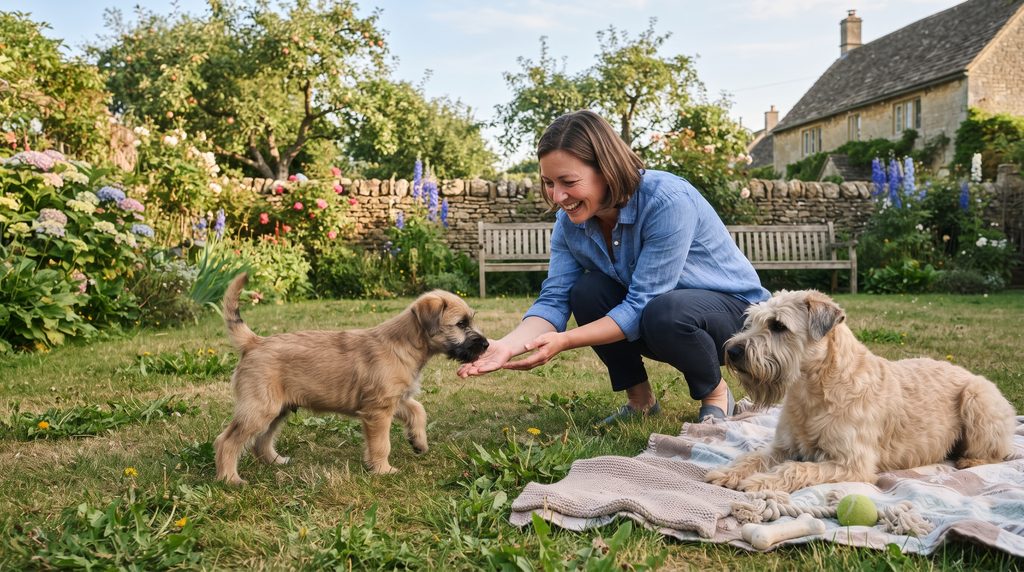
Is a Lakeland Terrier Right for You?
The Lakeland Terrier can be a wonderfully rewarding companion for people who appreciate an intelligent, affectionate, and confidently independent little dog. Its compact size, distinctive appearance, and lively personality make it appealing to a wide variety of households, but successful ownership requires considerably more than simply admiring its charming bearded face. The breed was developed for demanding work in England’s Lake District, and many of the qualities that made it an exceptional working terrier remain evident today. Its courage, curiosity, determination, and enthusiasm for exploration are central to its character. For the right owner, these characteristics are part of the attraction. For someone seeking a quiet, consistently obedient, or particularly undemanding companion, they may present genuine challenges.
The Lakeland Terrier is particularly well suited to individuals and families who enjoy an active lifestyle without necessarily wanting a large dog. Its modest size makes it convenient to accommodate at home or transport on suitable outings, while its athleticism allows it to participate enthusiastically in countryside walks, outdoor adventures, and interactive games. Owners who enjoy exploring different environments and spending meaningful time with their dogs are likely to appreciate the breed’s energy and natural curiosity. A Lakeland does not require constant strenuous exercise, but it benefits from regular opportunities to move, investigate, and experience the world beyond its immediate surroundings.
Personality is perhaps the most important consideration. Lakeland Terriers are not typically dogs that exist simply to follow instructions or remain quietly in the background. They have opinions, notice interesting opportunities, and can become remarkably determined when something captures their attention. An owner who enjoys problem-solving, appreciates a sense of humor, and can remain patient when training becomes challenging may find this independence entertaining. Someone who becomes frustrated by a dog that occasionally questions instructions or becomes distracted by wildlife may struggle to enjoy the relationship. Successful Lakeland Terrier ownership depends on accepting the breed’s distinctive character while providing clear and consistent guidance.
First-time dog owners should consider these qualities carefully. The Lakeland Terrier is not necessarily unsuitable for someone without previous experience, but it is rarely the easiest introduction to dog ownership. Its confidence, intelligence, and terrier instincts require thoughtful socialization, positive reinforcement training, and appropriate boundaries. A committed beginner who researches the breed, attends suitable training classes, and receives guidance from a knowledgeable breeder may do very well. However, those expecting an immediately cooperative companion that requires little training could find the breed demanding. Previous experience with independent terriers can be helpful, although willingness to learn and consistency are ultimately more important than experience alone.
Families with children may also find the Lakeland Terrier appealing, particularly when children are old enough to understand respectful interaction. The breed often enjoys games and household involvement, and its sturdy construction can make it a cheerful companion for suitable family activities. However, Lakelands should not be expected to tolerate rough handling, unwanted restraint, or constant attention. Adults must supervise interactions and ensure that the dog has somewhere peaceful to retreat. Families with very young children should consider whether they have sufficient time to manage both an energetic terrier and the unpredictable behavior of toddlers. An individual dog’s temperament and previous experiences matter just as much as general breed characteristics.
Households with other animals need to make an equally realistic assessment. Some Lakeland Terriers develop excellent relationships with compatible dogs, particularly when introduced carefully and raised with appropriate social experiences. Others are more selective or assertive. Cats may be accepted by certain individuals, but the breed’s historical hunting role means that chasing instincts can remain strong even in a friendly family dog. Homes containing rabbits, guinea pigs, or other vulnerable small animals require particularly strict separation. Prospective owners should consider whether their existing pets would genuinely be safe and comfortable sharing a household with a confident working terrier.
The home environment itself can make a substantial difference. Lakeland Terriers can adapt to houses of different sizes, and some live successfully in apartments when their needs are consistently met. A large property is not essential, but a secure outdoor area is valuable. These dogs are capable explorers, and a gap beneath a fence or an unsecured gate may provide an irresistible opportunity. Their alertness can also lead to barking when unfamiliar activity occurs nearby. Families living in closely spaced housing should consider whether they can manage these behaviors through training and sensible environmental arrangements. Simply having a small dog does not guarantee an effortless apartment lifestyle.
Grooming is another consideration that can influence whether the Lakeland Terrier suits a particular household. The breed’s wiry double coat sheds relatively little, which many owners appreciate, but maintaining it involves regular brushing and appropriate professional attention. Traditional hand-stripping preserves the coat’s harsh texture, while clipping offers a practical alternative for many companions. Neither approach eliminates the need for maintenance. Owners who want an attractive low-shedding dog but are unwilling to commit time or money to specialized coat care may be disappointed. Finding a knowledgeable terrier groomer before obtaining the dog is a sensible precaution, especially in areas where the breed is uncommon.
Daily companionship should also feature prominently in the decision. Lakeland Terriers generally enjoy participating in family life and benefit from regular interaction with their people. Some adults can learn to remain comfortable alone for reasonable periods, but prolonged isolation without suitable preparation or opportunities for activity may contribute to frustration or distress. Prospective owners who work long hours should have a realistic plan for toileting, companionship, and daily engagement. A household where someone regularly works from home, has flexible hours, or can arrange dependable care may find these needs easier to accommodate. The important consideration is not whether someone works outside the home, but whether the dog’s requirements can be met consistently.
Long-term responsibility matters as much as immediate compatibility. With a typical lifespan of approximately 12–15 years, the Lakeland Terrier represents a substantial commitment that may continue through changes in employment, family circumstances, housing, and personal routines. Owners should be prepared for veterinary expenses, grooming appointments, training, suitable holiday arrangements, and additional support during the dog’s senior years. The breed’s relative rarity may also make finding experienced groomers, breeders, or rescue assistance more challenging in certain locations. Choosing a Lakeland should therefore be a considered decision rather than an impulsive response to its appealing appearance.
It is also important to recognize that not every Lakeland Terrier has precisely the same personality. Some individuals are exceptionally outgoing and energetic, while others are more measured or reserved. Early experiences, inherited temperament, training, and the household environment all influence behavior. Prospective owners should spend time with adult Lakeland Terriers whenever possible, ideally observing them in ordinary home or outdoor situations rather than relying solely on photographs or descriptions. A responsible breeder or rescue organization can explain the individual dog’s needs and help determine whether its temperament is a suitable match.
For many people, the Lakeland Terrier’s greatest attraction is the relationship that develops when its independence is understood rather than constantly challenged. These dogs can be affectionate without becoming overly dependent, playful without needing endless entertainment, and courageous without being unnecessarily confrontational. Their lively intelligence often makes everyday companionship interesting, while their compact size allows them to participate in many aspects of family life. Owners who appreciate this balance and provide consistent guidance frequently develop strong, rewarding relationships with their dogs.
Ultimately, the Lakeland Terrier is best suited to people who want a genuine terrier rather than simply a small, attractive companion. It offers affection, humor, intelligence, athleticism, and considerable personality, but asks for patience, engagement, appropriate training, secure surroundings, and a commitment to regular coat care in return. It may not be the ideal choice for households seeking effortless obedience, unrestricted compatibility with small pets, or a dog content with very little interaction. For owners who welcome its independent spirit and understand its working heritage, however, the Lakeland Terrier can be an exceptionally engaging, loyal, and entertaining companion for many years.
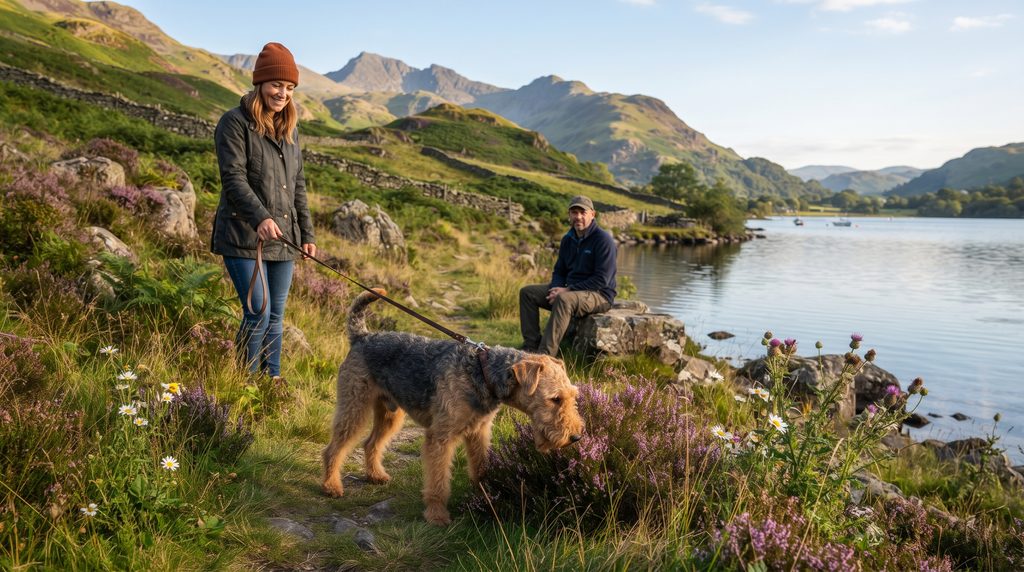
The Ideal Lakeland Terrier Household
A Lakeland Terrier is most likely to thrive with owners who enjoy an active, intelligent, and independent companion. The ideal household provides regular outdoor activity, positive reinforcement training, secure boundaries, and plenty of involvement in everyday family life. Owners should appreciate the breed’s curiosity and confidence without expecting automatic obedience. Respectful older children can be excellent companions, while homes with small pets require particular caution because of the terrier’s hunting instincts. Regular grooming and appropriate veterinary care must also fit comfortably within the household budget. Above all, the right owner enjoys the Lakeland Terrier’s spirited personality and is prepared to offer patient, consistent companionship throughout its life.
Final Thoughts
The Lakeland Terrier is a remarkable example of how centuries of purposeful breeding can shape a dog whose character remains unmistakable long after its original working responsibilities have changed. Developed among the rugged hills and rocky valleys of England’s Lake District, this courageous little terrier was expected to demonstrate determination, endurance, and independent judgment in circumstances that demanded genuine physical and mental toughness. Those qualities remain central to the breed today, even when its most important responsibilities involve accompanying its owner on walks, investigating the garden, or finding an entertaining way to participate in family life. Beneath its distinctive wiry coat and charming bearded expression is a confident, capable dog with an extraordinary amount of personality.
One of the Lakeland Terrier’s greatest attractions is its ability to combine an adventurous spirit with affectionate companionship. Many individuals develop close relationships with their families while retaining the curiosity and self-reliance that distinguish traditional working terriers. They enjoy discovering new environments, participating in familiar routines, and engaging with people who appreciate their enthusiasm. A Lakeland may be equally interested in investigating an unfamiliar woodland trail and bringing a favorite toy to someone relaxing at home. This combination of independence and attachment creates a distinctive relationship, particularly for owners who enjoy interacting with an intelligent dog rather than simply expecting quiet obedience.
However, the qualities that make the breed appealing also establish clear responsibilities. Lakeland Terriers require owners who understand that confidence and determination need appropriate direction. Their interest in wildlife, willingness to explore, and ability to make independent decisions cannot be eliminated through training, nor should they be regarded as defects. Instead, successful ownership involves providing safe opportunities for natural behavior while establishing reliable household boundaries. Secure outdoor areas, thoughtful leash management, engaging activities, and consistent positive reinforcement help create an environment in which the breed can thrive without unnecessary conflict.
The Lakeland Terrier’s physical characteristics deserve equal appreciation. Its compact, athletic structure was developed for practical work across challenging terrain, while its harsh double coat provided protection against difficult weather and rough vegetation. Although modern grooming can produce an elegant appearance, owners should remember that this is fundamentally a functional working breed. Regular coat maintenance is essential whether the traditional hand-stripped texture is preserved or a shorter companion trim is preferred. Its relatively low shedding may appeal to people who dislike excessive loose hair, but specialized grooming remains an important commitment throughout the dog’s life.
Health and longevity provide further reasons to value responsible breeding and attentive ownership. Lakeland Terriers generally enjoy a favorable reputation for robustness, and many remain active companions into their teenage years. Nevertheless, inherited eye conditions, orthopedic problems, dental disease, and other medical concerns still deserve appropriate attention. Prospective owners should seek breeders who understand relevant health risks and communicate openly about family history and available testing. Families considering rescue should likewise approach adoption with realistic expectations and an interest in the individual dog’s medical and behavioral background. Good veterinary care, appropriate nutrition, and early attention to changes in health can make a meaningful difference over the years.
Choosing a Lakeland Terrier also means considering whether its personality genuinely suits the household. This is not necessarily the ideal breed for someone seeking a dog that requires little involvement, responds automatically to every instruction, or can safely be trusted around all small animals. Its independent thinking can challenge inexperienced owners, while its natural hunting instincts require particular care in homes with vulnerable pets. On the other hand, people who enjoy outdoor activities, appreciate terrier humor, and are prepared to invest in training and companionship may find the Lakeland exceptionally rewarding. A well-matched dog does not need to be suitable for every household to be an excellent companion for the right one.
Because the breed is relatively uncommon, preserving its distinctive qualities is particularly important. Responsible breeders and dedicated enthusiasts help maintain sound physical structure, balanced temperament, and the characteristic working ability that shaped the Lakeland Terrier over generations. Prospective owners contribute to that effort by making informed decisions, avoiding irresponsible breeding practices, and recognizing that health and temperament matter more than coat color or immediate availability. Taking time to understand the breed before bringing one home is one of the most valuable steps toward a successful relationship.
Perhaps the most enjoyable aspect of living with a Lakeland Terrier is discovering how much individuality can exist within such a small dog. Its enthusiasm for everyday experiences, quick intelligence, affectionate nature, and occasional mischievousness can make ordinary routines surprisingly entertaining. Over time, owners often develop an appreciation for the subtle ways their dog communicates, the activities it enjoys most, and the confidence with which it approaches familiar surroundings. The relationship becomes especially rewarding when the dog’s natural character is understood and respected rather than constantly challenged.
Ultimately, the Lakeland Terrier offers something increasingly distinctive among modern companion dogs: a genuine connection to Britain’s working-terrier heritage combined with the warmth and companionship of a devoted household pet. It asks for patience, consistency, appropriate exercise, and regular grooming, but offers intelligence, affection, humor, and an adventurous outlook in return. For people willing to embrace its determined little personality and provide the care it deserves, the Lakeland Terrier can become a treasured family companion whose presence enriches everyday life for many wonderful years.

Explore More Terrier Breeds
Interested in discovering more dogs with the intelligence, courage, and character of the Lakeland Terrier? Explore our CanineBase Terrier Breeds guide to learn about the remarkable variety of breeds within this distinctive group. From confident working terriers to affectionate household companions, discover their histories, personalities, exercise requirements, grooming needs, and everyday care considerations. Our detailed breed guides can help you understand the differences and find a terrier that suits your home, experience, and lifestyle.
Learn More From the American Kennel Club
For additional authoritative information about the Lakeland Terrier, visit the American Kennel Club’s official Lakeland Terrier profile. The AKC provides information about the breed’s recognized standard, physical characteristics, temperament, working heritage, and general care requirements. Its resources offer a valuable reference for prospective owners, breeders, and terrier enthusiasts who want to understand this distinctive English breed and its unique qualities.