

Skye Terrier
The Skye Terrier is one of Scotland’s most distinctive and historically fascinating dog breeds, combining an elegant, flowing coat with the courage, determination, and independent spirit of a traditional working terrier. Originally developed on the rugged Isle of Skye, this remarkable breed possesses an exceptionally long, low-set body, short powerful legs, and an unmistakable silhouette that sets it apart from almost every other dog. Behind its refined appearance lies a surprisingly formidable character, shaped by centuries of working across rocky terrain and confronting animals considerably larger than itself. Although relatively uncommon today, the Skye Terrier remains a deeply loyal, intelligent, and affectionate companion whose remarkable history and enduring personality deserve far greater recognition.
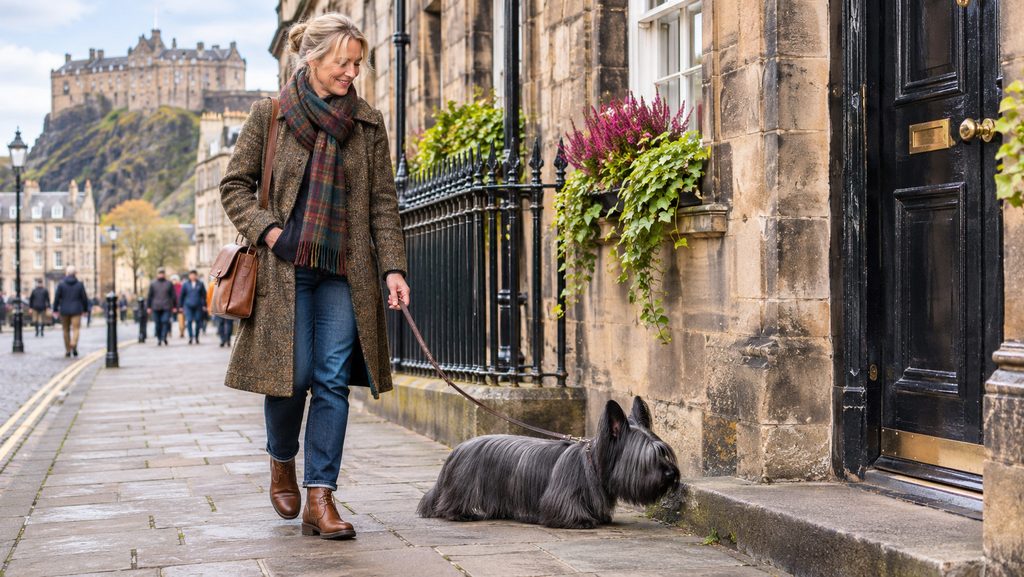
Few breeds demonstrate such an intriguing contrast between appearance and purpose. The Skye Terrier dog may resemble an aristocratic companion with its beautifully furnished ears and long, straight coat, but its ancestors were hardy working animals bred to pursue foxes, badgers, and other troublesome creatures around Scottish farms. Their powerful jaws, determined nature, and protective double coats enabled them to work in demanding conditions. These qualities remain part of the modern breed’s character, even though most Skye Terriers now enjoy comfortable lives as cherished family companions.
One of the breed’s most appealing characteristics is its extraordinary devotion to familiar people. Skye Terriers often develop especially close relationships with their owners, displaying a quiet affection that can be more personal and selective than the openly enthusiastic friendliness of some other breeds. They are frequently dignified around unfamiliar people, sometimes preferring to observe a situation before deciding whether to participate. However, beneath this reserved exterior is an engaging, affectionate companion that enjoys companionship, familiar routines, and meaningful interaction with its family.
This distinctive personality also makes the Skye Terrier particularly interesting to live with. Unlike breeds that constantly seek approval or eagerly greet every visitor, a Skye Terrier often approaches everyday life with a noticeable sense of self-possession. Its watchful nature, strong memory, and instinctive awareness of its surroundings can make it an attentive household companion. Owners frequently discover a surprisingly playful and humorous side once their dog feels comfortable and secure. This combination of dignity, curiosity, affection, and occasional stubbornness gives the breed a personality that is difficult to mistake for any other terrier.
The Skye Terrier also possesses a fascinating place in British cultural history. Its popularity increased dramatically during the nineteenth century, particularly after Queen Victoria developed an affection for the breed. Skye Terriers became fashionable companions among aristocratic households, appearing in portraits and gaining recognition throughout Britain. The breed also became closely associated with the celebrated story of Greyfriars Bobby, whose legendary devotion to his owner helped establish the Skye Terrier as a symbol of loyalty and faithfulness.
Despite its comparatively modest height, the Skye Terrier should never be mistaken for a fragile ornamental dog. It is sturdy, muscular, and capable of considerable determination. Daily walks, opportunities to explore interesting environments, and mentally engaging activities help satisfy its natural curiosity. Nevertheless, its independent temperament requires patient, consistent training, and early socialization is especially valuable in helping young dogs develop confidence around unfamiliar people, animals, and situations.
Its spectacular coat is another defining feature, but maintaining that appearance requires a realistic commitment from owners. Regular brushing, careful attention to tangles, and appropriate bathing help keep the coat healthy and comfortable. Its unusually elongated body also makes sensible handling and thoughtful exercise particularly important during physical development. Prospective owners should understand these practical responsibilities rather than choosing the breed solely for its striking appearance.
For the right household, the Skye Terrier offers a rewarding combination of affection, character, intelligence, and individuality. It is especially well suited to people who appreciate a loyal companion with a strong sense of independence and who are prepared to invest time in grooming, socialization, and everyday companionship. Understanding its Scottish working heritage, distinctive temperament, and specific care requirements is the foundation for enjoying life with one of the terrier group’s most remarkable and increasingly uncommon breeds.
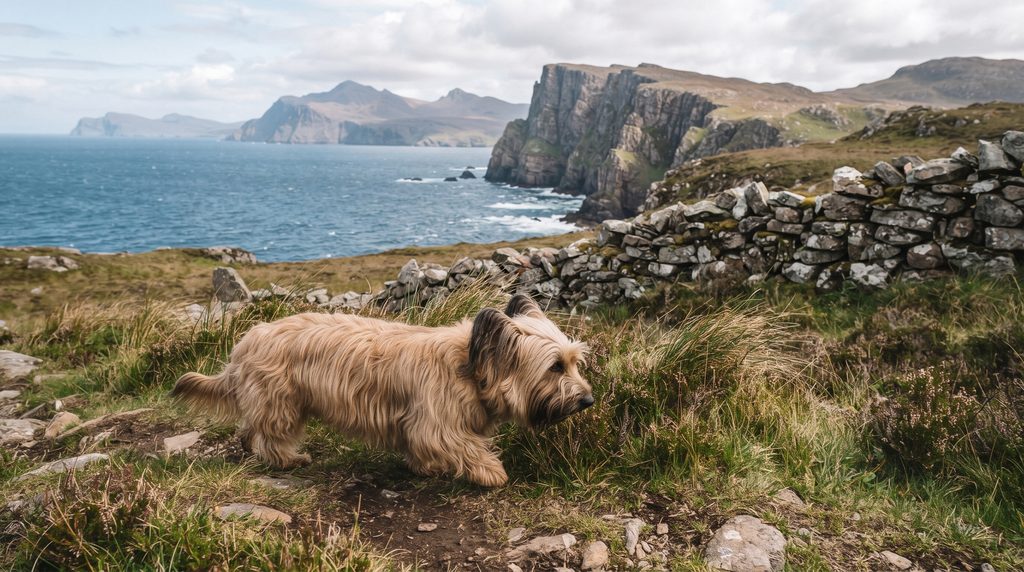
Table of Contents
Skye Terrier Fast Facts
Breed Group: Terrier
Origin: Isle of Skye, Scotland
Height: 10 inches (male); 9.5 inches (female)
Weight: 35–45 pounds (males); females slightly lighter
Life Expectancy: 12–14 years
Size: Small to medium; long, low, and sturdy
Coat: Long, straight, weather-resistant double coat
Coat Care: Thorough brushing several times weekly
Shedding: Moderate; seasonal undercoat shedding
Exercise Needs: Low to moderate; daily walks and play
Temperament: Loyal, courageous, dignified, affectionate, independent
Primary Role: Vermin hunter; devoted companion
Skye Terrier Star Ratings
Apartment Friendly: ★★★★☆
Family Friendly: ★★★★☆
Good With Children: ★★★☆☆
Good With Other Dogs: ★★☆☆☆
First-Time Owner Friendly: ★★☆☆☆
Easy Grooming: ★★☆☆☆
Affectionate: ★★★★★
Easy to Train: ★★★☆☆
Low Shedding: ★★★☆☆
Adaptable: ★★★★☆
High Exercise Needs: ★★☆☆☆
Tolerates Being Alone: ★★☆☆☆
Skye Terrier History and Origins
The Skye Terrier has one of the oldest and most distinctive histories among Scotland’s native terrier breeds, with origins closely connected to the rugged landscapes of the Isle of Skye and the surrounding western Highlands. For centuries, these hardy little dogs worked alongside Scottish farmers, helping protect livestock, poultry, and rural properties from troublesome predators. Their combination of courage, physical strength, determination, and remarkable loyalty eventually transformed them from practical working animals into highly prized companions of the British aristocracy.
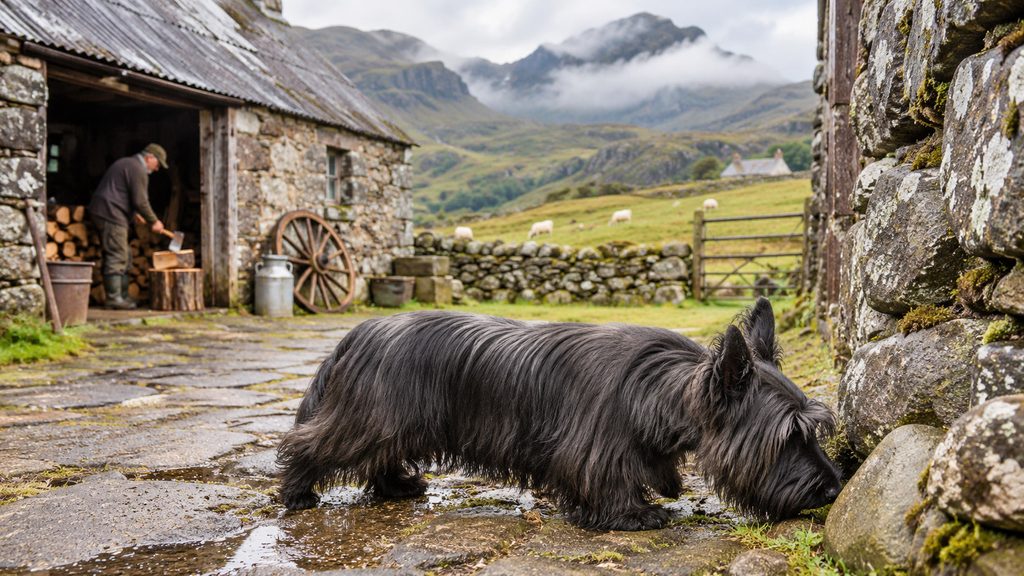
The breed’s early development took place long before organized kennel clubs, written breed standards, or modern pedigree registration. Its ancestors were shaped primarily by the demands of their environment rather than deliberate selection for appearance. The Isle of Skye, situated among Scotland’s Inner Hebrides, presented challenging conditions for both people and animals. Rocky coastlines, exposed hillsides, persistent rainfall, and harsh winds required dogs capable of working confidently in difficult terrain. A terrier that lacked resilience, independence, or physical determination would have been poorly suited to the island’s demanding agricultural life.
These early working terriers were particularly valued for controlling foxes, badgers, otters, and other animals that threatened rural livelihoods. Their elongated bodies and comparatively short legs allowed them to investigate rocky crevices, narrow passages, and underground shelters that larger dogs could not easily enter. Strong jaws, substantial muscles, and a protective coat helped them withstand demanding encounters. Although modern Skye Terriers are rarely expected to perform such work, their physical structure and characteristic determination remain closely connected to these original responsibilities.
Historical references to dogs resembling the Skye Terrier extend back several centuries. In 1570, the English physician and naturalist John Caius described long-haired terriers associated with the Scottish islands, providing an early written account of dogs believed to resemble the breed’s ancestors. However, early descriptions were not always precise by modern standards. The expression Skye dog could refer to a regional working type rather than the consistently recognizable pedigree breed familiar today. Different local strains developed over time, and the boundaries between Scotland’s early terrier varieties were considerably less distinct than those established by later kennel clubs.
During the eighteenth and nineteenth centuries, the Skye Terrier increasingly attracted attention beyond its island homeland. Scottish landowners and prominent families appreciated the breed’s attractive appearance, determined character, and devoted nature. These dogs were gradually introduced into more fashionable households, where their elegant coats and dignified personalities distinguished them from many other working terriers. This transition represented an important turning point, as the breed began to establish a reputation both as a capable rural worker and as an exceptionally loyal household companion.
Queen Victoria played a particularly influential role in raising the breed’s profile. She acquired a Skye Terrier in 1842 and developed an enduring affection for the breed, helping establish it as a fashionable companion among members of British high society. During the Victorian era, Skye Terriers appeared in aristocratic households, artistic portraits, and increasingly prominent dog exhibitions. Their association with royalty encouraged wider interest, while selective breeding gradually placed greater emphasis on the long, flowing coat and distinctive outline admired by enthusiasts.
One of the most enduring stories associated with the breed is that of Greyfriars Bobby, the celebrated Edinburgh dog whose devotion to his deceased owner became legendary. According to the traditional account, Bobby remained closely associated with his master’s grave in Greyfriars Kirkyard for approximately fourteen years, until the dog’s death in 1872. Although some details of the story have been questioned by historians, Bobby became a powerful cultural symbol of canine faithfulness. His memorial in Edinburgh continues to attract visitors, and the Skye Terrier remains strongly associated with this remarkable tale of loyalty.
As organized dog shows became established during the nineteenth century, breeders worked toward defining a more consistent Skye Terrier appearance. The breed gained recognition through formal kennel registration and became distinguished from other Scottish terriers that had once shared overlapping regional identities. Both erect-eared and drop-eared Skye Terriers became accepted expressions of the breed, although the erect-eared variety eventually became more prominent in exhibition circles. The development of formal standards helped preserve recognizable characteristics while reinforcing the Skye Terrier’s identity as a separate breed.
The Skye Terrier also gained admirers beyond Britain, including in North America, where its unusual appearance and distinguished heritage attracted dedicated breeders and exhibitors. The American Kennel Club recognized the breed in 1887. However, the extraordinary popularity it enjoyed during the Victorian period did not continue indefinitely. Changes in public tastes, the rise of other companion breeds, and shifting household preferences contributed to a gradual decline in numbers. By the modern era, the Skye Terrier had become relatively uncommon, even within its Scottish homeland.
Today, the Skye Terrier is recognized as one of Britain’s vulnerable native breeds, making responsible breeding and preservation especially important. Dedicated breed clubs and enthusiasts continue working to protect its distinctive characteristics, maintain genetic diversity, and introduce new generations to its remarkable qualities. Although its traditional hunting responsibilities have largely disappeared, the modern Skye Terrier still possesses the courage, loyalty, independence, and quiet determination that defined its ancestors. Understanding this history reveals why the breed is far more than an elegant long-coated companion: it is a living connection to centuries of Scottish rural life and an important part of the country’s canine heritage.
The Spanish Armada Legend
One intriguing tradition suggests that the Skye Terrier’s long coat originated when dogs surviving a shipwreck from the Spanish Armada in 1588 were crossed with native Scottish terriers. Although the story has been repeated for generations, historical evidence does not establish that these shipwrecked dogs actually contributed to the breed. Records indicate that terriers resembling early Skye types existed in the region before the Armada reached Scottish waters. The legend nevertheless illustrates the mystery surrounding the breed’s development. What is much better established is the Skye Terrier’s longstanding association with Scotland’s western islands and its centuries of service as a courageous working dog.
Skye Terrier Appearance and Size
The Skye Terrier possesses one of the most recognizable silhouettes in the canine world, combining an exceptionally long, low body with a magnificent straight coat and a remarkably dignified expression. Although relatively short in height, this Scottish terrier is considerably more substantial than its elegant appearance initially suggests. Its distinctive proportions, powerful construction, abundant furnishings, and confident carriage reflect a breed originally developed for physically demanding work rather than decorative companionship. Every feature of the Skye Terrier contributes to its unmistakable appearance, from its elongated head and strongly built jaws to its short, muscular legs and beautifully feathered ears.
An adult male Skye Terrier typically stands approximately 10 inches tall at the shoulder, while females generally reach around 9.5 inches. Males usually weigh between 35 and 45 pounds, with females tending to be somewhat lighter. These measurements place the breed in an unusual category: comparatively small in height but relatively heavy and substantial for its stature. A healthy adult should feel solid and muscular rather than fragile, with sufficient body condition to support comfortable movement without carrying unnecessary weight.
The breed’s extraordinary length is perhaps its most defining physical characteristic. According to the American Kennel Club breed standard, the body should measure approximately twice the dog’s height when measured from the breastbone to the rump. This creates the elongated, rectangular outline that distinguishes the Skye Terrier from more compact terriers. Its back should remain level, supported by strong muscles and a well-developed rib cage. The chest is deep, while the short, powerful legs provide the stability and strength historically needed for negotiating rocky terrain and confined spaces.
Despite these unusual proportions, a correctly constructed Skye Terrier should move with surprising ease and confidence. Its gait is smooth, purposeful, and fluid, with the front legs reaching forward naturally and the hindquarters supplying controlled propulsion. The dog should not appear awkward, excessively heavy, or restricted by its coat. When viewed from the side, a healthy Skye Terrier often seems to glide across the ground, its long body remaining remarkably steady as the legs move beneath it. This effortless movement is an important indication of sound physical construction.
The head is another particularly distinctive feature. Long and powerful, it should possess sufficient width and substance to accommodate strong jaws without appearing coarse or exaggerated. The skull tapers gradually toward a well-developed muzzle, ending in a black nose. Its medium-sized brown eyes, preferably dark brown, convey intelligence, alertness, and considerable expression. Although the long facial furnishings create the familiar appearance of a fringe falling over the eyes, the coat should never prevent the dog from seeing comfortably or moving confidently through its surroundings.
One of the breed’s most interesting characteristics is the presence of two naturally occurring ear types. Erect-eared Skye Terriers have upright ears with graceful feathering, creating a striking outline that is particularly familiar in modern photographs and dog shows. However, the drop-eared Skye Terrier is equally recognized within the breed standard. Its somewhat larger ears hang close against the head, producing a softer, more understated expression. Both varieties share the same general physical construction, temperament, and coat requirements. Ear carriage is simply a recognized variation within the breed rather than an indication of a separate type.
The Skye Terrier’s magnificent double coat contributes enormously to its distinctive appearance. Beneath the long outer covering lies a short, soft, woolly undercoat that provides insulation and protection. The outer coat is straight, relatively hard in texture, and lies flat against the body, falling down either side from a natural part along the back. Unlike the fluffy or tightly curled coats found in some companion breeds, the Skye Terrier’s coat should have a smooth, flowing appearance. Long furnishings frame the ears, muzzle, chest, legs, and tail, creating an elegant outline while retaining a practical connection to its working heritage.
Skye Terrier coat colors include black, blue, varying shades of gray, silver, platinum, fawn, and cream, depending on the terminology used by the relevant kennel club. Darker pigmentation around the ears and muzzle is characteristic, particularly in lighter-colored dogs. The nose should remain black, and a small white marking on the chest is acceptable under breed standards. Some individuals display subtle shading throughout the coat, while others have a more uniform appearance. These natural variations contribute to the breed’s visual diversity without altering its essential characteristics.
Coat color can also change considerably during development. Young Skye Terriers may be born with coloring that differs noticeably from their eventual adult appearance, particularly among dogs that develop lighter shades. Gradual changes in pigmentation and coat texture are therefore not necessarily signs of an unusual or incorrect coat. The full adult covering takes time to develop, and young dogs often appear considerably less heavily furnished than mature specimens. Prospective owners should consider the appearance of adult relatives rather than assuming a young puppy’s coloring and coat length will remain unchanged.
The tail is long and generously feathered, normally carried in a graceful continuation of the body’s outline rather than curling tightly over the back. When relaxed, it hangs with a gentle curve toward the end. The feet are strong, with substantial pads and nails suited to supporting the breed’s relatively heavy body. Although the long coat may conceal much of the underlying structure, the Skye Terrier should possess clearly developed muscles, sturdy limbs, and the balanced proportions of a capable working dog.
For owners, understanding this unusual body shape has practical importance beyond appearance. The Skye Terrier should be maintained at a healthy weight, given secure footing on slippery surfaces, and handled with proper support for its elongated body. Excessively high jumps and uncontrolled impacts are particularly undesirable during puppy development. Its coat also needs sufficient maintenance to preserve natural movement and prevent uncomfortable tangles. When properly cared for, the Skye Terrier combines remarkable physical individuality with strength, elegance, and a distinctive presence that few other breeds can match.
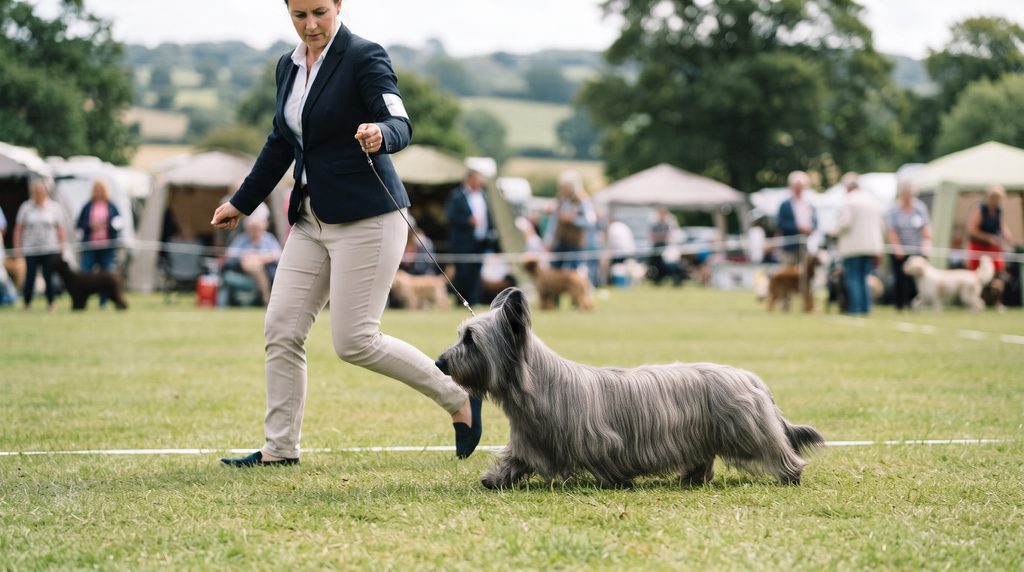
Judging Body Condition Beneath the Coat
A Skye Terrier’s long coat can make it surprisingly difficult to assess its actual body condition by sight alone. Owners should regularly feel along the rib cage, waist, and back to monitor changes that may be hidden beneath the hair. The ribs should be easy to feel beneath a light covering of tissue without being sharply prominent. Because this breed has an unusually long, low body, excess weight can increase physical strain and make everyday movement less comfortable. Regular veterinary weight assessments, appropriate meal portions, and attention to muscle condition are more reliable than judging the dog’s appearance through its abundant coat.
Skye Terrier Temperament and Personality
The Skye Terrier possesses a fascinating personality that combines deep affection, quiet confidence, intelligence, and the unmistakable independence of a traditional Scottish working terrier. Although its luxurious coat and dignified appearance might suggest a delicate or reserved companion, this breed has considerable strength of character and a surprisingly determined outlook on life. The Skye Terrier temperament is often described as courageous, loyal, good-natured, and discerning, with an especially strong attachment to familiar people. Understanding this combination of devotion and independence is essential for anyone considering the breed, because a Skye Terrier is neither an unquestioningly obedient companion nor a dog that automatically welcomes every new acquaintance.
Perhaps the breed’s most celebrated characteristic is its extraordinary loyalty. Skye Terriers frequently form exceptionally close relationships with their families, sometimes developing a particularly strong attachment to one person while remaining affectionate toward other household members. This devotion is often expressed through companionship rather than constant demands for attention. A Skye Terrier may quietly follow its owner between rooms, settle nearby during an evening at home, or carefully observe everyday activities. Although individual dogs vary considerably, many seem happiest when they can remain involved in family life without being expected to participate in every interaction.
The breed’s approach to unfamiliar people is particularly distinctive. Unlike naturally exuberant dogs that enthusiastically greet almost everyone, Skye Terriers are often cautious and observant when meeting strangers. They may stand quietly, assess a visitor’s behavior, and approach only when comfortable. This reserve should not be confused with inherent aggression or poor temperament. A confident, well-socialized Skye Terrier can remain composed and polite without necessarily seeking affection from unfamiliar people. Owners should respect this preference and avoid forcing greetings, particularly when a dog is uncertain about a new situation.
Beneath this dignified exterior, however, lies an entertaining and surprisingly playful companion. Skye Terriers often display a mischievous sense of humor, especially when interacting with people they know well. They may invent games, enthusiastically pursue favorite toys, or engage in animated bouts of activity that contrast sharply with their otherwise composed demeanor. Many enjoy interactive games involving searching, gentle tugging, and retrieving, although individual preferences differ. Their playfulness is often accompanied by remarkable persistence, reflecting the determination that historically allowed their ancestors to pursue quarry through challenging terrain.
Intelligence is another defining feature of the Skye Terrier’s personality. These dogs are observant, quick to recognize familiar routines, and capable of remembering both rewarding experiences and unpleasant encounters. Their independent thinking can make them appear stubborn, particularly when they do not understand the purpose of a request or find something more interesting nearby. However, independence should not be mistaken for an inability to learn. Skye Terriers can respond exceptionally well to patient, reward-based training that encourages cooperation and maintains their interest. Harsh corrections are especially counterproductive because the breed can be sensitive and may become withdrawn or distrustful when handled unfairly.
Although courageous and confident, the Skye Terrier is generally calmer in everyday household behavior than many of the more energetic terrier breeds. It can enjoy periods of relaxation and is often content to settle near its family after a satisfying walk or play session. This comparatively measured energy level makes the breed adaptable to different living arrangements, provided its physical and mental needs are met. However, a quiet Skye Terrier should not be mistaken for an inactive one. Regular opportunities to investigate its surroundings, engage with familiar people, and exercise its natural curiosity remain important for emotional well-being.
Its watchful nature also makes the Skye Terrier an attentive household observer. Many individuals readily notice unfamiliar sounds, approaching visitors, and changes in their environment. Some will bark to announce activity outside the home, particularly when someone approaches the entrance or an unusual noise interrupts a familiar routine. While this awareness can be useful, excessive barking should not be encouraged. Teaching calm responses to everyday sounds and rewarding quiet behavior can prevent natural vigilance from developing into unnecessary territorial reactions.
The Skye Terrier’s historical working instincts remain relevant to its modern personality. Although generations of selective breeding have produced affectionate companions, many retain a strong interest in movement, unfamiliar scents, and small animals. Their determination can become especially apparent when something catches their attention outdoors. A Skye Terrier investigating an interesting scent may temporarily become less responsive to its owner’s requests, while an unexpected encounter with a squirrel or other small creature can trigger an instinctive chase response. Secure surroundings and sensible management help owners accommodate these behaviors without expecting the dog to abandon its natural instincts entirely.
Social experiences during puppyhood strongly influence how confidently a Skye Terrier approaches adult life. Thoughtful introductions to different people, household activities, sounds, and environments help young dogs develop appropriate responses without overwhelming them. Socialization should prioritize positive experiences rather than encouraging indiscriminate friendliness. A Skye Terrier that can calmly observe a stranger, walk past another dog, or remain relaxed in an unfamiliar setting is demonstrating valuable social confidence, even if it chooses not to initiate contact.
Individual personality also matters enormously. Some Skye Terriers are naturally outgoing and sociable, while others retain a more serious, selective approach throughout adulthood. Genetics, early experiences, training, and household relationships all contribute to these differences. Responsible breeders should be able to discuss the temperaments of their breeding dogs and help prospective owners understand what to expect. Families should seek a stable, confident companion rather than assuming that all Skye Terriers will demonstrate identical behavior simply because they belong to the same breed.
Ultimately, the Skye Terrier is particularly rewarding for people who appreciate companionship built on mutual trust and respect. Its affection is genuine, its loyalty can be extraordinary, and its independent character brings considerable individuality to everyday life. Owners who provide patient guidance, positive social experiences, appropriate boundaries, and plenty of opportunities for companionship are most likely to discover the Skye Terrier at its best: a dignified, devoted, intelligent, and quietly entertaining dog with a personality every bit as distinctive as its appearance.
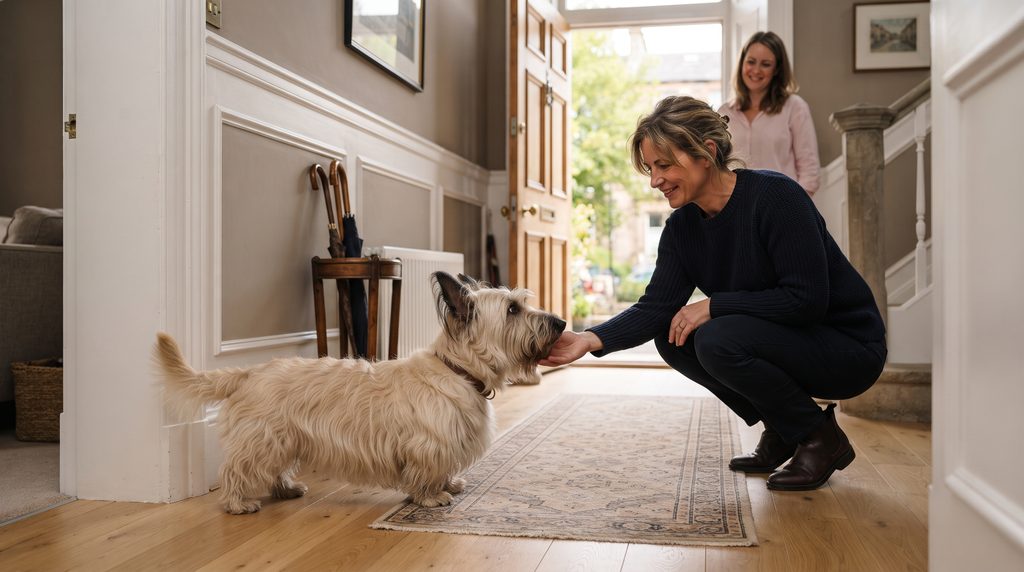
Helping a Reserved Skye Terrier Meet Visitors
Skye Terriers often appreciate being allowed to approach unfamiliar people on their own terms. When visitors arrive, provide a comfortable place where the dog can observe without feeling crowded. Ask guests to avoid leaning over the dog, reaching immediately toward its head, or insisting on physical contact. Calm conversation and the occasional treat gently offered or tossed by a visitor can help establish positive associations. Allow the Skye Terrier to initiate further interaction when ready. This respectful approach supports confidence while acknowledging the breed’s naturally discerning personality. Persistent fear, growling, or defensive behavior should be addressed with guidance from a qualified reward-based behavior professional.
Living With a Skye Terrier
Living with a Skye Terrier is often a rewarding experience for people who appreciate a loyal companion with a strong sense of individuality. This is not usually a breed that blends unnoticed into the background of household life. A Skye Terrier tends to become a distinct presence in the home, observing daily routines, following favorite people from room to room, and forming strong opinions about what it likes and dislikes. For owners who enjoy a dog with character, intelligence, and genuine emotional loyalty, the breed can be deeply satisfying. However, life with a Skye Terrier also involves practical considerations that prospective owners should understand from the outset.
One of the first things many owners notice is how closely a Skye Terrier likes to remain involved in family life. Although it may not constantly demand attention, it usually wants to know where its people are and what they are doing. Many develop the habit of quietly supervising household activity, settling nearby while someone works, cooks, or relaxes. This steady companionship is one of the breed’s most appealing qualities. A Skye Terrier often thrives in a home where it is treated as a genuine part of the family rather than an outdoor dog or a pet left to entertain itself for long periods.
Because the breed forms strong attachments, it generally does best in homes where someone is around for a reasonable part of the day. Long hours of isolation can be difficult for some individuals, particularly if they are not gradually taught how to settle alone. A Skye Terrier that becomes lonely or under-stimulated may bark, pace, chew household items, or become emotionally unsettled. This does not mean owners can never leave the dog alone, but it does mean independence should be taught gradually and thoughtfully. A stable routine, a comfortable resting space, and mentally engaging activities can make alone time much easier to manage.
In terms of energy level, the Skye Terrier is usually easier to live with than some of the more relentlessly busy terrier breeds. Most adults are content with regular daily walks, some play, and opportunities to investigate the environment. They do not usually require exhausting exercise programs, but they do need consistent activity and mental engagement. A dog that receives too little stimulation may become bored and stubborn, while one that is given sensible exercise and companionship is often calm and pleasant indoors. This balance makes the breed suitable for many homes, including quieter households, provided its needs are not ignored.
Space requirements are more flexible than some people expect. Despite its sturdy build, the Skye Terrier does not require a large rural property in order to be happy. A house with a secure yard is certainly convenient, but many can live well in smaller homes if they receive enough exercise and interaction. What matters most is not sheer square footage but the quality of daily life. Access to safe walks, a calm environment, and time with family will usually contribute more to the dog’s happiness than having a large amount of unused space. That said, the home should be arranged with the dog’s long, low body in mind, especially if there are many steep steps or slippery floors.
The breed’s distinctive shape affects daily management in several practical ways. Repeated jumping on and off high furniture, uncontrolled use of stairs, and slippery surfaces can place unnecessary strain on the back and joints, especially during puppy development. Owners often find it helpful to use rugs on smooth flooring, support young dogs sensibly, and avoid encouraging dramatic leaps. These precautions do not mean wrapping the dog in cotton wool. Rather, they reflect a realistic approach to protecting a breed whose long frame deserves thoughtful handling throughout life.
Skye Terriers also bring the typical terrier combination of curiosity and determination into everyday living. Many enjoy inspecting the garden, investigating household sounds, and keeping track of what is happening around the property. Their alert nature means they may notice visitors, wildlife, or unfamiliar activity before anyone else does. This can make them pleasantly watchful companions, but it also means owners should guide barking habits early. Calm, consistent boundaries help prevent the dog from becoming excessively reactive to every sound outside the window or every movement at the front gate.
Cleanliness and grooming inevitably affect household life as well. A long-coated breed will bring brushing, occasional bathing, and coat maintenance into the weekly routine. Mud, wet grass, and debris can cling to the furnishings on the legs, underside, and tail, especially in bad weather. Many owners keep towels near the door, establish a simple post-walk cleanup habit, and brush small tangles before they become larger mats. The breed is not especially chaotic in the home, but it does require owners who accept that coat care is part of ordinary life rather than an occasional extra task.
Emotionally, the Skye Terrier often suits people who enjoy a dog with depth and discernment. It may not display the instantly outgoing sociability of some companion breeds, but it often offers something more personal: a bond built through trust, consistency, and familiarity. Many owners cherish the way their Skye Terrier chooses to remain close, notices subtle changes in mood, and becomes a deeply woven part of the household rhythm. This loyalty can feel especially meaningful, but it also means the breed responds best to patient handling and respectful relationships rather than force or constant commotion.
Overall, living with a Skye Terrier is usually most enjoyable for people who value companionship, can commit to routine grooming and sensible management, and appreciate an intelligent dog with a mind of its own. In the right home, this breed is affectionate, observant, and deeply loyal, with enough calmness for indoor life and enough terrier spirit to keep things interesting. When its practical needs are understood and its personality is respected, the Skye Terrier becomes a distinctive and devoted household companion whose presence is difficult to forget.

Skye Terrier and Children
The Skye Terrier can be a loyal and affectionate family companion, but its relationship with children depends considerably on the dog’s individual temperament, early experiences, and the way interactions are managed. Unlike some naturally exuberant breeds that enthusiastically welcome almost any form of attention, the Skye Terrier tends to appreciate calm, respectful companionship. Its independent personality, strong attachments, and occasionally serious outlook mean it is generally better suited to households with older, considerate children who understand how to interact appropriately with dogs. Nevertheless, a well-socialized Skye Terrier raised in a stable family environment can develop warm, rewarding relationships with children and become a devoted participant in everyday family life.
One of the breed’s most appealing qualities is its strong loyalty toward familiar people. When a Skye Terrier grows up alongside children who treat it kindly, it may develop lasting attachments and enjoy remaining close to them during ordinary household activities. Some are content to settle beside a child reading a book, accompany family members around the garden, or participate in quiet games. Although these dogs are not necessarily demonstrative with everyone they encounter, their affection toward trusted family members can be genuine and enduring. Children who appreciate this quieter companionship may find the Skye Terrier especially rewarding.
However, the breed’s dignified and sometimes reserved personality means it is not always tolerant of unpredictable handling. Young children can be noisy, physically enthusiastic, and unaware of how their behavior affects an animal. Sudden grabbing, pulling the long coat, hugging tightly, or disturbing a resting Skye Terrier may cause discomfort or defensive reactions. The breed’s historical determination and strong sense of independence can make it less willing to tolerate repeated unwanted attention. For this reason, parents should never assume that a familiar dog will accept every interaction simply because it has previously behaved affectionately toward the child.
Families with toddlers or preschool-aged children should consider these characteristics particularly carefully. Very young children often struggle to understand canine boundaries, even when adults provide frequent reminders. A Skye Terrier may find their movements and high-pitched voices unsettling, especially if it has had limited early exposure to children. This does not make the breed inherently unsuitable for every household with young children, but it does mean responsible supervision and careful separation are essential. Families seeking a dog that readily tolerates frequent physical contact and lively, unpredictable play may find another breed a more straightforward choice.
Older children are often a better match because they can learn to recognize the dog’s preferences and participate constructively in its daily care. A school-aged child who understands the importance of gentle handling, predictable behavior, and personal space may enjoy a particularly positive relationship with a Skye Terrier. Supervised activities such as simple scent games, short training sessions, and leisurely walks provide opportunities for companionship without creating unnecessary excitement. These shared experiences can strengthen familiarity and help the dog associate children with enjoyable, manageable interactions.
The Skye Terrier’s distinctive physical structure also deserves attention when children are involved. Although strong and substantial beneath its coat, the breed has an unusually long body supported by comparatively short legs. Children should not be encouraged to pick up, carry, wrestle with, or lift the dog by its front legs. Rough games involving jumping from furniture, sudden twisting, or uncontrolled physical contact are equally inappropriate. Teaching children to interact at the dog’s natural level, rather than attempting to move or manipulate it, helps protect its back and joints while promoting confidence and trust.
Early socialization plays an important role in developing positive relationships with children. Puppies that experience calm, pleasant encounters with respectful youngsters are more likely to regard children as a normal part of their environment. These introductions should be brief, supervised, and adapted to the individual puppy’s confidence. Rather than allowing several excited children to gather around the dog, an adult can arrange a relaxed introduction with one calm child at a time. Treats, gentle games, and freedom to move away help establish positive associations without overwhelming the puppy.
Children should also learn to recognize the subtle signs that a Skye Terrier needs more space. Turning away, moving behind furniture, becoming unusually still, repeatedly licking the lips, or avoiding contact can indicate discomfort. Growling is a warning that should be taken seriously rather than punished. Adults should calmly end the interaction and consider what caused the dog’s uneasiness. A dog that feels able to retreat safely is generally less likely to escalate its behavior. Respecting these signals is especially important with a breed that may prefer withdrawing from unwanted attention rather than enthusiastically engaging with everyone.
Establishing household rules can make relationships considerably easier. A Skye Terrier should have a comfortable resting area where children are not permitted to disturb it. Meals, chews, and prized toys should be managed carefully, and children should never approach the dog while it is sleeping or eating. Likewise, the terrier should not be expected to tolerate chasing games, repeated teasing, or unwanted affection. These boundaries protect both the dog and the children while encouraging a peaceful household atmosphere. Even well-behaved older children benefit from adult guidance, particularly during energetic play.
Another consideration is the breed’s natural terrier instinct. A Skye Terrier may become excited when children run rapidly across the garden, wave toys, or engage in noisy games. Some individuals may chase moving objects or become overly interested in fast activity. Parents should redirect such behavior toward appropriate games rather than allowing the dog to develop habits of pursuing or nipping at children’s clothing. Calm reinforcement, sensible management, and predictable routines are more effective than expecting a dog with working-terrier ancestry to ignore every exciting movement.
Ultimately, the Skye Terrier is most likely to thrive with children who are old enough to appreciate its individuality and respect its boundaries. Its loyalty, intelligence, and affectionate nature can create wonderful family relationships, but these qualities must be supported by thoughtful socialization, suitable activities, and responsible adult supervision. When children are taught to treat the dog as a companion rather than a toy, the Skye Terrier can become a cherished family member whose quiet devotion and distinctive personality enrich everyday life for many years.
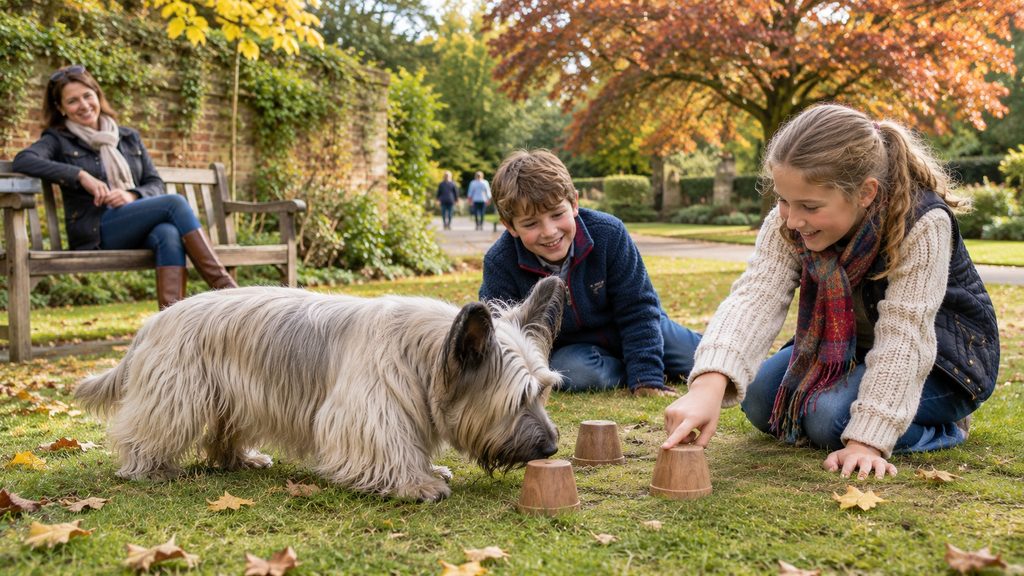
Teaching Children to Respect a Skye Terrier
A simple family rule can make a significant difference: allow the Skye Terrier to choose when it wants attention. Children should learn to offer an open hand for gentle sniffing, stroke the dog’s shoulder or chest when it welcomes contact, and stop when it moves away. They should never pull its long coat, disturb it while sleeping, or attempt to carry it. Supervised activities such as hiding treats, practicing familiar commands, or walking together encourage positive relationships. Provide a quiet resting area that remains off-limits to children, and always have an adult actively supervise interactions, regardless of how familiar the dog and children are with one another.
Skye Terrier With Other Dogs and Pets
The Skye Terrier can develop positive relationships with other dogs and household animals, but its traditional working instincts, independent personality, and sometimes selective approach to canine companionship require careful consideration. Originally bred to pursue challenging quarry across Scotland’s rugged landscape, this determined terrier possesses courage and confidence that can occasionally make interactions with unfamiliar animals complicated. Although many Skye Terriers live peacefully alongside other dogs, they are not universally sociable, and some prefer familiar companions rather than enthusiastic encounters with every animal they meet. Understanding these tendencies is particularly important for households that already have pets or regularly visit places where other dogs are present.
When introduced appropriately, Skye Terriers can form close and affectionate relationships with other household dogs. Individuals raised together from a young age often develop comfortable routines, sharing living spaces and enjoying familiar activities. Some become enthusiastic playmates, while others prefer a quieter arrangement in which each dog maintains its own resting areas and personal space. Both situations can represent successful companionship. Owners should avoid assuming that dogs must constantly interact or sleep together to demonstrate a healthy relationship. Peaceful coexistence, relaxed body language, and an absence of tension are often more meaningful indicators of compatibility.
The breed’s confidence can occasionally create difficulties when interacting with unfamiliar dogs, particularly those that behave intrusively or ignore social boundaries. A Skye Terrier may react defensively to persistent sniffing, rough play, or an overly enthusiastic greeting. Despite its relatively short stature, it is a substantial and determined dog that may be unwilling to retreat when challenged. Some individuals can also display greater tension around dogs of the same sex, although this is not inevitable. Breed tendencies should never replace an assessment of the individual dog’s behavior, history, and temperament.
Early socialization is especially valuable in developing appropriate canine manners. Young Skye Terriers benefit from meeting calm, well-behaved dogs in carefully controlled situations where interactions remain positive and manageable. Supervised puppy classes, relaxed walks alongside familiar dogs, and brief introductions in neutral environments can help establish confidence. However, socialization does not mean exposing a puppy to as many dogs as possible regardless of their behavior. A frightening encounter with an aggressive or overly boisterous animal can undermine confidence, particularly in a breed that may remember unpleasant experiences and become more cautious during future meetings.
Owners should also recognize that a Skye Terrier does not need to enjoy crowded dog parks to lead a fulfilling social life. Some individuals are perfectly content walking past other dogs politely without seeking direct contact. Others develop a small circle of familiar canine companions with whom they interact comfortably. Forcing an independent or selective terrier into chaotic off-leash environments can create unnecessary stress and increase the likelihood of confrontation. Structured opportunities for exercise, exploration, and controlled social encounters are usually more beneficial than expecting every Skye Terrier to participate enthusiastically in large groups.
Introducing a Skye Terrier to an established household dog requires patience and sensible planning. Initial meetings are often best arranged in a neutral outdoor location where neither animal feels responsible for defending its usual territory. Parallel walking with sufficient distance between the dogs allows them to become familiar with one another without immediate pressure. As their behavior becomes relaxed, owners can gradually reduce the distance and permit brief, comfortable interactions. Once home, separate feeding areas, individual resting spaces, and careful management of valued toys or chews can help prevent unnecessary competition. The process should progress at a pace that suits both dogs rather than following a predetermined schedule.
Relationships with cats present another important consideration. The Skye Terrier’s history as a vermin hunter means that movement from smaller animals can trigger a strong chase response. Nevertheless, some Skye Terriers learn to coexist successfully with cats, particularly when introduced carefully during puppyhood. Compatibility depends on the individual dog’s prey drive, the cat’s confidence, previous experiences, and the household’s ability to manage interactions. A calm dog that has previously lived peacefully with cats may be easier to introduce than an adult terrier with an established habit of chasing unfamiliar animals. Even so, successful introductions cannot be guaranteed.
When introducing a Skye Terrier to a cat, the cat should always have access to secure escape routes, elevated resting places, and rooms the dog cannot enter. Initial encounters can take place through a secure barrier, allowing both animals to observe one another without direct physical contact. Calm behavior should be rewarded, while persistent staring, stalking, lunging, or attempts to chase indicate that greater separation is necessary. Owners should never restrain a frightened cat while allowing the dog to approach. Gradual introductions and professional guidance when needed provide a safer foundation for coexistence. The animals should remain separated whenever supervision cannot be provided until their relationship is reliably established, and ongoing management may still be necessary.
Smaller household pets generally present greater challenges. Rabbits, guinea pigs, hamsters, pet rats, and other small mammals can strongly stimulate the Skye Terrier’s natural hunting instincts. The breed was developed specifically to confront and pursue animals, and even a dog that behaves gently around people may respond instinctively to sudden movement from a small pet. Owners should never assume that affection toward a familiar animal eliminates predatory risk. Secure enclosures, physical separation, and careful household management are essential. Direct interaction between a Skye Terrier and vulnerable small mammals is best avoided, and cages should be positioned where the dog cannot reach or disturb them.
Birds and backyard poultry also require particular caution. Chickens, ducks, and other birds may trigger chasing or predatory behavior, especially when they flap their wings or move rapidly. A Skye Terrier should not have unrestricted access to poultry yards simply because it appears calm while watching birds through a fence. Secure barriers and separate outdoor spaces help protect vulnerable animals while allowing the dog to enjoy its surroundings. The same principle applies to wildlife encountered during walks. Squirrels, rabbits, and other small creatures can quickly attract the attention of a terrier whose instinctive interest in movement remains strong.
Training can help owners manage these instincts, although it should not be expected to eliminate them completely. Teaching a reliable response to the dog’s name, rewarding voluntary attention, and practicing calm behavior around other animals can improve everyday control. A comfortable harness and secure leash are particularly useful in unfamiliar environments, while a safely enclosed yard provides opportunities for exploration without exposing wildlife or neighboring pets to unnecessary risk. Owners should remain attentive to changes in body language, especially fixed staring, increased tension, stiff posture, or sudden attempts to pursue another animal.
Ultimately, the Skye Terrier can be a rewarding companion in a multi-dog household when personalities are compatible, introductions are thoughtful, and appropriate boundaries are maintained. Living with cats may also be possible for carefully selected individuals, although smaller prey animals require much greater separation and protection. Prospective owners should be realistic about the breed’s working heritage and avoid expecting universal friendliness toward unfamiliar animals. With patient socialization, sensible management, and respect for individual temperament, many Skye Terriers can enjoy peaceful relationships with other dogs while remaining the courageous, independent companions that make the breed so distinctive.
Recognizing Comfortable Canine Introductions
When introducing a Skye Terrier to another dog, observe behavior rather than relying on tail movement alone. Relaxed muscles, loose body movements, gentle sniffing, and the ability to disengage comfortably are encouraging signs. Stiff posture, prolonged staring, raised tension, repeated growling, or attempts to block another dog’s movement suggest that more distance is needed. Short parallel walks often provide a calmer introduction than immediate face-to-face greetings. Avoid tightening the leash unnecessarily or forcing contact between reluctant dogs. If either animal repeatedly becomes distressed or reactive, consult a qualified reward-based trainer or veterinary behaviorist before attempting further close interactions.

Skye Terrier Exercise and Activity Needs
The Skye Terrier is an adaptable companion with relatively modest exercise requirements, but its calm household demeanor should never be mistaken for a lack of interest in physical activity. Developed as a determined working terrier in the demanding Scottish Highlands, this breed combines surprising strength, curiosity, and endurance with a more measured energy level than many other terriers. Most adult Skye Terriers enjoy daily walks, opportunities to explore unfamiliar scents, and interactive activities with their owners. They generally do not require intensive exercise programs, making them suitable for households that enjoy regular outdoor activity without needing an exceptionally athletic dog. However, their unusually long bodies and short legs mean exercise should be selected thoughtfully, particularly during puppyhood.
For most healthy adults, a daily routine involving approximately 30–60 minutes of comfortable activity provides a useful starting point, although individual requirements vary with age, fitness, health, and temperament. The Royal Kennel Club categorizes the breed as needing up to an hour of exercise each day, while the American Kennel Club emphasizes that even a short daily outing can provide valuable physical and mental benefits. Some Skye Terriers are satisfied with two leisurely walks and occasional play, whereas more active individuals enjoy longer outings. Owners should pay attention to their dog’s energy, recovery, and enthusiasm rather than treating a particular number of minutes as a rigid requirement.
Walking is one of the most practical and rewarding forms of exercise for a Skye Terrier. Its sturdy construction and purposeful gait allow it to cover reasonable distances at a comfortable pace, and many individuals particularly enjoy exploring parks, quiet woodland trails, and interesting neighborhood streets. Rather than insisting on continuous brisk movement, owners should allow regular opportunities for sniffing and investigating the environment. These experiences engage the dog’s natural curiosity and provide valuable mental stimulation. A leisurely walk with plenty of interesting scents can sometimes be more satisfying than a longer outing that offers little opportunity for exploration.
The Skye Terrier’s working heritage becomes especially apparent when it encounters an intriguing scent or an unfamiliar environment. Historically, these dogs were expected to investigate rocky crevices and pursue animals through difficult terrain, developing considerable persistence and independent decision-making abilities. Modern Skye Terriers often retain a strong desire to examine their surroundings. Scent-based enrichment activities can therefore make an excellent addition to ordinary exercise. Scattering a few treats through clean grass, arranging simple searches around the garden, or encouraging the dog to locate a favorite toy provides enjoyable mental challenges without placing excessive physical demands on its body.
Play is another valuable component of the breed’s daily routine. Many Skye Terriers enjoy gentle games of fetch, controlled tugging, and interactive activities that involve cooperation with their owners. Their playfulness may emerge in short, enthusiastic bursts rather than prolonged periods of high-energy activity. Toys that encourage searching, problem-solving, and natural investigation are particularly useful. Because the breed can be determined and possessive of interesting objects, games should include positive training that teaches the dog to release items willingly. Sessions are most successful when kept enjoyable and adapted to the individual dog’s preferences.
Although the Skye Terrier is strong and surprisingly capable, its distinctive body structure requires sensible exercise management. The breed has a remarkably elongated frame supported by short legs, making repeated high-impact movements less desirable than controlled, ground-level activities. Owners should discourage frequent jumping from elevated furniture, uncontrolled leaps over obstacles, and rough physical games involving sudden twisting or collisions. This does not mean healthy adult Skye Terriers must avoid normal movement, climbing, or playful activity. Rather, exercise should encourage physical fitness while minimizing unnecessary strain and allowing the dog to move naturally.
Puppies require particular consideration because their bones, joints, and supporting structures are still developing. Young Skye Terriers should enjoy frequent opportunities for gentle movement, exploration, and age-appropriate play without being pushed into long, demanding walks. Short outings on comfortable surfaces are generally preferable to extended forced exercise. Owners should also limit repeated jumping from cars, sofas, and other elevated surfaces. The breed has a recognized history of developmental forelimb lameness sometimes called Skye limp, making careful observation during growth especially important. Any persistent or noticeable limping should receive veterinary assessment rather than being dismissed as a normal feature of puppy development.
As puppies mature, exercise can gradually become more structured. Short walks through different environments help develop confidence while introducing the dog to familiar outdoor routines. Walking on grass, compacted earth, and other secure surfaces can provide varied sensory experiences, provided the terrain is safe and the activity remains comfortable. Young dogs should not be encouraged to keep pace with jogging adults or accompany cyclists for extended distances. A veterinarian familiar with the breed can help owners determine when more demanding activities are appropriate, particularly if the puppy has experienced any orthopedic concerns.
For adult Skye Terriers that enjoy additional challenges, organized canine activities can offer excellent opportunities for physical and mental enrichment. Obedience, beginner scent work, and carefully adapted agility exercises may all appeal to individual dogs. The American Kennel Club also recognizes the breed’s participation in activities such as Earthdog events, which draw upon traditional terrier instincts. However, obstacle height, jumping demands, and the dog’s physical soundness should always be considered. Activities emphasizing concentration, controlled movement, and cooperation are generally more appropriate than repeatedly encouraging maximum speed or dramatic aerial maneuvers.
Outdoor safety is another important consideration. Skye Terriers may become intensely interested in squirrels, rabbits, and other small animals, and their determination can temporarily override even well-practiced recall commands. Walking on a secure leash is sensible in unfamiliar areas, while enclosed gardens and appropriately fenced exercise spaces provide opportunities for greater freedom. A properly fitted harness may be useful for comfortable walking and controlled handling, provided it does not restrict shoulder movement or damage the coat. Owners should also inspect the dog’s furnishings after walks because grass seeds, burrs, and small debris can become trapped in its long hair.
Weather conditions can influence exercise choices as well. The Skye Terrier’s protective double coat developed in a cool, frequently damp environment, but that does not make the breed immune to overheating. Warm, humid weather may require shorter walks during cooler parts of the day, access to shade, and regular drinking water. In wet conditions, the long coat can collect considerable moisture and dirt, particularly around the legs and underside. Drying the dog thoroughly after outdoor activity helps prevent prolonged dampness and uncomfortable tangles. Its coat should be maintained carefully without assuming that shaving it is the best solution to summer heat.
As a Skye Terrier grows older, regular movement remains important for maintaining muscle condition, mobility, and general well-being. Senior dogs may benefit from shorter, more frequent walks, gentler surfaces, and additional time to investigate their surroundings. Stiffness, reluctance to move, or changes in gait should prompt veterinary attention rather than simply being attributed to age. Excess body weight can also make physical activity more demanding, so exercise and appropriate nutrition should work together to maintain a healthy body condition.
Ultimately, the Skye Terrier offers an appealing balance between outdoor enthusiasm and a relatively relaxed lifestyle. It does not need constant vigorous activity, but it benefits enormously from consistent walks, engaging play, and opportunities to use its natural curiosity. Owners who combine moderate exercise with thoughtful physical management will help their Skye Terrier remain fit, mentally satisfied, and comfortable throughout life. The goal is not to exhaust this determined Scottish companion, but to provide the right combination of movement, exploration, stimulation, and rest.
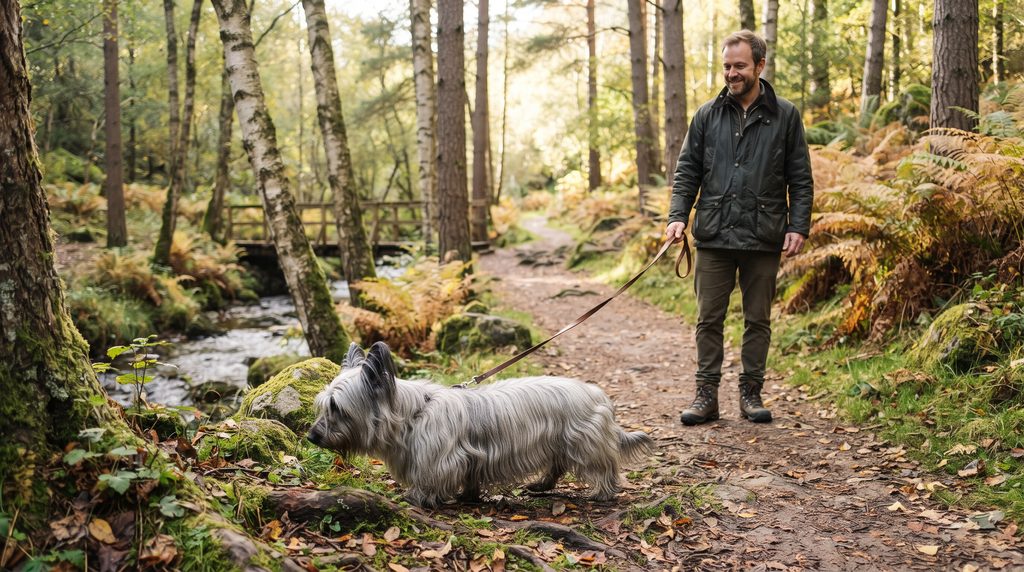
Protecting a Young Skye Terrier During Exercise
Skye Terrier puppies need opportunities to explore and develop strength, but their unusual body structure deserves special care during growth. Favor several short, relaxed walks over long forced outings, and discourage repeated jumping from furniture, vehicles, or elevated surfaces. Avoid strenuous obstacle courses and rough games that involve sudden twisting or hard landings. The breed can experience developmental forelimb lameness, sometimes called Skye limp, so owners should monitor changes in movement carefully. Any limping, pain, swelling, or reluctance to bear weight warrants veterinary assessment. Appropriate activity during puppyhood helps establish healthy habits without placing unnecessary stress on developing limbs.
Training a Skye Terrier
Training a Skye Terrier is a rewarding experience for owners who understand the difference between intelligence and unquestioning obedience. This distinctive Scottish breed is observant, capable of learning quickly, and often eager to cooperate with people it trusts, yet it retains the independent judgment of a traditional working terrier. Historically expected to make decisions while pursuing quarry through rocky terrain, the Skye Terrier was never developed to wait constantly for human direction. That independence remains evident in modern dogs, particularly when an interesting scent, unfamiliar visitor, or exciting distraction competes for their attention. Successful training therefore depends on patience, consistency, positive reinforcement, and making cooperation genuinely worthwhile.
One of the most important principles is to establish a trusting relationship before expecting reliable responses. Skye Terriers often develop exceptionally close bonds with their owners, but many are sensitive to harsh handling, raised voices, and repeated corrections. Punitive training can undermine confidence, encourage avoidance, and damage the relationship on which effective learning depends. Reward-based methods are far more appropriate. Small food rewards, verbal praise, favorite toys, and opportunities to investigate interesting surroundings can all reinforce desirable behavior. The most successful owners learn what motivates their individual dog rather than assuming that every Skye Terrier will respond equally enthusiastically to the same reward.
Training should begin as soon as a puppy arrives home, initially concentrating on practical behaviors that make everyday life easier. Responding to its name, approaching when called, settling on a designated mat, accepting gentle handling, and walking comfortably on a leash provide an excellent foundation. Sessions of only a few minutes are often sufficient for young puppies, particularly when repeated throughout the day. A simple verbal marker such as “yes,” or a clicker introduced consistently, helps identify the exact behavior being rewarded. Short, successful exercises encourage enthusiasm and prevent the frustration that can develop when an independent terrier is repeatedly asked to perform tasks it no longer finds interesting.
Early socialization deserves particular attention because the Skye Terrier is naturally discerning around unfamiliar people. Puppies should gradually encounter different environments, household sounds, visitors, surfaces, and everyday activities while remaining comfortable and secure. The objective is not to create a dog that enthusiastically approaches everyone. Instead, owners should encourage relaxed observation, appropriate curiosity, and confidence in unfamiliar situations. Visiting quiet shopping streets, watching people from a comfortable distance, and practicing simple exercises near everyday distractions can be valuable. Positive experiences should always take priority over the number of encounters, particularly when a puppy appears uncertain or overwhelmed.
Leash training is another essential skill, especially because Skye Terriers can become thoroughly absorbed in investigating their surroundings. Begin in a quiet location and reward the dog for walking near its owner without pulling. Gradually introduce more interesting environments as the behavior becomes reliable. Rather than insisting on a rigid walking position throughout every outing, combine short periods of attentive walking with opportunities to sniff and explore. This approach acknowledges the breed’s natural curiosity while teaching it to remain responsive. A comfortable, correctly fitted harness can provide practical control without restricting movement or placing unnecessary pressure on the neck.
Recall training requires particular persistence. Although a Skye Terrier may respond beautifully in the garden, its attention can change dramatically when a squirrel, rabbit, or unfamiliar scent appears. Begin by rewarding the dog generously for approaching from short distances in a quiet, enclosed space. Gradually increase distractions, using a long training line where appropriate and safe. Avoid calling repeatedly when the dog is unlikely to respond, and never punish it after it eventually returns. Reliable recall develops through repeated successful experiences, but the breed’s hunting instincts mean owners should continue using secure enclosures or a leash wherever uncontrolled chasing could create danger.
The Skye Terrier’s natural vigilance can also influence barking behavior. Some individuals are quick to announce visitors, unfamiliar noises, or activity outside the home. Rather than attempting to suppress every vocal response, owners should teach the dog what to do after noticing something unusual. Rewarding a return to its owner, settling on a mat, or moving away from a window can establish a more useful routine. Training should begin with manageable distractions and progress gradually. Preventing repeated rehearsal of excessive barking is equally important, so window coverings, appropriate distance from triggers, and predictable household arrangements may be helpful during the learning process.
Handling and grooming cooperation should be incorporated into training from an early age. The Skye Terrier’s long coat requires regular attention, making it particularly valuable for the dog to feel comfortable with brushing, paw inspection, ear examination, and gentle restraint. Begin with brief sessions in which the puppy voluntarily approaches the grooming area and receives rewards for remaining relaxed. Gradually introduce brushes, combs, and handling of individual body parts without forcing prolonged contact. A stable, non-slip surface and careful support for the dog’s elongated body improve safety. These exercises also prepare the Skye Terrier for veterinary examinations and other routine procedures throughout life.
House training generally follows the same principles used with other breeds, although consistency remains especially important. Puppies should receive frequent opportunities to eliminate outdoors, particularly after sleeping, eating, playing, and periods of excitement. Reward successful toileting immediately and supervise closely indoors while habits are developing. Accidents should be cleaned thoroughly without punishment. Owners should also introduce comfortable periods of separation gradually, teaching the puppy that remaining alone briefly is safe and predictable. This is particularly useful for a breed that often forms strong attachments to familiar people and enjoys staying close to household activity.
As the Skye Terrier enters adolescence, owners may notice a temporary reduction in responsiveness or an increased interest in competing distractions. A previously cooperative puppy might suddenly hesitate before responding, become more watchful around unfamiliar dogs, or test established household routines. This developmental stage is an opportunity to strengthen training rather than abandon it. Return temporarily to easier exercises, increase rewards where necessary, and maintain consistent expectations. Avoid confrontational attempts to establish dominance, which offer little practical benefit and may undermine trust. Calm repetition and clear guidance generally produce more reliable results than escalating corrections.
Advanced training can provide enjoyable mental enrichment for Skye Terriers that have mastered everyday manners. Rally obedience, scent work, trick training, and carefully adapted canine sports offer opportunities to develop concentration and cooperation. Searching for hidden objects is especially suitable because it allows the dog to use its natural investigative abilities. However, activities involving repeated jumping, abrupt twisting, or high-impact movements should be evaluated carefully because of the breed’s long, low physical structure. The objective is to encourage enjoyable learning and sound movement rather than demanding athletic performances that may be unsuitable for an individual dog’s age or condition.
Owners experiencing persistent training difficulties should seek assistance from a qualified professional who uses humane, evidence-based methods. This is particularly important when a Skye Terrier develops significant fear of strangers, strong reactions toward other dogs, resource guarding, or difficulty remaining alone. A knowledgeable trainer can help identify the causes of behavior and develop an appropriate plan without relying on intimidation. Ultimately, the Skye Terrier is highly capable of becoming a responsive, well-mannered companion. Its independence should be respected rather than treated as a defect, while its intelligence and loyalty provide a strong foundation for lifelong learning. With consistent guidance, patience, and positive reinforcement, training becomes an enjoyable partnership that strengthens the relationship between dog and owner.
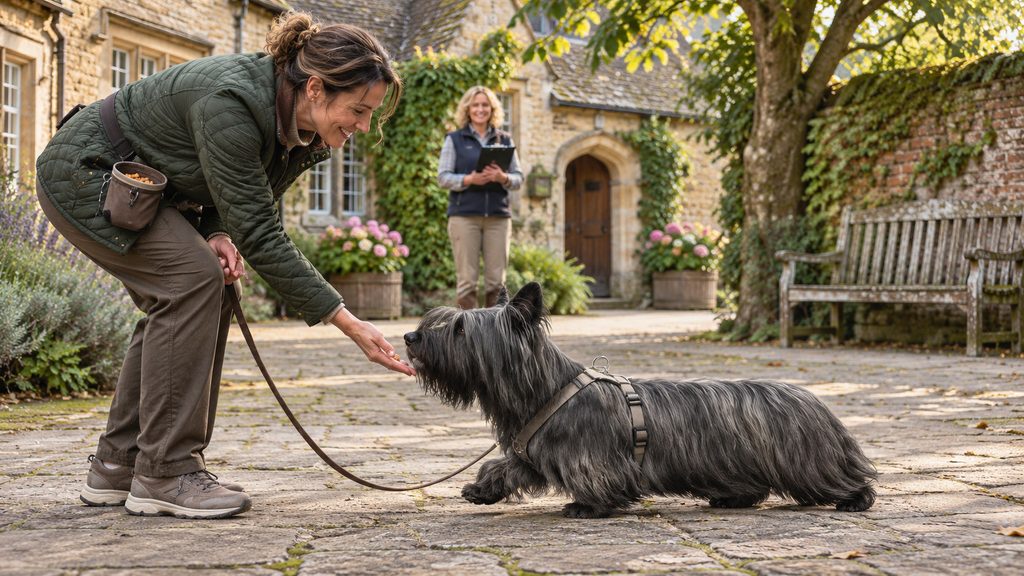
Skye Terrier Grooming and Coat Care
The Skye Terrier’s magnificent coat is one of its most distinctive features, giving the breed an elegant, flowing appearance that immediately separates it from most other terriers. Beneath this impressive covering lies a practical, weather-resistant double coat originally developed to protect working dogs from Scotland’s harsh climate and challenging terrain. Although the long hair may appear difficult to maintain, Skye Terrier grooming is generally more manageable than many prospective owners expect. The breed does not ordinarily require elaborate haircuts, professional sculpting, or the intensive hand-stripping associated with certain other terriers. However, regular brushing, careful attention to vulnerable areas, and consistent hygiene are essential for keeping the coat comfortable, healthy, and free from painful tangles.
The Skye Terrier has two distinct coat layers that serve different purposes. Its undercoat is short, soft, and woolly, providing insulation and protection against changing temperatures. The outer coat is considerably longer, straighter, and harder in texture, falling naturally down both sides of the body from a central part along the back. This protective covering helps repel moisture and shield the dog from vegetation and rough surfaces. The hair should lie relatively flat rather than forming the fluffy, rounded silhouette associated with some companion breeds. When properly maintained, the finished appearance is elegant and natural, with enough coat movement to reveal the dog’s distinctive long, low proportions.
Most adult Skye Terriers benefit from thorough brushing and combing at least twice weekly, although some require more frequent attention depending on coat texture, lifestyle, and weather conditions. Dogs that frequently explore woodland trails, grassy parks, or damp environments may accumulate considerably more debris than those enjoying mostly paved neighborhood walks. A useful grooming routine involves checking the coat briefly after outdoor activity and scheduling longer sessions to remove loose hair and work through developing tangles. Consistency matters more than spending excessive time on occasional intensive grooming. Small knots are usually much easier to manage before they tighten close to the skin.
A quality pin brush and a long-toothed metal comb are particularly useful for maintaining the Skye Terrier’s coat. Begin by dividing the hair into manageable sections and brushing gently from near the skin toward the ends, following the natural direction of growth. Avoid dragging the brush aggressively through resistance, as this can break the hair and cause discomfort. Once a section has been brushed, use the comb to check for remaining tangles beneath the outer covering. This is especially important because a Skye Terrier may appear beautifully groomed on the surface while concealed knots develop in the softer undercoat.
Certain areas deserve additional attention because friction and movement encourage tangling. The hair behind the ears, beneath the collar or harness, around the armpits, between the front legs, and along the underside can become knotted more quickly than the main body coat. The furnishings on the legs and tail may also collect burrs, grass seeds, and small pieces of vegetation. Owners should inspect these areas carefully after walks, removing debris before it becomes embedded. When a tangle cannot be separated comfortably with fingers and a comb, an experienced groomer can help prevent unnecessary pulling or accidental injury.
Bathing is another important part of coat maintenance, although the frequency should reflect the individual dog’s needs. Many Skye Terriers do well with bathing approximately every four to six weeks, while particularly active dogs may need more frequent cleaning. Use a gentle dog-specific shampoo and distribute it carefully through the coat without vigorous scrubbing, which can encourage tangles. Thorough rinsing is essential because residual products may irritate the skin or leave the hair feeling heavy. A suitable conditioner may help maintain manageability, especially where the furnishings are prone to dryness. After bathing, gently squeeze excess moisture from the coat with towels rather than rubbing the hair aggressively.
Drying a Skye Terrier thoroughly is particularly important because moisture can remain trapped beneath the long outer coat. A low-heat dryer, used carefully while brushing in the natural direction of hair growth, can help prevent tangles and lingering dampness. Owners should pay particular attention to the underside, legs, and areas where the coat lies close to the skin. A dog that has walked through heavy rain may also require careful drying even when a complete bath is unnecessary. Regularly checking the skin during grooming helps identify redness, irritation, unusual odors, or other changes that might otherwise remain hidden beneath the abundant hair.
One common source of confusion concerns searches for Skye Terrier short hair and whether the breed naturally occurs in a shorter-coated variety. The answer is straightforward: the recognized Skye Terrier has a long double coat, and there is no separately recognized short-haired variety. A short haired Skye Terrier is therefore generally a dog whose coat has been shortened through grooming, or a young individual whose adult coat has not fully developed. The traditional breed appearance relies on maintaining the natural coat, and routine clipping or sculpting is not part of standard show preparation.
Some companion owners nevertheless consider shortening the coat for practical reasons, especially when managing recurring tangles or maintaining an active outdoor lifestyle. Before making this decision, it is sensible to consult a professional groomer familiar with Skye Terriers and double-coated breeds. Shortening the coat may alter its appearance and protective qualities, and regrowth can vary. A full-body haircut should not be assumed necessary simply because the dog has long hair. Careful brushing, maintaining the furnishings around the feet, and improving daily grooming habits may provide a more suitable solution while preserving the breed’s characteristic appearance.
The hair around the face and eyes also requires thoughtful management. Skye Terriers naturally develop a veil of softer furnishings that falls over the forehead and around the muzzle. Although this may initially appear to obstruct vision, the coat often separates naturally and allows the dog to see comfortably. Owners should keep the facial hair clean and free from food residue, particularly around the mouth. Excessive tearing, redness, squinting, or persistent rubbing of the eyes warrants veterinary attention rather than automatically cutting away the surrounding hair. A groomer familiar with the breed can advise when limited practical tidying is appropriate.
Routine maintenance extends beyond the coat itself. The nails should be checked frequently and trimmed before they become long enough to affect comfortable walking. Hair growing between the paw pads may need careful trimming to improve traction and prevent debris from collecting. The ears should be inspected regularly for redness, discharge, unusual odor, or irritation, with cleaning performed only when necessary using an appropriate veterinary-recommended product. Both erect-eared and drop-eared Skye Terriers benefit from these checks. Regular toothbrushing with dog-safe toothpaste is equally valuable, helping maintain dental hygiene throughout adulthood.
Grooming should become a familiar and positive experience from puppyhood. Young Skye Terriers benefit from gentle introductions to brushing, paw handling, nail care, and standing comfortably on a secure surface. Short sessions accompanied by praise and small rewards help build confidence without overwhelming the puppy. As the adult coat gradually develops, owners can increase the thoroughness of their routine while remaining attentive to the dog’s comfort. A stable grooming table or other non-slip surface can make longer sessions easier, provided the dog’s elongated body is supported appropriately and it is never left unattended at height.
Ultimately, maintaining a Skye Terrier’s coat is less about achieving an elaborate show appearance and more about establishing a dependable routine. Regular brushing, careful bathing, thorough drying, and attention to sensitive areas help preserve the coat’s natural beauty while preventing discomfort. Owners who enjoy hands-on care may find grooming an especially rewarding opportunity to strengthen their relationship with the dog. With patience, appropriate equipment, and an understanding of its distinctive double coat, the Skye Terrier can remain beautifully presented, physically comfortable, and ready to enjoy the everyday adventures that make this remarkable Scottish breed such an engaging companion.
The Essential Skye Terrier Grooming Kit
Maintaining a Skye Terrier’s coat does not require an extensive collection of specialist equipment. A quality long-pin brush, a sturdy metal comb with appropriately spaced teeth, and a gentle dog-specific shampoo provide the foundation for regular care. A suitable conditioner, absorbent towels, and a low-heat dryer can make bathing more manageable. Keep rounded-tip grooming scissors available for careful trimming between the paw pads, along with appropriate nail clippers or a grinder. A secure non-slip grooming surface improves comfort and control. Most importantly, establish a consistent routine that allows you to check the entire coat, including the frequently overlooked areas behind the ears and beneath the legs.
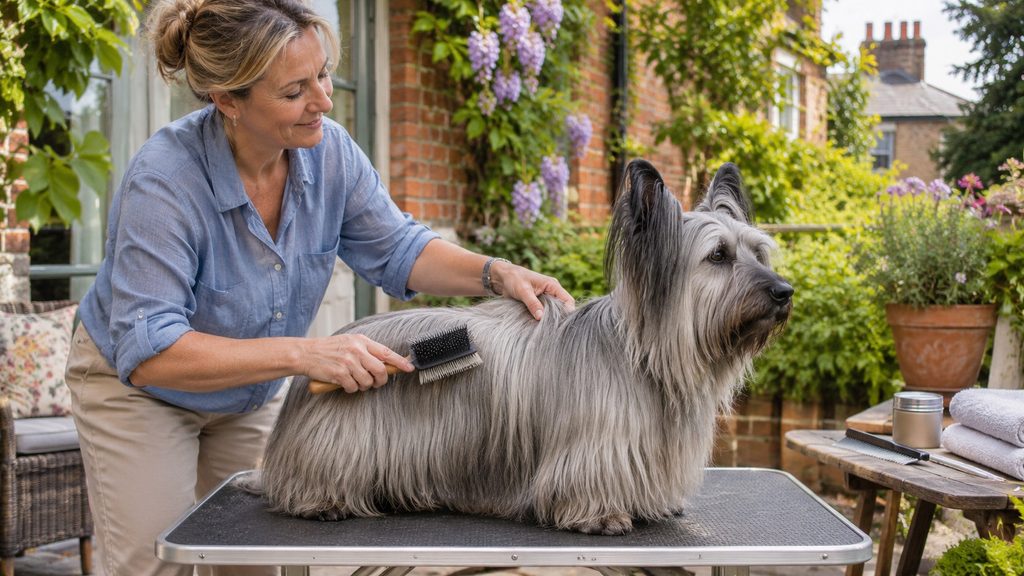
Skye Terrier Shedding
The Skye Terrier’s magnificent flowing coat can create the impression of a dog that sheds heavily throughout the year, but the reality is somewhat different. Although this Scottish breed has an abundant double coat, its shedding is generally moderate, with more noticeable hair loss during seasonal coat changes. The long outer hairs may remain visible on furniture and clothing, while some of the softer undercoat becomes trapped beneath the outer covering until removed through brushing. Understanding how the coat naturally renews itself helps owners distinguish normal shedding from excessive hair loss and maintain a comfortable home without compromising the breed’s distinctive appearance.
Unlike certain terriers with harsh, hand-stripped coats that shed relatively little into the household, the Skye Terrier naturally loses hair as part of its normal coat-growth cycle. Its soft, woolly undercoat provides insulation, while the longer, straighter outer coat offers protection against wind, moisture, and vegetation. These two layers do not necessarily shed at the same rate. Individual outer hairs are replaced gradually, while undercoat loss may become more noticeable at particular times of year. Consequently, a Skye Terrier can appear to shed very little for several weeks before releasing a greater amount of loose undercoat.
Seasonal shedding is particularly relevant to this breed. Many Skye Terriers shed their softer undercoat more noticeably once or twice annually, although the timing and intensity vary. Spring is a common period for increased coat loss as dogs adjust to changing daylight and environmental conditions. Some experience another noticeable transition later in the year. Dogs living primarily indoors may display less distinct seasonal patterns because artificial lighting, indoor heating, and stable household temperatures influence their normal coat cycles. Owners should therefore expect some individual variation rather than assuming that every Skye Terrier will follow an identical shedding schedule.
One reason the breed’s shedding can seem relatively manageable is that loose hair often remains caught within its long coat instead of immediately falling onto surrounding surfaces. While this may reduce the amount of visible hair scattered around the house, it also creates an important grooming responsibility. Dead undercoat that remains trapped can become tangled with surrounding hair, particularly behind the ears, beneath the legs, and around areas affected by friction. Regular combing helps release this loose material before it develops into uncomfortable mats. A coat that looks tidy from a distance may still contain considerable loose undercoat beneath its outer layer.
During ordinary periods, brushing and combing a couple of times weekly may be sufficient for many adult Skye Terriers. When seasonal shedding increases, owners may find that shorter, more frequent sessions are helpful. A long-pin brush can gently separate the outer hair, while a suitable metal comb allows careful inspection of the softer undercoat. Work through manageable sections without pulling aggressively or scraping the skin. The aim is to remove naturally loosened hair, not to strip away healthy coat or force the undercoat to shed prematurely. Grooming should remain comfortable and positive for the dog.
Bathing can also help manage accumulated loose hair when performed appropriately. A gentle dog-specific shampoo removes dirt and debris, while thorough rinsing helps prevent irritation. After bathing, careful drying and combing can release hair that has already become detached. However, excessive bathing, aggressive brushing, or repeated use of harsh grooming tools may damage the coat and irritate the skin. The Skye Terrier’s natural coat texture should be preserved rather than repeatedly thinned or cut in an attempt to eliminate shedding. Clipping the coat short does not stop the normal hair-growth cycle and is unnecessary for routine shedding control.
Household management is generally straightforward when owners maintain a dependable grooming routine. Regular vacuuming, washable bedding, and occasional use of a lint roller can help control the loose hair that accumulates on soft furnishings. Keeping a small grooming kit near the usual brushing area makes it easier to address seasonal changes before hair begins collecting around the home. Owners may also find that brushing outdoors during suitable weather reduces the amount of loose undercoat released indoors. However, the dog should always be groomed in a secure, comfortable location where it cannot become frightened or attempt to escape.
Prospective owners sometimes wonder whether the Skye Terrier is suitable for people with dog allergies. Despite its relatively manageable shedding, the breed is not hypoallergenic. Allergic reactions are commonly triggered by proteins associated with canine skin particles, saliva, and other secretions rather than hair alone. Loose hair can carry allergens through the home, but reducing visible shedding does not necessarily eliminate exposure. Someone with significant dog allergies should spend time around Skye Terriers before making an ownership decision and seek appropriate medical advice. No breed can be guaranteed to avoid triggering an allergic reaction.
Nutrition and general health also influence coat condition. A complete, balanced diet provides the protein, essential fatty acids, vitamins, and minerals required for normal skin function and hair growth. Poor nutritional balance, certain medical conditions, and persistent skin irritation can contribute to an unhealthy coat or abnormal hair loss. Owners should avoid assuming that supplements are necessary simply because their Skye Terrier sheds seasonally. Additional oils, vitamins, or other products should be considered with veterinary guidance, particularly when the dog already receives a nutritionally complete commercial diet.
It is equally important to recognize when shedding may indicate a problem rather than normal coat renewal. Bald patches, persistent itching, inflamed skin, unusual odors, excessive flaking, or sudden changes in coat density deserve veterinary assessment. Hair loss accompanied by lethargy, weight changes, or alterations in appetite may also warrant investigation. Allergies, parasites, infections, and hormonal disorders are among the possible causes of abnormal shedding in dogs. Because the Skye Terrier’s long coat can conceal developing skin problems, owners should regularly examine the skin beneath the hair rather than relying entirely on its external appearance.
Age can influence coat changes as well. Puppies gradually develop the fuller texture and length of the adult double coat, while older dogs may experience alterations in hair growth, density, or condition. These changes are not always associated with disease, but substantial or unexpected hair loss should never be dismissed simply because a dog is growing older. Consistent photographs, grooming observations, and veterinary examinations can help identify meaningful changes over time. Owners who understand their individual dog’s normal shedding pattern are better equipped to recognize when something unusual occurs.
Overall, Skye Terrier shedding is a manageable aspect of ownership rather than an overwhelming disadvantage of the breed’s luxurious coat. Seasonal undercoat loss, occasional loose outer hairs, and regular grooming are normal expectations. With appropriate brushing, sensible bathing, good nutrition, and attention to skin health, most owners can maintain the coat without excessive difficulty. The key is accepting that the Skye Terrier naturally sheds while appreciating that its extraordinary appearance can be preserved through consistent, relatively straightforward care.

Seasonal Coat Changes vs. Abnormal Hair Loss
A Skye Terrier may release more loose undercoat during seasonal changes, particularly when brushed or bathed. This is generally normal when the skin remains healthy and the coat retains its usual coverage. However, shedding accompanied by bald patches, persistent scratching, redness, unusual odors, or noticeable changes in skin texture should not be dismissed as seasonal. Carefully part the long hair when checking for irritation or hidden problems. If hair loss becomes sudden, excessive, or uneven, arrange a veterinary examination. Recognizing the difference between ordinary coat renewal and abnormal hair loss helps protect the dog’s comfort and long-term skin health.
Skye Terrier Feeding and Nutrition
Providing a balanced, carefully managed diet is an essential part of maintaining the Skye Terrier’s health, mobility, and overall quality of life. Although relatively short in stature, this distinctive Scottish breed is considerably more substantial than its appearance suggests, with a strong muscular body supported by short legs and an unusually elongated frame. Appropriate nutrition should therefore support healthy muscle development, maintain an ideal body condition, and prevent unnecessary weight gain. The Skye Terrier does not require a specialized breed-exclusive diet, but its physical characteristics, moderate exercise needs, and different nutritional requirements throughout life make thoughtful feeding particularly important.
A high-quality, complete and balanced commercial dog food is generally the most practical foundation for everyday feeding. Owners should select a product appropriate for their dog’s age, activity level, body condition, and any diagnosed medical requirements. In the United States, an Association of American Feed Control Officials (AAFCO) nutritional adequacy statement can help identify whether a food is formulated or tested to provide complete nutrition for a particular life stage. The manufacturer’s nutritional expertise, quality-control procedures, and feeding research are also worth considering. Attractive packaging, fashionable ingredients, and expensive marketing claims do not necessarily indicate superior nutritional quality.
Protein plays an important role in supporting the Skye Terrier’s muscles, tissues, and normal bodily functions. As a sturdy breed with an unusually long back, maintaining appropriate muscle condition is especially desirable. Complete dog foods provide protein alongside carefully balanced fats, carbohydrates, vitamins, and minerals. Dietary fat supplies concentrated energy and essential fatty acids that contribute to normal skin and coat health. However, highly energy-dense foods can also make overfeeding easier, particularly in dogs with modest exercise requirements. Rather than focusing on a single ingredient or nutrient percentage, owners should consider the nutritional balance and suitability of the entire diet.
Portion control is particularly important because the Skye Terrier’s long coat can conceal changes in body condition. A dog may gradually accumulate excess weight without appearing noticeably heavier beneath its flowing hair. Owners should regularly feel the rib cage, observe changes in waist definition, and monitor body weight using a reliable scale. On the commonly used nine-point body condition scoring system, a score of approximately four or five is generally considered ideal. The ribs should be readily felt beneath a light covering of tissue, and the dog should retain an appropriate waist without appearing excessively thin. Veterinary assessments can help distinguish excess fat from the breed’s naturally substantial construction.
Adult male Skye Terriers commonly weigh approximately 35–45 pounds, with females generally somewhat lighter, but these figures should not be treated as fixed feeding targets. Individual requirements vary according to body size, age, reproductive status, metabolism, health, and daily activity. An active adult enjoying regular outdoor adventures may require more calories than a quieter companion spending much of the day indoors. Feeding guides printed on commercial food packaging provide a useful starting point, but the recommended portions should be adjusted according to the dog’s actual body condition and weight trends. Using a kitchen scale to measure food can provide greater consistency than relying on loosely filled measuring cups.
Most healthy adult Skye Terriers do well with two measured meals each day, usually offered in the morning and evening. Predictable feeding times make it easier to monitor appetite and establish a comfortable household routine. Dividing the daily allowance can also help owners manage hunger and avoid offering one unnecessarily large meal. Food should be served in a stable, appropriately sized bowl positioned where the dog can eat without being disturbed. Because the breed has short legs and an elongated body, a low, secure feeding arrangement is generally more practical than an unnecessarily elevated bowl. Fresh drinking water should remain available throughout the day.
Skye Terrier puppies have different nutritional requirements because they are developing bones, muscles, organs, and the supporting structures necessary for their unusual body shape. A complete puppy food appropriate for their expected adult size should provide the nutrients needed for steady growth. Puppies generally require several smaller meals throughout the day, with feeding frequency gradually reduced as they mature. Owners should follow veterinary guidance and the food manufacturer’s life-stage recommendations rather than attempting to accelerate growth through excessive feeding. Maintaining healthy body condition during puppyhood is particularly valuable because unnecessary weight can increase the demands placed on developing limbs and joints.
As a puppy approaches adulthood, its diet should eventually transition from growth nutrition to an appropriate adult maintenance formula. The timing depends on individual development, body condition, and veterinary advice. Dietary changes are best introduced gradually, commonly over approximately seven to ten days, by mixing increasing proportions of the new food with the previous diet. Some dogs require a slower transition, particularly if they have experienced digestive sensitivity. Sudden changes can cause temporary gastrointestinal upset, making it difficult to determine whether a problem relates to the ingredients, portion size, or speed of transition.
Treats can be especially useful when training a Skye Terrier because the breed often responds well to rewarding, engaging interactions. However, frequent food rewards can contribute substantially to daily calorie intake. As a general guideline, treats and other non-complete foods should account for no more than approximately 10% of total daily calories, with the remainder supplied by a complete, balanced diet. Owners can reserve a portion of the dog’s normal food allowance for training or divide larger treats into very small pieces. The reward needs to be meaningful to the dog, but it does not need to be large. Avoid routinely sharing fatty leftovers or rich human foods simply because the terrier displays an appealing expression.
Food safety deserves equal attention. Chocolate, grapes, raisins, onions, garlic, and products containing xylitol can be dangerous to dogs and should be kept securely out of reach. Cooked bones may splinter, while unsuitable chews and oversized food pieces can present choking or gastrointestinal risks. Owners considering home-prepared meals should seek advice from a board-certified veterinary nutritionist because a diet that appears varied and wholesome may still lack essential nutrients or contain inappropriate mineral balances. Raw meat diets also introduce potential infectious risks for dogs and household members. A nutritionally complete, appropriately handled diet is generally safer and easier to manage than an improvised feeding program.
Maintaining the Skye Terrier’s magnificent coat also depends partly on appropriate nutrition. Adequate protein, essential fatty acids, and balanced micronutrients support normal skin function and healthy hair growth. However, a dull coat, excessive flaking, persistent itching, or abnormal hair loss should not automatically be attributed to dietary deficiencies. Allergies, parasites, infections, and other medical conditions may produce similar changes. Supplements marketed for coat improvement are not routinely necessary when a dog already receives a complete diet. Excessive supplementation can occasionally create nutritional imbalances, so additional products should be discussed with a veterinarian before being introduced.
Senior Skye Terriers may eventually require adjustments to their feeding routine as activity levels, muscle condition, and health needs change. Some older dogs require fewer calories because they move less, while others benefit from diets designed to maintain muscle mass or address particular medical conditions. Age alone does not justify automatically switching to a lower-protein diet. Dental discomfort, digestive changes, and reduced appetite may also affect feeding preferences and should receive appropriate attention. Regular veterinary examinations provide an opportunity to review weight, muscle condition, hydration, and the continued suitability of the dog’s food.
Ultimately, successful Skye Terrier nutrition depends less on complicated feeding strategies than on consistency, appropriate food selection, and careful observation. A complete diet, measured portions, sensible treats, fresh water, and routine weight assessments provide a strong foundation for long-term well-being. Owners should remain attentive to changes hidden beneath the breed’s abundant coat and make adjustments when activity, age, or health circumstances change. By maintaining healthy body condition and supporting normal muscle development, thoughtful feeding helps this distinctive Scottish terrier remain active, comfortable, and capable of enjoying everyday family life.
Measuring Meals Beneath a Long Coat
A Skye Terrier’s abundant coat can conceal gradual weight gain, making regular monitoring particularly valuable. Use a kitchen scale to measure daily food portions and divide the allowance between consistent feeding times. Check body condition by gently feeling the ribs rather than relying entirely on appearance. Keep training treats within approximately 10% of daily calories, and account for additional snacks when adjusting meals. Weigh your dog periodically using the same scale whenever possible. If weight increases unexpectedly, review portion sizes, treats, activity, and any health changes with your veterinarian. Maintaining an appropriate weight supports comfortable movement throughout the dog’s life.
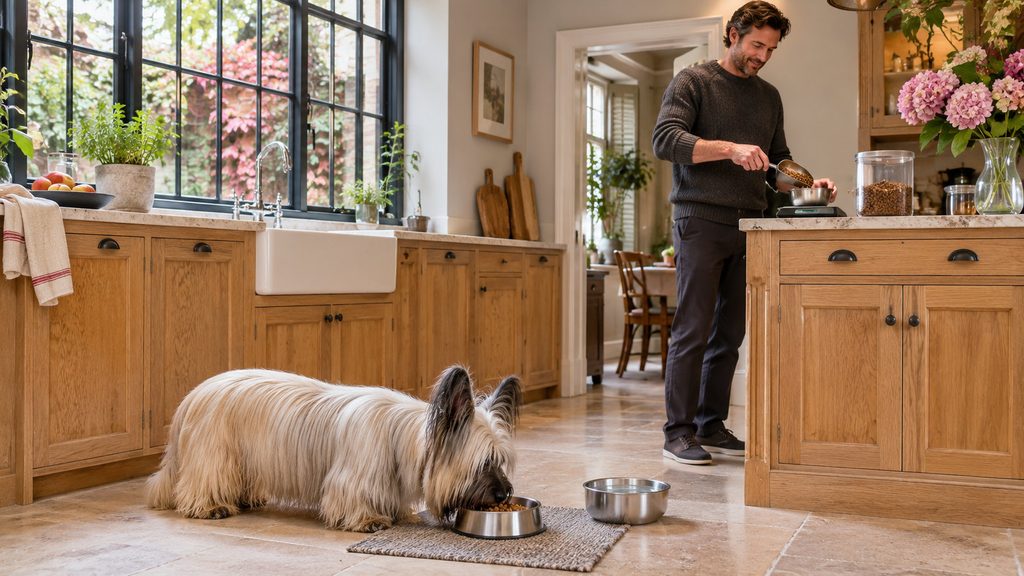
Skye Terrier Health and Common Health Problems
The Skye Terrier is generally considered a robust and comparatively long-lived breed, but its unusual physical structure and relatively small breeding population make certain health considerations particularly important. Originally developed for demanding work across Scotland’s rugged landscape, the breed possesses considerable strength and resilience despite its short legs and elongated body. Many Skye Terriers enjoy active, comfortable lives well into their senior years. However, prospective owners should understand the orthopedic, kidney, liver, and other health conditions that have been documented within the breed. Responsible breeding, appropriate veterinary care, sensible exercise, and early recognition of unusual symptoms all contribute to maintaining long-term well-being.
One of the most distinctive aspects of Skye Terrier health is the breed’s chondrodystrophic body structure. This describes the characteristic short-legged proportions resulting from differences in the development of cartilage and bone. Although these proportions are integral to the breed’s appearance, they can influence limb alignment, joint development, and the way physical stresses are distributed. A healthy Skye Terrier should move comfortably and confidently, without persistent limping, obvious pain, or difficulty supporting its weight. Owners should become familiar with their dog’s normal gait so that subtle changes can be recognized before they develop into more significant mobility problems.
A particularly important condition affecting some young Skye Terriers is commonly called Skye limp or puppy limp. This developmental problem may appear while a puppy’s front limbs are still growing and can be associated with differences in the rate at which the long bones develop. Affected puppies may display intermittent or persistent forelimb lameness, sometimes without obvious signs of discomfort. The condition frequently improves as the dog matures, but owners should never assume that every limping puppy has a harmless developmental issue. Injuries, joint abnormalities, infections, and other orthopedic problems can produce similar symptoms. Veterinary assessment is therefore essential whenever unusual lameness appears.
The Skye Terrier Club has also highlighted concerns involving elbow development, including elbow incongruity and premature closure of growth plates. These conditions can affect how the bones of the forelimb align and interact during movement. Some affected dogs experience persistent lameness or changes in gait, while others show relatively subtle abnormalities. Research examining elbow development in Skye Terriers has helped improve understanding of these problems, although their relationships with puppy limp are not completely established. Appropriate imaging and assessment by a veterinarian experienced with orthopedic conditions in short-legged breeds may be necessary when a young dog develops persistent or recurring mobility difficulties.
Protecting developing limbs is an important part of responsible puppy care. Young Skye Terriers should be allowed to explore, walk, and play naturally, but repeated jumping from high furniture, uncontrolled leaps from vehicles, and excessive high-impact exercise are best avoided. Short, varied walks and carefully supervised play provide opportunities to build coordination and confidence without placing unnecessary demands on immature joints. Owners should avoid both extremes: exhausting a developing puppy through demanding exercise or restricting normal movement so severely that muscle development and social experiences are compromised. Exercise recommendations should be adapted to the individual puppy’s development and any veterinary findings.
The breed’s elongated body also makes spinal health an important consideration. Intervertebral disc disease, commonly called IVDD, occurs when a disc between the vertebrae degenerates or becomes displaced, potentially causing pain or compression of the spinal cord. Spinal problems have been reported in Skye Terriers, although not every long-backed dog will develop disc disease. Warning signs can include sudden back or neck pain, reluctance to jump, an unusually hunched posture, difficulty walking, weakness, or changes in coordination. A dog that develops sudden weakness, paralysis, or loss of bladder control requires immediate emergency veterinary attention. Maintaining healthy body weight and avoiding repeated uncontrolled impacts are sensible precautions, although they cannot eliminate every spinal risk.
Renal dysplasia is another condition recognized within the breed. This developmental disorder occurs when the kidneys do not form normally, potentially reducing their ability to filter waste products and regulate fluid balance. The Skye Terrier Club describes renal dysplasia as uncommon but sufficiently important to justify continued monitoring and breeding-related precautions. The severity of kidney abnormalities can vary considerably. Some affected dogs develop excessive thirst, increased urination, reduced appetite, poor growth, weight loss, or signs of chronic kidney disease. Others may not display obvious symptoms until kidney function has already deteriorated. Veterinary investigations may include blood testing, urinalysis, blood pressure measurement, and ultrasound imaging.
Because renal dysplasia has been identified within the breed, responsible breeders are encouraged by the Skye Terrier Club to arrange kidney ultrasound examinations for breeding animals. This approach helps identify certain structural abnormalities that may otherwise remain unnoticed. However, a normal ultrasound does not guarantee that a dog or its offspring will never experience kidney disease. Prospective owners should ask about family health history and available veterinary findings rather than relying on general assurances that a particular breeding line is healthy. Continued observation throughout adulthood remains important because kidney problems can also develop for reasons unrelated to inherited structural abnormalities.
Chronic hepatitis and other forms of liver disease have also been documented in Skye Terriers. Hepatitis refers to inflammation of the liver, an organ responsible for numerous essential functions including metabolism, nutrient processing, and the removal of certain waste products. Published veterinary research has identified liver disease among related Skye Terriers, sometimes accompanied by excessive copper accumulation. However, liver disease in this breed should not automatically be classified as a simple inherited copper-storage disorder. Investigations suggest that its development may involve more complex biological mechanisms. The Skye Terrier Club has supported research intended to improve understanding of these conditions and identify potential genetic associations.
Liver disease can be particularly challenging because early symptoms may be vague or absent. Affected dogs might develop reduced appetite, unexplained weight loss, vomiting, increased thirst, lethargy, or abdominal discomfort. More advanced disease can produce jaundice, abdominal fluid accumulation, or neurological abnormalities. Routine veterinary examinations and blood tests may identify changes that warrant further investigation, although blood results alone cannot always determine the underlying cause. Ultrasound imaging and, in selected cases, liver biopsy may be required. Owners should never introduce copper-restricted diets, liver supplements, or other specialized treatments without veterinary guidance, because the appropriate management depends on the specific diagnosis.
Cancer is another health concern monitored by breed organizations, although the available information does not establish that every Skye Terrier faces an unusually high risk of a particular tumor. As with other breeds, the likelihood of developing cancer generally increases with age, and different forms of the disease can affect different body systems. Owners should seek veterinary advice when they discover unexplained lumps, persistent swelling, abnormal bleeding, unexplained weight loss, or changes in appetite and activity. Some tumors are relatively easy to identify during physical examination, while others require blood tests, imaging, or tissue sampling. Early investigation is preferable to assuming that an unusual change is simply part of growing older.
Routine skin, ear, eye, and dental care also deserves attention. The Skye Terrier’s long coat can conceal irritated skin, parasites, small wounds, and developing lumps, making regular hands-on inspection particularly valuable. Its facial furnishings may collect moisture and debris, while the ears should be checked for unusual discharge, odor, redness, or discomfort. Both erect-eared and drop-eared individuals require appropriate ear care. Dental disease can develop gradually and may become painful before obvious symptoms appear, so regular toothbrushing and veterinary oral examinations are worthwhile. Persistent squinting, eye redness, or changes in vision should receive prompt assessment rather than being attributed to hair falling across the face.
Maintaining an appropriate body condition is especially important for a breed with such distinctive proportions. Excess weight increases the physical demands placed on the limbs and spine and can contribute to reduced mobility as the dog ages. Because the Skye Terrier’s abundant coat makes visual assessments difficult, owners should regularly feel the ribs and monitor body weight. Appropriate nutrition, moderate daily activity, and adjustments to feeding as the dog matures all help maintain comfortable movement. Older individuals may also benefit from supportive bedding, secure footing, and modifications to household routines if joint stiffness or reduced mobility develops.
Preventive veterinary care provides the foundation for identifying health problems before they become more serious. Skye Terriers should receive appropriate vaccinations, parasite prevention, dental assessments, and regular physical examinations based on their age and individual circumstances. Annual wellness visits are a sensible minimum for many healthy adults, while senior dogs or those with diagnosed conditions may require more frequent monitoring. Discussing kidney function, liver health, mobility, and body condition during veterinary visits can be particularly useful for this breed. Owners should also provide their veterinarian with relevant family health information and report changes in movement, appetite, drinking, urination, or behavior promptly.
Ultimately, most Skye Terrier owners can approach the breed’s health with informed confidence rather than unnecessary anxiety. Its distinctive physical structure requires thoughtful management, and certain inherited or developmental conditions deserve careful attention, but these concerns do not mean that every Skye Terrier will experience serious illness. Choosing a responsible breeder, maintaining appropriate body weight, providing sensible exercise, and establishing a strong relationship with a trusted veterinarian give the breed the best opportunity for a healthy and comfortable life. Early recognition of potential problems, supported by appropriate veterinary investigation, remains one of the most valuable responsibilities of Skye Terrier ownership.
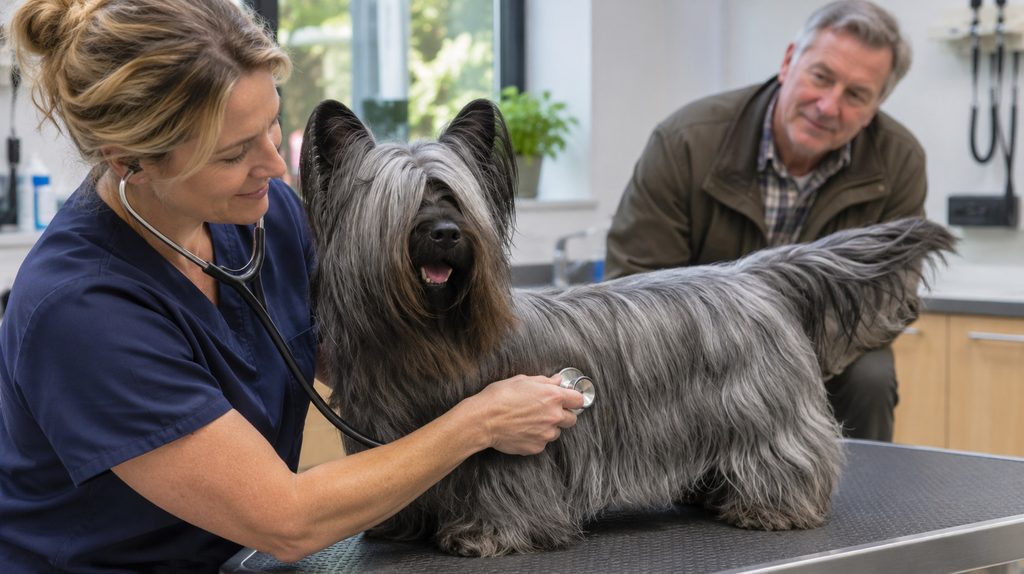
Skye Terrier Health Screening and Inherited Conditions
Responsible health screening plays an important role in protecting the future of the Skye Terrier, particularly because this distinctive Scottish breed has a relatively small worldwide population and several documented health concerns that require ongoing investigation. Although many Skye Terriers live healthy, active lives, inherited conditions can sometimes remain hidden until a dog reaches maturity or produces offspring. Understanding the available screening methods, their limitations, and the importance of responsible breeding helps prospective owners make informed decisions. For a rare breed such as the Skye Terrier, protecting genetic diversity is just as important as identifying individual health problems, making careful breeding decisions essential to its long-term preservation.
Unlike some breeds with extensive lists of established genetic screening requirements, the Skye Terrier currently has relatively few standardized breed-specific tests. The American Kennel Club’s national breed-club health testing guidance does not list mandatory or recommended tests for this breed, while the Royal Kennel Club emphasizes genetic diversity as a central breeding priority. This does not mean that Skye Terriers are free from inherited health concerns. Rather, several conditions affecting the breed are complex, incompletely understood, or not yet associated with a reliable commercially available DNA test. Responsible breeders should therefore combine appropriate veterinary investigations with detailed family health records and careful consideration of breeding relationships.
One of the most important breed-specific recommendations concerns renal dysplasia, a developmental disorder in which the kidneys form abnormally. The Skye Terrier Club in the United Kingdom strongly recommends that breeding dogs undergo ultrasound examination of both kidneys before mating. This examination should be performed by an appropriately qualified veterinarian, with the findings recorded alongside the dog’s identification details. Kidney ultrasound can help identify certain structural abnormalities that may otherwise remain unnoticed. However, a normal ultrasound does not guarantee that the dog is genetically free from renal dysplasia or that its offspring will never develop kidney disease.
Prospective owners should feel comfortable asking breeders whether both parents have undergone kidney ultrasound examinations and whether the results are available for review. The Skye Terrier Club encourages breeders to retain veterinary documentation and share relevant findings with its Health Committee. This approach supports better understanding of renal disease within the breed while helping responsible breeders make more informed decisions. A breeder who can explain the purpose and limitations of screening is generally providing more meaningful reassurance than one who simply claims that their dogs have never experienced health problems.
Orthopedic assessment is another valuable consideration because the Skye Terrier’s unusually short legs and elongated body influence skeletal development. Some puppies experience developmental forelimb lameness, commonly called Skye limp, while researchers have also investigated elbow incongruity and premature closure of growth plates. These conditions may affect limb alignment and movement, although they should not automatically be treated as interchangeable diagnoses. Owners should monitor growing puppies for persistent limping, abnormal posture, discomfort, or reluctance to walk. Veterinary assessment is essential when these signs occur, even when a developmental condition is suspected.
Research undertaken through the Finnish Skye Elbow Project introduced a specialized radiographic procedure for evaluating elbow incongruity in mature Skye Terriers. The project uses a grading system to describe the degree of incongruity visible on carefully positioned X-rays. This assessment differs from conventional elbow screening protocols used for some other breeds. The Skye Terrier Club advises that dogs undergoing this particular evaluation should be at least two years old, allowing the limbs and elbows to complete their development. Although this research provides useful information, specialized elbow grading should not be confused with a universally required screening program for every breeding Skye Terrier.
Liver health represents another important area of investigation. Chronic hepatitis has been documented within the breed, prompting research into potential genetic contributions and the biological mechanisms involved. The Skye Terrier Club has supported efforts to identify genetic markers that could eventually improve screening and breeding decisions. However, owners should not assume that a definitive breed-specific DNA test for hepatitis is currently available. Liver blood tests can help identify abnormalities in liver function or cellular injury, but they do not establish whether a dog carries an inherited predisposition. Further investigation may be necessary when results are abnormal or when concerning symptoms develop.
The distinction between genetic testing and general medical screening is particularly important. A validated DNA test identifies a specific genetic variant associated with a defined condition, whereas ultrasound, radiography, blood testing, and physical examination assess anatomical or physiological findings. Each method provides different information. A dog may have normal blood results while carrying a genetic predisposition, and an abnormal ultrasound does not necessarily establish a simple inherited disorder. Responsible breeders should understand these differences and avoid presenting a routine veterinary health examination as proof that a dog is genetically clear of every relevant disease.
Spinal health also deserves consideration because of the Skye Terrier’s long, low physical structure. Intervertebral disc disease and other spinal problems have been reported within the breed, although the available evidence does not justify assuming that every Skye Terrier has a high individual risk. No universal spinal screening program can guarantee freedom from future disc disease. Breeders should nevertheless be willing to discuss significant spinal problems among related dogs and consider movement, comfort, and overall physical soundness when selecting breeding animals. Owners can support long-term mobility through sensible exercise, appropriate body condition, and prompt veterinary assessment of pain or neurological changes.
The breed’s small population creates an additional challenge. Excessively concentrating breeding programs around a limited number of popular dogs can reduce genetic diversity and increase the likelihood that harmful inherited variants become more widespread. The Royal Kennel Club’s 2026 Skye Terrier population analysis examined measures including inbreeding coefficients, effective population size, general relatedness, and the influence of popular sires. These findings reinforce the importance of considering the wider genetic population rather than focusing exclusively on individual appearance or particular pedigree lines. Maintaining diversity requires thoughtful cooperation between breeders, breed clubs, and researchers.
A coefficient of inbreeding, often abbreviated COI, estimates the likelihood that an individual inherits two copies of a genetic variant from a shared ancestor. Higher values can indicate greater genetic similarity within a pedigree, although the interpretation depends on the available pedigree depth or genomic information. A low coefficient is not a guarantee of health, just as a higher coefficient does not automatically mean a dog will develop an inherited disease. Responsible breeding decisions should consider the health histories of relatives, the genetic relationship between prospective parents, individual temperament, physical soundness, and the broader needs of the breed population.
Breed health surveys and long-term medical records are particularly valuable when established genetic tests are limited. The Skye Terrier Club’s 2025 health survey collected information about puppy limp, kidney disease, liver disease, cancer, and spinal conditions, helping identify priorities for future research. Such surveys provide useful observations but should not automatically be interpreted as precise disease prevalence across the entire breed. Participation may be influenced by owners’ experiences, the availability of veterinary diagnoses, and the relatively small number of dogs involved. Nevertheless, reporting both healthy dogs and diagnosed conditions contributes to a more complete understanding of Skye Terrier health.
Prospective owners should also distinguish between pedigree registration and documented health assessment. Registration with a recognized kennel club establishes recorded ancestry, but it does not independently guarantee that a puppy’s parents have undergone every useful medical examination. Responsible breeders should be transparent about relevant health results, known conditions within their lines, and any difficulties encountered in previous litters. They should also explain why particular breeding combinations were selected and demonstrate a commitment to maintaining genetic diversity. Honest discussion of potential health concerns is generally more reassuring than unrealistic promises that a puppy will never develop a medical problem.
Ultimately, protecting the Skye Terrier’s health requires a balanced approach combining available screening, responsible breeding, informed ownership, and continued scientific research. Kidney ultrasound, appropriate orthopedic investigation, detailed health histories, and careful pedigree analysis can all contribute meaningful information, even where definitive genetic tests remain unavailable. The breed’s future depends on preserving its distinctive characteristics without unnecessarily narrowing an already limited gene pool. Owners and breeders who support transparent health reporting, participate in relevant research initiatives, and prioritize long-term physical soundness help ensure that future generations of Skye Terriers remain healthy, resilient, and true to their remarkable Scottish heritage.
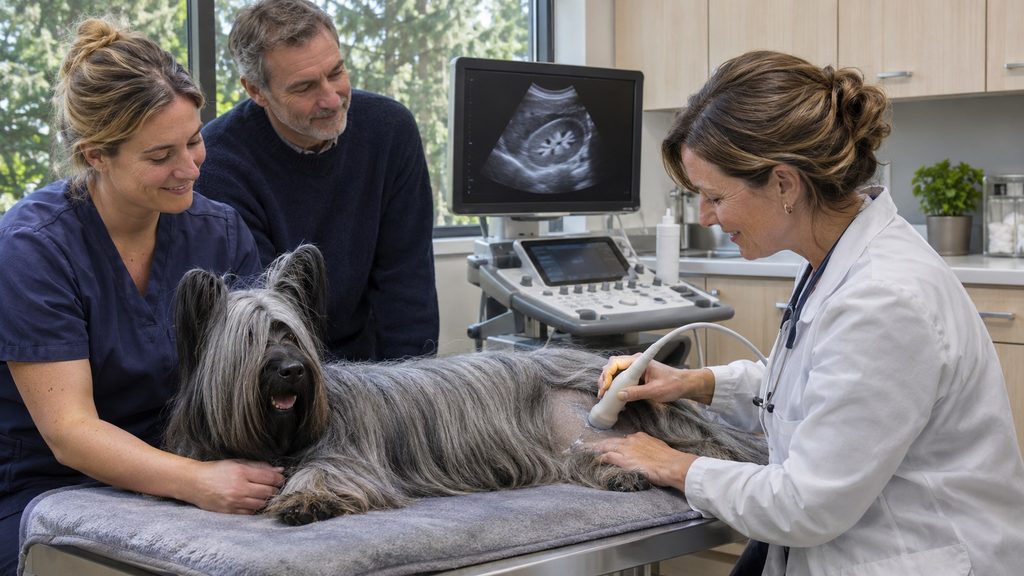
Health Records Worth Requesting From a Skye Terrier Breeder
Before choosing a Skye Terrier puppy, ask whether both parents have received kidney ultrasound examinations and request the documented findings. Discuss any history of puppy limp, elbow abnormalities, spinal problems, liver disease, or cancer among close relatives. A responsible breeder should also explain how pedigree relationships and genetic diversity influence breeding decisions. Remember that a normal veterinary examination does not guarantee freedom from inherited disease, particularly when no validated DNA test exists. Transparent records, knowledgeable explanations, and a willingness to discuss previous health concerns are valuable indicators of a breeder’s commitment to protecting this uncommon Scottish terrier.
Skye Terrier Lifespan and Aging
The Skye Terrier is generally a long-lived and resilient Scottish breed, with many individuals enjoying active, rewarding lives well into their senior years. Its combination of a sturdy physical constitution, moderate exercise requirements, and strong attachment to familiar people can make it a particularly satisfying companion throughout adulthood and old age. Although every dog ages differently, understanding the breed’s expected longevity, changing physical needs, and potential age-related health concerns helps owners provide appropriate care at every stage. With thoughtful nutrition, regular veterinary attention, sensible activity, and a supportive home environment, older Skye Terriers can continue enjoying the companionship and everyday pleasures that have defined their lives.
The typical Skye Terrier lifespan is approximately 12–14 years, although some individuals live longer. Dogs Victoria identifies this range as the breed’s average life expectancy, while the Royal Kennel Club describes the breed as generally living beyond twelve years. These figures provide useful guidance rather than a guarantee for any individual dog. Genetics, inherited conditions, nutrition, body condition, veterinary care, and environmental factors all influence longevity. Some Skye Terriers remain remarkably active into their mid-teens, while others experience health challenges earlier in life. Owners should focus on maintaining physical comfort and quality of life rather than measuring successful aging solely by the number of years reached.
A Skye Terrier may begin showing subtle signs of aging around eight to ten years of age, although there is no universal age at which every dog becomes senior. Some individuals remain energetic and playful well beyond this period, while others gradually become less active. Owners might notice longer sleeping periods, a preference for shorter walks, or a slower response when rising from rest. These changes are not necessarily alarming, but they deserve observation. A healthy older Skye Terrier should still show interest in familiar activities, enjoy companionship, and move comfortably within its physical capabilities.
Maintaining mobility is particularly important because the breed’s unusually long body and short legs can influence how age-related stiffness affects daily movement. Arthritis, reduced muscle strength, and spinal discomfort may gradually make activities such as climbing steps, jumping onto furniture, or navigating slippery floors more difficult. Owners should watch for hesitation before moving, changes in walking speed, altered posture, or reluctance to participate in previously enjoyable activities. Persistent stiffness should not automatically be dismissed as normal aging. Veterinary assessment can identify treatable pain and help establish appropriate management before mobility deteriorates further.
Small household adjustments can make a substantial difference to an aging Skye Terrier’s comfort. Non-slip runners on smooth flooring provide better traction, while supportive bedding helps reduce pressure on uncomfortable joints. Where the dog regularly encounters steps or elevated furniture, appropriately designed ramps may reduce repeated jumping. A secure, easily accessible resting area allows the dog to remain near its family without constantly moving between rooms. These changes are especially valuable for an elongated breed, although owners should still encourage normal movement and muscle use rather than unnecessarily restricting activity.
Regular exercise remains essential throughout the senior years, even when a Skye Terrier no longer enjoys the same level of activity it once did. Shorter, more frequent walks are often preferable to occasional demanding outings. Gentle exploration, relaxed sniffing, and familiar neighborhood routes provide both physical movement and mental stimulation. Owners should adapt walking distances to the dog’s comfort, allowing additional rest when needed. Activities that encourage controlled movement can help maintain muscle condition, while repeated jumping, rough play, and exhausting exercise should be avoided when age-related orthopedic problems are present.
Weight management becomes increasingly important as activity levels decline. The Skye Terrier’s flowing coat can conceal gradual weight gain, making regular body condition assessments particularly valuable. Excess weight increases the demands placed on aging joints and the spine, potentially worsening discomfort and reducing mobility. However, excessive calorie restriction can also be harmful if it results in muscle loss. Older dogs benefit from nutritionally complete diets that provide appropriate energy and support the maintenance of lean tissue. Veterinary guidance can help determine whether a senior-specific food is necessary or whether adjustments to an existing diet are sufficient.
Dental health is another important consideration. Older Skye Terriers may develop periodontal disease, damaged teeth, or discomfort that affects eating and general well-being. Because dental problems can progress gradually, owners may not immediately recognize the signs. Persistent bad breath, difficulty chewing, dropping food, or reluctance to accept familiar treats can indicate a need for examination. Regular toothbrushing and professional veterinary dental assessments help maintain oral comfort. A senior dog’s age alone should not prevent appropriate dental treatment, although anesthesia and medical decisions should always account for individual health circumstances.
Changes in hearing and vision may also emerge with advancing age. Some Skye Terriers become less responsive to familiar sounds, while others hesitate in dim lighting or appear uncertain when navigating unfamiliar surroundings. The breed’s facial furnishings can make observing eye changes more challenging, so owners should check for cloudiness, redness, discharge, or unusual behavior. Gradual sensory decline can often be managed through predictable routines, clear walking routes, and careful household arrangements. However, sudden changes in vision or hearing warrant prompt veterinary investigation because some causes are treatable and should not be attributed automatically to old age.
Cognitive changes deserve equally thoughtful attention. Like other aging dogs, senior Skye Terriers may occasionally experience confusion, disrupted sleeping patterns, changes in social interaction, or difficulty remembering established routines. A dog that previously slept comfortably through the night might begin wandering or vocalizing, while another may appear unsettled in familiar surroundings. These behaviors can have several explanations, including pain, sensory changes, medical illness, or canine cognitive dysfunction. Veterinary assessment is important before assuming that cognitive decline is responsible. Maintaining consistent routines and providing gentle mental enrichment can help support confidence and emotional well-being.
Veterinary examinations should generally become more frequent as the Skye Terrier enters its senior years. The American Animal Hospital Association recommends approximately twice-yearly wellness visits for senior pets, allowing changing health needs to be identified and addressed earlier. Depending on the individual dog, examinations may include weight and muscle assessments, dental evaluations, mobility checks, blood testing, urinalysis, and blood pressure measurement. Because kidney and liver diseases have been documented within the breed, discussing appropriate monitoring with a veterinarian is particularly worthwhile. Screening plans should reflect the dog’s history and clinical findings rather than automatically applying every available test.
The Skye Terrier’s relatively long coat also requires continued attention during old age. A senior dog experiencing arthritis or reduced flexibility may find prolonged grooming more uncomfortable than it once did. Owners can adapt by dividing brushing into shorter sessions, using non-slip surfaces, and supporting the dog’s body gently when changing positions. Regular examination beneath the coat helps identify skin irritation, hidden lumps, and areas of discomfort. Although some older Skye Terriers benefit from limited practical trimming, drastic coat shortening is not automatically necessary. The priority should be maintaining cleanliness and comfort while preserving as much of the natural protective coat as reasonably possible.
Emotional companionship remains one of the most rewarding aspects of caring for an older Skye Terrier. The breed’s characteristic loyalty often becomes especially apparent after many years of shared routines and familiar experiences. Senior dogs may seek quiet proximity rather than energetic play, preferring to rest near their owners or enjoy gentle interactions throughout the day. They should still be offered opportunities to investigate their surroundings and make simple choices, even when physical activity becomes more limited. Familiar walks, favorite resting places, and predictable family routines can provide considerable reassurance.
For dogs experiencing chronic illness or advanced age-related limitations, quality-of-life assessments become increasingly important. Owners should consider comfort, appetite, hydration, mobility, sleep, interest in family interaction, and the ability to enjoy familiar activities. Veterinary teams can help manage pain, adjust medication, recommend supportive therapies, and discuss palliative care when necessary. Decisions should reflect the individual dog’s well-being rather than age alone. A Skye Terrier with a manageable chronic condition may continue enjoying a fulfilling life for a considerable period when appropriate support is available.
Ultimately, the senior years can be a particularly meaningful stage of Skye Terrier ownership. Although physical abilities may gradually change, the breed’s devotion, intelligence, and distinctive personality often remain wonderfully recognizable. By adapting exercise, maintaining healthy body condition, providing regular veterinary care, and creating a comfortable home environment, owners can help their aging companion continue enjoying everyday life. The goal is not simply to extend the Skye Terrier’s lifespan, but to preserve comfort, dignity, companionship, and the quiet pleasures that make its later years so valuable.
Making Everyday Life Easier for a Senior Skye Terrier
An older Skye Terrier may benefit from small adjustments that protect comfort without unnecessarily limiting independence. Provide non-slip flooring, supportive bedding, and easy access to favorite resting areas. Replace demanding walks with shorter outings that still allow plenty of sniffing and exploration. Monitor weight, appetite, mobility, and changes in behavior, and discuss persistent stiffness or unusual symptoms with your veterinarian. Senior wellness examinations approximately every six months can help identify developing concerns. Most importantly, maintain familiar routines and encourage gentle companionship. Even when physical activity decreases, an older Skye Terrier can continue enjoying a deeply satisfying family life.
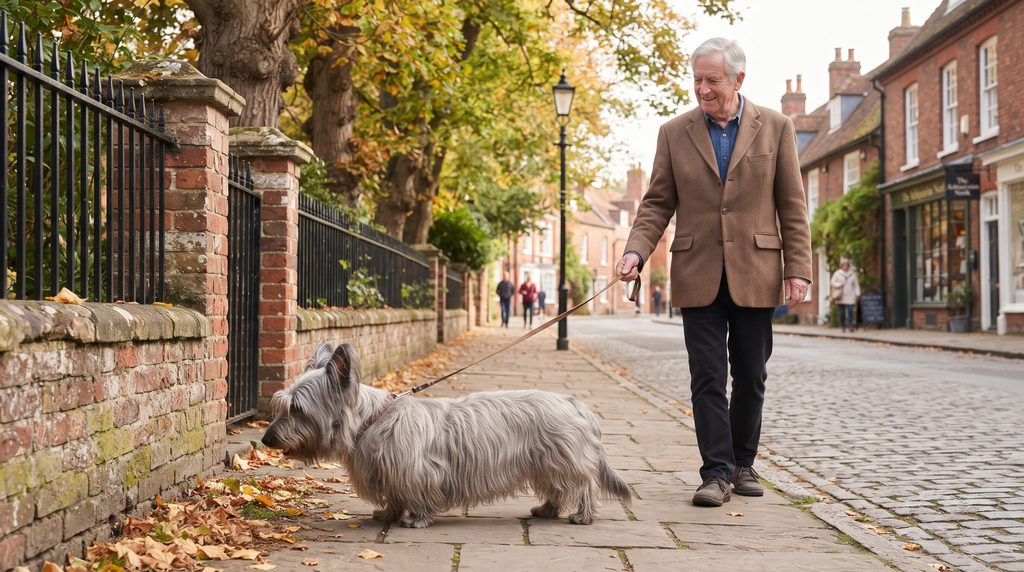
Cost of Owning a Skye Terrier
Owning a Skye Terrier involves a long-term financial commitment that extends considerably beyond bringing the dog home. Although relatively modest in height and generally moderate in its exercise requirements, this distinctive Scottish breed has particular needs relating to grooming, preventive veterinary care, nutrition, and maintaining its unusual long, low body in good condition. Its rarity can also influence the initial expenses and practical arrangements involved in finding a responsible breeder or adopting an available dog. Prospective owners should therefore consider both predictable everyday expenses and the possibility of unexpected medical bills. Careful financial planning helps ensure that a Skye Terrier receives consistent, appropriate care throughout its life without placing unnecessary pressure on the household budget.
One of the breed’s most distinctive financial considerations is its limited availability. The Skye Terrier remains relatively uncommon in the United States, with the American Kennel Club including it among the country’s rarest recognized breeds. Responsible breeders may produce litters infrequently, and prospective owners sometimes need to travel considerable distances or join a waiting list. Transportation, accommodation, and other travel arrangements can add to the initial commitment. However, rarity alone should never justify compromising on responsible breeding practices. Documented health information, appropriate socialization, sound temperament, and careful selection of breeding animals remain more important than convenience or immediate availability.
Adoption through a breed-specific rescue organization may occasionally provide an alternative, although Skye Terriers are not frequently encountered in general shelters. Rescue organizations typically assess prospective homes carefully because the breed’s independent temperament and grooming requirements may not suit every household. Depending on the organization, adoption arrangements may include veterinary examinations, vaccinations, identification, and other essential care. Owners adopting an adult Skye Terrier should also consider the possibility of additional expenses associated with dental treatment, coat restoration, training, or previously identified medical conditions. A thoughtfully planned adoption can be rewarding, but it should not be approached with the assumption that an older dog will necessarily be inexpensive to maintain.
Initial equipment expenses are generally manageable because the Skye Terrier does not require unusually large accessories or elaborate exercise equipment. Essential items include a comfortable bed, correctly fitted harness, sturdy leash, identification tags, secure travel restraint or crate, food and water bowls, and appropriate toys. The breed’s elongated body makes supportive bedding, secure footing, and comfortable handling particularly important. Some households may also benefit from non-slip rugs or ramps that reduce repeated jumping from elevated furniture. Although these additions involve modest initial expenditure, they can contribute substantially to everyday comfort and sensible physical management.
Grooming represents one of the more noticeable ongoing responsibilities. The Skye Terrier’s magnificent double coat requires regular brushing, careful combing, occasional bathing, and attention to the furnishings around its ears, legs, and underside. Owners who maintain the coat themselves can keep expenses relatively modest by investing in good-quality brushes, combs, dog-specific shampoo, conditioner, and appropriate drying equipment. However, individuals who prefer professional assistance should allow for recurring appointments. Grooming charges vary considerably according to location, coat condition, appointment length, and the services provided. A badly tangled coat may require additional time and expense, making consistent home maintenance an effective way to control costs.
Food expenses are influenced by the dog’s weight, activity level, age, and nutritional requirements. Although the Skye Terrier stands only approximately ten inches tall, it is a substantial breed that generally weighs considerably more than many other dogs of similar height. Owners should therefore budget according to actual body weight and caloric needs rather than assuming that every short-legged terrier eats very little. A complete, balanced diet appropriate for the dog’s life stage provides the foundation for everyday nutrition. Treats, dental chews, and occasional dietary adjustments add to routine spending, although unnecessary supplements and fashionable specialty foods should not automatically be considered essential.
Routine veterinary care is another predictable responsibility. Annual wellness examinations, vaccinations, parasite prevention, dental assessments, and age-appropriate diagnostic testing contribute to maintaining good health. As a Skye Terrier grows older, additional blood tests, urinalysis, dental procedures, and mobility evaluations may become appropriate. The cost of veterinary services varies considerably between regions and clinics, so prospective owners should request local estimates rather than relying entirely on national averages. Establishing a regular relationship with a trusted veterinary practice also makes it easier to identify changes in health and obtain timely advice when concerns arise.
The breed’s particular health considerations make planning for unexpected veterinary expenses especially important. Skye Terriers can experience developmental forelimb problems, including puppy limp, while renal dysplasia, chronic hepatitis, spinal conditions, and other illnesses have been documented within the breed. These conditions do not affect every individual, but diagnostic investigations and specialist treatment can become expensive when they are necessary. Radiographs, ultrasound examinations, laboratory testing, orthopedic consultations, and emergency treatment may each involve substantial costs. Owners should be financially prepared for the possibility of specialized care without assuming that serious illness is inevitable.
Pet insurance is one option for managing some unexpected veterinary expenses. According to the North American Pet Health Insurance Association’s 2026 industry report, the average annual premium for accident-and-illness coverage for dogs in the United States was approximately $836 during 2025. This is an industry-wide figure rather than a Skye Terrier-specific quotation. Actual premiums depend on factors such as the dog’s age, location, coverage limits, deductible, and insurer. Owners should examine exclusions carefully, particularly those involving preexisting conditions, hereditary disorders, waiting periods, and orthopedic problems. Insurance does not eliminate financial responsibility, but suitable coverage may reduce the impact of an otherwise difficult veterinary bill.
Households that prefer not to purchase insurance should consider establishing a dedicated veterinary emergency fund. Regular contributions can create a financial reserve for unexpected consultations, diagnostic tests, or urgent procedures. However, a savings fund takes time to accumulate, and serious medical expenses can occur before sufficient money has been set aside. Some owners combine insurance with separate savings to cover deductibles, excluded services, and routine care. The most appropriate arrangement depends on household finances, the ability to manage unexpected expenses, and the individual dog’s health circumstances.
Training and socialization may also involve occasional expenditure. Although Skye Terriers are intelligent and capable learners, their independent personality and natural reserve around unfamiliar people make thoughtful early training particularly valuable. Puppy socialization classes, private reward-based training sessions, and carefully selected enrichment activities can help establish desirable habits. Owners experiencing persistent behavioral difficulties may benefit from working with a qualified trainer or veterinary behaviorist. Investing in appropriate guidance early can sometimes prevent more complicated problems from developing, particularly in households where the dog regularly encounters visitors, children, or unfamiliar animals.
Travel and household arrangements can create additional expenses. Owners who work long hours may require occasional pet-sitting or dog-walking assistance, while holidays can involve boarding, professional home care, or dog-friendly accommodation. Because Skye Terriers often form strong attachments to their families and may be selective around unfamiliar people, choosing a suitable caregiver deserves particular consideration. Some individuals are happiest with a familiar sitter who maintains established routines rather than a busy boarding environment. These arrangements are not required by every household, but they should be considered when estimating the practical costs of ownership.
For general planning purposes, an American household might allow approximately $1,500–$3,500 or more annually for the routine ownership of a healthy adult Skye Terrier, depending on local costs, food choices, professional grooming, veterinary services, and insurance arrangements. This is an illustrative budgeting range, not a measured breed-specific average, and it excludes the initial acquisition or adoption arrangements, major emergencies, and potentially expensive boarding or specialist treatment. Some owners will spend considerably less, particularly when performing routine grooming themselves, while others may face significantly higher annual expenses. Preparing a personalized budget based on local veterinary and grooming estimates provides a more reliable picture.
Over a typical lifespan of approximately twelve to fourteen years, even modest annual expenses become a meaningful long-term financial commitment. Owners should also anticipate that costs may change as their dog ages, with greater attention sometimes required for dental health, mobility, diagnostic screening, and chronic medical conditions. Responsible financial planning therefore involves more than calculating the expenses of a healthy young adult. It means considering how the household would provide appropriate care if circumstances changed or the dog developed additional needs later in life.
Ultimately, the Skye Terrier is not necessarily an unusually expensive breed to maintain, but its rarity, distinctive coat, and specific health considerations require realistic preparation. Owners who are comfortable performing routine grooming, maintaining appropriate body condition, arranging preventive veterinary care, and planning for unexpected expenses can manage many of the breed’s costs effectively. The most important investment is a sustained commitment to the dog’s welfare throughout its life. For those prepared to provide that care, the Skye Terrier offers years of loyal companionship, individuality, and affection that make responsible ownership deeply rewarding.
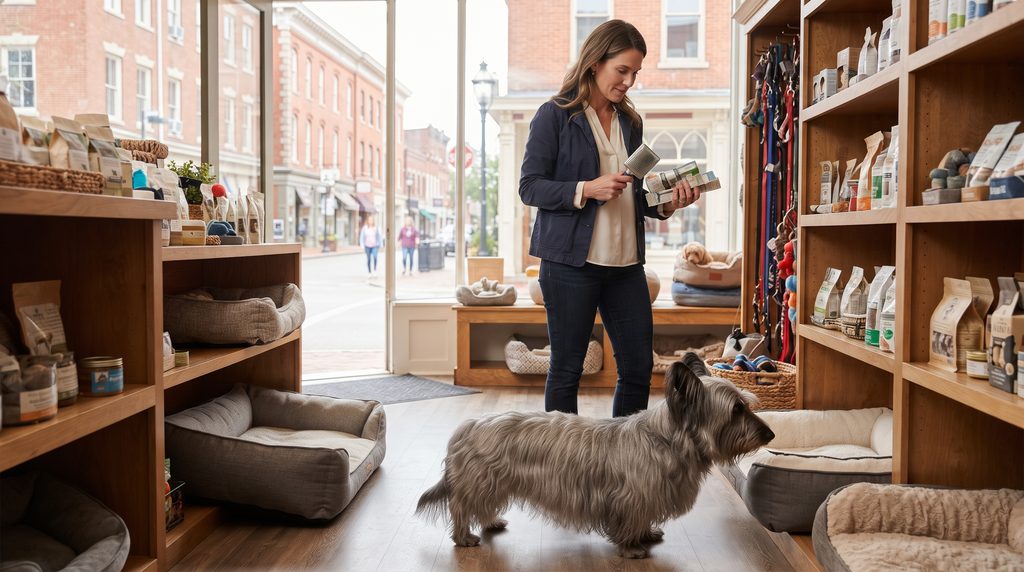
Budgeting for a Rare Breed
The Skye Terrier’s rarity can make responsible planning especially important. Allow for possible travel when contacting established breeders or breed-specific rescue organizations, and investigate veterinary services before bringing the dog home. Routine expenses include quality food, grooming supplies, preventive healthcare, and occasional training or pet-sitting. A separate emergency fund or suitable insurance policy can help manage unexpected medical bills. Because the breed has documented orthopedic, kidney, and liver concerns, review any hereditary-condition exclusions carefully. Maintaining the coat at home and monitoring body weight are practical ways to control recurring expenses without compromising the dog’s comfort or health.
Choosing a Skye Terrier Puppy or Rescue
Choosing a Skye Terrier is an important decision that deserves careful research, patience, and a realistic understanding of this unusual Scottish breed. Although its magnificent coat and distinctive silhouette make an immediate impression, the Skye Terrier’s independent temperament, deep loyalty, and specific care requirements are equally important considerations. Its relative rarity also means that finding a responsibly bred puppy or an appropriate rescue dog may require more time than locating a common companion breed. Prospective owners should focus on health, temperament, early socialization, and long-term compatibility rather than appearance alone. A thoughtful approach provides the best foundation for welcoming a confident, healthy Skye Terrier into a suitable home.
Because Skye Terrier puppies are relatively uncommon, responsible breeders may produce only occasional litters and maintain waiting lists of prospective owners. This should not automatically be regarded as inconvenient or discouraging. Carefully planned breeding programs are particularly important for rare breeds, where preserving genetic diversity and avoiding the overuse of closely related breeding animals are ongoing priorities. The Skye Terrier Club of America provides a breeder directory that can help prospective owners begin their research, although inclusion does not constitute an individual endorsement. Breed clubs, recognized dog shows, and conversations with experienced owners can also provide valuable opportunities to learn about the breed before making a commitment.
A responsible breeder should demonstrate genuine knowledge of Skye Terrier history, temperament, health, and everyday care. They should be willing to explain their breeding decisions, discuss the characteristics of both parents, and provide appropriate documentation. Prospective owners should expect questions about their household, previous dog experience, working arrangements, and ability to manage a long-coated terrier. A breeder who takes time to understand the future home is demonstrating concern for the puppy’s long-term welfare. Equally important is a willingness to answer questions honestly, including those involving inherited conditions or difficulties previously encountered within their breeding lines.
Health transparency deserves particular attention. Renal dysplasia, developmental forelimb problems, chronic hepatitis, and certain spinal conditions have been documented within the breed. The Skye Terrier Club in the United Kingdom recommends kidney ultrasound examinations of breeding animals, while the American Kennel Club currently lists no standardized national breed-club health tests for Skye Terriers. Prospective owners should ask which examinations have been performed, request available results, and discuss relevant family health history. A normal veterinary examination is reassuring but does not guarantee freedom from inherited disease. Responsible breeders should understand the limitations of screening and avoid making unrealistic promises about future health.
Visiting the breeder, when practical, provides an opportunity to observe the environment in which the puppies are developing. Young dogs should have clean, comfortable surroundings, appropriate opportunities for play, and regular positive interaction with people. Meeting the mother can offer useful insight into temperament, physical characteristics, and everyday behavior. She should appear appropriately cared for and comfortable in her surroundings, although maternal behavior can influence her response to visitors. Prospective owners should also observe how the puppies interact with familiar people, respond to ordinary household sounds, and recover from unfamiliar but manageable experiences.
When evaluating an individual Skye Terrier puppy, temperament should carry at least as much weight as appearance. A healthy, appropriately socialized youngster may be curious, playful, observant, and somewhat cautious when first meeting unfamiliar people. Because Skye Terriers are naturally discerning, the most suitable puppy is not necessarily the one that immediately rushes toward every visitor. Look instead for a youngster that can investigate its surroundings, engage comfortably with familiar people, and recover from mild uncertainty. Persistent fear, extreme withdrawal, unusual aggression, or obvious physical discomfort deserves further discussion with the breeder and a veterinarian.
Physical development also requires careful consideration. A Skye Terrier puppy should appear well nourished without being excessively heavy, with clear eyes, clean ears, healthy skin, and comfortable movement. Its naturally short legs and elongated body should not be accompanied by persistent limping or obvious difficulty walking. Young Skye Terriers can experience developmental forelimb lameness, so any concerns about movement should receive appropriate veterinary assessment. Owners should also remember that the puppy’s coat may differ considerably from its eventual adult appearance. Both color and furnishings can change as the dog matures, making adult relatives a more useful guide to its likely mature appearance.
Early socialization is particularly important for this breed. Skye Terriers often develop strong attachments to familiar people while remaining reserved with strangers, making positive experiences during puppyhood valuable for long-term confidence. A responsible breeder should begin introducing puppies to normal household sounds, gentle handling, appropriate visitors, and varied everyday experiences. After bringing the puppy home, owners should continue this process gradually. Calm introductions to new environments, carefully selected dogs, and respectful people help build confidence without overwhelming the youngster. The objective is a secure, adaptable companion rather than a dog expected to greet everyone enthusiastically.
Preparing the home before arrival makes the transition considerably easier. A comfortable sleeping area, secure garden, suitable food, correctly fitted harness, practical grooming equipment, and appropriate toys provide a useful starting point. Because of the breed’s unusually long body, young puppies should be protected from repeated jumping from furniture, uncontrolled leaps from vehicles, and excessive stair use. Non-slip flooring and careful handling can make everyday movement safer. Owners should also establish predictable routines for meals, toileting, rest, and gentle training. Early consistency helps a young Skye Terrier understand household expectations while strengthening its relationship with familiar people.
Documentation is another important part of responsible puppy placement. The Skye Terrier Club of America’s Code of Ethics calls for written health and vaccination records, a contract, and pedigree information when puppies are placed with new owners. The club also recommends a prompt veterinary examination after the puppy arrives. Prospective owners should review all agreements carefully, including provisions concerning registration, future breeding, and the breeder’s responsibilities if circumstances change. A responsible breeder should remain approachable after placement, offering practical guidance on feeding, grooming, socialization, and breed-specific concerns as the puppy develops.
Rescue and adoption provide another potential route to Skye Terrier ownership, although opportunities may be limited because relatively few dogs enter rescue programs. Breed clubs and experienced enthusiasts may occasionally know of adults requiring new homes following changes in family circumstances, owner illness, or other difficulties unrelated to the dog’s behavior. An adult Skye Terrier can be an excellent option for someone who appreciates a more established personality and wishes to avoid the intensive demands of early puppy development. However, prospective adopters should remain realistic about the dog’s previous experiences and the adjustment period that may follow a change of home.
When considering an adult rescue, ask about its behavior around unfamiliar people, children, other dogs, and smaller household animals. Information about previous grooming routines, veterinary history, separation tolerance, and responses to handling is equally useful. Some rescued Skye Terriers settle readily into new environments, while others need additional time to develop trust and confidence. The breed’s loyalty to familiar people may make major household changes particularly significant. Providing predictable routines, comfortable resting areas, and calm introductions can help a newly adopted dog feel secure without pressure to become immediately affectionate or sociable.
Matching the individual dog to the household is ultimately more important than choosing between a puppy and an adult. Families with young children, multiple pets, or demanding work schedules should consider whether their circumstances align with the Skye Terrier’s reserved personality and strong attachment to its people. Prospective owners should also be prepared for regular grooming, moderate daily exercise, positive training, and sensible management of the breed’s unusual body structure. Someone who values independence, quiet devotion, and close companionship may find the Skye Terrier exceptionally rewarding, while a household seeking an effortlessly sociable or low-maintenance dog may be less suitable.
Choosing a Skye Terrier thoughtfully also contributes to the preservation of a rare and historically important breed. Supporting responsible breeding, considering appropriate rescue opportunities, and valuing health and temperament over superficial characteristics all help protect its future. Whether welcoming a lively youngster or offering a home to an adult in need, successful ownership begins with realistic expectations and a willingness to understand the dog’s individuality. With patience, preparation, and a genuine appreciation of its remarkable character, a Skye Terrier can become a deeply loyal companion whose presence enriches family life for many years.

Is a Skye Terrier Right for You?
The Skye Terrier can be an exceptionally rewarding companion, but choosing this distinctive Scottish breed requires more consideration than simply admiring its elegant appearance or relatively modest exercise needs. Beneath its magnificent coat lies an intelligent, determined, and deeply loyal dog with a strong sense of independence. It is often calmer than many other terriers, yet retains the courage, curiosity, and self-confidence of its working ancestors. For people who appreciate an affectionate companion with individuality and character, the Skye Terrier can be a wonderful choice. However, its reserved personality, regular grooming requirements, and particular physical needs mean it is not equally suited to every household or lifestyle.
One of the strongest reasons to consider a Skye Terrier is its remarkable devotion to familiar people. These dogs frequently develop close relationships with their owners and enjoy participating in ordinary household routines. A Skye Terrier may follow its favorite person between rooms, settle nearby during quiet evenings, or accompany the family on relaxed outings. Its affection is often understated rather than exuberant, but the emotional bond can be exceptionally strong. People who enjoy close companionship without needing a constantly excitable dog may find this combination particularly appealing. The breed generally thrives when it receives regular attention, predictable routines, and opportunities to remain involved in family life.
Prospective owners should nevertheless understand that a Skye Terrier is not necessarily friendly toward everyone it encounters. The breed is naturally observant and may remain reserved around unfamiliar people, particularly during initial introductions. This selective approach can be attractive to owners who appreciate a thoughtful, dignified companion, but it requires appropriate socialization and respectful handling. A Skye Terrier should not be expected to welcome every visitor enthusiastically or tolerate unwanted physical attention. Households with frequent gatherings, unfamiliar guests, or highly unpredictable activity should consider whether they can provide a comfortable environment in which the dog feels secure.
Families with children need to consider the breed’s personality carefully. Skye Terriers can form affectionate relationships with respectful youngsters, particularly when raised together and introduced appropriately. However, they generally appreciate calm interactions and may be less tolerant of rough handling than some more easygoing family breeds. Older children who understand canine boundaries are often a better match than toddlers who instinctively grab, chase, or hug animals. Parents must supervise interactions and teach children to respect the dog’s resting areas and personal space. A Skye Terrier can be a valued family member, but it should never be selected on the assumption that it will automatically enjoy every form of childhood activity.
Compatibility with other household animals is another important consideration. Some Skye Terriers live peacefully alongside familiar dogs, while others can be selective or assertive in canine relationships. Their historical hunting instincts also mean that small animals may trigger a strong chase response. A household containing rabbits, guinea pigs, or other vulnerable pets will require particularly careful separation and management. Living with cats may be possible for appropriately socialized individuals, although success cannot be guaranteed. Owners hoping for a dog that effortlessly welcomes unfamiliar animals or enjoys every crowded dog park may find another breed more suitable.
In terms of exercise, the Skye Terrier offers an appealing balance. Most healthy adults enjoy daily walks, opportunities to investigate interesting scents, and occasional interactive games without requiring the extensive exercise programs associated with highly energetic working breeds. This makes the breed attractive to moderately active individuals, couples, and households that enjoy regular outdoor activity at a comfortable pace. However, a Skye Terrier should not be regarded as an inactive companion. It still needs mental stimulation, opportunities to explore, and consistent engagement with its surroundings. Boredom and insufficient activity can contribute to undesirable behavior, particularly in an intelligent dog with a naturally independent mind.
Housing arrangements can be surprisingly flexible. The Skye Terrier can adapt to apartment living, suburban homes, and quieter rural properties when its needs are met. Its relatively moderate energy requirements can make smaller living spaces practical, provided the dog receives regular exercise and companionship. However, its alert nature may result in barking at unfamiliar sounds or approaching visitors, particularly in busy apartment buildings. Early training and appropriate management are important. Secure outdoor areas are also valuable because the breed may pursue wildlife or become absorbed in investigating interesting scents. A large property is not essential, but a safe and well-managed environment is.
Grooming represents one of the clearest lifestyle commitments associated with this breed. The Skye Terrier’s long, straight double coat requires regular brushing, careful combing, and occasional bathing to remain comfortable and free from tangles. Owners who enjoy hands-on coat care may find the routine rewarding, but those seeking a truly low-maintenance dog should think carefully before choosing a Skye Terrier. The coat can collect leaves, mud, and moisture during outdoor activity, making practical cleaning part of everyday life. Professional grooming assistance is available, but it does not eliminate the need for regular attention at home.
Training also requires the right expectations. The Skye Terrier is intelligent and capable of learning effectively, but it was developed to work with considerable independence. Owners who expect immediate, unquestioning obedience may become frustrated when the dog pauses to investigate something more interesting. Patient, reward-based training, consistent boundaries, and engaging activities generally produce the best results. The breed is often particularly rewarding for people who enjoy building a cooperative relationship rather than relying on rigid control. First-time owners can succeed when prepared to learn appropriate methods, although previous experience with independent terriers can be beneficial.
The Skye Terrier’s physical structure deserves equal consideration. Its exceptionally long body and short legs create an unmistakable appearance but also require thoughtful management during growth and throughout adulthood. Owners should maintain an appropriate body condition, provide comfortable footing, and avoid encouraging repeated high-impact jumping. Young puppies need suitable exercise without excessive physical demands, while older dogs may eventually benefit from household adjustments that support mobility. Breed-related health concerns, including developmental limb problems, renal dysplasia, and certain liver conditions, also make responsible breeding and veterinary monitoring important. Prospective owners should be prepared for these responsibilities rather than assuming that a relatively small dog will automatically be simple to maintain.
The breed’s rarity introduces another practical consideration. Finding a responsibly bred Skye Terrier may involve considerable research, travel, or a waiting period. Owners should prioritize knowledgeable breeders who understand the importance of genetic diversity, appropriate health assessments, and stable temperament. Rescue opportunities may also arise, although they are relatively uncommon. This limited availability can be frustrating for someone hoping to bring a puppy home immediately, but patience is particularly worthwhile when choosing a breed with such a small breeding population. A thoughtful selection process contributes to both individual welfare and the long-term preservation of the breed.
The Skye Terrier is generally best suited to an owner who values loyalty, appreciates an independent personality, enjoys moderate daily activity, and accepts regular grooming as part of responsible care. It can be a wonderful companion for individuals or couples, experienced dog owners, and families with older, respectful children. It is less suitable for households that expect universal friendliness, have little time for companionship or training, or want a dog that requires almost no coat maintenance. These are general tendencies rather than absolute rules, and individual Skye Terriers can vary considerably according to genetics, upbringing, and experience.
Ultimately, choosing a Skye Terrier means accepting the whole dog rather than simply its remarkable appearance. Its devotion, intelligence, quiet humor, and unmistakable character can make everyday companionship deeply satisfying, but these qualities are accompanied by independence, discernment, and practical responsibilities. For an owner prepared to provide patient guidance, regular care, appropriate exercise, and a secure family environment, the Skye Terrier offers something genuinely special: a courageous little Scottish companion with extraordinary loyalty and a personality as memorable as its magnificent coat.
The Ideal Skye Terrier Household
A Skye Terrier is often happiest with owners who enjoy close companionship, appreciate independent thinking, and can provide regular grooming and moderate daily exercise. Calm households, predictable routines, and respectful handling generally suit the breed particularly well. Families with older children may be a good match, while homes with very young children or vulnerable small pets require additional consideration. Prospective owners should also be comfortable managing the breed’s long, low body and arranging appropriate veterinary care. Above all, the ideal household values the Skye Terrier’s individuality rather than expecting it to behave like an endlessly sociable or unquestioningly obedient companion.
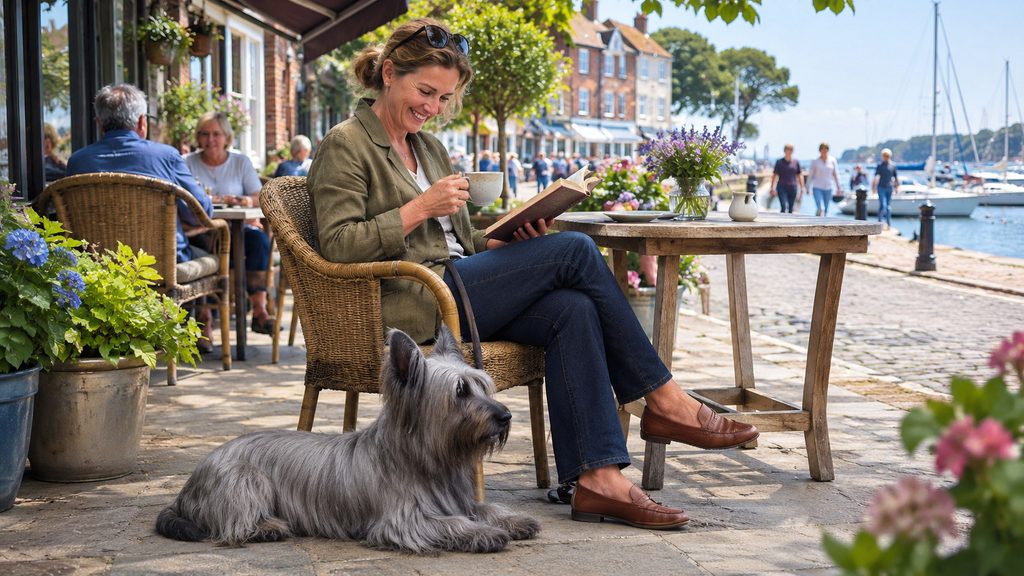
Skye Terrier Final Thoughts
The Skye Terrier is one of the most remarkable and historically significant members of the terrier group, combining an extraordinary appearance with the courage, intelligence, and independence of its Scottish working ancestors. Its magnificent coat, exceptionally long body, and dignified expression make it immediately recognizable, but these physical characteristics reveal only part of its appeal. The breed’s greatest qualities are often found in its personality: an unwavering loyalty to familiar people, a thoughtful approach to unfamiliar situations, and a quiet determination that has endured through centuries of changing circumstances. For those fortunate enough to share their lives with one, the Skye Terrier offers companionship that is deeply personal and wonderfully distinctive.
Few breeds possess such an intriguing journey from working necessity to cherished family companion. Developed among the rugged landscapes of Scotland’s western islands, the Skye Terrier once confronted challenging quarry in conditions that demanded courage and resilience. Its practical abilities eventually attracted the admiration of British royalty, while the legendary story of Greyfriars Bobby strengthened its association with extraordinary canine devotion. Today, the breed’s traditional hunting responsibilities have largely disappeared, but its distinctive spirit remains unmistakable. Beneath the elegant coat is still a determined terrier that approaches life with curiosity, confidence, and considerable individuality.
One of the Skye Terrier’s most rewarding qualities is the depth of its attachment to the people it trusts. Unlike dogs that enthusiastically seek attention from everyone, this breed often reserves its strongest affection for familiar companions. Its loyalty may be expressed through quiet gestures: following an owner into another room, settling close during a peaceful evening, or looking attentively toward a familiar voice. These understated expressions of companionship can create an especially meaningful relationship. Owners who appreciate a dog with an independent personality often discover that the Skye Terrier’s affection becomes even more rewarding because it is built on familiarity and mutual trust.
That distinctive character also requires understanding. A Skye Terrier may be reserved with strangers, selective around unfamiliar dogs, and determined when an interesting scent captures its attention. These tendencies are part of its traditional terrier heritage rather than qualities that should automatically be interpreted as undesirable. Patient socialization, reward-based training, and respectful handling help the dog develop confidence while retaining its natural individuality. The most successful relationships emerge when owners guide behavior consistently without expecting the Skye Terrier to abandon the independent thinking that makes it so distinctive.
Everyday care is another important part of appreciating the breed. Its spectacular coat requires regular brushing, thoughtful bathing, and attention to tangles and trapped debris. Its long, low body benefits from appropriate weight management, sensible physical activity, and particular care during puppy development. The breed also has documented health considerations that make responsible breeding and routine veterinary monitoring valuable. None of these responsibilities should overshadow the pleasure of ownership, but they deserve realistic preparation. A Skye Terrier is most comfortable and content when its practical needs are understood and incorporated naturally into family life.
Fortunately, the breed’s moderate exercise requirements and generally composed household behavior make it adaptable to a variety of living arrangements. A Skye Terrier can enjoy a quiet home, a suburban neighborhood, or a more rural lifestyle, provided it receives regular companionship and opportunities to explore. Daily walks, gentle play, and engaging scent activities often provide the stimulation it needs without requiring exhausting exercise programs. Its natural curiosity ensures that even ordinary outings can become interesting adventures, especially when owners allow time for investigation rather than treating every walk as a hurried routine.
Families considering the breed should appreciate that compatibility depends more on household expectations than appearance alone. A calm environment, respectful children, consistent routines, and owners willing to invest in grooming and training generally provide a favorable foundation. The breed may be less suitable for people seeking an instantly sociable dog, a companion that tolerates rough handling, or a pet requiring minimal maintenance. However, for individuals and families who genuinely enjoy a thoughtful, independent dog, these characteristics often become some of the Skye Terrier’s most endearing qualities.
The Skye Terrier’s rarity also makes responsible ownership especially meaningful. Once fashionable in Victorian households, it now exists in comparatively small numbers, making the preservation of healthy breeding lines and genetic diversity an important responsibility. Dedicated breeders, breed clubs, rescue volunteers, and committed owners all contribute to protecting its future. Choosing a Skye Terrier thoughtfully, supporting transparent health practices, and introducing others to its remarkable qualities can help ensure that this historic Scottish breed continues to be appreciated by future generations.
Perhaps the most compelling reason to admire the Skye Terrier is that it has never entirely surrendered its original character. Despite centuries of companionship and changing fashions, it remains courageous without needing to be constantly boisterous, affectionate without demanding universal attention, and independent without lacking devotion. Its remarkable combination of elegance and resilience sets it apart from more conventional companion breeds. The same dog that looks perfectly at home resting beside its family may display extraordinary determination when exploring an unfamiliar trail or investigating an intriguing scent.
Ultimately, the Skye Terrier is a breed for people who value character as much as appearance and companionship as much as convenience. It asks for patience, consistent care, and an appreciation of its distinctive temperament, but offers loyalty, intelligence, affection, and an unmistakable sense of individuality in return. For the right owner, this uncommon Scottish terrier becomes far more than a beautiful dog with a fascinating history. It becomes a trusted companion, a familiar presence in everyday life, and a lasting reminder of the extraordinary bond that can develop between people and dogs.
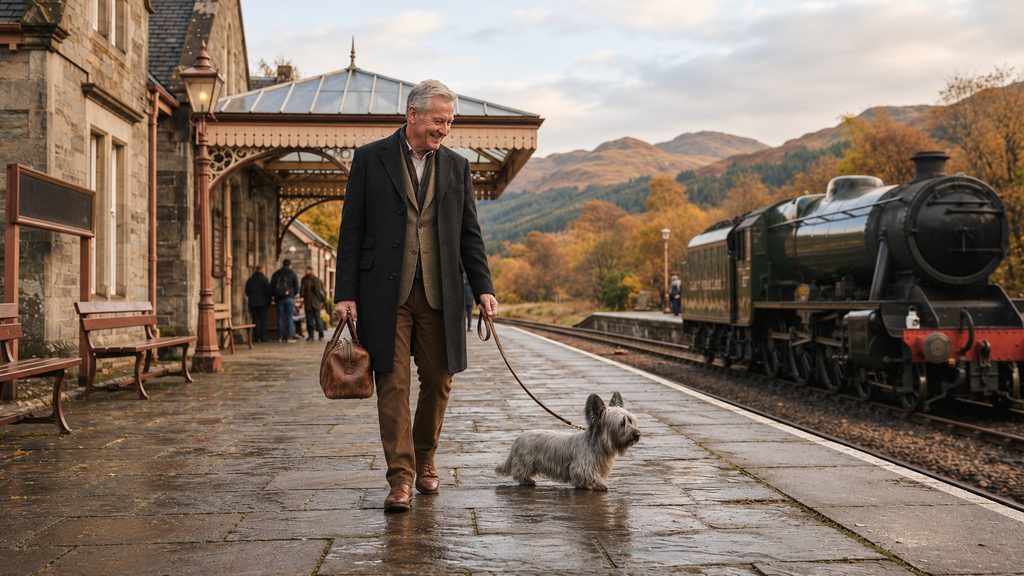
Explore More Terrier Dog Breeds
The Skye Terrier is one of many fascinating breeds within the Terrier Group. From energetic working terriers to quieter, affectionate companions, these dogs offer remarkable variety in size, temperament, appearance, and care requirements. Explore our complete guide to Terrier Dog Breeds to discover their different histories, personalities, and everyday needs, and find the breed that best suits your lifestyle.
Learn More About the Skye Terrier
For additional information about the Skye Terrier’s official breed characteristics, history, and recognized standards, visit the American Kennel Club’s Skye Terrier breed profile. The AKC provides authoritative information about this distinctive Scottish breed and its place within the Terrier Group, offering a useful companion reference for prospective owners and enthusiasts interested in learning more.