

Soft Coated Wheaten Terrier
The Soft Coated Wheaten Terrier is one of Ireland’s most appealing and distinctive dog breeds, combining an exuberant personality, a beautiful silky coat, and the determination of a traditional working terrier. Originally developed as an adaptable farm dog, this lively, affectionate companion possesses a remarkable combination of friendliness, intelligence, confidence, and spirited independence. Its warm wheaten coloring, softly waving coat, expressive dark eyes, and unmistakably cheerful demeanor give it an instantly recognizable appearance, but there is much more to the breed than its charming exterior.
Beneath that elegant coat lies a sturdy, athletic dog with strong working instincts and a genuine enthusiasm for everyday life. Whether exploring the countryside, joining family activities, or enthusiastically welcoming a familiar person home, the Soft Coated Wheaten Terrier brings a distinctive blend of Irish character, loyalty, and infectious energy to the households fortunate enough to share its company.
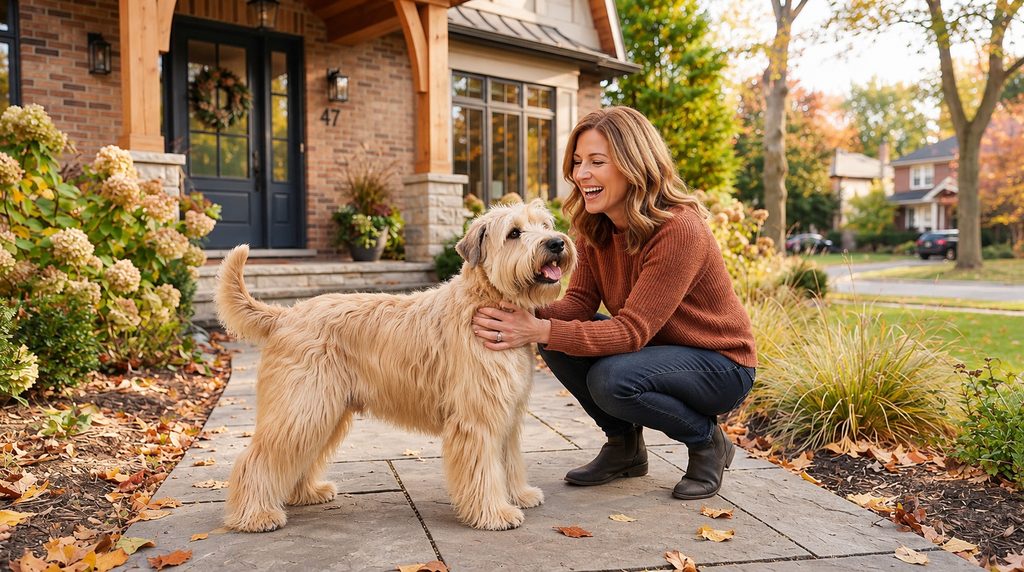
One of the first things people notice about a Soft Coated Wheaten Terrier dog is its wonderfully expressive personality. Wheatens are often outgoing, playful, and eager to participate in whatever their families are doing. Many greet familiar people with extraordinary enthusiasm, a characteristic affectionately known among breed enthusiasts as the “Wheaten Greetin’.” This exuberance can be delightfully entertaining, although it also highlights the importance of teaching polite greetings from puppyhood. Unlike some more reserved terrier breeds, many Wheatens actively seek human interaction and enjoy being involved in household routines.
The breed’s origins reveal a practical working dog rather than an ornamental companion. For generations, Irish farming families relied on these versatile terriers to control vermin, guard rural properties, assist with livestock, and perform various everyday tasks. Their strength, agility, determination, and independent judgment made them valuable companions in an environment where dogs needed to contribute to farm life. Although the modern Soft Coated Wheaten Terrier usually enjoys a much more comfortable existence, its working heritage remains evident in its curiosity, physical confidence, and willingness to investigate interesting sights, sounds, and scents.
Its distinctive coat is another major attraction. Unlike the harsh, wiry coverings associated with many traditional terriers, the Soft Coated Wheaten Terrier has a soft, silky, gently waving single coat that develops its characteristic warm wheat coloring as the dog matures. Young puppies may have noticeably darker coloring and a different coat texture, with the familiar adult appearance emerging gradually. The breed also sheds relatively little compared with many double-coated dogs, although this does not make it completely free from shedding or guaranteed to be suitable for people with allergies. Regular grooming is essential because the silky hair can develop tangles and mats without consistent attention.
In everyday life, the Wheaten combines the affectionate nature of a devoted family companion with the energy and determination of a terrier. Most enjoy daily walks, active games, outdoor exploration, and opportunities to investigate their surroundings. They are generally enthusiastic participants in family activities and may enjoy training, scent work, or other mentally engaging challenges. However, this is not usually a breed content to spend every day without meaningful activity. Its intelligence and spirited personality require regular engagement, while its natural independence means training is most successful when owners use patience, consistency, and positive reinforcement.
The Soft Coated Wheaten Terrier is also a substantial medium-sized dog rather than the delicate companion its elegant coat might suggest. Adults are strong, balanced, and athletic, with enough stamina to enjoy an active lifestyle. Their enthusiasm can occasionally make them boisterous, particularly during adolescence or when meeting visitors. Families should therefore appreciate that the breed’s generally friendly nature does not automatically translate into effortless manners. Early socialization, sensible household boundaries, and opportunities to practice calm behavior help channel its natural exuberance into enjoyable companionship.
For households with children, a well-socialized Soft Coated Wheaten Terrier can be a playful and affectionate family member. Many enjoy interactive games and develop strong attachments to familiar youngsters. Nevertheless, their energetic greetings and lively movement can occasionally overwhelm smaller children, making supervision and appropriate training important. Relationships with other dogs and household animals also vary. Some Wheatens are sociable and adaptable, while others display the confidence, persistence, and prey drive associated with their terrier ancestry. Individual temperament, early experiences, and thoughtful introductions all influence successful relationships.
Prospective owners should also understand the breed’s practical care requirements. Although the coat is beautiful and comparatively low-shedding, it requires regular brushing, combing, and professional or home grooming to remain comfortable and manageable. Healthy adults need dependable exercise, suitable nutrition, preventive veterinary care, and opportunities for mental stimulation. Certain inherited medical conditions, particularly those affecting kidney function and the digestive system, make responsible breeding, health screening, and ongoing monitoring especially important. Choosing a Wheaten should involve careful research into these responsibilities rather than focusing exclusively on its attractive appearance or affectionate reputation.
The breed’s combination of enthusiasm and affection makes it especially appealing to individuals and families who enjoy an involved canine companion. A Wheaten often wants to accompany its people on walks, investigate new environments, participate in games, and remain close during quieter moments at home. Its playful disposition can bring considerable warmth and humor to everyday routines, while its terrier independence ensures that life is rarely dull. Owners who appreciate an expressive, sometimes mischievous personality are often particularly well suited to this engaging Irish breed.
For the right household, the Soft Coated Wheaten Terrier offers a wonderful combination of companionship, athletic ability, loyalty, and irrepressible charm. It is not the ideal choice for someone seeking a completely undemanding dog, but people prepared to provide consistent training, regular exercise, attentive grooming, and meaningful interaction may find it exceptionally rewarding. Understanding the breed’s farming heritage, distinctive coat, energetic temperament, and long-term health needs provides the foundation for a successful relationship with one of Ireland’s most recognizable and affectionate terriers.

Table of Contents
Soft Coated Wheaten Terrier Fast Facts
Breed Group: Terrier
Origin: Ireland
Height: 18–19 inches (male); 17–18 inches (female)
Weight: 35–40 pounds (male); 30–35 pounds (female)
Life Expectancy: 12–14 years
Size: Medium; sturdy, athletic, and nearly square
Coat: Soft, silky, gently waving single coat
Coat Care: Daily brushing and combing; regular trimming
Shedding: Very low; loose hair requires combing
Exercise Needs: Moderate to high; daily walks and active play
Temperament: Affectionate, lively, friendly, intelligent, independent
Primary Role: Versatile Irish farm dog; family companion
Soft Coated Wheaten Terrier Star Ratings
Apartment Friendly: ★★★☆☆
Family Friendly: ★★★★★
Good With Children: ★★★★☆
Good With Other Dogs: ★★★☆☆
First-Time Owner Friendly: ★★★☆☆
Easy Grooming: ★☆☆☆☆
Affectionate: ★★★★★
Easy to Train: ★★★☆☆
Low Shedding: ★★★★★
Adaptable: ★★★★☆
High Exercise Needs: ★★★★☆
Tolerates Being Alone: ★★☆☆☆
Soft Coated Wheaten Terrier History and Origins
The Soft Coated Wheaten Terrier has a rich and distinctly Irish history, shaped by generations of ordinary farming families who valued practical ability, courage, and companionship above fashionable appearance. Unlike some terrier breeds developed primarily for organized hunting or exhibition, the Wheaten emerged as a versatile working dog capable of performing many different tasks around rural properties. Its ancestors helped control vermin, protect farmyards, move livestock, and accompany their owners through demanding everyday activities. Although the breed’s precise beginnings remain uncertain, dogs resembling today’s Soft Coated Wheaten Terrier have been associated with Ireland for at least two centuries. This long working heritage explains much of the breed’s sturdy construction, confident personality, intelligence, and characteristic determination.
The breed developed particularly strongly in the agricultural communities of southern and southwestern Ireland, including counties such as Kerry, Cork, Limerick, Clare, Tipperary, and Waterford. These regions supported numerous small farms where families depended on animals that could contribute meaningfully to daily life. A useful farm dog needed enough strength to work around livestock, sufficient courage to confront pests, and the stamina to accompany its owner across fields and uneven countryside. The Wheaten’s compact but athletic body, practical size, and adaptable personality made it particularly valuable in these circumstances.
Historically, the Soft Coated Wheaten Terrier was frequently associated with the ordinary Irish farmer rather than the aristocratic sporting establishment. Large hunting dogs and specialized sporting breeds were traditionally associated with wealthier landowners, while more modest households relied on adaptable terriers. The Wheaten consequently acquired a reputation as the farmer’s all-purpose companion, sometimes described as the poor man’s dog. Its value came from what it could accomplish rather than the prestige of its pedigree. This practical background distinguishes the breed from dogs developed primarily for companionship or formal exhibition, even though the modern Soft Coated Wheaten Terrier has become a much-loved family pet.
Vermin control was among the breed’s most important traditional responsibilities. Rats and other pests threatened stored grain, animal feed, and agricultural supplies, making an alert, determined terrier extremely useful. Wheatens were also historically employed in pursuit of rabbits, foxes, badgers, and other quarry, although these activities reflected the practices and circumstances of earlier centuries. Their work required confidence, persistence, quick reactions, and an ability to make decisions without constant human direction. Many of these qualities remain recognizable in modern Wheatens, particularly when an interesting scent or rapidly moving animal captures their attention.
The breed was not limited to hunting and pest control. Irish farmers also valued Soft Coated Wheaten Terriers for helping move cattle, alerting households to unfamiliar activity, and accompanying family members during ordinary agricultural work. This versatility encouraged the development of a dog that combined terrier spirit with a comparatively sociable and cooperative disposition. Unlike highly specialized working breeds, Wheatens needed to adapt to changing responsibilities throughout the day. Their modern enthusiasm for family activities, outdoor exploration, and human companionship reflects this tradition of working closely alongside familiar people.
The ancestry of the Wheaten Terrier is closely connected with Ireland’s other native terrier breeds. The Irish Terrier and Kerry Blue Terrier share historical associations with the same agricultural communities, and breed historians generally recognize overlapping ancestry among these dogs. Some authorities believe the Wheaten may be the oldest of the three long-legged Irish terriers and could have contributed to the development of related breeds. However, the precise relationships remain uncertain because breeding records from the earliest periods are incomplete. Claims about a single original ancestor or a neatly documented breeding program should therefore be treated cautiously.
The international breed designation Irish Soft Coated Wheaten Terrier emphasizes this longstanding national identity. Historical references also use the term Irish Wheaten Terrier, although the modern recognized breed name distinguishes it from the separately recognized Irish Terrier. Both descriptions reflect the breed’s origins rather than different modern varieties. The familiar golden coat also played an important part in establishing its identity. While the color and texture of early working dogs probably varied more than those of today’s pedigree Wheatens, the characteristic soft, wheaten covering gradually became one of the breed’s defining features.
Despite its lengthy history, the Wheaten remained outside formal kennel-club recognition for considerably longer than many other established terriers. Its association with ordinary farming households meant that systematic pedigree registration and competitive exhibition were not initially priorities. The breed’s practical qualities were well understood by the people who depended on it, but its distinctive identity was not widely recognized by the organized dog-show community. By the early twentieth century, enthusiasts began working more deliberately to preserve the traditional Wheaten and establish a consistent breed standard.
Several dedicated Irish breeders and supporters played important roles in this development, including Dr. Gerard J. Pierse and Patrick Blake. Their efforts helped bring greater attention to the breed at a time when its future was far from assured. The Irish Kennel Club officially recognized the Soft Coated Wheaten Terrier in 1937, marking a major turning point in its history. Formal recognition encouraged more systematic breeding, pedigree documentation, and public exhibition. It also helped establish the Wheaten as a distinct Irish breed rather than merely another regional variety of working terrier.
Recognition brought new attention to the breed’s appearance as well as its working qualities. Breeders increasingly emphasized the characteristic soft coat, wheaten coloring, balanced construction, and distinctive terrier expression. The traditional Irish presentation preserved a relatively natural, flowing coat, while later grooming conventions in other countries developed somewhat different appearances. These differences are most noticeable in the presentation and density of the coat rather than in the underlying identity of the breed. The contrast between Irish and American coat styles remains an interesting aspect of modern Wheaten ownership and exhibition.
The Soft Coated Wheaten Terrier began establishing a presence in the United States during the 1940s. In November 1946, a litter of six Wheatens arrived from Belfast, helping introduce the breed to American enthusiasts. Lydia Vogel of Massachusetts was among the earliest supporters and exhibited Wheatens at the Westminster Kennel Club show in 1947. Initial public interest was relatively limited, however, and the breed did not immediately gain widespread recognition. More substantial breeding activity began during the late 1950s, supported by additional imports and the efforts of dedicated American families.
The formation of the Soft Coated Wheaten Terrier Club of America on March 17, 1962, represented another important milestone. The choice of St. Patrick’s Day appropriately acknowledged the breed’s Irish heritage and reflected the growing commitment of American enthusiasts to preserving its identity. During the following decade, registration numbers increased and the breed became more familiar at dog shows. On May 1, 1973, the American Kennel Club admitted the Soft Coated Wheaten Terrier to its Stud Book, and later that year the breed became eligible for regular Terrier Group competition.
As Wheatens gained recognition internationally, their role shifted increasingly toward companionship, exhibition, and organized canine activities. The qualities that had once made them valuable farm dogs translated naturally into family life: alertness, intelligence, affection, physical confidence, and a willingness to participate in everyday routines. Modern Wheatens can enjoy activities such as obedience, rally, agility, and scent work, although their independent terrier instincts remain an important part of their personality. Their enthusiasm and strong attachment to people have helped establish a reputation for lively greetings and engaging companionship.
Today, the Soft Coated Wheaten Terrier is recognized throughout much of the world as an important member of Ireland’s native canine heritage. Its distinctive coat and cheerful personality attract considerable admiration, but responsible preservation involves more than maintaining an attractive appearance. Breeders must also consider stable temperament, physical soundness, genetic diversity, and inherited health conditions. Understanding the breed’s history provides valuable perspective on these responsibilities. The modern Wheaten is not simply a decorative, golden-coated companion; it is the descendant of generations of capable Irish farm dogs whose adaptability, resilience, and affectionate character remain central to the breed’s identity.
Why the Wheaten Was Known as the Farmer’s Terrier
The Soft Coated Wheaten Terrier earned its reputation through usefulness rather than social prestige. On small Irish farms, one dog might be expected to control rats, alert the household to visitors, accompany its owner across fields, and assist with livestock. This variety of responsibilities encouraged intelligence, independence, physical stamina, and close cooperation with familiar people. Unlike terriers maintained primarily for organized sport, the Wheaten was a practical household worker whose value extended far beyond appearance. Its modern enthusiasm for family life, outdoor exploration, and interactive activities reflects the versatility that made its ancestors such dependable companions in rural Ireland.

Soft Coated Wheaten Terrier Appearance and Size
The Soft Coated Wheaten Terrier is a beautifully balanced, medium-sized Irish dog whose distinctive appearance combines the strength and athleticism of a traditional working terrier with an exceptionally soft, silky coat. Unlike the wiry coverings associated with many other terrier breeds, the Wheaten’s gently waving hair creates an elegant, natural silhouette that moves freely as the dog walks. Beneath this attractive coat lies a sturdy, muscular, and surprisingly powerful animal developed for practical work on Irish farms. Its nearly square proportions, expressive rectangular head, strong legs, and lively carriage distinguish it from both smaller terriers and the increasingly popular curly-coated companion breeds with which it is sometimes confused.
Understanding Wheaten Terrier size begins with recognizing that this is a substantial medium-sized dog rather than a small lapdog. According to the American Kennel Club breed standard, adult males should stand approximately 18–19 inches at the shoulder, with 18.5 inches considered ideal. Females are slightly smaller, generally measuring 17–18 inches, with an ideal height of 17.5 inches. These measurements are taken at the withers, the highest point of the shoulders. Although the breed’s flowing coat can make individuals appear larger than they actually are, a healthy Wheaten should display a balanced relationship between height, length, and overall physical substance.
The typical Soft Coated Wheaten Terrier size is accompanied by a solid but athletic build. Adult males generally weigh 35–40 pounds, while females usually weigh 30–35 pounds under the American standard. These ranges describe the expected proportions of well-constructed dogs rather than fixed targets for every individual. A particularly muscular Wheaten may feel surprisingly substantial beneath its soft coat, but it should never appear excessively heavy or cumbersome. Proper body condition is especially important because the breed was developed for active work requiring agility, endurance, and freedom of movement.
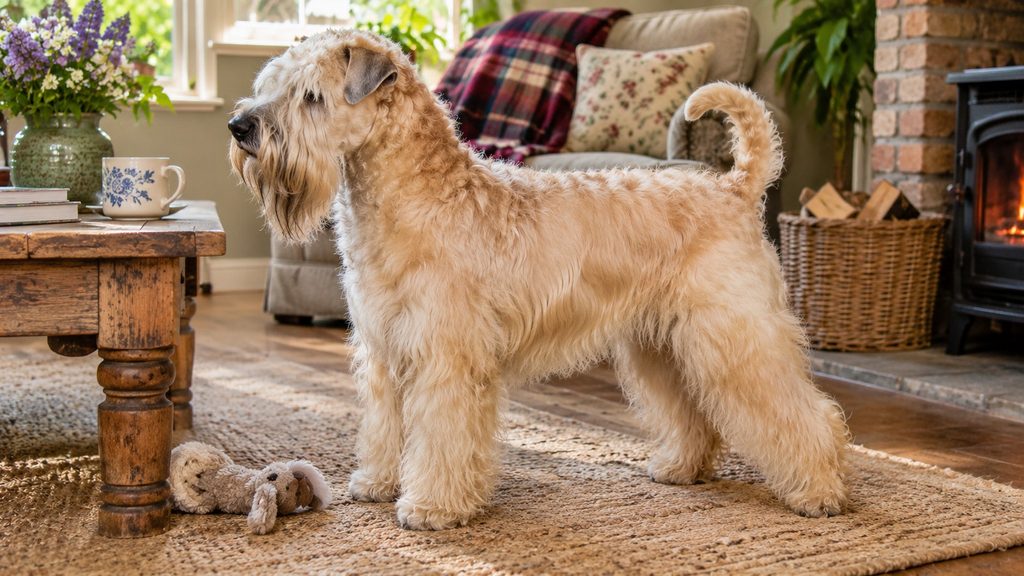
A full grown Soft Coated Wheaten Terrier should present a nearly square outline when viewed from the side, with the distance from the shoulder to the ground approximately matching the length of the body from the front of the chest to the rear. The back should be strong and level, the chest relatively deep, and the ribs well developed without creating an excessively rounded or barrel-shaped appearance. The neck is of medium length and blends smoothly into well-laid-back shoulders. These proportions produce the balanced silhouette characteristic of a versatile working terrier rather than an exaggerated or heavily built companion dog.
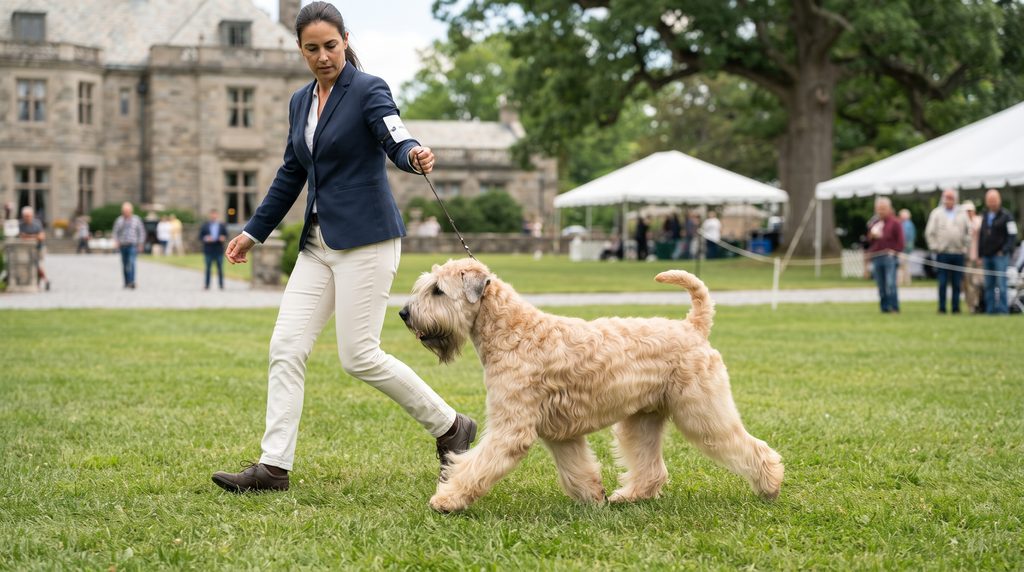
The breed’s legs contribute considerably to its athletic appearance. The forelegs should be straight, strong, and appropriately boned, while the hindquarters provide sufficient muscle and angulation for confident movement. Its feet are compact, with substantial pads capable of supporting activity across varied ground conditions. When viewed in motion, a correctly constructed Wheaten should demonstrate a free, graceful, and lively gait, with effective reach from the front legs and controlled drive from the rear. The dog should move smoothly without appearing stiff, awkward, or excessively high-stepping. Its overall movement reflects the stamina and agility that historically made the breed so useful to Irish farming families.
The head is another important feature of the Wheaten’s recognizable appearance. It should be moderately long, strong, and rectangular when viewed from the front or side. The skull is relatively flat, with a clearly defined but not exaggerated stop leading toward a powerful muzzle. A well-developed black nose provides a distinctive contrast against the lighter facial hair. The eyes are medium-sized and dark reddish brown to brown, conveying alertness, intelligence, and considerable expression. Although the dog’s facial furnishings may partially shade the eyes, its expression should remain lively and attentive rather than obscured by an excessively rounded or heavily sculpted head.
The ears are small to medium in size and fold naturally forward, with the front edge lying close to the side of the head. Their shape contributes to the Wheaten’s unmistakable terrier expression and distinguishes it from breeds with upright ears or long, hanging spaniel-like ears. The ear leather should remain relatively fine, and the hair should not be so excessively abundant that it overwhelms the head’s natural proportions. Together with the strong muzzle, dark eyes, and softly furnished beard, these features create the engaging expression that so many owners find irresistible.
Perhaps the breed’s most important physical characteristic is its exceptional coat. The Soft Coated Wheaten Terrier has an abundant single coat rather than a dense double coat. Its texture should be soft and silky, with a natural wave that becomes apparent as the hair develops and moves. The coat falls over the head, body, and legs, creating an attractive flowing outline without concealing the dog’s underlying structure. Unlike harsh-coated terriers, Wheatens do not possess the characteristic wiry texture associated with traditional hand-stripped coats. Equally, their hair should not be woolly, cottony, excessively frizzy, or tightly curled like that of some Poodle crosses.
Differences in coat presentation can make Wheatens from different breeding traditions appear surprisingly varied. The traditional Irish coat is generally more open, lighter in volume, and particularly silky, often falling in clearly defined loose waves close to the body. The coat commonly seen on American exhibition dogs may appear fuller and more carefully shaped, especially around the legs and facial furnishings. Both presentations belong to the same recognized breed, and neither represents a separate variety. The underlying requirements remain softness, silkiness, appropriate waves, and a recognizable terrier outline. Detailed grooming techniques and haircut choices are considered separately in the dedicated grooming section.
Understanding Wheaten Terrier colors is equally important because the breed’s appearance changes considerably during development. Mature dogs should display a clear wheaten color, ranging from pale beige and light golden shades to richer golden wheat. The precise intensity varies naturally between individuals, and occasional darker hairs may occur within an otherwise acceptable coat. Some mature Wheatens also retain subtle blue-gray shading around the ears and muzzle. However, the overall appearance should remain unmistakably wheaten rather than predominantly white, black, red, or dark brown. The American Kennel Club recognizes wheaten as the breed’s standard registered color.
Puppies can look remarkably different from adults. Many are born with darker coats containing reddish, brownish, or grayish shading, black facial masks, or dark tipping along the body. These markings normally change as the dog matures, sometimes producing an appearance that differs substantially from its early puppy photographs. Consequently, photographs described as a black Wheaten Terrier may actually show a young puppy with temporary dark pigmentation rather than a recognized black-coated adult variety. Similarly, searches for a brown Soft Coated Wheaten Terrier often reflect darker puppy coloring or unusually rich immature coat shades. A mature, pedigree Wheaten should eventually develop the characteristic wheaten coloration.
Coat development requires patience because the familiar adult appearance does not emerge immediately. The puppy’s coat may initially stand away from the body, appear comparatively plush, or lack the distinctive flowing waves seen in mature dogs. During adolescence, changes in texture and pigmentation can produce an uneven transitional appearance. Many Wheatens develop a more recognizable adult coat by approximately two years of age, although complete stabilization may take longer. Owners should avoid judging a young dog’s eventual appearance solely by its coat at eight or twelve weeks. Genetics, age, grooming practices, and individual development all influence the finished appearance.
Another common point of confusion concerns smaller versions of the breed. Despite online references to a mini Soft Coated Wheaten Terrier, there is no officially recognized miniature variety within the American Kennel Club breed standard. A genuinely purebred Wheaten is expected to develop within the established medium-sized range, allowing for normal individual variation. Dogs advertised as miniature Wheatens may be unusually small individuals, mixed breeds, or animals produced through breeding practices that do not reflect the recognized standard. Prospective owners should therefore be cautious about claims that a miniature Wheaten represents a separate established type, particularly when those claims are used to justify unusual breeding arrangements.
The tail completes the breed’s balanced, confident outline. It is set relatively high and carried upright, sometimes with a gentle forward curve. Tail length and presentation may vary according to national regulations, breeding traditions, and whether docking is legally permitted. Natural tails are seen in many countries, while some American exhibition dogs historically have had docked tails. Regardless of length, the tail should complement the dog’s overall balance rather than appearing tightly curled over the back. Its lively carriage frequently contributes to the enthusiastic expression and animated movement associated with the breed.
Understanding the correct Soft Coated Wheaten Terrier weight and proportions has practical importance beyond conformation standards. Because the coat can obscure changes in body condition, owners should regularly feel the ribs, monitor body weight, and assess the dog’s waist rather than judging fitness entirely by appearance. Excess weight can reduce comfort and physical agility, while insufficient muscle condition may make a dog appear less substantial than it should. Appropriate nutrition, regular exercise, and veterinary guidance help maintain the strong yet athletic construction that defines a healthy adult Wheaten.
Ultimately, the Soft Coated Wheaten Terrier’s appearance is a distinctive combination of elegance and working-dog practicality. Its sturdy medium-sized body, balanced proportions, strong terrier head, expressive folded ears, and flowing golden coat create a memorable impression. Yet the most important qualities are not extravagant hair length or dramatic styling, but correct physical construction, comfortable movement, and the unmistakably soft, gently waving coat from which the breed takes its name. A properly developed and maintained Wheaten should look both beautiful and capable: an athletic Irish terrier whose physical characteristics continue to reflect generations of practical rural work.
Why Wheaten Puppies Can Look So Different
A young Soft Coated Wheaten Terrier may have a darker, fluffier coat than the silky golden covering expected in adulthood. Puppies can display black tipping, reddish shading, darker ears, or uneven coloring that gradually fades as the adult coat develops. Texture also changes, with the characteristic flowing waves becoming more noticeable during maturation. Some individuals do not achieve their final coat appearance until approximately two to three years of age. Prospective owners should therefore examine adult relatives and discuss coat development with an experienced breeder rather than expecting a young puppy to look like a fully mature show dog.
Soft Coated Wheaten Terrier Temperament and Personality
The Soft Coated Wheaten Terrier possesses one of the most engaging and exuberant personalities in the terrier group, combining an affectionate, people-oriented disposition with intelligence, confidence, playfulness, and a distinctly independent streak. Developed as a versatile Irish farm dog, the breed retains the lively spirit and determination of its working ancestors while displaying an unusually enthusiastic approach to family companionship. Understanding the Wheaten Terrier temperament means appreciating both sides of this character: the warmhearted, cheerful companion that delights in human attention and the spirited, occasionally stubborn terrier that follows its own instincts when something interesting captures its attention. For owners who enjoy an expressive dog with considerable personality, the Wheaten can be exceptionally rewarding.
Perhaps the breed’s most famous characteristic is its enthusiastic greeting behavior. Soft Coated Wheaten Terriers are celebrated for the affectionate welcome commonly called the “Wheaten Greetin’,” which may involve excited movements, enthusiastic tail wagging, spinning, and attempts to jump toward familiar people. This exuberance reflects the breed’s strong interest in human companionship and its tendency to retain youthful excitement well into adulthood. Although the behavior can be wonderfully entertaining, an adult Wheaten is substantial enough to accidentally knock over a small child or surprise an unsuspecting visitor. Teaching calm greetings through consistent, reward-based training allows owners to preserve the dog’s cheerful personality while encouraging appropriate manners.
The Soft Coated Wheaten Terrier personality is strongly influenced by its relationship with familiar people. Many Wheatens develop close attachments to their households and prefer being involved in everyday activities rather than observing family life from a distance. They often follow their owners between rooms, investigate household routines, and enthusiastically join games or outings. Some are especially attentive to changes in their owners’ moods, responding with affectionate proximity or an increased desire for interaction. This emotional engagement is one of the breed’s most appealing qualities, although individual dogs vary in how openly they express affection.
Unlike certain more reserved terrier breeds, the Wheaten is often naturally outgoing with people. Many enjoy meeting visitors and respond to friendly attention with obvious pleasure. However, sociability should not be confused with an absence of boundaries or the ability to tolerate every situation. Individual Wheatens may be cautious around unfamiliar people, particularly when they have experienced limited socialization or unsettling encounters. Their confidence develops most reliably through positive, gradual exposure to different environments and respectful interactions. A well-adjusted adult should be able to remain composed around strangers without being expected to greet everyone enthusiastically.
Intelligence is another important aspect of Soft Coated Wheaten Terrier temperament. These dogs are observant, quick to recognize familiar routines, and capable of learning a wide variety of behaviors. However, their working heritage encouraged independent decision-making, and some Wheatens are inclined to investigate an interesting distraction rather than immediately comply with a familiar request. This can create the impression of stubbornness, particularly during adolescence. The breed generally responds best to short, engaging training sessions that reward cooperation, encourage problem-solving, and maintain enthusiasm. Repetitive drilling, harsh corrections, and confrontational handling are more likely to produce frustration than dependable obedience.
The Wheaten’s playful nature is particularly noticeable during everyday family life. Many individuals retain puppy-like enthusiasm for years, enjoying interactive games, searching for toys, exploring unfamiliar places, and participating in activities with their owners. Their characteristic humor may emerge through harmless mischief, such as proudly carrying an unexpected household object, inviting someone into a game, or performing an enthusiastic burst of movement when excited. These behaviors contribute to the breed’s considerable charm, but owners should also provide suitable outlets for its energy. A bored Wheaten may invent activities that are considerably less entertaining from a human perspective.
Although generally more sociable than some terriers, the Wheaten still possesses substantial physical energy and determination. It is not simply a gentle companion with a decorative coat. Healthy adults typically enjoy regular walks, active play, and opportunities to investigate their surroundings. Their enthusiasm can make them lively participants in outdoor adventures, and many enjoy activities involving scent work, agility, or interactive problem-solving. However, physical exercise alone does not satisfy every behavioral need. Wheatens also benefit from opportunities to make choices, engage their senses, and work cooperatively with familiar people.
Confidence is an essential part of the breed’s traditional character. The American Kennel Club standard describes the Wheaten as happy, steady, and self-assured, with a lively interest in its surroundings. Excessive timidity or aggression is not characteristic of the ideal temperament. Nevertheless, confidence can sometimes become assertiveness when an individual dog is excited, frustrated, or poorly socialized. Some Wheatens may resist intrusive behavior from other dogs or become determined when defending a valued object. Early guidance, appropriate social experiences, and careful observation of individual behavior help owners encourage balanced responses without suppressing the dog’s natural self-confidence.
The breed’s historical hunting instincts remain relevant to its modern behavior. Although today’s Wheatens are primarily family companions, many retain a strong interest in squirrels, rabbits, birds, and other rapidly moving animals. Sudden movement can trigger an enthusiastic chase, sometimes overriding a previously reliable recall response. Their curiosity may also encourage investigating holes, following scents, or exploring the boundaries of an unfamiliar environment. Secure fencing and dependable leash habits are therefore important, particularly where wildlife or traffic presents a risk. Training can improve responsiveness, but owners should not assume that natural prey drive can be eliminated completely.
Another characteristic of Wheaten Terrier personality is the breed’s ability to combine lively activity with genuine household affection. After appropriate exercise and mental engagement, many adults enjoy relaxing close to their families, settling beside a sofa or resting in a familiar room. However, some young Wheatens find it difficult to switch from excitement to relaxation without guidance. Teaching a calm settling routine, rewarding quiet behavior, and providing predictable periods of rest can be particularly useful during adolescence. These skills help balance the breed’s enthusiasm and prevent an otherwise affectionate companion from becoming unnecessarily demanding or constantly overstimulated.
Wheatens are often attentive household observers and may bark when someone approaches the property or an unusual sound interrupts their routine. Their alertness reflects their historical role in watching over Irish farms, but they are not generally regarded as specialized protection dogs. Many are far more interested in greeting an accepted visitor than intimidating one. Some individuals become vocal when bored, excited, or frustrated, while others are comparatively quiet. Owners can encourage appropriate behavior by responding calmly to alert barking and rewarding the dog for disengaging from everyday disturbances rather than allowing repeated barking to become a habit.
Strong attachment to familiar people also means that independence must be developed thoughtfully. Although the Soft Coated Wheaten Terrier is capable of learning to remain home alone for reasonable periods, some individuals become unsettled when left without company or stimulation for extended hours. Signs of difficulty may include persistent vocalization, destructive behavior, pacing, or unusual distress during departures. These behaviors are not inevitable breed characteristics, and they should not automatically be labeled separation anxiety without appropriate assessment. Gradual independence training, predictable routines, and comfortable resting arrangements can help young Wheatens develop confidence when family members are temporarily absent.
Individual temperament varies according to genetics, early experiences, socialization, and the quality of everyday relationships. Some Wheatens are exuberant extroverts who seek attention from almost everyone, while others are more thoughtful or selective. Responsible breeders should prioritize stable, confident temperaments and help prospective owners understand the characteristics of their breeding dogs. Puppies benefit from early exposure to ordinary household experiences, gentle handling, suitable visitors, and appropriately selected dogs. These introductions should encourage curiosity and resilience without overwhelming a youngster or expecting every encounter to result in excited physical interaction.
Ultimately, the defining Wheaten Terrier characteristics are an appealing combination of affection, confidence, intelligence, playfulness, and independent terrier spirit. This is a breed that often approaches life enthusiastically and expects to participate in whatever its family is doing. Its cheerful disposition can make it a wonderful companion, but its energy, strong opinions, and occasionally exuberant behavior require patient guidance and consistent expectations. Owners who appreciate a lively, affectionate dog and are willing to invest in positive training and meaningful companionship are most likely to discover the Wheaten at its best: a joyful, devoted Irish terrier whose personality is every bit as memorable as its beautiful golden coat.
Managing the Famous Wheaten Greetin’
Many Soft Coated Wheaten Terriers express affection through enthusiastic jumping, spinning, and attempts to greet people face-to-face. Although charming, these greetings can become difficult to manage as a puppy grows into a strong adult. Teach your Wheaten that keeping all four paws on the floor earns attention, praise, and rewards. Practice with familiar visitors before introducing more exciting situations, and avoid encouraging jumping during play if you expect calm greetings later. A consistent routine helps preserve the breed’s joyful personality while preventing accidental knocks, scratched clothing, or overwhelming encounters with children and visitors.
Living With a Soft Coated Wheaten Terrier
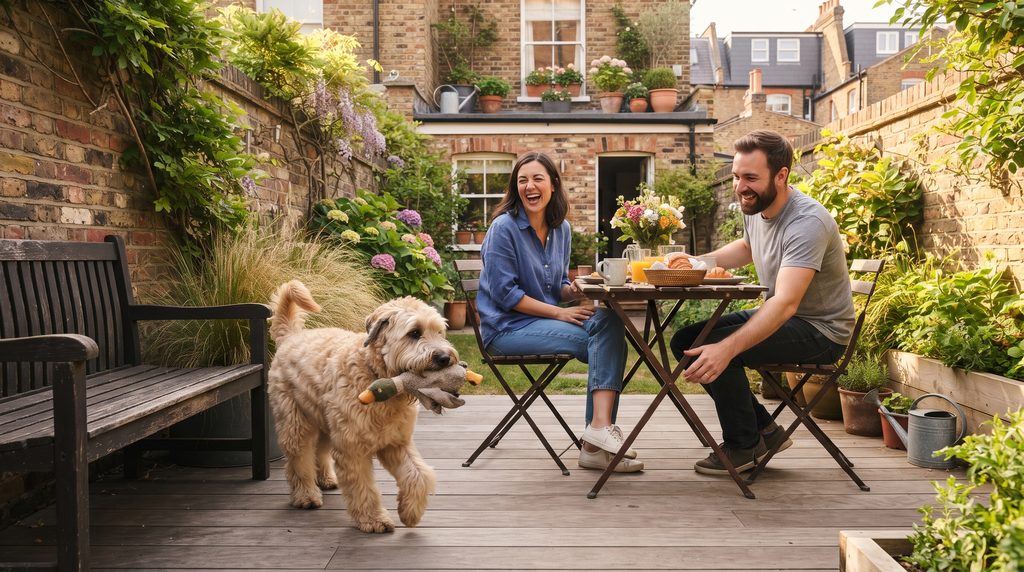
Living with a Soft Coated Wheaten Terrier means sharing your home with an affectionate, energetic, and frequently entertaining companion that enjoys being involved in everyday family life. This distinctive Irish breed combines the enthusiasm of a playful terrier with the strong attachment to people that developed during generations of working alongside farming families.
A Wheaten is rarely content to remain an unnoticed presence in the household. It wants to participate in familiar routines, accompany its owners whenever possible, investigate interesting activity, and enjoy regular interaction with the people it trusts. For households that appreciate an expressive, cheerful dog, these qualities can make everyday life exceptionally rewarding. However, prospective owners should also understand that the breed’s enthusiasm, grooming requirements, and independent personality demand consistent attention.
One of the most noticeable Wheaten Terrier traits is the desire to remain close to familiar people. Many Wheatens follow their owners between rooms, settle nearby during quiet activities, and become excited when family members return home. They often enjoy being included in ordinary household events rather than waiting patiently for occasional attention. A Wheaten may accompany someone into the kitchen, investigate a shopping bag, or eagerly supervise preparations for an outing. This curiosity is part of the breed’s considerable appeal, but it also means owners should establish reasonable boundaries so that constant involvement does not develop into demanding behavior.
The Wheaten’s enthusiastic approach to life can make the home a lively place, particularly during puppyhood and adolescence. Young dogs may rush excitedly toward visitors, carry toys around the house, or suddenly become energetic when familiar people begin moving toward the door. Their happiness is infectious, but an excited adult weighing 30–40 pounds can be surprisingly forceful. Teaching calm greetings, waiting at doorways, and settling when necessary is therefore important from an early age. Consistent expectations help preserve the dog’s affectionate character while preventing its exuberance from becoming difficult to manage.
Despite this lively personality, a well-exercised adult Wheaten can become a comfortable and affectionate household companion. Many enjoy relaxing beside their owners after a satisfying walk or play session, especially when they have opportunities for mental stimulation throughout the day. However, young Wheatens may need guidance to understand when excitement should give way to rest. Providing a comfortable bed in a familiar area, rewarding calm behavior, and establishing predictable household routines can help develop this balance. Owners should avoid assuming that a dog will automatically settle simply because it has been physically active.
Exercise is an important part of successful Wheaten ownership. Although the breed is adaptable, most healthy adults need meaningful daily activity rather than occasional short outings. Walks through interesting neighborhoods, relaxed hikes, active games, and opportunities to explore different environments provide useful outlets for energy. Wheatens often enjoy participating in outdoor activities with their families, but they can also become distracted by wildlife or unfamiliar scents. Secure fencing and responsible leash management are particularly valuable because the breed retains the strong investigative instincts of its working ancestors. A suitable routine combines physical activity with opportunities to sniff, explore, and engage mentally.
Housing arrangements can be flexible when those needs are met. A Soft Coated Wheaten Terrier may adapt successfully to a suburban house, an urban townhouse, or even an apartment when its owners provide sufficient exercise, companionship, and training. However, its medium size and lively personality make it less suitable for households expecting a completely sedentary companion. Apartment residents should consider opportunities for outdoor activity, access to suitable walking areas, and the possibility of barking when unfamiliar sounds occur. A secure yard can be convenient, but it does not replace regular interaction or supervised exercise.
One particularly distinctive feature of life with a Wheaten is the practical care associated with its beautiful coat. Although the breed sheds relatively little, its soft, continuously growing hair can become tangled without regular attention. Owners should expect brushing and combing to form part of their weekly schedule, often with brief daily checks in areas prone to matting. The coat also collects leaves, grass seeds, dust, and moisture during outdoor adventures. Keeping towels near an entrance, checking the paws after walks, and establishing a comfortable grooming routine can make household management considerably easier.
The Soft Coated Wheaten Terrier’s magnificent facial furnishings introduce another charming but practical responsibility. Its long beard may become damp after drinking water, collect small food particles during meals, or pick up debris while investigating the garden. Some dogs leave little trails of water after visiting their bowls, especially when their beards are particularly long. A soft towel kept near the feeding area allows owners to dry the facial hair gently and prevent prolonged moisture. Regularly checking the beard for trapped material also helps maintain cleanliness and comfort. These small routines quickly become familiar parts of life with this unmistakably bearded Irish terrier.
Households should also consider how the Wheaten manages periods of separation. Its strong attachment to familiar people means some individuals find extended time alone particularly challenging, especially when separation has not been introduced gradually. Puppies should learn to settle comfortably in a safe resting area while owners move around the home and eventually leave for brief periods. Enrichment toys, predictable routines, and calm departures can support independence. However, persistent barking, destructive behavior, or signs of distress should be investigated rather than dismissed as ordinary disobedience. Owners who work long hours may need to arrange appropriate companionship or daytime care.
Visitors are another regular feature of everyday Wheaten life. Many individuals are naturally enthusiastic when meeting familiar guests and may attempt to jump, spin, or press close in anticipation of attention. Such greetings are often affectionate rather than threatening, but they can overwhelm children, older visitors, or anyone uncomfortable around lively dogs. Teaching a reliable settling behavior and rewarding four paws on the floor can improve these encounters. Households should also provide clear guidance to visitors, particularly when a young Wheaten is learning appropriate manners. Consistency is usually more effective than attempting to restrain the dog after excitement has already escalated.
The breed’s curiosity also makes household safety important. Wheatens may investigate accessible food, explore garden beds, or become interested in objects left within reach. Secure storage of household chemicals, medications, unsuitable foods, and tempting small objects reduces avoidable risks. Outdoor spaces should have reliable fencing, particularly where wildlife or passing animals might encourage chasing. Owners should also provide suitable toys and opportunities for investigation so that the dog has appropriate outlets for its natural interests. A mentally satisfied Wheaten is generally easier to manage than one expected to remain inactive for long periods.
Living with children and other pets requires thoughtful expectations. Many Wheatens develop affectionate relationships with familiar youngsters, but their enthusiasm can occasionally lead to accidental knocks during play. Adults should supervise interactions, teach respectful handling, and establish rules that protect both children and the dog. Relationships with other household animals vary according to temperament and experience. Some Wheatens coexist comfortably with familiar dogs and cats, while others retain a stronger interest in chasing smaller animals. Early socialization and careful introductions provide the best foundation, but individual behavior should always guide management.
Regular veterinary care and appropriate nutrition also contribute to comfortable daily life. Maintaining a healthy body condition supports the Wheaten’s natural athleticism, while routine dental care, parasite prevention, and age-appropriate veterinary examinations help identify developing problems. Because the breed has documented inherited kidney and digestive conditions, owners should understand the importance of recommended screening and report unexplained changes in appetite, thirst, urination, weight, or general behavior. These responsibilities are explored in greater detail in the dedicated health sections, but they remain important considerations throughout ordinary ownership.
Ultimately, living with a Soft Coated Wheaten Terrier is most rewarding for people who enjoy an involved, affectionate companion and are comfortable managing a spirited personality. The breed brings considerable warmth, humor, and enthusiasm into the home, but it also needs regular exercise, positive training, thoughtful socialization, and dependable coat maintenance. Its beautifully bearded face and cheerful disposition may initially attract attention, yet the strongest relationships develop through the everyday routines shared between dog and owner. For households prepared to embrace both its charm and its responsibilities, the Wheaten can become a deeply loved family companion whose presence makes ordinary life considerably more entertaining.
Soft Coated Wheaten Terrier and Children
The Soft Coated Wheaten Terrier is often an affectionate, playful, and enthusiastic family companion, making it an appealing choice for households with children who enjoy interacting with dogs. Originally developed as a versatile Irish farm terrier, the breed has a long history of living closely with families and participating in everyday household activities. Its cheerful personality, strong attachment to familiar people, and willingness to join games can make relationships with children particularly rewarding. However, the Wheaten is also an energetic, physically substantial dog that may retain its exuberant puppy behavior well into adulthood. Families should therefore consider not only its affectionate nature but also its strength, excitement levels, and need for consistent training and supervision.
One of the breed’s most appealing qualities is its enthusiasm for shared activities. Many Wheatens enjoy playing with familiar children, carrying toys, investigating interesting objects, and participating in outdoor games. Their naturally cheerful demeanor can make them entertaining companions for youngsters who appreciate an active, interactive dog. Unlike breeds that prefer lengthy periods of undisturbed relaxation, a Wheaten often welcomes opportunities to become involved in family activity. Nevertheless, children should understand that enthusiasm does not mean the dog wants constant attention. Every Wheaten needs opportunities to rest, withdraw from excitement, and enjoy quiet time without being approached.
The famous Wheaten Greetin’ is particularly relevant to families with children. Wheatens are known for greeting familiar people with considerable excitement, sometimes jumping upward, spinning, or attempting to reach someone’s face. Although these behaviors usually reflect affection rather than hostility, they can be overwhelming for smaller children. An adult Wheaten weighing approximately 30–40 pounds is strong enough to knock over a toddler accidentally, especially when excited by running, laughter, or visitors arriving. Parents should establish appropriate greeting habits early, rewarding the dog for keeping all four paws on the ground and teaching children to remain calm rather than encouraging jumping.
Families with toddlers and preschool-aged children should consider the breed’s exuberance particularly carefully. Very young children often move unpredictably, make sudden noises, and struggle to understand an animal’s need for personal space. A playful Wheaten may become excited by rapid movement and attempt to join a game without recognizing its own strength. Even a friendly dog can accidentally cause injury through jumping, enthusiastic pawing, or running into a child. This does not mean every Wheaten is unsuitable for a household with young children, but it does require vigilant supervision, thoughtful management, and realistic expectations. Families seeking an exceptionally calm companion may find another breed easier to manage during the toddler years.
Older children are often especially well matched to the Soft Coated Wheaten Terrier. School-aged youngsters who understand canine boundaries can participate in walks, simple training exercises, supervised games, and enrichment activities. A child who enjoys outdoor play may appreciate the Wheaten’s enthusiasm and stamina, while the dog benefits from regular interaction and mentally engaging experiences. Activities such as gently rolling a ball, finding hidden toys, or practicing familiar commands can help strengthen the relationship. Adults should remain responsible for training decisions and physical control, particularly because a Wheaten may pull strongly on the leash when distracted by wildlife or unfamiliar surroundings.
Teaching appropriate handling is essential regardless of the child’s age. Wheatens have soft, attractive coats that naturally invite touching, but children must learn that pulling the beard, tugging at the ears, grabbing the tail, or climbing over the dog is unacceptable. The breed’s substantial build should never be interpreted as an invitation to wrestle or engage in rough physical games. Instead, children should be encouraged to stroke the dog’s shoulders or chest gently when it welcomes contact. If the Wheaten turns away, moves to another room, or shows signs of discomfort, the interaction should end immediately. Respecting these boundaries helps prevent unnecessary stress and supports a trusting relationship.
Early socialization plays an important role in helping Wheatens develop appropriate behavior around children. Puppies raised in households with calm, respectful youngsters often become comfortable with ordinary family sounds and movements. However, successful socialization requires more than simply allowing children to play with a puppy. Introductions should remain positive and manageable, with the youngster free to move away whenever necessary. Brief encounters with appropriately supervised children of different ages can help a puppy learn that unfamiliar people are not threatening. Owners should avoid overwhelming young Wheatens with groups of excited children, especially during sensitive developmental periods.
Parents should also recognize that canine body language can be subtle. A Wheaten that suddenly becomes still, turns its head away, repeatedly licks its lips, yawns outside a sleepy context, or attempts to leave an interaction may be showing discomfort. More obvious warning signals include stiff posture, growling, or snapping. These behaviors should not be ignored or punished without considering what caused them. Growling is an important warning that the dog needs more space. Adults should calmly separate the child and dog, identify the source of discomfort, and seek professional behavioral guidance if concerning reactions recur. Preventing stressful encounters is more effective than expecting a dog to tolerate repeated unwanted attention.
Household routines can make relationships considerably easier. A Wheaten should have a comfortable resting area where children know not to disturb it. Meals, high-value chews, and favorite toys should be managed carefully, particularly in households with younger children. Children should never approach a dog while it is sleeping or eating, attempt to remove objects from its mouth, or follow it into a designated quiet space. Physical barriers such as baby gates can help create predictable separation when adults are occupied. These arrangements protect both children and dogs without implying that the Wheaten is inherently difficult or unsafe.
Supervision remains necessary even when a Wheaten and a child have developed a close relationship. Familiarity does not eliminate the possibility of accidental injury, and both children and dogs can behave differently when tired, startled, or unusually excited. Parents should actively observe interactions rather than simply remaining somewhere in the same house. If a situation becomes too energetic or distracting to supervise properly, separating the dog and children is a sensible precaution. These principles become especially important during birthday parties, family gatherings, and visits from unfamiliar children who may not understand the dog’s normal routines.
The Soft Coated Wheaten Terrier’s grooming requirements also provide opportunities to teach older children responsible animal care. Under adult supervision, a child can help prepare grooming equipment, offer small rewards during gentle brushing, or learn how to recognize tangles in the coat. Its distinctive long beard may require wiping after meals or drinking, while the feet and legs often need checking after outdoor play. These activities can encourage patience and empathy when approached calmly. However, children should not be expected to manage difficult mats, restrain a reluctant dog, or perform tasks that might cause discomfort. Grooming should remain a positive experience rather than a responsibility placed entirely on younger family members.
The breed’s independent terrier instincts introduce another consideration during outdoor activities. Wheatens may become intensely interested in squirrels, birds, bicycles, or other moving objects, particularly when excited. Children should not be responsible for walking a strong Wheaten without suitable adult oversight, even when the dog usually behaves well. Secure fencing is also important because an enthusiastic terrier may pursue wildlife beyond the garden. Teaching reliable recall, loose-leash walking, and calm responses to distractions supports family safety, but owners should continue using appropriate physical management in environments where chasing could create danger.
Choosing an individual Wheaten with a suitable temperament is particularly important for families. Responsible breeders should be willing to discuss the behavior of their adult dogs, describe the puppies’ early experiences, and help match individual personalities to prospective households. Families adopting an adult Wheaten should ask about its previous exposure to children, responses to handling, excitement levels, and any history of concerning behavior. A calm, socially confident individual may be easier for some households than a particularly boisterous adolescent. Breed reputation provides useful guidance, but the specific dog’s temperament and experiences ultimately determine whether a household is an appropriate match.
Ultimately, the Soft Coated Wheaten Terrier can be a wonderful companion for children when its enthusiasm is balanced with sensible boundaries, consistent training, and responsible adult supervision. Its affectionate nature, playful personality, and enjoyment of shared activities offer considerable opportunities for family companionship. However, this is not a breed that should be chosen solely because it has a friendly reputation. Parents must be prepared to manage exuberant greetings, supervise energetic play, and teach children to respect the dog’s needs. In a household that appreciates its lively character and provides appropriate guidance, the Wheaten can become a devoted family member whose cheerful presence enriches childhood experiences and everyday family life.

Teaching Children Safe Wheaten Play
Soft Coated Wheaten Terriers often love active games, but their enthusiasm can make play more physical than children expect. Encourage youngsters to roll toys along the ground, practice simple reward-based exercises, and participate in supervised searching games rather than wrestling or encouraging jumping. Teach children to stop when the dog becomes overly excited, turns away, or needs a rest. Provide a quiet resting area that remains off-limits during family activities. Older children can help with simple care routines, but adults must retain responsibility for supervision, training, and safe handling. Calm, predictable interactions help build a trusting relationship.
Soft Coated Wheaten Terrier With Other Dogs and Pets
The Soft Coated Wheaten Terrier can be an affectionate and sociable companion in a household with other animals, but its friendliness toward people should not be mistaken for guaranteed compatibility with every dog or pet it encounters. Developed as a versatile Irish farm terrier, the breed combines a generally cheerful disposition with confidence, determination, and natural hunting instincts. Many Wheatens enjoy the company of familiar dogs and can develop comfortable relationships with household cats when introduced appropriately. However, individual temperament, early socialization, previous experiences, and the behavior of other animals all influence successful relationships. Prospective owners should therefore approach multi-pet living with realistic expectations, particularly when smaller animals are involved.
Compared with some traditionally more combative terrier breeds, the Soft Coated Wheaten Terrier is often relatively sociable with other dogs. Many enjoy playful encounters and respond enthusiastically to friendly canine companions. Their lively personality can make them entertaining playmates for dogs with similar energy levels, particularly when both animals understand appropriate social boundaries. Nevertheless, breed tendencies are only generalizations. Some Wheatens prefer a small circle of familiar companions, while others are more selective or uncomfortable around unfamiliar dogs. A well-adjusted Wheaten should be capable of remaining composed in the presence of other animals without necessarily wanting to play with everyone.
One consideration is the breed’s exuberant greeting style. Soft Coated Wheaten Terriers frequently approach familiar people with considerable enthusiasm, and some display similarly energetic behavior toward other dogs. An excited Wheaten may bounce forward, attempt to initiate vigorous play, or persist in seeking interaction when another dog would prefer to disengage. Although usually well intentioned, this behavior can create tension with calmer or more sensitive companions. Owners should teach their Wheaten to recognize appropriate social boundaries and respond when another dog moves away. Rewarding relaxed approaches, brief greetings, and voluntary disengagement helps prevent friendly enthusiasm from becoming socially overwhelming.
Early socialization plays an important role in developing appropriate canine behavior. Young Wheatens benefit from carefully arranged encounters with calm, well-socialized dogs of different sizes and appearances. Positive puppy classes, supervised play with familiar companions, and relaxed parallel walks can provide valuable experiences. However, socialization should never be measured simply by the number of dogs a puppy encounters. Repeated exposure to boisterous, intimidating, or aggressive animals may produce fear or defensive behavior rather than confidence. The objective is to help the Wheaten feel comfortable around other dogs while learning that direct interaction is not always necessary.
Some Wheatens become more selective as they mature. A puppy that once played happily with almost every dog may develop clearer preferences during adolescence and adulthood. This is not necessarily evidence of poor socialization, although persistent hostility or escalating reactivity deserves attention. Individual dogs may also become uncomfortable when unfamiliar companions approach valued toys, food, or resting places. Owners should observe body language and intervene before tensions develop. Stiff posture, prolonged staring, repeated attempts to move away, growling, or sudden changes in movement can indicate that an interaction needs more space or a calmer setting.
Introducing a Wheaten to an established household dog should be approached gradually. A neutral outdoor environment is often preferable to immediately bringing an unfamiliar animal into the home. Begin with parallel walking at a distance where both dogs remain relaxed, then allow brief interaction if their behavior is comfortable. Avoid forcing face-to-face greetings or allowing either dog to crowd the other. Once indoors, provide separate resting areas, food bowls, and access to valued resources. Supervise their early interactions and allow the relationship to develop naturally. Some dogs become close playmates, while others are happiest sharing a home without constant physical interaction.
Size and energy differences are also important. A healthy adult Wheaten is a substantial medium-sized terrier, generally weighing approximately 30–40 pounds. Its enthusiasm may be too intense for a fragile toy breed or an elderly dog that prefers quiet companionship. Likewise, a Wheaten may become uncomfortable when repeatedly overwhelmed by a much larger, physically exuberant dog. Compatibility depends less on choosing two breeds of identical size than on selecting individuals with suitable play styles, confidence, and tolerance. Owners should interrupt games that become excessively rough, encourage regular breaks, and prevent either animal from repeatedly chasing or pinning the other.
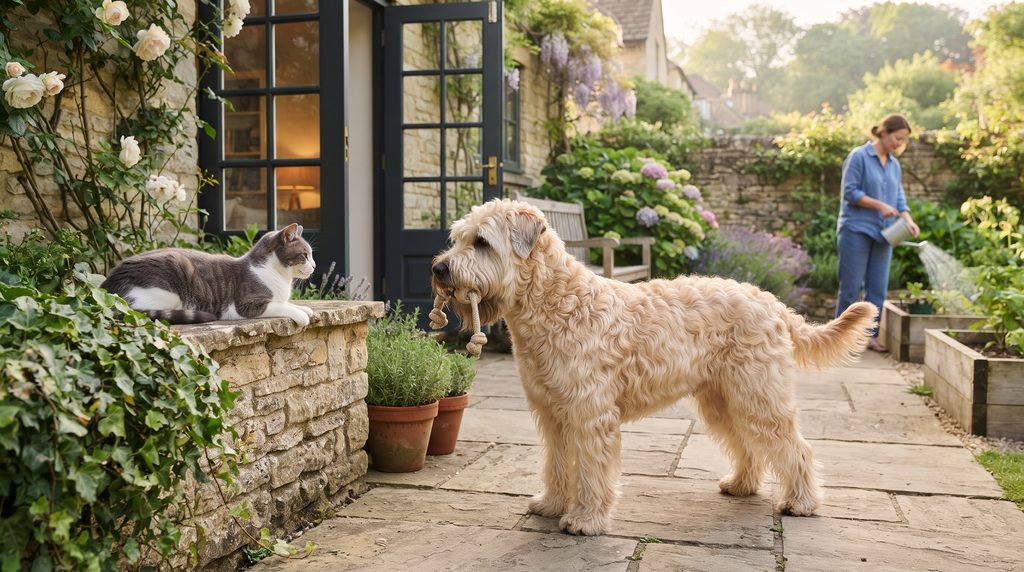
Living with cats presents another consideration because the Wheaten retains hunting instincts from its farming heritage. Some individuals coexist peacefully with familiar cats, particularly when introduced during puppyhood and raised in households where calm feline behavior is normal. Others remain intensely interested in chasing animals that run away. A Wheaten that appears relaxed around a stationary cat may suddenly become excited when the same cat darts across the room. For this reason, successful coexistence should never be assumed solely because a dog has shown friendly curiosity during a brief introduction.
Introducing a Wheaten to a cat should begin with secure separation and opportunities for both animals to become accustomed to one another’s presence. A sturdy barrier, such as a properly installed pet gate, can allow controlled visual contact without direct physical interaction. The cat should always have safe escape routes, elevated resting places, and access to rooms the dog cannot enter. Reward the Wheaten for relaxed observation and for turning its attention away from the cat voluntarily. Gradually progress only when both animals remain comfortable. Persistent staring, stalking, lunging, or attempts to chase indicate that greater distance and more careful management are necessary.
Even when a Wheaten and cat appear to have developed a positive relationship, owners should remain attentive to changes in behavior. Excitement during play, visiting animals, household disruptions, or unfamiliar surroundings can temporarily alter an otherwise predictable interaction. Some dog-and-cat households become reliably peaceful, while others require long-term separation during unsupervised periods. The cat’s welfare is just as important as the dog’s behavior. A cat that hides constantly, stops using familiar resting areas, or becomes reluctant to move through the house may be experiencing stress even when the Wheaten does not behave aggressively.
Smaller household animals require considerably greater caution. Rabbits, guinea pigs, hamsters, rats, and other small mammals may trigger the Wheaten’s natural prey drive. Historically, these terriers were expected to control vermin around Irish farms, and their interest in fast-moving small animals has not disappeared simply because they now live as family companions. Even an affectionate, well-trained Wheaten may react instinctively when a small animal suddenly runs, squeaks, or moves inside an enclosure. Direct interaction with vulnerable small mammals is best avoided, and physical separation should remain the foundation of household safety.
Pet birds and backyard poultry also need secure protection. Chickens, ducks, and other birds can attract considerable attention from an energetic Wheaten, especially when flapping wings or sudden movements stimulate chasing behavior. Owners should use appropriately constructed enclosures and prevent unsupervised access to vulnerable animals. The same caution applies to wildlife encountered during walks. Squirrels, rabbits, and other small creatures may trigger a strong pursuit response, potentially causing the dog to ignore familiar commands. Secure fencing and appropriate leash management are essential, particularly near roads, farmland, and areas where wildlife is abundant.
Training provides valuable support for successful multi-pet living. Reward-based exercises that teach the Wheaten to respond to its name, disengage from distractions, settle calmly, and walk on a loose leash can improve everyday control. A reliable recall is useful, although it should never be treated as a substitute for secure physical management when prey animals are present. Owners can also teach the dog to move to a designated resting place while other household pets receive attention or food. These predictable behaviors reduce unnecessary competition and help create an environment where animals can coexist without constantly interacting.
When difficulties develop, early professional guidance is preferable to allowing repeated confrontations. Persistent growling, resource guarding, fixation on cats, or aggressive responses toward other dogs may require a structured behavior assessment. A qualified reward-based trainer or veterinary behaviorist can help identify contributing factors and develop an appropriate management plan. Punishment, forced exposure, or attempts to make animals resolve disagreements themselves may increase anxiety and create additional risks. Because Wheatens are intelligent and responsive to positive training, carefully managed behavior modification can be valuable, although some situations require permanent separation to protect vulnerable animals.
Ultimately, the Soft Coated Wheaten Terrier can thrive in a multi-dog household and may develop affectionate relationships with familiar cats when personalities and introductions are appropriate. Its cheerful disposition and enthusiasm for companionship are genuine strengths, but they exist alongside the confidence, persistence, and hunting instincts of a traditional terrier. Responsible owners should respect these characteristics rather than expecting universal friendliness toward every animal. With thoughtful socialization, suitable companions, secure environments, and consistent positive training, many Wheatens can enjoy harmonious relationships with other household pets while retaining the lively, inquisitive personality that makes the breed so engaging.
Helping a Wheaten Settle Into a Multi-Pet Home
A successful introduction is measured by relaxed behavior, not how quickly two animals begin playing together. Introduce unfamiliar dogs through calm parallel walks and provide separate feeding areas, resting spaces, and valued toys during the adjustment period. Cats should have secure escape routes and elevated places where they can remain undisturbed. Reward your Wheaten for looking away from other animals, settling comfortably, and responding to familiar cues. Avoid forcing interaction or allowing repeated chasing, even when it appears playful. Small mammals and birds require secure physical separation because the breed’s traditional hunting instincts may remain strong despite excellent training and affectionate household behavior.
Soft Coated Wheaten Terrier Exercise and Activity Needs
The Soft Coated Wheaten Terrier is an energetic, athletic, and enthusiastic Irish breed that requires regular physical activity and mental engagement to remain healthy, content, and manageable at home. Although generally less intense than some exceptionally driven working terriers, the Wheaten retains considerable stamina, curiosity, and a strong desire to participate in everyday adventures. Its farming ancestors were expected to control vermin, accompany their owners across fields, and perform varied physical tasks throughout the day. These working qualities remain evident in modern Wheatens, many of which retain an impressively youthful enthusiasm well into adulthood. For prospective owners, understanding the breed’s activity requirements is essential because its affectionate, cheerful personality is most enjoyable when supported by appropriate daily exercise.
Most healthy adult Soft Coated Wheaten Terriers benefit from approximately an hour of varied daily activity as a practical starting point, although individual needs differ considerably. Some are satisfied with a substantial walk and several shorter play sessions, while particularly energetic individuals welcome additional outdoor adventures. The Royal Kennel Club categorizes the breed as requiring up to an hour of daily exercise, while the American Kennel Club emphasizes its continuing medium-to-high energy level. Rather than treating any particular duration as a rigid rule, owners should consider their dog’s age, fitness, temperament, recovery, and enthusiasm. The quality and variety of activity are often just as important as the number of minutes spent outdoors.
Walking provides an excellent foundation for the Wheaten’s exercise routine. A brisk neighborhood walk allows the dog to use its muscles, experience different environments, and establish a predictable daily rhythm. However, Wheatens often find exploratory walks particularly satisfying because their natural curiosity encourages them to investigate unfamiliar scents and surroundings. Allowing time to sniff vegetation, explore suitable pathways, and observe everyday activity provides mental stimulation alongside physical movement. Two varied walks may be more engaging than repeatedly following the same short route, especially when an owner occasionally introduces woodland trails, waterfront paths, or unfamiliar but manageable environments.
The breed’s athletic construction also makes it a capable companion for moderately active households. Healthy, physically mature Wheatens may enjoy hiking, longer countryside walks, and carefully introduced jogging with owners who appreciate outdoor exercise. Their strong legs, balanced bodies, and energetic dispositions allow many to cover considerable ground comfortably. Nevertheless, stamina develops gradually, and not every Wheaten enjoys sustained running or difficult terrain. Owners should build fitness progressively, provide appropriate rest, and monitor for changes in movement or enthusiasm. Exercise should challenge the dog pleasantly without requiring it to continue when tired, uncomfortable, or overheated.
Interactive play is another important component of the Wheaten’s daily activity. Many enjoy chasing toys, retrieving soft balls, playing structured tug games, and enthusiastically joining familiar people in outdoor activities. Their playful temperament often makes exercise feel more like shared entertainment than a formal routine. However, repeated high-speed chasing, abrupt changes of direction, and excessive jumping can place unnecessary demands on developing or physically unprepared dogs. Games should include pauses, opportunities to settle, and appropriate control over the intensity of movement. A successful play session leaves the Wheaten satisfied and relaxed rather than excessively aroused or struggling to recover.
The Soft Coated Wheaten Terrier also benefits enormously from activities that challenge its intelligence. Historically expected to work independently and investigate unfamiliar situations, the breed often enjoys solving problems rather than simply repeating physical exercises. Scent games are particularly useful because they encourage natural exploratory behavior without requiring strenuous movement. Owners can hide a favorite toy around the garden, scatter part of a meal across clean grass, or encourage the dog to locate treats concealed in suitable objects. Food puzzles and simple searching activities can also provide valuable enrichment during unfavorable weather. These exercises are especially helpful for energetic Wheatens that become restless when physical activity alone fails to satisfy their curiosity.
Organized dog sports can offer additional opportunities for Wheatens that enjoy structured challenges. Agility, rally obedience, scent work, and selected obedience activities may suit individuals with the necessary confidence, physical fitness, and interest. Their athletic ability and enthusiasm can make them enjoyable partners, although independent thinking may occasionally require patient guidance. Activities involving jumping or demanding obstacles should be adapted to the dog’s age and physical development. A young Wheaten should not be pushed into repeated high-impact training before reaching appropriate skeletal maturity. The emphasis should remain on cooperation, controlled movement, and enjoyment rather than achieving maximum speed or competitive performance.
One of the most important exercise considerations involves the Wheaten’s natural prey drive. Although often friendly and affectionate toward people, this is still a terrier with strong instincts to pursue moving animals. Squirrels, rabbits, birds, and even passing vehicles may attract considerable attention. The Soft Coated Wheaten Terrier Club of America specifically warns that Wheatens can chase moving objects and should not be allowed to roam freely in unfenced areas. Owners should therefore use secure leashes during ordinary walks and provide off-leash exercise only in appropriately enclosed locations. A reliable recall is valuable, but it should never be regarded as an absolute guarantee when an exciting distraction appears.
Secure fencing is particularly useful for households that enjoy regular outdoor play. A well-maintained garden allows a Wheaten to investigate, play games, and move freely without encountering traffic or neighboring animals. However, a garden should complement daily walks rather than replace them. Wheatens generally appreciate exploring environments beyond their property, and repeatedly leaving an energetic dog alone outdoors does little to satisfy its need for companionship. Some may also attempt to dig or investigate fencing when bored or attracted by wildlife. Regular supervision, suitable enrichment, and appropriately constructed boundaries help prevent these behaviors from becoming persistent problems.
Exercise requirements change considerably during puppyhood. Young Wheatens are often extraordinarily lively, but their developing bones, joints, and muscles should not be subjected to prolonged forced exercise. Short, self-paced walks, supervised exploration, gentle play, and positive social experiences provide a more appropriate foundation than demanding hikes or sustained jogging. Puppies also need substantial sleep and may become increasingly excitable when overtired. Owners should avoid following rigid exercise formulas without considering individual development. Veterinary advice is particularly valuable when introducing more demanding activities or when a puppy shows signs of lameness, discomfort, or unusual fatigue.
Adolescence can present another challenge because many Wheatens become physically capable of greater activity before developing reliable impulse control. A young dog may pull strongly toward interesting scents, become overly excited around other dogs, or struggle to settle after energetic play. Owners should combine appropriate exercise with training that rewards loose-leash walking, attention, and calm behavior. Gradually increasing environmental distractions allows the Wheaten to learn appropriate manners without losing its natural enthusiasm. Long, exhausting exercise sessions are not a substitute for teaching emotional regulation, and excessive activity can sometimes leave an excitable adolescent more stimulated rather than calmer.
Weather conditions also influence safe exercise. The Wheaten’s coat offers some protection against cool and damp conditions, but its abundant hair does not prevent overheating during warm or humid weather. Owners should schedule demanding activity during cooler morning or evening periods, offer drinking water, and provide opportunities for shade and rest. Hot pavement can damage paw pads, while excessively strenuous exercise in high temperatures can lead to dangerous heat illness. Rapid or distressed panting, weakness, vomiting, unusual behavior, or collapse require immediate attention. Heatstroke is an emergency, and affected dogs need prompt veterinary treatment while safe cooling measures begin.
Outdoor adventures also introduce practical coat-maintenance responsibilities. A Wheaten exploring woodland trails or grassy fields may collect burrs, leaves, grass seeds, and small twigs within its soft, flowing hair. The furnishings around the legs, paws, underside, and beard are particularly vulnerable. After exercise, owners should inspect the coat carefully, check between the toes, and remove trapped debris before tangles develop. Wet or muddy hair should be cleaned and dried appropriately. These routines are especially important for active Wheatens because a neglected coat can quickly become uncomfortable even when the dog remains physically fit.
Swimming and water-based activities may appeal to some Wheatens, although individual enthusiasm and swimming ability vary. A dog that enjoys splashing through shallow streams does not necessarily feel comfortable swimming in deeper water. Introductions should be gradual, with secure footing, calm surroundings, and opportunities to leave the water voluntarily. A properly fitted canine life jacket is advisable during boating or other activities involving deeper water. Owners should also be cautious about strong currents, unsafe water quality, and slippery banks. Freshwater rinsing and thorough drying after outdoor swimming help maintain skin and coat comfort.
Older Wheatens often retain a surprising amount of enthusiasm, but exercise should gradually reflect changes in physical condition. Some continue enjoying substantial walks well into their senior years, while others benefit from shorter outings and gentler activities. Arthritis, reduced muscle strength, heart disease, and other medical concerns can influence stamina and comfort. Owners should monitor recovery after exercise, changes in gait, reluctance to participate, and unusual fatigue. Rather than eliminating activity, adjustments can preserve mobility and enjoyment. Gentle walking, scent exploration, and familiar games frequently remain rewarding even when vigorous running is no longer appropriate.
Ultimately, the Soft Coated Wheaten Terrier is best suited to owners who enjoy regular physical activity and appreciate a dog that wants to participate in everyday life. Its exercise needs are manageable for many moderately active households, but they should never be underestimated simply because the breed has an affectionate personality or beautiful coat. Daily walks, interactive play, mental enrichment, safe exploration, and opportunities for companionship provide the foundation for a balanced routine. When these needs are met consistently, the Wheaten is more likely to settle comfortably at home while retaining the joyful energy, athletic confidence, and engaging personality that make this Irish terrier such a rewarding companion.
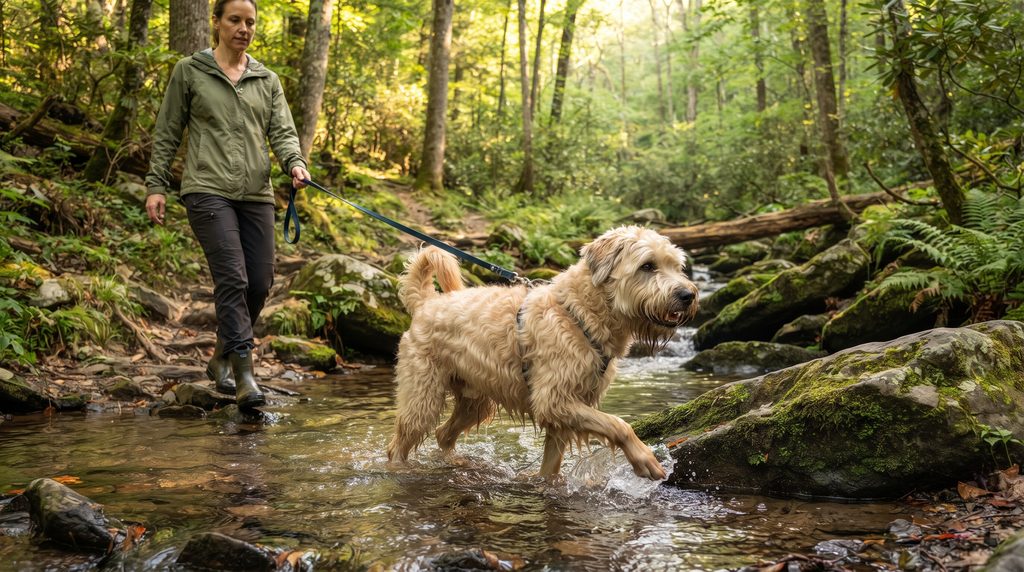
Building a Balanced Wheaten Exercise Routine
A healthy adult Soft Coated Wheaten Terrier often benefits from approximately an hour of varied daily activity, adjusted to individual fitness and energy levels. Combine purposeful walks with opportunities to sniff, explore, and enjoy interactive games. Add short scent searches or reward-based exercises to provide mental stimulation without constantly increasing physical demands. Because Wheatens retain strong chasing instincts, use secure fencing for off-leash play and keep the dog leashed in unenclosed areas. Puppies require shorter, self-paced activities, while senior dogs may need gentler outings. Watch for excessive fatigue, overheating, stiffness, or changes in movement, and adapt the routine whenever necessary.
Training a Soft Coated Wheaten Terrier
Training a Soft Coated Wheaten Terrier can be an entertaining and deeply rewarding experience, but success depends on understanding the breed’s unusual combination of intelligence, enthusiasm, sensitivity, and independent thinking. Developed as a versatile Irish farm dog, the Wheaten was expected to respond to its surroundings, investigate unfamiliar situations, and make decisions without constant human direction.
These abilities remain evident in modern companions, which often learn quickly but may become distracted when something more interesting captures their attention. A Wheaten is rarely incapable of understanding a request; the greater challenge is frequently persuading an enthusiastic terrier that cooperating with its owner is more rewarding than following its own ideas. Patient, consistent, reward-based training provides the strongest foundation for a reliable and enjoyable relationship.
Among the most important Soft Coated Wheaten Terrier traits to consider during training are the breed’s lively temperament and sensitivity to handling. Wheatens are intelligent, observant dogs that often respond enthusiastically to food rewards, toys, praise, and interactive games. However, they can become frustrated or disengaged when exercises are repetitive, confusing, or unnecessarily harsh. Punitive corrections, intimidation, and confrontational handling may undermine confidence and damage the trust needed for effective learning. Instead, owners should communicate expectations clearly, reward desirable behavior promptly, and create situations in which the dog can succeed. This approach preserves the Wheaten’s characteristic enthusiasm while encouraging self-control and dependable cooperation.
Training should begin as soon as a puppy arrives home. Initial lessons need not involve formal obedience routines or complicated exercises. Responding to its name, approaching when called, following a hand target, settling on a comfortable mat, and accepting gentle handling provide an excellent foundation. Young puppies generally learn best through brief, enjoyable sessions lasting only a few minutes. These can be incorporated naturally into feeding, play, and household routines. A consistent verbal marker such as “yes,” or a properly introduced clicker, helps identify the exact behavior being rewarded. Owners should end sessions while the puppy remains interested rather than continuing until enthusiasm disappears.
One of the earliest training priorities should be managing the famous Wheaten Greetin’. Many Wheatens instinctively express excitement through jumping, bouncing, and attempting to reach familiar people’s faces. Although affectionate, this behavior can become difficult to manage when a puppy grows into a substantial adult. Owners should teach that keeping all four paws on the floor earns attention and rewards. Practicing calm greetings with familiar people in controlled situations is particularly useful. If the dog becomes excessively excited, visitors can temporarily withdraw attention until it settles. Consistency is essential because occasionally encouraging jumping while discouraging it at other times creates confusion. The objective is not to suppress the breed’s cheerful personality, but to teach appropriate ways of expressing affection.
Loose-leash walking is another particularly valuable skill. Wheatens are enthusiastic explorers and can develop a habit of pulling toward interesting scents, unfamiliar people, and other animals. Begin training in a quiet environment where distractions are manageable. Reward the dog for walking near its owner with a relaxed leash, then gradually introduce more stimulating surroundings. Changing direction, pausing briefly when the leash becomes tight, and rewarding voluntary attention can help establish better habits. Owners should avoid relying on constant physical restraint or allowing the dog to drag them toward every interesting object. A comfortable, correctly fitted harness can assist with management, but it does not replace the need to teach appropriate walking behavior.
Recall training deserves particular attention because the Soft Coated Wheaten Terrier retains strong hunting and chasing instincts. A dog that responds beautifully in the living room may become considerably less attentive when a squirrel darts across a park or another animal appears nearby. Begin with short, enthusiastic recall exercises in a secure environment, rewarding the dog generously whenever it approaches. Gradually increase distance and distractions while maintaining a high likelihood of success. A long training line can provide additional safety during outdoor practice. Owners should avoid repeatedly calling when the dog is unlikely to respond or punishing it after an eventual return. Even well-trained Wheatens should remain leashed or securely enclosed where uncontrolled chasing could create danger.
Impulse-control exercises help manage the Wheaten’s natural enthusiasm. Teaching the dog to wait briefly before moving through an open doorway, remain settled while food is prepared, and disengage from an exciting distraction can make ordinary household life considerably easier. These skills should develop gradually, beginning with simple situations where success is achievable. For example, an owner can reward a puppy for pausing calmly before a door opens, then slowly increase the difficulty as the behavior becomes reliable. The goal is not prolonged restraint or rigid obedience. It is helping the Wheaten learn that patience and cooperation lead to enjoyable opportunities rather than immediately acting on every impulse.
Early socialization also plays a central role in training. Wheatens are often naturally friendly toward people, but that does not eliminate the need for positive experiences with different environments, animals, sounds, and everyday activities. Puppies benefit from calmly observing pedestrians, encountering suitable dogs, experiencing different walking surfaces, and becoming familiar with ordinary household noises. Socialization should emphasize confidence and appropriate responses rather than encouraging indiscriminate greetings. A Wheaten that can walk past another dog without pulling, remain relaxed near unfamiliar people, or calmly observe a busy street is demonstrating valuable social learning. Overwhelming encounters should be avoided because repeated frightening experiences can undermine confidence.
Adolescence can be an especially demanding stage. Many young Wheatens become physically stronger, increasingly curious, and more interested in environmental distractions before developing mature impulse control. A previously responsive puppy may suddenly hesitate when called, become overexcited around visitors, or test familiar household routines. These changes should be managed through consistent expectations rather than escalating punishment. Temporarily simplifying exercises, increasing the value of rewards, and practicing in less distracting environments can help restore reliability. Owners should remember that adolescent behavior is influenced by development as well as learning history. Patient repetition and predictable boundaries generally produce better long-term results than confrontational attempts to establish control.
House training should also be approached systematically. Puppies need frequent opportunities to eliminate outdoors, particularly after sleeping, eating, playing, and periods of excitement. Rewarding successful toileting immediately helps establish the desired routine. Indoor supervision, appropriate confinement when necessary, and thorough cleaning of accidents contribute to progress. Punishing a puppy for an accident is counterproductive and may encourage it to hide when eliminating. Wheaten puppies may become distracted outdoors by exciting smells or unfamiliar activity, so choosing a relatively quiet toileting area can be helpful during early training. Owners should remain patient and recognize that individual puppies mature at different rates.
Cooperative grooming training is especially important because the Wheaten’s soft, flowing coat requires consistent maintenance throughout life. A young dog should gradually become comfortable with brushing, combing, paw handling, ear inspection, and gentle attention around the muzzle and beard. Begin with very short sessions, rewarding calm behavior and allowing the puppy to become familiar with each grooming tool. A secure, non-slip surface helps prevent accidents, while careful handling builds confidence. Some Wheatens initially dislike having their feet or facial furnishings touched, making gradual desensitization particularly valuable. Teaching the dog to stand comfortably and participate willingly in grooming can prevent considerable frustration for both owners and professional groomers.
Training a Wheaten to settle calmly is equally useful. The breed’s strong interest in family activities means some individuals find it difficult to relax when visitors arrive, children are playing, or household members are moving around. A designated mat or comfortable bed can become a reliable resting place when associated with positive experiences. Begin by rewarding the dog for approaching the mat voluntarily, then gradually reinforce lying down and remaining relaxed for short periods. Over time, this behavior can be practiced during meals, conversations, and other everyday activities. A dependable settling routine helps the Wheaten participate in family life without feeling compelled to investigate every movement.
Separation training should begin gradually because Wheatens often form strong attachments to familiar people. Puppies can learn that spending short periods alone is safe when introductions are carefully managed. Begin with brief separations while the dog remains comfortable, then gradually increase duration according to its response. Suitable enrichment, predictable routines, and a familiar resting area can support the process. However, persistent barking, pacing, destructive behavior, or visible distress should not simply be attributed to stubbornness. These signs may indicate separation-related difficulties that require a more individualized approach. Owners should avoid repeatedly leaving a distressed dog alone in the hope that it will eventually become accustomed to the experience.
Once everyday manners are established, many Wheatens enjoy more advanced training activities. Rally obedience, scent work, agility, trick training, and other organized canine sports provide opportunities to develop concentration and strengthen the relationship between dog and owner. The breed’s athletic ability and enthusiasm can make it an entertaining participant, although independent thinking occasionally creates amusing challenges. Training games that incorporate searching, movement, and problem-solving are often particularly successful. Owners should select activities appropriate to the dog’s age, physical condition, and individual interests rather than assuming that every Wheaten will enjoy the same competitive pursuits.
When behavior problems arise, early professional guidance can prevent difficulties from becoming established habits. Persistent jumping, excessive leash pulling, resource guarding, reactivity toward other dogs, or significant difficulty settling may benefit from a structured training plan. A qualified professional using humane, evidence-based methods can help identify contributing factors and develop practical solutions. Owners should prioritize trainers who understand terrier behavior and recognize the importance of maintaining confidence and enthusiasm. Training is most effective when it teaches the dog what to do, rather than relying primarily on corrections for unwanted behavior.
Ultimately, the Soft Coated Wheaten Terrier is a capable learner whose intelligence and affectionate personality provide an excellent foundation for lifelong training. Its independence and exuberance can make some lessons more demanding than expected, but these qualities are also central to the breed’s charm. Owners who begin early, reward cooperation, maintain consistent expectations, and provide opportunities for enjoyable learning are most likely to raise a confident, responsive companion. The goal is not to eliminate the Wheaten’s spirited Irish character, but to channel its energy, curiosity, and enthusiasm into behaviors that make everyday life more enjoyable for everyone.
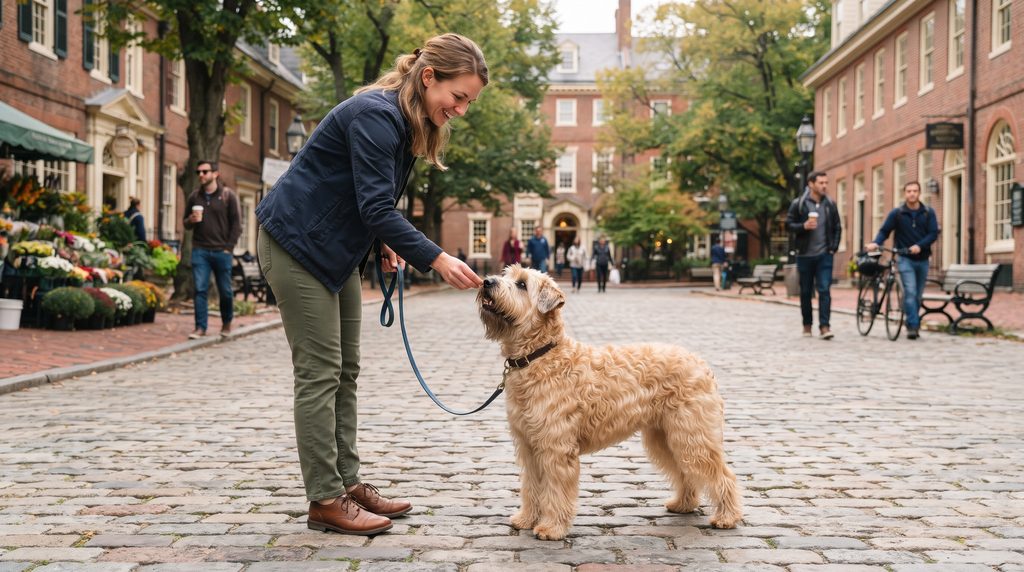
Soft Coated Wheaten Terrier Grooming and Coat Care
The Soft Coated Wheaten Terrier possesses one of the most distinctive coats in the terrier group, combining an exceptionally soft, silky texture with beautiful natural waves and warm golden coloring. Unlike many traditional terriers whose harsh coats require hand-stripping, the Wheaten has a flowing single coat that needs regular brushing, careful combing, occasional bathing, and appropriate trimming.
Although its relatively low-shedding coat is attractive to many prospective owners, maintaining it requires considerably more attention than its effortless appearance might suggest. Proper Soft Coated Wheaten Terrier grooming is therefore an essential part of responsible ownership, helping prevent painful matting, maintain skin health, and preserve the breed’s recognizable appearance. With suitable equipment, consistent routines, and patient handling, this demanding responsibility can become an enjoyable part of everyday life.
The Wheaten’s coat differs significantly from those of many other terrier breeds. It consists of a soft, abundant layer of hair without the dense protective undercoat associated with double-coated dogs. The mature coat should feel silky rather than harsh, with loose waves or large, flowing curls that follow the contours of the body. The texture can vary considerably between individuals, ranging from relatively fine and light to noticeably fuller and more substantial. However, an authentic Wheaten coat should not be excessively woolly, cottony, or tightly curled. These characteristics are important because the coat’s texture influences how easily it tangles, how frequently it requires attention, and which grooming techniques are most effective.
Establishing a dependable brushing routine is the foundation of successful coat care. The Soft Coated Wheaten Terrier Club of America recommends daily brushing and combing, particularly for owners maintaining a longer coat. Some mature dogs with lighter, silkier hair may eventually require less intensive sessions, but frequent checks remain important. Coat length, texture, outdoor activity, and the dog’s stage of development all influence the appropriate schedule. During adolescence, when the puppy coat gradually changes into the adult covering, tangles can form particularly quickly. Owners should therefore be prepared to increase grooming frequency whenever the coat becomes more difficult to manage.
A practical Wheaten Terrier grooming guide begins with selecting the correct equipment. A good-quality pin brush or suitable slicker brush helps separate the hair and remove surface debris, while a medium- and fine-toothed metal comb is essential for checking the coat thoroughly. A light conditioning or detangling spray may help reduce friction when used according to the manufacturer’s instructions. The metal comb is particularly important because a coat can appear beautifully brushed on the outside while concealing knots close to the skin. The objective is not simply to produce a neat appearance, but to ensure that the entire coat remains comfortable and free from mats.
For effective Wheaten Terrier grooming, work through the coat in small sections rather than brushing only the visible surface. A technique commonly called line brushing involves gently separating a narrow section of hair, brushing it in the direction of growth, and gradually moving through the surrounding coat. Once an area has been brushed, follow with a metal comb to identify remaining tangles. The comb should move through the hair without repeatedly catching or pulling. Pay particular attention to the chest, armpits, groin, inner thighs, and behind the ears, where movement and friction can encourage knots. The beard, legs, and tail also deserve regular inspection.
Matting is among the most common grooming difficulties experienced by Wheaten owners. The breed’s soft hair can become tangled after outdoor activity, bathing, or prolonged friction beneath a collar or harness. Small knots may be separated gently with fingers, suitable grooming products, and careful combing. However, tight mats can pull painfully against the skin, restrict comfortable movement, and conceal irritation or infection. Owners should never attempt to cut a close-fitting mat with ordinary scissors because the skin can become drawn into the tangled hair. Severe matting is best addressed by an experienced professional groomer or veterinarian, particularly when removing it would otherwise cause considerable discomfort.
Bathing helps maintain cleanliness and preserve the coat’s characteristic softness. Many companion Wheatens benefit from bathing approximately every four to eight weeks, although the appropriate frequency depends on lifestyle, coat condition, and individual skin needs. Dogs that frequently explore muddy trails or swim may require additional cleaning. Before bathing, remove substantial tangles because water can make existing mats more difficult to manage. Use a gentle shampoo formulated for dogs, distribute it carefully through the coat, and rinse thoroughly. A suitable conditioner may improve manageability, particularly for longer coats. Avoid vigorous circular scrubbing, which encourages unnecessary tangling.
Drying deserves particular attention. After bathing, gently squeeze moisture from the coat using absorbent towels rather than rubbing aggressively. A dryer set to a comfortable, low temperature can then be used while carefully separating the hair with a brush or comb. Owners should ensure that the coat is thoroughly dry, particularly around the underside, legs, and areas where hair lies close to the skin. Prolonged dampness can contribute to discomfort and skin irritation. The dog should remain comfortable throughout the process, and hot airflow should never be directed against sensitive skin. A properly dried Wheaten coat should feel clean, soft, and naturally flowing rather than heavily fluffed or artificially straightened.
The breed’s magnificent beard and facial furnishings require their own simple maintenance routine. Long hair around the muzzle can collect food particles, become wet after drinking, and trap small pieces of outdoor debris. Gently wiping the beard with a soft towel and combing it regularly helps maintain cleanliness. Hair falling over the forehead, often called the fall, is another characteristic feature. It should be maintained so that the dog can see comfortably without losing the traditional Wheaten expression. The breed club provides guidance on carefully trimming this area, and inexperienced owners may prefer to have a knowledgeable groomer demonstrate the technique before attempting it themselves.
Understanding Wheaten Terrier haircut styles is useful because the breed can be maintained in several practical presentations. Traditional exhibition grooming emphasizes the recognizable terrier outline, flowing furnishings, and distinctive head shape. For family companions, a shorter, easier-to-maintain trim may be more practical, especially for active dogs that regularly encounter mud, vegetation, or water. A professionally performed Wheaten Terrier haircut should balance appearance with comfort, allowing the dog to move naturally while retaining enough facial and body furnishings to remain recognizably Wheaten. Owners should discuss their preferred maintenance routine with the groomer rather than choosing a style solely from a photograph.
The popular Wheaten Terrier puppy cut generally refers to a shorter, relatively even pet trim rather than an official breed-standard presentation. It can make routine care easier by reducing the amount of hair likely to collect debris or develop tangles. However, a shorter haircut does not eliminate the need for brushing or regular skin checks. Some owners prefer a modified show trim, which retains more of the characteristic coat, while others choose a practical comfort trim using clippers and scissors. The Soft Coated Wheaten Terrier Club of America provides guidance for these different pet-grooming approaches. The best choice depends on the dog’s coat, household routine, and the owner’s ability to maintain the selected length.
Another important distinction concerns the traditional Irish coat. The term Soft Coated Wheaten Terrier Irish coat generally refers to the lighter, silkier, more naturally flowing presentation associated with Irish breeding traditions. Some American Wheatens have fuller coats requiring different grooming techniques, although both belong to the same recognized breed. Coat texture varies between individual dogs, and grooming should reflect those differences rather than attempting to make every Wheaten look identical. A lighter Irish-style coat may require less shaping but can still develop painful tangles if neglected. Neither coat presentation is automatically maintenance-free, and both deserve regular inspection and careful handling.
Occasionally, owners encounter photographs of a shaved Wheaten Terrier and wonder whether close clipping is an appropriate alternative to regular grooming. Wheatens can be clipped into shorter pet trims, unlike breeds whose coat maintenance depends on preserving a particular harsh, hand-stripped texture. However, extremely close shaving is not routinely necessary and may leave the skin more exposed to sunlight, irritation, and environmental conditions. When severe matting makes comfortable combing impossible, a short professional clip may be the most humane solution. The priority should always be the dog’s welfare rather than preserving coat length at the expense of comfort.
Puppy coat development creates another important grooming challenge. Young Wheaten puppies may initially have relatively short, soft hair that appears easy to maintain. As the dog matures, the developing adult coat begins replacing the juvenile covering, often creating a period of increased tangling. The Soft-Coated Wheaten Terrier Club of Great Britain identifies this transitional stage as particularly demanding, with changes beginning around seven or eight months and continuing into early adulthood. Daily combing during this period helps prevent dead hair from becoming trapped within the developing coat. Establishing positive grooming habits before this transition begins can prevent considerable difficulties later.
Routine care should also include regular nail trimming, ear inspection, dental hygiene, and paw maintenance. Long nails can affect comfortable walking, while excessive hair between the paw pads may contribute to slipping or trap debris. The ears should be examined for unusual redness, discharge, odor, or irritation, with cleaning performed using suitable products when necessary. Regular toothbrushing with dog-safe toothpaste helps maintain oral health. During grooming, owners should also examine the skin beneath the coat for lumps, parasites, injuries, or unexpected changes. The Wheaten’s abundant hair can conceal developing problems, making these hands-on examinations particularly valuable.
Grooming should always be introduced through patient, positive experiences. Begin handling a Wheaten puppy’s paws, ears, beard, and body gently, rewarding calm cooperation with praise and small treats. Gradually introduce brushes, combs, dryers, and the sounds associated with professional grooming. A stable, non-slip surface provides greater security, while short sessions prevent young dogs from becoming overwhelmed. Owners who use professional groomers should establish a regular schedule and explain the breed’s distinctive coat requirements. Even with professional assistance, consistent home combing remains essential because several weeks of neglected coat care can produce substantial matting between appointments.
Ultimately, the Soft Coated Wheaten Terrier is a high-maintenance grooming breed despite its comparatively low-shedding coat. Its beautiful golden hair requires regular attention, appropriate equipment, sensible bathing, careful trimming, and an understanding of how coat texture changes with age. Owners who appreciate this responsibility and develop a dependable routine can preserve the coat’s natural beauty without turning grooming into a constant struggle. More importantly, thoughtful coat care protects the dog’s comfort, supports healthy skin, and provides opportunities for affectionate interaction. A well-maintained Wheaten should look naturally elegant, feel comfortable in its coat, and remain ready to enjoy the active family life for which this spirited Irish terrier is so well suited.
The Essential Wheaten Grooming Equipment
A dependable Wheaten grooming kit should include a quality pin brush or suitable slicker brush, a medium- and fine-toothed metal comb, gentle dog shampoo, conditioner, and absorbent towels. The metal comb is particularly important because it reveals hidden tangles that brushing alone may miss. A low-heat dryer, appropriate nail clippers, and carefully selected grooming scissors can support additional maintenance. Owners planning to trim the coat themselves should seek practical instruction before using clippers around sensitive areas. During the puppy-to-adult coat transition, check for tangles daily, particularly behind the ears, beneath the legs, and around the beard. Regular attention prevents painful matting and makes professional grooming appointments considerably easier.
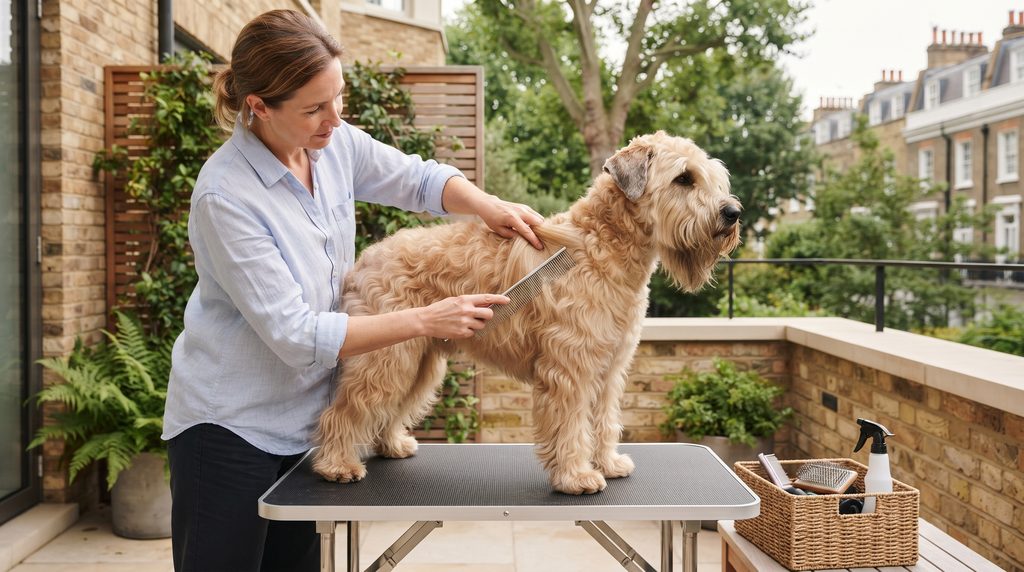
Soft Coated Wheaten Terrier Shedding
The Soft Coated Wheaten Terrier is widely admired for its beautiful golden coat and remarkably low level of visible shedding. Unlike many breeds that release substantial amounts of loose hair throughout the home, the Wheaten typically leaves very little hair on furniture, clothing, and carpets. This characteristic makes it attractive to people who enjoy having a dog indoors but prefer to avoid constant vacuuming and heavy seasonal shedding. However, low shedding does not mean a maintenance-free coat, and it certainly does not guarantee freedom from allergies. Understanding Wheaten Terrier shedding is important because the breed’s unusual coat requires a different approach to maintenance from that of most short-haired or double-coated dogs.
The Wheaten possesses a single coat consisting of soft, silky hair without the dense seasonal undercoat found in breeds such as Golden Retrievers, German Shepherds, and Siberian Huskies. Its hair grows continuously and typically remains within the coat for longer periods instead of being released in large quantities. Although individual hairs naturally reach the end of their growth cycle and fall out, much of the loose hair can remain caught among the surrounding strands until it is removed through brushing and combing. This helps explain why Wheatens generally leave considerably less visible hair around the household than many other dogs.
Owners researching Soft Coated Wheaten Terrier shedding should understand that the breed is commonly described as non-shedding, although this is not entirely literal. Every dog naturally loses some hair and skin cells, including breeds with continuously growing coats. The distinction is that the Wheaten does not ordinarily experience the substantial coat loss associated with seasonal undercoat shedding. A few loose strands may occasionally appear on bedding, upholstery, or grooming tools, particularly when the coat is being combed. These small amounts are normal and should not be confused with excessive hair loss or a developing skin problem.
One consequence of this low-shedding coat is that released hair may become trapped within the surrounding furnishings. Instead of falling harmlessly onto the floor, loose strands can twist around neighboring hair and contribute to tangles. This is particularly noticeable around the armpits, behind the ears, beneath the collar, and between the legs. A Wheaten that appears to shed almost nothing can therefore develop substantial matting when its coat is neglected. Regular combing removes trapped hair before it becomes entangled, making consistent coat maintenance particularly important even when the home remains relatively free of dog hair.
Another distinction concerns seasonal changes. Many double-coated breeds experience obvious periods of heavy shedding as they replace their insulating undercoats. The Wheaten does not normally undergo these dramatic seasonal coat blows. Owners may notice modest differences in loose hair or coat condition throughout the year, but heavy spring and autumn shedding is not a defining breed characteristic. If a previously healthy Wheaten begins losing unusual amounts of hair, develops thinning patches, or shows signs of skin irritation, the change deserves attention rather than being dismissed as ordinary seasonal shedding.
Puppy development can temporarily complicate the picture. Young Wheatens often begin life with coats that differ considerably from their eventual adult appearance. As the juvenile hair changes into the mature silky covering, loose strands may become trapped within the developing coat, increasing the risk of tangles and matting. This transition commonly begins during adolescence and can continue as the dog approaches full maturity. Some owners notice that combing becomes more demanding during this period, even though the puppy is not necessarily leaving more hair around the house. Frequent grooming helps prevent accumulated hair from forming uncomfortable knots.
One of the most frequently asked questions is: Does a Wheaten Terrier shed enough to create a noticeable cleaning problem? For most properly maintained adults, visible hair accumulation is relatively limited. Owners may find fewer loose hairs on dark clothing, bedding, and upholstered furniture than they would with a heavily shedding breed. However, household cleanliness still depends on the individual dog, coat length, grooming practices, and everyday activities. Wheatens can bring dirt, leaves, moisture, and outdoor debris into the home within their long furnishings. Their low-shedding advantage does not eliminate the need for ordinary cleaning or regular coat care.
The breed’s reputation for being suitable for people with allergies requires particular care. Soft Coated Wheaten Terrier hypoallergenic claims are common, but no dog breed can guarantee an allergy-free household. Dog allergies are triggered by proteins associated with skin cells, saliva, urine, and other biological sources rather than simply by the amount of visible hair a dog sheds. These allergens can travel through the environment on microscopic particles and settle on furniture, bedding, and clothing. A Wheaten may release relatively little coat hair while still producing enough allergens to cause symptoms in a sensitive individual.
Nevertheless, some people who experience allergic reactions around heavily shedding dogs report greater comfort with Wheatens. The Soft Coated Wheaten Terrier Club of America acknowledges these experiences while emphasizing that reactions differ considerably between individuals. A person’s sensitivity may depend on which allergens trigger their symptoms, the particular dog’s allergen production, and the amount of exposure involved. Consequently, it would be misleading to promise that choosing a Wheaten will prevent sneezing, itchy eyes, skin reactions, or asthma symptoms. Low shedding is a genuine breed characteristic, but allergy tolerance cannot be established from coat appearance alone.
Prospective owners with allergies should spend meaningful time around adult Wheatens before making a commitment. Ideally, encounters should occur in ordinary home environments rather than relying solely on a brief meeting outdoors. The breed club also recommends exposure to both puppies and adults because reactions may differ. However, even several apparently comfortable visits cannot guarantee that symptoms will remain absent after months of living together. People with significant allergies or asthma should discuss their circumstances with an appropriate healthcare professional, particularly when previous animal exposure has caused respiratory difficulties.
Regular household maintenance can help manage the spread of loose hair and environmental allergens, although it cannot eliminate them completely. Washing dog bedding, cleaning frequently used surfaces, and vacuuming with a suitable high-efficiency filtration system may reduce accumulated particles. Some households benefit from keeping sleeping areas free of pets or using appropriately maintained air filtration equipment. These measures should complement rather than replace professional allergy advice. Owners should also avoid excessive bathing in an attempt to eliminate allergens because frequent washing with unsuitable products may dry or irritate the dog’s skin.
Coat length influences how much maintenance a Wheaten needs, but it does not fundamentally change the breed’s shedding pattern. A shorter practical pet trim can make brushing easier and reduce the accumulation of outdoor debris, while a longer show-style coat requires more careful attention. Neither style guarantees fewer allergens. Regular grooming should concentrate on removing trapped hair, preserving skin comfort, and preventing matting. If an individual Wheaten develops excessive itching, dandruff, bald patches, persistent redness, or an unusual odor, veterinary assessment is appropriate because these signs may indicate a condition unrelated to normal coat turnover.
Ultimately, the Soft Coated Wheaten Terrier offers a genuine advantage for households seeking a dog that leaves relatively little visible hair around the home. Its soft, continuously growing single coat sheds far less noticeably than the coats of many popular breeds, and it does not normally experience dramatic seasonal shedding. However, that benefit comes with substantial grooming responsibilities and no guarantee of allergy tolerance. Prospective owners should view low shedding as one attractive feature of the breed rather than a reason to overlook its coat maintenance needs. For people prepared to comb regularly and maintain realistic expectations, the Wheaten’s beautiful golden coat can be both a practical advantage and one of its most appealing characteristics.
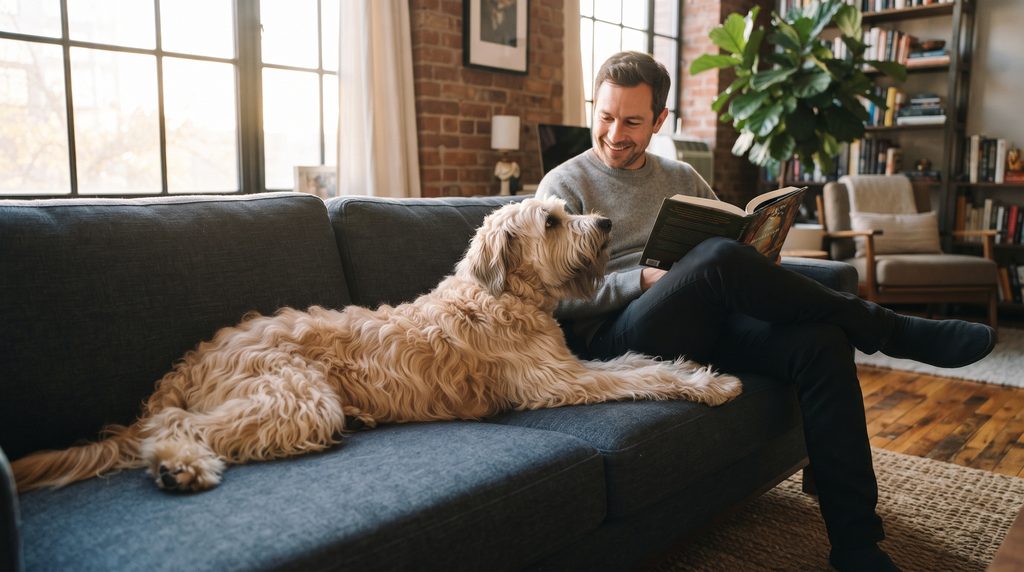
Low Shedding Does Not Mean Allergy-Free
Soft Coated Wheaten Terriers generally leave very little loose hair around the home, but they still produce allergens through their skin, saliva, and urine. Some people with dog allergies tolerate Wheatens reasonably well, while others experience significant symptoms. Anyone with known allergies should spend time around adult Wheatens before considering ownership and seek medical advice when reactions are substantial. Remember that grooming removes trapped hair and helps prevent matting, but it cannot make a dog completely allergen-free. Regular cleaning, appropriate bedding care, and sensible household arrangements may reduce exposure without guaranteeing that allergic reactions will disappear.
Soft Coated Wheaten Terrier Feeding and Nutrition
Feeding a Soft Coated Wheaten Terrier correctly is essential for maintaining its athletic build, healthy skin, beautiful silky coat, and long-term well-being. This energetic Irish breed generally thrives on a complete, balanced diet appropriate for its age, body condition, activity level, and individual health requirements. Although Wheatens have certain inherited health vulnerabilities that deserve attention, most healthy individuals do not require an unusual or highly restrictive feeding program. The Soft Coated Wheaten Terrier Club of America specifically cautions against the belief that every Wheaten needs a special diet to prevent kidney or intestinal disease. Instead, responsible feeding begins with sound nutritional principles, sensible portions, consistent routines, and veterinary guidance when an individual dog develops a medical concern.
Choosing an appropriate commercial food provides the simplest foundation for everyday nutrition. Look for a product labeled complete and balanced for the dog’s current life stage, supported by nutritional standards recognized by the Association of American Feed Control Officials (AAFCO). Growing puppies require different nutrient proportions from mature adults, while older dogs may benefit from adjustments based on body condition and medical history. High-quality dry food, nutritionally complete wet food, or an appropriate combination can all be suitable choices. The nutritional adequacy statement matters more than fashionable packaging, impressive ingredient lists, or marketing claims suggesting that one particular recipe is universally superior.
When comparing dog food for Soft Coated Wheaten Terrier puppies and adults, owners should consider the manufacturer’s nutritional expertise, formulation practices, quality controls, and willingness to provide reliable information about its products. The World Small Animal Veterinary Association offers useful guidance for evaluating pet food manufacturers, including questions about qualified nutrition professionals and product testing. An expensive food is not automatically better than a reasonably priced alternative, and descriptions such as premium, holistic, or natural do not independently establish nutritional superiority. The most suitable diet is one that meets the individual dog’s needs, maintains healthy body condition, and is supported by credible nutritional information.
Portion control is especially important because the Wheaten’s abundant coat can disguise gradual weight gain. Healthy adult males typically weigh approximately 35–40 pounds, while females generally weigh 30–35 pounds, although ideal weight depends on individual frame and muscle development. Owners should regularly assess body condition rather than relying exclusively on the scales. The ribs should be easily felt beneath a light covering of tissue, with a recognizable waist when viewed from above and an abdominal tuck when observed from the side. If the dog begins losing its waist or accumulating excess body fat, feeding portions should be reviewed with a veterinarian.
Daily calorie requirements vary according to age, neuter status, exercise, metabolism, and overall health. An energetic adult accompanying its owner on regular hikes may require more food than a similarly sized Wheaten enjoying moderate neighborhood walks. Feeding charts printed on commercial packaging provide useful starting estimates, but they are not precise prescriptions for every dog. Measuring meals with a kitchen scale can be more consistent than using an unmarked scoop or estimating portions by eye. Owners should monitor weight and body condition periodically and adjust quantities gradually to maintain an appropriate physique without unnecessary restriction.
Most healthy adult Wheatens do well with two measured meals daily, usually offered at reasonably consistent times. Dividing food between morning and evening can help establish predictable household routines and make appetite changes easier to recognize. Some individuals prefer smaller, more frequent meals, particularly when advised by a veterinarian. Fresh drinking water should always remain available, and feeding areas should be quiet enough for the dog to eat without unnecessary competition or interruption. In multi-pet households, separate feeding spaces can prevent resource guarding, food stealing, and disagreements between animals with different dietary requirements.
Wheaten puppies need food specifically formulated for growth. Their developing muscles, bones, and organs require sufficient energy, protein, essential fatty acids, minerals, and vitamins in appropriate proportions. Young puppies commonly begin with three or four meals daily, gradually transitioning toward fewer meals as they mature. A responsible breeder can explain the puppy’s established feeding routine and provide information about its current food. Sudden dietary changes may cause digestive upset, so introducing a replacement food gradually over approximately seven to ten days is often sensible when the puppy is otherwise healthy. Growth should be monitored carefully because both underfeeding and excessive weight gain can affect developing dogs.
Protein is important for maintaining the Wheaten’s strong musculature, supporting tissue repair, and providing essential amino acids. Dietary fats supply concentrated energy and essential fatty acids that contribute to healthy skin and coat condition. Carbohydrates can provide digestible energy, while suitable fiber supports normal digestive function. Vitamins and minerals are equally important, but adding supplements indiscriminately can disrupt an otherwise balanced diet. Owners should not assume that additional protein, expensive coat supplements, or unusually high-fat recipes will automatically improve appearance or athletic performance. Nutrient balance and appropriate calorie intake matter more than maximizing any single ingredient.
The breed’s predisposition to protein-losing nephropathy (PLN) and protein-losing enteropathy (PLE) makes informed nutrition particularly important. PLN involves abnormal protein loss through the kidneys, while PLE involves protein loss through the intestinal tract. Both conditions can require veterinary treatment and carefully selected therapeutic diets, but their nutritional management differs. Dogs diagnosed with PLN may need a veterinary renal diet with controlled protein and phosphorus, depending on the disease and its severity. Dogs with certain forms of PLE may require carefully regulated dietary fat and other individualized adjustments. These diets should be prescribed according to veterinary findings rather than introduced as routine preventive measures.
Importantly, the Soft Coated Wheaten Terrier Club of America states that healthy Wheatens do not automatically need a special diet to avoid PLN or PLE. Feeding every Wheaten a low-protein diet, restricting fat without medical justification, or choosing an expensive therapeutic product cannot be assumed to prevent these inherited disorders. Equally, a commercially balanced diet cannot eliminate genetic susceptibility. Owners should focus on appropriate nutrition alongside recommended health monitoring. Persistent diarrhea, vomiting, unexplained weight loss, appetite changes, increased thirst, or swelling should prompt veterinary assessment rather than repeated attempts to solve the problem through home dietary experimentation.
Food allergies and sensitivities are another area where misinformation can cause unnecessary restrictions. Some owners believe that Wheatens are universally allergic to chicken or require grain-free diets, but the breed club specifically identifies such sweeping claims as myths. Individual dogs can develop adverse food reactions, yet these must be evaluated according to their symptoms and medical history. Persistent itching, recurrent ear inflammation, vomiting, or diarrhea may warrant veterinary investigation. When a food allergy is genuinely suspected, a veterinarian may recommend a carefully controlled elimination diet using an appropriate hydrolyzed or novel-protein formulation. Randomly switching ingredients often makes identifying the underlying problem more difficult.
Grain-free feeding should not be considered an automatic nutritional advantage. Unless an individual Wheaten has a documented reason to avoid particular ingredients, a properly formulated grain-inclusive diet can be entirely appropriate. The U.S. Food and Drug Administration has investigated reports of canine dilated cardiomyopathy associated with certain diets, including some containing high proportions of legumes or potatoes. The relationship remains complex, and not every grain-free food has been shown to cause heart disease. Nevertheless, owners should avoid making restrictive dietary decisions based solely on marketing claims and should discuss unusual formulations with their veterinarian.
Treats can be valuable for training because Wheatens are intelligent, enthusiastic dogs that often respond well to food rewards. However, frequent rewards can contribute substantially to daily calorie intake, particularly during intensive puppy training or adolescence. The World Small Animal Veterinary Association recommends limiting treats and other complementary foods to approximately ten percent of a dog’s daily calories. Small portions of the regular food allowance can often be used during training, reducing the need for additional snacks. Owners should also avoid dangerous foods such as chocolate, grapes, raisins, onions, products containing xylitol, and cooked bones that may splinter or cause injury.
The Wheaten’s magnificent beard introduces a small but distinctive feeding consideration. Long facial furnishings may collect pieces of food or become damp when the dog drinks water. Some individuals enthusiastically carry moisture away from their bowls, leaving small puddles on nearby flooring. A washable feeding mat, easily cleaned bowls, and a soft towel kept nearby can simplify these everyday routines. Gently checking and drying the beard helps prevent trapped debris and persistent dampness. Food and water bowls should be washed regularly, and fresh water should be replenished throughout the day, especially during warmer weather or after exercise.
As Wheatens enter their senior years, nutritional needs may change. Some older dogs become less physically active and require fewer calories to avoid weight gain, while others need particular attention to preserving muscle condition. Dental problems, reduced appetite, digestive changes, or developing medical conditions may influence food selection. A senior label alone does not guarantee that a product is appropriate for every older Wheaten. Veterinary examinations and body condition assessments should guide dietary decisions, especially because inherited kidney and intestinal conditions may become apparent during adulthood. Any significant unexplained weight loss or persistent change in eating habits warrants investigation.
Ultimately, feeding a Soft Coated Wheaten Terrier successfully does not require complicated diets or expensive nutritional trends. Most healthy individuals thrive on a complete, balanced food, sensible portions, regular meals, appropriate treats, and unlimited access to fresh water. The breed’s inherited health concerns make veterinary monitoring important, but they should not encourage unnecessary dietary restrictions in otherwise healthy dogs. Owners who understand their Wheaten’s body condition, adjust feeding to its activity level, and respond promptly to unusual digestive or weight changes can support the energetic lifestyle, physical strength, and beautiful golden coat that define this engaging Irish terrier.
Does Every Wheaten Need a Special Diet?
No. The Soft Coated Wheaten Terrier Club of America specifically advises that healthy Wheatens do not automatically require specialized diets to prevent protein-losing nephropathy or protein-losing enteropathy. These conditions deserve careful veterinary monitoring, but unnecessary protein restriction, fat restriction, or ingredient elimination may compromise otherwise balanced nutrition. Choose a complete diet appropriate for your dog’s life stage, activity, and body condition. If kidney disease, intestinal disease, or a genuine food allergy is diagnosed, nutritional treatment should be individualized under veterinary supervision. Unexplained weight loss, persistent digestive problems, or unusual appetite changes should always be investigated rather than managed through repeated unsupervised food changes.

Soft Coated Wheaten Terrier Health and Common Health Problems
The Soft Coated Wheaten Terrier is generally a sturdy, athletic breed capable of enjoying a long and active life when provided with appropriate nutrition, exercise, preventative veterinary care, and responsible breeding. Its energetic personality and strong physical constitution are appealing qualities, but prospective owners should understand that the breed has several recognized inherited health vulnerabilities.
The most significant concerns involve certain kidney and intestinal disorders, particularly protein-losing nephropathy and protein-losing enteropathy. These conditions have received considerable attention from veterinary researchers and breed organizations because early recognition can make an important difference to affected dogs. Understanding potential Wheaten Terrier health problems allows owners to recognize unusual symptoms, discuss appropriate monitoring with their veterinarians, and make informed decisions without assuming that every Wheaten will develop a serious illness.
The Soft Coated Wheaten Terrier Club of America identifies protein-losing nephropathy (PLN) and protein-losing enteropathy (PLE) as two conditions occurring at higher-than-normal rates within the breed. Other documented concerns include renal dysplasia and Addison’s disease. These disorders differ substantially in their causes, progression, and treatment, although some early symptoms can overlap. Importantly, many Wheatens never develop these conditions and remain healthy throughout their lives. A family history of disease, genetic risk information, and routine veterinary findings can help guide individual monitoring, but no owner should attempt to diagnose a serious health problem based on breed predisposition alone.
Protein-losing nephropathy is one of the breed’s most important inherited health concerns. PLN occurs when damage to the kidneys’ filtering structures allows excessive protein to escape into the urine. Normally, healthy kidneys retain essential blood proteins while removing waste products from circulation. When this filtering system becomes impaired, protein loss can contribute to reduced blood albumin levels, fluid accumulation, and progressive kidney dysfunction. Some affected Wheatens initially appear healthy, making routine urine testing particularly valuable. As the condition progresses, possible signs include weight loss, reduced appetite, lethargy, increased drinking or urination, and swelling associated with abnormal fluid retention. However, increased thirst or urination is not necessarily present early in the disease.
Early recognition of PLN matters because veterinary treatment may help reduce protein loss, manage complications, and support quality of life. Treatment depends on the individual dog’s clinical findings and may involve medications, carefully selected nutrition, blood-pressure management, and ongoing laboratory monitoring. Some Wheatens respond well to treatment and remain comfortable for considerable periods, while others experience progressive disease despite intervention. There is also an important distinction between genetic susceptibility and a confirmed diagnosis. A DNA test can identify variants associated with increased PLN risk, but it cannot establish whether a dog currently has kidney disease or predict with certainty whether it will develop the condition.
Protein-losing enteropathy is another major concern. PLE describes excessive loss of blood proteins through the gastrointestinal tract and may result from different underlying intestinal disorders. Affected dogs can develop persistent or recurring diarrhea, vomiting, unexplained weight loss, changes in appetite, or reduced energy. In more advanced cases, low blood protein levels may contribute to fluid accumulation within the abdomen or other tissues. Some dogs initially show intermittent signs that resemble less serious digestive problems. Consequently, recurring gastrointestinal symptoms should not automatically be attributed to dietary sensitivity, particularly when accompanied by weight loss or changes in general condition.
Diagnosing PLE requires veterinary investigation because several different conditions can produce similar symptoms. Blood testing may reveal reduced protein concentrations, while additional examinations help determine whether protein is being lost through the intestines rather than the kidneys or another process. Depending on the findings, treatment may involve a carefully controlled therapeutic diet, medications addressing intestinal inflammation, and management of the underlying disease. Not all dogs with PLE require identical dietary restrictions, and changing foods repeatedly without veterinary guidance may delay appropriate treatment. Affected Wheatens need individualized care and regular assessment of their response to treatment.
Renal dysplasia is a separate kidney disorder that must not be confused with PLN. It involves abnormal development of kidney tissue, potentially reducing the kidneys’ ability to function normally. Unlike protein-losing nephropathy, renal dysplasia does not characteristically cause significant urinary protein loss. Signs may appear in young dogs and can include excessive thirst, frequent urination, poor growth, reduced appetite, vomiting, or difficulty maintaining body condition. Severity varies considerably. Some affected dogs develop significant kidney dysfunction early in life, while others experience a more gradual course. Veterinary diagnosis may involve laboratory tests, imaging, and further investigation when clinically appropriate.
Addison’s disease, also called hypoadrenocorticism, is another recognized health concern in Wheatens. This endocrine disorder occurs when the adrenal glands produce insufficient quantities of certain hormones needed for normal physiological function. Symptoms can be frustratingly nonspecific, including intermittent vomiting, diarrhea, poor appetite, weight loss, weakness, or unusual fatigue. Some dogs experience periods of apparent improvement before becoming ill again. In severe cases, an Addisonian crisis can cause profound weakness, collapse, and potentially life-threatening circulatory disturbances. Suspected crisis symptoms require emergency veterinary attention. Fortunately, many dogs diagnosed with Addison’s disease can enjoy a good quality of life with appropriate lifelong treatment and monitoring.
Although kidney and intestinal conditions receive the greatest attention, other Wheaten Terrier health issues also deserve consideration. Hip dysplasia can occur when the hip joint develops abnormally, potentially contributing to discomfort, reduced mobility, and degenerative joint disease. The breed club notes that hip dysplasia is not especially common in Wheatens, but responsible breeders still screen their breeding dogs to help prevent its occurrence. Owners should seek veterinary advice if a Wheaten develops persistent stiffness, difficulty rising, reluctance to jump, or an altered gait. Maintaining appropriate body condition and avoiding excessive joint stress can support comfortable movement throughout life.
Eye disorders have also been reported within the breed, including inherited or congenital abnormalities. While the breed club indicates that significant eye problems are not especially common, breeding dogs should undergo appropriate ophthalmic examinations. Owners should remain alert to persistent redness, cloudiness, excessive tearing, squinting, or apparent changes in vision. Not every eye problem is inherited, and some conditions can develop through injury, inflammation, or age-related changes. Prompt veterinary assessment is particularly important when a dog experiences sudden discomfort or visual difficulty because certain eye conditions require urgent treatment to preserve comfort and sight.
Less frequently discussed conditions include urinary incontinence associated with anatomical abnormalities, degenerative myelopathy, and paroxysmal dyskinesia. Degenerative myelopathy is a progressive neurological condition affecting movement, particularly in older dogs, although it is not among the breed’s most frequently reported health problems. Paroxysmal dyskinesia involves episodes of abnormal involuntary movement that may resemble seizures but have different neurological characteristics. These conditions illustrate the importance of investigating unusual symptoms rather than assuming that all changes in movement or behavior are caused by age, training difficulties, or ordinary fatigue.
Everyday preventative care remains important regardless of inherited risk. Wheatens benefit from regular veterinary examinations, appropriate vaccination, parasite prevention, dental care, and monitoring of skin, ears, and overall body condition. Their abundant coat can conceal lumps, skin irritation, or gradual changes in weight, making hands-on examinations valuable. Owners should become familiar with their dog’s normal appetite, energy, drinking habits, bowel movements, and urination. Persistent departures from these patterns deserve attention, even when an otherwise cheerful Wheaten continues playing and interacting normally.
One particularly important feature of responsible Wheaten ownership is the value of routine health monitoring before symptoms appear. The breed club recommends beginning annual blood and urine screening at approximately one year of age, with additional testing when genetic risk, medical findings, or veterinary recommendations justify it. These examinations can help identify abnormalities involving kidney function, protein loss, and other important health indicators. They cannot prevent every disease, but early detection may create more opportunities for treatment and management. The following dedicated health-screening section explains these recommendations, including the role and limitations of PLN-associated genetic testing.
Ultimately, the Soft Coated Wheaten Terrier should be regarded as a generally robust breed with several important health predispositions that deserve informed attention. The possibility of inherited disease should encourage responsible puppy selection, appropriate veterinary screening, and prompt investigation of unusual symptoms rather than unnecessary alarm. Many Wheatens remain active, affectionate companions for years, and thoughtful preventative care helps owners protect that quality of life. Understanding the breed’s principal health concerns, recognizing early warning signs, and maintaining a productive relationship with a knowledgeable veterinarian provide the strongest foundation for long-term well-being.
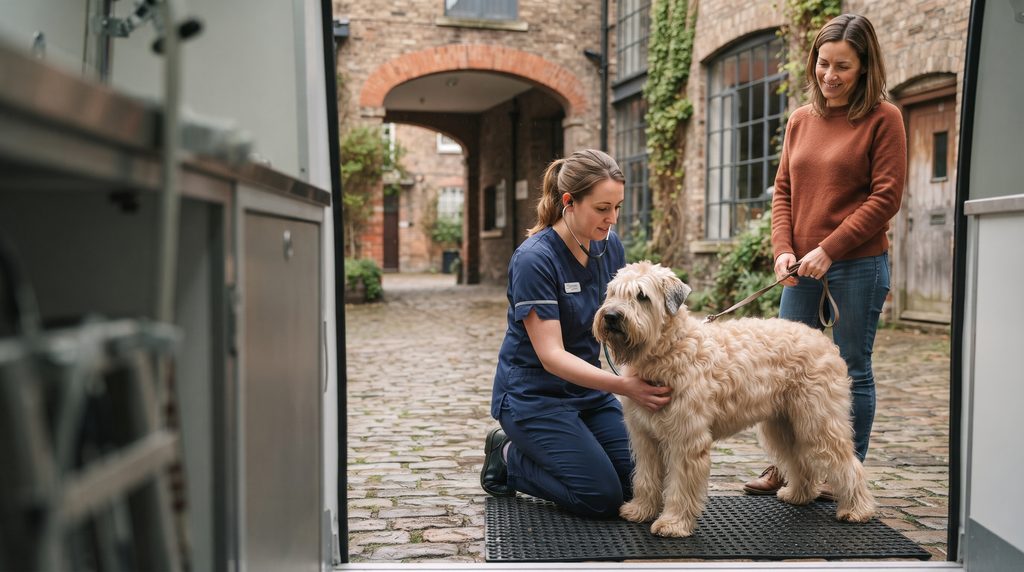
Soft Coated Wheaten Terrier Health Screening and Inherited Conditions
Health screening is particularly important for the Soft Coated Wheaten Terrier because several of the breed’s recognized inherited conditions can develop before obvious symptoms appear. Although many Wheatens enjoy long, healthy lives, their predisposition to certain kidney and intestinal disorders makes routine veterinary monitoring an essential responsibility rather than an optional precaution.
The Soft Coated Wheaten Terrier Club of America has developed detailed screening recommendations to help owners and breeders identify potential problems as early as possible. These recommendations combine regular blood and urine testing with genetic risk assessment, appropriate breeding-stock examinations, and careful attention to family medical history. Understanding what each test can and cannot reveal allows owners to make informed decisions without assuming that a clear result guarantees lifelong freedom from disease.
One of the most significant advances in Wheaten health research has been the identification of genetic variants associated with protein-losing nephropathy (PLN). Researchers at the University of Pennsylvania School of Veterinary Medicine identified variants involving two genes that are associated with an increased risk of developing this kidney disorder. A DNA test became available in 2012, allowing breeders and owners to assess an individual dog’s inherited risk. The test usually requires a simple cheek-swab sample, although some laboratories accept other sample types. It provides valuable information for breeding decisions and veterinary monitoring, but it is not a diagnostic test for kidney disease.
PLN-associated DNA results are generally interpreted according to whether a Wheaten carries zero, one, or two copies of the associated variants. Dogs without the variants are considered to have a lower identified genetic risk, while dogs carrying one or two copies fall into progressively higher-risk categories. However, the relationship is not absolute. A Wheaten with a higher-risk result may never develop PLN, and a dog with a lower-risk result can still experience kidney disease. The test therefore cannot predict an individual dog’s future with certainty. Its principal value lies in helping veterinarians establish appropriate screening schedules and enabling responsible breeders to make informed genetic decisions.
The breed club recommends that owners know their Wheaten’s PLN-associated DNA status, unless the dog’s genetic status can be established reliably through documented parental testing. Importantly, even dogs with a lower-risk result require regular health monitoring. Genetic testing assesses inherited susceptibility, while blood and urine tests look for evidence of developing disease. These complementary approaches should not be confused. A dog can carry risk-associated variants without showing clinical abnormalities, while another dog may develop an unrelated kidney condition despite receiving a favorable PLN genetic result. Both situations demonstrate why ongoing veterinary care remains essential throughout adulthood.
The Soft Coated Wheaten Terrier Club of America recommends beginning annual health screening at approximately one year of age. The suggested protocol includes a blood biochemical profile, complete blood count, routine urinalysis, and a specific test for abnormal urinary protein loss. These examinations assess different aspects of general health and kidney function, providing a useful baseline against which later results can be compared. Screening should continue even when the dog appears energetic, maintains a healthy appetite, and behaves normally. Some kidney disorders progress silently, with obvious signs developing only after substantial physiological changes have occurred.
The blood biochemical profile provides information about several important internal processes. Measurements such as creatinine, blood urea nitrogen, and symmetric dimethylarginine (SDMA) can help veterinarians assess kidney function. Albumin and total protein concentrations are especially relevant because excessive protein loss may reduce their levels in the bloodstream. Electrolytes, cholesterol, phosphorus, and other biochemical measurements can provide additional information about health and possible disease. A complete blood count evaluates red blood cells, white blood cells, and platelets, helping identify abnormalities that may warrant further investigation. No single blood value provides a definitive diagnosis, so results must be interpreted together with the dog’s clinical findings.
Urine testing is particularly important for identifying potential early signs of PLN. A routine urinalysis examines urine concentration, chemical characteristics, and sediment, but additional testing is needed to evaluate protein loss accurately. The breed club specifically recommends a urine protein-to-creatinine ratio (UPC) or a microalbuminuria test. These are generally requested separately from a standard urinalysis and should not be assumed to be included automatically. An abnormal result can indicate that further investigation is necessary, although protein may appear in urine for reasons unrelated to inherited kidney disease. Veterinarians may recommend repeating tests, checking for infection, measuring blood pressure, or performing additional examinations before establishing a diagnosis.
Screening frequency may need to increase when a Wheaten carries PLN-associated variants. According to the breed club’s protocols, dogs with one copy may benefit from additional urine protein testing approximately every six months beginning around two to four years of age. Dogs with two copies are generally recommended to receive this additional testing at least every six months beginning around two years of age. The club also advises more cautious monitoring when genetic status is unknown. These recommendations should be discussed with the dog’s veterinarian, who can adjust the schedule according to individual results, family history, age, and overall health.
Blood pressure measurement is another useful component of preventative care. High blood pressure can accompany kidney disease and may contribute to further damage when left untreated. The breed club recommends obtaining a baseline measurement during healthy veterinary visits beginning around one year of age. Repeated measurements can help identify changes over time, although temporary excitement or anxiety during a clinic appointment may affect individual readings. Veterinary interpretation is therefore important. When hypertension is identified, additional investigation may be necessary to determine its significance and whether treatment is appropriate.
Screening for protein-losing enteropathy (PLE) is more complicated because no validated DNA test currently identifies genetic susceptibility to this condition in Wheatens. PLE may result from several underlying gastrointestinal disorders, and its development cannot be ruled out through ordinary genetic testing. Owners should report persistent diarrhea, vomiting, unexplained weight loss, reduced appetite, or recurring digestive disturbances, especially when there is a family history of intestinal disease. Depending on the circumstances, veterinarians may recommend blood testing, fecal examinations, gastrointestinal panels, or measurement of fecal alpha-1 proteinase inhibitor, which can provide evidence of intestinal protein loss. These tests support investigation but do not independently establish every possible underlying cause.
There are likewise no established DNA screening tests for the breed’s recognized predispositions to renal dysplasia or Addison’s disease. Renal dysplasia involves abnormal kidney development, while Addison’s disease affects adrenal hormone production. Their clinical presentations and diagnostic procedures are different, making routine observation and appropriate veterinary investigation essential. Unusual thirst, changes in urination, recurrent digestive illness, persistent weakness, or unexplained weight changes may warrant additional tests. When Addison’s disease is suspected, specific endocrine testing is required to establish the diagnosis. A normal PLN genetic result does not eliminate the possibility of these unrelated conditions.
Responsible breeding programs should also include orthopedic and ophthalmic screening. The Soft Coated Wheaten Terrier Club of America’s Code of Ethics requires hip evaluation before breeding to help reduce the occurrence of hip dysplasia. Screening may involve radiographs assessed through the Orthopedic Foundation for Animals (OFA) or an appropriate PennHIP assessment. Breeding dogs should also undergo eye examinations performed by a veterinary ophthalmologist before their first breeding and every two years through ten years of age. These examinations help identify inherited or potentially inherited eye abnormalities that may affect breeding decisions.
Additional genetic tests are available for conditions such as microphthalmia syndrome, degenerative myelopathy, and paroxysmal dyskinesia. These tests address different inherited concerns and should not be confused with PLN screening. The breed club recommends considering them as part of informed breeding decisions, although their interpretation varies according to the disorder and the strength of the relationship between a particular variant and clinical disease. For example, carrying a genetic variant associated with degenerative myelopathy does not necessarily mean a dog will develop neurological symptoms. Responsible breeders should understand these limitations and avoid making breeding decisions based solely on an isolated laboratory result.
Prospective owners should ask breeders for documented health results for both parents rather than accepting general assurances that the dogs are healthy. Important records include hip evaluations, ophthalmic examinations, PLN-associated DNA testing, and appropriate blood and urine monitoring. The breed club’s recommendations also provide guidance on additional genetic screening. Many results can be checked through the OFA database or the Soft Coated Wheaten Terrier Health and Pedigree Database. A reputable breeder should welcome questions, explain relevant findings, discuss known problems within the wider pedigree, and demonstrate a thoughtful approach to reducing inherited disease without unnecessarily narrowing genetic diversity.
Canine Health Information Center (CHIC) certification can provide another useful reference when evaluating breeding dogs. For the Soft Coated Wheaten Terrier, the breed club identifies hip certification, PLN-associated variant testing, and eye certification as the required CHIC screening categories. However, a CHIC number does not mean every test result was normal or that the dog is guaranteed free of inherited disease. It indicates that the required evaluations have been completed and their results made publicly available. Prospective owners should therefore review the actual findings rather than treating certification alone as proof of excellent genetic health.
Maintaining organized medical records is especially valuable throughout a Wheaten’s life. Owners should keep copies of DNA results, blood chemistry reports, urine protein measurements, blood pressure readings, and veterinary recommendations. Comparing results over time may reveal developing trends that are less obvious from a single examination. When changing veterinarians or relocating, these records can help maintain continuity of care. Families should also inform their veterinarian about any relevant health problems affecting the dog’s parents, siblings, or other close relatives. A detailed medical history can support more individualized monitoring and earlier investigation when concerns arise.
Ultimately, effective health screening provides the Soft Coated Wheaten Terrier with an important layer of protection against potentially serious inherited disease. No available test can guarantee that a dog will remain healthy, and genetic susceptibility does not necessarily lead to illness. Nevertheless, the combination of responsible breeding, PLN-associated DNA testing, regular blood and urine screening, appropriate orthopedic and eye examinations, and prompt investigation of unusual symptoms offers substantial practical value. Owners who establish these habits early and maintain them throughout adulthood are better equipped to recognize developing problems and support their Wheaten’s long-term comfort, health, and quality of life.
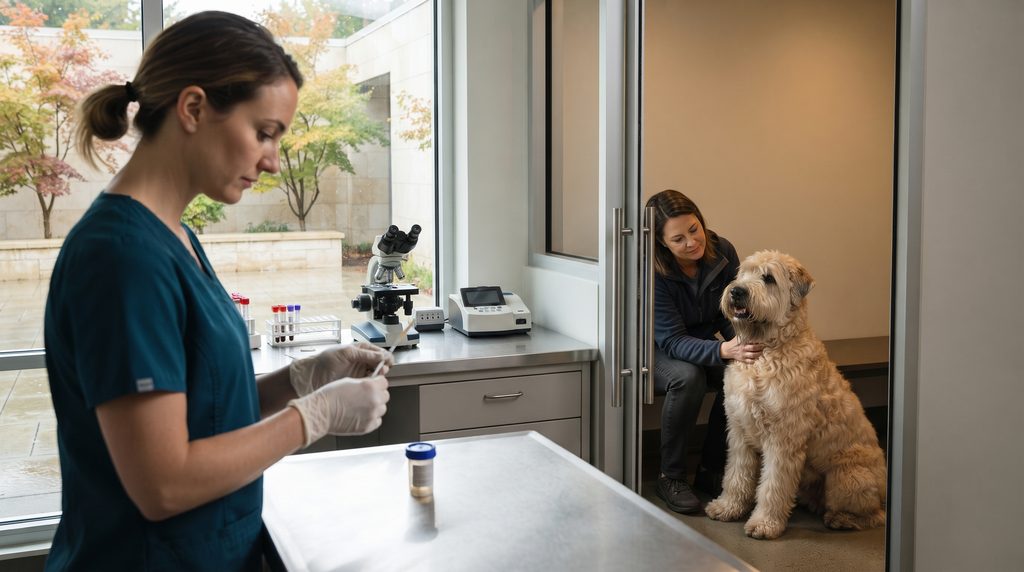
Understanding Your Soft Coated Wheaten Terrier’s PLN Test Results
The PLN-associated DNA test identifies inherited risk, not an existing diagnosis of kidney disease. Dogs with zero copies of the identified variants have a lower genetic risk, while those with one or two copies may need more frequent monitoring. The Soft Coated Wheaten Terrier Club of America recommends annual blood and urine screening beginning around one year of age, regardless of DNA status. Higher-risk dogs may require additional urine protein testing approximately every six months. Ask your veterinarian to include a urine protein-to-creatinine ratio or microalbuminuria test, as these may not be part of a standard urinalysis. Keep copies of results to help identify changes over time.
Soft Coated Wheaten Terrier Lifespan and Aging
The Soft Coated Wheaten Terrier is a generally hardy, athletic breed with the potential to enjoy many active and affectionate years alongside its family. The American Kennel Club gives the breed a typical lifespan of 12–14 years, while the Soft Coated Wheaten Terrier Club of America reports an average range of approximately 12–15 years, with some individuals living to 17.
These figures provide useful expectations, although the lifespan of any individual dog depends on genetics, inherited health risks, nutrition, preventative veterinary care, and the circumstances of its life. For prospective owners, understanding the Soft Coated Wheaten Terrier life expectancy means preparing for a substantial long-term commitment and recognizing that senior Wheatens often retain much of the enthusiasm and affectionate personality that make the breed so appealing.
One particularly endearing characteristic of the Soft Coated Wheaten Terrier is its tendency to remain playful and interested in family activities well beyond puppyhood. Many adults retain a lively curiosity, enthusiasm for familiar people, and enjoyment of outdoor adventures throughout middle age. Unlike dogs that become noticeably sedentary relatively early, healthy Wheatens may continue enjoying substantial walks and interactive games into their senior years. However, maintaining youthful enthusiasm does not necessarily mean that a dog has retained the same physical endurance. Owners should observe changes in recovery, mobility, and general comfort rather than assuming that a cheerful older Wheaten can manage every activity it enjoyed as a younger adult.
The commonly quoted Wheaten Terrier lifespan should be viewed as a population-level expectation rather than an individual prediction. Some Wheatens develop serious inherited conditions that reduce longevity, while others remain remarkably healthy into their mid-teens. Responsible breeding can help reduce certain inherited risks, but it cannot eliminate all illness. Dogs from carefully screened breeding programs still require routine veterinary attention throughout life. Likewise, an older Wheaten that has exceeded the typical lifespan range should not automatically be considered unusually fragile. Overall health, mobility, appetite, and enjoyment of daily activities provide more meaningful information than chronological age alone.
Most Soft Coated Wheaten Terriers begin showing recognizable signs of aging gradually rather than experiencing an abrupt transition into old age. Changes may become noticeable around eight to ten years, although individual variation is considerable. A once tireless companion may begin choosing shorter walks, sleeping more deeply after exercise, or taking additional time to recover from energetic activities. Some dogs develop subtle changes in hearing, vision, or responsiveness. These developments should be monitored rather than automatically dismissed as normal aging. Pain, endocrine disorders, kidney disease, and other treatable conditions can resemble ordinary age-related slowing.
Maintaining healthy body condition becomes particularly important as the Soft Coated Wheaten Terrier grows older. Reduced activity can lower daily calorie requirements, while excess body weight places additional strain on joints and may contribute to reduced mobility. The breed’s abundant coat can conceal gradual changes in body shape, making regular weight measurements and hands-on body condition assessments valuable. Owners should be able to feel the ribs beneath a suitable covering of tissue and identify a natural waist. Unexplained weight loss also deserves veterinary investigation, especially when accompanied by appetite changes, digestive disturbances, or increased thirst.
The Soft Coated Wheaten Terrier has several recognized inherited health vulnerabilities that remain relevant throughout adulthood. Protein-losing nephropathy, protein-losing enteropathy, Addison’s disease, and other conditions may affect long-term health and require individualized veterinary management. The breed club recommends regular blood and urine screening beginning at approximately one year of age, with additional monitoring according to genetic risk and medical findings. These examinations remain important as the dog ages because some conditions develop before obvious symptoms appear. Early identification cannot guarantee a cure, but it may create opportunities for treatment, improved comfort, and more effective long-term management.
Exercise should remain a regular part of senior Wheaten care. Gentle walking helps maintain muscle condition, supports joint movement, and provides valuable mental stimulation. However, the duration and intensity should reflect the dog’s current capabilities. An older Soft Coated Wheaten Terrier may enjoy two shorter walks more than one demanding outing, particularly when stiffness or reduced stamina becomes apparent. Allowing time to investigate familiar scents and explore comfortable surroundings can preserve the pleasures of outdoor activity without unnecessary strain. Sudden reluctance to walk, persistent limping, difficulty rising, or unusual fatigue warrants veterinary assessment rather than simply reducing exercise indefinitely.
Joint comfort deserves increasing attention during the senior years. Although hip dysplasia is not among the breed’s most frequently reported health conditions, Wheatens can develop osteoarthritis and other mobility problems as they age. Changes may include hesitation before climbing stairs, difficulty jumping into a vehicle, stiffness after resting, or reduced enthusiasm for previously enjoyable activities. Owners can support mobility through appropriate weight management, suitable exercise, and veterinary treatment when necessary. Non-slip flooring, supportive bedding, and ramps or steps for frequently used furniture may also improve comfort. Pain medication and joint supplements should be selected with veterinary guidance, particularly when kidney function is a concern.
Coat care remains essential throughout the Wheaten Terrier life span, although grooming routines may need adjustment as the dog ages. Older Wheatens sometimes become less comfortable standing for extended periods, especially when arthritis or muscle weakness develops. Shorter grooming sessions, stable non-slip surfaces, and regular breaks can reduce discomfort. The soft coat still requires thorough combing to prevent painful mats, particularly around the legs, armpits, and behind the ears. The long beard should remain clean and comfortable, while nails may need more frequent attention if reduced activity causes less natural wear. Owners should also use grooming sessions to check for skin changes, lumps, and areas of tenderness.
Dental health can influence an aging Soft Coated Wheaten Terrier’s appetite, comfort, and general well-being. Periodontal disease is common in older dogs and may cause painful chewing, bad breath, inflamed gums, or tooth loss. Regular toothbrushing, appropriate veterinary examinations, and professional dental treatment when indicated can help maintain oral comfort. Owners should not assume that difficulty eating dry food is simply part of growing older. Sudden reluctance to chew, excessive drooling, or visible oral discomfort deserves investigation. Dental treatment plans should account for the individual dog’s general health and any known kidney, endocrine, or other medical conditions.
Mental engagement is equally important. The Soft Coated Wheaten Terrier is an intelligent, observant dog that often enjoys familiar routines and interaction with its owners. Senior Wheatens may benefit from gentle scent games, easy food puzzles, familiar training exercises, and relaxed exploration of safe environments. These activities provide stimulation without demanding strenuous physical effort. Changes in sleep patterns, disorientation, unusual nighttime restlessness, or loss of previously reliable household habits may indicate medical or cognitive difficulties. Such changes deserve veterinary evaluation because pain, sensory decline, and other health conditions can sometimes produce similar behavior.
Comfortable household arrangements can make a considerable difference to an elderly Wheaten. A warm, supportive bed in a familiar location provides a reliable resting place, while accessible drinking water and predictable routines reduce unnecessary physical demands. Older dogs may become less tolerant of boisterous play, sudden disturbances, or lengthy grooming sessions. Children and other pets should respect their need for undisturbed rest. Some senior Wheatens continue seeking enthusiastic family interaction, while others prefer quieter companionship. Responding to these changing preferences helps preserve confidence and allows the dog to remain involved in household life without becoming overwhelmed.
Understanding the average lifespan of a Wheaten Terrier also involves recognizing the importance of quality of life rather than focusing exclusively on longevity. Owners should regularly consider whether their dog can move comfortably, enjoy familiar activities, maintain an appropriate appetite, rest peacefully, and engage positively with the people and surroundings it loves. When chronic illness develops, veterinarians can help establish realistic treatment goals and appropriate comfort measures. Palliative care, when needed, may allow an older dog to continue enjoying meaningful experiences while reducing pain or distress. Compassionate decisions should always reflect the individual animal’s welfare and medical circumstances.
Ultimately, the Soft Coated Wheaten Terrier often remains a lively, affectionate companion for much of its 12–14-year typical lifespan, with some individuals enjoying several additional years. Good breeding practices, consistent preventative care, appropriate nutrition, regular health monitoring, and sensible adjustments during old age can all support long-term well-being. Although no owner can guarantee how long an individual dog will live, providing attentive care throughout every life stage offers the best foundation for a comfortable and fulfilling life. For families fortunate enough to share their home with a senior Wheaten, the breed’s familiar warmth, gentle humor, and enduring devotion can make its later years especially meaningful.
Helping Your Wheaten Enjoy Its Senior Years
The Soft Coated Wheaten Terrier commonly lives 12–14 years, although some individuals reach their mid-teens or beyond. As your dog ages, focus on maintaining comfortable movement, healthy body condition, and regular veterinary monitoring. Continue appropriate blood and urine screening, especially when inherited kidney or intestinal conditions are a concern. Adapt walks to current stamina, provide supportive bedding, and use non-slip surfaces where necessary. Older Wheatens still benefit from gentle scent games, familiar routines, and affectionate companionship. Report unexplained weight changes, persistent stiffness, digestive disturbances, or unusual behavior promptly rather than assuming they are inevitable signs of aging.

Cost of Owning a Soft Coated Wheaten Terrier
The cost of owning a Soft Coated Wheaten Terrier extends far beyond the day you first bring one home. This cheerful Irish breed is not usually the most expensive dog to maintain on a daily basis, but it is also not a low-maintenance bargain breed. A Soft Coated Wheaten Terrier needs quality food, regular grooming, routine veterinary care, training, parasite prevention, and sensible budgeting for emergencies. Because the Soft Coated Wheaten Terrier is an active, medium-sized dog with a substantial coat and several recognized inherited health concerns, owners should plan for steady ongoing expenses rather than focusing only on the initial outlay.
One of the first financial considerations is how the Soft Coated Wheaten Terrier enters the household. A responsibly bred Soft Coated Wheaten Terrier puppy often involves a significant initial cost because reputable breeders invest in health testing, careful socialization, appropriate veterinary care, and thoughtful breeding practices. Rescue adoption is sometimes less expensive at the outset, although rescue Wheatens may still require veterinary treatment, grooming, training, or behavior support after adoption. In either case, the initial step is only the beginning. Owners should think in terms of the full lifetime commitment rather than the first payment.
Food is one of the most predictable long-term expenses. A healthy adult Soft Coated Wheaten Terrier generally does well on a complete, balanced commercial diet suited to its age, activity, and body condition. Because the Soft Coated Wheaten Terrier is a solid, athletic medium-sized breed, feeding costs are usually moderate rather than minimal. Higher-quality foods, dental chews, and training treats all add to the monthly budget. Owners should also remember that a Soft Coated Wheaten Terrier with kidney or intestinal disease may eventually require a prescription diet, which can increase food costs further. Even when the dog is perfectly healthy, consistent nutritional quality is a recurring expense worth planning for.
Grooming is another major part of the cost of owning a Soft Coated Wheaten Terrier. The breed’s soft, continuously growing coat requires regular brushing and combing at home, and many owners also use a professional groomer every several weeks to keep the coat tidy, manageable, and comfortable. A Soft Coated Wheaten Terrier that is not groomed properly can mat quickly, particularly around the legs, beard, chest, and behind the ears. Even owners who do much of the work themselves should budget for brushes, combs, shampoo, conditioner, nail care tools, and possibly a dryer or grooming table. The Soft Coated Wheaten Terrier is therefore not as inexpensive to maintain as a short-coated breed that needs only minimal coat care.
Routine veterinary care is another unavoidable responsibility. Every Soft Coated Wheaten Terrier should receive regular wellness examinations, vaccinations according to veterinary advice, parasite prevention, and dental care. Annual or twice-yearly checkups are important for any dog, but they are especially valuable in a Soft Coated Wheaten Terrier because the breed has recognized health risks involving the kidneys and intestines. Blood tests, urine testing, and other monitoring may be recommended as the dog matures. Dental cleanings under anesthesia can also become a periodic expense over the life of a Soft Coated Wheaten Terrier, particularly if home dental care is inconsistent.
Medical contingencies are one of the biggest reasons to budget carefully. The Soft Coated Wheaten Terrier Club of America highlights inherited concerns including protein-losing nephropathy, protein-losing enteropathy, Addison’s disease, and some other health issues. Not every Soft Coated Wheaten Terrier will develop serious illness, but owners should be financially prepared if one does. Diagnostic workups, specialist consultations, ultrasound examinations, repeated bloodwork, prescription diets, medications, and ongoing monitoring can become costly. For that reason, many families either purchase pet insurance early or maintain a dedicated emergency fund. A Soft Coated Wheaten Terrier may be healthy for years and then suddenly require significant veterinary spending, so financial preparation matters.
Training and socialization also belong in a realistic ownership budget. A Soft Coated Wheaten Terrier is bright, energetic, and affectionate, but it can also be excitable and strong-willed if not guided consistently. Puppy classes, basic obedience work, and occasional one-to-one training support can be money well spent, especially for first-time Wheaten owners. A well-trained Soft Coated Wheaten Terrier is generally easier to live with, easier to groom, and easier to manage in public. Investing in training early can reduce later frustration and may help prevent more serious behavioral difficulties that are harder and more expensive to address.
Equipment and household items are another part of the overall cost. A Soft Coated Wheaten Terrier needs a suitable bed, food and water bowls, collar, harness, leash, crate or travel restraint, toys, poop bags, towels, and grooming supplies. Because the breed is active and people-oriented, many owners also spend money on enrichment toys, puzzle feeders, and replacements for worn chews or bedding. These are not necessarily huge costs one by one, but together they form a meaningful part of everyday life with a Soft Coated Wheaten Terrier. Holiday boarding, pet sitting, or dog walking can also add noticeably to annual expenses for owners who travel or work long hours.
Although exact totals vary widely by region and lifestyle, many households find that the annual routine cost of a Soft Coated Wheaten Terrier is moderate to fairly substantial once food, grooming, veterinary care, preventatives, and everyday supplies are combined. Owners who groom their own Soft Coated Wheaten Terrier and enjoy few health problems may spend noticeably less than owners who rely on regular professional grooming and face ongoing medical treatment. Location matters too, as veterinary and grooming fees vary considerably between rural areas and major cities. The most useful approach is to build a realistic local budget rather than relying on one universal figure.
The long-term nature of ownership is what matters most. A Soft Coated Wheaten Terrier commonly lives well into its teens, so even moderate yearly spending adds up over time. Senior care may eventually include more frequent examinations, additional laboratory screening, joint-support measures, dental work, and medication. Owners should therefore think not only about what a Soft Coated Wheaten Terrier costs this month, but also about what this breed may require over twelve to fifteen years or more. Planning ahead allows families to make calm, responsible decisions if circumstances change.
Ultimately, the cost of owning a Soft Coated Wheaten Terrier is best understood as the cost of providing a good life. This affectionate, active breed rewards its family with companionship, personality, and charm, but it depends on that family to provide proper care consistently. For households prepared to budget for grooming, routine healthcare, quality food, training, and unexpected veterinary needs, a Soft Coated Wheaten Terrier can be a deeply rewarding companion. The key is entering ownership with clear expectations and the financial flexibility to care for the dog properly at every stage of life.

Where Wheaten Ownership Costs Often Rise
For many owners, the biggest recurring costs of a Soft Coated Wheaten Terrier are grooming and veterinary care. The breed’s coat needs regular maintenance, and professional grooming appointments can quickly become a major annual expense if home grooming is limited. Veterinary costs may also rise as the dog ages, particularly if blood and urine screening identifies kidney or intestinal concerns. Budgeting for preventative care, insurance or an emergency fund, and occasional professional training usually makes Soft Coated Wheaten Terrier ownership far less stressful and helps families respond quickly when extra support is needed.
Choosing a Soft Coated Wheaten Terrier Puppy or Rescue
Choosing a Soft Coated Wheaten Terrier is an exciting decision, but finding the right individual requires careful research, patience, and an understanding of the breed’s distinctive needs. This affectionate Irish terrier is known for its cheerful personality, beautiful silky coat, and enthusiastic attachment to familiar people. However, its lively temperament, grooming requirements, and recognized inherited health concerns make responsible puppy selection particularly important.
Whether you are considering a young puppy from a reputable breeder or an adult Soft Coated Wheaten Terrier through rescue, the goal should be to find a healthy, well-matched companion whose needs you can meet throughout its life. Taking time to investigate breeding practices, temperament, medical history, and household compatibility offers a much stronger foundation than choosing a dog simply because of its appealing appearance.
Prospective owners searching for Soft Coated Wheaten Terrier puppies should begin by identifying breeders who prioritize health, temperament, and responsible placement. The Soft Coated Wheaten Terrier Club of America maintains a breeder directory and provides detailed guidance on recognizing ethical breeding practices. A responsible breeder should be knowledgeable about the breed’s history, characteristics, and inherited conditions. They should also be genuinely interested in the household their puppies will enter. Expect questions about your previous experience with dogs, working arrangements, family members, grooming plans, and ability to provide regular exercise. These questions demonstrate concern for the puppy’s long-term welfare rather than unnecessary interference.
Health testing is one of the most important considerations when evaluating Wheaten Terrier breeders. Responsible breeding dogs should undergo appropriate hip evaluations, veterinary ophthalmic examinations, and testing for genetic variants associated with protein-losing nephropathy. The breeder should also be able to discuss routine blood and urine screening and any known history of kidney or intestinal disease in the family. Ask to see actual veterinary or laboratory records rather than accepting general statements that the parents are healthy. The breed club also recommends reviewing available health information through the Soft Coated Wheaten Terrier Health and Pedigree Database.
One particularly important warning concerns protein-losing enteropathy. No validated DNA test currently establishes whether a Wheaten is genetically clear of PLE. Consequently, breeders who claim that their entire breeding program is genetically free from this condition should be questioned carefully. Even excellent screening cannot eliminate every inherited risk, and a conscientious breeder should acknowledge these limitations. The objective is responsible risk management, transparent communication, and informed breeding decisions. Owners should be wary of anyone promising that a Soft Coated Wheaten Terrier puppy cannot develop inherited disease simply because both parents appear healthy.
Visiting the breeder, when practical, provides valuable information about how a litter is raised. Puppies should live in clean, comfortable surroundings with appropriate opportunities for interaction, exploration, and rest. They should appear alert, responsive, and interested in their environment without being consistently frightened or withdrawn. Meeting the mother can offer insight into adult appearance and temperament, although her behavior may be influenced by caring for her puppies. Responsible breeders should explain the litter’s socialization experiences and describe how they introduce everyday sounds, gentle handling, different surfaces, and appropriate interactions with people.
Choosing an individual Wheaten Terrier puppy involves more than selecting the boldest or most affectionate youngster. Puppies naturally differ in confidence, activity level, curiosity, and sensitivity. A very energetic puppy may suit an experienced, active household, while a more thoughtful youngster could be a better match for a quieter family. The breeder has usually observed each puppy across many situations and should be able to explain these differences. A brief meeting rarely reveals a puppy’s entire future personality, so thoughtful matching is more reliable than relying exclusively on which puppy approaches first.
Prospective owners should also understand how dramatically the Soft Coated Wheaten Terrier changes as it matures. Young puppies may have darker, reddish, or heavily shaded coats with black tipping around the muzzle and ears. Their hair can be relatively straight, fluffy, or different in texture from the characteristic flowing adult coat. These variations are normal during development. The familiar golden-wheaten coloring and silky adult texture emerge gradually, sometimes taking two to three years to stabilize fully. A puppy’s early appearance therefore should not be treated as an exact prediction of its mature coat.
Before bringing home a Soft Coated Wheaten Terrier puppy, ask about veterinary examinations, vaccinations, parasite prevention, feeding routines, and any medical concerns identified during development. A responsible breeder should provide appropriate registration information, a written agreement, and clear guidance about the puppy’s initial care. They should also explain their policies if an owner can no longer keep the dog. Ethical breeders generally remain interested in the animals they produce and provide advice as those dogs mature. Avoid sources unwilling to disclose breeding conditions, identify the parents, or supply meaningful health documentation.
Not every prospective owner wants to raise a puppy, and Wheaten Terrier rescue offers an equally worthwhile route to ownership. Adult Wheatens may enter rescue because of changes in family circumstances, housing difficulties, illness, or an owner’s inability to manage grooming and exercise requirements. These situations do not necessarily indicate that the dog has serious behavioral problems. Some adults arrive with established household manners, experience living with families, and a temperament that can be assessed more clearly than that of a very young puppy. However, others may need patient training, medical treatment, or time to adjust to unfamiliar surroundings.
Organizations involved in Soft Coated Wheaten Terrier rescue often assess dogs before placing them in suitable homes. Depending on available information, they may describe the dog’s behavior around people, other animals, and children, along with known health concerns and grooming needs. The Soft Coated Wheaten Terrier Club of America lists independent rescue organizations, including National Wheaten Rescue and Wheatens In Need, while making clear that these groups operate independently of the club. Prospective adopters should investigate each organization’s procedures and ask how dogs are evaluated, supported, and matched with new households.
Families considering Wheaten Terrier adoption should be open about their lifestyle and expectations. An adult Wheaten with a high activity level may be unsuitable for someone seeking a quiet companion, while a dog uncomfortable around other animals may require a home without additional pets. Ask whether the dog has experience being left alone, how it behaves during grooming, whether it has shown resource guarding, and what veterinary records are available. Some rescue dogs have incomplete medical histories, making an early veterinary examination particularly important. Patience during the adjustment period is essential because behavior may change as the dog becomes more comfortable in its new environment.
Some Wheaten Terrier rescue dogs arrive with severely matted coats or limited experience of regular grooming. Restoring their comfort may require professional clipping, careful skin assessment, and gradual introduction to handling. Others may need help with leash walking, calm greetings, or settling when visitors arrive. These challenges should be approached with positive training and realistic expectations rather than punishment. An adult Soft Coated Wheaten Terrier can learn new routines successfully, particularly when owners provide predictable structure and reward cooperative behavior. However, adopters should be prepared to seek qualified professional assistance when difficulties are persistent or potentially unsafe.
Preparing the home is important whether the new arrival is a puppy or an adult. A Soft Coated Wheaten Terrier should have a comfortable resting space, suitable food and water bowls, a secure collar or harness, a dependable leash, appropriate toys, and grooming equipment. Secure fencing deserves particular attention because the breed retains a natural interest in chasing wildlife and exploring its surroundings. Families should also establish realistic routines for exercise, feeding, grooming, and periods of rest. Puppy-proofing or preparing a quiet adjustment area for an adult rescue can reduce preventable problems during the first weeks.
The early days in a new household should emphasize reassurance, consistency, and gradual introductions. A young Soft Coated Wheaten Terrier puppy needs opportunities for appropriate socialization, gentle handling, house training, and positive experiences with everyday surroundings. An adult rescue may benefit from a quieter beginning, with limited visitors and carefully managed exposure to unfamiliar animals. Neither should be overwhelmed by excessive attention or demanding activities immediately after arrival. Owners should observe individual preferences and allow confidence to develop naturally. A predictable routine can help the dog understand its new environment and begin forming trusting relationships.
Ultimately, choosing a Soft Coated Wheaten Terrier responsibly means looking beyond the appeal of its golden coat and famously cheerful disposition. The best outcome comes from selecting an individual whose temperament, health background, and needs suit the household. Reputable breeders provide transparency and lifelong support, while responsible rescue organizations work to match deserving dogs with suitable families. Both routes can lead to deeply rewarding companionship. With careful preparation, realistic expectations, and a commitment to responsible care, a Soft Coated Wheaten Terrier can become a cherished family member whose affectionate personality and lively Irish spirit enrich everyday life for many years.
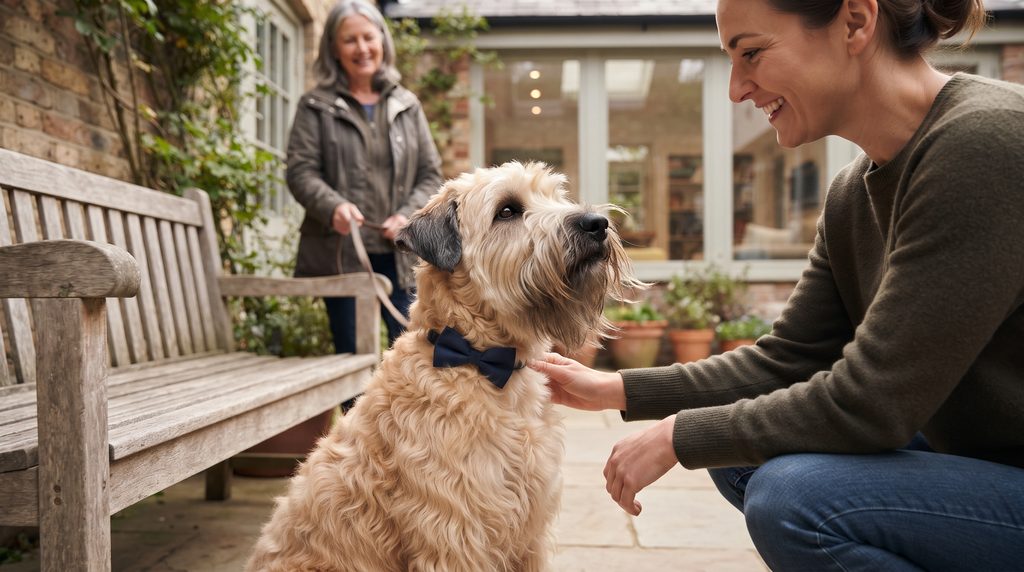
Is a Soft Coated Wheaten Terrier Right for You?
The Soft Coated Wheaten Terrier is an affectionate, enthusiastic, and remarkably engaging companion, but choosing this beautiful Irish breed requires more than an appreciation of its golden coat and cheerful personality. A Soft Coated Wheaten Terrier brings considerable energy, intelligence, independence, and devotion into family life, along with responsibilities that should never be underestimated. Its playful nature and famous Wheaten Greetin’ can make everyday experiences wonderfully entertaining, while its grooming requirements, strong chasing instincts, and occasional stubbornness demand patient management. For people who enjoy an active, interactive relationship with their dog, these qualities can be deeply rewarding. However, households seeking a quiet, undemanding companion may find the breed more challenging than expected.
The Soft Coated Wheaten Terrier is particularly well suited to owners who want their dog to participate in everyday family activities. These dogs typically enjoy being close to familiar people, accompanying them on outings, investigating household routines, and sharing moments of relaxation. Their affectionate disposition makes them appealing companions for individuals, couples, and families who appreciate canine involvement. However, a Wheaten is not generally happiest when left alone in a backyard or expected to entertain itself throughout the day. It thrives when treated as an active member of the household and provided with regular opportunities for interaction.
Prospective owners should consider whether they can provide consistent exercise. The Soft Coated Wheaten Terrier is a medium-sized, athletic dog whose traditional working background remains evident in its enthusiasm for movement and exploration. Most healthy adults benefit from approximately an hour of varied daily activity, adjusted to individual fitness and temperament. Walks, interactive games, scent activities, and opportunities to explore unfamiliar environments help satisfy both physical and mental needs. A household that enjoys hiking, walking, traveling, or spending time outdoors may find the Wheaten a particularly enjoyable companion. By contrast, owners who prefer minimal activity may struggle to keep a young, energetic individual content.
Training expectations are equally important. Although the Soft Coated Wheaten Terrier is intelligent and capable of learning quickly, it retains the independent decision-making abilities of a traditional terrier. Some individuals become distracted by exciting sights, sounds, or smells, while others enthusiastically test boundaries during adolescence. Owners need patience, consistency, and a willingness to use positive, reward-based methods. Early socialization, reliable recall training, calm greeting habits, and loose-leash walking should be treated as essential skills. People expecting immediate obedience without investing time in training may find the Wheaten frustrating, whereas those who enjoy working cooperatively with a clever dog often appreciate its personality enormously.
The breed’s exuberance deserves particular consideration in households with children. Many Soft Coated Wheaten Terriers are affectionate family companions and enjoy playing with respectful youngsters. However, their enthusiasm can occasionally become overwhelming, especially when excited greetings involve jumping or vigorous movement. An adult Wheaten is strong enough to knock over a small child accidentally. Families with older children who understand appropriate canine boundaries may find the breed especially rewarding, while households with toddlers need careful supervision and realistic expectations. No dog should be expected to tolerate rough handling, and children must be taught to respect resting areas, meals, and personal space.
Other household animals should also influence the decision. The Soft Coated Wheaten Terrier can coexist successfully with familiar dogs and, in some circumstances, cats when introductions are thoughtful and individual temperaments are compatible. Nevertheless, the breed retains hunting instincts that may encourage chasing smaller animals. Owners with rabbits, guinea pigs, pet birds, or backyard poultry should consider whether secure separation can be maintained consistently. Even a well-trained Wheaten may react instinctively when wildlife suddenly moves nearby. Secure fencing and dependable leash management are therefore important features of responsible ownership.
Grooming is one of the most significant practical commitments. The Soft Coated Wheaten Terrier has a beautiful, soft, silky coat that sheds relatively little but requires frequent brushing and thorough combing. Without appropriate attention, tangles can develop into painful mats, particularly around the legs, armpits, ears, and beard. Owners must either learn suitable grooming techniques or budget for regular professional assistance, often combining both approaches. Anyone attracted to the breed primarily because of its low-shedding coat should understand this trade-off. Less visible hair around the home does not mean less work, and the Wheaten’s magnificent appearance depends on consistent maintenance.
Allergy concerns require realistic expectations as well. Although the Soft Coated Wheaten Terrier is often promoted as a suitable breed for allergy-sensitive households, no dog is completely hypoallergenic. Individual Wheatens produce allergens through their skin, saliva, and other biological sources, even when their coats release relatively little visible hair. Some people tolerate Wheatens better than heavily shedding breeds, while others experience significant symptoms. Prospective owners with allergies should spend time around adult dogs and seek appropriate medical advice before committing to ownership. Choosing a Wheaten solely because it is described as hypoallergenic could lead to disappointment for both the family and the dog.
Living arrangements are another consideration. A Soft Coated Wheaten Terrier can adapt to city or country life when provided with sufficient exercise, companionship, and stimulation. A suburban house with a secure garden offers convenient opportunities for outdoor play, but a committed apartment owner may also manage successfully. Apartment living requires particular attention to daily walks, barking, excitement around visitors, and opportunities for the dog to settle calmly. The breed’s adaptability should not be confused with an ability to thrive in every environment without adjustment. The quality of daily care matters considerably more than the size or appearance of the property.
Time spent away from home can strongly influence suitability. The Soft Coated Wheaten Terrier frequently develops close attachments to familiar people and may struggle when left without companionship for extended periods. Some individuals learn to remain alone comfortably for reasonable durations, while others need carefully structured independence training and additional daytime support. Prospective owners who work long hours should consider whether family members, suitable pet-care arrangements, or flexible schedules can meet the dog’s needs. Persistent loneliness, inadequate stimulation, and poorly managed separation difficulties can undermine an otherwise affectionate relationship.
Financial readiness should also be considered before choosing a Soft Coated Wheaten Terrier. Routine expenses include appropriate food, grooming equipment, professional trimming, veterinary examinations, parasite prevention, training, and everyday supplies. The breed’s recognized inherited health concerns introduce additional considerations, particularly protein-losing nephropathy and protein-losing enteropathy. Responsible owners should understand recommended blood and urine monitoring and be prepared for potentially expensive veterinary treatment if illness develops. Pet insurance or an appropriately funded emergency reserve can help protect both the dog and household finances. A Wheaten is a long-term commitment that commonly extends well beyond a decade.
First-time dog owners are not automatically unsuitable, but they should approach the breed with realistic expectations. A Soft Coated Wheaten Terrier can be an affectionate and rewarding first companion when its owner is willing to learn, attend training classes, maintain grooming routines, and provide consistent exercise. However, the breed may be less forgiving of inconsistent boundaries than a particularly easygoing companion dog. Its enthusiasm, intelligence, and occasional stubbornness mean that early habits can become deeply established. New owners who seek guidance from responsible breeders, qualified trainers, and knowledgeable groomers are more likely to develop confidence and establish a successful routine.
It is also worth considering whether the breed’s personality genuinely matches your expectations. Some people want a quiet dog that responds immediately to instruction, rarely becomes excited, and shows little interest in its surroundings. The Soft Coated Wheaten Terrier is unlikely to satisfy every aspect of that description. Its natural character is lively, inquisitive, affectionate, and sometimes mischievous. It may greet visitors enthusiastically, investigate unexpected noises, or become fascinated by movement outdoors. These traits are not simply training failures; they reflect the breed’s history and temperament. Appropriate guidance can improve manners, but responsible ownership also means appreciating the dog for what it is.
For active households that enjoy companionship, the Soft Coated Wheaten Terrier offers many appealing qualities. It can be an entertaining walking partner, a devoted family companion, and an enthusiastic participant in training games and outdoor adventures. Its relatively low-shedding coat is attractive to owners willing to maintain it properly, while its affectionate disposition often creates close and enduring relationships. The breed combines the determination of a terrier with a notably cheerful and people-oriented personality. For owners who enjoy expressive dogs with plenty of character, these qualities can make the everyday responsibilities worthwhile.
Ultimately, the Soft Coated Wheaten Terrier is best suited to people who want an energetic, affectionate companion and are prepared to invest time in exercise, grooming, training, and preventative healthcare. It is not an effortless breed, nor should its friendliness be mistaken for an absence of challenges. However, for the right household, its exuberant greetings, intelligence, playful humor, and deep attachment to familiar people can create an exceptionally rewarding relationship. Choosing a Soft Coated Wheaten Terrier should be a decision based on compatibility and long-term commitment rather than appearance alone. When the match is right, this spirited Irish dog can become a treasured companion whose warmth and enthusiasm enrich family life for many years.
The Household That Suits a Wheaten Best
The Soft Coated Wheaten Terrier is especially well suited to a household that enjoys regular walks, interactive play, and close companionship. Ideal owners are comfortable with a lively, occasionally independent personality and are willing to invest in positive training from an early age. Frequent grooming is essential, even though the coat sheds relatively little. Secure outdoor spaces, realistic expectations around children and other pets, and appropriate veterinary budgeting are important advantages. A Wheaten may adapt to apartment life when these needs are met, but it is generally less suited to people seeking a sedentary, low-maintenance dog or one that will routinely spend long periods alone.

Soft Coated Wheaten Terrier Final Thoughts
The Soft Coated Wheaten Terrier is a breed that leaves a lasting impression, combining the determination of a traditional Irish working dog with an unusually cheerful, affectionate, and engaging personality. Its beautiful golden coat may be the first thing people notice, but the true appeal of the Soft Coated Wheaten Terrier lies in the remarkable character beneath that silky exterior. Enthusiastic greetings, playful curiosity, intelligence, and a strong desire to participate in family life make this distinctive terrier a memorable companion. For owners who appreciate a lively dog with a sense of humor and an unmistakable personality, the Wheaten offers a relationship that can be deeply rewarding.
What distinguishes the Soft Coated Wheaten Terrier from many other breeds is the combination of exuberance and genuine affection. Its famous Wheaten Greetin’ captures this character particularly well. Few things illustrate the breed’s enthusiasm more clearly than a delighted Wheaten welcoming someone home after even a brief absence. Yet these animated greetings are only one expression of a broader attachment to familiar people. Many Wheatens enjoy quietly sharing everyday routines, accompanying their owners from room to room, and resting nearby after an enjoyable day. Their companionship is often expressive, affectionate, and wonderfully entertaining.
Behind this engaging personality lies a substantial working heritage. The Soft Coated Wheaten Terrier was developed to perform practical tasks around Irish farms, including controlling vermin and helping with everyday rural life. That background produced a dog with physical resilience, confidence, curiosity, and a willingness to make independent decisions. These qualities remain important in modern homes. A Wheaten may be affectionate and people-oriented, but it is not automatically obedient or content with inactivity. Owners who understand its terrier instincts are better prepared to provide appropriate exercise, positive training, secure boundaries, and opportunities to investigate the world.
Another defining feature of the Soft Coated Wheaten Terrier is its magnificent coat. The soft, flowing golden hair, distinctive facial furnishings, and expressive beard create an appearance unlike that of most traditional terriers. Its relatively low-shedding coat is a genuine advantage for households seeking less loose hair around the home, but that benefit comes with considerable grooming responsibilities. Regular brushing, thorough combing, appropriate trimming, and attention to the beard are essential. Prospective owners should appreciate the coat not simply as a beautiful feature, but as a continuing commitment to the dog’s comfort and well-being.
Health considerations also deserve a prominent place in responsible ownership. Although the Soft Coated Wheaten Terrier is generally sturdy and athletic, recognized inherited conditions affecting the kidneys and intestines make careful breeding and regular veterinary screening particularly important. Understanding protein-losing nephropathy, protein-losing enteropathy, and other documented concerns helps owners recognize potential warning signs without becoming unnecessarily alarmed. Responsible breeders should provide appropriate health information, while owners should maintain recommended blood and urine monitoring throughout adulthood. Good preventative care cannot guarantee lifelong health, but it provides an important foundation for early recognition and informed treatment.
For families, the Soft Coated Wheaten Terrier can bring considerable warmth and enjoyment. Many individuals develop affectionate relationships with respectful children and enjoy sharing outdoor activities, games, and ordinary household experiences. However, enthusiastic greetings and energetic play require consistent supervision, particularly around younger children. Relationships with other animals also depend on individual temperament and appropriate introductions. The breed’s natural curiosity and hunting instincts should always be respected. Choosing a Wheaten means accepting both its sociable qualities and the practical responsibilities associated with an energetic, independent terrier.
One of the most rewarding aspects of living with a Soft Coated Wheaten Terrier is watching its personality develop over time. Puppies may be inquisitive, exuberant, and occasionally challenging, while adolescents often combine increasing physical strength with an independent approach to familiar rules. With patient guidance, many mature into affectionate, confident companions that remain playful well into adulthood. Even senior Wheatens frequently retain a delightful interest in familiar people and everyday adventures. Each stage brings different responsibilities, but the breed’s characteristic enthusiasm often remains an enduring part of family life.
Successful ownership depends less on having a perfect home than on providing a lifestyle that genuinely suits the dog. A Soft Coated Wheaten Terrier may thrive in a suburban house, a country property, or a well-managed urban home when its exercise, grooming, training, and companionship needs are met. What matters most is the owner’s willingness to remain involved. Regular walks, meaningful interaction, patient training, and dependable healthcare contribute more to a satisfying relationship than a large property alone. The Wheaten is at its best when treated as a companion with needs and preferences rather than simply an attractive addition to the household.
Ultimately, the Soft Coated Wheaten Terrier is not a breed for everyone, and that is part of what makes finding the right match so important. It asks for time, attention, energy, grooming, and patience, but frequently repays that commitment with remarkable affection, enthusiasm, and personality. From its humble origins on Irish farms to its place in modern family homes, this golden-coated terrier has retained the qualities that make it distinctive: courage, curiosity, determination, and an extraordinary enjoyment of life. For owners prepared to embrace those characteristics, the Soft Coated Wheaten Terrier can become far more than a beautiful dog. It can become a cherished companion whose joyful presence makes everyday life richer, warmer, and considerably more entertaining.

Explore More Terrier Breeds
The Soft Coated Wheaten Terrier is one of many fascinating breeds in the Terrier Group. These confident, energetic dogs share a working heritage but differ considerably in temperament, appearance, size, and grooming needs. Explore our CanineBase Terrier Breeds Guide to discover more about these distinctive companions, compare their characteristics, and find the breed that best suits your lifestyle, experience, and family.
Official Breed Information
For further authoritative information about the Soft Coated Wheaten Terrier, visit the American Kennel Club’s official breed profile. The AKC provides valuable guidance on the breed standard, appearance, temperament, exercise, grooming, and responsible ownership. This trusted resource complements the CanineBase breed guide and offers additional information for prospective owners and anyone interested in this distinctive Irish terrier.