

Teddy Roosevelt Terrier
The Teddy Roosevelt Terrier is a small but remarkably capable American breed that combines the determination of a traditional working terrier with the affectionate, engaging personality of a devoted family companion. Recognizable by its distinctive short legs, muscular body, and alert expression, this energetic little dog possesses considerably more strength, stamina, and confidence than its compact appearance might suggest.
Originally developed from the shorter-legged Rat Terriers that worked on American farms and homesteads, the breed retains a natural enthusiasm for exploring, investigating interesting scents, and staying involved in whatever its family is doing. Intelligent, playful, and deeply attached to its people, the Teddy Roosevelt Terrier can be an entertaining household companion for owners who appreciate an active dog with plenty of individuality. Although its friendly disposition and manageable size make it appealing to many households, its strong hunting instincts, lively temperament, and need for mental stimulation deserve careful consideration. Understanding these qualities is essential to appreciating this distinctive and increasingly recognized American terrier.

A common question among people discovering this breed is what is a Teddy Roosevelt Terrier? Essentially, it is a distinctive, short-legged American hunting terrier that developed from the same working stock as the Rat Terrier. However, its lower-set body, heavier bone structure, and characteristic rectangular proportions distinguish it from its longer-legged relative. Despite its compact build, this is not a delicate or sedentary companion. The breed was developed for practical work, particularly controlling rodents around farms, barns, and rural properties, and it retains the physical ability, determination, and quick reactions associated with those responsibilities.
One of the most appealing qualities of the Teddy Roosevelt Terrier is its ability to combine energetic outdoor activity with genuine affection for its household. These dogs often develop particularly close relationships with their owners and enjoy participating in everyday routines rather than spending long periods alone. They can be enthusiastic walking companions, entertaining playmates, and surprisingly capable participants in activities such as obedience, scent work, and agility. Their intelligence makes learning enjoyable, although their independent streak occasionally requires patience, consistency, and a sense of humor.
Family life can suit this breed particularly well when its physical and emotional needs are understood. Teddy Roosevelt Terriers are generally affectionate with familiar people and can form rewarding relationships with respectful children. Many also live successfully alongside other dogs, although careful introductions and early socialization remain important. Their history as determined hunters means that smaller household animals may trigger natural chasing instincts, and even a well-trained terrier should not automatically be trusted around unfamiliar rodents or other potential prey. Secure outdoor spaces, appropriate supervision, and reliable recall training are sensible priorities.
Although relatively small, the breed has substantial exercise requirements compared with many similarly sized companion dogs. Regular walks, opportunities to investigate interesting environments, interactive games, and short training sessions help satisfy its active mind. At the same time, a well-exercised Teddy Roosevelt Terrier can be a remarkably affectionate indoor companion, often happiest relaxing close to family members after a satisfying day. Its short, smooth coat also makes routine grooming relatively straightforward, although shedding, dental care, weight management, and preventive veterinary attention remain part of responsible ownership.
The breed reached an important milestone on January 1, 2026, when it gained full recognition from the American Kennel Club and officially joined the Terrier Group. This recognition has introduced the Teddy Roosevelt Terrier to a wider audience while acknowledging the efforts of dedicated breeders who worked to preserve its distinctive characteristics. Nevertheless, it remains less familiar than many established American terriers, making reliable information especially valuable for prospective owners.
For the right household, the Teddy Roosevelt Terrier offers an appealing combination of loyalty, intelligence, humor, and adventurous spirit. However, its small stature should never be mistaken for low maintenance. This comprehensive guide explores the breed’s history, appearance, temperament, exercise requirements, training, grooming, nutrition, health, and suitability for different lifestyles, helping prospective owners decide whether this engaging American terrier is the right companion for them.

Table of Contents
Teddy Roosevelt Terrier Fast Facts
Breed Group: Terrier
Height: 8–14 inches
Weight: 8–25 pounds
Lifespan: 14–16 years
Coat Type: Short, smooth, dense coat
Shedding Level: Moderate
Colors: Always white with black, chocolate, tan, red, lemon, blue, or tricolor markings
Temperament: Loyal, lively, intelligent, and determined
Energy Level: Moderate to high
Exercise Needs: Daily walks and active play
Trainability: Intelligent but occasionally independent
Best For: Active families, experienced small-dog owners, and homes wanting a sturdy companion terrier
Teddy Roosevelt Terrier Star Ratings
Family-Friendly: ★★★★★
Good With Children: ★★★★☆
Good With Other Dogs: ★★★★☆
Good With Other Pets: ★★☆☆☆
Affection Level: ★★★★★
Playfulness: ★★★★★
Exercise Needs: ★★★★☆
Grooming Needs: ★★☆☆☆
Ease of Training: ★★★★☆
Barking Tendency: ★★★☆☆
Adaptability: ★★★★☆
Apartment Living: ★★★★☆
Teddy Roosevelt Terrier History and Origins
The Teddy Roosevelt Terrier is a distinctly American breed whose history is closely connected to the working farms, rural communities, and practical hunting traditions of the United States. Although it has only recently achieved full recognition from the American Kennel Club, its ancestry stretches back to the nineteenth century, when small, determined terriers became valuable companions to farmers and working families. These dogs were appreciated for their ability to control rodents, protect stored food, and pursue small game around agricultural properties. Their usefulness depended on intelligence, agility, physical resilience, and the willingness to work independently, characteristics that remain recognizable in the modern Teddy Roosevelt Terrier.
The breed’s earliest ancestors accompanied European immigrants, particularly working-class families arriving from Britain. These imported terriers were not necessarily maintained as distinct pedigree breeds. Instead, they were frequently bred for their practical abilities, with appearance taking a secondary role to hunting effectiveness and general usefulness. Their ancestry is believed to include several traditional terrier types, including the Smooth Fox Terrier, Manchester Terrier, Bull Terrier, and now-extinct English White Terrier. Other breeds, potentially including the Beagle, Whippet, and Italian Greyhound, may also have contributed to the wider working-terrier population from which the breed eventually emerged.
As these versatile dogs became established across the United States, they developed into the working population commonly known as Rat Terriers. Farmers valued their determination when hunting rats and mice, while their alertness made them useful around barns, stables, and family homes. Some were also capable of pursuing squirrels and other small game. Because working ability mattered more than uniform appearance, considerable variation existed within the population, including differences in height, body length, and leg structure.
Over time, two recognizable types emerged. The longer-legged dogs became known as Type A Rat Terriers, while the shorter-legged, more substantially built dogs were identified as Type B Rat Terriers. The latter eventually developed into the modern Teddy Roosevelt Terrier. These compact dogs retained the hunting instincts and athletic ability of their taller relatives but possessed a more rectangular body, deeper chest, heavier bone structure, and distinctively shorter legs. Their low-set construction became an identifying feature rather than simply an occasional variation within the wider Rat Terrier population.
Before receiving its present name, the breed was also associated with descriptions such as Short-Legged Rat Terrier and Bench-Legged Feist. The shortened name Roosevelt Terrier is sometimes encountered, while Theodore Roosevelt Terrier is another variation people use when referring to the breed. However, Teddy Roosevelt Terrier is the established official name.
The presidential connection is an interesting part of the breed’s story, although it is sometimes misunderstood. Theodore Roosevelt, the 26th president of the United States, was widely known for his enthusiasm for outdoor pursuits, hunting, wildlife conservation, and dogs. Terriers were associated with efforts to control rodents around the White House during his presidency. However, Roosevelt did not personally develop the Teddy Roosevelt Terrier, and the historical evidence does not establish him as the founder of this specific breed. Its name was chosen to honor his reputation as an energetic outdoorsman and his association with working terriers, rather than to credit him with creating a particular bloodline.
A significant turning point came during the 1990s, when enthusiasts began working to establish the short-legged terriers as a distinct breed rather than a variation of the Rat Terrier. Their efforts led to the development of a separate breed standard, emphasizing the characteristic low-set proportions, muscular construction, and traditional working abilities. On January 1, 1999, the United Kennel Club officially recognized the Teddy Roosevelt Terrier. This recognition helped establish its independent identity and encouraged breeders to preserve its defining characteristics.
Further progress followed as breed supporters pursued recognition through the American Kennel Club. The American Teddy Roosevelt Terrier Club was established in 2016, and the breed entered the AKC Foundation Stock Service that same year. It advanced into the Miscellaneous Class in July 2019, allowing additional opportunities for organized exhibition and development. These stages were important because they supported pedigree documentation, consistent breeding standards, and the establishment of a sufficiently organized breed community.
The most notable recent milestone arrived on January 1, 2026, when the breed achieved full AKC recognition and officially joined the Terrier Group. The Teddy Roosevelt Terrier AKC recognition timeline therefore reflects decades of work by enthusiasts dedicated to protecting a relatively uncommon part of American canine heritage. Full recognition also brought greater opportunities for participation in AKC conformation events and increased public awareness of the breed.
Despite these developments, the Teddy Roosevelt Terrier has retained much of its original working character. Its compact proportions were never intended to produce a fragile ornamental companion. Instead, the breed standard continues to emphasize strength, agility, balance, and the physical ability to perform traditional terrier work. Modern examples may spend more time enjoying family activities, organized dog sports, and comfortable homes than hunting rodents, but their alertness, determination, and enthusiasm remain connected to the practical demands of their ancestors.
Understanding this history helps explain why the Teddy Roosevelt Terrier differs from many other small companion breeds. Its affectionate nature and manageable size are appealing, but beneath its cheerful personality lies a genuine American working terrier, developed through generations of selection for usefulness, courage, and adaptability.
From Working Rat Terrier to Recognized American Breed
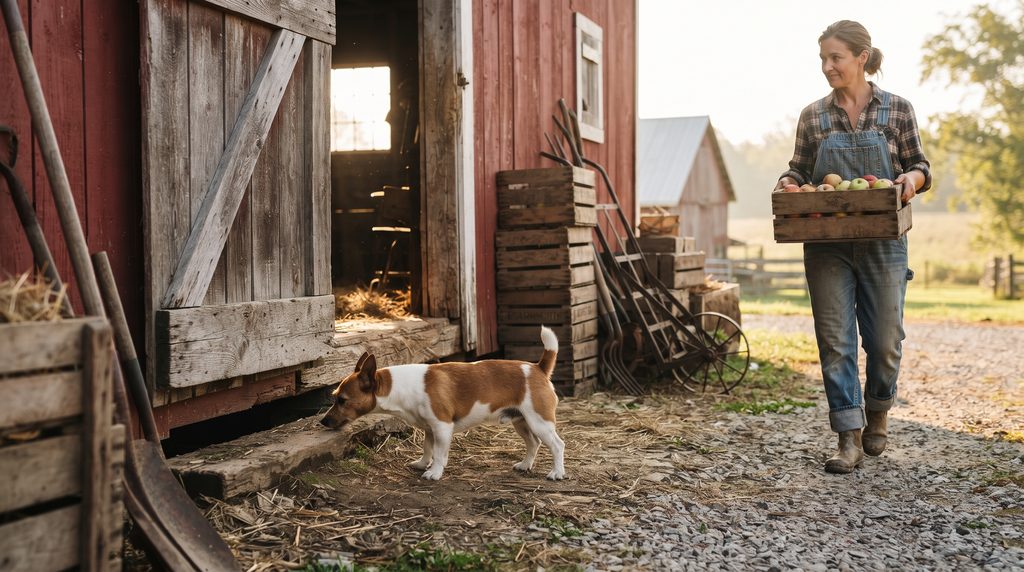
The Teddy Roosevelt Terrier’s development illustrates how American working dogs evolved into distinct modern breeds. Its shorter-legged ancestors were originally valued alongside taller Rat Terriers for their ability to control vermin and protect rural properties. As breeders began preserving the low-set variety, a separate identity gradually emerged. The United Kennel Club recognized the breed in 1999, followed by AKC Foundation Stock Service acceptance in 2016, Miscellaneous Class status in 2019, and full AKC recognition in January 2026. Despite these formal milestones, the breed remains closely connected to its agricultural origins, retaining the muscular build, alertness, and determination that made its ancestors valuable farm companions.
Teddy Roosevelt Terrier Appearance and Size
The Teddy Roosevelt Terrier has a distinctive appearance that immediately separates it from many other small terrier breeds. Compact, muscular, and noticeably longer than it is tall, this American working dog combines a low-set body with the strength, confidence, and alert expression of a capable hunter. Its short legs are perhaps its most recognizable characteristic, but they should never create the impression of a fragile or awkwardly constructed animal. A correctly proportioned Teddy Roosevelt Terrier is sturdy, balanced, and surprisingly athletic, with a strong chest, substantial bone structure, and the physical ability to move efficiently across varied terrain.
According to the American Kennel Club, the Teddy Roosevelt Terrier stands approximately 8–14 inches at the shoulder and generally weighs 8–25 pounds. The United Kennel Club maintains a somewhat narrower height standard of 8–12 inches, illustrating a difference between the two organizations’ breed standards. Individual dogs vary in size, but height alone does not determine whether an example is correctly proportioned. Muscular development, body length, chest depth, and overall balance are equally important considerations.
One of the breed’s defining features is its rectangular outline. The preferred relationship between height and body length is approximately 7:10, meaning the dog is visibly longer than it is tall. Its legs are genuinely short, with the distance from elbow to ground considerably less than that of a conventional Rat Terrier. The chest is deep and well developed, while the back remains strong and relatively level. Although the forearms may show a slight natural curve, excessive bowing, weakness, or awkward movement should not be considered desirable characteristics.
Despite its low stature, the Teddy Roosevelt Terrier should retain the appearance of a functional working dog. Its shoulders are muscular without excessive heaviness, its hindquarters are powerful, and its feet are compact and well formed. When moving, the breed should display a lively, confident gait with coordinated front and rear movement. It is not intended to shuffle, waddle, or struggle with ordinary activity. This distinction is especially important because the breed’s characteristic short-legged structure should remain compatible with agility, endurance, and everyday comfort.
The head is proportionate to the body, with a broad, slightly rounded skull tapering toward a well-developed muzzle. The expression is intelligent, friendly, and alert, often giving the dog an unmistakably inquisitive appearance. Its relatively small, oval eyes may vary from lighter to darker shades depending on coat pigmentation. The ears are V-shaped and can stand erect, remain semi-erect, or fold into a button shape. Matching ear carriage is preferred, although young dogs may take time to develop their mature ear position.
The coat is another defining feature. Teddy Roosevelt Terriers have short, dense, smooth-to-medium-hard hair that lies close to the body and usually carries a natural sheen. There is no recognized long-haired or wire-haired variety. The coat provides practical protection during everyday activities without the substantial grooming requirements associated with many rough-coated terriers. Although its appearance is sleek and tidy, the breed does shed, and its short hairs can still accumulate on clothing, furniture, and household surfaces.
There is considerable variety in Teddy Roosevelt Terrier Colors, with attractive combinations of white and other shades creating distinctive individual appearances. Recognized colors include black, chocolate, red, lemon, blue, fawn, silver, and several related variations. Dogs may display predominantly white coats with colored patches, darker coats with white markings, or tricolor combinations incorporating tan points. White must be present somewhere on the coat, although the amount and location can vary. Small areas of ticking within white markings are also permitted under the relevant breed standards.
A Blue Teddy Roosevelt Terrier has a coat featuring a diluted black pigment that produces a slate-gray or blue-gray appearance rather than a vivid blue color. Blue may appear alongside white markings, sometimes with additional tan points. This coloration is recognized, but it should not be confused with merle, a separate mottled coat pattern that is disqualified under the AKC and UKC breed standards. Coat color alone should never be treated as an indication of superior quality, health, or temperament.
Prospective owners occasionally encounter descriptions such as Miniature Teddy Roosevelt Terrier or Toy Teddy Roosevelt Terrier, particularly in informal advertisements and online discussions. However, neither is an officially recognized size variety within the breed. The Teddy Roosevelt Terrier is already a small dog, and naturally smaller individuals can occur within its accepted height range. Claims that extremely tiny examples represent a special or exclusive variety should be approached cautiously, particularly when unusually small size is being emphasized over structural soundness, health, and responsible breeding.
The breed’s tail may be naturally long, naturally bobbed, or docked where legally permitted. A natural full tail generally tapers toward the tip and may be carried with an upward curve or extended behind the body, depending on the dog’s activity and mood. Tail appearance contributes to the overall silhouette but does not change the essential requirement for a balanced, muscular, and functional terrier.
Physical maturity also deserves consideration. Teddy Roosevelt Terriers are relatively slow to reach complete maturity, with some continuing to develop muscular substance and adult proportions until approximately two or three years of age. A young dog may initially appear narrower through the chest or less substantially built than a mature adult. For prospective owners, understanding these developmental differences helps establish realistic expectations when evaluating puppies, adolescents, and fully grown dogs.
Ultimately, the ideal Teddy Roosevelt Terrier should look capable rather than exaggerated. Its short legs, sturdy rectangular body, expressive features, and smooth multicolored coat create an appealing and instantly recognizable appearance. More importantly, these characteristics should work together to produce a confident, agile companion whose physical construction reflects the practical working heritage of this distinctive American breed.

Recognizing Correct Teddy Roosevelt Terrier Proportions
When evaluating a Teddy Roosevelt Terrier, its overall construction matters more than height or weight alone. The breed should have a clearly rectangular body, genuinely short legs, a deep chest, and substantial muscle without excessive bulk. Its low-set appearance should not resemble the extreme body length of a Dachshund or the taller, more square construction of a conventional Rat Terrier. Adult dogs should move confidently and comfortably, without obvious weakness or exaggerated limb curvature. Because puppies develop at different rates, their proportions may change considerably as they mature. Responsible breeders prioritize balanced structure, sound movement, and appropriate health screening rather than unusually small size or fashionable coat colors.
Teddy Roosevelt Terrier Temperament and Personality
The Teddy Roosevelt Terrier has a lively, affectionate, and remarkably engaging personality that reflects its history as both a determined working dog and a devoted household companion. Although small in stature, this confident American terrier possesses considerable character, combining curiosity, intelligence, loyalty, and an entertaining sense of mischief. It is generally happiest when actively involved in family life, whether accompanying its owner on an outdoor adventure, investigating something interesting in the backyard, or relaxing beside familiar people at the end of the day.
Understanding the Teddy Roosevelt Terrier Temperament means recognizing that this breed is neither a constantly restless hunter nor a quiet ornamental companion. Instead, it is an adaptable, people-oriented dog with genuine working instincts and a strong desire for companionship.
One of the breed’s defining qualities is its attachment to its family. Teddy Roosevelt Terriers frequently develop close emotional bonds with their owners, sometimes showing a particular preference for one person. This devotion can be expressed through affectionate greetings, a willingness to follow family members around the house, and an obvious enjoyment of shared activities. Many are particularly attentive to changes in their owners’ behavior and seem remarkably aware of familiar household routines. Although individual personalities vary, the breed generally appreciates physical affection and close contact, making it an appealing companion for people who enjoy having their dog involved in everyday life.
Despite this affectionate nature, the Teddy Roosevelt Terrier retains the independence and determination expected of a traditional working terrier. Its ancestors were required to locate and dispatch rodents without constant human direction, and that heritage remains evident in its curiosity and problem-solving abilities. An interesting scent, unfamiliar sound, or movement beneath a garden shed can immediately capture its attention. Owners may discover that their terrier has a remarkable ability to investigate small details that other dogs overlook. This inquisitive personality makes the breed entertaining, but it also requires sensible boundaries and opportunities for appropriate exploration.
Playfulness is another particularly appealing characteristic. Teddy Roosevelt Terriers often retain a youthful enthusiasm well into adulthood and can be enthusiastic participants in games involving toys, retrieving, chasing, and interactive problem-solving. Many appear to possess a natural sense of humor, occasionally inventing amusing behaviors to attract attention or encourage interaction. Their expressive faces, alert ears, and animated movements contribute to their engaging personalities. However, playful behavior should be encouraged through appropriate toys and structured activities rather than allowing the dog to develop habits such as stealing household objects or demanding constant attention.
Although friendly and affectionate with familiar people, Teddy Roosevelt Terriers can be more reserved when meeting strangers. Some greet newcomers readily, while others prefer to observe from a comfortable distance before approaching. This natural caution should not be confused with fearfulness or inappropriate aggression. A well-socialized dog should remain confident and manageable around unfamiliar people, even when it chooses not to seek immediate physical contact. Owners can encourage positive social behavior by allowing their terrier to approach visitors voluntarily rather than insisting that every stranger pet or handle the dog.
The breed also possesses a strong protective instinct, particularly toward its home and familiar household members. Teddy Roosevelt Terriers are naturally alert and may respond quickly to unfamiliar sounds, approaching visitors, or unexpected activity outside. Their barking can make them effective little watchdogs, although their primary value lies in alerting their owners rather than providing physical protection. Without appropriate guidance, some individuals may become excessively vocal when responding to everyday disturbances. Teaching a reliable quiet cue and rewarding calm behavior can help maintain an appropriate balance between natural vigilance and relaxed household manners.
Intelligence plays an important role in the Teddy Roosevelt Terrier’s behavior. These dogs generally learn quickly, especially when training is engaging, consistent, and based on positive reinforcement. Their eagerness to participate makes them suitable candidates for obedience, rally, scent work, and other activities that encourage cooperation between dog and owner. However, intelligence does not always translate into unquestioning obedience. An interesting smell or moving animal may temporarily become more compelling than a familiar command. Owners who combine clear expectations with patience and enjoyable training usually achieve better results than those relying on repetitive drilling or harsh corrections.
The Teddy Roosevelt Terrier’s hunting heritage also influences its relationship with the surrounding environment. Its prey drive can be substantial, particularly when encountering squirrels, rodents, or other small moving animals. Even an affectionate, well-behaved household companion may react instinctively when something runs across its path. This does not necessarily indicate an aggressive personality toward people or other dogs. Rather, it reflects a specific hunting response developed through generations of selective breeding. Secure fencing, supervision around vulnerable animals, and reliable leash manners are therefore sensible parts of responsible ownership.
Social relationships with other dogs are often positive, particularly when introductions begin early and remain pleasant. Unlike some terriers historically selected for confrontation with other dogs, the Teddy Roosevelt Terrier is generally described as sociable and not especially inclined toward unnecessary conflict. Nevertheless, its confidence and enthusiasm can occasionally overwhelm more sensitive companions. Careful introductions, appropriate supervision, and respect for individual personalities are important, especially when dogs differ significantly in size, age, or activity level.
A particularly rewarding aspect of the breed is its ability to settle after meaningful activity. Although energetic and enthusiastic outdoors, many Teddy Roosevelt Terriers enjoy spending quiet periods indoors with their families. A dog that has received suitable exercise, mental stimulation, and attention may be perfectly content resting on a comfortable bed or curling up beside its owner. This balance makes the breed appealing to households seeking an active companion without necessarily wanting a dog that demands continuous vigorous exercise throughout the day.
Individual temperament is influenced by genetics, early experiences, socialization, and the quality of everyday handling. Puppies raised in supportive environments and exposed gradually to different people, sounds, surfaces, and situations are more likely to develop into adaptable adults. Equally important is recognizing that not every Teddy Roosevelt Terrier will have identical preferences. Some are enthusiastic social butterflies, while others are more thoughtful observers. Some enjoy lengthy outdoor adventures, while others prefer shorter bursts of activity followed by considerable family time.
Ultimately, the Teddy Roosevelt Terrier offers an appealing combination of affection, confidence, intelligence, and genuine individuality. Its playful nature and strong attachment to people make it a rewarding companion, while its hunting instincts and occasional independence remind owners that it remains a working terrier at heart. For families willing to provide companionship, constructive training, and opportunities for exploration, this distinctive little dog can bring considerable warmth, entertainment, and loyalty to everyday life.
Understanding the Teddy Roosevelt Terrier’s Protective Instincts
Teddy Roosevelt Terriers are naturally attentive to their surroundings and often alert their families when unfamiliar people or animals approach. This watchfulness reflects their working heritage, but it should not develop into excessive barking, territorial behavior, or suspicion of ordinary visitors. Early socialization helps puppies distinguish everyday experiences from genuinely unusual situations, while consistent training encourages calm responses. Owners should reward relaxed behavior around guests and avoid encouraging confrontational displays. Although some individuals are initially reserved with strangers, a well-adjusted Teddy Roosevelt Terrier should remain confident, approachable on its own terms, and comfortable participating in ordinary family and community activities.

Living With a Teddy Roosevelt Terrier
Living with a Teddy Roosevelt Terrier can be an enormously rewarding experience for owners who appreciate an affectionate, intelligent, and entertaining dog that enjoys participating in everyday household activities. Although compact enough for smaller homes, this distinctive American terrier has the curiosity, confidence, and enthusiasm of a much larger working dog. Its manageable size and relatively straightforward grooming requirements make certain aspects of ownership convenient, but its active personality and strong attachment to people mean that a successful home environment requires more than simply providing comfortable accommodations. The breed thrives when companionship, activity, mental stimulation, and sensible household boundaries become natural parts of daily life.
One of the first things new owners often discover is how involved a Teddy Roosevelt Terrier likes to be in household routines. Whether someone is preparing breakfast, sorting laundry, gardening, or settling down to watch television, the dog may appear nearby, watching proceedings with considerable interest. This engagement reflects the breed’s people-oriented nature and intelligence. Many individuals enjoy following their owners between rooms and participating in ordinary activities, sometimes offering amusing interpretations of what constitutes helpful behavior. Providing appropriate opportunities for involvement, alongside teaching the dog to relax independently, helps maintain a comfortable household balance.
Despite its small stature, the Teddy Roosevelt Terrier is not necessarily content with a sedentary lifestyle. Daily walks, interactive play, and opportunities to investigate different environments contribute significantly to its well-being. A dog that spends most of its time indoors without meaningful stimulation may become increasingly restless, vocal, or inclined to invent its own entertainment. Digging, persistent barking, and inappropriate chewing can develop when natural curiosity has few acceptable outlets. Fortunately, these behaviors are often easier to manage when owners establish predictable routines that combine physical activity with enjoyable mental challenges.
Housing flexibility is one of the breed’s advantages. A Teddy Roosevelt Terrier can adapt successfully to apartments, townhouses, suburban properties, and rural homes, provided its needs are consistently met. A large backyard is convenient but does not automatically produce a satisfied dog, particularly when outdoor access involves little meaningful interaction. Conversely, apartment living can work extremely well when owners provide regular walks, enrichment activities, and opportunities to explore beyond the home. The important consideration is not simply the amount of available space but how effectively the household accommodates the dog’s physical and behavioral requirements.
Its alert personality deserves attention, especially in homes with nearby neighbors. Teddy Roosevelt Terriers may announce unfamiliar visitors, unusual noises, or movement outside windows with enthusiastic barking. Apartment corridors, shared entrances, delivery drivers, and passing pedestrians can provide frequent opportunities for this behavior. Early training that rewards calm responses is particularly valuable. Positioning a comfortable resting area away from busy windows, managing visual triggers, and teaching the dog to respond reliably when asked to settle can help reduce unnecessary noise without suppressing its naturally observant character.
Another important consideration is the breed’s response to spending time alone. Teddy Roosevelt Terriers generally enjoy human companionship and may find prolonged isolation frustrating, particularly when they have not learned to relax independently. This does not mean every individual develops separation anxiety, but owners should introduce alone time gradually rather than assuming the dog will naturally adjust to an empty house. Comfortable sleeping arrangements, safe enrichment toys, predictable departure routines, and appropriate opportunities for exercise can help develop independence. Households where everyone is absent for lengthy periods may need to consider dog walkers, trusted visitors, or other suitable arrangements.
The breed’s distinctive physical construction also influences practical household decisions. Although Teddy Roosevelt Terriers are sturdy and athletic, their short legs and relatively long bodies make sensible environmental management worthwhile. Owners should discourage repeated uncontrolled leaps from high furniture and provide stable, nonslip surfaces where necessary. Low steps or ramps may be useful for individuals that frequently access elevated resting places. These precautions should not be interpreted as evidence that the breed is physically delicate. A healthy, well-constructed Teddy Roosevelt Terrier should move confidently and enjoy ordinary activity, but unnecessary strain and repetitive awkward landings are best avoided.
Outdoor security is another essential aspect of ownership. The breed’s history as a determined rodent hunter means that squirrels, mice, or other small animals can quickly attract its attention. A secure garden should have appropriately maintained fencing, with particular attention to gaps beneath gates and areas where digging might create an escape route. Because Teddy Roosevelt Terriers are small and surprisingly agile, owners should not assume that ordinary boundaries are automatically sufficient. Supervised outdoor exploration, dependable recall training, and appropriate leash use provide additional safeguards when the dog’s hunting instincts become engaged.
Household cleanliness and maintenance are generally uncomplicated compared with those associated with many heavily coated breeds. The Teddy Roosevelt Terrier’s short, smooth coat does not require professional styling or elaborate daily maintenance, although loose hairs can still accumulate on furniture and clothing. A comfortable indoor resting area, regular nail care, dental hygiene, and appropriate bathing help maintain everyday comfort. Its low-set body may also collect moisture, dust, or mud along the chest and underside during wet walks, making a quick towel-dry particularly useful after outdoor adventures.
Temperature management is worth considering because the breed has a short coat without the substantial insulation of some northern or double-coated dogs. In cold, wet conditions, smaller individuals may appreciate a lightweight, properly fitted coat during outdoor activities. In hot weather, walks should be scheduled thoughtfully, with access to shade and drinking water. The breed’s enthusiasm can sometimes encourage continued activity even when conditions are less than ideal, so owners should monitor comfort rather than relying entirely on the dog’s willingness to keep moving.
For many households, the most satisfying feature of living with a Teddy Roosevelt Terrier is the contrast between its energetic outdoor personality and its affectionate behavior indoors. After an enjoyable walk, training session, or period of exploration, a contented terrier may happily settle beside its family for a quiet evening. Its intelligence, humor, loyalty, and willingness to participate in daily routines can make ordinary moments unexpectedly entertaining. With realistic expectations, consistent boundaries, and sufficient companionship, this adaptable little working terrier can become a deeply rewarding member of the household.

Teddy Roosevelt Terrier and Children
The Teddy Roosevelt Terrier can make a wonderful family companion for households with children, particularly when the dog has been raised with youngsters and everyone understands how to interact respectfully. Affectionate, playful, intelligent, and naturally devoted to its family, this small American terrier often enjoys the energy and companionship that children bring to everyday life. Its sturdy construction and enthusiastic personality can make it an entertaining playmate, while its strong attachment to familiar people encourages close family relationships. However, the Teddy Roosevelt Terrier remains an active working breed with natural hunting instincts, personal boundaries, and a relatively small body. Successful relationships with children depend on thoughtful introductions, appropriate supervision, and an understanding of the individual dog’s temperament.
One of the breed’s most appealing qualities is its willingness to participate in family activities. Teddy Roosevelt Terriers are often curious about whatever children are doing, whether that involves exploring the backyard, playing with toys, or preparing for an afternoon adventure. Many enjoy interactive games and respond enthusiastically when invited to participate. Their lively personalities can make them particularly appealing to school-age children who appreciate an energetic companion. Nevertheless, enthusiasm should not be mistaken for unlimited patience. Even an affectionate terrier needs opportunities to rest, withdraw from attention, and enjoy activities without constant handling.
Early experiences play an important role in shaping the relationship between a Teddy Roosevelt Terrier and children. Puppies exposed gradually to calm, positive interactions with youngsters are more likely to become comfortable around their movements, voices, and unpredictable behavior. These experiences should be carefully managed rather than overwhelming the puppy with excessive excitement. Short, pleasant encounters involving gentle handling, appropriate play, and positive reinforcement help establish confidence. Children should also learn that a puppy is a living animal rather than a toy, and that affection must always be offered in ways the dog finds comfortable.
Families with babies and toddlers require particular care because very young children cannot reliably understand canine boundaries. Sudden movements, grabbing hands, loud noises, and accidental falls may startle even a normally tolerant dog. A Teddy Roosevelt Terrier’s short legs and compact body also make it vulnerable to being stepped on, fallen over, or handled awkwardly. Adults should supervise every interaction closely and use physical separation whenever active supervision is not possible. Baby gates, secure resting areas, and clearly established household routines can help protect both the child and the dog during this demanding stage of family life.
Preschool-age children may be eager to hug, carry, or chase a small dog, but these behaviors should be discouraged. Many dogs find tight embraces uncomfortable, particularly when they restrict movement or prevent escape. Lifting a Teddy Roosevelt Terrier incorrectly can also place unnecessary strain on its body. Children should instead be encouraged to stroke the dog’s shoulder or chest gently when it voluntarily approaches. Sitting quietly and allowing the terrier to initiate contact creates a safer and more comfortable experience than pursuing an animal that is trying to move away.
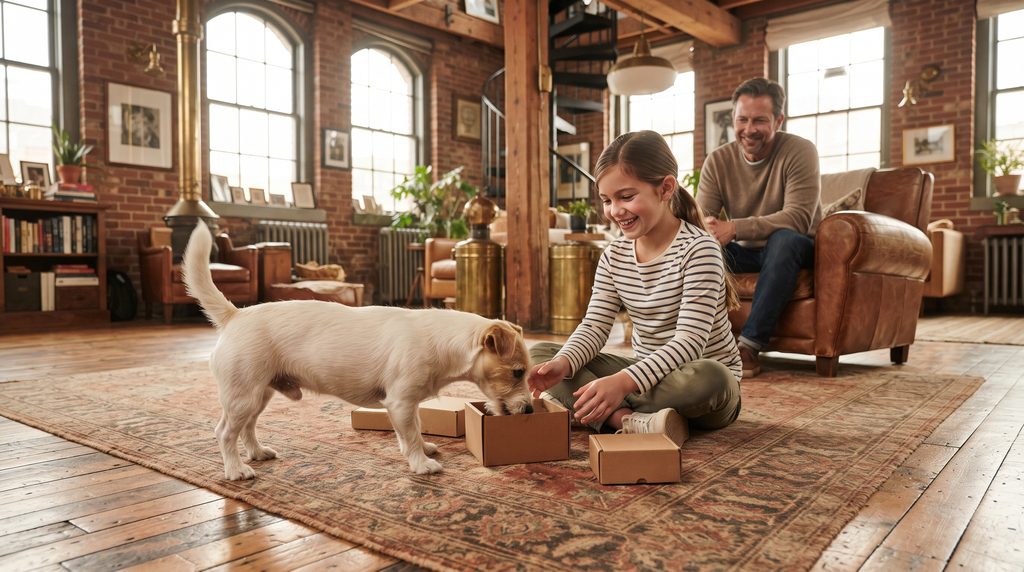
School-age children are often better equipped to develop rewarding relationships with the breed. They can learn simple training exercises, participate in supervised play, and begin understanding the dog’s behavioral signals. Activities such as hiding treats for scent games, practicing basic obedience, or gently rolling a toy across the floor provide opportunities for enjoyable cooperation. Because Teddy Roosevelt Terriers are intelligent and generally responsive to positive reinforcement, these activities can become particularly satisfying. Adults should remain responsible for managing training sessions, ensuring that expectations are reasonable and preventing frustration when the dog becomes distracted.
Older children and teenagers may discover that the Teddy Roosevelt Terrier is a surprisingly capable partner for outdoor adventures. Its compact appearance should not obscure its working heritage or enthusiasm for physical activity. Walking, appropriately paced hiking, backyard games, and introductory dog sports can all provide valuable opportunities for shared enjoyment. Teenagers may also enjoy teaching tricks or participating in organized training classes. However, the dog’s exercise should match its age, physical development, and condition, and children should never be expected to manage challenging situations beyond their abilities.
Understanding canine body language is especially important in families with children. A Teddy Roosevelt Terrier that turns its head away, repeatedly licks its lips, stiffens, freezes, or attempts to leave an interaction may be signaling discomfort. Growling should be treated as useful communication rather than behavior to punish. Correcting a dog for warning that it feels threatened can discourage communication without resolving the underlying problem. Children should learn to stop interacting immediately when the dog appears uncomfortable, while adults should identify the cause and provide appropriate space or assistance.
The breed’s natural excitement can occasionally complicate children’s games. Teddy Roosevelt Terriers possess a strong prey drive, and rapid movement may encourage chasing behavior. Running children, bouncing balls, and squealing games can become particularly stimulating for an enthusiastic terrier. Although playful pursuit is not necessarily aggressive, it may lead to jumping, grabbing clothing, or accidental collisions. Teaching calm greetings, reliable responses to familiar cues, and appropriate toy-based games helps channel the dog’s enthusiasm into safer activities. Games that encourage children to run away while the dog pursues them are generally best avoided.
Food, toys, and resting spaces also require sensible household rules. Children should never disturb a Teddy Roosevelt Terrier while it is eating, sleeping, chewing a valued treat, or recovering from an exciting activity. Although many individuals happily share their belongings, any dog may become uncomfortable when approached around something it considers important. Adults should teach children to leave the dog’s possessions alone unless specifically invited to participate in a supervised training exercise. If resource guarding develops, guidance from a qualified reward-based trainer or veterinary behavior professional is preferable to confrontation or punishment.
The breed’s protective and watchful nature deserves consideration when children invite friends home. Some Teddy Roosevelt Terriers readily welcome unfamiliar youngsters, while others are initially reserved or alert to unusual activity. Excited groups of children can produce considerable noise and unpredictable movement, potentially overwhelming a dog accustomed to quieter routines. Introductions should be calm and controlled, with visitors encouraged to ignore the terrier until it appears comfortable. Providing a separate resting space during particularly lively gatherings can help prevent overstimulation and allow the dog to disengage whenever necessary.
Parents should also consider the practical responsibilities of caring for a Teddy Roosevelt Terrier. Although children can assist with feeding preparations, brushing, training, and supervised play, adults must remain accountable for veterinary care, exercise, nutrition, and behavioral management. A child’s enthusiasm may fluctuate as schoolwork, friendships, and other interests develop. Because this breed can live well into its teenage years, families should approach ownership as a long-term commitment rather than a temporary childhood experience. Shared responsibilities can be educational, but the dog’s welfare should never depend entirely on a child’s consistency.
Not every Teddy Roosevelt Terrier will be equally comfortable around children. Genetics, previous experiences, age, health, and individual personality all influence behavior. An adult rescue dog unfamiliar with youngsters may need a much slower introduction than a puppy raised in a supportive family environment. Similarly, a terrier experiencing discomfort, anxiety, or age-related changes may become less tolerant of noisy activity. Families should assess the individual dog rather than relying entirely on general breed descriptions, and seek professional guidance when signs of persistent fear or conflict appear.
For households willing to establish clear boundaries and encourage respectful interactions, the Teddy Roosevelt Terrier can become an affectionate, entertaining, and deeply valued family companion. Its combination of intelligence, playfulness, loyalty, and enthusiasm creates opportunities for genuine friendship between children and dogs. The strongest relationships develop when youngsters learn to appreciate the terrier’s individuality, respect its need for personal space, and participate in enjoyable activities that build trust. With responsible adult supervision and appropriate socialization, this distinctive little American breed can contribute enormously to family life.
Helping Children Build a Safe Relationship With Their Terrier
Children should learn to interact with a Teddy Roosevelt Terrier through calm, predictable activities rather than rough handling or overly exciting games. Supervised scent searches, simple trick training, and gentle toy-based play can help establish trust while providing useful mental stimulation. Teach youngsters never to disturb the dog during meals, sleep, or quiet time, and to recognize when it wants to move away. Because this breed is small and low-set, children should avoid lifting, squeezing, or accidentally stepping on it. Adults should supervise interactions, provide an accessible resting area, and ensure that positive experiences remain comfortable for both the dog and the child.
Teddy Roosevelt Terrier With Other Dogs and Pets
The Teddy Roosevelt Terrier is generally a sociable, confident, and adaptable little dog that can develop rewarding relationships with other household animals when introductions are handled thoughtfully. Unlike some terrier breeds historically associated with confrontational behavior toward other dogs, the Teddy Roosevelt Terrier was developed to work around people and other animals while performing practical hunting duties. Its strong family attachments, well-developed social instincts, and naturally inquisitive personality often make it a suitable companion in multidog households. However, its background as an accomplished rodent hunter introduces important considerations, particularly when smaller pets are involved. Understanding the difference between ordinary canine sociability and instinctive prey-driven behavior is essential to establishing a safe and harmonious household.
One of the breed’s more appealing characteristics is its generally positive attitude toward other dogs. Teddy Roosevelt Terriers are often curious rather than confrontational when encountering unfamiliar canine companions. Many enjoy shared walks, interactive games, and opportunities to explore interesting environments alongside another dog. Their confidence also means they are not necessarily intimidated by considerably larger breeds, although confidence should never be mistaken for an ability to handle rough or inappropriate interactions. Individual temperament, previous experiences, and the behavior of the other dog remain important factors in determining whether a friendship develops successfully.
Early socialization helps establish comfortable relationships with other dogs. Puppies benefit from carefully managed exposure to friendly, appropriately vaccinated dogs of different sizes, ages, and personalities. These experiences should emphasize calm introductions, positive associations, and opportunities to disengage rather than overwhelming excitement. A suitable puppy class can provide useful guidance, although the quality of supervision matters more than simply allowing unrestricted play. Young Teddy Roosevelt Terriers should learn to approach other dogs politely, recognize social signals, and respond when their owners interrupt an interaction.
The breed’s small size creates particular considerations when interacting with much larger dogs. Although a Teddy Roosevelt Terrier may display considerable bravery and enthusiasm, a powerful companion can accidentally cause injury during rough play. Even a friendly Labrador Retriever or German Shepherd may be physically overwhelming if games involve repeated body contact, uncontrolled chasing, or jumping. Owners should supervise closely, interrupt play when necessary, and provide opportunities for both dogs to rest. Successful relationships depend on compatible play styles and mutual respect rather than size alone.
Living with another Teddy Roosevelt Terrier can be particularly enjoyable when both dogs have compatible personalities. Their shared enthusiasm for exploration, interactive games, and family activities may provide valuable companionship. However, introducing two energetic terriers does not automatically guarantee harmony. Differences in confidence, maturity, exercise requirements, and tolerance for excitement can affect the relationship. Owners should establish individual feeding areas, suitable resting places, and opportunities for separate attention. This prevents unnecessary competition and ensures that each dog develops a secure relationship with its human family.
Introducing an adult Teddy Roosevelt Terrier to an established household dog requires a gradual approach. Initial meetings are generally best arranged in a quiet, neutral environment where neither animal feels obliged to defend familiar territory. Parallel walking, with sufficient distance for both dogs to remain relaxed, can help establish positive associations before closer interaction. Brief greetings should be followed by opportunities to move apart. Once the dogs appear comfortable, carefully supervised time together at home can begin. Food bowls, favorite toys, and other potentially contested resources should initially be managed separately.
Although the breed is generally sociable, individual Teddy Roosevelt Terriers may occasionally display possessiveness, territorial behavior, or discomfort around particular dogs. These responses should not automatically be dismissed as typical terrier stubbornness. Repeated stiffness, prolonged staring, blocking access to people or resources, and escalating vocal behavior may indicate tension. Owners should intervene calmly before disagreements develop into confrontations. Reward-based training and professional behavioral guidance can be especially useful when household dogs struggle to share space comfortably.
Relationships with cats require a somewhat different approach. The Teddy Roosevelt Terrier is often described by breed authorities as capable of living successfully alongside cats, particularly when raised with them from an early age. Some individuals develop affectionate relationships with feline housemates, sharing resting spaces or calmly occupying the same room. Nevertheless, the breed’s strong hunting instincts mean that compatibility should never be assumed. A terrier that peacefully accepts a familiar household cat may still react enthusiastically when an unfamiliar cat runs across the garden.
Successful cat introductions depend heavily on controlled exposure and the ability of both animals to retreat safely. Initially, the cat should have access to separate rooms, elevated resting places, and escape routes that the dog cannot follow. Baby gates or other secure barriers can allow gradual visual and scent-based introductions without direct contact. The Teddy Roosevelt Terrier should be rewarded for calm observation, disengagement, and responding to familiar cues. Progress should occur at the pace of the more uncomfortable animal, rather than according to a predetermined schedule.
The cat’s behavior can also influence the relationship. A confident, dog-experienced cat may be less likely to trigger excited pursuit than one that immediately flees whenever the terrier approaches. However, owners should never deliberately expose a fearful cat to chasing behavior in the hope that repeated encounters will establish familiarity. Chasing can become highly rewarding for a dog with strong prey drive, while the resulting stress may seriously affect the cat’s welfare. If a Teddy Roosevelt Terrier repeatedly fixates on the cat, stalks it, or cannot disengage, continued separation and professional guidance may be necessary.
Smaller household pets present a greater challenge. Rabbits, guinea pigs, hamsters, mice, rats, and other small mammals closely resemble the animals that Teddy Roosevelt Terriers were originally developed to pursue. Even a friendly, affectionate dog may respond instinctively to their movement, scent, or vocalizations. This reaction is not necessarily a sign of poor training or an aggressive personality. It reflects a deeply rooted hunting response that may remain powerful despite successful obedience training and otherwise excellent household manners.
For this reason, small mammals should be housed in secure enclosures within areas inaccessible to the terrier. Owners should not rely on wire cages alone if the dog can reach, overturn, or repeatedly investigate them. Direct interaction should generally be avoided, even when the dog initially appears calm or uninterested. Birds and other vulnerable pets may require similar precautions, depending on their size, enclosure arrangements, and the individual dog’s reactions. Maintaining separate, secure environments is usually more reliable than attempting to train away every possible predatory response.
Outdoor encounters with wildlife introduce additional challenges. Teddy Roosevelt Terriers retain an enthusiastic interest in squirrels, rodents, and other small animals. A dog that behaves politely around familiar household pets may react very differently when something suddenly darts across a path. Secure fencing, reliable leash handling, and appropriate recall training help reduce the risk of uncontrolled pursuit. Owners should also avoid encouraging their terrier to chase neighborhood cats or wildlife, as repeated opportunities can strengthen an already established instinct.
Dog parks and other social environments should be approached according to the individual terrier’s confidence and behavior. Some Teddy Roosevelt Terriers enjoy appropriately managed group activities, while others prefer familiar companions or smaller gatherings. Overcrowded parks, uncontrolled play, and dogs with incompatible temperaments can create unnecessary stress. Structured walks with known canine friends, supervised training classes, and small social groups may provide equally satisfying opportunities for companionship without the unpredictability of busy off-leash areas.
Ultimately, the Teddy Roosevelt Terrier can be an excellent companion for other dogs and, in suitable circumstances, household cats. Its affectionate personality, confidence, and generally cooperative social tendencies provide a strong foundation for positive relationships. However, its determined hunting heritage requires realistic expectations around smaller animals, wildlife, and unfamiliar pets. Owners who prioritize thoughtful introductions, consistent supervision, secure environments, and respect for individual personalities are best placed to create a peaceful household in which their Teddy Roosevelt Terrier and other animals can thrive.
Managing a Teddy Roosevelt Terrier in a Multi-Pet Household
Teddy Roosevelt Terriers often enjoy canine companionship and may live successfully with familiar cats, particularly when introduced carefully from an early age. However, their traditional hunting instincts make smaller animals a different proposition. Rabbits, guinea pigs, rodents, and other vulnerable pets should remain in secure areas inaccessible to the dog. Even a terrier that behaves calmly around household animals may instinctively pursue unfamiliar wildlife. Introduce dogs gradually, supervise interactions with larger companions, and provide separate feeding and resting spaces when necessary. With cats, encourage relaxed behavior and ensure reliable escape routes. Never assume that friendly behavior toward people or dogs guarantees safety around potential prey animals.

Teddy Roosevelt Terrier Exercise and Activity Needs
The Teddy Roosevelt Terrier may be small and short-legged, but its energy, enthusiasm, and physical capabilities are those of a genuine working dog. Developed from determined American farm terriers, this compact breed possesses considerable stamina, natural curiosity, and a strong desire to remain active. Its distinctive low-set construction should never be mistaken for an indication that it requires little exercise. On the contrary, a healthy Teddy Roosevelt Terrier enjoys opportunities to explore, investigate scents, participate in games, and accompany its owner on outdoor adventures. Meeting these needs contributes to physical fitness, emotional stability, and a satisfying relationship between dog and owner. The most successful exercise routines combine regular movement with activities that engage the breed’s intelligent and inquisitive mind.
For many healthy adult Teddy Roosevelt Terriers, approximately 45–75 minutes of purposeful daily activity can provide a useful starting point, although individual requirements vary considerably. This is a practical planning range rather than a formal breed standard. Younger adults with particularly active personalities may enjoy considerably more, while older dogs or individuals with health limitations may require gentler routines. Exercise does not need to occur in one continuous session. Two enjoyable walks, supplemented by interactive games and opportunities for exploration, may be more satisfying than a single lengthy outing. Owners should consider their dog’s age, conditioning, enthusiasm, recovery, and overall health rather than relying exclusively on the clock.
Walking is one of the most accessible and beneficial activities for this breed. Teddy Roosevelt Terriers generally appreciate varied routes that provide unfamiliar scents, interesting surroundings, and opportunities to investigate their environment. Neighborhood walks, woodland paths, park trails, and quieter coastal areas can all offer enjoyable experiences. Although their legs are short, these dogs can cover surprising distances when appropriately conditioned. However, owners should allow for the breed’s naturally lower stride and avoid expecting a small terrier to maintain the relentless pace of a much taller, long-legged companion.
Exploratory walking can be especially rewarding because the Teddy Roosevelt Terrier possesses a well-developed hunting instinct. Its ancestors were expected to locate rodents around farms and outbuildings, relying heavily on scent, observation, and persistence. Modern dogs retain much of this investigative enthusiasm. Allowing a terrier to pause and examine interesting smells can provide valuable mental stimulation, even when the walk covers a relatively short distance. Owners who prioritize constant forward movement may overlook an important aspect of the dog’s natural behavior. A balanced walk can include periods of brisk exercise alongside slower opportunities for controlled sniffing and exploration.
Interactive play provides another excellent outlet for the breed’s enthusiasm. Many Teddy Roosevelt Terriers enjoy retrieving soft toys, investigating treat-filled puzzles, playing structured tug games, and participating in short sessions of energetic backyard activity. Their intelligence and determination often make them enthusiastic problem-solvers, particularly when games involve searching for hidden objects or completing simple challenges. Owners should vary activities occasionally to maintain interest while reinforcing appropriate behavior. Repeated high-speed chasing, abrupt turning, and uncontrolled jumping are less desirable than balanced games that encourage movement without unnecessary strain.
Scent work is particularly well suited to the Teddy Roosevelt Terrier’s working heritage. Simple activities can begin indoors by placing a few treats in easily accessible hiding places and encouraging the dog to locate them. As confidence develops, owners can introduce more challenging searches involving cardboard boxes, different rooms, or suitable outdoor environments. Organized scent work classes provide additional opportunities to develop these abilities. Because searching requires concentration, patience, and independent problem-solving, even relatively short sessions can be surprisingly satisfying. This makes scent work especially useful during periods of poor weather or when extended outdoor exercise is impractical.
The breed can also excel in organized canine activities. Agility, obedience, rally, and other structured dog sports offer opportunities to develop coordination, fitness, and communication with an owner. The American Kennel Club also identifies Dock Diving and AKC Scent Work among activities in which Teddy Roosevelt Terriers may participate successfully. However, training should accommodate the dog’s individual abilities and physical development. Agility equipment must be appropriately sized, and jumping heights should remain suitable for a low-set dog. Youngsters should not be encouraged to perform repeated high-impact obstacles before they are physically mature and adequately conditioned.
Hiking can be an enjoyable activity for Teddy Roosevelt Terriers accustomed to outdoor adventures. Their muscular bodies, alert personalities, and interest in unfamiliar environments often make them enthusiastic trail companions. Nevertheless, their short legs influence how efficiently they negotiate certain obstacles. Deep mud, oversized steps, loose rocks, and steep scrambles may require considerably more effort than they would for a taller dog. Owners should select routes appropriate to the terrier’s conditioning and provide assistance when necessary. Carrying sufficient drinking water, planning rest opportunities, and checking paws after demanding terrain help maintain comfort during longer excursions.
The breed’s hunting instincts also create important exercise-related safety considerations. A squirrel darting across a trail or a rodent disappearing into vegetation may trigger an immediate desire to pursue. Even a normally responsive Teddy Roosevelt Terrier can become temporarily distracted by movement or scent. For this reason, secure walking equipment and reliable leash handling are essential in areas where wildlife, traffic, or unfamiliar animals may be encountered. Off-leash exercise is best reserved for appropriately enclosed environments where the dog can explore without risking escape or unwanted pursuit.
Puppies require a different approach to physical activity. Teddy Roosevelt Terriers develop gradually, and their muscular structure and adult proportions may continue changing beyond their first year. Young puppies benefit from frequent opportunities for gentle movement, exploratory play, socialization, and short walks appropriate to their developmental stage. Forced running, excessive repetitive jumping, and demanding endurance exercise should be avoided while their bodies are developing. There is no universally appropriate exercise duration for every puppy, so owners should observe comfort, enthusiasm, and recovery while discussing concerns with their veterinarian.
Weather conditions can also influence activity choices. The Teddy Roosevelt Terrier’s short, close-fitting coat provides relatively limited protection against cold, wet conditions, particularly for smaller individuals. A properly fitted lightweight coat may improve comfort during chilly walks. Conversely, hot pavement, strong sunshine, and high humidity can make vigorous exercise dangerous. Owners should adjust activity to the weather, provide regular access to drinking water, and choose cooler periods for longer outings. During extreme conditions, indoor scent games and short training activities can provide useful alternatives to extended outdoor exercise.
Recognizing the difference between healthy enthusiasm and fatigue is an important ownership skill. Some Teddy Roosevelt Terriers remain eager to continue playing even when they are becoming physically tired. Persistent panting, slowing pace, unusual reluctance to move, changes in gait, or stiffness after activity may indicate that exercise has become excessive. Owners should allow adequate recovery and increase demanding activities gradually. Repeated limping, discomfort, or difficulty negotiating ordinary obstacles deserves veterinary assessment rather than an assumption that short-legged dogs naturally move awkwardly.
Exercise requirements also change with age. Mature Teddy Roosevelt Terriers may remain energetic for many years, but older individuals often benefit from adjustments to intensity, duration, and terrain. Comfortable walking, gentle exploratory activities, and low-impact scent games can help preserve mobility while reducing unnecessary physical strain. Maintaining a healthy body weight becomes particularly important because excess weight increases the demands placed on joints and supporting muscles. Owners should adapt routines to the individual dog rather than expecting a senior terrier to maintain the same performance as a younger adult.
Ultimately, the Teddy Roosevelt Terrier thrives when exercise offers more than simple physical exertion. Its combination of stamina, intelligence, curiosity, and working instincts makes it particularly responsive to activities that provide purpose and variety. A satisfying day might include a brisk morning walk, a short afternoon scent-searching game, and an enjoyable evening outing with its family. For owners willing to provide consistent activity, engaging challenges, and opportunities to explore safely, this spirited American terrier can become a remarkably capable and enthusiastic adventure companion.

Exercise That Supports a Short-Legged Working Terrier
The Teddy Roosevelt Terrier’s unusual proportions should influence exercise planning without unnecessarily restricting activity. These sturdy little dogs are naturally athletic, but their shorter legs can make high obstacles, steep steps, and repeated jumping more demanding than they appear. Brisk walking, scent games, appropriately designed agility activities, and controlled retrieving provide excellent opportunities for exercise. Build endurance gradually, particularly before longer hikes or organized sports. Puppies should avoid excessive repetitive impact while developing, and older dogs may benefit from gentler activities. A healthy Teddy Roosevelt Terrier should move confidently and comfortably; persistent stiffness, limping, or reluctance to exercise warrants veterinary attention rather than being dismissed as a normal feature of the breed.
Training a Teddy Roosevelt Terrier
Training a Teddy Roosevelt Terrier can be an especially rewarding experience because this intelligent, attentive American breed combines a natural willingness to cooperate with the determination and curiosity of a traditional working terrier. Originally developed to hunt rodents and assist around farms, these dogs are accustomed to observing their surroundings, making quick decisions, and responding enthusiastically to interesting activities. Their intelligence and strong attachment to their owners often make them surprisingly receptive to training, particularly when lessons involve praise, enjoyable rewards, and opportunities to solve problems. However, their hunting instincts and occasional independence mean that successful training requires consistency, patience, and an understanding of what motivates the individual dog.
One of the breed’s greatest training advantages is its desire to interact with familiar people. Many Teddy Roosevelt Terriers enjoy learning new behaviors because training provides an opportunity to receive attention and participate in shared activities. Praise, small food rewards, toys, and playful interaction can all be effective motivators. Reward-based methods are particularly suitable because they strengthen cooperation without creating unnecessary anxiety or confrontation. Harsh corrections, intimidation, and physically forceful techniques are inappropriate for this breed and may undermine the confidence and trust that make its naturally affectionate temperament so appealing.
Training should begin as soon as a puppy joins its new household. Early lessons can focus on recognizing its name, approaching when called, following a person for a few steps, and responding to simple cues such as sit, down, and wait. Sessions lasting just a few minutes are usually sufficient for young puppies, especially when repeated naturally throughout the day. Because Teddy Roosevelt Terriers are intelligent and observant, they often recognize household routines surprisingly quickly. Owners should establish consistent expectations from the beginning, rewarding desirable behavior rather than waiting until unwanted habits become established.
Recall training deserves particular attention because the breed’s hunting background can make moving animals exceptionally distracting. A Teddy Roosevelt Terrier may respond beautifully when called indoors but temporarily ignore the same instruction when a squirrel disappears beneath a fence. Begin recall exercises in a quiet environment, rewarding the dog generously whenever it approaches. Gradually introduce greater distances and mild distractions before progressing to more challenging locations. A lightweight long line attached to a suitable harness can provide additional security during outdoor practice. Even with excellent training, off-leash freedom should remain restricted to safely enclosed areas when wildlife or other hazards are present.
Teaching a reliable leave-it cue is equally valuable. These terriers are naturally inclined to investigate interesting objects, scents, and small moving creatures, making impulse-control exercises particularly useful. Owners can begin by rewarding the dog for disengaging from a treat held in a closed hand, then gradually progress to objects on the floor and distractions encountered during walks. A separate drop-it cue can help when the dog has already picked something up. Trading an object for a worthwhile reward is generally more effective than chasing the terrier or forcibly removing items, which may unintentionally encourage possessiveness or playful avoidance.
Loose-leash walking is another essential skill. Although the Teddy Roosevelt Terrier is relatively small, its enthusiasm can produce persistent pulling when something interesting captures its attention. Owners should reward walking near their side, checking in voluntarily, and responding calmly to changes in direction. A well-fitted harness can offer comfortable control without placing unnecessary pressure on the neck. Because the breed has short legs, walking equipment must be appropriately adjusted to avoid rubbing beneath the front limbs or restricting shoulder movement. Training should also allow controlled opportunities for sniffing, rather than expecting rigid heelwork throughout every outing.
Socialization involves considerably more than meeting other dogs. Teddy Roosevelt Terriers can be affectionate and confident with their families while remaining somewhat reserved around unfamiliar people. During puppyhood, carefully introduce different environments, visitors, household sounds, surfaces, vehicles, and ordinary community activities. Experiences should be positive and manageable, allowing the puppy to observe unfamiliar situations without being overwhelmed. Owners should avoid forcing interactions with strangers, particularly when the dog appears uncertain. Rewarding relaxed observation and voluntary approaches helps develop confidence while respecting the breed’s naturally watchful personality.
House-training is generally manageable when owners establish a predictable routine. Puppies should receive frequent opportunities to eliminate outdoors, particularly after waking, eating, playing, and resting. Immediate praise and rewards help establish the correct association. Accidents should be cleaned thoroughly without punishment, since frightening a puppy rarely improves its understanding of appropriate toileting behavior. Consistency matters more than rigid expectations about how quickly progress should occur. Even intelligent puppies require time to develop bladder control, recognize household routines, and reliably communicate when they need to go outside.
Crate training can provide a useful foundation for comfortable rest, safe travel, and temporary household management. The crate should be introduced as a welcoming resting space rather than a place of punishment. Comfortable bedding, suitable enrichment toys, and positive associations can encourage voluntary use. Because Teddy Roosevelt Terriers enjoy companionship, owners should also teach gradual independence through short, manageable periods of separation. A puppy that follows family members constantly may need help learning that being alone briefly is safe. Prolonged isolation, however, is not a substitute for training and may contribute to frustration or distress.
Barking management is especially relevant to the breed’s alert personality. Teddy Roosevelt Terriers often notice approaching visitors, unusual noises, and movement beyond the household. Rather than attempting to eliminate barking entirely, owners should teach appropriate responses and reward the dog for settling after an initial alert. A quiet cue can be introduced during calm training exercises, while environmental management may reduce repeated stimulation from busy windows or entranceways. Owners should avoid shouting over barking, which can increase excitement. Consistent reinforcement of calm behavior is usually more productive than reacting angrily whenever the dog vocalizes.
Teaching everyday handling skills also improves long-term welfare. Teddy Roosevelt Terriers benefit from becoming comfortable with gentle paw handling, ear examinations, toothbrushing, and routine veterinary procedures. Introduce these experiences gradually, rewarding cooperation and allowing the dog to remain relaxed. Because the breed has a relatively long, low-set body, owners should also teach appropriate ways to enter vehicles, use household steps, and approach raised surfaces without uncontrolled jumping. Cooperative handling exercises can be particularly valuable when the dog becomes older or requires more frequent veterinary attention.
Beyond basic obedience, the Teddy Roosevelt Terrier can be an enthusiastic participant in organized dog activities. Rally, obedience, agility, scent work, and other structured sports provide excellent opportunities to develop communication and confidence. The breed’s natural hunting abilities may also make activities such as Barn Hunt especially rewarding. Training should accommodate individual fitness, age, and physical construction, with appropriately sized obstacles and controlled jumping requirements. A dog does not need to compete formally to benefit from these activities. Learning tricks, locating hidden objects, and practicing simple training sequences at home can provide considerable mental satisfaction.
Adolescent Teddy Roosevelt Terriers may occasionally test established boundaries as their confidence and independence develop. A previously reliable response can become inconsistent when distractions become more interesting, particularly during outdoor adventures. This does not mean the dog has forgotten its training or is deliberately challenging its owner. Returning temporarily to easier exercises, improving rewards, and managing distractions usually produces better results than confrontation. Adult rescue dogs may also require time to understand unfamiliar household expectations, especially when their previous training history is uncertain.
Ultimately, successful Teddy Roosevelt Terrier training depends on making cooperation enjoyable, maintaining realistic expectations, and providing sufficient opportunities for the dog to use its intelligence constructively. These enthusiastic little terriers respond particularly well to owners who combine clear communication with affection, patience, and variety. Their natural willingness to participate can make them delightful training partners, while their independent hunting instincts ensure that lessons remain interesting. With consistent positive reinforcement and thoughtful management, a Teddy Roosevelt Terrier can develop excellent household manners, dependable everyday skills, and a strong working relationship with its owner.

Teddy Roosevelt Terrier Grooming and Coat Care
The Teddy Roosevelt Terrier is a relatively low-maintenance breed when it comes to grooming, making it an appealing choice for owners who prefer a naturally tidy dog without the demands of elaborate coat maintenance. Its short, dense, smooth coat lies close to the body and requires neither professional haircuts nor the regular hand-stripping associated with certain rough-coated terriers.
However, easy coat care should not be confused with a complete absence of grooming responsibilities. Regular brushing, occasional bathing, nail trimming, dental hygiene, and routine skin and ear inspections remain important for maintaining the health and comfort of this active American breed. Establishing a simple, consistent grooming routine also provides valuable opportunities to examine the dog’s physical condition and strengthen its relationship with its owner.
The Teddy Roosevelt Terrier’s coat was developed for practical working purposes rather than decorative appearance. Its short, closely fitting hair offers a degree of protection during everyday activities while allowing the dog’s muscular construction and distinctive low-set proportions to remain clearly visible. According to the United Kennel Club breed standard, the coat should be short, dense, and medium-hard to smooth, with a natural sheen. Long, broken, or wire-haired coats are not characteristic of the breed. Healthy coats generally appear smooth and clean, although texture, density, and the amount of loose hair can vary between individual dogs.
Brushing once or twice a week is generally sufficient for routine coat maintenance. A soft-bristle brush, rubber grooming mitt, or gentle curry comb can help remove loose hairs, surface dirt, and debris while distributing natural skin oils across the coat. The American Kennel Club specifically recommends weekly brushing with a soft brush or curry comb. Because the hair is short, grooming sessions are usually quick and straightforward. Owners should use gentle pressure and avoid excessively firm brushing, particularly over the chest, abdomen, and other areas where the skin may be more sensitive.
Although the coat is short, Teddy Roosevelt Terriers do shed. Loose hairs may accumulate on clothing, furniture, and bedding, particularly during periods of increased coat turnover. Regular brushing helps manage the amount of hair left around the home, but it cannot prevent the natural shedding process entirely. Some individuals release more hair than others, and seasonal changes may influence the amount of grooming required. Owners should avoid using aggressive deshedding tools or sharp-bladed grooming equipment that could irritate the skin or damage the short protective coat. The breed’s shedding characteristics are explored in greater detail in the dedicated shedding section.
Bathing requirements are generally modest. A Teddy Roosevelt Terrier that spends most of its time indoors and enjoys ordinary neighborhood walks may need only occasional baths, while an adventurous dog that frequently explores muddy trails, beaches, or rural properties may require washing more often. Rather than following an unnecessarily rigid bathing schedule, owners should consider the condition of the coat and skin. Use a gentle shampoo formulated specifically for dogs, rinse thoroughly, and dry the coat with a clean towel. Frequent bathing with unsuitable products can contribute to dryness and irritation by disturbing the skin’s natural protective oils.
The breed’s distinctive short-legged construction introduces a practical consideration that owners of taller dogs may encounter less frequently. Because the chest and underside sit relatively close to the ground, Teddy Roosevelt Terriers can collect mud, dust, grass, and moisture along their lower bodies during outdoor adventures. After wet walks, a quick inspection of the chest, abdomen, legs, and paws can prevent accumulated dirt from being carried indoors. A damp cloth or gentle rinse is often sufficient when the entire coat does not require bathing. Drying the underside thoroughly is particularly worthwhile during cold or damp weather.
Nail care is an essential part of the grooming routine, especially for a breed whose short legs and compact feet contribute to its characteristic movement. Overgrown nails can interfere with comfortable footing, alter how weight is distributed through the paws, and increase the risk of painful nail damage. Many dogs require nail trimming approximately every three to four weeks, although individual growth rates and walking surfaces influence the interval. Owners should check the nails regularly rather than relying exclusively on a calendar. Nails that consistently click against hard flooring or extend excessively toward the ground may require attention.
Trimming should be performed carefully using appropriately sized dog nail clippers or a suitable nail grinder. Owners unfamiliar with the procedure should ask a veterinarian or experienced groomer to demonstrate how to identify the sensitive quick inside the nail. This is particularly important when dark pigmentation makes the quick difficult to see. Taking off small amounts gradually is generally safer than attempting to remove too much at once. Dewclaws also deserve attention because they may not naturally wear down during walking. Keeping nails at a comfortable length supports the Teddy Roosevelt Terrier’s natural movement and everyday physical confidence.
Ear care is usually straightforward, although the breed’s ears may be erect, semi-erect, or button-shaped. Regardless of their position, ears should be inspected regularly for unusual odor, redness, excessive wax, discharge, or persistent scratching. Healthy ears do not necessarily require frequent cleaning, and unnecessary intervention can cause irritation. When cleaning is appropriate, owners should use a veterinarian-recommended product and follow the supplied instructions. Cotton-tipped swabs should never be inserted deep into the ear canal. Repeated head shaking, pain, swelling, or unpleasant odor warrants veterinary attention rather than continued home treatment.
Dental hygiene is particularly important for a small breed, as plaque accumulation and periodontal disease can cause significant discomfort and may eventually affect eating and overall health. Daily toothbrushing with a dog-specific toothbrush and toothpaste offers the most effective routine home protection. If daily brushing is initially difficult, owners can gradually establish tolerance through short, positive sessions. Veterinary-approved dental products may provide additional support, but they should not replace brushing and professional dental assessments when needed. Human toothpaste should never be used because some ingredients are unsuitable or potentially harmful to dogs.
Routine grooming also provides an opportunity to examine the Teddy Roosevelt Terrier’s skin and general physical condition. Owners should look for unusual redness, persistent itching, bald patches, sores, parasites, or changes in skin texture. The short coat makes many surface abnormalities relatively easy to notice, although the underside, armpits, and areas between the toes still require attention. After walks through long grass or wooded environments, check carefully for ticks, grass seeds, and minor injuries. The dog’s adventurous personality may occasionally lead it into vegetation or confined spaces where small scratches and other problems can occur.
Introducing grooming during puppyhood helps establish cooperative behavior that benefits the dog throughout its life. Begin with brief, gentle handling exercises, allowing the puppy to become comfortable with having its paws, ears, mouth, and body examined. Reward relaxed cooperation and increase the duration gradually. Teddy Roosevelt Terriers are generally intelligent and responsive to positive reinforcement, making them well suited to cooperative grooming techniques. Owners should avoid forcing prolonged sessions when a puppy becomes overwhelmed. A calm, predictable approach is more likely to produce an adult dog that accepts grooming without unnecessary anxiety.
Older Teddy Roosevelt Terriers may require adjustments to their grooming routines as physical comfort and mobility change. Dogs experiencing joint stiffness or reduced endurance may appreciate shorter sessions, softer surfaces, and additional support while standing. Dental problems, skin changes, and nail overgrowth can also become more significant with age, making regular inspections increasingly valuable. Professional assistance may be worthwhile when an owner cannot comfortably perform particular tasks or when a dog becomes resistant because of pain or anxiety.
Ultimately, grooming a Teddy Roosevelt Terrier should be a manageable and enjoyable part of responsible ownership rather than a demanding chore. Its practical short coat keeps routine maintenance relatively simple, while regular attention to nails, teeth, ears, skin, and paws supports long-term comfort and well-being. By establishing positive grooming habits early and adjusting care to the dog’s lifestyle and age, owners can help preserve the healthy appearance, confident movement, and active personality that make this distinctive American terrier such an appealing companion.
Why the Teddy Roosevelt Terrier Does Not Need a Haircut
Unlike breeds with continuously growing hair, the Teddy Roosevelt Terrier has a naturally short, close-fitting coat that maintains its characteristic appearance without clipping or professional styling. Shaving is unnecessary for ordinary coat care and may leave the skin more exposed to sunlight and environmental irritation. The United Kennel Club standard also specifies that the breed’s whiskers should not be trimmed or removed. These specialized sensory hairs help dogs detect nearby objects and navigate their surroundings. Routine maintenance should therefore concentrate on gentle brushing, occasional bathing, nail care, and regular health inspections rather than altering the coat’s natural length or appearance.
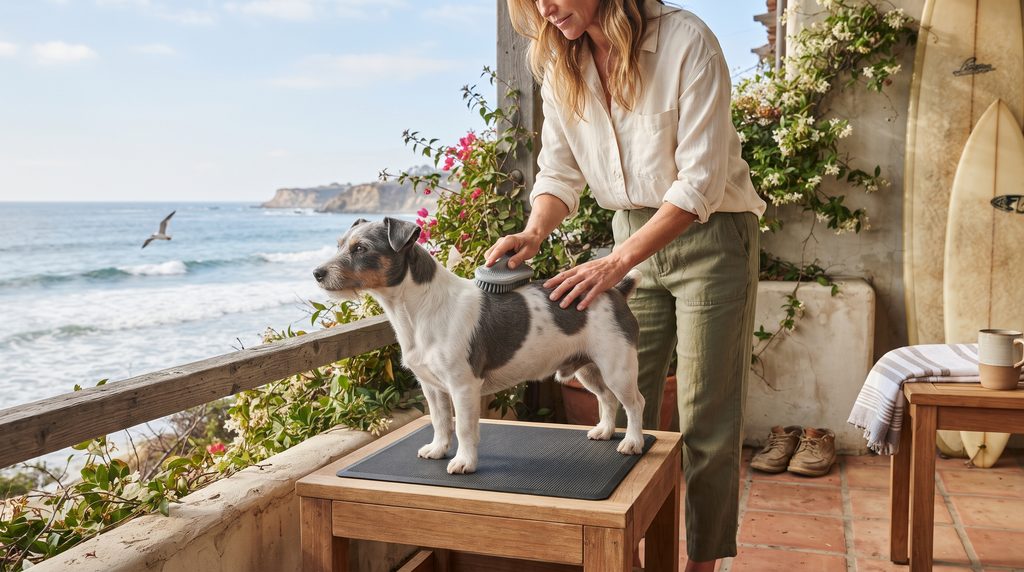
Teddy Roosevelt Terrier Shedding
The Teddy Roosevelt Terrier has a short, smooth coat that is relatively easy to maintain, but prospective owners should understand that this breed does shed. Despite its sleek appearance and modest grooming requirements, the Teddy Roosevelt Terrier is not a non-shedding dog, and loose hairs will occasionally appear on clothing, furniture, bedding, and household surfaces. The American Kennel Club describes the breed as a seasonal shedder, meaning that hair loss may become more noticeable during certain periods of the year.
For most households, shedding is manageable with straightforward grooming and regular cleaning, although the amount of hair released varies between individual dogs. Understanding the breed’s natural coat cycle helps owners distinguish ordinary shedding from changes that may indicate a skin or health problem.
The Teddy Roosevelt Terrier’s coat consists of short, dense hair that lies closely against the body. Unlike breeds with long, continuously growing hair, this traditional working terrier naturally releases older hairs as new ones develop. Its coat was shaped by generations of practical farm work, where durability and straightforward maintenance were more important than an elaborate appearance. The closely fitting hair helps maintain the dog’s characteristic smooth outline, revealing its muscular shoulders, deep chest, and distinctive low-set body. However, the absence of a long or fluffy coat does not mean that hair remains permanently attached.
In everyday conditions, shedding is generally light to moderate, although owners may notice periods when considerably more hair is released. Short hairs tend to be less conspicuous than the long strands produced by some heavily coated breeds, but they can still accumulate in surprising places. The relatively stiff texture of individual hairs may cause them to cling to upholstery, woven blankets, and clothing. Dark fabrics can make white hairs particularly visible, while pale furniture may highlight darker coat colors. This is worth considering because the Teddy Roosevelt Terrier comes in numerous combinations of white, black, chocolate, red, blue, and other recognized shades.
Seasonal shedding is a normal feature of the breed. Changes in daylight, temperature, and the natural hair-growth cycle can influence when older coat hairs are released. Some Teddy Roosevelt Terriers may shed more noticeably during spring or fall, while others maintain a relatively consistent pattern throughout the year. Dogs that spend most of their time indoors may experience less sharply defined seasonal changes because household temperatures and artificial lighting create a comparatively stable environment. Nevertheless, individual differences are considerable, and there is no universal timetable that applies to every dog.
Regular brushing is the simplest way to manage loose hair before it spreads throughout the home. The American Kennel Club recommends weekly brushing with a soft brush or rubber curry mitt, an approach that suits the Teddy Roosevelt Terrier’s short, closely fitting coat. A gentle grooming session removes loose surface hairs while helping maintain the coat’s natural sheen. During periods of heavier shedding, increasing brushing to several brief sessions each week may be useful. The objective is to collect hairs that are already being released rather than attempting to pull out healthy, firmly attached coat.
A rubber grooming mitt is particularly practical for many Teddy Roosevelt Terriers. Its flexible surface can collect loose hair without requiring aggressive pressure against the skin. Owners can use slow, gentle strokes in the direction of hair growth, paying attention to the back, shoulders, and sides. The chest and underside should be handled carefully because these areas may be more sensitive. A soft-bristle brush provides another useful option, especially for dogs that prefer lighter contact. Tools designed to remove large quantities of dense undercoat are generally unnecessary for this short-coated breed and may cause irritation when used excessively.
Bathing can also help remove loose hair and accumulated dirt, although frequent washing should not be used as a substitute for regular brushing. Most Teddy Roosevelt Terriers require only occasional baths when their coats become dirty or develop an unpleasant odor. A gentle dog-specific shampoo followed by thorough rinsing and towel-drying is usually sufficient. Excessive bathing, particularly with harsh products, may strip natural skin oils and contribute to dryness or irritation. Owners should avoid attempting to control shedding by shaving the coat, as this does not address the natural hair-growth cycle and is unnecessary for routine maintenance.
Managing shedding inside the home is usually uncomplicated when sensible cleaning habits are established. Washable dog blankets, removable furniture covers, and easily cleaned resting areas can significantly reduce the amount of hair that accumulates on household furnishings. Vacuuming frequently used rooms and upholstered surfaces helps collect loose hairs before they become embedded in fabrics. A rubber upholstery brush or lint roller can be useful for clothing and soft furnishings. Households with hard flooring may find that a microfiber mop or vacuum collects short hairs more effectively than sweeping, which can redistribute fine particles into the air.
One important consideration is whether the Teddy Roosevelt Terrier is suitable for people with dog allergies. Although its short coat may appear appealing to allergy-sensitive households, the breed is not hypoallergenic. Dog allergies are primarily associated with proteins found in saliva, dander, and urine rather than hair length alone. Shed hairs can carry allergens, but even dogs that release relatively little visible hair may trigger allergic reactions. Prospective owners with known allergies should seek advice from an allergy specialist and, where practical, spend time around individual dogs before making a long-term commitment.
Healthy skin and coat condition also depend on appropriate nutrition. A complete, balanced diet supplies the protein, essential fatty acids, vitamins, and minerals required for normal skin function and hair growth. Dogs receiving unsuitable diets or experiencing nutritional deficiencies may develop dull coats, dry skin, or abnormal hair loss. However, adding supplements without a demonstrated need is unlikely to resolve ordinary seasonal shedding. Owners concerned about coat quality should first review the dog’s diet, general health, and any accompanying symptoms with their veterinarian rather than relying on products marketed as shedding cures.
It is also important to distinguish ordinary shedding from abnormal hair loss. Seasonal shedding should generally leave the coat evenly distributed, without exposed patches of skin, persistent inflammation, or obvious discomfort. Bald spots, broken hairs, excessive scratching, redness, scabs, unpleasant odor, or sudden changes in coat density may indicate an underlying problem. Possible causes include allergies, external parasites, bacterial or fungal skin infections, hormonal disorders, and other medical conditions. These problems require appropriate veterinary assessment, particularly when hair loss develops rapidly or is accompanied by changes in behavior or general health.
Routine observation can make unusual changes easier to recognize. Because the Teddy Roosevelt Terrier has a very short coat, owners may notice small areas of thinning, skin irritation, or discoloration relatively quickly. Brushing provides an opportunity to examine the skin along the back, flanks, chest, and underside. Changes should be assessed in context, including the dog’s age, environment, parasite prevention, and recent health history. Senior dogs may develop new skin or coat problems, but unexplained hair loss should not automatically be dismissed as a normal consequence of aging.
The Teddy Roosevelt Terrier’s enthusiasm for outdoor activity introduces another practical consideration. These inquisitive dogs often investigate grass, shrubs, woodland paths, and other environments where pollen, dust, or plant debris can accumulate on the coat. Such material may contribute to household allergens or cause irritation in susceptible dogs, even when shedding itself remains normal. Wiping the coat and paws after particularly dusty or grassy outings can help remove surface debris. Persistent itching or recurrent skin problems, however, deserve veterinary attention rather than increasingly frequent washing.
For prospective owners who dislike extensive grooming, the Teddy Roosevelt Terrier offers a practical compromise. Its short coat requires little specialized equipment, and most routine brushing sessions take only a few minutes. Nevertheless, anyone expecting a completely hair-free household may be disappointed. This is a genuine shedding breed, even if its modest size and uncomplicated coat make maintenance less demanding than that of many larger or heavily coated dogs. Owners should be comfortable with regular cleaning and occasional increases in loose hair during seasonal coat changes.
Ultimately, Teddy Roosevelt Terrier shedding is a manageable aspect of ownership rather than a significant grooming burden for most households. Weekly brushing, occasional bathing, sensible household cleaning, balanced nutrition, and regular skin inspections are generally sufficient to maintain a healthy coat. Recognizing the difference between natural seasonal shedding and abnormal hair loss helps owners respond appropriately when changes occur. With realistic expectations and a simple grooming routine, families can enjoy this affectionate, lively little terrier without devoting excessive time to coat maintenance.

What to Expect During Seasonal Shedding
Teddy Roosevelt Terriers naturally release loose hair throughout the year, with more noticeable shedding possible during seasonal coat changes. Their short, dense hairs can cling to clothing and upholstered furniture despite the breed’s uncomplicated grooming needs. Weekly brushing with a soft brush or rubber curry mitt is usually sufficient, although several shorter sessions may help during heavier shedding periods. Washable bedding, regular vacuuming, and simple fabric-cleaning tools make household maintenance easier. Normal shedding should not create bald patches or cause persistent itching. Sudden hair loss, redness, inflamed skin, or significant changes in coat condition should prompt veterinary assessment rather than more aggressive brushing or bathing.
Teddy Roosevelt Terrier Feeding and Nutrition
Feeding a Teddy Roosevelt Terrier appropriately is an important part of maintaining the muscular strength, healthy body weight, and energetic personality that characterize this distinctive American working breed. Although small in stature, the Teddy Roosevelt Terrier possesses considerable stamina and often enjoys an active lifestyle involving walking, exploring, training, and interactive play. Its nutritional requirements therefore depend on more than its compact appearance. Age, body condition, activity level, reproductive status, and overall health all influence how much food an individual dog needs. A carefully selected, nutritionally complete diet, combined with sensible portion control and regular weight monitoring, provides the foundation for long-term health and helps preserve the breed’s naturally athletic construction.
The most important consideration when choosing food is nutritional completeness rather than fashionable ingredients or expensive marketing claims. A Teddy Roosevelt Terrier should receive a diet formulated for its particular life stage, whether puppy, adult, or senior, and supported by appropriate nutritional testing or formulation standards. Commercial foods carrying an Association of American Feed Control Officials (AAFCO) nutritional adequacy statement provide useful information about whether the product is intended for growth, adult maintenance, or all life stages. Owners should also consider the manufacturer’s nutritional expertise, quality-control procedures, and ability to provide detailed information about the formulation.
Protein plays an essential role in maintaining the Teddy Roosevelt Terrier’s muscles, supporting normal tissue repair, and contributing to healthy growth. This is particularly relevant because the breed standard emphasizes a strongly constructed, well-muscled dog rather than a lightly built companion. However, more protein is not automatically better, and most healthy adults do not require specialized high-protein performance diets. A balanced commercial food formulated for the dog’s age and activity level will generally supply appropriate nutrients. Additional protein supplements should not be necessary unless a veterinarian identifies a specific nutritional requirement.
Dietary fats provide concentrated energy and contribute to healthy skin, coat condition, and normal physiological function. They are particularly useful in supporting active dogs, but excessive calorie intake can quickly contribute to unwanted weight gain. Carbohydrates can also provide digestible energy and are not inherently unsuitable for Teddy Roosevelt Terriers. A well-formulated diet should contain an appropriate balance of protein, fats, essential fatty acids, vitamins, minerals, and other nutrients. Owners should evaluate the overall nutritional quality of a food rather than selecting products based on the presence or absence of individual ingredients.
Portion control deserves particular attention because the Teddy Roosevelt Terrier’s relatively small body means that modest additional calorie intake can have a noticeable effect on weight. The breed commonly weighs approximately 8–25 pounds, but its ideal weight depends on height, skeletal structure, and muscular development. A smaller terrier may require substantially fewer calories than a larger individual, even when both are equally active. Feeding recommendations printed on packaging offer a useful starting point, but they should be adjusted according to the dog’s body condition, exercise, and weight trends rather than followed without question.
For most healthy adult Teddy Roosevelt Terriers, dividing the daily food allowance into two measured meals provides a convenient routine. Morning and evening feeding can help owners monitor appetite, establish predictable household habits, and distribute daily calories consistently. Some individuals may do well with a different schedule, particularly when training activities or medical requirements influence feeding arrangements. Accurate measuring is important because estimating portions by eye can gradually increase calorie intake. A digital kitchen scale provides a practical way to measure dry food consistently, especially when the dog’s total daily allowance is relatively small.
Maintaining a healthy body condition is especially important for a breed with a long, low-set body and short, sturdy legs. Excess weight increases the mechanical demands placed on joints, supporting muscles, and the spine. Owners should be able to feel the ribs beneath a light covering of tissue without pressing excessively, while the dog should display an appropriate waist when viewed from above. Because the Teddy Roosevelt Terrier naturally has a deep chest and substantial musculature, body condition should be assessed alongside its characteristic structure rather than relying exclusively on the number displayed by a scale.
Puppies have different nutritional requirements from adults because they must support growth, skeletal development, and increasing muscular strength. A Teddy Roosevelt Terrier puppy should receive a complete diet formulated for growth, with appropriately balanced calcium, phosphorus, protein, and other essential nutrients. Young puppies generally need more frequent meals than mature dogs, often beginning with three or four daily feedings before gradually transitioning to fewer meals as they develop. The appropriate schedule depends on age, appetite, and veterinary guidance. Because this breed may continue developing its adult muscular substance beyond its first year, feeding decisions should be based on growth and body condition rather than appearance alone.
Overfeeding puppies should be avoided, even when owners want to encourage a strong, muscular adult. Rapid or excessive weight gain can place unnecessary demands on developing bones and joints. Puppies should grow steadily while maintaining a healthy body condition, and food quantities should be adjusted as their weight and activity change. Owners should also avoid adding calcium supplements or other growth-promoting products to a nutritionally complete puppy diet unless specifically prescribed. The objective is balanced development, not producing the largest or heaviest possible dog.
Treats are valuable training tools for Teddy Roosevelt Terriers because the breed is intelligent, food-motivated in many cases, and enthusiastic about learning. Small rewards can help reinforce recall, polite walking, calm behavior, and other essential skills. However, frequent training sessions can add significant calories if rewards are not included in the daily allowance. A widely recommended guideline is to keep treats and other supplementary foods below approximately 10% of total daily calories. Owners can reduce meal portions appropriately or reserve part of the dog’s normal kibble allowance for training exercises. Tiny rewards are often sufficient for a dog of this size.
Fresh drinking water should be available throughout the day, particularly for active Teddy Roosevelt Terriers that enjoy outdoor exploration and exercise. Water requirements vary with temperature, diet, activity level, and health. Dogs eating dry food may obtain less moisture from their meals than those receiving wet food, but both need reliable access to clean drinking water. During hiking, travel, or energetic play, owners should carry suitable water and provide regular opportunities to drink. Unusual increases or decreases in thirst should be discussed with a veterinarian, especially when accompanied by changes in urination, appetite, or energy.
The breed’s strong curiosity and hunting instincts also make food safety an important household consideration. Teddy Roosevelt Terriers may enthusiastically investigate dropped food, unsecured garbage, or interesting objects encountered outdoors. Owners should prevent access to chocolate, grapes, raisins, onions, garlic, xylitol-containing products, alcohol, and other substances known to be hazardous to dogs. Cooked bones, unsuitable table scraps, and excessively fatty leftovers can also create unnecessary risks. Teaching reliable leave-it and drop-it cues provides additional protection, although secure storage and supervision remain the most dependable preventive measures.
Some owners become interested in homemade, raw, or grain-free diets because they believe these approaches are inherently healthier. However, there is no established evidence that Teddy Roosevelt Terriers require any particular alternative feeding style simply because of their breed. Homemade diets can be nutritionally incomplete unless formulated by a qualified veterinary nutrition specialist. Raw animal products may introduce harmful bacteria and other food-safety concerns. Grain-free diets are not automatically superior, and dietary changes should be based on a genuine nutritional or medical need rather than advertising claims.
Food sensitivities and allergies can occur in individual Teddy Roosevelt Terriers, but the breed is not known to require a universally restricted diet. Persistent itching, recurrent ear problems, vomiting, diarrhea, or other digestive disturbances may have several possible causes, including conditions unrelated to food. Owners should consult their veterinarian before eliminating major ingredients or repeatedly switching diets. When a food allergy is suspected, a properly supervised elimination diet provides more reliable information than commercial intolerance tests or informal experimentation.
Nutritional needs change as Teddy Roosevelt Terriers grow older. Senior dogs may become less active and require fewer calories to maintain an appropriate weight, although some remain energetic well into their teenage years. Preserving muscle mass becomes increasingly important with age, and unnecessary protein restriction is generally inappropriate for otherwise healthy seniors. Dental disease, digestive changes, kidney problems, or other medical conditions may eventually influence food selection. Older dogs should receive individualized nutritional assessments rather than automatically changing to a senior formula at a predetermined birthday.
Ultimately, the best feeding approach for a Teddy Roosevelt Terrier is one that maintains an appropriate body condition, supports healthy muscular development, and provides sufficient energy for the dog’s individual lifestyle. A complete, balanced diet, measured portions, moderate treats, reliable hydration, and periodic veterinary nutritional reviews are more valuable than complicated feeding trends. By monitoring body condition and adjusting food intake as circumstances change, owners can help their Teddy Roosevelt Terrier remain active, comfortable, and healthy throughout its life.
Why Weight Management Matters for This Short-Legged Breed
The Teddy Roosevelt Terrier’s muscular, rectangular body is supported by relatively short legs, making healthy weight management particularly important. Even modest excess weight can increase the demands placed on the joints, spine, and supporting muscles. Owners should assess body condition regularly rather than judging health by weight alone. The ribs should be easily felt beneath a light tissue covering, with a visible waist from above. Use measured meals, account for training treats, and adjust portions when activity levels change. Regular veterinary weight checks help identify gradual changes before they become significant. Maintaining appropriate muscle and avoiding excess body fat supports comfortable movement and long-term mobility.
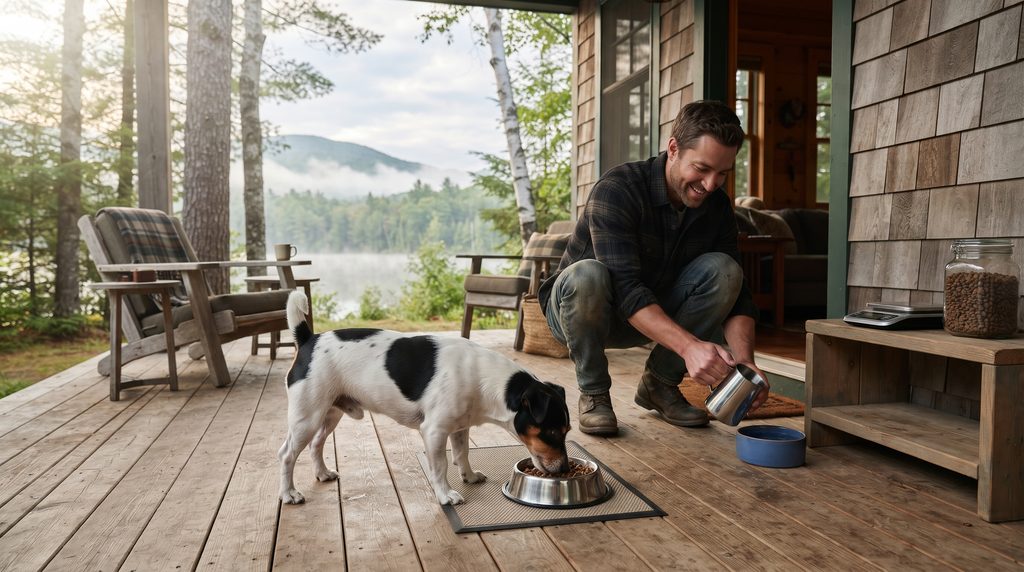
Teddy Roosevelt Terrier Health and Common Health Problems
The Teddy Roosevelt Terrier is generally regarded as a robust, long-lived American breed, with many individuals enjoying active and healthy lives well into their teenage years. Developed from practical working terriers, these dogs were traditionally valued for physical resilience, muscular strength, and the ability to perform demanding tasks despite their compact stature. Nevertheless, responsible ownership requires an understanding of the health conditions that can affect the breed, particularly those involving the knees, eyes, heart, and spine.
Some concerns are associated with inherited traits, while others reflect the everyday health challenges encountered by small, active dogs. Recognizing potential problems early, maintaining an appropriate body condition, and establishing a reliable veterinary care routine can make a substantial difference to long-term comfort and quality of life.
It is important to distinguish between conditions documented within the breed and diseases that affect large numbers of individuals. The Teddy Roosevelt Terrier remains relatively uncommon, and comprehensive population-level health statistics are limited. Consequently, the existence of a recommended screening test does not necessarily mean that the corresponding disease is widespread. The American Teddy Roosevelt Terrier Club describes the breed as generally healthy while emphasizing responsible breeding and preventive testing. Prospective owners should therefore approach discussions of Teddy Roosevelt Terrier health problems with balanced expectations rather than assuming that every dog is likely to develop a serious inherited disorder.
One of the principal orthopedic concerns is patellar luxation, a condition in which the kneecap moves out of its normal position within the groove of the thighbone. This problem can affect one or both hind legs and occurs in numerous small dog breeds. Affected Teddy Roosevelt Terriers may occasionally lift a hind leg, skip several steps, or briefly alter their gait before returning to normal movement. Mild cases may cause few noticeable difficulties, while more severe instability can lead to persistent discomfort, lameness, and progressive joint deterioration. Veterinary examination establishes the severity of the condition and whether monitoring, rehabilitation, or surgical treatment is appropriate.
The breed’s distinctive short-legged, rectangular construction also makes spinal health an important consideration. Chondrodystrophy, a genetic characteristic associated with shortened limbs, can be accompanied by an increased risk of intervertebral disc disease when certain inherited variants are present. Intervertebral discs normally cushion the vertebrae, but degeneration or displacement can cause pain and potentially compress the spinal cord. Warning signs include an unusually hunched posture, reluctance to move, sensitivity when the back or neck is touched, weakness, or changes in coordination. Sudden difficulty walking, dragging limbs, or loss of bladder control requires immediate veterinary attention. Importantly, short legs alone do not establish that an individual dog has disc disease.
Primary lens luxation is another important condition associated with the Teddy Roosevelt Terrier. This inherited eye disorder involves weakening of the structures that normally hold the lens in position. When the lens becomes displaced, it can cause inflammation, increased pressure within the eye, and potentially permanent vision loss. Affected dogs may develop redness, excessive tearing, squinting, cloudiness, or sudden discomfort. Some cases develop during adulthood rather than puppyhood, making ongoing awareness important even when a dog appeared healthy when young. A painful, red, or suddenly cloudy eye should always be regarded as urgent because prompt treatment can be essential to preserving vision.
Cardiac health is also included among the breed’s recommended screening priorities. Heart abnormalities can vary considerably in severity, ranging from relatively minor findings to conditions that interfere with normal circulation or exercise tolerance. Some dogs with heart disease initially show few obvious symptoms, while others may develop coughing, unusual fatigue, reduced stamina, rapid breathing, or fainting episodes. A veterinarian can assess heart sounds during routine examinations and recommend additional diagnostic testing when abnormalities are detected. A heart murmur does not automatically indicate severe disease, but it should be investigated appropriately rather than dismissed without assessment.
Dental disease deserves attention because small dogs can develop significant plaque accumulation, gum inflammation, and periodontal problems. The Teddy Roosevelt Terrier’s relatively compact mouth may make effective dental care especially worthwhile, although the condition is not unique to the breed. Persistent bad breath, red gums, loose teeth, difficulty chewing, or reluctance to accept hard food can indicate oral discomfort. Daily brushing with dog-specific toothpaste, regular veterinary dental examinations, and professional treatment when necessary help protect oral health. Dental pain can develop gradually, and dogs may continue eating despite considerable discomfort, making preventive care preferable to waiting for obvious symptoms.
Skin irritation and allergies can occur in individual Teddy Roosevelt Terriers, although there is insufficient evidence to describe the breed as universally allergy-prone. Its short coat makes redness, thinning hair, rashes, and other skin changes relatively easy to notice. Persistent scratching, paw licking, recurrent ear irritation, or localized hair loss may indicate environmental allergies, parasites, infection, or another underlying condition. Owners should avoid assuming that every itchy dog has a food allergy. Proper veterinary investigation helps distinguish different causes and prevents unnecessary dietary restrictions or repeated use of unsuitable grooming products.
Maintaining a healthy body weight is particularly important for the Teddy Roosevelt Terrier because its low-set, muscular body places specific demands on the supporting joints and spine. Excess body fat can increase mechanical strain, reduce endurance, and make existing orthopedic problems more difficult to manage. A healthy terrier should retain a discernible waist and have ribs that can be felt beneath a light tissue covering. Owners should monitor body condition regularly, adjust feeding quantities as activity levels change, and avoid allowing an affectionate dog’s enthusiasm for treats to result in gradual weight gain. Maintaining appropriate muscle mass is equally important, especially as the dog ages.
Exercise contributes significantly to long-term health, but activities should respect the breed’s physical construction. Teddy Roosevelt Terriers are capable working dogs and should not be treated as fragile simply because their legs are short. Regular walking, controlled play, scent work, and appropriate conditioning support muscular strength and joint mobility. However, repeated uncontrolled jumps from high furniture, abrupt twisting movements, and demanding obstacles may create unnecessary risks, particularly for dogs with known orthopedic or spinal conditions. Owners should encourage confident movement while avoiding activities that produce discomfort or require physical abilities beyond the individual dog’s conditioning.
Preventive veterinary care provides an important safeguard throughout the breed’s life. Puppies require appropriate vaccination schedules, parasite protection, growth assessments, and examinations for congenital or developmental abnormalities. Healthy adults benefit from regular veterinary visits that include weight monitoring, dental assessment, heart auscultation, and evaluation of mobility. A veterinarian may also examine the kneecaps and investigate unusual gait changes, particularly when there is a relevant family history. Preventive screening should be tailored to the individual rather than assuming that every dog requires the same investigations at every appointment.
As Teddy Roosevelt Terriers enter middle age and their senior years, owners should pay closer attention to changes in movement, appetite, energy, and behavior. Early arthritis, dental disease, visual impairment, and other age-related problems may initially produce subtle signs. A dog that becomes reluctant to climb steps, avoids favorite activities, or begins sleeping considerably more than usual may be experiencing discomfort rather than simply becoming less enthusiastic with age. More frequent veterinary examinations can help identify developing problems and establish appropriate treatment before quality of life declines significantly.
Owners should also become familiar with warning signs that require prompt veterinary attention. Persistent vomiting, severe diarrhea, breathing difficulty, collapse, seizures, or sudden behavioral changes should not be ignored. For this breed, particular urgency applies to sudden paralysis or severe back pain, as well as painful eye changes that could indicate lens displacement or glaucoma. When a spinal problem is suspected, unnecessary movement should be minimized while urgent veterinary assistance is arranged. Owners should never administer human pain medications without veterinary direction, as several commonly used products can be dangerous to dogs.
Responsible breeding practices contribute substantially to the breed’s long-term health. The American Kennel Club lists patellar evaluation, cardiac examination, primary lens luxation testing, and chondrodystrophy testing among the national breed club’s recommended assessments. These tests help identify potential risks before breeding decisions are made, although no screening program can guarantee that every puppy will remain free of disease. Buyers should seek clear documentation of relevant parental health results and ask thoughtful questions about the health and longevity of related dogs. The specific tests, genetic inheritance patterns, and interpretation of results are examined in the following health screening section.
Ultimately, the Teddy Roosevelt Terrier’s generally favorable health outlook should be viewed alongside the responsibilities associated with its distinctive physical structure and inherited background. Many individuals remain energetic, affectionate, and physically capable throughout long lives, particularly when supported by appropriate nutrition, exercise, preventive care, and responsible breeding. Understanding the conditions that deserve attention allows owners to recognize unusual symptoms without becoming unnecessarily alarmed. With informed veterinary guidance and consistent everyday care, this sturdy American terrier has an excellent opportunity to enjoy a comfortable, active, and rewarding life.
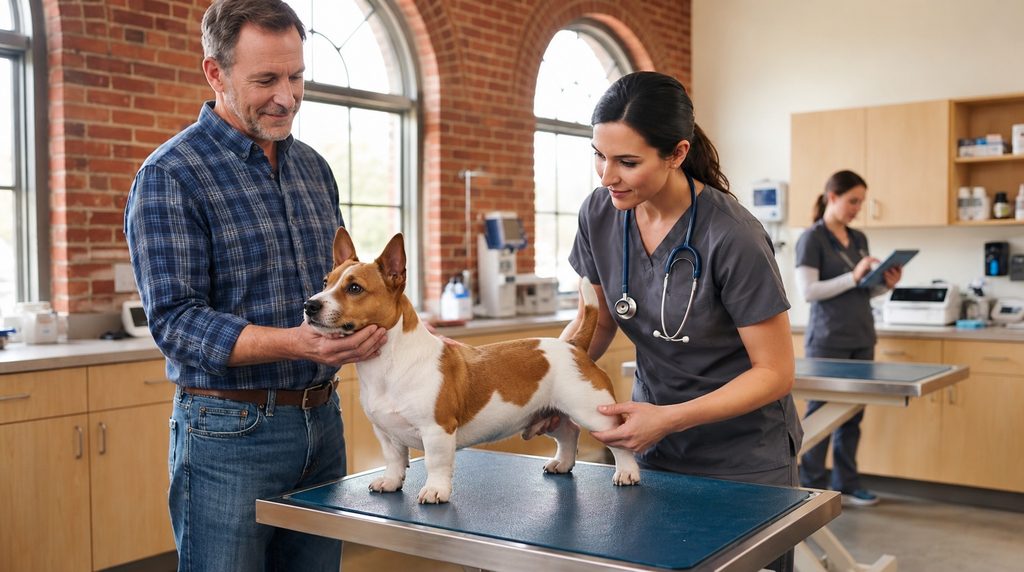
Teddy Roosevelt Terrier Health Screening and Inherited Conditions
Responsible health screening plays an important role in preserving the Teddy Roosevelt Terrier’s physical soundness, working ability, and long-term well-being. Although this American breed is generally considered healthy, its relatively small breeding population and distinctive genetic background make careful selection of breeding dogs especially important. Advances in canine genetic testing now allow breeders to identify certain inherited risks before producing puppies, while veterinary examinations can reveal structural or cardiac abnormalities that DNA testing alone cannot detect.
For prospective owners, understanding these assessments provides a practical way to evaluate breeding practices and ask informed questions about a puppy’s family history. The objective is not to suggest that the Teddy Roosevelt Terrier is unusually unhealthy, but to encourage responsible decisions that protect the breed’s future.
The American Kennel Club identifies four principal health assessments recommended by the national breed club: patellar evaluation, cardiac examination, primary lens luxation testing, and chondrodystrophy testing. These recommendations reflect conditions considered relevant to responsible breeding rather than a prediction that every dog will develop them. The American Teddy Roosevelt Terrier Club also encourages breeders to document their health testing, either through publicly accessible records or by providing copies of examination and laboratory reports. Prospective owners should expect clear explanations of the results and how they influence breeding decisions.
Primary lens luxation, commonly abbreviated PLL, is one of the most important inherited conditions for which genetic testing is available. It occurs when the fibers supporting the lens inside the eye become weakened, potentially allowing the lens to move from its normal position. The condition can cause severe discomfort, inflammation, glaucoma, and permanent loss of vision. A mutation in the ADAMTS17 gene has been identified as an important cause of PLL in terriers. Because affected dogs may not develop symptoms until adulthood, an apparently healthy young breeding dog can still carry a genetic risk that would be difficult to recognize through an ordinary physical examination.
A DNA test can identify dogs carrying zero, one, or two copies of the relevant PLL mutation. Dogs with two copies have a substantially increased risk of developing the condition, while those with one copy are generally described as carriers and have a much lower, but not completely absent, risk. The mutation is commonly characterized as recessive, although research has demonstrated that carriers can occasionally develop clinical disease. Responsible breeders use this information to avoid producing genetically high-risk puppies. Carrier status should be interpreted carefully, since excluding every carrier without considering genetic diversity can create additional challenges for a relatively uncommon breed.
Chondrodystrophy, or CDDY, is another particularly relevant genetic consideration because the Teddy Roosevelt Terrier has a characteristically short-legged, rectangular body. A specific insertion involving the FGF4 gene on canine chromosome 12 is associated with shortened limbs and an increased risk of intervertebral disc disease, commonly known as IVDD. This inherited risk factor can contribute to premature degeneration of the cushioning discs between vertebrae. When an affected disc herniates, it may produce spinal pain, weakness, loss of coordination, or paralysis. Genetic testing identifies whether the dog carries the relevant variant, allowing breeders and owners to make more informed decisions.
An important distinction is that inheriting a CDDY-associated variant does not guarantee that a dog will develop symptomatic IVDD. The variant increases susceptibility, but not every genetically predisposed animal experiences a disc herniation. Unlike the principal PLL mutation, the CDDY-associated IVDD risk follows a dominant pattern, meaning that even one copy can increase susceptibility. Two copies may produce more pronounced shortening of the limbs. The American Teddy Roosevelt Terrier Club recommends testing breeding dogs and discourages breeding dogs known to carry this risk-associated mutation. Results should be considered alongside clinical history, structural soundness, and veterinary genetic advice.
Chondrodystrophy should not be confused with chondrodysplasia, abbreviated CDPA. Although both genetic mechanisms can influence leg length, they involve different FGF4 retrogene insertions and do not carry identical implications for spinal health. CDPA is associated with the characteristic shortening of limbs in certain breeds, while the chromosome 12 CDDY variant is specifically linked to increased susceptibility to disc degeneration. The distinction matters because the Teddy Roosevelt Terrier’s short legs are an established breed characteristic, not automatically evidence of spinal disease. Modern genetic screening can help breeders distinguish these inherited traits rather than making assumptions based solely on outward appearance.
Patellar evaluation provides a different kind of health information because it involves a physical examination rather than a simple DNA result. Patellar luxation occurs when the kneecap moves outside its normal groove, potentially causing intermittent skipping, lameness, discomfort, or long-term joint deterioration. The condition can involve several inherited and developmental factors, and no single genetic test reliably identifies every dog at risk. A veterinarian examines the knees and grades any instability according to its severity. The breed club recommends evaluating breeding dogs after they reach at least 12 months of age, when the results are more representative of mature joint development.
A normal patellar assessment is reassuring, but it does not guarantee that a dog’s descendants will never experience orthopedic problems. Breeders should consider the health of parents, siblings, and previous offspring alongside individual examination results. Dogs displaying persistent knee instability or clinically significant lameness require appropriate veterinary assessment before any breeding decision. Maintaining sound movement is particularly important for the Teddy Roosevelt Terrier because its compact, muscular body must remain capable of the agility and physical activity expected of a traditional working terrier.
Cardiac screening forms the fourth principal recommendation. A veterinary heart examination assesses potential abnormalities in heart rhythm, sounds, and overall cardiovascular function. The breed club recommends examinations after 12 months of age, preferably by veterinarians with relevant specialist expertise. An abnormal finding may require additional investigations, such as echocardiography or electrocardiography, to determine its significance. Not every heart murmur indicates serious inherited disease, but unexplained abnormalities should be investigated before breeding. Responsible breeders should also consider any known cardiac conditions among related dogs rather than relying exclusively on a single examination.
Additional genetic markers have been identified within the wider Teddy Roosevelt Terrier population. The AKC’s breed-specific DNA resource lists degenerative myelopathy, chondrodysplasia, and congenital hypothyroidism with goiter among other variants identified in the breed. These should not automatically be interpreted as conditions with a high documented prevalence. The American Teddy Roosevelt Terrier Club notes that a degenerative myelopathy-associated marker has been identified but reports no confirmed clinically affected Teddy Roosevelt Terriers in its published health overview. Such distinctions are important because the presence of a genetic marker does not necessarily establish how frequently a disease occurs or how strongly a particular result predicts clinical illness.
Prospective owners should understand the difference between genetic testing and clinical screening. A DNA test identifies specific inherited variants, while a veterinary examination evaluates the dog’s present physical condition. A dog can test clear for the principal PLL mutation and still develop an unrelated eye disorder. Similarly, a normal cardiac examination does not eliminate the possibility of future acquired heart disease. Comprehensive breeding assessments combine appropriate genetic tests, physical examinations, family health information, and careful observation of movement and temperament. No single test provides a complete guarantee of lifetime health.
The Orthopedic Foundation for Animals, commonly known as OFA, provides an established system for recording many canine health assessments. When results are registered and publicly available, prospective owners can often verify relevant information rather than relying solely on verbal assurances. Some responsible breeders may instead provide original laboratory reports and veterinary certificates directly. In either situation, documentation should clearly identify the dog, the examination or test performed, the date, and the result. A generic statement that the parents have been health tested is less useful than specific, verifiable evidence.
Breeding decisions should also consider the long-term genetic diversity of this relatively uncommon American terrier. Eliminating breeding dogs indiscriminately because they carry any identifiable recessive mutation may unnecessarily narrow the available gene pool. Some carrier dogs can be included in carefully planned breeding programs when paired with genetically appropriate partners, provided the resulting risks are understood and managed. However, decisions involving dominant risk variants such as CDDY require different considerations. Veterinary geneticists and experienced breed health specialists can help breeders balance disease prevention, genetic diversity, and preservation of the breed’s characteristic working structure.
For puppy buyers, responsible health screening should be part of a wider evaluation of the breeder. Clear parental test results, knowledge of family longevity, openness about previous health problems, and willingness to discuss genetic risks are encouraging signs. A breeder should be able to explain why particular dogs were paired and how those decisions support healthy puppies. Prospective owners should be cautious when health guarantees replace meaningful documentation or when unusual appearance, extreme shortness of leg, or rare coat colors are emphasized above sound construction.
Ultimately, health screening provides an opportunity to protect the qualities that make the Teddy Roosevelt Terrier distinctive without compromising its well-being. Its muscular build, short legs, lively personality, and working heritage should be preserved through informed breeding rather than exaggerated physical characteristics. While genetic testing cannot eliminate every potential health problem, it enables breeders to reduce identifiable risks and gives owners a clearer understanding of their dog’s background. Combined with responsible selection, transparent records, and ongoing veterinary care, these practices support the long-term health and future of this increasingly recognized American breed.

Four Health Screening Results to Request From a Breeder
Before choosing a Teddy Roosevelt Terrier puppy, request documentation of the parents’ patellar evaluations, cardiac examinations, primary lens luxation DNA results, and chondrodystrophy genetic testing. These four assessments are recommended by the national breed club and listed by the American Kennel Club. Ask whether results are registered with the Orthopedic Foundation for Animals or available as original veterinary and laboratory reports. Genetic carrier status requires careful interpretation, and a clear result for one condition does not establish freedom from every inherited disease. Responsible breeders should explain the findings openly, discuss relevant family health history, and demonstrate how screening information influenced their breeding decisions.
Teddy Roosevelt Terrier Lifespan and Aging
The Teddy Roosevelt Terrier is generally a long-lived American breed, with many individuals remaining energetic, affectionate, and actively involved in family life well into their senior years. According to the American Kennel Club, the typical Teddy Roosevelt Terrier lifespan is approximately 14–16 years, while the United Kennel Club cites a life expectancy of 15–16 years. This makes the breed an appealing choice for owners seeking a companion capable of sharing many years of everyday adventures. However, longevity depends on numerous factors, including genetics, inherited health risks, nutrition, exercise, preventive veterinary care, and the individual dog’s circumstances. Understanding how the breed changes with age helps owners maintain comfort, mobility, and quality of life throughout this potentially lengthy companionship.
One of the Teddy Roosevelt Terrier’s most appealing characteristics is its tendency to retain considerable enthusiasm as it matures. Unlike breeds that become noticeably sedentary relatively early in adulthood, many healthy Teddy Roosevelt Terriers continue enjoying walks, scent-based activities, interactive games, and family outings for much of their lives. Their curious personalities and strong attachment to familiar people often remain recognizable even as physical stamina begins to decline. An older terrier may prefer shorter adventures or more leisurely opportunities to explore, but this does not necessarily mean it has lost interest in participating. Preserving familiar routines while adjusting physical demands can help maintain confidence and emotional well-being.
The transition into senior life occurs gradually rather than at a universally defined birthday. Smaller dogs often age differently from larger breeds, and individual health can influence when age-related changes become apparent. Although veterinary organizations commonly recommend increased preventive attention beginning around seven years of age, a healthy Teddy Roosevelt Terrier may remain highly active considerably longer. Owners should therefore evaluate their dog’s physical condition, activity tolerance, and behavior instead of assuming that reaching a particular age requires dramatic lifestyle restrictions. Establishing baseline health measurements during middle age can make subsequent changes easier to recognize.
Mobility deserves particular consideration because the Teddy Roosevelt Terrier has a distinctive rectangular body supported by relatively short, muscular legs. A properly constructed dog should move confidently and comfortably throughout adulthood, but age-related joint deterioration can gradually affect walking, climbing, and everyday movement. Osteoarthritis may cause stiffness after resting, reluctance to negotiate steps, slower movement, or difficulty settling into comfortable positions. These signs are sometimes mistaken for ordinary aging, yet persistent discomfort should never be dismissed as inevitable. Veterinary assessment can identify underlying problems and establish an appropriate management plan involving weight control, carefully selected exercise, rehabilitation, or medication when necessary.
Spinal comfort also becomes increasingly important as the breed ages. Teddy Roosevelt Terriers may carry genetic variants associated with chondrodystrophy and an increased risk of intervertebral disc disease. This does not mean that every individual will experience spinal problems, but owners should remain attentive to unexplained back pain, changes in posture, weakness, or reluctance to move. Maintaining appropriate body weight and avoiding repeated uncontrolled jumps from elevated furniture can help reduce unnecessary physical strain. Stable flooring, accessible sleeping areas, and thoughtfully positioned ramps may be useful for older dogs experiencing reduced mobility. Sudden weakness, paralysis, or severe spinal pain requires emergency veterinary attention rather than routine senior-care adjustments.
Maintaining muscle mass is another important aspect of healthy aging. Although the Teddy Roosevelt Terrier is naturally sturdy and well muscled, older dogs can gradually lose lean tissue as activity levels and metabolic processes change. Excessive inactivity may accelerate this decline, particularly when an owner reduces exercise simply because the dog has reached its senior years. Gentle daily walking, appropriate strengthening exercises, and controlled opportunities for exploration can help preserve physical function. Owners should seek veterinary guidance when introducing rehabilitation exercises or managing established orthopedic conditions. The objective is to maintain comfortable movement rather than expecting an older terrier to match the endurance of a young adult.
Nutrition should evolve alongside the dog’s changing requirements. Some senior Teddy Roosevelt Terriers need fewer calories because they exercise less, while others remain sufficiently active to require relatively modest dietary adjustments. Excess weight can aggravate joint and spinal discomfort, making regular body-condition assessments particularly valuable. However, excessive calorie restriction can contribute to unwanted muscle loss. Older dogs generally benefit from complete, balanced diets that provide adequate high-quality protein, unless a specific medical condition requires a different approach. Veterinary nutritional advice can help determine whether a senior formula, therapeutic diet, or adjustment to the existing food is appropriate.
Dental care becomes increasingly significant with advancing age. Small dogs can develop substantial periodontal disease, and years of plaque accumulation may eventually cause painful gum inflammation, loose teeth, or difficulty chewing. Teddy Roosevelt Terriers may continue eating despite oral discomfort, so changes in appetite are not always an early warning sign. Regular veterinary dental examinations, daily toothbrushing when tolerated, and professional treatment where indicated help protect oral health. Owners should also monitor for persistent bad breath, excessive drooling, facial swelling, or reluctance to accept familiar foods. Treating dental disease can improve comfort and help older dogs continue enjoying normal meals and activities.
Vision and hearing may change as Teddy Roosevelt Terriers grow older. Some dogs gradually become less responsive to familiar sounds, while others develop age-related changes in vision that make unfamiliar environments more challenging. The breed also has an established inherited risk of primary lens luxation, which should not be confused with ordinary age-related visual changes. Sudden eye redness, cloudiness, pain, or apparent loss of vision requires urgent veterinary assessment. When gradual sensory decline occurs, owners can help by maintaining consistent furniture arrangements, using clear visual or tactile cues, and approaching their dogs calmly rather than startling them unexpectedly.
Behavioral changes can also emerge during senior life. An older Teddy Roosevelt Terrier may sleep more, become less tolerant of household disturbances, or prefer quieter interactions with visitors and children. Some changes reflect reduced energy or sensory function, while others may indicate discomfort, anxiety, or an underlying medical problem. Canine cognitive dysfunction can cause disorientation, altered sleep patterns, changes in social interaction, or difficulties with previously reliable house-training habits. These symptoms should not automatically be attributed to normal aging. Veterinary assessment can help identify potentially treatable causes and determine whether cognitive support or other interventions are appropriate.
Regular preventive veterinary care is particularly valuable during the breed’s later years. The American Animal Hospital Association recommends veterinary examinations approximately every six months for senior pets, including those that appear healthy. These appointments provide opportunities to evaluate body condition, mobility, dental health, heart function, sensory changes, and general well-being. Depending on the dog’s age and medical history, the veterinarian may recommend blood tests, urinalysis, blood pressure measurement, or other investigations. Establishing trends over time can reveal developing problems before they produce obvious symptoms, supporting earlier treatment and more effective long-term management.
Mental stimulation remains important throughout the Teddy Roosevelt Terrier’s life. This intelligent breed retains a natural interest in scent investigation, familiar training games, and interaction with its family. Older dogs may no longer enjoy lengthy, demanding activities, but gentle enrichment can provide considerable satisfaction. Searching for treats in easily accessible locations, practicing familiar cues, and exploring new scents during short walks can help maintain engagement without unnecessary physical strain. Owners should select activities according to individual comfort and avoid assuming that reduced mobility means a senior terrier no longer needs opportunities to use its mind.
Comfortable sleeping arrangements can make a meaningful difference to an aging Teddy Roosevelt Terrier. A supportive bed placed in a quiet, draft-free location provides an inviting resting area, particularly for dogs experiencing joint stiffness. Nonslip flooring can improve confidence on polished timber, tile, or other slippery surfaces. Because the breed is short-legged, owners may also find that shallow steps or low ramps reduce the need for difficult climbing. During colder weather, a lightweight coat or warm indoor resting area may help maintain comfort, especially when an older dog has reduced muscle mass or circulatory problems.
Emotional well-being deserves as much attention as physical health. Teddy Roosevelt Terriers often form exceptionally close relationships with their owners, and that attachment can become particularly meaningful during their senior years. Older individuals may appreciate familiar schedules, predictable walks, gentle affection, and opportunities to remain close to household activities. Major changes in living arrangements, prolonged isolation, or the sudden loss of familiar companions can be unsettling. Owners should introduce necessary changes gradually and provide reassurance through consistent routines. Aging should not mean excluding the dog from family experiences simply because its physical capabilities have changed.
As health conditions become more complicated, evaluating quality of life helps guide responsible care. Important considerations include whether the dog can rest comfortably, maintain an adequate appetite, move without uncontrolled pain, enjoy familiar interactions, and participate in activities that still bring satisfaction. Veterinary professionals can help owners assess these factors objectively and develop individualized treatment plans. Palliative care may sometimes be appropriate for serious chronic conditions, with the emphasis placed on comfort and dignity. Recognizing when an older dog requires additional support is an important expression of responsible ownership rather than an indication that its needs have become burdensome.
Ultimately, the Teddy Roosevelt Terrier’s considerable potential lifespan offers the opportunity for a lasting and deeply rewarding relationship. Its intelligence, affection, lively personality, and interest in family life often remain evident long after its youthful athleticism begins to soften. While inherited risks and ordinary age-related conditions deserve attention, many older Teddy Roosevelt Terriers can continue enjoying comfortable, engaging lives with appropriate support. By maintaining healthy body condition, adapting exercise, providing regular veterinary care, and respecting changing physical needs, owners can help their terrier make the most of its senior years while preserving the companionship that makes this distinctive breed so special.
Helping a Senior Teddy Roosevelt Terrier Stay Active
Older Teddy Roosevelt Terriers often retain their curiosity and enthusiasm even as their physical abilities gradually change. Shorter walks, gentle scent games, supportive bedding, and nonslip flooring can help preserve independence and everyday comfort. Maintaining healthy body weight is particularly important for this low-set breed because excess weight increases strain on the joints and spine. Senior dogs should receive regular veterinary assessments, ideally approximately every six months, to identify emerging mobility, dental, cardiac, or sensory problems. Owners should also watch for unusual stiffness, reluctance to move, changes in appetite, or confusion. With appropriate adjustments, many senior terriers continue enjoying active, affectionate family lives.
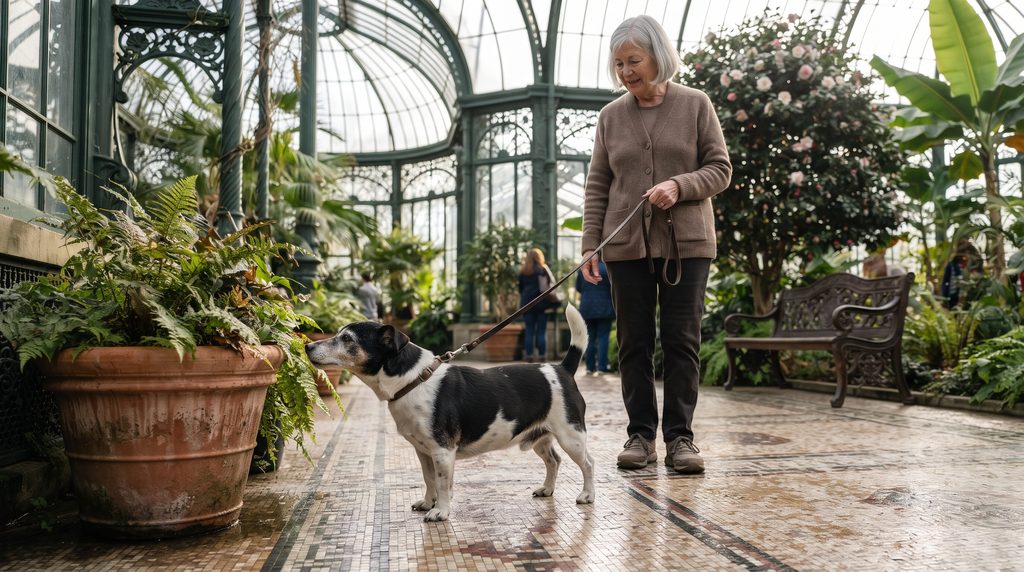
Cost of Owning a Teddy Roosevelt Terrier
The cost of owning a Teddy Roosevelt Terrier extends well beyond the initial expense of bringing one home. Although this compact American breed generally consumes less food than larger dogs and requires relatively little professional grooming, responsible ownership involves ongoing financial commitments throughout a potentially long life. Veterinary care, balanced nutrition, preventive treatments, training, insurance, equipment, and occasional unexpected expenses all contribute to the overall budget. Because the Teddy Roosevelt Terrier can live approximately 14–16 years, prospective owners should consider both immediate requirements and the financial responsibilities of providing consistent care over many years. Planning realistically helps ensure that the dog’s health, comfort, and well-being remain priorities regardless of changing household circumstances.
One of the first considerations is the breed’s relative rarity. Although the Teddy Roosevelt Terrier achieved full American Kennel Club recognition in January 2026, it remains considerably less common than many established companion breeds. Families seeking a responsibly bred puppy may need to contact specialist breeders, join waiting lists, or travel beyond their immediate area. Transportation, overnight accommodations, and veterinary arrangements can add to initial expenses. However, rarity should never justify compromising on health screening, breeding practices, or appropriate puppy socialization. Choosing a responsible breeder who provides meaningful health documentation is more important than selecting an individual based solely on convenience or availability.
Preparing a home for a Teddy Roosevelt Terrier involves purchasing equipment appropriate to its distinctive body shape and energetic personality. Essential items generally include a comfortable bed, secure crate or suitable resting area, stainless-steel food and water bowls, an appropriately fitted harness, leash, identification, grooming supplies, and durable toys. Because the breed is low-set and muscular, harness fit deserves particular attention. Equipment designed for taller, narrow-bodied terriers may rub beneath the front legs or restrict comfortable shoulder movement. High-quality, properly fitted accessories may cost slightly more initially but can offer better durability and comfort over time.
For basic equipment, a preliminary allowance of approximately $200–$500 may be reasonable for many American households, depending on the quality of the products selected and what is already available. This is an illustrative planning range rather than a breed-specific market average. Additional expenses may include secure fencing, baby gates, nonslip flooring, or ramps for accessing elevated resting places. Households with existing dogs may already own suitable equipment, although each animal should have access to its own appropriate feeding and resting arrangements.
Food is one area where the Teddy Roosevelt Terrier’s modest size can provide a financial advantage. With adults generally weighing approximately 8–25 pounds, the breed usually requires considerably less food than a large working dog. Nevertheless, the smallest individuals may have substantially different calorie requirements from larger, highly active adults. A practical annual food allowance might be approximately $250–$650 for many healthy individuals eating a complete commercial diet. Specialty veterinary diets, particular dietary requirements, and premium feeding choices may increase this amount. Owners should prioritize nutritional adequacy and appropriate portion sizes rather than assuming the most expensive product is necessarily the healthiest.
Routine veterinary care is another major ongoing responsibility. Healthy Teddy Roosevelt Terriers require periodic examinations, appropriate vaccinations, parasite prevention, dental assessments, and treatment for ordinary illnesses or minor injuries. Veterinary fees vary substantially between regions and practices, but budgeting several hundred dollars annually for routine services and preventive medications is sensible. The American Veterinary Medical Association’s 2026 pet ownership statistics report average veterinary spending of approximately $595 per dog-owning household annually, although individual households may have more than one dog. This figure should be treated as general context rather than a prediction of one Teddy Roosevelt Terrier’s expenses.
The breed’s particular health considerations make responsible veterinary planning especially valuable. Patellar luxation, inherited eye conditions, cardiac abnormalities, and certain genetic factors affecting spinal health are among the concerns addressed through recommended breeding assessments. Prospective owners should request appropriate parental health documentation rather than assuming that routine puppy examinations provide equivalent information. Once the dog joins its new home, veterinary investigations should be guided by clinical findings, family history, and professional advice. Genetic screening may sometimes provide useful information, but repeatedly ordering tests without a clear purpose is not necessarily beneficial.
Unexpected veterinary expenses can be considerably more demanding than routine care. An accident, orthopedic injury, serious eye disorder, or spinal emergency may require diagnostic imaging, specialist consultations, hospitalization, or surgery. Depending on the condition and location, these services can result in bills reaching several thousand dollars. Owners should consider how they would manage such expenses before an emergency occurs. Maintaining a dedicated veterinary savings reserve, obtaining suitable insurance, or combining both approaches can provide greater financial security when urgent treatment becomes necessary.
Pet insurance is worth considering because the Teddy Roosevelt Terrier may remain with its family for well over a decade. Accident-and-illness policies can help reduce the financial impact of certain unexpected veterinary bills, although deductibles, reimbursement percentages, annual limits, waiting periods, and exclusions vary considerably. According to figures reported from the North American Pet Health Insurance Association’s 2026 industry report, the average U.S. annual premium for dog accident-and-illness coverage during 2025 was approximately $836. This is a nationwide insurance average, not a Teddy Roosevelt Terrier-specific quotation. Individual premiums may differ substantially according to location, age, coverage choices, and medical history.
Insurance policies should be reviewed carefully for hereditary and congenital conditions. Some policies cover eligible inherited disorders when symptoms arise after enrollment and relevant waiting periods, while others impose exclusions or restrictions. Preexisting conditions are generally excluded, making early consideration of coverage worthwhile. Owners should also establish whether the insurer reimburses expenses after payment or offers another claims arrangement. A policy that appears inexpensive may provide limited protection during an expensive emergency, so understanding the actual coverage matters more than comparing premiums alone.
Grooming expenses are comparatively modest. The Teddy Roosevelt Terrier has a short, smooth coat that usually requires little more than weekly brushing, occasional bathing, nail trimming, ear inspections, and routine dental care. Most owners can perform much of this maintenance at home using inexpensive equipment. Professional grooming appointments are generally optional rather than essential, although some owners may prefer assistance with nail care or bathing. Dental examinations and professional veterinary dental procedures are separate medical expenses and should not be overlooked simply because the breed’s coat is easy to maintain.
Training and enrichment represent another worthwhile investment. Teddy Roosevelt Terriers are intelligent, energetic dogs that benefit from learning appropriate household manners, reliable recall, and calm behavior around distractions. Group puppy classes, basic obedience courses, and occasional specialist training sessions can help establish these skills. Some owners may also choose to participate in scent work, rally, agility, or other organized activities. Fees vary according to location and level of participation. Although formal classes are not compulsory throughout the dog’s life, owners should allow for initial training and the replacement of enrichment toys or equipment as necessary.
The breed’s enthusiasm for outdoor activity can also influence household spending. Walking equipment, suitable travel restraints, portable water containers, and occasional outdoor accessories may become useful for families who regularly hike, camp, or travel with their dogs. Because Teddy Roosevelt Terriers are relatively small, transporting them is often more convenient than traveling with much larger breeds. Nevertheless, pet-friendly accommodations, boarding facilities, professional dog walkers, and daycare services can add considerable expenses for households that rely on them regularly.
For general planning, an annual budget of approximately $1,200–$3,000 before optional insurance, significant boarding expenses, and unexpected veterinary emergencies may be a reasonable illustrative starting range for a healthy adult Teddy Roosevelt Terrier in the United States. Actual expenditure can fall outside this range, particularly in expensive metropolitan areas or when a dog needs specialist care. The estimate is not a published breed-specific average. Owners should calculate their own budget using local veterinary fees, preferred food, preventive treatments, training arrangements, and anticipated lifestyle expenses.
Over a potential 14–16-year lifespan, even relatively modest annual expenses represent a substantial financial commitment. Costs may also change as the dog ages. Senior Teddy Roosevelt Terriers can develop additional requirements involving dental treatment, mobility support, medication, diagnostic tests, or more frequent veterinary visits. Rising service costs and changes in personal circumstances may affect what owners can comfortably afford. Maintaining some flexibility in the household budget can make these transitions easier to manage without delaying necessary care.
Rescue and adoption may provide an alternative route to welcoming a Teddy Roosevelt Terrier into the family, although breed-specific opportunities can be limited. Adoption arrangements sometimes include vaccinations, microchipping, or sterilization, which may reduce certain initial expenses. However, adopted dogs still require the same long-term commitment to nutrition, veterinary care, training, and companionship. Some may also benefit from additional behavioral support or medical treatment, depending on their background.
Ultimately, owning a Teddy Roosevelt Terrier is generally less demanding financially in areas such as food consumption and coat maintenance than caring for many larger or heavily coated breeds. However, its compact size does not reduce the importance of preventive veterinary care, suitable equipment, training, or emergency planning. Families who consider the full lifetime commitment rather than concentrating exclusively on initial expenses are better prepared to provide consistent, responsible care. With realistic budgeting and appropriate financial safeguards, owners can focus on enjoying the intelligence, affection, humor, and enduring companionship that make this distinctive American terrier so rewarding.

Budgeting for a Teddy Roosevelt Terrier’s Lifetime Care
The Teddy Roosevelt Terrier’s small size and uncomplicated coat can help keep food and grooming expenses manageable, but veterinary care remains an important financial commitment. Allow for routine examinations, vaccinations, parasite prevention, dental care, training, and occasional equipment replacement. Consider pet insurance or a dedicated emergency fund to prepare for unexpected illness or injury. Because the breed may live 14–16 years, owners should also anticipate changing medical requirements during senior life. Responsible budgeting involves more than meeting ordinary monthly expenses; it means maintaining sufficient financial flexibility to provide appropriate care when the dog’s needs change.
Choosing a Teddy Roosevelt Terrier Puppy or Rescue
Choosing a Teddy Roosevelt Terrier is an exciting decision, but finding the right individual requires careful research, patience, and an understanding of this relatively uncommon American breed. Although the Teddy Roosevelt Terrier achieved full American Kennel Club recognition in January 2026, it remains less widely available than many established companion dogs. Prospective owners may therefore need to contact specialist breeders, consider joining waiting lists, or investigate rescue organizations that occasionally care for these distinctive short-legged terriers. Whether welcoming a young puppy or adopting an adult, the priority should always be health, temperament, responsible breeding or rehabilitation practices, and compatibility with the household’s lifestyle.
Finding responsibly bred Teddy Roosevelt Terrier Puppies often begins with the American Teddy Roosevelt Terrier Club, the breed’s official AKC parent club. The organization maintains a breeder directory that can provide a useful starting point for researching established breeding programs. However, the club explicitly states that appearing in its directory does not constitute an endorsement. Prospective owners must therefore conduct their own assessments rather than assuming that every listed breeder follows identical health-screening, socialization, or puppy-rearing practices. AKC breeder referral resources can provide another avenue for identifying people actively involved in preserving and developing the breed.
A responsible breeder should demonstrate a thorough understanding of the Teddy Roosevelt Terrier’s distinctive physical construction, working heritage, and temperament. These dogs should be bred for balanced structure, sound movement, good health, and stable personalities rather than exaggerated short legs or unusual markings. Breeders should welcome thoughtful questions about their dogs, explain the strengths and limitations of the breed, and discuss whether a prospective household can provide appropriate exercise, companionship, and training. Genuine interest in where puppies will live is usually encouraging because responsible breeders want their dogs placed in suitable long-term homes.
Health screening is one of the most important considerations. The American Kennel Club identifies patellar evaluation, cardiac examination, primary lens luxation testing, and chondrodystrophy testing among the national breed club’s recommended assessments. Prospective owners should request relevant results for both parents and ask how those findings influenced the breeding decision. Some records may be publicly available through the Orthopedic Foundation for Animals, while others may be supplied as original veterinary or laboratory reports. Registration papers and a routine veterinary examination do not replace appropriate parental health screening.
A well-organized breeding program should also provide information about the health and longevity of related dogs. Because the Teddy Roosevelt Terrier is relatively uncommon, understanding family history can be particularly valuable. Ask whether previous generations have experienced orthopedic problems, inherited eye conditions, spinal disorders, or significant cardiac abnormalities. Responsible breeders should be willing to discuss known concerns without promising that every puppy will remain completely free of disease. No breeding program can eliminate every possible health risk, but transparent records and informed decisions demonstrate a commitment to improving the breed.
When meeting a litter, pay attention to the environment in which the puppies are being raised. Young Teddy Roosevelt Terriers benefit from clean surroundings, comfortable resting areas, appropriate human interaction, and opportunities to experience ordinary household sounds and activities. Puppies should appear reasonably confident and curious for their age, although some individuals may initially approach unfamiliar visitors more cautiously than others. The mother should be available to meet whenever circumstances permit, allowing prospective owners to observe her behavior, physical condition, and relationship with the breeder.
The distinctive appearance of a Teddy Roosevelt Terrier Puppy deserves particular consideration. The breed should eventually develop a sturdy, muscular, rectangular body supported by genuinely short legs. However, puppies mature gradually, and their chest depth, proportions, and muscular development may continue changing over an extended period. The official AKC standard notes that complete maturity may not occur until approximately two or three years of age. Consequently, prospective owners should not judge a young puppy exclusively by the precise appearance of its legs or body. Balanced development and the quality of the parents are more meaningful than exaggerated early proportions.
Temperament should be evaluated with equal care. Teddy Roosevelt Terriers are generally affectionate, intelligent, lively, and closely attached to their families, but individual personalities vary. A suitable family companion should demonstrate curiosity, recover appropriately from minor surprises, and show a willingness to engage with people. Some puppies may be naturally more adventurous, while others prefer observing unfamiliar situations before participating. Neither extreme excitement nor excessive timidity should automatically be considered desirable. Experienced breeders can help identify the puppy whose confidence, energy, and interaction style best match a particular household.
Early socialization is another important consideration. Well-raised puppies should experience age-appropriate exposure to different people, surfaces, sounds, handling routines, and everyday household activities. These experiences should be positive rather than overwhelming. Ask how puppies are introduced to grooming, gentle restraint, unfamiliar objects, and brief periods away from their littermates. Such preparation can make the transition into a new home considerably easier. However, socialization must continue after adoption, especially because the Teddy Roosevelt Terrier can be naturally watchful around unfamiliar people and environments.
Prospective owners should also confirm that puppies remain with their mother and littermates until an appropriate age. In most circumstances, puppies should not leave before eight weeks, and some breeders may retain them until ten or twelve weeks, depending on developmental needs and applicable laws. During this period, puppies continue learning social behavior, appropriate play, and important communication skills. A breeder who pressures someone to collect a very young puppy prematurely should raise concerns. Vaccination records, parasite-treatment information, identification details, and a written care plan should accompany the puppy when it leaves.
Documentation deserves careful attention. A responsible breeder should provide a written agreement explaining the responsibilities of both parties, the puppy’s registration status, relevant medical information, and arrangements if the owner can no longer provide appropriate care. Some agreements include provisions for returning the dog to the breeder rather than rehoming it independently. These arrangements can provide an important safeguard for a breed whose comparatively small population may make suitable alternative homes harder to identify.
Prospective owners should be cautious when encountering unusually marketed variations of the breed. Terms implying an exceptionally tiny or exclusive size should not override the official breed standard. Neither miniature nor toy Teddy Roosevelt Terriers are recognized as separate AKC varieties. Likewise, unusual coat colors should never be presented as evidence of superior quality. Appearance can be appealing, but physical soundness, health screening, and stable temperament are far more important than fashionable descriptions.
Rescue and adoption provide another worthwhile route to Teddy Roosevelt Terrier ownership. Although the breed is uncommon, adult dogs occasionally require new homes because of changing family circumstances, housing difficulties, or other reasons unrelated to their temperament. The American Teddy Roosevelt Terrier Club states that it does not operate a dedicated breed rescue within the club, but it identifies organizations that include these terriers within their rescue activities. These include New Rattitude and Ratbone Terrier Rescue. Because availability changes, prospective adopters may need patience and flexibility when searching for a suitable individual.
An adult rescue dog can offer several advantages. Its approximate mature size, physical proportions, and established personality are usually easier to assess than those of a young puppy. Foster carers may also provide valuable information about the dog’s behavior around children, cats, other dogs, visitors, and unfamiliar environments. Some adults already have basic house manners or leash experience, although previous training should not be assumed. For households that prefer a more predictable activity level or wish to avoid the demands of puppyhood, an appropriately matched adult can be an excellent choice.
However, rescue dogs sometimes require additional time to adjust. A Teddy Roosevelt Terrier entering a new household may initially appear unusually quiet, reserved, or unsettled. Changes in environment, unfamiliar people, and disrupted routines can affect behavior during the first several weeks. Owners should provide predictable feeding and walking schedules, comfortable resting areas, and opportunities to explore gradually. Training should emphasize positive reinforcement and confidence-building rather than immediate expectations of perfect obedience.
Whether adopting or choosing a puppy, the household should be prepared for the breed’s natural hunting instincts. Teddy Roosevelt Terriers are enthusiastic investigators with an interest in small moving animals, making secure fencing and appropriate supervision important. Families with rabbits, guinea pigs, or other vulnerable pets should consider these instincts carefully before proceeding. Likewise, owners who work away from home for extended periods should establish realistic arrangements for companionship and daily activity.
Ultimately, choosing a Teddy Roosevelt Terrier should involve more than finding an appealing small dog. Its intelligence, affectionate nature, distinctive short-legged construction, and working ancestry create a companion with genuine personality and specific needs. Responsible breeders and knowledgeable rescue organizations can help prospective owners understand these characteristics and select an individual suited to their circumstances. Taking time to evaluate health, temperament, background, and long-term compatibility creates the strongest foundation for a rewarding relationship with this engaging American terrier.

Is a Teddy Roosevelt Terrier Right for You?
The Teddy Roosevelt Terrier can be an outstanding companion for the right household, offering an appealing combination of affection, intelligence, adaptability, and genuine working-dog enthusiasm in a remarkably compact package. Its distinctive short-legged appearance may initially attract attention, but successful ownership depends on appreciating the energetic, inquisitive personality beneath that charming exterior. This is a dog that enjoys spending time with familiar people, exploring interesting environments, learning new skills, and participating in everyday activities. Although generally adaptable to different living arrangements, the Teddy Roosevelt Terrier is not necessarily suitable for everyone. Understanding its companionship needs, hunting instincts, activity requirements, and potential challenges is essential before making a long-term commitment.
One of the strongest reasons to consider this breed is its affectionate, people-oriented nature. Teddy Roosevelt Terriers often develop close relationships with their owners and enjoy being actively involved in household life. They are particularly appealing to individuals or families who genuinely want a companion rather than a dog that spends most of its time independently. Many enjoy accompanying their owners around the home, joining outdoor activities, and relaxing nearby during quieter moments. However, their devotion also means that prolonged isolation may be difficult for some individuals. A household able to provide regular interaction, consistent routines, and opportunities for companionship is generally a better match than one where the dog would routinely spend very long periods alone.
Activity level is another important consideration. Despite its short legs, the Teddy Roosevelt Terrier is a capable, muscular working breed with considerable enthusiasm for walking, playing, and investigating its surroundings. Owners who enjoy regular outdoor activities may find its stamina and curiosity particularly rewarding. However, the breed does not necessarily require an exceptionally athletic household or continuous strenuous exercise. A combination of daily walks, interactive games, scent-based enrichment, and short training sessions can provide meaningful stimulation. The essential requirement is consistency. Someone seeking a dog content with occasional brief outings and little additional engagement may find the Teddy Roosevelt Terrier more demanding than expected.
The breed’s intelligence makes it particularly suitable for owners who enjoy training and building a cooperative relationship with their dog. Teddy Roosevelt Terriers are generally quick learners and often respond enthusiastically to positive reinforcement. Their natural curiosity creates opportunities for obedience, tricks, scent work, and organized canine activities. Nevertheless, their working heritage can occasionally produce independent decisions, particularly when an interesting scent or moving animal captures their attention. Owners should be prepared to practice recall, loose-leash walking, calm greetings, and impulse control throughout the dog’s development. Those who appreciate training as an enjoyable ongoing activity are likely to find the breed especially satisfying.
Apartment and townhouse living can suit a Teddy Roosevelt Terrier surprisingly well. Its manageable size, straightforward coat maintenance, and ability to settle after appropriate activity make it adaptable to smaller homes. However, compact dimensions do not automatically create an ideal apartment dog. The breed’s natural watchfulness means that unfamiliar hallway noises, nearby neighbors, and frequent visitors may trigger barking. Owners must be willing to establish calm household routines, provide regular outdoor experiences, and manage environmental distractions. A well-exercised, appropriately trained terrier may thrive in an apartment, while an understimulated dog with unrestricted access to busy windows could become difficult to manage regardless of the property’s size.
Families with children may also find the Teddy Roosevelt Terrier an appealing choice. Its playful personality, affectionate disposition, and enthusiasm for shared activities can make it a rewarding companion for youngsters who understand respectful animal handling. School-age children may particularly enjoy supervised training games and outdoor adventures. However, younger children require constant adult supervision around dogs, and the breed’s small, low-set body makes accidental injury from rough handling or falls a genuine consideration. Parents must remain responsible for the dog’s care and ensure that children respect its sleeping areas, food, and personal space. A family prepared to teach these boundaries can develop a rewarding relationship with this lively little terrier.
Households with existing dogs may also be suitable, as Teddy Roosevelt Terriers are generally described as sociable with other dogs when appropriately introduced. Their confident personalities can allow them to interact comfortably with substantially larger companions, although compatible play styles and supervision remain important. Some individuals also live successfully with cats, especially when raised alongside them. Nevertheless, compatibility varies, and unfamiliar animals may provoke different responses from familiar household companions. Owners should evaluate each relationship individually rather than relying on breed generalizations. Thoughtful introductions, separate resting spaces, and gradual adjustment help establish positive relationships in homes where multiple animals must share everyday routines.
Small mammals present a more significant concern. Teddy Roosevelt Terriers were developed to locate and pursue rodents, and their natural hunting instincts remain an important part of their character. Rabbits, guinea pigs, hamsters, and other vulnerable animals may trigger predatory responses even in otherwise affectionate and obedient dogs. Families keeping such pets must be willing to maintain secure separation and carefully controlled environments. Likewise, anyone expecting a dog to wander freely through an unfenced yard without investigating wildlife may find this breed challenging. Appropriate outdoor boundaries and responsible leash management are essential, particularly in areas with abundant squirrels, rodents, or other small animals.
Grooming convenience is a genuine advantage for households seeking a practical companion. The Teddy Roosevelt Terrier’s short, smooth coat generally requires only weekly brushing, occasional bathing, and routine maintenance of nails, ears, and teeth. Professional coat styling is unnecessary, saving both time and ongoing expense. However, the breed does shed and is not hypoallergenic. Families particularly sensitive to loose dog hair or canine allergens should consider this before adoption. Its compact size also makes bathing, transportation, and many ordinary care tasks comparatively manageable, although small dogs still require consistent dental care, preventive veterinary attention, and responsible nutritional management.
The breed’s unusual physical construction deserves consideration when planning an appropriate home. Teddy Roosevelt Terriers are sturdy, agile dogs, but their relatively long bodies and short legs make sensible management of repetitive jumping and physically demanding obstacles worthwhile. Secure, nonslip flooring and accessible resting places may be particularly beneficial for individuals with mobility concerns. Prospective owners should also understand the importance of responsible breeding and health screening, particularly for patellar luxation, primary lens luxation, cardiac abnormalities, and genetic variants associated with spinal disease. A healthy dog should move comfortably and confidently, and its distinctive appearance should never be used to justify exaggerated or unsound physical characteristics.
Financial commitment is another important factor. Although the Teddy Roosevelt Terrier generally consumes relatively little food and requires minimal professional grooming, routine veterinary care, preventive treatments, training, and unexpected medical expenses remain substantial responsibilities. The breed’s potential lifespan of approximately 14–16 years means that ownership can extend across major changes in employment, housing, family circumstances, and personal finances. Prospective owners should consider whether they can provide consistent care throughout these transitions. Pet insurance or a dedicated veterinary savings fund may be worthwhile, particularly because orthopedic, eye, or spinal emergencies can involve expensive specialist treatment.
The Teddy Roosevelt Terrier can be suitable for first-time dog owners, provided they are willing to learn about terrier behavior and establish consistent expectations. Its intelligence and affectionate personality can make training enjoyable, but first-time owners should not underestimate the importance of early socialization, appropriate exercise, and management of hunting instincts. Puppy classes, reward-based training, and guidance from experienced breeders or qualified professionals can provide valuable support. Conversely, someone expecting unquestioning obedience without regular training may struggle with the breed’s curiosity and occasional independence. Previous dog ownership is less important than patience, preparation, and a genuine willingness to understand the individual dog.
Prospective owners should also consider whether they would prefer a puppy or an adult rescue. Puppies require considerable time for house-training, socialization, supervision, and the development of appropriate household manners. Adult dogs may offer a more established temperament and activity level, potentially making compatibility easier to assess. Because the Teddy Roosevelt Terrier is relatively uncommon, finding a suitable individual can require patience. Meeting well-adjusted examples of the breed, speaking with knowledgeable owners, and investigating responsible breeders or rescue organizations can help prospective households develop realistic expectations before proceeding.
The Teddy Roosevelt Terrier is particularly well suited to people who appreciate a small dog with substantial personality. Active individuals, engaged families, experienced terrier enthusiasts, and owners interested in training or canine sports may find its enthusiasm genuinely delightful. It can also be an affectionate companion for less athletic households when regular exercise and enrichment remain part of daily life. However, people wanting a very quiet, naturally sedentary dog, those unable to provide consistent companionship, or households where vulnerable small pets cannot be safely separated may be better served by another breed.
Ultimately, deciding whether a Teddy Roosevelt Terrier is right for you requires looking beyond its attractive appearance and relatively convenient size. This is an intelligent, loyal, playful, and determined working terrier that flourishes when treated as an active participant in family life. Its adaptability and affectionate personality are considerable strengths, but they work best alongside reliable training, meaningful daily activity, responsible supervision, and realistic long-term expectations. For owners prepared to embrace its individuality and provide the care it deserves, the Teddy Roosevelt Terrier can become an exceptionally engaging and deeply devoted companion for many years.
The Ideal Teddy Roosevelt Terrier Household
A Teddy Roosevelt Terrier is most likely to thrive with owners who enjoy companionship, regular activity, and positive-reinforcement training. Its manageable size suits apartments and larger homes alike, provided exercise, enrichment, and barking are appropriately managed. Families with respectful children and compatible dogs may find it an affectionate, entertaining companion. However, its hunting instincts make careful management essential around small mammals and wildlife. Prospective owners should also be comfortable with moderate shedding, long-term veterinary responsibilities, and the breed’s occasional independence. The best match is not necessarily the most athletic household, but one prepared to include this intelligent little working terrier in everyday family life.

Teddy Roosevelt Terrier Final Thoughts
The Teddy Roosevelt Terrier is an appealing example of how a traditional American working dog can retain its original character while becoming a devoted modern family companion. Small, muscular, intelligent, and full of personality, this distinctive breed combines the confidence of a determined hunter with the affectionate nature of a dog that genuinely enjoys human companionship. Its unusual short-legged appearance may be the first characteristic people notice, but its loyalty, curiosity, playful enthusiasm, and willingness to participate in everyday life are often what make the strongest impression on those who come to know it.
The breed’s development from the shorter-legged working Rat Terriers of rural America has left a lasting influence on both its appearance and behavior. Teddy Roosevelt Terriers were never intended to be delicate decorative dogs. Their compact bodies, substantial musculature, and determined personalities reflect generations of practical work controlling rodents and protecting agricultural properties. Although most now live primarily as companions, those original instincts remain evident in their enthusiasm for exploring, investigating scents, and responding quickly to movement around them.
For many owners, the Teddy Roosevelt Terrier’s greatest attraction is its ability to combine energy with affection. A well-adjusted individual may spend the morning enthusiastically exploring a woodland trail, enjoy an afternoon training session, and settle contentedly beside its family in the evening. This adaptability makes the breed suitable for a variety of living arrangements, from apartments and suburban houses to rural properties. However, successful ownership depends on providing appropriate exercise, mental stimulation, companionship, and consistent training rather than assuming that a small dog naturally requires little attention.
Its relationships with people can be particularly rewarding. Teddy Roosevelt Terriers often form strong attachments to familiar family members and enjoy participating in household activities. Their intelligence and playfulness can make them entertaining companions for adults and respectful children alike. Many also live comfortably alongside other dogs and, in suitable circumstances, cats. Nevertheless, their hunting instincts deserve careful management around rodents, rabbits, and other vulnerable small animals. Understanding these natural behaviors helps owners provide appropriate boundaries without expecting the dog to abandon characteristics deeply rooted in its ancestry.
The breed’s relatively uncomplicated coat is another practical advantage. Routine brushing, occasional bathing, and ordinary nail, dental, and ear care are generally sufficient to maintain a healthy appearance. However, prospective owners should remember that Teddy Roosevelt Terriers do shed and are not hypoallergenic. Their grooming convenience should be considered alongside the responsibilities associated with training, exercise, preventive veterinary care, and providing suitable outlets for their active minds.
Health and responsible breeding are especially important considerations for anyone interested in this relatively uncommon breed. Its distinctive physical proportions should always remain compatible with comfortable movement and functional athleticism. Appropriate parental screening for patellar abnormalities, inherited eye disease, cardiac concerns, and relevant genetic conditions helps support healthier breeding decisions. Prospective owners should prioritize sound structure, stable temperament, transparent health documentation, and responsible breeding practices rather than exaggerated physical characteristics or unusual coat colors.
The Teddy Roosevelt Terrier’s potential lifespan of approximately 14–16 years also makes ownership a substantial long-term commitment. Over those years, individual needs will change as a lively puppy develops into a mature adult and eventually enters senior life. Exercise, nutrition, veterinary care, and household arrangements may require adjustments, but the breed’s affectionate personality and inquisitive spirit can remain deeply engaging throughout its life. Families prepared to accommodate those changing needs may enjoy many rewarding years with their companion.
The breed’s full recognition by the American Kennel Club in 2026 represents an important achievement for the enthusiasts who worked to preserve its independent identity. Recognition has brought this distinctive American terrier to a wider audience while reinforcing the importance of maintaining the characteristics that distinguish it from its longer-legged Rat Terrier relatives. As awareness grows, responsible breeding and accurate public understanding will remain essential to protecting its future.
Ultimately, the Teddy Roosevelt Terrier is best appreciated as a genuine working terrier in a small, affectionate, and adaptable package. Its size makes many aspects of ownership convenient, but its intelligence, energy, determination, and hunting instincts deserve respect. For people who enjoy an involved, playful companion and are willing to provide appropriate training, activity, and lifelong care, this engaging American breed can offer an exceptionally rewarding relationship.
The Teddy Roosevelt Terrier may be modest in stature, but its personality, loyalty, and enthusiasm for life are anything but small.

Explore More Terrier Breeds
Enjoy discovering the Teddy Roosevelt Terrier? Explore our complete guide to Terrier Breeds and learn more about the remarkable variety of dogs in this spirited group. From energetic traditional hunters to affectionate family companions, terriers share a fascinating history of determination, intelligence, and adaptability. Compare their personalities, sizes, grooming requirements, and everyday care needs to discover which breeds might suit your lifestyle.
Our Terrier Group guide provides a useful starting point for exploring these distinctive dogs.
Learn More From the American Kennel Club
For additional authoritative information about this distinctive American breed, visit the American Kennel Club’s Teddy Roosevelt Terrier breed profile. The AKC provides information about the breed’s official standard, physical characteristics, temperament, history, and expected lifespan. Its resources also help prospective owners understand the responsibilities of choosing a purebred companion and the importance of informed breeding and ownership decisions.
This is a valuable companion reference for anyone researching the Teddy Roosevelt Terrier.