

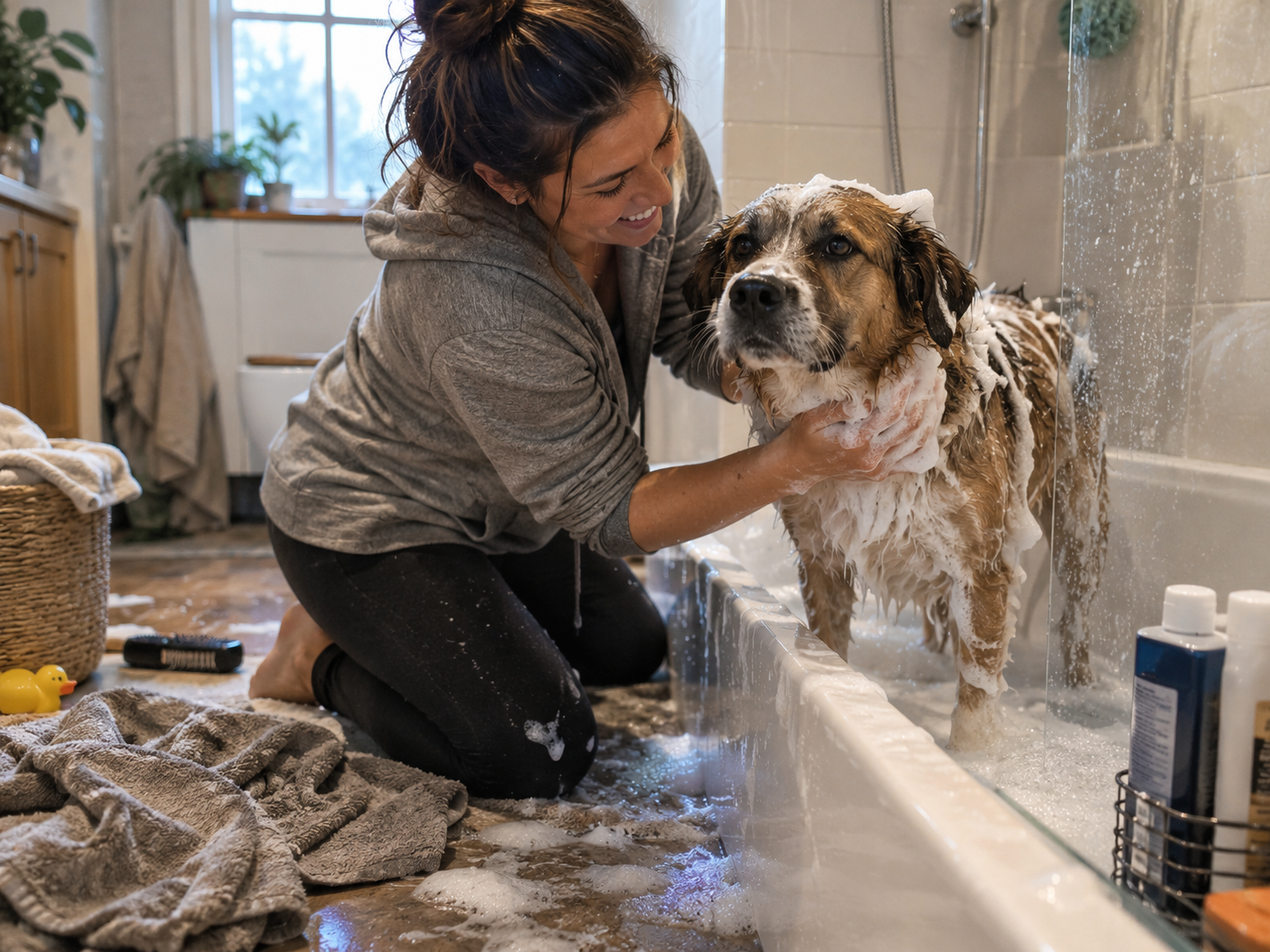
Do You Bathe a Dog Before Grooming?
In most cases, yes — but with one important step first: brush the dog before the bath. Brushing removes loose hair, dirt, debris, and tangles before the coat gets wet. That matters because mats and knots can tighten during bathing and become much harder to remove afterward. Both the American Kennel Club and VCA Animal Hospitals recommend brushing before bathing for this reason.
Once the coat has been brushed through, bathing is usually the next stage of a full grooming routine. A clean coat is easier to dry, comb, clip, and shape, and removing dirt and oils before trimming can also help grooming tools work more effectively. After the bath, the dog should be dried thoroughly before further brushing, clipping, or styling begins.
The exact order can vary depending on the dog’s coat and condition. A short-coated dog with no tangles may need only a quick brush before bathing, while a long-haired, curly, or double-coated dog may require much more preparation. Dogs with heavy matting are a special case because severely tangled areas often need professional attention before the dog gets wet. VCA specifically warns that tangles can become extremely difficult to remove after bathing.
Bathing itself should also be appropriate for the individual dog. Dogs do not all need baths on the same schedule. Coat type, lifestyle, activity level, skin condition, and how dirty the dog becomes all influence how often bathing is necessary. Bathing too frequently can dry the skin and coat, particularly if unsuitable products are used.
For most home grooming sessions, a sensible order is therefore brush, bathe, dry, brush again, and then complete any trimming or finishing work. The second brushing helps separate the clean coat, remove remaining loose hair, and prepare it for clipping or shaping if required.
Using a shampoo made specifically for dogs is also important. Human shampoo is formulated for human skin and is not the best choice for routine dog bathing. AKC guidance recommends a mild dog-specific shampoo and thorough rinsing so residue is not left against the skin.
So if you are wondering do you bathe a dog before grooming, the simplest answer is: usually yes, but grooming actually starts before the bath. A good brush-through first can make the entire process easier, safer, and more comfortable for your dog.

Table of Contents
What Is the Best Order for Grooming a Dog?
A good grooming routine usually follows a simple order: brush first, bathe second, dry thoroughly, brush again, then trim or finish the coat if needed. Following that sequence helps prevent tangles from tightening, makes the coat easier to work with, and can make the entire process more comfortable for the dog.
The first brushing is especially important for medium, long, curly, or double-coated dogs. Loose hair and small tangles are much easier to remove while the coat is dry. Once hair becomes wet, knots can tighten and mats can become denser, making them more difficult and sometimes painful to work through.
After the coat has been checked and brushed, the dog can usually be bathed. Lukewarm water and a shampoo formulated specifically for dogs are the safest general choices. Work the shampoo through the coat gently rather than aggressively rubbing or twisting the hair, particularly on dogs that are prone to tangling.
Rinsing is just as important as washing. Shampoo left behind can irritate the skin and make the coat feel dull or sticky. Thick-coated dogs may need considerably more rinsing than expected because water and shampoo can remain trapped deep within the coat.
Next comes drying. Some short-coated dogs can be towel-dried relatively quickly, while long-haired and double-coated breeds may need more thorough drying. Professional groomers often use controlled airflow to separate the coat and remove loose undercoat while drying. At home, the priority should be getting the coat comfortably and thoroughly dry without overheating or frightening the dog.
Once the coat is dry, brushing again removes loosened hair and helps the coat sit naturally. This second brush-through also makes it easier to see areas that may need trimming, clipping, or additional attention.
Trimming generally comes later because clean, dry hair is easier to assess and cut evenly. However, heavily matted dogs are an important exception. If a coat is badly tangled, bathing first can make the problem worse. Severe mats may need to be clipped or professionally removed before the bath rather than brushed out aggressively.
Nails, ears, paw hair, and other finishing work can be fitted into the routine depending on the dog and the groomer’s preference. Some dogs tolerate nail trimming better before the bath, while others are calmer afterward. There is no need to force every dog through exactly the same sequence if a small adjustment makes grooming safer and less stressful.
So when deciding do you bathe a dog before grooming, remember that bathing is usually part of grooming rather than the first step. A little preparation beforehand can make everything that follows much easier.
A Simple Grooming Order
For most dogs, a practical grooming routine is brush, bathe, dry, brush again, then complete any clipping or finishing work. Brushing before the bath helps remove loose hair and small tangles before water can tighten them. After bathing, thorough drying and another brush-through leave the coat clean, separated and easier to trim. Heavily matted dogs are the main exception, because severe tangles may need professional removal before bathing. The exact routine can vary with coat type, condition and the individual dog.

Should You Brush a Dog Before Bathing?
Yes — in most cases, you should brush a dog before bathing. This is one of the most useful steps in the grooming process because it removes loose hair, surface debris, and small tangles before water is introduced to the coat.
When dry tangles become wet, they can tighten and become more difficult to remove. This is especially important for dogs with long, curly, silky, or double coats. A small knot that is easy to work through before the bath can become much denser once soaked, shampooed, and rubbed.
Brushing beforehand also helps the bath work more effectively. Removing loose fur and dirt allows water and shampoo to reach the coat and skin more evenly. On heavily shedding breeds, a thorough pre-bath brush can also reduce the amount of loose undercoat that ends up in the bath and drainage system.
The type of brushing needed depends on the dog. A short-coated dog may need only a quick pass to remove loose hair, while a Golden Retriever, Collie, Poodle, or other coat-heavy breed may need much more preparation. The goal is not to make the coat perfect before bathing, but to remove obvious tangles and loose material that could become harder to manage when wet.
Care is especially important around sensitive areas such as behind the ears, under the front legs, around the collar area, the groin, and the feathering on the legs and tail. These are common places for knots and mats to develop because the coat experiences more friction.
If the brush catches on a tangle, avoid pulling hard. Work gradually from the outer edge of the knot toward the skin while supporting the coat to reduce pulling. For difficult or tight mats, forcing a brush through can hurt the dog and damage the skin underneath.
Dogs with severe matting are different. A coat that is tightly matted close to the skin may not be suitable for routine home brushing at all. In these cases, bathing before the mats are addressed can make them even tighter. Professional groomers may recommend clipping severely matted areas instead of attempting to brush them out.
Once the pre-bath brushing is complete, the dog can be washed, thoroughly rinsed, dried, and brushed again. That second brushing helps remove additional loose hair released during bathing and leaves the coat smoother and easier to manage.
So if you are asking do you bathe a dog before grooming, brushing is the important first step to remember. In most grooming routines, the bath comes after the initial coat preparation rather than before it.

Why Brushing First Matters
Brushing before bathing helps remove loose hair, dirt and small tangles before they become wet and potentially tighten. This is particularly important for long-haired, curly and double-coated dogs, where hidden knots can become much harder to manage after washing. A pre-bath brush also allows shampoo and water to move through the coat more evenly. Severe matting is different and may require professional clipping or detangling before the dog is bathed. Gentle preparation before washing can make the entire grooming process easier and more comfortable.
Should You Bathe a Matted Dog Before Grooming?
A heavily matted dog should not usually be bathed before the mats are properly assessed. Water can cause tangled hair to tighten as it dries, making an already difficult coat even harder to work through and potentially increasing discomfort for the dog.
Mats form when loose hair, dirt, moisture, and friction cause strands of coat to twist together. They commonly develop behind the ears, under collars and harnesses, beneath the front legs, around the groin, and in feathering on the legs and tail. Dogs with curly, long, silky, or dense coats are especially prone to them, although almost any coat can become tangled if grooming is neglected.
Small, loose tangles may sometimes be gently worked out before bathing. The key is to avoid pulling directly against the skin. Supporting the hair near its base while carefully separating the outer edges of the knot can reduce discomfort. However, once a mat becomes dense or sits tightly against the skin, repeated brushing may hurt the dog and can irritate or damage the skin underneath.
Severe matting is often better handled by a professional groomer. In some cases, clipping the coat short is kinder than attempting to brush out numerous tight mats. Although owners may understandably want to preserve the dog’s coat, comfort and skin health should come first.
Matting can also hide problems underneath. Moisture trapped close to the skin may contribute to irritation, while debris, parasites, or small wounds can be difficult to see beneath a dense mat. Tight mats can also pull continuously on the skin as the dog moves.
Once severe matting has been removed, the dog can usually be bathed safely. The newly exposed skin may be sensitive, so gentle handling and an appropriate dog shampoo are important. The coat should then be rinsed and dried thoroughly.
This is one of the main exceptions to the general answer to do you bathe a dog before grooming. For a normally maintained coat, brushing followed by bathing works well. For a heavily matted coat, however, the grooming process may need to begin with clipping or professional coat removal before any water is used.
Preventing mats is much easier than dealing with them later. Regular brushing, paying particular attention to friction areas, and keeping up with professional grooming when needed can prevent small tangles from developing into painful, tightly packed mats.
Matted Coats Need Special Care
A heavily matted dog should usually be assessed before bathing because water can tighten tangled hair and make the coat more difficult to manage. Small, loose knots may sometimes be gently removed beforehand, but dense mats close to the skin can be painful to brush and may need professional clipping instead. Matting can also hide irritation, debris or skin problems underneath. Once severe mats are safely removed, the dog can generally be bathed and dried as normal. Preventing mats through regular brushing is far easier and more comfortable than removing them later.

Should You Trim a Dog Before or After Bathing?
For most dogs, trimming is easier after bathing and drying, because a clean, fully dry coat sits more naturally and is easier to cut evenly. Dirt, oils, loose hair, and coat compression can all affect the way fur lies, so washing first often gives a groomer a clearer view of the finished shape.
That does not mean every dog should always be clipped after a bath. The condition of the coat matters. If a dog is heavily matted, badly tangled, or carrying a large amount of compacted coat, some clipping may need to happen first. Removing dense mats before bathing can prevent them from tightening further and can make the bath safer and more comfortable.
For a normally maintained coat, however, the usual sequence is preparation, bathing, drying, and then trimming. Once the dog is clean and dry, areas such as the feet, face, sanitary area, feathering, or overall coat length can be shaped more accurately.
Drying is particularly important before clipping. Damp hair can clump together, stretch, or sit differently from dry hair, which can lead to an uneven finish. Clippers and scissors also work more predictably on a properly prepared coat.
Coat type can influence the exact approach. Curly-coated dogs such as Poodles and many doodle-type dogs are often dried in a way that straightens and separates the coat before clipping. This creates a more even surface and helps produce a cleaner result. Long-coated breeds may need careful brushing and drying before any final trimming, while short-coated dogs may require little or no clipping at all.
Some owners prefer to tidy obvious problem areas before the bath, especially if fur around the paws or sanitary areas is excessively long. That can be practical, but major shaping is usually best left until the coat is clean and dry.
Safety also matters. Trying to cut through dirty, tangled, or tightly matted hair can increase the chance of pulling the skin or accidentally catching it with scissors or clippers. If the coat is in poor condition, a professional groomer may need to decide whether pre-bath clipping is the safer option.
So when considering do you bathe a dog before grooming, trimming is generally one of the later stages. For most dogs, brushing first, bathing, drying thoroughly, and then trimming gives the neatest and most predictable result.

Can You Bathe a Dog Too Often?
Yes — bathing a dog too often can dry out the skin and coat, particularly if the wrong shampoo is used or the dog already has sensitive skin. Dogs produce natural oils that help protect the skin and keep the coat healthy, and repeated washing can strip some of those oils away.
How often a dog should be bathed depends on several factors, including coat type, activity level, lifestyle, skin condition, and how dirty the dog gets. A dog that swims, rolls in mud, or spends a lot of time outdoors may need more frequent baths than a mostly indoor dog with a clean, short coat.
Some breeds also tolerate bathing differently. Dogs with oily coats may need more regular washing, while breeds with dry or sensitive skin may benefit from longer intervals between baths. Curly, long-haired, and heavily coated breeds may require more structured grooming schedules because bathing is often tied to brushing, drying, and coat maintenance.
Using a shampoo made specifically for dogs is important. Human shampoos are designed for human skin and can be too harsh for routine canine use. Even with dog shampoo, very frequent bathing may still cause dryness if the product is strongly fragranced, overly degreasing, or not suited to the individual dog.
Rinsing thoroughly also matters. Shampoo residue left in the coat can contribute to itching, flaking, or irritation. Thick-coated dogs may need extra rinsing because product can remain trapped close to the skin.
Dogs with diagnosed skin conditions are a special case. A veterinarian may recommend medicated baths on a specific schedule, sometimes much more frequently than would be appropriate for a healthy dog. In those situations, the veterinary treatment plan should take priority over general grooming advice.
The signs of over-bathing can include dry or flaky skin, increased scratching, a dull coat, or irritation. If these develop after bathing more frequently, it may be worth reducing the schedule or discussing the products being used with a veterinarian or professional groomer.
So when thinking about do you bathe a dog before grooming, the answer may still be yes, but that does not mean every grooming session needs to include a bath. Brushing, nail care, ear checks, and coat maintenance can all be done between baths when the dog does not actually need washing.
The best bathing schedule is therefore the one that keeps the dog clean and comfortable without repeatedly stripping the coat unnecessarily.

More Bathing Is Not Always Better
Dogs do not all need to be bathed on the same schedule. Coat type, activity level, skin condition and lifestyle all influence how often washing is appropriate. Bathing too frequently can remove natural oils and contribute to dryness or irritation, especially when harsh products are used. A dog-specific shampoo and thorough rinsing are important, while dogs with medical skin conditions may need a veterinarian-prescribed bathing routine. Grooming can still continue between baths through brushing, nail care and other coat maintenance.
What Kind of Shampoo Should You Use on a Dog?
For routine bathing, the safest general choice is a shampoo made specifically for dogs. Canine skin is different from human skin, so products designed for people are not ideal for regular use on dogs. A mild dog shampoo is usually a better option because it is formulated with the canine coat and skin barrier in mind.
The right shampoo also depends on the dog’s individual needs. A healthy dog with normal skin may do well with a simple gentle cleansing shampoo, while a dog with dry or sensitive skin may benefit from a moisturizing or fragrance-free formula. Dogs with allergies, recurring skin infections, or other dermatological problems may need a medicated shampoo recommended by a veterinarian.
Coat type can matter too. Long, curly, or dense coats may benefit from shampoos designed to rinse cleanly without leaving heavy residue, while dogs with very oily coats may need a product that removes excess grease without stripping the skin too aggressively.
Owners should be cautious with heavily perfumed shampoos. A strong scent may be appealing to people, but dogs have a much more sensitive sense of smell, and fragranced products can sometimes irritate sensitive skin. Mild, uncomplicated formulations are often the easiest place to start.
Shampoo should also be rinsed out thoroughly. Even a good dog shampoo can cause irritation if residue remains trapped close to the skin. Thick-coated and double-coated dogs may need particularly careful rinsing because product can remain deep within the undercoat.
Avoid getting shampoo directly into the dog’s eyes, ears, or mouth. Around the face, using a damp cloth or carefully applied diluted product can provide more control than pouring shampoo over the head.
If a dog develops persistent itching, redness, flaking, sores, or an unusual odor, changing shampoo alone may not solve the problem. These signs can have many causes, including allergies, parasites, infection, or other skin conditions, and veterinary advice may be needed.
So when deciding do you bathe a dog before grooming, the product used matters just as much as the order of the grooming routine. A gentle, dog-specific shampoo, followed by thorough rinsing and drying, helps keep the coat clean without unnecessarily irritating the skin.
Choose a Shampoo Made for Dogs
For routine bathing, use a mild shampoo formulated specifically for dogs rather than a human product. Dogs with sensitive or dry skin may benefit from fragrance-free or moisturizing formulas, while dogs with diagnosed skin problems may need a veterinarian-recommended medicated shampoo. Whatever product is used, thorough rinsing is essential because residue left in the coat can contribute to itching or irritation. If a dog develops persistent redness, flaking, sores or unusual odor, it is worth seeking veterinary advice rather than repeatedly changing shampoos.

How Should You Dry a Dog After Bathing?
Drying is one of the most important parts of grooming after a bath because leaving the coat damp can encourage tangles, trap moisture close to the skin, and make later brushing or trimming more difficult. The best method depends on the dog’s coat type, size, and tolerance for noise and airflow.
Start by gently squeezing excess water from the coat with your hands, especially on longer-haired dogs. Avoid vigorous rubbing with a towel because rough towel-drying can twist the coat and create new tangles. Instead, press and blot with an absorbent towel to remove as much moisture as possible.
Short-coated dogs may dry relatively quickly with towel drying alone, especially in warm conditions. Long-haired, curly, and double-coated dogs usually need more thorough drying because moisture can remain trapped deep in the coat even when the surface feels almost dry.
A pet dryer or controlled blow dryer can be useful, but it should be used carefully. The airflow should be comfortable rather than extremely hot, and the dryer should not be held too close to the skin. Dogs that are nervous around dryers may need gradual introduction, shorter sessions, or a quieter setting.
Professional groomers often use airflow to separate the coat while drying. This helps lift loose undercoat, straighten curly or wavy hair, and make the coat easier to brush and trim. The process is especially useful for breeds with dense coats because it can reveal damp areas that are difficult to notice by touch alone.
Sensitive areas need extra care. The face, ears, groin, and paws should be dried gently, and strong airflow should never be directed straight into the eyes or ears. A towel is often the easiest option around the head.
Once the coat is mostly dry, brushing can help finish the process. Working through the coat gently while drying helps separate the hair and prevents small tangles from tightening. This is particularly useful for long-coated and curly-coated dogs.
If the dog remains damp underneath a thick coat, skin irritation can sometimes develop, especially in warm or humid conditions. Thorough drying is therefore not just about appearance; it also supports skin comfort.
So when thinking about do you bathe a dog before grooming, remember that drying is a key step between the bath and any final brushing, clipping, or trimming. A properly dried coat is easier to manage and helps produce a cleaner, safer grooming result.
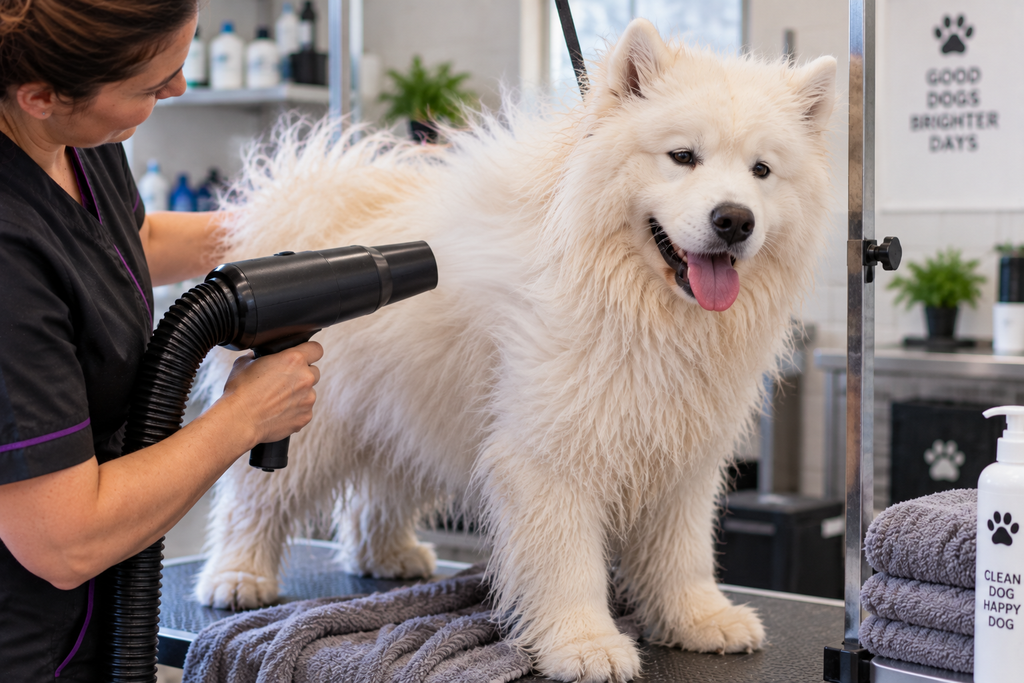
Dry Gently and Thoroughly
After bathing, remove excess water gently rather than rubbing the coat aggressively with a towel. Short-coated dogs may dry quickly, while long, curly and double-coated breeds often need more thorough drying to prevent moisture remaining close to the skin. Pet dryers can help separate the coat and remove loose undercoat, but airflow should be comfortable and never directed into the eyes or ears. Brushing while the coat finishes drying can also help prevent tangles and prepare the dog for trimming or final grooming.
Should You Brush a Dog Again After Bathing?
Yes — for many dogs, brushing again after bathing and drying is an important part of the grooming process. The first brush before the bath removes loose hair and tangles, while the second brush helps separate the clean coat, remove hair loosened during washing, and prepare the dog for any trimming or finishing work.
Bathing often releases additional dead hair, especially in breeds that shed heavily or have a dense undercoat. Once the dog is dry, that loosened hair can be removed much more effectively with another gentle brush-through.
The second brushing is particularly useful for long-haired, curly, silky, and double-coated dogs. These coats can shift and compact while wet, and drying may leave sections of hair sitting unevenly. Brushing afterward helps restore the coat’s natural shape and makes it easier to spot any tangles that developed during bathing or drying.
It can also improve the final appearance of the groom. Clean, separated hair is easier to assess, which is important if the dog is going to be clipped, scissored, or tidied around the feet, face, legs, or tail.
The coat should be completely or almost completely dry before thorough brushing begins. Brushing soaking-wet hair can cause unnecessary pulling and may damage some coat types. A light comb-through while drying can be useful, but the main finishing brush is generally best once the coat has dried.
As with every grooming step, the brush should match the coat. A slicker brush may work well for certain curly or long coats, while an undercoat rake, pin brush, or rubber grooming tool may be better for others. The aim is to remove loose hair and separate the coat without scratching the skin or pulling painfully.
Pay attention to areas that commonly tangle, including behind the ears, under the legs, around collars or harnesses, and along longer feathering. These areas may need a little extra care after bathing because moisture and movement can encourage knots to form.
If the dog becomes uncomfortable or the brush repeatedly catches in the coat, stop rather than forcing it through. Persistent tangles or dense mats may need professional help.
So when considering do you bathe a dog before grooming, remember that grooming continues after the bath. A second brush once the coat is dry is often what turns a simple wash into a complete grooming session.
Brush Again Once the Coat Is Dry
Brushing after bathing and drying helps remove hair loosened during washing, separates the clean coat and prepares it for any final trimming or styling. This is particularly useful for long-haired, curly and double-coated dogs, where the coat can shift or tangle while wet. The dog should be mostly or completely dry before a full brush-through, and the grooming tool should suit the coat type. A gentle second brushing can make the final groom look neater while also helping identify any remaining tangles.
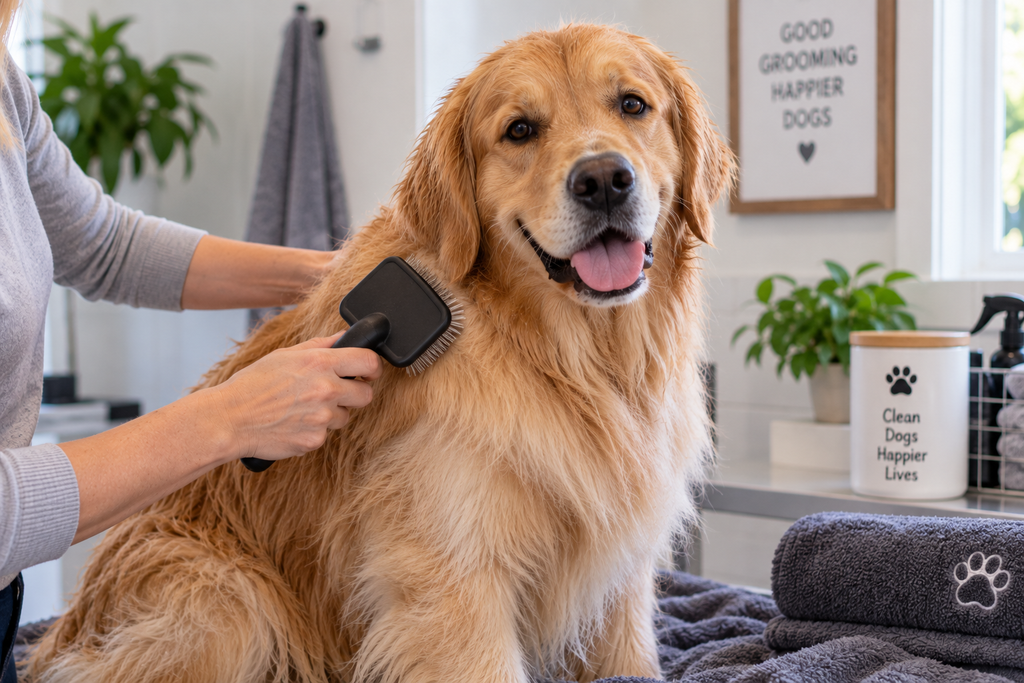
How Often Should You Groom a Dog?
How often a dog needs grooming depends on coat type, shedding level, lifestyle, age, and how quickly the coat becomes dirty or tangled. There is no single schedule that suits every dog, but regular maintenance is much easier than waiting until the coat becomes matted, overgrown, or uncomfortable.
Short-coated dogs often need less intensive grooming. A weekly brush may be enough for many smooth-coated breeds, with bathing only when the dog becomes dirty, develops an odor, or needs washing for another reason. Even short coats can shed heavily, so regular brushing still helps remove loose hair and keep the skin and coat in good condition.
Long-haired, curly, and silky-coated dogs generally need more frequent attention. These coats can tangle quickly, particularly behind the ears, under the legs, around collars and harnesses, and along longer feathering. Some dogs may need brushing several times a week, while others benefit from daily maintenance.
Double-coated breeds also require regular grooming, especially during seasonal shedding. Brushing helps remove loose undercoat before it compacts against the skin. During heavier shedding periods, grooming may need to become more frequent even if the dog is not being bathed more often.
Professional grooming schedules vary too. Dogs that require clipping or shaping may visit a groomer every four to eight weeks, although the exact interval depends on coat growth and the style being maintained. Dogs with continuously growing coats may need appointments more often than breeds whose coats remain relatively stable.
Lifestyle makes a difference. A dog that swims, hikes, plays in mud, or spends a lot of time outdoors may need more frequent brushing and washing than a dog that lives mostly indoors. Active dogs should also have their paws, ears, and coat checked regularly for debris, seeds, burrs, or small tangles.
Older dogs and dogs with mobility problems may need grooming routines adjusted to keep sessions shorter and more comfortable. Regular gentle grooming can also help owners notice changes in the skin, lumps, sore areas, parasites, or other issues that might otherwise go unnoticed.
The important point is that grooming is not only about appearance. It is part of routine coat and skin care, and the best schedule is one that prevents problems before they develop.
So when asking do you bathe a dog before grooming, remember that bathing is only one part of a broader routine. Regular brushing and coat checks between baths often matter just as much as the bath itself.
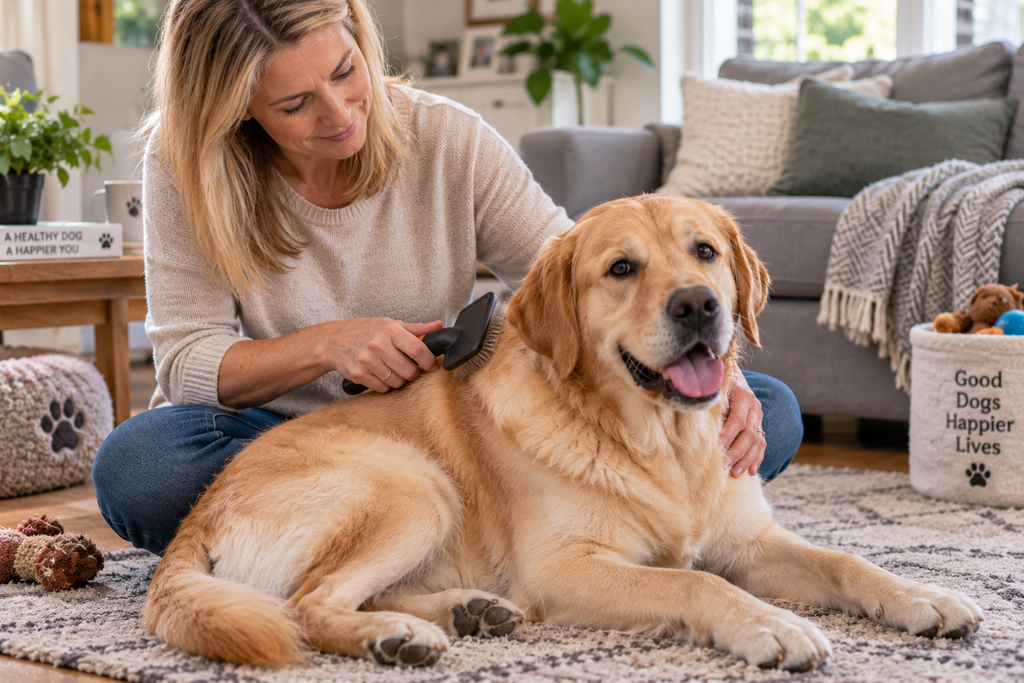
When Should You Use a Professional Dog Groomer?
Home grooming works well for many routine tasks, but there are times when using a professional dog groomer is the safer and easier option. Groomers are trained to handle different coat types, use professional tools, work around sensitive areas, and recognize when a coat problem may be beyond simple home maintenance.
One of the clearest reasons to seek professional help is heavy matting. Tight mats can pull on the skin, hide irritation, and make brushing painful. Attempting to cut them out at home can also be risky because a dog’s skin can become drawn up into the mat and may be difficult to see. A groomer can assess whether the coat can be safely detangled or whether clipping is the kinder option.
Dogs with coats that require regular shaping or clipping may also benefit from professional appointments. Poodles, Bichon Frises, many doodle-type dogs, and other continuously growing coats can become difficult to maintain without the right equipment and technique. Professional drying and clipping can also create a more even finish than home grooming.
Very thick double coats are another situation where professional equipment can help. Breeds such as Samoyeds, Huskies, and some shepherds can hold a large amount of loose undercoat. High-velocity dryers and appropriate grooming tools can remove this efficiently without unnecessarily shaving the coat.
A professional groomer can also be useful if the dog becomes anxious, restless, or difficult to handle during grooming. That does not mean every nervous dog will automatically behave better in a salon, but an experienced groomer may be able to use safer handling techniques and work through the session more efficiently.
Nail trimming is another common reason owners seek help. Dogs with dark nails can be especially challenging because the quick is difficult to see. If you are uncomfortable trimming nails or your dog strongly resists, a groomer or veterinary clinic may be a better choice.
There are also times when a groomer should not be the first stop. If the dog has open sores, significant skin inflammation, unusual lumps, persistent itching, ear pain, or signs of infection, a veterinarian should assess the problem. Grooming may improve cleanliness, but it cannot replace medical treatment.
Professional grooming can also be worthwhile simply for convenience. Owners with large dogs, heavy coats, limited mobility, or limited space may find bathing and drying at home difficult. A salon provides the equipment needed to handle these tasks more comfortably.
So when asking do you bathe a dog before grooming, the answer may depend partly on who is doing the grooming and the condition of the coat. For routine home care, brushing before bathing is usually straightforward. For difficult coats, severe matting, or more complex grooming needs, professional help can make the process safer and more comfortable for both dog and owner.
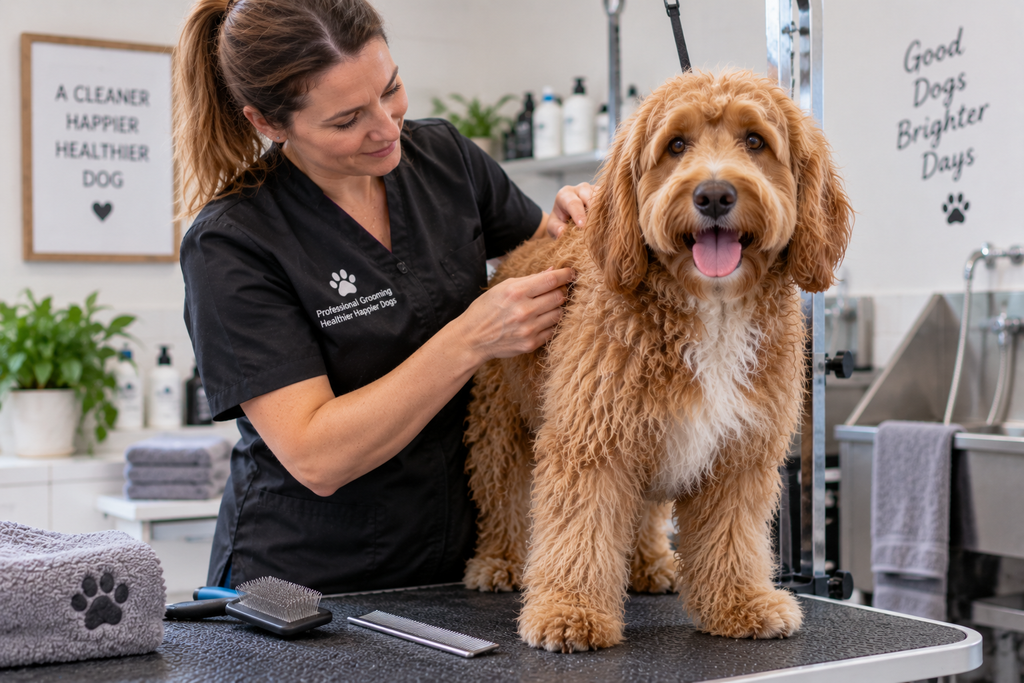
Know When to Call a Groomer
Professional grooming can be especially useful for heavily matted coats, continuously growing hair, dense double coats, difficult nail trims, or dogs that are hard to manage safely at home. Experienced groomers have equipment and techniques that can make bathing, drying, clipping and coat removal easier. However, skin infections, painful ears, open sores, unusual lumps or other medical concerns should be assessed by a veterinarian rather than treated as a grooming problem. Knowing when to ask for help can prevent discomfort and make regular coat care much easier.
Do You Bathe a Dog Before Grooming? — Final Takeaway
So, do you bathe a dog before grooming? In most cases, yes — but the bath usually comes after an initial brush-through rather than as the very first step.
The most practical routine for many dogs is to brush first, remove loose hair and tangles, bathe with a dog-specific shampoo, rinse thoroughly, dry the coat completely, and then brush again before any final trimming or finishing work.
There are exceptions. A heavily matted dog may need clipping or professional assessment before bathing, while some short-coated dogs may need very little grooming beyond brushing and an occasional bath. Dogs with skin conditions may also need a veterinarian-recommended bathing schedule rather than a standard grooming routine.
The main goal is not to follow one rigid sequence for every dog, but to work with the coat type, condition, and individual dog in front of you. Good preparation before the bath and careful drying afterward can make grooming safer, easier, and much more comfortable.
A well-planned grooming routine does more than keep a dog looking tidy. It also gives you regular opportunities to check the skin, coat, ears, paws, and nails and notice small problems before they become larger ones.
Explore More Dog Grooming Advice
Want more practical help with brushing, bathing, coat care, nails, and everyday grooming routines? Visit our Dog Grooming guide for more advice on keeping your dog clean, comfortable, and well maintained.
Learn More About Dog Grooming
For additional guidance on bathing, brushing, coat care, and maintaining a healthy grooming routine, read the American Kennel Club’s guide to grooming a dog.