


Why Is My Female Dog Suddenly Peeing in the House?
When a previously house-trained female dog suddenly starts peeing in the house, it is worth paying attention. An unexpected accident does not automatically mean she has forgotten her training or is being difficult. Sudden indoor urination can happen for several reasons, ranging from relatively simple changes in routine or stress to urinary tract problems, hormonal incontinence, increased thirst from illness, pain, or age-related changes. Veterinary sources recommend ruling out medical causes when a previously reliable dog begins house soiling unexpectedly.
The pattern of the accidents can provide useful clues. A dog that repeatedly squats and passes small amounts of urine may be experiencing bladder irritation or a urinary tract problem. A spayed female dog that leaves a wet patch where she has been sleeping may instead have urinary incontinence and may not even realize that urine is leaking. Dogs that suddenly begin drinking and urinating much more than usual can have a different underlying problem altogether.
Behavior can play a role too. Changes in the household, anxiety, excitement, territorial marking or disruption to the dog’s normal toilet routine can sometimes lead to indoor urination. Younger female dogs may also urinate during highly exciting or submissive interactions. However, when the behavior appears suddenly in a dog that was reliably house-trained, it is sensible to consider physical causes before assuming the problem is purely behavioral.
Female dogs have some particular considerations. Urinary tract inflammation or infection can contribute to accidents, while hormone-responsive urinary incontinence is especially associated with spayed females and becomes more common in middle-aged and older dogs. Other possibilities include bladder stones, kidney disease, diabetes, neurological problems or medications that cause increased thirst and urination.
The good news is that many causes of sudden indoor urination can be treated or managed once the reason is identified. The first step is noticing exactly what is happening: whether your dog is consciously squatting or unknowingly leaking, whether she is drinking more, how often she needs to urinate, and whether there are other changes such as straining, blood in the urine, discomfort or unusual behavior.
In this guide, we’ll work through the common reasons a female dog may suddenly start peeing in the house, how to distinguish a training or behavioral problem from a possible medical issue, and when it is time to arrange a veterinary examination.
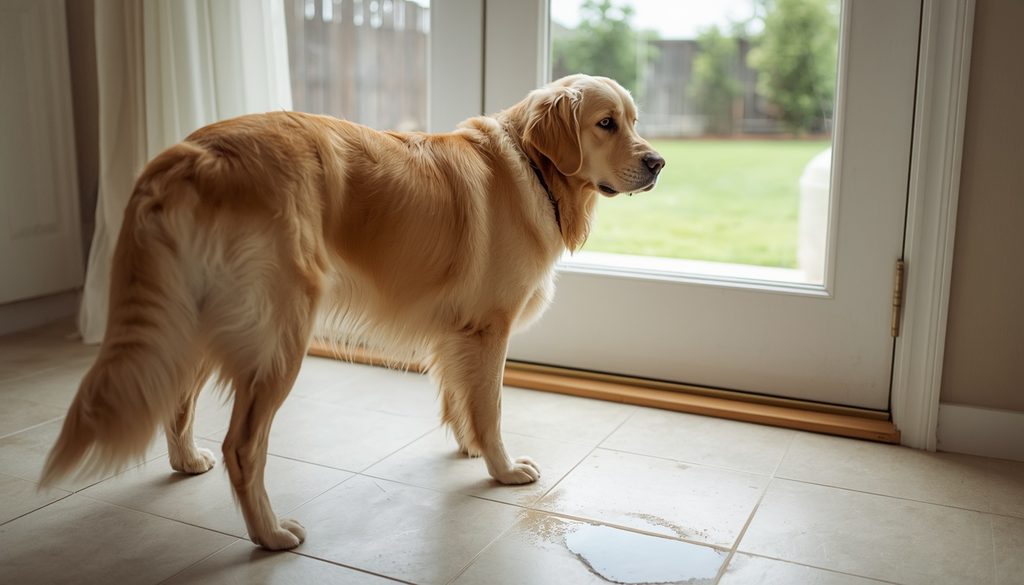
Table of Contents
Common Reasons a Female Dog Suddenly Starts Peeing in the House
When a house-trained female dog suddenly starts urinating indoors, the most useful first step is to look at the pattern rather than assuming there is one single cause. Sudden accidents can come from urinary tract disease, incontinence, increased urine production, pain, neurological problems or behavioral changes. The details around when and how the accidents happen can help narrow down what is most likely.
A urinary tract infection is one of the more common possibilities. Female dogs are at increased risk of bacterial cystitis, partly because their urethra is shorter and positioned closer to the anus. A dog with a UTI may ask to go outside more often, squat repeatedly, pass only small amounts of urine, strain, lick around the vulva or occasionally have blood in the urine. A previously reliable dog suddenly having accidents can therefore be an important clue rather than a training failure.
Urinary incontinence looks different. Instead of deliberately squatting indoors, a dog may leak urine without realizing it, particularly while sleeping or resting. Owners sometimes first notice a damp bed, a wet patch where the dog has been lying or urine dribbling as she gets up. Urethral sphincter mechanism incompetence is especially associated with spayed female dogs and is often seen in middle-aged or older animals.
Another pattern is a dog that is producing much more urine than before. If she is suddenly drinking substantially more water and passing large amounts of urine, the bladder may simply fill more quickly than it used to. Conditions including diabetes mellitus, kidney disease, Cushing’s disease and other metabolic disorders can cause increased thirst and urination. Certain medications, including corticosteroids and diuretics, can also contribute.
Intact female dogs have another important consideration: pyometra, a potentially serious infection of the uterus, can be associated with increased thirst and urination. It is one reason a sudden change in drinking or toilet habits in an unspayed female dog deserves veterinary attention rather than prolonged observation at home.
Behavioral causes do exist. Stress, changes in household routine, a new pet, territorial marking or excitement can sometimes lead to indoor urination. But behavioral explanations are generally easier to consider once medical problems have been ruled out, particularly when the change appeared suddenly in a previously house-trained adult dog.
Age can also change the picture. Older female dogs may develop incontinence, mobility problems that make getting outside harder, cognitive changes or diseases that increase urine production. More than one factor can even be present at the same time.
The most helpful thing an owner can do is observe carefully. Note whether the dog is consciously squatting or leaking unknowingly, whether the amount is small or large, whether she is drinking more, and whether there are other signs such as straining, discomfort, blood, excessive licking or changes in appetite and energy. Those observations can give a veterinarian valuable clues about where to investigate first.
The Pattern of the Accident Matters
Try to notice exactly how the indoor urination happens. Frequent small squats can point toward bladder irritation or a urinary tract problem, while a wet patch left behind during sleep may suggest urinary incontinence. Large puddles combined with noticeably increased drinking can indicate that your dog is producing more urine than usual. Also note any straining, blood, genital licking, unusual odor, pain or changes in appetite and energy. These details can help your veterinarian distinguish between bladder disease, incontinence, increased urine production and behavioral causes much more quickly.
Urinary Tract Infections and Bladder Problems
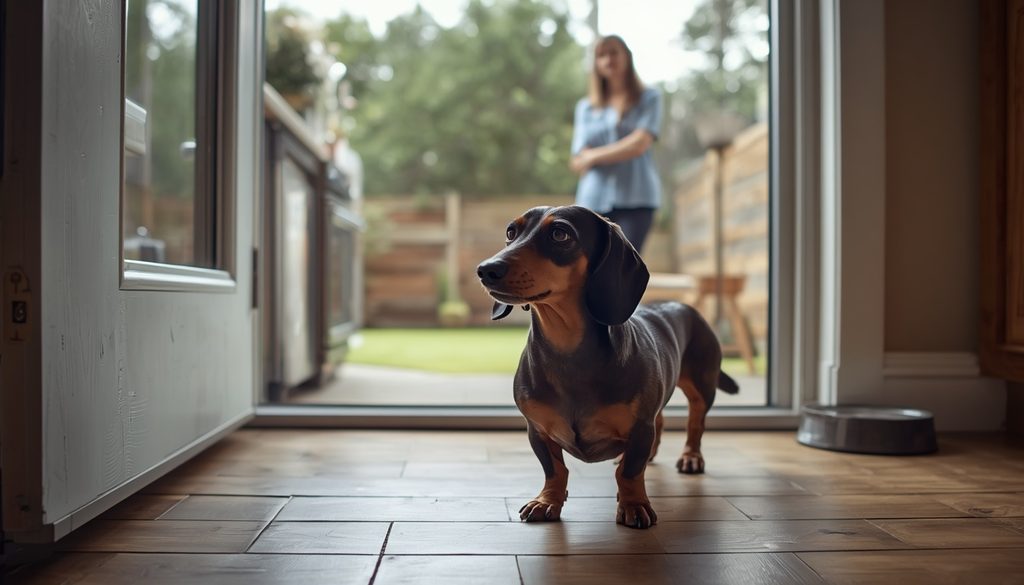
A urinary tract infection is one of the first medical possibilities to consider when a previously house-trained female dog suddenly begins peeing indoors. Female dogs are more prone to bacterial urinary infections than males because of their anatomy, and the signs can sometimes appear quite suddenly. What looks like a sudden lapse in house training may actually be a dog struggling with bladder irritation or discomfort.
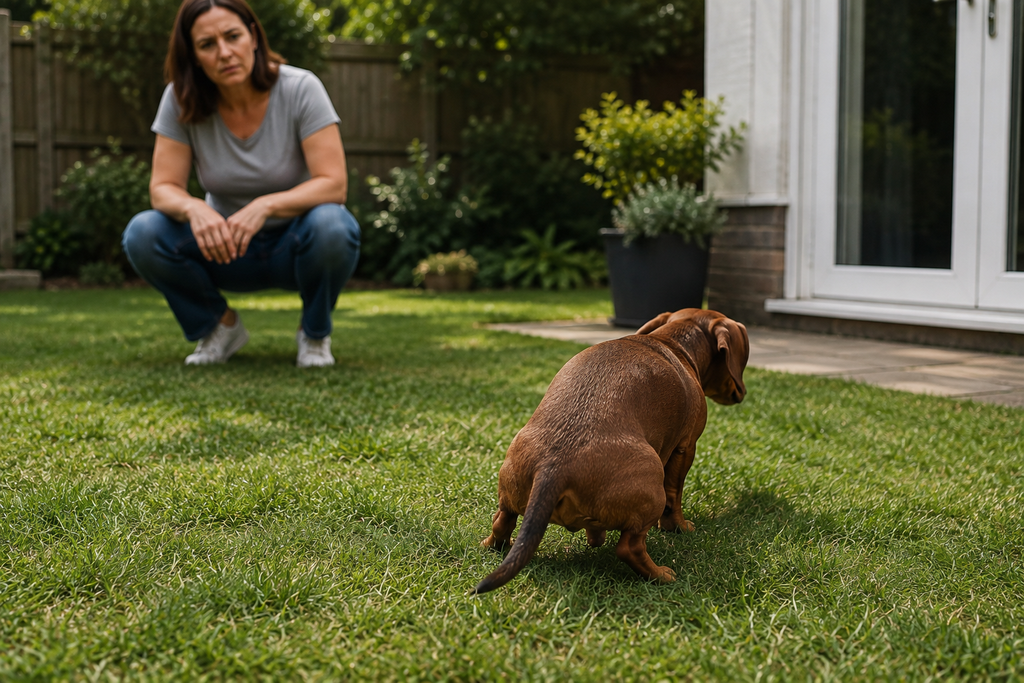
One of the clearest clues is frequency. A dog with a urinary tract infection may ask to go outside much more often than usual, squat repeatedly, or pass only small amounts of urine each time. Some dogs appear restless because they feel the urge to urinate even when the bladder is nearly empty. Others may begin having accidents indoors simply because they cannot comfortably hold their urine for as long as they normally would.
Straining is another sign worth noticing. If your dog repeatedly assumes the urinating position but produces only a small amount, or seems uncomfortable while trying to go, a bladder problem becomes more likely. Blood in the urine can also occur, although it may not always be obvious unless the urine is collected or seen on a light-colored surface. Increased licking around the vulva, stronger-smelling urine, or obvious discomfort may provide additional clues.
Not every bladder problem is caused by infection. Bladder stones, crystals, inflammation, structural abnormalities and other urinary conditions can produce similar signs. This is why diagnosis is important rather than simply assuming every accident is a UTI. A veterinarian may recommend a urinalysis and, depending on the results, a urine culture, imaging or other tests to identify the underlying cause.
Female dogs with recurring urinary infections may need a more detailed investigation. Repeated infections can sometimes be linked with bladder stones, anatomical issues, diabetes, kidney disease or other conditions that make infection more likely. Treating each episode without looking for the reason it keeps returning may not solve the underlying problem.
Owners should also avoid giving leftover antibiotics or attempting to treat a suspected infection without veterinary guidance. The wrong medication may not be effective, and inappropriate antibiotic use can make future infections harder to treat. A properly collected urine sample can help identify whether bacteria are present and which treatment is most appropriate.
Prompt attention matters because untreated urinary infections can become more uncomfortable and, in some cases, may move upward toward the kidneys. If indoor accidents are accompanied by frequent urination, straining, blood, obvious pain, fever or lethargy, veterinary assessment should not be delayed.
The most useful takeaway is simple: when a female dog suddenly starts peeing in the house and the accidents are accompanied by urgency or repeated small urinations, think medical before behavioral. A bladder problem is often treatable, but it first needs to be recognized for what it is.
Signs That Point Toward a Urinary Problem
Frequent squatting, passing only small amounts of urine, straining, blood in the urine, increased genital licking or suddenly needing to go outside much more often can all point toward a urinary tract or bladder problem. A UTI is one possibility, but bladder stones, crystals and inflammation can cause similar signs. If a previously house-trained female dog suddenly starts having accidents and seems uncomfortable or unusually urgent about urinating, a veterinary urine test is often the most useful next step.
Spay-Related Incontinence in Female Dogs
Spay-related urinary incontinence is another important reason a female dog may suddenly begin leaking urine in the house, particularly if she was previously reliable with house training. This type of incontinence is usually caused by weakness in the mechanism that helps keep the urethra closed between urinations. It is commonly referred to as urethral sphincter mechanism incompetence, or USMI.
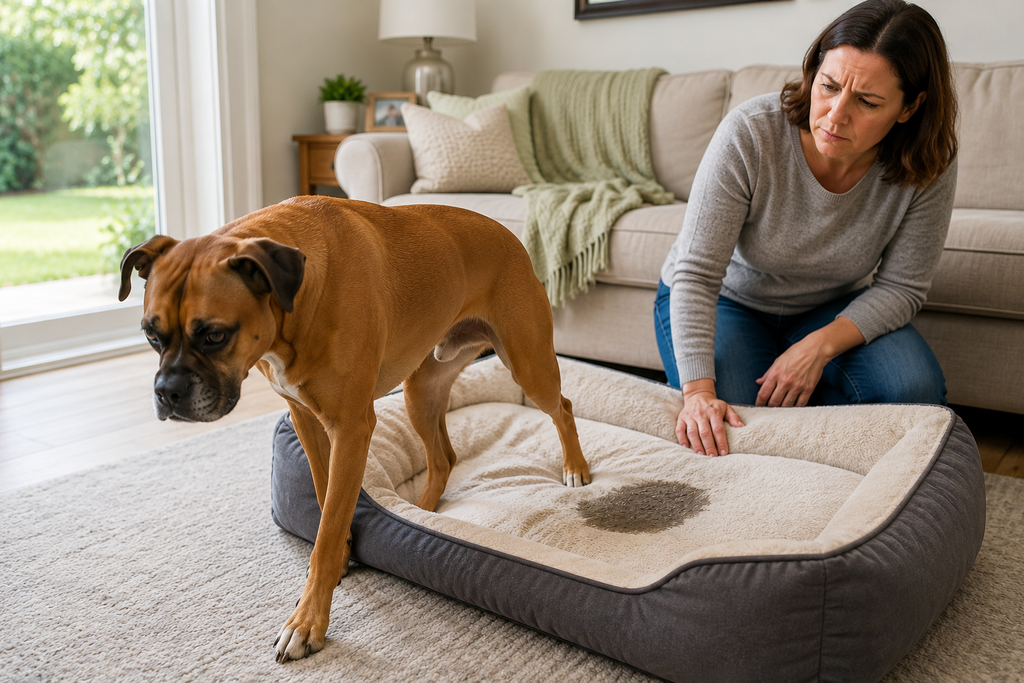
The pattern often looks quite different from a urinary tract infection. Instead of repeatedly squatting or asking to go outside, a dog with urinary incontinence may leak urine without realizing it. Owners often first notice a wet patch on bedding, a damp area where the dog has been lying, or small amounts of urine dribbling as she gets up from rest. Some dogs remain completely relaxed while the leakage happens because they are not consciously choosing to urinate.
Spayed female dogs are affected more often than intact females, and the problem is especially associated with middle-aged and older dogs. Larger breeds are commonly discussed as being at greater risk, although smaller dogs can also develop the condition. The timing varies considerably. Some dogs develop signs relatively soon after being spayed, while others remain completely normal for years before leakage begins.
Hormonal changes are thought to play a role because estrogen contributes to normal urethral tone. After spaying, reduced hormonal influence can make it harder for the urinary sphincter to remain tightly closed, particularly when the dog is deeply relaxed or asleep. This does not mean that spaying is inherently harmful or that every spayed female will become incontinent; most do not.
It is still important not to diagnose spay-related incontinence based on the pattern alone. Urinary tract infections, bladder disease, neurological problems and other conditions can also cause leakage. A veterinarian may recommend urine testing and other examinations before deciding that USMI is the most likely explanation.
The encouraging part is that spay-related incontinence can often be managed successfully. Veterinary treatment may include medications that increase urethral tone or, in some cases, hormonal therapy. Response varies between dogs, and ongoing monitoring may be needed to find the most effective approach.
Owners can also make day-to-day management easier by providing washable bedding, giving the dog regular opportunities to urinate, and keeping the skin around the hindquarters clean and dry if leakage occurs. Repeated urine contact can irritate the skin, so hygiene matters.
The key clue is unconscious leakage rather than deliberate indoor urination. If a female dog is leaving wet patches where she sleeps or rests, especially without appearing aware that it happened, urinary incontinence becomes an important possibility worth discussing with a veterinarian.
Leaking While Resting Is an Important Clue
Spay-related urinary incontinence often appears as unconscious leakage rather than deliberate indoor urination. Owners may notice a damp bed, a wet patch where the dog has been sleeping, or urine dribbling as she gets up after resting. This pattern can be especially noticeable in middle-aged or older spayed females, although younger dogs can also be affected. Because urinary tract infections, bladder disease and some neurological problems can cause similar signs, veterinary assessment is important before assuming the cause. The encouraging part is that many dogs with urethral sphincter weakness can be managed successfully with appropriate treatment, regular toilet opportunities and simple steps to keep bedding and skin clean and dry.
Stress, Anxiety, and Changes in Routine
Not every case of sudden indoor urination is caused by a medical problem. Stress, anxiety, excitement, marking, and changes in routine can all contribute, especially if the dog has already been checked and no physical cause has been found. Even a previously reliable female dog may have accidents when something in her environment changes enough to disrupt normal habits.
Common triggers can include moving house, a new baby, a new pet, visitors staying over, changes in work schedules, renovations, loud noises, or the loss of a familiar companion. Some dogs react strongly to relatively small changes, particularly if they are naturally sensitive or already prone to anxiety. A dog that normally waits comfortably for a toilet break may suddenly become unsettled, distracted, or less able to hold on when her routine changes.
Marking is another possibility, although it tends to look different from a full bladder accident. A dog that is marking may deposit small amounts of urine in several locations rather than emptying a large volume in one place. New furniture, unfamiliar animals, or changes in household scent can sometimes trigger this behavior. Female dogs can mark too, even though the behavior is often associated more strongly with males.
Excitement or submissive urination can also occur, particularly in younger or highly sensitive dogs. This usually happens during greetings, intense interaction, or moments when the dog feels overwhelmed. The key difference is that these accidents are linked to a specific emotional trigger rather than happening randomly throughout the day.
If behavior is involved, punishment is usually counterproductive. Scolding a dog for an accident can increase anxiety and may make the problem worse, especially if she does not understand why she is being corrected. A better approach is to restore predictable routines, offer more frequent toilet opportunities, clean accidents thoroughly, and reward successful outdoor toileting.
It is also useful to look at whether anything else has changed. Has the dog started avoiding a particular doorway? Is she reluctant to go outside in bad weather? Has another pet begun blocking access to the yard? Has the timing of walks changed? Sometimes the cause is surprisingly practical rather than deeply behavioral.
Persistent accidents still deserve veterinary attention, even when stress seems likely. Medical and behavioral causes can overlap, and a dog experiencing discomfort may also become anxious or unsettled.
The most useful clue is context. If accidents began soon after a clear household or routine change and medical causes have been ruled out, stress or behavioral disruption becomes more plausible. In that situation, restoring consistency and reducing pressure can often help the dog regain normal habits.

Older Female Dogs and Age-Related Causes
As female dogs get older, several age-related changes can make indoor accidents more likely even if they have been reliably house-trained for years. Aging itself does not automatically cause a dog to start peeing in the house, but senior dogs are more likely to develop medical, mobility, hormonal, or cognitive problems that interfere with normal toilet habits.
One common change is reduced bladder control. Spayed females may develop urethral sphincter weakness that becomes more noticeable in middle age or later life, particularly when they are sleeping or deeply relaxed. In these cases, the dog may leave a wet patch on bedding or leak urine without appearing aware of it.
Older dogs are also more likely to develop diseases that increase thirst and urine production. Kidney disease, diabetes mellitus, Cushing’s disease, and some medications can all lead to greater water intake and larger or more frequent urination. A senior dog that suddenly begins drinking much more than usual and producing large puddles indoors should therefore be assessed rather than simply given more frequent toilet breaks without investigating why the change occurred.
Mobility can also become part of the problem. Arthritis, weakness, or neurological disease may make it harder for an older dog to stand up quickly, negotiate stairs, reach the back door, or walk far enough outside to urinate. A dog that once comfortably waited may now need more frequent and easier access to an appropriate toilet area.
Cognitive dysfunction is another important possibility. Some senior dogs experience age-related changes in memory, awareness, and learning. House-trained dogs may begin urinating in unusual places, forget to signal that they need to go outside, or even go outdoors and return inside without eliminating because they have lost part of the routine. Cognitive dysfunction can also be accompanied by disorientation, sleep changes, increased anxiety, pacing, or altered interaction with family members.
These causes can overlap. An older female dog might have mild arthritis that slows her down, increased urine production from kidney disease, and some degree of urinary incontinence at the same time. That is why a new accident pattern in a senior dog deserves a broader look rather than assuming one simple explanation.
At home, owners can help by offering more frequent toilet opportunities, keeping routes to the yard easy to access, using non-slip flooring where needed, and providing washable bedding if leakage occurs. However, these measures should support veterinary care rather than replace it.
The important point is that losing house training is not an inevitable part of growing old. When a senior female dog suddenly starts urinating indoors, there is usually a reason worth identifying. Many age-related causes can be treated, managed, or accommodated once the pattern is understood.
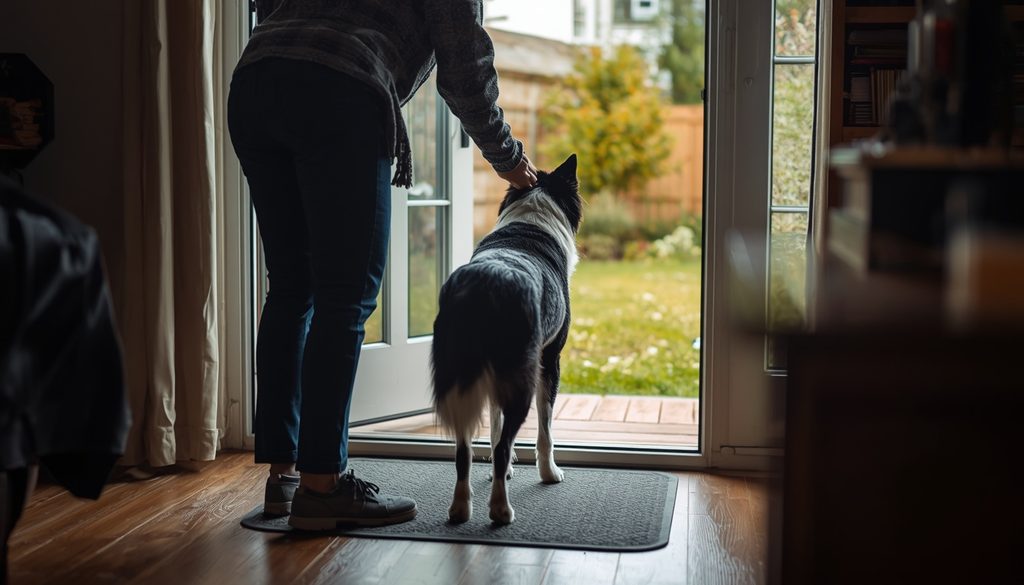
Do Not Assume It Is Just Old Age
Senior female dogs can begin having indoor accidents for several different reasons, including urinary incontinence, kidney or hormonal disease, arthritis, neurological problems, and cognitive decline. The pattern can provide useful clues: leaking during sleep may suggest reduced bladder control, while increased drinking and large volumes of urine may point toward an underlying medical condition. A dog that seems confused, forgets to ask to go outside, or urinates soon after coming back indoors may be showing cognitive changes. More frequent toilet breaks can help, but a new loss of house training in an older dog should still be discussed with a veterinarian rather than dismissed as normal aging.
When Should You See a Veterinarian?
A sudden change in house-training habits is worth taking seriously, especially when a female dog that was previously reliable begins urinating indoors without an obvious explanation. Some cases turn out to be relatively simple, but others are linked to urinary disease, incontinence, metabolic illness, pain, or age-related changes. The key is knowing which signs make veterinary assessment more urgent.
Frequent attempts to urinate are one of the clearest warning signs. If your dog is repeatedly squatting but producing only a small amount, straining, or appearing uncomfortable, a urinary tract or bladder problem becomes more likely. Blood in the urine, strong-smelling urine, excessive licking around the vulva, or obvious pain should also prompt veterinary attention.
A sudden increase in thirst matters too. If your female dog is drinking noticeably more water and producing larger or more frequent puddles, the problem may extend beyond the bladder itself. Conditions such as diabetes, kidney disease, or hormonal disorders can increase urine production, and these usually need proper testing rather than simple changes to the toilet routine.
Unconscious leakage is another important clue. A dog that leaves a wet patch where she has been sleeping, dribbles urine while resting, or seems unaware that leakage has happened may have urinary incontinence rather than a house-training problem. This is particularly relevant in spayed females, but it still needs veterinary assessment because other urinary conditions can cause similar signs.
Older dogs deserve particular attention when accidents begin suddenly. New confusion, pacing, reduced mobility, difficulty reaching the yard, increased drinking, or changes in sleep patterns can all point toward underlying age-related problems. More than one issue may be present at the same time.
There are also situations where prompt or urgent veterinary care is appropriate. A dog that is repeatedly trying to urinate but producing little or no urine, appears severely painful, becomes lethargic, vomits, develops a fever, or seems generally unwell should not simply be monitored at home. Urinary obstruction is less common in female dogs than males, but an inability to pass urine can still become an emergency.
If the accidents are mild and your dog otherwise seems completely normal, it can still be useful to keep a short record of what is happening. Note how often she urinates, whether the amounts are small or large, whether she is drinking more, when accidents occur, and whether she is consciously squatting or leaking while resting. Those details can make a veterinary consultation much more useful.
The main principle is simple: when a previously house-trained female dog suddenly starts peeing in the house, do not assume she is being naughty. A sudden change in toilet habits is information, and sometimes it is the first visible sign that something physical has changed.
Know the Signs That Need Prompt Attention
Contact your veterinarian if indoor accidents are accompanied by straining, frequent attempts to urinate, blood in the urine, obvious discomfort, increased thirst, unusual lethargy, vomiting, or a sudden change in behavior. Unconscious leaking during sleep or rest also deserves assessment, especially in a spayed female dog. If your dog repeatedly tries to urinate but produces little or nothing, seek veterinary help promptly rather than waiting to see if it resolves. Keeping notes on drinking, frequency, urine volume, and when accidents occur can also help your veterinarian identify the most likely cause more quickly.

What You Can Do at Home While You Work Out the Cause
While you are arranging veterinary advice or monitoring a mild change, there are several practical steps that can make life easier for both you and your dog. The goal is not to “retrain” a dog that may have a medical problem, but to reduce accidents, gather useful information, and keep her comfortable until the cause is clearer.
Start by increasing toilet opportunities. A female dog that is suddenly urinating indoors may simply be unable to hold her bladder as long as she used to, whether because of infection, incontinence, increased urine production, age, or stress. Taking her outside more often gives her more chances to succeed and can reduce frustration. For older dogs or those with mobility problems, make the route outside as short and easy as possible.
Keep a simple record of what is happening. You do not need anything complicated. Note the time of each accident, whether the amount was small or large, whether she squatted deliberately or appeared to leak while resting, and whether she is drinking more than usual. If you notice straining, blood, strong odor, genital licking, changes in appetite, or unusual tiredness, record those as well. A clear pattern can be extremely helpful when you speak with a veterinarian.
Do not restrict water unless a veterinarian specifically tells you to. It can be tempting to reduce access to water when a dog is urinating more frequently, but increased thirst may be a sign of an underlying medical problem, and limiting water can make some conditions worse. Fresh water should remain available.
Clean accidents thoroughly with an enzymatic pet cleaner if possible. Dogs can often smell traces of urine that people cannot detect, and lingering odor may encourage repeat urination in the same place. Avoid ammonia-based cleaners, which can smell similar to urine and may confuse the issue.
If your dog is leaking while asleep or resting, washable bedding or absorbent protective layers can make management easier. Keep the skin and coat around the hindquarters clean and dry to reduce irritation. Dog diapers can be useful in some cases, but they should be changed regularly and should not replace investigation of the underlying cause.
Most importantly, avoid punishment. If your female dog is suddenly peeing in the house, she may be uncomfortable, confused, anxious, or physically unable to control what is happening. Scolding can add stress without solving the problem. Quietly clean the area, offer more frequent outdoor breaks, and reward successful toileting outside.
If the pattern continues, worsens, or is accompanied by other symptoms, move from monitoring to veterinary assessment. Home management is most useful as a temporary support, not as a substitute for diagnosis when something has clearly changed.

Helpful Steps You Can Take Right Away
Offer more frequent toilet breaks, keep fresh water available, and note when accidents happen and what they look like. Record whether your dog squats deliberately, leaks while resting, drinks more than usual, or shows signs such as straining, blood, unusual odor, licking, lethargy, or discomfort. Clean indoor accidents thoroughly with an enzymatic pet cleaner and avoid punishment, as scolding can increase stress without addressing the underlying cause. Washable bedding and absorbent layers can help if leakage is occurring during rest. These steps can make day-to-day management easier while also giving your veterinarian more useful information if the problem continues.
How Your Veterinarian May Diagnose the Problem
When a female dog suddenly starts peeing in the house, the veterinary workup usually begins with the history you provide. The pattern of the accidents can help narrow the possibilities considerably, so details such as whether your dog is leaking while asleep, squatting frequently, drinking more than usual, or passing large amounts of urine are all useful.
A physical examination is often the next step. Your veterinarian may check your dog’s abdomen, bladder, hydration, temperature, mobility, and general condition, while also looking for signs of pain or infection. In older dogs, the examination may include a closer look at joint function, neurological signs, and overall senior health.
Urinalysis is one of the most common tests used when sudden indoor urination is involved. It can provide information about urine concentration, blood, glucose, protein, crystals, inflammation, and other abnormalities. If infection is suspected, a urine culture may also be recommended to identify bacteria and determine which antibiotic is most appropriate.
Blood tests may be suggested if your dog is drinking and urinating more than usual or if the veterinarian suspects a broader medical problem. Bloodwork can help assess kidney function, blood glucose, liver values, electrolytes, and other indicators that may point toward conditions such as diabetes, kidney disease, or hormonal disorders.
Imaging can also be useful in some cases. X-rays or ultrasound may be recommended if bladder stones, structural problems, tumors, or other urinary tract abnormalities are suspected. Dogs with recurring infections may need a more detailed investigation to understand why the problem keeps returning rather than simply treating each episode individually.
If the main sign is unconscious leakage while resting, your veterinarian may consider urinary incontinence once infection and other causes have been ruled out. In a spayed female, urethral sphincter weakness may be high on the list, but diagnosis still depends on excluding other conditions that can produce similar symptoms.
For senior dogs, the process may be broader. Mobility problems, cognitive decline, medication effects, kidney disease, and incontinence can overlap, so more than one test may be needed to build a complete picture.
It can help to bring notes about when accidents occur, how much urine is passed, whether your dog is aware of it, and any changes in thirst, appetite, energy, or behavior. A urine sample may sometimes be requested, although the clinic may prefer to collect one directly depending on the tests required.
The goal of testing is not simply to confirm that your dog is urinating indoors. It is to work out why. Once the underlying cause is identified, treatment or management becomes much more targeted and often much more successful.
What Tests Might Be Needed?
A veterinarian may begin with a physical examination and urinalysis, then add a urine culture, blood tests, X-rays, or ultrasound depending on the pattern of symptoms. Frequent small urinations may lead the investigation toward infection or bladder irritation, while increased thirst and large urine volumes may point toward kidney, metabolic, or hormonal problems. Unconscious leakage can suggest incontinence once other causes have been excluded. Bringing notes about timing, urine volume, drinking habits, and whether your dog seems aware of the accidents can help make the diagnostic process more efficient and focused.

Treatment Depends on What Is Causing the Accidents
There is no single treatment for a female dog that suddenly starts peeing in the house, because the right solution depends entirely on the underlying cause. The most effective approach is therefore to identify whether the problem is related to infection, incontinence, increased urine production, pain, age-related change, stress, or another medical condition before trying to correct the behavior itself.
If a urinary tract infection is confirmed, treatment will usually focus on clearing the infection and addressing any reason it may have developed. In some cases, a veterinarian may recommend a urine culture so the most appropriate antibiotic can be selected. Dogs with repeated infections may need further testing to look for bladder stones, anatomical abnormalities, diabetes, or other conditions that make infection more likely.
Spay-related urinary incontinence is managed differently. When the problem is caused by weakness in the urethral sphincter, medication may be prescribed to improve urethral tone or support hormonal influence. Some dogs respond very well and regain good bladder control, while others need ongoing adjustments or long-term treatment.
If increased drinking and urination are being caused by a condition such as diabetes, kidney disease, or a hormonal disorder, treatment focuses on that disease rather than the accidents themselves. As the underlying condition is brought under better control, urinary frequency may improve as well. In these cases, changes in water intake should never be managed simply by restricting access to water unless a veterinarian specifically advises it.
Older dogs with arthritis or reduced mobility may need a combination of medical treatment and practical changes at home. Better pain control, shorter routes to the yard, non-slip flooring, ramps, or more frequent toilet breaks can all help. If cognitive decline is contributing, a predictable routine and easier access outside may reduce confusion and accidents.
Behavioral causes require a different approach again. If medical problems have been ruled out, treatment may involve rebuilding a reliable toilet routine, reducing stress, increasing outdoor opportunities, and rewarding successful urination outside. Punishment is rarely useful and can make anxiety-related accidents worse.
Some dogs may have more than one issue at the same time. A senior female dog could have mild incontinence, arthritis, and increased urine production from another disease, so treatment may need to address several factors rather than just one.
The important thing is to avoid treating the symptom in isolation. Indoor urination is a sign that something has changed. Once the reason is understood, the solution becomes much clearer and usually much more effective.

Can House Training Need to Be Revisited?
Yes. Even a dog that has been reliably house-trained for years may sometimes need a short period of refresher training after a medical problem, stressful event, change in routine, or period of reduced mobility. The important distinction is that retraining should usually come after medical causes have been considered, not instead of them.
If a female dog suddenly starts peeing in the house and veterinary checks do not reveal an underlying medical problem, it can help to temporarily return to a more structured toilet routine. Take her outside more frequently, especially after waking, eating, drinking, play, or long periods of rest. Use the same exit point and toilet area where possible so the routine becomes predictable again.
Supervision can also help during the retraining period. Keeping the dog nearby makes it easier to notice signs that she may need to go out, such as pacing, circling, sniffing, or moving toward the door. If you cannot supervise closely, using a comfortable confined area for short periods may reduce the chance of repeated accidents, provided the dog is already comfortable there.
Reward successful outdoor urination immediately. Praise, a small treat, or another reward your dog values can help rebuild the association between going outside and a positive outcome. Timing matters, so reward her as soon as she finishes rather than waiting until you are back indoors.
Accidents should be handled calmly. Scolding after the fact is unlikely to help because the dog may not connect the punishment with the earlier urination. In anxious dogs, punishment can make the problem worse by adding stress to an already confusing situation. Clean the area thoroughly and focus on making the next successful toilet trip easier.
A temporary setback does not necessarily mean the dog has forgotten everything she learned. Sometimes the original medical or emotional trigger simply disrupts an established habit. Once the trigger is addressed and the routine becomes predictable again, many dogs return to their previous reliability quite quickly.
Older dogs may need permanent changes rather than a short refresher. More frequent toilet breaks, easier access to the yard, or a closer sleeping area may simply become part of their new normal. The goal should be realistic success rather than expecting an aging dog to hold her bladder for the same length of time she managed when younger.
If accidents continue despite a structured routine, or if new symptoms appear, it is worth returning to the veterinarian. House-training refreshers are useful when behavior and routine are part of the problem, but they should not be used to mask persistent medical signs.

A Refresher Can Help — Once Medical Causes Are Ruled Out
A previously house-trained dog may need a short refresher after illness, stress, schedule changes, or a period of reduced mobility. Temporarily increase toilet breaks, supervise more closely, and reward outdoor urination immediately so the routine becomes predictable again. Avoid punishment for accidents, as this can create anxiety without addressing the cause. Older dogs may need lasting adjustments such as more frequent trips outside or easier access to the yard. If accidents continue despite a consistent routine, or if other symptoms appear, further veterinary assessment is more appropriate than simply increasing training pressure.
How to Prevent Repeat Accidents
Once the underlying cause has been identified and treated or managed, the next goal is to reduce the chance of accidents becoming a recurring pattern. Prevention usually works best when medical care, routine, observation, and practical household changes all support one another.
Start with a predictable toilet schedule. Taking your dog outside at regular times helps reduce the chance that her bladder becomes overly full and gives you more opportunities to reinforce successful outdoor urination. Morning, after meals, after drinking, after naps, after play, and before bedtime are particularly useful times to build into the routine.
Pay attention to any pattern that appeared before the accidents began. If your dog now needs to go outside more often, adjust the schedule rather than expecting her to hold on as long as she once did. Senior dogs, dogs recovering from urinary problems, and dogs taking certain medications may all need more frequent opportunities.
Keep access to the toilet area easy. Slippery floors, stairs, closed doors, or a long distance to the yard can become surprisingly important, particularly for older dogs or those with arthritis. Non-slip runners, night lighting, ramps, or a more convenient exit can make a real difference.
If stress contributed to the problem, try to reduce unnecessary disruption where possible. Predictable feeding, walking, and sleeping routines can help sensitive dogs settle more easily. New pets, visitors, renovations, or schedule changes may still happen, but keeping the rest of the dog’s routine stable can reduce the impact.
Thorough cleaning is also important. Areas that have been urinated on should be cleaned with an enzymatic pet cleaner so lingering odor does not encourage repeat use of the same location. Ordinary household cleaners may remove the visible stain without fully breaking down the scent cues a dog can detect.
Continue watching for subtle changes even after the accidents stop. A recurrence of increased thirst, straining, leaking during sleep, frequent small urinations, or unusual behavior may indicate that the original problem has returned or that something new has developed.
For dogs with chronic incontinence or age-related limitations, prevention may mean management rather than complete elimination of every accident. Washable bedding, absorbent layers, more frequent toilet trips, and easy outdoor access can protect comfort and hygiene without placing unrealistic demands on the dog.
The most important thing is to respond early if the pattern changes again. A dog that suddenly starts peeing in the house is giving you useful information. Once you understand what that information means, preventing future accidents becomes much easier.
Build Prevention Into the Daily Routine
The best way to prevent repeat accidents is to combine a predictable toilet schedule with easy access outside, thorough cleaning, and continued observation. Offer regular bathroom breaks at key times such as after waking, meals, drinking, play, and before bedtime. If your dog is older, recovering from a urinary problem, or taking medication, she may need more frequent opportunities than before. Keep routes to the yard simple, use enzymatic cleaners on previous accident areas, and watch for recurring signs such as increased thirst, straining, leaking during sleep, or frequent small urinations. Early action is usually easier than waiting for the pattern to become established again.

Final Thoughts: Why Is My Female Dog Suddenly Peeing in the House?
If your female dog suddenly starts peeing in the house after being reliably house-trained, the most important thing is not to assume she has simply forgotten her training. Sudden indoor urination can be linked to urinary tract infection, bladder irritation, spay-related incontinence, increased urine production, age-related changes, stress, pain, or changes in routine.
The pattern usually gives the best clues. Frequent small urinations and straining point in a different direction from unconscious leaking during sleep, while large puddles combined with increased thirst suggest a different group of possible causes again. Older dogs may also be dealing with more than one issue at the same time.
The good news is that many of these causes can be treated or managed once they are identified. Veterinary testing can help distinguish between infection, incontinence, metabolic disease, and other medical problems, while behavioral or routine-based accidents often improve once the underlying trigger is addressed.
At home, the best approach is calm and practical: offer more frequent toilet breaks, keep fresh water available, clean accidents thoroughly, avoid punishment, and pay attention to changes in drinking, urination, appetite, mobility, and behavior.
If your dog seems uncomfortable, is straining, has blood in the urine, is drinking much more than usual, or repeatedly tries to urinate without producing much, veterinary assessment should not be delayed.
Ultimately, a sudden change in toilet habits is useful information. Once you identify what has changed, you are in a much better position to help your dog get back to feeling comfortable and settled again.

The Main Thing to Remember
A female dog suddenly peeing in the house is usually telling you that something has changed, whether that change is medical, age-related, behavioral, or environmental. Look at the pattern of the accidents, watch for changes in thirst or comfort, and avoid assuming the problem is deliberate. Many causes are treatable or manageable once identified, and early attention often makes the problem easier to solve. If the accidents continue, worsen, or are accompanied by straining, blood, pain, increased drinking, lethargy, or unusual behavior, veterinary assessment is the safest next step.
Explore More on the CanineBase Blog
Looking for more practical advice on dog behavior, health, training and everyday ownership? Visit the CanineBase Blog for more helpful guides designed to answer real questions dog owners face. From understanding unusual behavior to managing common health and lifestyle concerns, our growing collection of articles is built to help you make confident, informed decisions for your dog.
Learn More About Urinary Problems in Dogs
For more veterinary information about inappropriate urination, urinary infections, incontinence and other possible causes of sudden house-soiling, visit VCA Animal Hospitals’ guide to inappropriate urination. It explains the common medical and behavioral causes and the types of tests veterinarians may use to identify the problem.