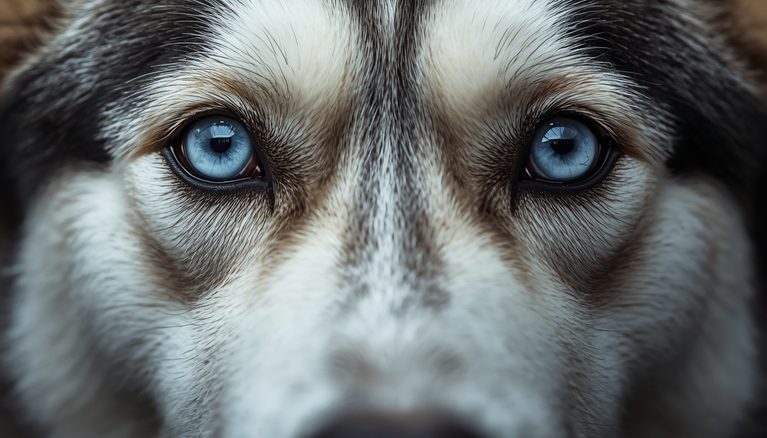


Where Do Dogs Come From?
Dogs have lived beside humans for so long that their origins stretch back beyond written history. When we ask where do dogs come from, the answer takes us back to ancient wolf populations living thousands of years before written records began. Every modern dog — from a tiny Chihuahua to a Great Dane — ultimately traces its ancestry to those ancient wolves, but the transformation from wolf to domestic dog was not a single simple event. It unfolded over thousands of years as certain wolves and humans gradually developed a relationship that would eventually produce the first domesticated animal.
Scientists agree that domestic dogs descended from gray wolves, although probably not from the exact wolf populations alive today. Genetic evidence suggests that dogs arose from an ancient wolf lineage that has since disappeared or changed substantially. Researchers are still debating precisely where domestication happened and whether the earliest process involved one wolf population or several closely related groups.
What is much clearer is that dogs appeared extraordinarily early in human history. Archaeological remains that closely resemble recognizable domestic dogs date back roughly 14,000–17,000 years, while older wolf-like remains associated with humans have generated continuing debate about whether domestication may have begun considerably earlier.
Dogs were therefore living alongside people long before humans created modern cities, written languages, or most of the livestock species we now take for granted. They accompanied hunter-gatherers rather than simply appearing after agriculture began.
The relationship may have started gradually. Wolves that were less fearful of humans could have approached camps to feed on discarded food and animal remains. Animals able to tolerate people would have gained access to a reliable food source, while humans may eventually have benefited from their sharp senses, warning behavior, hunting abilities, and companionship. Over generations, natural selection and eventually deliberate human selection would have favored animals better adapted to living alongside people.
By around 11,000 years ago, ancient DNA shows that dogs had already diversified into at least five major ancestry groups. That means the human-dog relationship was already ancient and geographically widespread by the time agriculture was becoming established in many parts of the world.
Humans then carried dogs with them as populations migrated across continents. Dogs traveled alongside hunters, pastoral communities, farmers, traders, and settlers, and their genetic history sometimes mirrors the movements of human populations. Over thousands of years, people also began selecting dogs for particular abilities such as hunting, guarding, herding, pulling loads, and companionship.
The hundreds of breeds familiar today are a much more recent chapter in that story. The extraordinary differences between modern breeds largely reflect human selection imposed upon an animal whose partnership with us began thousands of years before organized breed registries existed.
So where do dogs come from? The simplest answer is ancient Eurasian wolves. The more fascinating answer is that dogs emerged from one of the longest and most successful relationships ever formed between humans and another species.

Table of Contents
How Wolves Became Dogs
The transformation from wolf to dog did not happen because ancient people simply captured a few wolf pups and deliberately created a new species. The more likely story is much slower and more gradual. Over many generations, some wolves were probably better able than others to tolerate the presence of humans, and those animals may have gained access to a dependable source of food around campsites and settlements.
This process is sometimes described as self-domestication. Wolves that were less fearful and less reactive could approach human areas without being driven away or killed, while more aggressive or highly wary animals would have been less likely to benefit from the opportunity. Over time, the calmer animals may have become increasingly adapted to living alongside people.
Humans would also have gained advantages from this arrangement. Wolves possessed acute hearing, a strong sense of smell, and the ability to detect approaching animals or strangers. Even before formal training existed, animals living near a camp could have provided early warning of danger. Some may also have helped humans locate or pursue prey, while others may simply have reduced waste by feeding on discarded scraps.
The relationship probably became more deliberate as people began recognizing the value of particular animals. A calmer wolf-like animal that stayed close, tolerated handling, or showed useful hunting behavior would have been more likely to be fed, protected, or allowed to reproduce near humans. That gradually shifted selection away from traits that helped wild wolves survive independently and toward traits that made life with humans easier.
Over generations, physical changes would also have accumulated. Early dogs became smaller and more variable than their wolf ancestors, and changes in skull shape, teeth, body size, coat, and behavior eventually became increasingly obvious. These changes did not necessarily happen all at once, and early dogs probably remained far more wolf-like in appearance than most modern breeds.
Genetics shows that the domestication process was complex. Modern dogs are descended from ancient wolf populations, but researchers have not identified a single surviving modern wolf population that can simply be labeled as the direct ancestor of all dogs. The ancestral population may have disappeared, mixed with other wolves, or been part of a broader Eurasian wolf population that no longer exists in the same form.
There is also evidence that dogs and wolves continued interbreeding after domestication began. This means the history of dogs is not a neat straight line from wolf to dog. Instead, it appears to involve repeated contact, migration, mixing, and selection over thousands of years.
What changed most dramatically was behavior. Dogs evolved to pay close attention to humans in ways wolves generally do not. They became better at interpreting gestures, following human direction, and forming strong social bonds with people. Those abilities would eventually become some of the defining characteristics of the domestic dog.
The result was not simply a tamer wolf. It was a new kind of animal, shaped by a long relationship with humans and uniquely adapted to live alongside us.
Domestication Was a Gradual Process
Dogs were probably not created through one deliberate act of domestication. Instead, the process likely unfolded over many generations as less fearful wolves spent more time near human camps and gradually adapted to living alongside people. Humans then began favoring animals that were easier to tolerate, useful in hunting or guarding, and better able to cooperate. Over time, both behavior and appearance changed. The result was not simply a tame wolf, but a distinct animal increasingly specialized for a close social relationship with humans.

How Early Dogs Spread With Humans
Once dogs had begun living alongside people, their history became closely tied to human movement. As hunter-gatherer groups traveled, settled new regions, followed migrating game, and eventually developed farming and pastoral communities, dogs moved with them. This helped spread early dog populations across vast parts of Eurasia and, over time, into other continents.
Ancient DNA has shown that dogs were already genetically diverse thousands of years ago. By around 11,000 years ago, several distinct dog lineages were present in different regions, suggesting that dogs had already traveled widely with humans long before the development of modern breeds.
In some cases, the genetic history of dogs appears to track the movement of human populations. When groups migrated into new areas, they often brought their dogs with them. Those dogs sometimes mixed with local dog populations, while in other regions an incoming population largely replaced dogs that had lived there previously. The result was a complex map of ancestry that changed repeatedly as people moved, traded, fought, and established new settlements.
Dogs were useful companions during this expansion. They could help with hunting, warn of approaching animals or strangers, guard camps, and provide companionship. As human societies became more specialized, dogs also began taking on increasingly specialized roles. Some populations were particularly useful for hunting, others for guarding, herding, pulling loads, or working around livestock.
The spread of agriculture created another major shift. Farming communities lived more permanently in settlements and kept livestock, creating new jobs for dogs. Guarding homes and animals became increasingly important, while dogs that could help control livestock eventually contributed to the development of herding types. In colder regions, dogs were also adapted for pulling and transport.
Diet changed too. Early dogs living around agricultural communities were increasingly exposed to foods associated with human settlements, including starch-rich plant material. Genetic studies have found differences between dogs and wolves in genes associated with starch digestion, although this adaptation developed over time and does not mean every early dog population ate the same diet. It does show how closely canine biology began responding to human lifestyles.
Dogs also crossed major geographic barriers with people. They accompanied human populations into the Americas and spread across Asia, Europe, Africa, and eventually remote island regions. Some ancient dog lineages disappeared, while others contributed ancestry to populations that survive today.
This long period of movement explains why the question where do dogs come from does not have a simple answer based on one modern country or region. The story of where do dogs come from also became the story of human migration, because dogs traveled wherever people established new communities. Dogs originated from ancient Eurasian wolf populations, but once domestication began, they became global travelers.
By moving wherever humans moved, dogs became part of human cultural history as well as natural history. They were no longer simply animals living near people. They had become companions whose survival, reproduction, and eventual diversity were increasingly linked to our own.

Dogs Traveled Wherever People Went
Once early dogs formed close relationships with humans, they began spreading alongside migrating hunter-gatherers, farmers, traders and pastoral communities. Ancient DNA shows that several distinct dog lineages already existed by around 11,000 years ago, indicating that dogs had become geographically widespread surprisingly early. Human migration repeatedly moved dogs into new regions, where they sometimes mixed with local populations and sometimes replaced them. Over thousands of years, this movement helped produce the extraordinary geographic and genetic diversity seen in dogs today.
When Did Dogs Become Domesticated?
Pinning down exactly when dogs became domesticated is difficult because domestication was a gradual process rather than a single event. Archaeologists and geneticists agree that dogs were living closely with humans by the end of the last Ice Age, but researchers continue to debate how much earlier the relationship may have begun.
Some of the clearest archaeological evidence for early domestic dogs comes from remains dating back roughly 14,000 to 17,000 years. These animals show physical differences from wolves and, in some cases, were buried in ways that suggest they had a special relationship with humans. Earlier canid remains, some more than 20,000 years old, have also been proposed as possible early dogs, but scientists do not always agree on whether those animals were truly domesticated or simply unusual wolves.
Genetic research suggests that the split between the ancestors of modern dogs and ancient wolves may have happened considerably earlier than the oldest universally accepted dog fossils. Estimates vary between studies, but many place the divergence somewhere during the Late Pleistocene, tens of thousands of years ago. This does not necessarily mean recognizable domestic dogs existed immediately after that split. A population can become genetically distinct before the behavioral and physical features of full domestication are obvious.
This distinction is important when asking where do dogs come from. There was probably a long transitional period in which wolf-like animals lived increasingly close to humans, became less fearful, and gradually developed traits that made coexistence easier. Archaeological remains capture only snapshots of that process, while DNA allows researchers to look further back into population history.
By around 11,000 years ago, ancient DNA shows that dogs had already divided into several distinct ancestry groups across different regions. That level of diversity strongly suggests domestication had begun much earlier, giving dogs enough time to spread with human populations and develop regional differences.
The timing also means dogs were domesticated before most other familiar domestic animals. Sheep, goats, cattle, pigs, and horses were all domesticated later, largely in association with agriculture. Dogs, by contrast, began their relationship with humans while people were still living primarily as hunter-gatherers.
That makes the dog-human partnership unusually ancient. Early dogs may have assisted in hunting, provided warning of approaching danger, helped process waste around camps, or simply offered companionship. Whatever the exact sequence, the relationship proved stable enough to survive dramatic changes in human society.
So there is no single universally agreed date when wolves suddenly became dogs. Instead, the evidence points to a long process that began during the Ice Age and was already well established by the time permanent settlements and agriculture started reshaping human life.
Dog Domestication Began Before Farming
Dogs were living closely with humans before most familiar livestock species had been domesticated. Archaeological evidence for clearly domestic dogs reaches back roughly 14,000–17,000 years, while genetic studies suggest the separation between dog and wolf ancestors may have begun much earlier. By around 11,000 years ago, dogs were already divided into several distinct ancestry groups across different regions. That means the human-dog relationship was well established long before farming became widespread, making dogs one of the earliest and most enduring animal partners in human history.

Why Dogs Look So Different From Wolves Today
Modern dogs share ancestry with ancient wolves, but thousands of years of domestication and selective breeding have produced an extraordinary range of body shapes, coat types, sizes, colors, and behaviors. A Chihuahua and a Great Dane may look as if they belong to completely different species, yet both are domestic dogs shaped from the same ancient lineage.
Some of the earliest changes probably began before humans were deliberately breeding dogs for appearance. Animals that were less fearful and more tolerant of people may also have developed physical traits associated with domestication, such as changes in skull shape, ear carriage, coat pattern, body size, and reproductive behavior. Over many generations, those differences accumulated.
Later, human selection became much more intentional. People began favoring dogs that performed particular jobs well. Hunting dogs were selected for scenting, speed, tracking, retrieving, or pursuing prey. Herding dogs were selected for responsiveness and control around livestock. Guardian dogs were favored for size, confidence, and protective instincts. Sled and draft dogs were shaped for endurance, strength, and cold tolerance.
These functional differences gradually created recognizable regional dog types long before modern breeds existed. A dog used to chase game across open ground needed a very different body from one expected to pull loads through snow or guard livestock from predators.
Modern breed development accelerated this process dramatically. During the last few centuries, especially with the rise of kennel clubs and formal breed standards, people began selecting not only for working ability but also for highly specific appearance. Coat length, ear shape, head proportions, leg length, tail carriage, and color could all become defining breed characteristics.
This helps explain why modern dogs show more visible variation in body shape than almost any other domestic animal. Selective breeding can act quickly when humans consistently choose which animals reproduce, and dogs have been subjected to unusually intense selection for both function and appearance.
Despite those differences, many underlying behaviors still reflect the species’ shared ancestry. Dogs remain highly social, rely heavily on scent and body language, and retain behaviors such as chasing, guarding, digging, scavenging, and territorial marking. What humans have done is exaggerate or suppress particular tendencies in different populations.
So when people ask where do dogs come from, the answer does not end with wolves. Modern breeds are the result of an additional layer of human selection that transformed early domestic dogs into hundreds of specialized forms.
The remarkable variety we see today is therefore a record of both evolution and human history. Every breed carries traces of the original dog-human partnership, but each also reflects the particular jobs, environments, and preferences of the people who shaped it.

What Did the First Dogs Look Like?
The first domestic dogs probably looked much more like wolves than most modern breeds do today. Early dogs would not have had the extreme variation we now see in coat length, body size, ear shape, muzzle length, or leg proportions. Instead, they were likely medium-sized, wolf-like animals with practical bodies suited to surviving alongside mobile human groups.
As domestication progressed, however, early dogs began to diverge physically from wild wolves. Archaeological remains suggest changes in skull shape, tooth size, jaw proportions, and overall body size. Some early dogs appear to have had shorter, broader muzzles and smaller teeth than wolves, which may reflect both genetic change and different feeding environments.
Coat variation also probably appeared gradually. Wolves are relatively consistent in appearance compared with modern dogs, but once animals began living closely with humans, different coat colors, textures, and patterns could persist more easily. Traits that might have been disadvantageous in the wild were no longer necessarily removed by natural selection.
Behavioral changes may have appeared before dramatic physical differences. When asking where do dogs come from, it is important to remember that the earliest dogs may still have looked remarkably wolf-like. An early dog that tolerated people, stayed close to camp, responded to human cues, or showed reduced fear could have been useful even if its appearance had changed very little. Over time, those behavioral traits may have become associated with increasingly distinct physical features.
Some of the earliest recognizable dogs found in archaeological sites were already smaller and differently proportioned than local wolves. Others remain difficult to classify because they sit somewhere between wolf and dog. That ambiguity is one reason debates continue about exactly when domestication began. Not every ancient canid associated with humans can be confidently labeled a domestic dog.
Regional variation would also have emerged early. Dogs living in colder northern environments may have retained heavier coats and more robust bodies, while animals in warmer climates could have been leaner and lighter. Differences in food availability, human lifestyles, and local environments would gradually push populations in different directions.
By the time humans began settling permanently and developing agriculture, dogs were already sufficiently diverse that distinct regional types had emerged. Those early forms were still nothing like the hundreds of formal breeds recognized today, but they laid the foundation for later specialization.
So if you could stand beside one of the earliest domestic dogs, you would probably see an animal that looked recognizably canine but still strongly wolf-like. It might have had a somewhat shorter muzzle, different body proportions, a more varied coat, and—most importantly—a much greater willingness to live near people.
That willingness to share space with humans was the trait that mattered most. The enormous physical diversity of modern dogs came later.
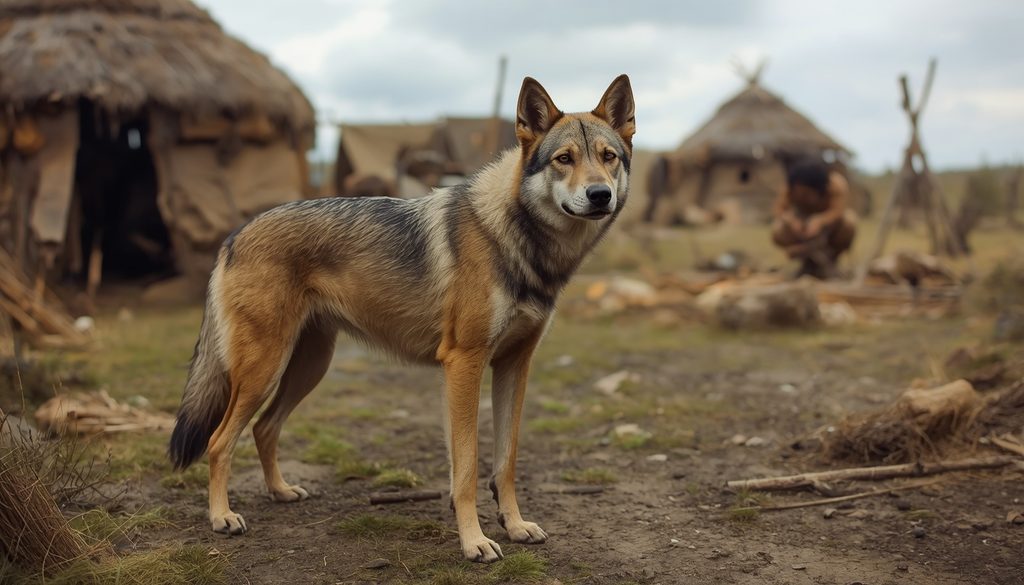
Early Dogs Were Still Very Wolf-Like
The first domestic dogs probably looked much closer to wolves than to most modern breeds. Over time, differences in skull shape, tooth size, body size, coat color and proportions began to appear as dogs adapted to living alongside humans. Some ancient remains are difficult to classify because they fall between clearly wild wolves and clearly domestic dogs. What likely changed first was behavior: dogs that tolerated people, stayed near camps and responded to human activity had an advantage. The dramatic physical diversity seen in modern breeds developed much later.
How Dogs Became So Good at Understanding Humans
One of the most remarkable results of domestication is not the enormous variety of dog shapes and sizes, but the way dogs learned to live socially with people. Modern dogs are unusually attentive to human behavior and can use gestures, gaze, body movement, and tone of voice in ways that make cooperation between the two species exceptionally effective.
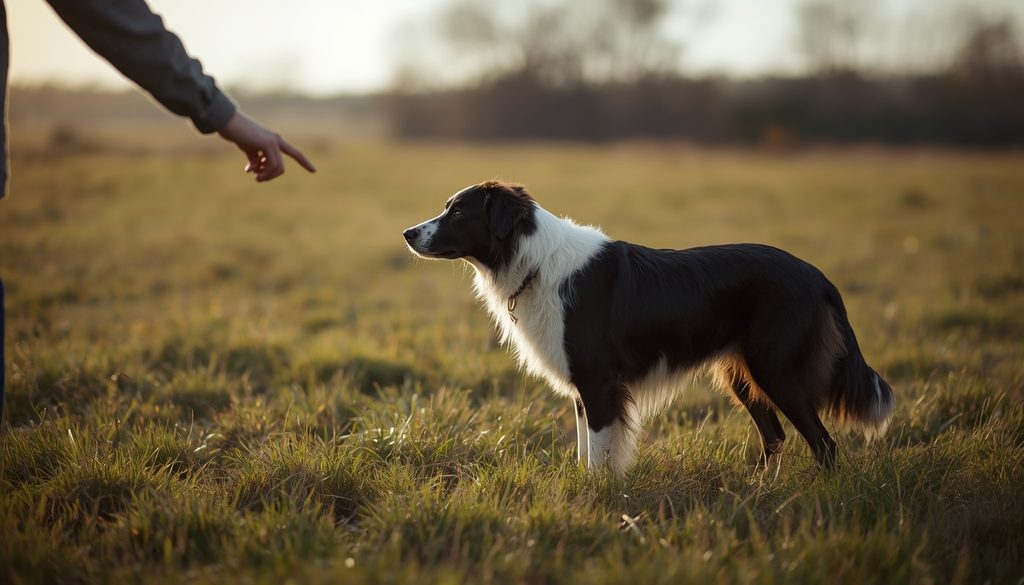
Researchers have found that dogs can follow human pointing and directional cues, look toward people when faced with an unfamiliar or unsolvable problem, and use human attention as useful social information. Some of these abilities appear to have been strengthened by domestication, while experience with humans throughout a dog’s life also plays an important role.
This social attentiveness would have been extremely useful during the early relationship between humans and dogs. An animal able to notice where a person was looking, follow a gesture toward prey, respond to changes in posture, or remain close during cooperative activity would have had advantages over an animal that ignored human signals entirely.
Over many generations, humans probably favored dogs that were easier to communicate with and more comfortable working alongside people. Later, deliberate breeding exaggerated these abilities in particular groups. Herding dogs became exceptionally responsive to movement and direction. Gundogs were selected to cooperate closely with hunters. Livestock guardians developed different forms of independence while still recognizing and responding to human partners.
Companion dogs inherited another side of this relationship: the ability to form strong social bonds with people. Dogs frequently look toward their owners for information or reassurance in unfamiliar situations. They can also use alternating gaze—looking between a person and an object or problem—as a way of drawing human attention toward something.
Research into dog-human gazing has even explored the role of oxytocin, a hormone involved in social bonding. Some studies have found changes in oxytocin during positive interactions between dogs and their owners, although researchers continue to debate how much of this effect reflects domestication itself and how much develops through individual life experience and attachment.
That distinction matters because dogs are not born with every human-reading skill fully developed. Socialization and experience remain enormously important. A puppy raised with positive human interaction has many opportunities to learn what gestures, expressions, routines, and voices mean. Domestication may provide a strong foundation, but everyday life continues building on it.
This helps explain why the history behind where do dogs come from is about much more than physical ancestry. The question where do dogs come from also has a behavioral answer, because domestication gradually produced animals that were increasingly suited to reading, responding to, and cooperating with humans. Dogs did not simply become smaller or differently shaped wolves. They became animals increasingly suited to participating in human social life.
That ability may be one of the biggest reasons the partnership endured. A dog that can understand enough of our behavior to cooperate with us—and communicate enough of its own intentions for us to respond—has an extraordinary advantage in a human world.
Dogs Learned to Read the Human World
Domestication changed more than the way dogs look. Dogs became exceptionally attentive to human gestures, gaze and everyday behavior, while experience throughout life helps strengthen those skills further. Many dogs will follow pointing cues, look toward their owners when uncertain, or deliberately draw human attention toward something they cannot solve themselves. These abilities helped turn the relationship between people and dogs into genuine cooperation. Rather than simply tolerating humans, domestic dogs became remarkably well adapted to living, communicating and working within human social groups.
When Did Modern Dog Breeds Begin?
Although dogs have lived with humans for thousands of years, most modern dog breeds are surprisingly recent. For much of history, people bred dogs primarily for function rather than for a fixed appearance. A useful hunting dog, livestock guardian, herder, sled dog, or companion might belong to a recognizable regional type without matching the strict breed standards familiar today.
These older dog populations were often shaped by geography and work. Dogs from cold northern regions tended to develop traits suited to harsh climates, while hunting dogs in open country were selected for speed, endurance, scenting ability, or cooperation with people. In many places, dogs were bred because they performed a job well, and appearance mattered mainly when it was connected to that job.
The concept of the modern standardized breed developed much later, especially during the 18th and 19th centuries in Europe. Dog showing became increasingly popular, breed clubs were formed, and written standards began defining how particular dogs should look and behave. Pedigree records also became more formal, making it possible to maintain closed breeding populations over generations.
This changed dog breeding dramatically. Instead of selecting mainly for broad working ability, breeders could increasingly emphasize precise physical characteristics such as head shape, coat color, ear carriage, leg length, body proportions, and tail position. Dogs that matched a desired standard were more likely to be bred, while animals outside that standard were excluded.
The establishment of kennel clubs accelerated the process. The Kennel Club in Britain was founded in 1873, and organizations in other countries followed. As registration systems expanded, many regional dog types were transformed into formally recognized breeds with defined ancestry and appearance.
Some breeds have much older histories than their modern registration suggests. Greyhound-like dogs, mastiff-type guardians, spitz dogs, and various hunting types existed long before kennel clubs. What changed in the modern era was the creation of relatively closed populations with formal names and written breed standards.
This helps explain why the diversity of dogs appears ancient but many of the breeds we recognize today are not. Looking at where do dogs come from also shows why ancient dog types can have very old histories while many modern breeds are comparatively recent. The underlying dog types may be centuries or even thousands of years old, while the modern breed itself may have been standardized only within the last 150 to 200 years.
It also adds another layer to the question where do dogs come from. Dogs first emerged from ancient wolf populations, then diversified as they moved with humans, and finally became the highly standardized breeds we know today through relatively recent selective breeding.
Modern breeds are therefore the newest chapter in a much older story. The dog-human relationship began in prehistory, but the idea of a tightly defined Labrador Retriever, Poodle, Bulldog, or German Shepherd is largely a product of the modern breeding era.
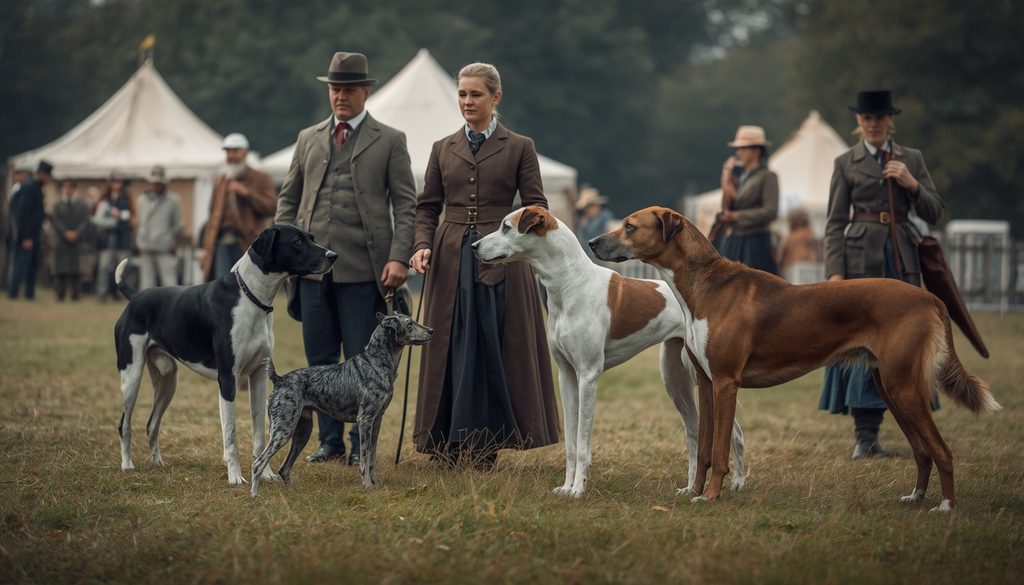
Most Modern Breeds Are Surprisingly Recent
Dogs have lived beside humans for thousands of years, but many recognizable modern breeds were standardized only during the last two centuries. Earlier dogs were usually bred mainly for practical abilities such as hunting, guarding, herding or pulling, with regional types developing naturally over time. The rise of dog shows, pedigree records, kennel clubs and written breed standards in the 1800s made breeding much more controlled. This is why ancient dog types can have very old histories even though the modern registered breeds descended from them may be comparatively recent.
Do All Dogs Still Share Wolf DNA?
Yes. Every domestic dog still carries a very close genetic relationship to wolves because dogs descended from ancient wolf populations. The important point is that modern dogs are not simply descended from the gray wolves living today. Instead, they trace back to ancient wolf populations that were genetically related to modern wolves but were not identical to them.
Dogs and wolves still share most of their DNA, which is why they retain so many biological similarities. Both belong to the genus Canis, and both share many of the same basic behaviors, body systems, sensory abilities, and social instincts. Dogs still rely heavily on scent, use complex body language, form social groups, defend resources, chase moving objects, dig, scavenge, and communicate through posture, facial expression, vocalization, and scent marking.
What changed during domestication was not the entire canine blueprint, but the way certain traits were emphasized or reduced. Dogs became more tolerant of human presence, more responsive to human communication, and increasingly diverse in body size, coat, behavior, and temperament. Human selection then pushed those differences much further, eventually producing everything from toy breeds to giant livestock guardians.
Genetic studies also show that dogs and wolves did not completely stop interbreeding once domestication began. In some regions and periods, domestic dogs bred with wild wolves, adding further complexity to their ancestry. That is one reason the genetic history of dogs cannot be represented as a perfectly straight line from one ancestral wolf population to modern breeds.
Some modern dog populations carry more detectable wolf ancestry than others because of this later mixing, but all domestic dogs ultimately share ancient wolf ancestry. This does not mean that breeds that look more wolf-like are necessarily “closer” to the original dog in a simple evolutionary sense. A Siberian Husky may resemble a wolf more than a Pug does, but both are equally domestic dogs shaped by thousands of years of evolution and human selection.
Appearance can therefore be misleading. A breed with upright ears, a long muzzle, and a thick gray coat may retain a more wolf-like silhouette, while a short-faced companion breed may look dramatically different. Genetically, however, both belong to the same domesticated lineage.
This is an important part of understanding where do dogs come from. Dogs did not lose their wolf ancestry when domestication began. Instead, that ancestry became the foundation on which thousands of years of adaptation, migration, and selective breeding were built.
Modern dogs are therefore both ancient and new: ancient in their evolutionary roots, but extraordinarily reshaped by their long relationship with humans.
Dogs Still Carry Their Wolf Ancestry
All domestic dogs remain genetically closely related to wolves because they descend from ancient wolf populations. Modern breeds may look radically different from one another, but they still share many inherited canine traits such as scent-based communication, social behavior, chasing, scavenging, digging and territorial marking. Dogs and wolves also continued to interbreed in some regions after domestication began, adding further complexity to canine ancestry. A wolf-like appearance does not necessarily mean a breed is genetically “closer” to the original dog; even highly modified modern breeds still share the same ancient domesticated lineage.

What Dog Origins Tell Us About Dogs Today
Understanding where dogs come from helps explain many of the behaviors that modern owners still see every day. Thousands of years of domestication have changed dogs dramatically, but they remain social canids whose senses, instincts, and communication systems were built on an ancient foundation. Looking at that history can make seemingly puzzling dog behavior much easier to understand.
Dogs still experience much of the world through scent. Humans tend to rely heavily on vision, but a dog may spend several minutes investigating a patch of grass because smell provides information about which animals have passed through, how recently they were there, and potentially something about their condition. What looks like aimless sniffing during a walk is actually an important form of information gathering.
Chasing behavior also reflects ancient ancestry. Movement can trigger pursuit in many dogs because predators evolved to notice and respond to moving animals. Selective breeding later strengthened this tendency in some breeds and redirected it in others. A sighthound chasing movement, a terrier pursuing small animals, and a Border Collie controlling livestock are very different behaviors, but all draw on older predatory patterns that humans modified for particular purposes.
Social behavior has been reshaped just as strongly. Dogs inherited the capacity to form close relationships with other canids, but domestication expanded that social flexibility toward humans. Modern dogs can form powerful attachments to people, learn household routines, respond to gestures, and cooperate with us in ways that have become central to their success as a species.
Guarding and territorial behavior also make more sense when viewed historically. Early dogs that alerted human settlements to unfamiliar animals or people could have been valuable companions. Thousands of years later, that same underlying tendency may appear when a pet dog barks at the front gate or becomes alert when someone unfamiliar approaches the house.
Scavenging is another ancient behavior that remains extremely successful. The earliest relationship between wolves and humans may have involved access to discarded food around camps. Modern dogs still possess an impressive ability to locate food opportunities, whether that means investigating a kitchen bin, searching beneath the dining table, or finding something edible during a walk.
Even the extraordinary differences between breeds become easier to understand when viewed through this history. Humans did not create every canine behavior from nothing. Instead, we repeatedly selected and exaggerated existing tendencies. Retrievers were developed around carrying and cooperative hunting behavior, herding dogs around controlled pursuit, guardians around vigilance and protection, and companion breeds around traits that made close domestic life especially successful.
This does not mean every behavior should simply be accepted because it is “natural.” Dogs still need training, boundaries, appropriate outlets, and safe management. But understanding the origin of a behavior can help owners respond more effectively than treating it as deliberate disobedience.
The story of where do dogs come from therefore has practical relevance today. Modern dogs may sleep on sofas, travel in cars, and live in suburban homes, but many of the instincts beneath that lifestyle are far older than the environments in which we now expect them to behave.

Where Do Dogs Come From? — Final Takeaway
So, where do dogs come from? The evidence points back to ancient wolf populations living somewhere in Eurasia during the Ice Age. Exactly when and where domestication began is still debated, but the relationship between humans and dogs was already firmly established thousands of years before agriculture transformed human society.
What makes the story remarkable is that dogs were not created in a single moment. Domestication probably developed gradually as less fearful wolves began spending more time around human camps. Over generations, animals that tolerated people, cooperated with them, and adapted successfully to life alongside humans became increasingly different from their wild relatives.
From there, dogs traveled wherever people traveled. They accompanied hunter-gatherers, farmers, herders, traders, and migrating communities across enormous distances. Different environments and human needs gradually produced different types of dogs, while later selective breeding transformed those regional working dogs into the extraordinary variety of modern breeds we recognize today.
Yet beneath those differences, every domestic dog still carries the legacy of that ancient relationship. Their love of scent, social communication, tendency to chase, ability to cooperate, and remarkable attentiveness to humans all reflect a history that stretches back thousands of years.
The Labrador sleeping beside the family sofa, the Border Collie working sheep, the Dachshund following a scent, and the Husky running through snow may look and behave very differently, but they are all part of the same extraordinary story.
Dogs began as descendants of ancient wolves.
What they became was something unique: an animal shaped not only by evolution, but by one of the longest and closest partnerships between two species in human history.
Explore More About Dogs
From breed histories and behavior to health, training and everyday life with dogs, there is much more to explore across CanineBase. Visit our Dog Blog for more practical guides, fascinating canine stories and answers to the questions dog owners ask most often.
Learn More About Dog Origins
Research into dog domestication continues to develop as scientists compare archaeological discoveries with ancient and modern DNA. For additional background on the evolutionary relationship between dogs and wolves, read How Wolves Really Became Dogs from Smithsonian Magazine.