

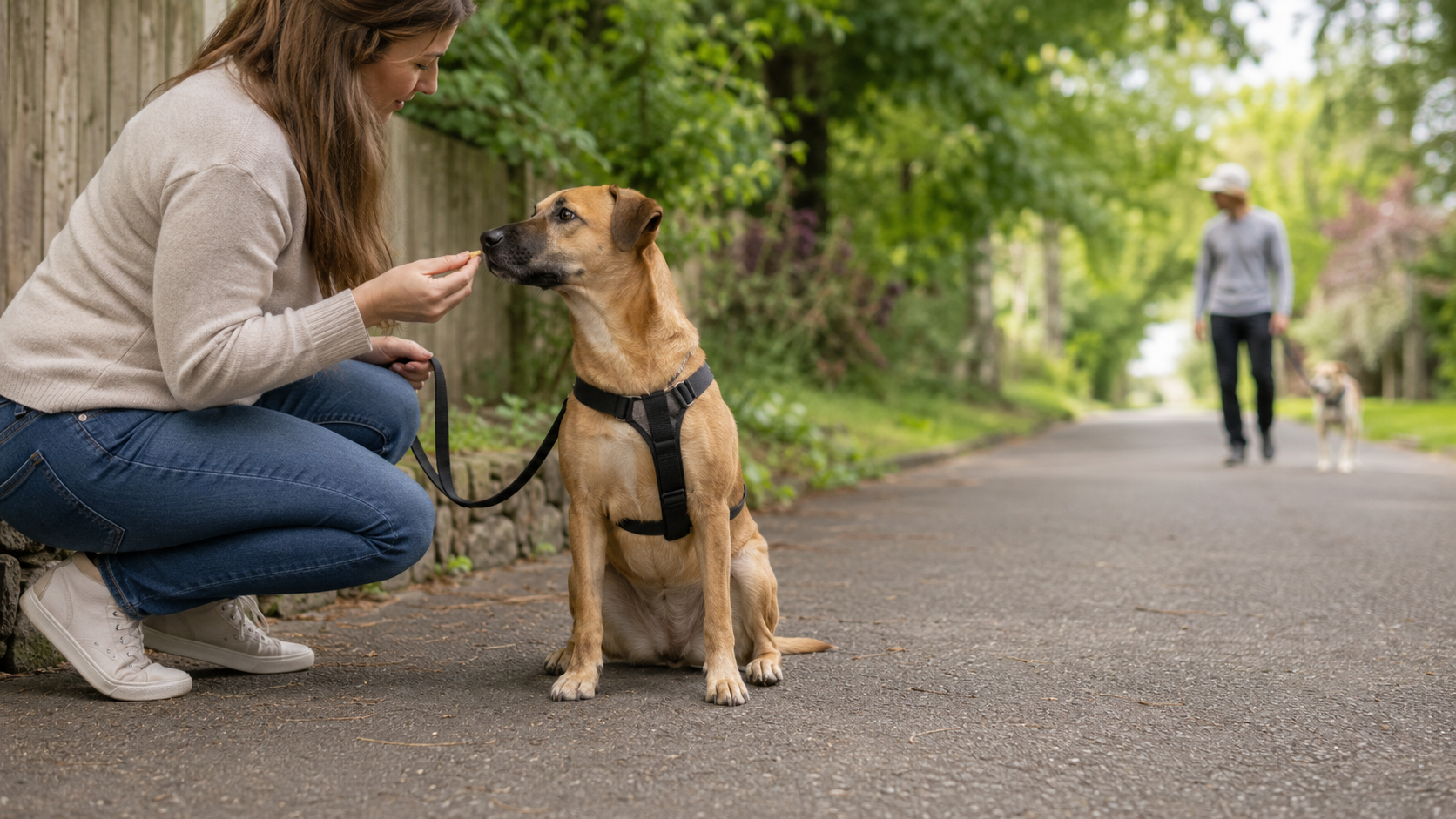
Reactive dog training is about helping dogs respond more calmly to the people, animals, sounds and situations that trigger an intense reaction. A reactive dog may bark, lunge, growl, whine, freeze or become extremely excited when faced with something they find frightening, frustrating or overwhelming. These reactions can make everyday walks and outings stressful, but reactivity does not automatically mean a dog is aggressive. With the right training approach, careful management and a better understanding of what causes the reaction, many dogs can learn to cope more successfully with their triggers and feel safer in the world around them.

Table of Contents
Reactive Dogs vs Aggressive Dogs
Reactivity and aggression are not the same thing, even though they can sometimes look similar. A reactive dog may bark, lunge, growl, pull or become highly agitated because they are frightened, frustrated, overexcited or overwhelmed by a trigger.
Aggression involves behavior intended to threaten, drive away or potentially injure another person or animal. Growling, snapping and biting can be aggressive behaviors, but they can also occur as part of a defensive response when a dog feels trapped or unsafe.
The two can overlap. A reactive dog may behave aggressively in some situations, and a dog with a history of aggression may also be highly reactive. However, barking or lunging alone does not automatically mean a dog is aggressive.
Understanding the difference is important because effective reactive dog training should address the emotion behind the behavior rather than simply trying to suppress the outward reaction. A frightened dog may need more distance and gradual confidence-building, while a frustrated dog may need help learning calmer responses around things they want to approach.
If a dog has bitten, attempted to bite or shows increasingly serious aggressive behavior, safety should come first. A qualified trainer, veterinarian or veterinary behaviorist can help assess the behavior and develop an appropriate management and training plan.
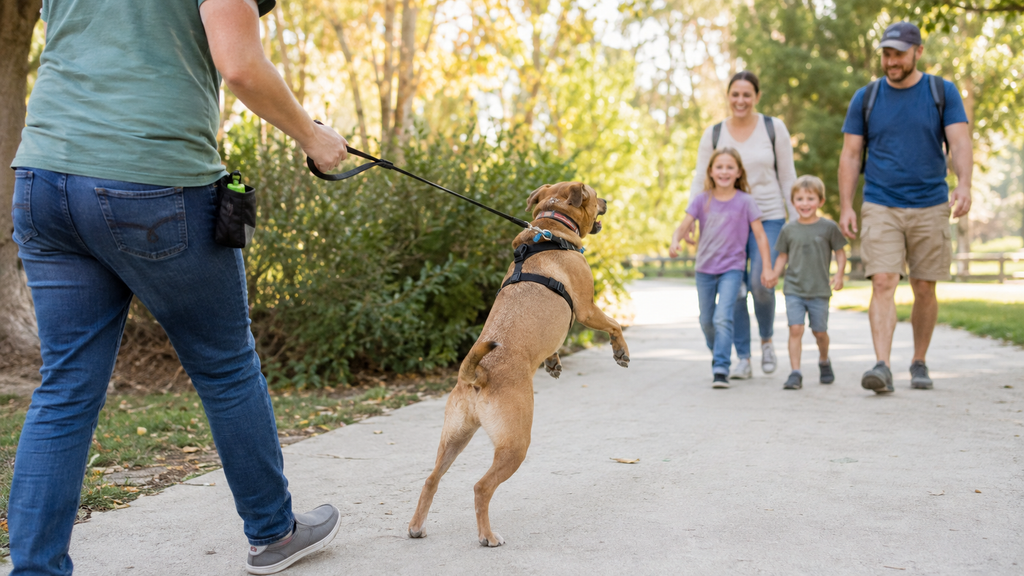
Reactivity Does Not Always Mean Aggression
A dog that pulls, barks, or becomes highly excited on leash is not automatically being aggressive. Some dogs react because they are frustrated, overstimulated, or eager to reach a person, child, or other dog. Understanding the difference helps owners respond more calmly and choose training methods that address the dog’s emotional state rather than just the outward behavior.
What Is a Reactive Dog?
A reactive dog is one that responds very strongly to particular triggers in the environment. That reaction may involve barking, lunging, whining, growling, pulling hard on the leash, freezing, staring, spinning around or becoming so excited that the dog appears unable to listen to the person handling them.
The trigger itself varies from dog to dog. Some dogs react primarily to other dogs, while others may struggle around unfamiliar people, bicycles, runners, cars, children, livestock or certain sounds. A dog can also be reactive only in particular situations. For example, a dog that is relaxed around other dogs in an open area may become highly reactive when restrained on a leash or approached in a narrow space.
Reactivity is often linked to the dog becoming emotionally overwhelmed. Fear is a common cause, but frustration, excitement, uncertainty and previous negative experiences can all contribute. Some dogs desperately want to approach another dog or person but become frustrated because the leash prevents them from doing so. Others react because they want the trigger to move farther away.
The intensity of the reaction can make it appear as though the dog suddenly loses control, but there are usually warning signs before the barking or lunging begins. The dog may become very still, stare at the trigger, close their mouth, shift their weight forward, raise their ears or tail, or stop responding to familiar cues.
Recognizing these earlier signs is an important part of reactive dog training. The goal is not simply to stop barking after the reaction has already started. It is to notice when the dog is beginning to struggle and help them before they become too overwhelmed to learn.
Reactivity can be difficult for owners because everyday situations become harder to predict and manage. A simple walk can involve constantly watching for approaching dogs, crossing roads to create distance or changing direction unexpectedly. Understanding what the dog is reacting to, and why, is the first step toward making those situations easier for both dog and owner.
Reactivity Is an Emotional Response
A reactive dog is not simply being disobedient. Barking, lunging, freezing or pulling can be signs that the dog has become overwhelmed by fear, frustration, excitement or uncertainty. Effective reactive dog training focuses on understanding those triggers, creating enough distance for the dog to cope, and gradually teaching calmer responses. Learning to recognize the early signs of tension can make training safer and more effective because it allows the owner to respond before the dog reaches the point of a full reaction.
Common Triggers for Reactive Dogs
Reactive dogs can respond strongly to almost anything they find frightening, exciting, frustrating or difficult to predict. For many dogs, however, certain triggers appear again and again.
Other dogs are one of the most common. A dog may become tense as soon as another dog appears in the distance, particularly when walking on a leash. Some react only when the other dog comes close, while others may begin staring, pulling or vocalizing from much farther away.
Unfamiliar people can also trigger reactions. This may include strangers approaching directly, people wearing unusual clothing, delivery drivers, joggers or visitors entering the home. Some dogs are comfortable with adults but become uneasy around children because their movements and voices can be faster and less predictable.
Movement itself can be highly stimulating. Bicycles, scooters, runners, skateboards, cars and wildlife may trigger chasing, barking or lunging, particularly in dogs with strong herding, hunting or chase tendencies.
Barriers can make reactions considerably stronger. A dog that behaves calmly when free to move away may react intensely when restricted by a leash, fence, gate, window or car. Being unable either to approach or retreat can increase frustration and make the dog feel trapped.
Sounds can also trigger reactivity. Doorbells, knocking, traffic, construction noise, thunder, fireworks and even another dog barking nearby may cause some dogs to become highly aroused. Dogs with noise sensitivities may remain unsettled long after the original sound has stopped.
Location and context matter too. Narrow paths, crowded sidewalks, veterinary waiting rooms, busy cafés or confined entrances can reduce the amount of space available and make a normally manageable trigger much harder for a dog to cope with.
One of the most useful things an owner can do is begin noticing patterns. Keeping track of what triggered the reaction, how far away it was, what happened immediately beforehand and how quickly the dog recovered can help identify situations that repeatedly cause difficulty.
Once those patterns become clearer, reactive dog training becomes much more targeted. Instead of trying to control reactions everywhere at once, owners can begin working with individual triggers at distances and intensities the dog is actually capable of handling.

Triggers Can Be Highly Individual
There is no single trigger shared by every reactive dog. Other dogs, strangers, children, bicycles, wildlife, noises or confined spaces may all cause a strong response in some individuals. Identifying the situations that repeatedly cause difficulty is an important part of reactive dog training because it allows owners to work at a distance and intensity their dog can handle. The same dog may also cope well with a trigger in one environment but struggle in another, especially when space is limited or several triggers appear at once. Watching for these patterns can help owners plan safer walks and choose better moments for training.
Understanding a Reactive Dog’s Threshold
A dog’s threshold is the point at which a trigger becomes too intense for them to remain calm and responsive. Before reaching that point, the dog may notice the trigger but still be able to take food, respond to familiar cues, look back at the owner or move away without becoming overwhelmed.
Once the dog goes over threshold, that changes. They may begin barking, lunging, growling, pulling, freezing or becoming so focused on the trigger that they seem unable to hear anything else. At that stage, learning becomes much more difficult because the dog is reacting emotionally rather than calmly processing what is happening around them.
Distance plays a major role in threshold. A dog that reacts strongly when another dog is five metres away may remain completely manageable when that same dog is thirty metres away. For another dog, movement, noise or the number of triggers present may matter more than distance alone.
The environment can also change how quickly a dog reaches threshold. A quiet park with plenty of space may be manageable, while a narrow footpath, busy street or crowded entrance leaves very little room to move away. Several small stressors occurring together can also push a dog over threshold even when none of them would normally cause a major reaction on their own.
Early warning signs are therefore extremely important. A dog may stop sniffing, close their mouth, stiffen their body, stare intensely, lean forward, raise their ears or tail, or suddenly stop responding to the owner. These subtle changes often appear before the more obvious barking or lunging begins.
Effective reactive dog training aims to work below threshold whenever possible. This means creating enough distance and reducing the intensity of the situation so the dog can notice the trigger without becoming overwhelmed. At this level, the dog is far more capable of learning a different response.
Owners sometimes feel that moving away from a trigger means avoiding the problem, but distance is actually a valuable training tool. Creating space allows the dog to regain control and gives the owner an opportunity to reinforce calmer behavior rather than repeatedly practicing explosive reactions.
As training progresses, the distance a dog needs may gradually decrease. The goal is not to rush toward closer encounters, but to help the dog build confidence and coping skills at a pace they can handle.
Learning to recognize threshold can transform the way an owner approaches reactivity. Instead of waiting for the dog to explode and then trying to stop the behavior, training becomes about noticing the earlier signs, adjusting the situation and helping the dog remain in a state where learning is still possible.

Using Distance to Reduce Reactions
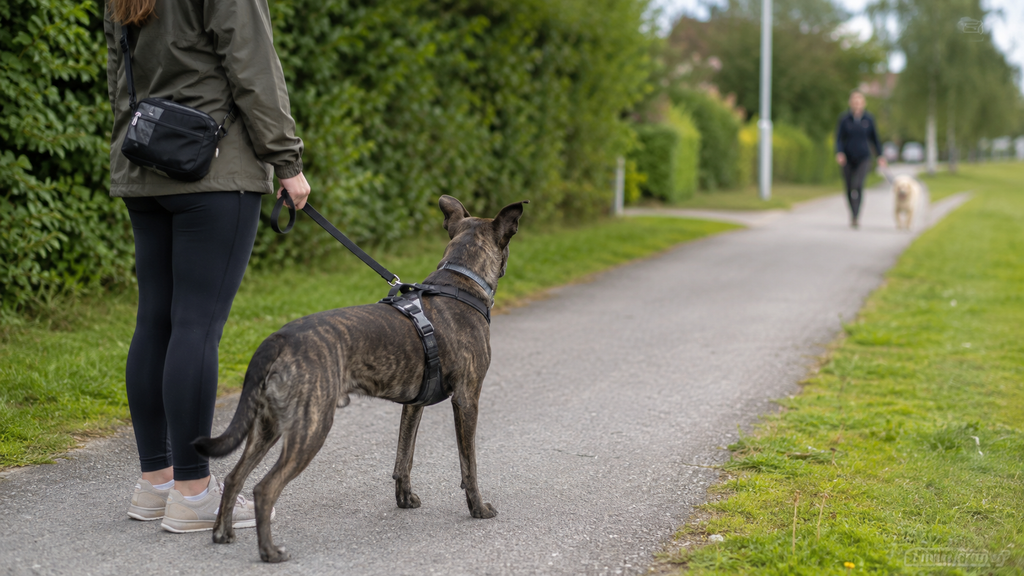
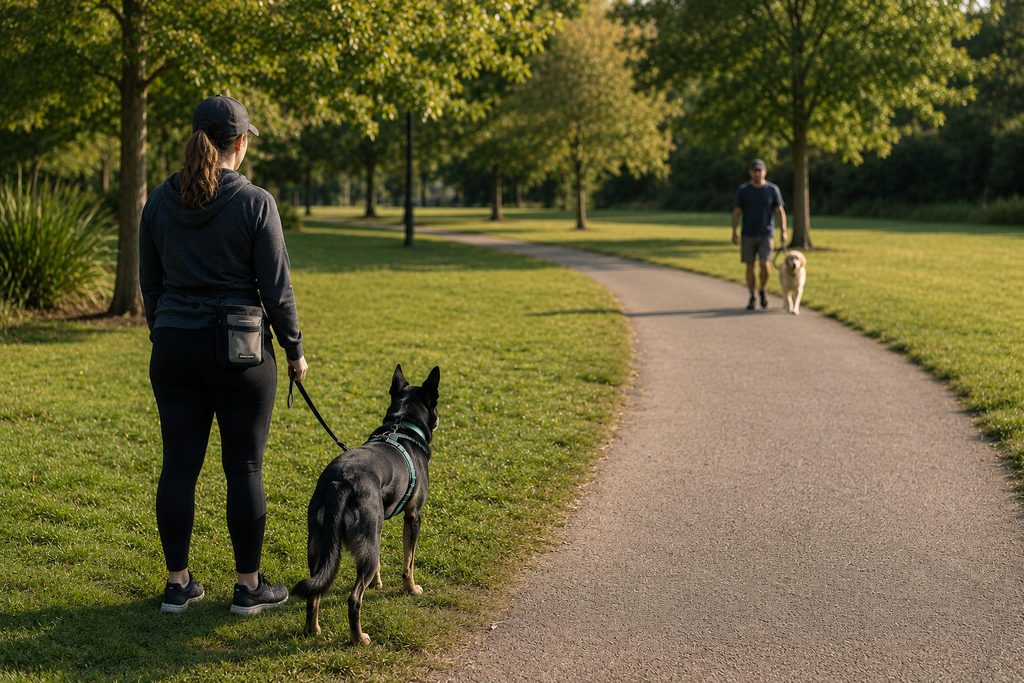
Distance is one of the most useful tools in reactive dog training. The farther a dog is from a trigger, the easier it is usually for them to stay calm, think clearly and respond to the person handling them.
For some dogs, only a small increase in space is enough to make a major difference. Moving from the same sidewalk to the opposite side of the road, stepping behind a parked car or crossing onto a wider patch of grass can reduce the intensity of the situation almost immediately.
This does not mean owners should avoid triggers forever. The purpose of distance is to keep the dog in a state where learning is possible. When the dog is calm enough to notice the trigger without barking, lunging or becoming completely fixated, the owner has an opportunity to reward calmer behavior and build a different emotional response.
Distance can also prevent repeated rehearsals of the unwanted reaction. Every time a dog practices barking, lunging or pulling intensely toward a trigger, that pattern can become more familiar. Creating space reduces the chances of the dog repeatedly practicing the same explosive behavior.
Owners should therefore feel comfortable changing direction, crossing the road or moving off a path when needed. These choices are not signs that training has failed. They are part of managing the environment so the dog can succeed.
The right distance will vary from dog to dog and may even change from one day to the next. A dog that comfortably watches another dog from twenty metres away one morning may need considerably more space later if they are tired, stressed or have already encountered several triggers.
Good reactive dog training is therefore flexible. Rather than focusing on how close the dog can get, the better question is whether the dog is still calm enough to learn. If the answer is yes, the distance is probably appropriate. If the dog is staring, stiffening, refusing food or beginning to vocalize, more space may be needed.
Over time, many dogs can gradually work at smaller distances, but this should happen because the dog is coping better rather than because the owner is forcing progress. Slow, successful repetitions are usually more valuable than pushing too quickly and triggering a major reaction.
More Distance Can Mean Less Reaction
Creating space between a reactive dog and a trigger can reduce the intensity of the situation almost immediately. Crossing the road, changing direction or stepping well away from a busy path can help the dog stay calm enough to respond and learn. In reactive dog training, distance is not avoidance — it is a practical way to prevent overwhelming reactions while gradually building better coping skills. The amount of space a dog needs will vary depending on the trigger, the environment and how stressed the dog already feels. Giving the dog enough room to remain under threshold can make future training sessions safer, calmer and far more productive.
Desensitization and Counterconditioning
Desensitization and counterconditioning are two of the most important techniques used in reactive dog training. They are often used together because one reduces the intensity of the trigger while the other changes the dog’s emotional response to it.
Desensitization means exposing the dog to a trigger at a level they can cope with. That usually means working at a greater distance, reducing movement, lowering noise or choosing a quieter environment. The goal is for the dog to notice the trigger without becoming overwhelmed.
If the dog reacts strongly, the exposure was probably too intense. Moving farther away or making the situation easier allows the dog to settle and gives training a better chance of succeeding.
Counterconditioning adds something positive to the experience. When the dog notices the trigger, the owner provides something the dog values, such as a small high-value treat. Over time, the appearance of the trigger can begin to predict something good rather than immediately causing fear, frustration or tension.
For example, a dog that reacts to other dogs may begin training at a distance where another dog can be seen but does not cause barking or lunging. Each time the reactive dog notices the other dog, the owner calmly rewards them. When the other dog disappears, the rewards stop.
This creates a simple association: the trigger appears, good things happen. The trigger leaves, the rewards end. Repeated carefully over time, this can help change the dog’s emotional response.
Timing matters. The reward should happen when the dog notices the trigger, not only after they have already reacted. This is one reason staying under threshold is so important. A dog that is already barking, lunging or panicking is much less able to form the calm associations the training is designed to create.
Progress should be gradual. Once the dog is consistently relaxed at one distance, the owner may work slightly closer or introduce a little more movement. If the dog begins struggling again, increasing distance is usually the better choice than pushing forward.
The quality of the reward also matters. Everyday kibble may be enough for some dogs, while others need something more valuable when working around difficult triggers. The reward should be strong enough to compete with whatever is happening in the environment.
Desensitization and counterconditioning are not quick fixes, but they can be extremely effective when practiced consistently. The aim is not simply to stop visible behavior. It is to help the dog feel differently about the situations that used to trigger intense reactions.
That change in emotion is what makes reactive dog training more durable. When the dog begins feeling safer and more comfortable around a trigger, calmer behavior is much more likely to follow.

More Distance Can Mean Less Reaction
Creating space between a reactive dog and a trigger can reduce the intensity of the situation almost immediately. Crossing the road, changing direction or stepping well away from a busy path can help the dog stay calm enough to respond and learn. In reactive dog training, distance is not avoidance — it is a practical way to prevent overwhelming reactions while gradually building better coping skills. The amount of space a dog needs will vary depending on the trigger, the environment and how stressed the dog already feels. Giving the dog enough room to remain under threshold can make future training sessions safer, calmer and far more productive.
Teaching Focus and Engagement Around Triggers
One of the most useful skills in reactive dog training is teaching the dog to check back in with the person handling them instead of becoming completely locked onto a trigger.
This does not mean forcing constant eye contact. The aim is simply to help the dog learn that noticing a trigger does not have to lead immediately to staring, pulling, barking or lunging.
Training can begin in a quiet environment with very few distractions. The owner can reward the dog for voluntarily looking toward them, responding to their name or following an easy cue such as “this way” or “touch.” These simple behaviors create a foundation that can later be used when something more difficult appears.
Once the dog understands the exercise, it can be practiced around mild distractions and gradually around triggers at a safe distance. The moment the dog notices another dog, person or moving object, the owner can wait for a brief check-in and reward it.
Some dogs will naturally glance back toward their owner after seeing a trigger. Others may need more help at first. A small movement, cheerful verbal cue or hand target can give the dog something simple and familiar to do without adding pressure.
Food can be especially useful because it helps reinforce the behavior quickly and can also give the dog a reason to turn away from the trigger. High-value treats are often more effective in difficult environments than everyday food.
Engagement should not become a test the dog constantly fails. If the dog cannot respond, refuses food or is staring intensely at the trigger, the situation is probably too difficult. Increasing distance is usually more productive than repeating cues over and over.
Owners should also avoid demanding prolonged attention while the dog is worried. Allowing the dog to look briefly at the trigger and then return attention to the handler is often more realistic and useful than trying to make the dog ignore the environment completely.
As this skill improves, the owner gains another way to interrupt escalating fixation before it becomes a full reaction. A dog that can notice a trigger and then calmly reconnect with the handler is in a much better position to make a different choice.
Over time, this pattern can become part of everyday walks. The trigger appears, the dog notices it, checks back in and receives reinforcement for staying connected and calm.
That kind of voluntary engagement is a powerful part of reactive dog training because it gives the dog something constructive to do while also strengthening communication between dog and owner.
Teach the Dog to Check Back In
Reactive dog training becomes easier when a dog learns to notice a trigger and reconnect with the person handling them. Rewarding voluntary check-ins or simple cues can help interrupt fixation before it develops into barking or lunging. The goal is to give the dog a familiar way to stay connected and make calmer choices. Practice first in quiet places, then gradually introduce more challenging environments as confidence improves.

Leash Handling for Reactive Dogs
Leash handling can make a significant difference in reactive dog training. A leash is essential for safety, but the way it is used can either help a dog feel more secure or add extra tension to an already difficult situation.
A common mistake is keeping the leash constantly tight. When the leash is pulled taut, the dog may feel physically restricted and become more frustrated or anxious. Tight leash pressure can also make it harder for the dog to move naturally, turn away from a trigger or choose a calmer response.
Where possible, the leash should have enough slack for the dog to move comfortably while still allowing the owner to maintain control. The handler should avoid sudden jerks, repeated pulling or dragging the dog away unless immediate safety requires it.
A well-fitted harness can be especially useful for reactive dogs because it distributes pressure across the body rather than concentrating it around the neck. This can be particularly helpful for dogs that lunge or pull strongly when they become aroused.
The owner’s movement matters as well. Instead of waiting until a trigger is extremely close, handlers can calmly change direction, step off the path, cross the road or create a wider arc around another dog or person. These movements give the dog more space before the situation becomes overwhelming.
Leash length should suit the environment. A standard fixed-length leash usually provides more predictable control than a retractable leash in busy areas. The dog should have enough room to move and sniff, but not so much freedom that the owner cannot respond quickly when a trigger appears.
Owners can also practice simple movement cues away from triggers. A cheerful “this way,” hand target or practiced U-turn can help the dog follow the handler without creating a struggle at the end of the leash.
Body position can be useful too. In some situations, the owner can place themselves between the dog and the approaching trigger while calmly moving away. This can reduce direct visual pressure and help guide the dog toward a safer position.
Good leash handling is not about physically overpowering a reactive dog. It is about using movement, distance and clear communication to prevent the dog from becoming trapped in situations they cannot handle.
When leash skills are combined with threshold awareness, rewards and gradual exposure, everyday walks can become much easier to manage. The goal is for the leash to remain a safety connection between dog and owner rather than becoming another source of tension during reactive dog training.

Keep the Leash Calm and Predictable
A constantly tight leash can add frustration and tension when a reactive dog is already struggling. Good reactive dog training uses the leash as a safety connection rather than a way to physically control every movement. A well-fitted harness, enough slack for comfortable movement, and calm changes of direction can help the dog feel less trapped around triggers. Practicing simple U-turns and movement cues in quiet places also gives owners useful tools they can rely on before a situation becomes overwhelming.
Managing Walks With a Reactive Dog
Walks can be one of the hardest parts of living with a reactive dog because triggers are often unpredictable. Another dog can appear around a corner, a cyclist may approach from behind, or a busy sidewalk can suddenly leave very little room to move away.
Good management starts before the walk begins. Choosing quieter routes, avoiding the busiest times of day and using areas with more open space can make reactive dog training much easier. A calm environment gives the dog more opportunity to practice successful behavior instead of repeatedly being pushed over threshold.
Owners should also scan the environment ahead. Spotting another dog, runner or bicycle early gives much more time to respond. Crossing the street, turning down another path or moving onto a grassy verge is far easier when the trigger is still some distance away.
It can also help to plan escape routes. Parked cars, driveways, side streets and open grassy areas can all provide useful space when another dog is approaching. Knowing where to move before the dog begins reacting reduces panic and makes the handler’s response more deliberate.
Not every walk needs to be a training session. Some days, the priority may simply be giving the dog a calm outing with as few difficult encounters as possible. Sniffing, exploring and walking in quieter places still provide valuable physical and mental stimulation.
Shorter walks can sometimes be more productive than long ones. A dog that has successfully handled two or three triggers may become increasingly tired or stressed if the walk continues for another hour. Ending on a calm note can be more valuable than trying to cover a particular distance.
Owners should also remember that stress can accumulate. A difficult encounter early in the walk may make the dog more sensitive to later triggers. Several small events that would normally be manageable can eventually combine and push the dog over threshold.
This is sometimes described as trigger stacking. For example, a dog may first hear construction noise, then encounter an unfamiliar person, then see another dog approaching on a narrow path. By the third event, the dog may react much more strongly than expected because their stress level has already been building.
Allowing time to decompress after difficult encounters can help. Moving to a quiet area, encouraging sniffing or simply creating more distance can give the dog a chance to settle before continuing.
Managing walks is not about avoiding life. It is about creating enough successful experiences for the dog to build confidence and learn better responses over time.
As reactive dog training progresses, owners may find that routes which once felt impossible become manageable. The improvement often happens gradually, through many ordinary walks where the dog is given enough space, support and opportunity to succeed.
What Not to Do With a Reactive Dog
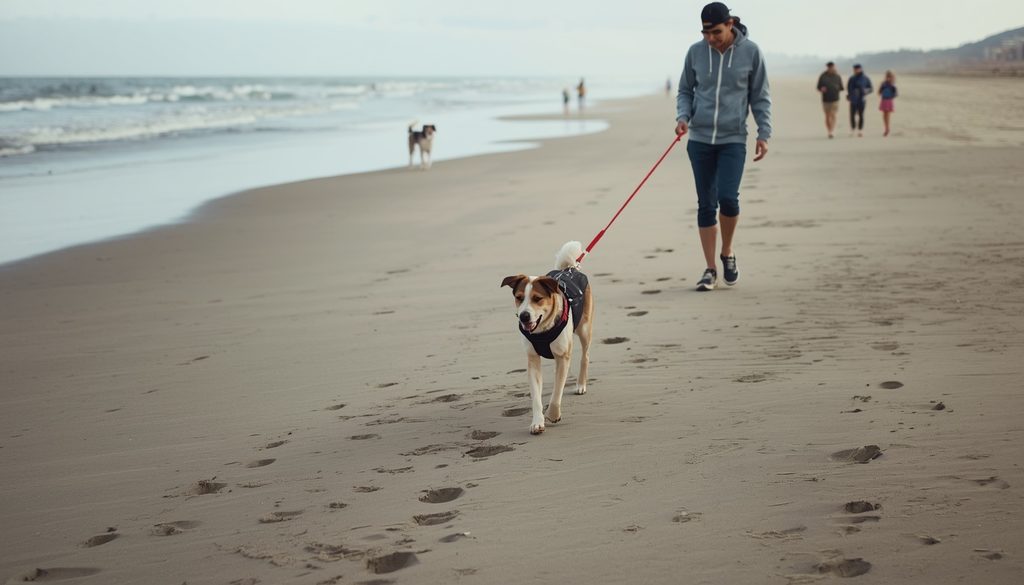
Reactive dog training is not only about what owners should do. Avoiding the wrong responses can be just as important, because some common reactions can increase fear, frustration or arousal instead of helping the dog cope.
Punishing barking, lunging or growling is one of the biggest risks. Yelling, leash corrections or physical punishment may suppress the visible behavior temporarily, but they do not necessarily change the emotion causing it. A frightened dog may become even more worried, while a frustrated dog may become more agitated.
Owners should also avoid forcing a reactive dog to remain close to a trigger in the hope that they will eventually “get used to it.” If the dog is already over threshold, prolonged exposure can make the experience more stressful and strengthen the negative association.
Repeatedly allowing unfamiliar dogs to approach closely can create similar problems. Even well-meaning owners sometimes feel that their dog needs more social contact, but a reactive dog may benefit far more from controlled distance than from frequent face-to-face encounters.
Dragging the dog away after a reaction can also add conflict. If safety allows, calmly increasing distance and guiding the dog away is usually preferable to turning the situation into a physical struggle.
Another mistake is waiting until the dog is already barking or lunging before taking action. By that point, the dog may be too overwhelmed to respond well. Watching for earlier signs such as staring, stiffening or reduced responsiveness gives the owner much more opportunity to intervene.
Owners should also be cautious about expecting progress to happen in a straight line. A dog may handle a particular trigger well one day and struggle with the same situation the next. Stress, fatigue, pain, environment and previous encounters can all affect how much the dog can cope with.
Comparing one reactive dog with another is rarely helpful either. Some dogs improve quickly, while others need months of careful management and training. The goal should be steady improvement for the individual dog rather than meeting an arbitrary timetable.
Perhaps most importantly, owners should avoid viewing every reaction as a failure. Reactivity can be difficult to manage, and setbacks are normal. Each difficult encounter can still provide useful information about the dog’s threshold, triggers and current ability to cope.
Effective reactive dog training focuses on reducing unnecessary pressure, preventing repeated explosive reactions and creating more opportunities for the dog to succeed. Calm, consistent handling usually produces much better results than trying to overpower or punish the behavior.
Avoid Adding More Pressure
Pulling hard on the leash, forcing a reactive dog closer to a trigger, or repeatedly correcting the dog can increase stress instead of helping. Effective reactive dog training focuses on creating space, reducing pressure, and helping the dog stay calm enough to learn. The goal is not to overpower the reaction, but to prevent the dog from becoming overwhelmed and give them a better chance to make a calmer choice.
Can Reactive Dogs Improve?
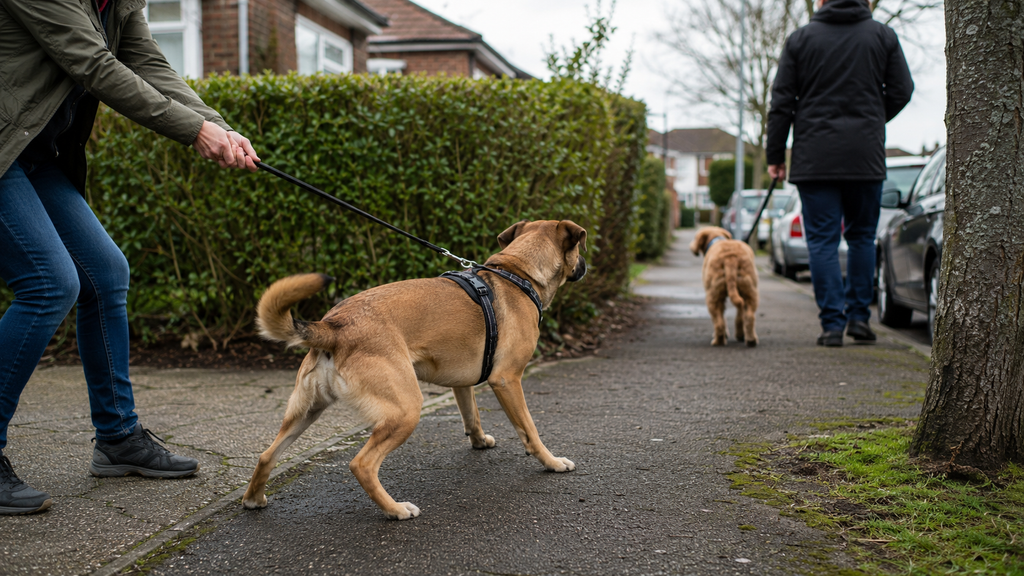
Yes, many reactive dogs can improve significantly with consistent training, good management and enough time. Improvement does not always mean a dog becomes completely comfortable in every situation, but it can mean fewer reactions, faster recovery and a greater ability to stay calm around triggers that once felt overwhelming.
Progress is usually gradual. A dog may first learn to stay relaxed at a greater distance, then begin checking back with the owner more often, and eventually handle closer or more complicated situations without reacting.
Some dogs improve quickly, while others need months of careful reactive dog training before the changes become obvious. The pace depends on the dog’s temperament, history, triggers, environment and how often they are pushed beyond threshold.
One of the most important signs of progress is recovery time. A dog that once remained stressed for several minutes after seeing another dog may eventually settle within seconds. That reduction in recovery time can make walks and everyday life much easier.
Another sign is increased flexibility. The dog may begin taking food around triggers, responding to familiar cues or choosing to move away rather than bark or lunge. These small changes show that the dog is becoming better able to think and cope under pressure.
Setbacks are normal. A difficult encounter, illness, pain, fatigue or several stressful events close together can temporarily make a dog more reactive again. That does not necessarily mean the training has failed.
Owners should therefore judge progress over weeks and months rather than individual walks. Looking at the overall trend gives a much clearer picture than focusing on one difficult day.
Success also looks different for different dogs. For one dog, the goal may be calmly passing another dog across the street. For another, simply being able to see a dog in the distance without exploding may represent major progress.
Reactive dog training works best when success is defined by the individual dog rather than by unrealistic expectations. The aim is to help the dog feel safer, recover more quickly and move through the world with greater confidence and control.

Progress Can Be Gradual but Meaningful
Many reactive dogs can improve significantly with consistent training, careful management, and realistic expectations. Progress may first appear as greater distance tolerance, faster recovery after seeing a trigger, or more frequent check-ins with the owner. Reactive dog training is rarely perfectly linear, so occasional setbacks do not erase the gains a dog has already made. What matters most is the overall trend toward calmer responses and better coping skills.
When to Get Professional Help
Many owners can make meaningful progress with reactive dog training at home, but some situations are safer and easier to manage with professional support.
Professional help is particularly important if a dog has bitten, attempted to bite, redirected aggression toward the handler, or reacts so intensely that the owner struggles to maintain control. These situations require careful assessment because safety has to come before training progress.
A qualified trainer or behavior professional can help identify the dog’s triggers, assess body language, and determine whether the behavior is primarily driven by fear, frustration, excitement, guarding, pain, or another underlying cause.
Veterinary input can also be important, especially when reactivity appears suddenly or becomes noticeably worse. Pain, illness, changes in vision or hearing, and other medical problems can reduce a dog’s tolerance and make previously manageable situations much harder.
For more serious or complex cases, a veterinary behaviorist may be appropriate. These veterinarians have additional training in animal behavior and can assess both behavioral and medical factors that may be contributing to the problem.
Owners should look for professionals who use evidence-based, humane training methods and who are comfortable working with reactive dogs. A good professional should explain what they are doing, help the owner understand the dog’s behavior, and avoid methods that rely heavily on fear, intimidation, or punishment.
Getting help does not mean the owner has failed. Reactive behavior can be complicated, and an experienced professional may notice patterns that are difficult to see when you are concentrating on simply getting through the walk.
The earlier serious reactivity is addressed, the easier it can be to prevent unwanted patterns from becoming more established. Professional guidance can also give owners more confidence because they have a clear plan for managing difficult situations.
Reactive dog training should always be adapted to the individual dog. When the behavior feels unsafe, unpredictable, or too difficult to manage alone, seeking qualified help is one of the most responsible steps an owner can take.
Know When to Bring in Professional Support
Professional help can be especially valuable when a reactive dog has bitten, attempted to bite, redirects aggression, or becomes difficult to control around triggers. A qualified trainer, veterinarian, or veterinary behaviorist can help identify what is driving the behavior and develop a safer, more structured plan. Good reactive dog training should be tailored to the individual dog and should use humane, evidence-based methods rather than fear or intimidation. Seeking help early can also give owners more confidence and reduce the risk of difficult behavior becoming more established.

Living With a Reactive Dog
Living with a reactive dog can require more planning than living with a dog that moves easily through every environment. Walks may need to happen at quieter times, visitors may need to be introduced carefully, and owners often become very good at spotting potential triggers before their dog does.
That level of awareness can feel exhausting at first, especially when even simple outings require constant decisions about distance, routes and timing. Over time, however, many owners develop routines that make everyday life much more manageable.
Predictability can help. Dogs often cope better when walks, feeding, rest and training follow reasonably consistent patterns. A predictable routine does not remove reactivity, but it can reduce some of the background stress that makes difficult situations harder to handle.
Providing appropriate mental enrichment can also be valuable. Sniffing games, food puzzles, scatter feeding, scent work and calm training exercises give the dog ways to use their brain without constantly being exposed to challenging environments.
Rest matters too. Dogs that are tired, overstimulated or repeatedly exposed to stressful situations may become more reactive. Quiet time at home, comfortable sleeping areas and opportunities to decompress can all support better emotional regulation.
Owners do not need to prove progress by taking a reactive dog into crowded places. A dog can have a rich, enjoyable life without visiting busy cafés, packed dog parks or every social event. Choosing environments the dog can handle is not a failure — it is responsible management.
It can also help to rethink what a successful walk looks like. A calm twenty-minute walk with plenty of sniffing and no major reactions may be more valuable than an hour-long outing filled with stressful encounters.
Some reactive dogs may never enjoy close interaction with unfamiliar dogs or people, and that is not necessarily a problem. The goal of reactive dog training is not to turn every dog into a highly social animal. It is to help the individual dog feel safer, cope better and move through daily life with less stress.
Owners should also give themselves permission to make practical choices. Turning around, skipping a busy route, asking someone for more space or leaving an environment early can all be sensible decisions.
As confidence grows, both dog and owner often become better at communicating. The owner learns to recognize subtle changes in body language, while the dog becomes more likely to look for guidance rather than immediately reacting.
Living with a reactive dog can require patience, but progress can make a remarkable difference. A dog that once struggled at the sight of another dog across the street may eventually be able to notice the trigger, check back in with the owner and continue walking calmly.
Those small moments are often where the real success of reactive dog training becomes visible. The aim is not perfection. It is a safer, calmer and more enjoyable life for both dog and owner.

A Good Life Does Not Require Perfect Behavior
Living well with a reactive dog often means choosing quieter routes, allowing more space, planning ahead, and avoiding situations the dog is not ready to handle. Reactive dog training can improve confidence and coping skills, but success does not mean every dog has to enjoy crowded places or close social encounters. A calm walk, a predictable routine, and fewer overwhelming experiences can make everyday life far more enjoyable. The goal is not perfection, but helping the dog feel safer and giving both dog and owner more confidence in daily situations.
Final Thoughts on Reactive Dog Training
Reactive dog training is rarely about producing a perfectly calm dog in every possible situation. It is about understanding what causes the reaction, recognizing when the dog is beginning to struggle, and creating enough space and support for better choices to become possible.
The most effective progress usually comes from combining several things: working below threshold, using distance wisely, rewarding calmer responses, improving leash handling, managing walks carefully and gradually changing the dog’s emotional response to triggers.
Owners should expect progress to be uneven. Some days will feel easy, while others may involve setbacks or unexpectedly strong reactions. Looking at the overall trend is far more useful than judging success by one difficult encounter.
A reactive dog may never enjoy crowded dog parks, busy events or close greetings with unfamiliar dogs, and that does not mean training has failed. A dog that can notice a trigger, remain under control, recover quickly and reconnect with the owner may already have made enormous progress.
Patience matters because emotional change takes time. The goal is not simply to stop barking or lunging, but to help the dog feel safer and more capable in situations that once felt overwhelming.
With consistent reactive dog training, thoughtful management and realistic expectations, many dogs can become far easier to live with and much more confident in the world around them. The result is not perfection, but a calmer, safer and more enjoyable relationship between dog and owner.
Explore More Dog Training Guides
Reactive dog training is only one part of building better communication and calmer everyday behavior. Explore more practical training advice, obedience guidance, leash skills and behavior support in the CanineBase Dog Training guide.
Learn More About Humane Behavior Training
For additional evidence-based information about dog behavior and humane training methods, visit the American Veterinary Society of Animal Behavior, which provides resources on animal behavior, training and welfare.